
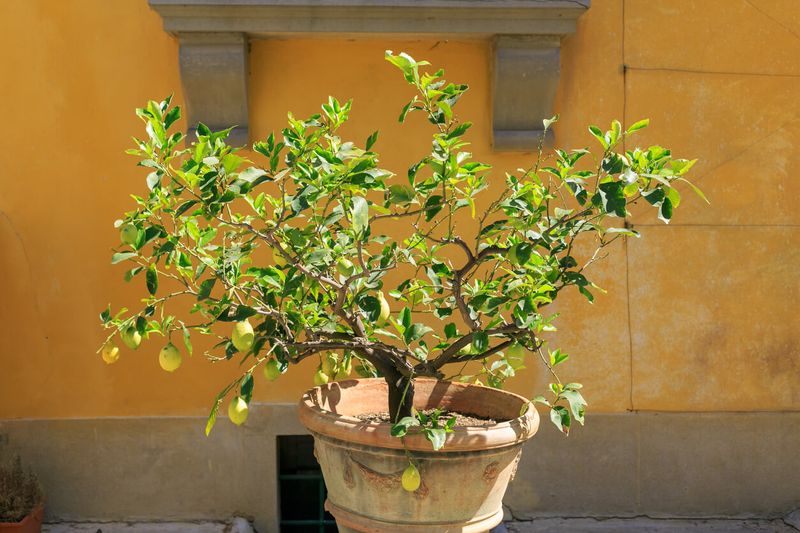
Walk outside on a hot California afternoon and you might find your lemon or orange tree looking a little defeated, with leaves hanging limply instead of reaching toward the sun. Before you grab the hose, hold on.
That drooping canopy is a signal worth reading carefully, because watering a tree that does not actually need it can cause just as many problems as leaving a thirsty one dry. Learning to tell the difference could save your tree and your water bill.
Afternoon droop signals a water-balance problem, not one diagnosis
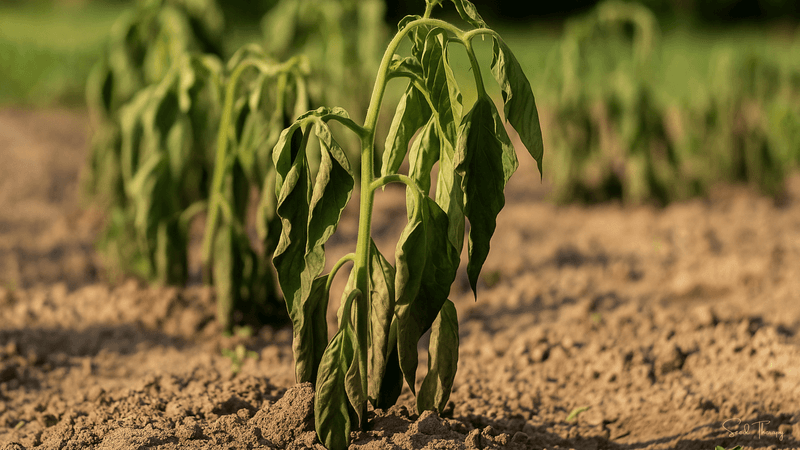
Picture the water inside a citrus tree as a continuous column moving from the soil, through the roots, up the trunk, and out through tiny pores on each leaf. On a hot California afternoon, the air pulls moisture out of those pores faster than the roots can push it back up.
When that gap widens, the leaves lose their firmness and sag. UC ANR guidance on heat and trees describes this drooping as an early sign of heat stress rather than a guaranteed sign that the root zone is dry.
Several things can make the imbalance worse. High temperatures, low humidity, dry or hot winds, heat reflected off pavement or walls, dry soil, roots that are shallow, recently disturbed, or confined to a tight space, all of these stack the odds against the tree’s ability to keep up.
A tree planted in the last few months has not yet spread its roots far enough to draw from a large reservoir of soil moisture, so even a moderately warm day can tip it into afternoon wilt.
The key point is that the drooping canopy is a warning about water balance, not a single diagnosis with one meaning. A tree that stands upright in the morning, sags by three in the afternoon, and looks normal again by the following morning may simply be responding to temporary heat stress.
That overnight recovery is a hopeful sign, but it does not automatically confirm that the tree is fine or that it needs more water. The symptom narrows the list of possibilities without closing it, and the next step is a closer look rather than an immediate reach for the irrigation valve.
Why the hottest hours make leaves sag
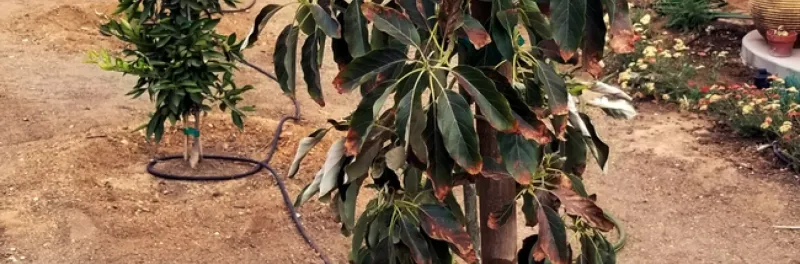
Every leaf on a citrus tree is covered with tiny openings called stomata that release water vapor as the tree goes about its business of photosynthesis. When the air is hot and dry, those openings lose water at a faster rate, a process called transpiration.
If the atmosphere demands more water than the roots can supply, the cells inside the leaves lose their rigidity and the whole canopy sags.
The tree has a defense mechanism: it can close those stomata to slow water loss. That helps in the short term, but closing the openings also cuts off the cooling system and reduces photosynthesis, so the tree is essentially holding its breath.
UC Marin Master Gardeners’ heat guidance notes that stomatal closure is one of the first responses a tree makes to thermal stress, and it comes with real costs to growth and fruit development.
Overnight recovery is encouraging, but it does not close the book on the problem. A tree can bounce back each morning while still accumulating stress across a long heat wave.
UC ANR Landscape Notes on heat stress in trees explains that repeated cycles of wilt and recovery can eventually contribute to leaf scorch, premature leaf drop, fruit drop, reduced growth, or dieback. No single temperature reading determines when citrus crosses into danger territory, because humidity, wind, solar exposure, soil moisture, root health, tree age, and cultivar all play a role.
The pattern matters more than any one afternoon reading.
Compare the canopy and inspect the correct root zone
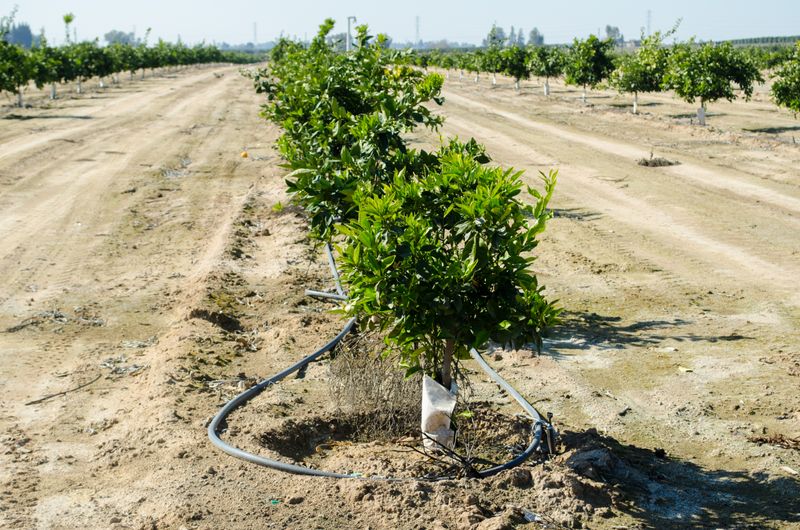
A simple two-part check can tell you a lot before you touch the irrigation timer. Go out in the late afternoon when the canopy looks droopy, then return the next morning before the heat builds and compare what you see.
UC Master Gardener guidance on watering during drought recommends observing citrus before the heat of the day and noting when water-stress signs appear, because timing tells you whether you are dealing with temporary heat response or something more persistent.
If the tree looks normal in the morning, move to the second part of the check: the soil or potting medium itself. For an in-ground tree, push a screwdriver, a soil probe, or your finger several inches below the surface near the drip line, which is roughly below the outer edge of the canopy.
Moist soil at that depth means the root zone is probably not the problem, and adding water may do more harm than good. Dry soil at that depth is useful information pointing toward irrigation.
Container-grown citrus requires a different inspection. The potting medium inside the pot is what matters, not the ground around it.
UC Master Gardener advice on Meyer lemon care highlights that newly planted and container citrus can dry out quickly because their root systems are smaller, shallower, or confined, so the root ball may be bone dry even when the surrounding garden soil feels fine. Lift a small pot if you can, or press a wooden skewer into the medium and check for moisture when you pull it out.
Before drawing any conclusion, also account for factors that amplify heat stress without having anything to do with soil moisture. A tree planted against a south-facing stucco wall, a pot sitting on a concrete patio, a young tree in its first summer, or a tree exposed to dry Santa Ana winds faces a heavier atmospheric load than a mature tree in a shaded, mulched bed.
UC IPM’s water management and pest problems resource notes that wind, drainage conditions, and tree age all affect how quickly a root zone is depleted. Read the whole picture before deciding on a response.
Water a dry in-ground root zone slowly and deeply
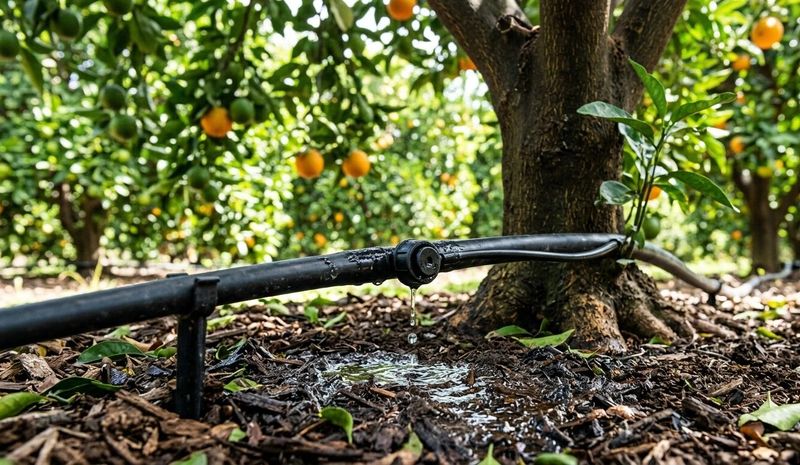
When the soil check confirms a genuinely dry root zone under an established in-ground citrus tree, the right response is a slow, deep watering applied to the right location. Feeder roots fan out beneath and slightly beyond the canopy, so that is where water needs to reach.
UC IPM’s watering citrus guide instructs growers to irrigate slowly beneath and somewhat beyond the drip line rather than puddling water near the trunk. As a tree matures and its roots push further out, the irrigation zone should follow, moving gradually away from the trunk over time.
For planning purposes, UC IPM cultural tips for citrus offer a broad summer reference of roughly 4 to 6 inches of water per month for established in-ground trees, often divided into applications about every 7 to 10 days in hot climates. These figures are starting points, not statewide prescriptions.
Sandy soil drains faster and needs more frequent, smaller applications. Heavy clay holds moisture longer but can become waterlogged.
A large, mature tree with deep roots draws from a different reservoir than a young tree in its second season.
Heat spikes deserve special attention. UC ANR’s Central Valley heat-spike guidance recommends checking the top several inches of soil before an extreme heat event and replenishing the active root zone ahead of the forecast rather than waiting until the tree shows distress.
A tree that enters a heat wave with a well-moistened root zone handles the stress better than one that starts dry. UC ANR’s backyard heat advice reinforces that adjusting irrigation frequency during extreme heat, rather than sticking to a fixed calendar, is the smarter approach for California conditions.
Local evapotranspiration rates, your irrigation equipment’s output, and any active water restrictions in your area should all factor into how you calibrate.
Adjust container care to the confined root ball
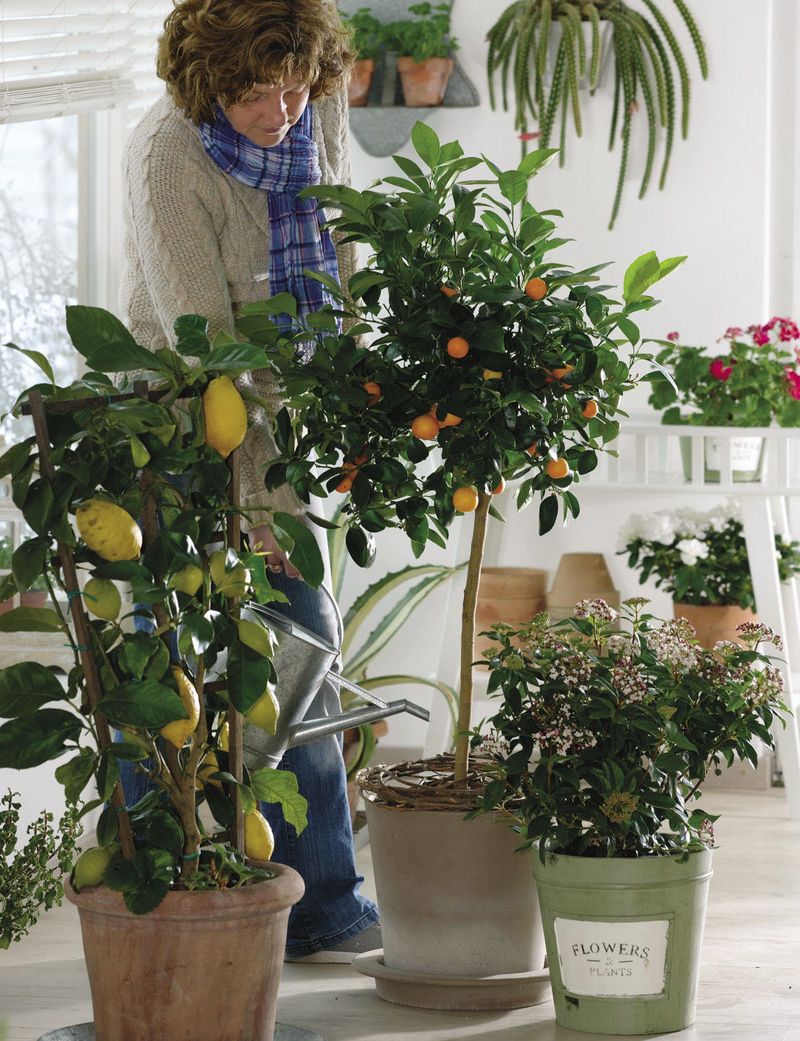
Container citrus lives by different rules than an in-ground tree, and the in-ground advice in the previous section does not transfer to a pot. The root ball is confined to whatever volume the container holds, which means it can go from adequately moist to critically dry within a day or two during a California heat wave, even when the soil around the pot feels perfectly fine.
UC IPM’s water management resource specifically flags newly planted and container-grown citrus as needing more frequent monitoring than established in-ground trees for exactly this reason.
Before watering a container tree, check the potting medium itself. Push a finger or a wooden skewer two to three inches into the mix.
If it feels dry at that depth, water thoroughly until it drains freely from the bottom of the pot, then stop. If the medium still feels moist, hold off and check again the next morning.
UC Master Gardener guidance on Meyer lemon container care emphasizes that drainage is as important as watering: a pot without adequate drainage holes, or one sitting in a saucer of standing water, sets up root problems that no amount of careful watering can fix.
The 4 to 6 inches per month planning figure and the 7 to 10-day interval mentioned for established in-ground trees are not container prescriptions. Do not apply them here.
UC IPM’s citrus watering guidance makes clear that container volume, potting medium composition, pot material, sun exposure, and temperature all affect how quickly a confined root ball dries out. Let the condition of the potting medium and the drainage behavior of the container guide your decisions, not a calendar or a fixed gallon amount.
Protect roots from both drought and excess water
Shallow daily sips of water and heavy automatic flooding are both problematic for citrus roots, just in opposite directions. Frequent light watering trains roots to stay near the surface, where they are most vulnerable to heat and drought.
Saturated soil, on the other hand, suffocates roots by pushing out the oxygen they need, and it creates the warm, wet conditions that the pathogen responsible for Phytophthora root and crown rot thrives in. UC IPM’s citrus watering guide recommends consistent moisture with good drainage rather than either extreme.
Keep irrigation away from the trunk, root crown, and graft union. Water pooling against the base of the tree creates an entry point for Phytophthora gummosis, a disease that attacks the bark near the soil line and can girdle a tree over time.
Direct your drip emitters or soaker hose to the feeder root zone beneath and beyond the canopy, and let the trunk stay dry.
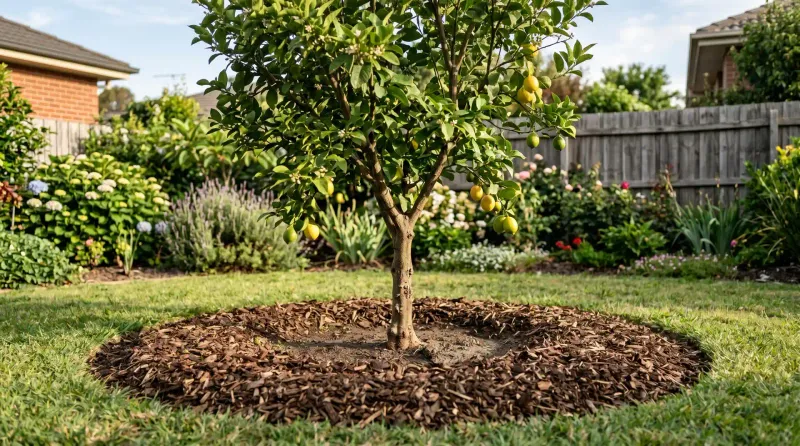
Mulch is a practical supporting tool. A 3 to 4 inch layer of coarse wood chips spread over the root zone slows evaporation, moderates soil temperature, and reduces competition from weeds.
UC ANR citrus care guidance and UC Master Gardener drought watering advice both recommend leaving a gap of roughly 6 to 12 inches between the mulch and the trunk to prevent moisture from accumulating against the bark. In California’s variable climates, from cool coastal gardens to scorching inland valleys, the right mulch depth and gap may need adjustment, but the principle of keeping the trunk dry and the root zone covered stays the same.
Persistent symptoms require a broader diagnosis
Afternoon droop that clears up by morning is one pattern. Wilting that is still there when you check before breakfast is a different conversation.
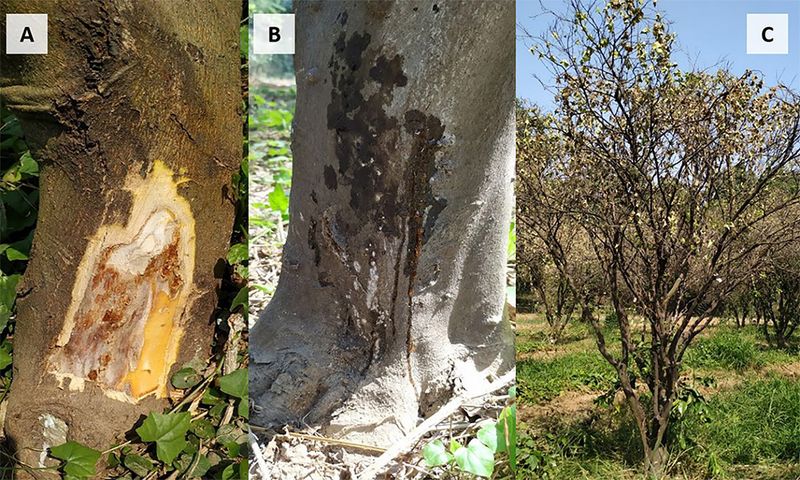
Persistent morning wilt, yellowing leaves, leaf scorch, premature leaf drop, twig dieback, or a canopy that looks drought-stressed while the soil is clearly wet all point toward something that more water cannot fix. UC IPM’s Phytophthora root and crown rot page explains that this pathogen can produce drought-like symptoms even in well-watered trees, because it destroys the roots needed to move water upward.
Affected trees do not recover simply because irrigation increases.
If you suspect root or crown problems, inspect the trunk base and root crown for discolored or water-soaked bark, gummy amber resin, or a foul smell. UC IPM’s Phytophthora gummosis resource describes these as characteristic signs of infection at the soil line.
Also check whether drainage is adequate: soil that stays wet for days after irrigation is a structural problem, not just a watering-schedule problem.
Not every unusual leaf symptom points to a water issue. Citrus leafminer produces winding silvery mines and curled, distorted young leaves, a pattern that looks nothing like the whole-canopy sag of heat stress and is not treated with irrigation.
Heat and drought stress can also increase susceptibility to citrus red mite. UC IPM’s citrus red mite guidance recommends inspecting leaves for stippling, bronzing, fine webbing, or abnormal drop before considering any treatment, and favors monitoring and preserving natural enemies over reflexive pesticide applications.
UC IPM’s water management and pest problems overview reinforces that stressed trees are more pest-prone, making accurate diagnosis the first priority.
A separate concern worth knowing about is Huanglongbing, or HLB, sometimes called citrus greening. Afternoon droop alone does not suggest HLB.
The disease is associated with blotchy, asymmetrical leaf mottling, yellow shoots, twig dieback, stunting, and misshapen or bitter fruit. California now has active HLB detections and quarantine areas; CDFA’s HLB regulation and quarantine information and USDA APHIS updates on the expanded California quarantine area reflect how seriously regulators are treating the threat.
If you see a combination of those unusual symptoms, CDFA guidance on what to expect after an HLB detection outlines the reporting process. The right move is to contact CDFA rather than to try to diagnose the disease from a drooping canopy alone.
Use the next morning to choose the next step
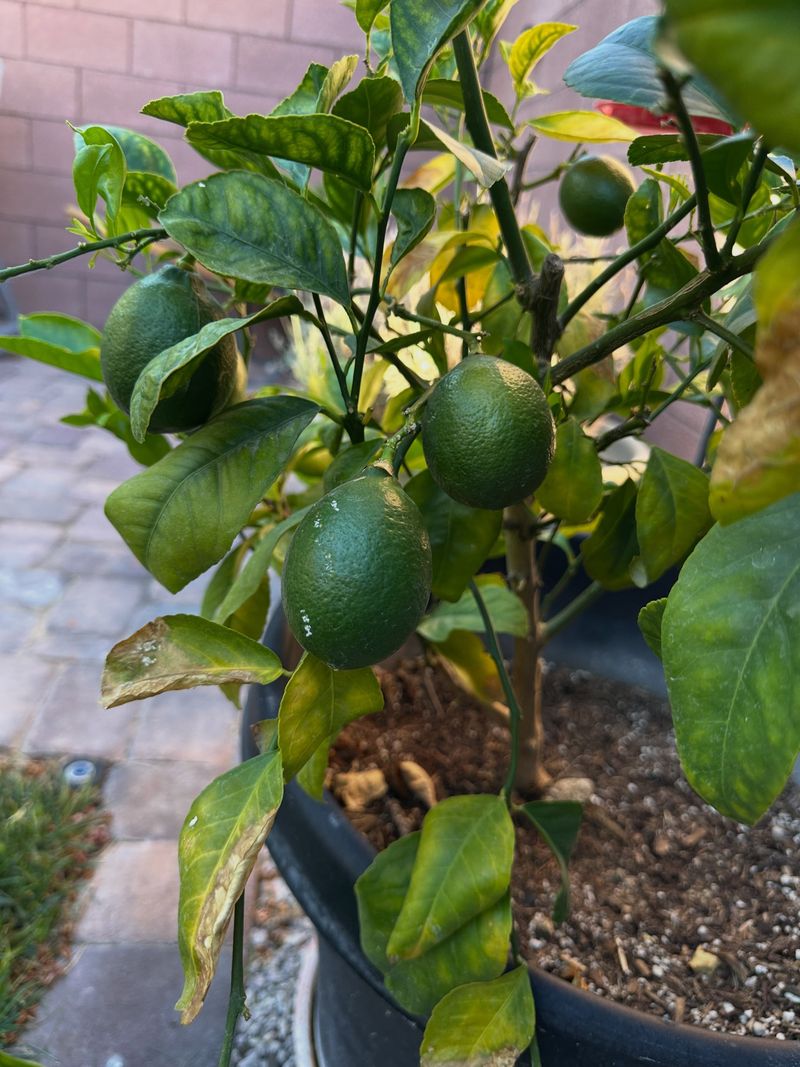
Morning is when the picture becomes clearest. A canopy that has fully recovered overnight supports the idea of a temporary heat response, though it does not rule out repeated stress accumulating over a season.
Go ahead and check the root zone as described earlier: dry soil under an established in-ground tree calls for a slow, deep irrigation applied beneath and beyond the canopy, with the trunk kept dry. A dry potting medium in a container calls for thorough watering until water drains freely, followed by a drainage check.
UC ANR citrus care guidance and UC IPM’s watering citrus resource both point toward this kind of evidence-based, root-zone-targeted approach rather than automatic or calendar-driven watering.
Wet soil in the morning combined with a wilted canopy is the scenario that demands a different response entirely. Stop irrigating and look harder at drainage, the trunk base, and root health.
UC IPM’s root and crown rot resource and the UC IPM water management and pest problems guide both make clear that irrigation cannot rescue a tree whose roots have been damaged by disease, salt, or chronic waterlogging. Prompt, accurate action may reduce further stress, but no single watering correction guarantees recovery once prolonged damage has set in.
A citrus tree that is read carefully and responded to thoughtfully, rather than watered on reflex, is the one most likely to make it through a California summer in good shape.