
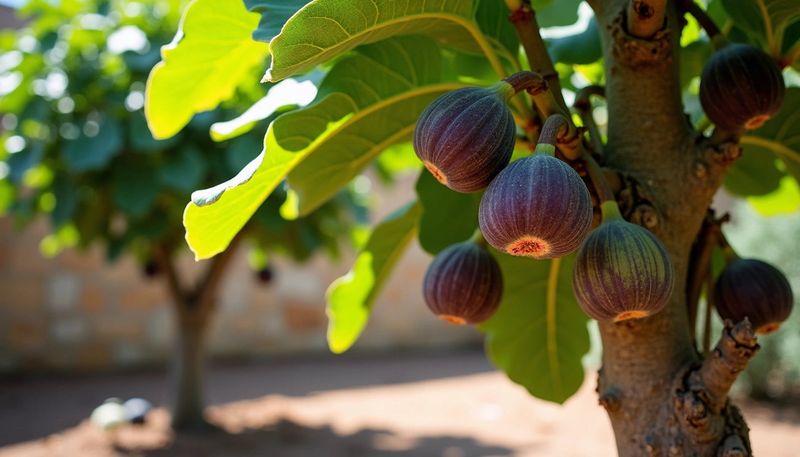
A fig tree full of lush green leaves but empty of fruit is one of the most frustrating sights in a California backyard. You water it, the tree thrives, and yet season after season there is nothing to pick.
Understanding why this happens, and what to actually change, can save you from wasting time, money, and effort on fixes that miss the real problem.
Start by defining what “no figs” means
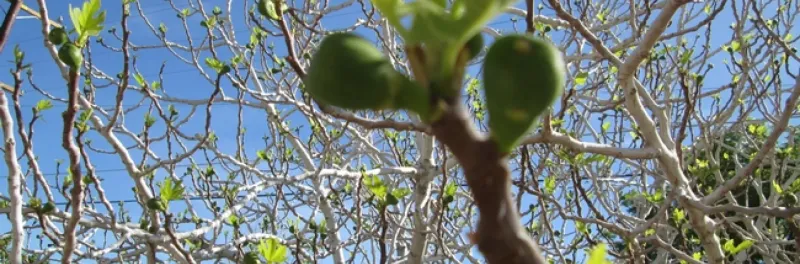
Before changing anything about how you care for your fig tree, take a closer look at what is actually happening. Three separate situations can all feel like “no figs,” but each one points to a different cause and calls for a different response.
The first situation is a tree that produces only leaves, with no small figs forming at all during the growing season. The second is a tree that does set tiny figs but drops them before they develop, leaving small green fruitlets on the ground.
The third is a tree that holds its fruit all the way through summer but never ripens it, leaving hard, green, or shriveled figs on the branch.
Each of these problems has its own diagnostic trail. A tree that never sets fruit at all may be too young, too shaded, or receiving too much nitrogen.
A tree that drops small figs may be reacting to heat spikes, inconsistent watering, or cultivar-specific behavior. UC IPM notes that figs generally do not fruit until at least age two, and some trees may take as long as six years to reach reproductive maturity.
Age alone can explain a lot. A tree planted one or two seasons ago that looks healthy but bears nothing may simply not be ready yet.
The stronger excess-nitrogen pattern tends to show up in established trees, meaning trees that have been in the ground long enough to fruit, that suddenly produce unusually dense foliage, long vigorous shoots, and very little or no fruit.
Watch the tree through a full growing season before making changes. Note whether any small figs form, when they appear, and whether they hold or fall.
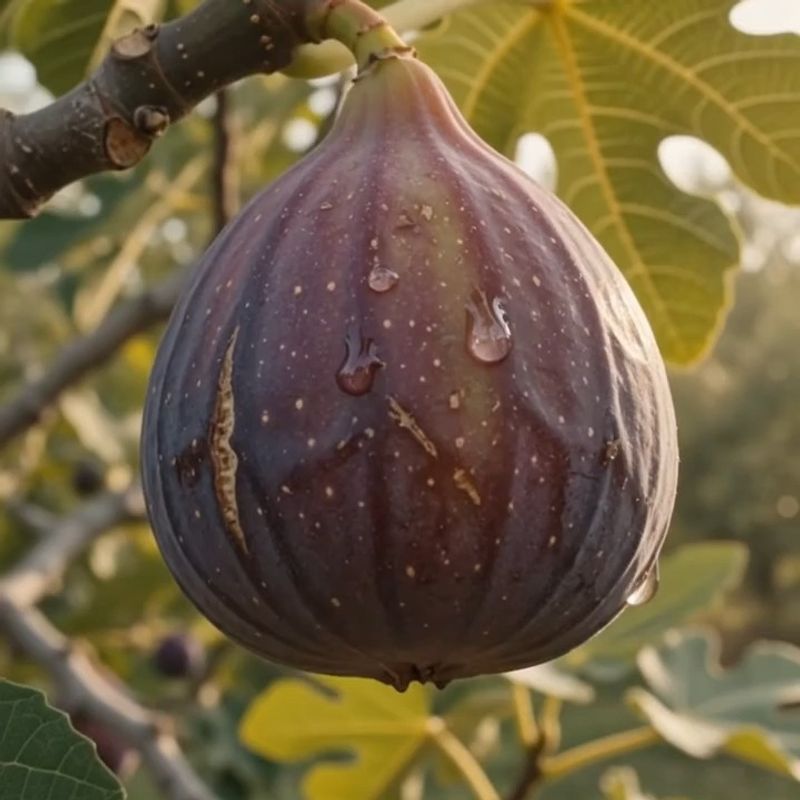
UC IPM guidance on fig culture points out that a ripe fig is soft, drooping, and separates easily from the branch, so a tree with small green figs that later shrivel has a fundamentally different problem from one that never forms fruit at all.
Excess nitrogen can favor leaves over fruit
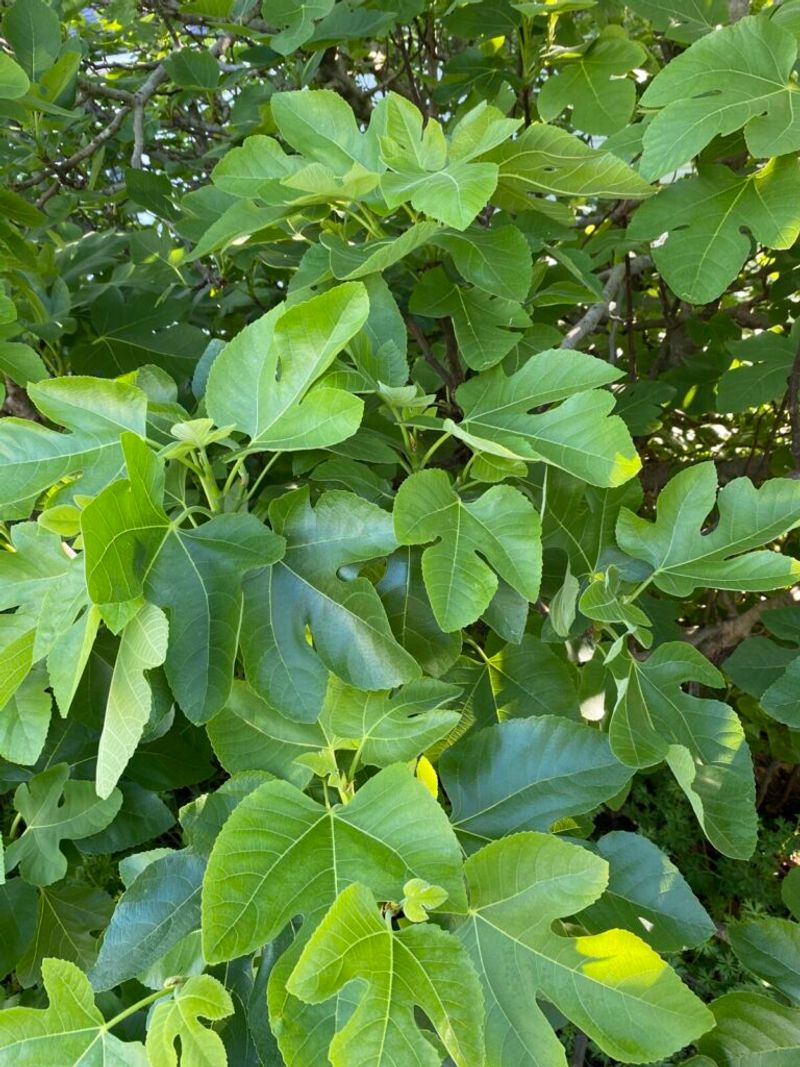
When an established fig tree is putting out long, vigorous shoots and thick, dark green leaves but producing little or no fruit, excess nitrogen is one of the most well-supported explanations. Nitrogen pushes vegetative growth hard.
Given too much of it, a fig tree will keep building branches and leaves at the expense of the reproductive effort needed to set and develop fruit.
UC IPM states that heavy nitrogen fertilization promotes branches and leaves while suppressing fruit production. Georgia Extension makes the same point, advising growers to stop fertilizing when a fig is already excessively vigorous.
The key word is “already.” If the tree is visibly lush and fast-growing, adding more nitrogen will likely make the imbalance worse, not better.
The tricky part is that many California homeowners feed their fig trees without realizing it. Lawn fertilizer applied near the tree’s drip line is one of the most common hidden sources, because grass-feeding products are often high in nitrogen and tree roots extend well beyond the canopy edge.
Composted manure, poultry products, blood meal, and high-nitrogen blended fertilizers applied as general garden amendments can all reach the fig’s root zone and push the same leafy response.
The corrective step for a lush, established tree is straightforward: pause all supplemental nitrogen. Stop applying lawn fertilizer within the tree’s root zone, hold off on manure or poultry-based composts, and skip any high-nitrogen blends for at least one full growing season.
Georgia Extension’s fig guidance frames this as an observation step, not a guaranteed treatment. Reducing nitrogen corrects one specific imbalance when that imbalance is the actual problem.
It will not overcome poor light, a young tree that has not reached fruiting age, a cultivar with unmet pollination needs, drought stress, waterlogged roots, or disease.
Give the tree a full season after stopping supplemental nitrogen before drawing conclusions. Growth habits built up over multiple years of heavy feeding do not reverse in a few weeks.
Check sunlight, drainage, and irrigation next
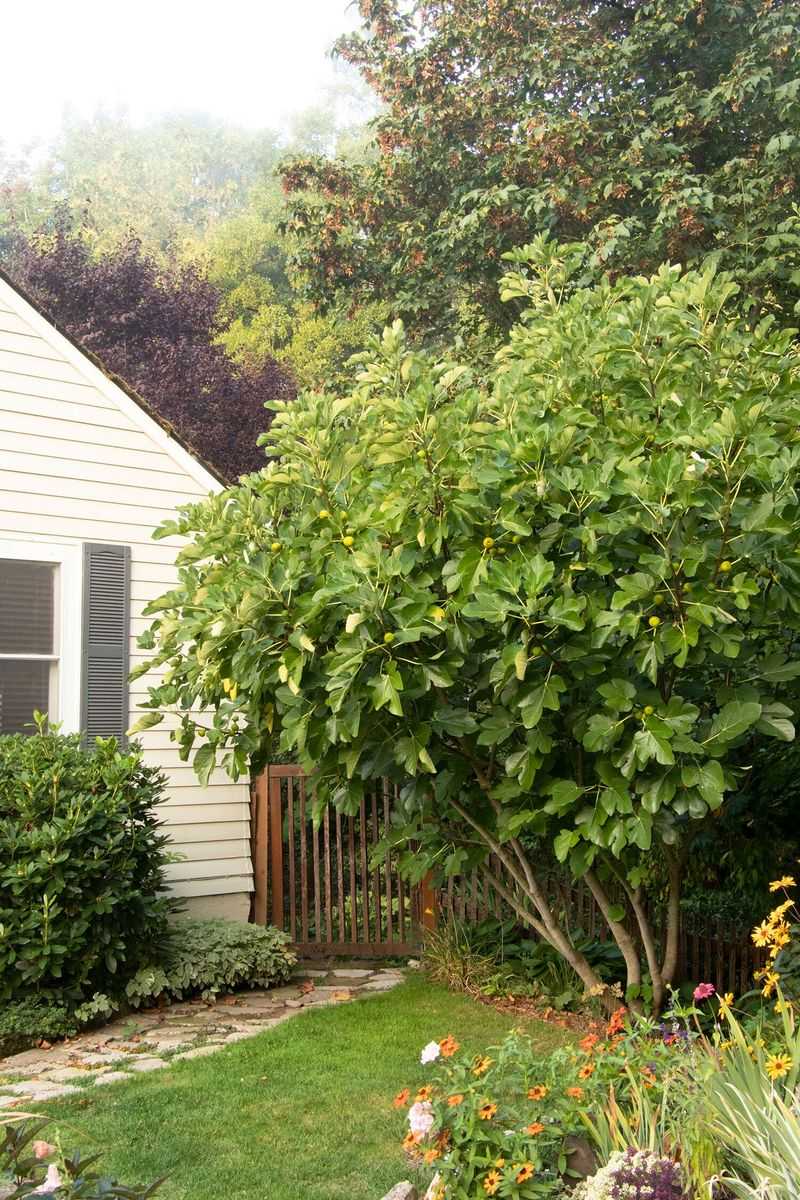
Pausing nitrogen is a useful first step, but site conditions can prevent any improvement from showing up if they are working against the tree at the same time. Sunlight is the most basic requirement.
UC ANR recommends at least eight hours of direct sun during the growing season for productive fig trees. A tree growing in partial shade from a house, fence, or neighboring tree may simply lack the energy to develop fruit even when nitrogen is no longer an issue.
Walk around the tree at different times of day and count actual sun hours reaching the canopy. If the tree is shaded for a significant part of the day, reduced nitrogen alone will not fix the problem.
Pruning nearby plants or limbing up overhanging branches may help, but in some locations the shade source cannot be removed and the tree may need to be relocated or replaced.
Drainage matters almost as much as light. Fig roots sitting in poorly drained soil can be chronically stressed even when the tree looks outwardly healthy.
Wet, compacted, or clay-heavy soil restricts oxygen at the root zone and can mimic drought stress by impairing water uptake. Before assuming a watering problem, check whether the soil drains within a day or two after a good rain or deep irrigation.
Water stress itself, in either direction, can reduce fruit set and trigger fruit drop. Both too little and too much irrigation can impair production.
UC IPM identifies inconsistent moisture as a contributor to fig drop, and UC IPM’s cultural tips recommend watering deeply around the drip line rather than repeatedly wetting the trunk or applying frequent shallow sprinklings that never reach the deeper root zone.
How often to water depends on your specific conditions. Sandy soils in hot inland valleys dry out faster than heavy clay soils near the coast.
A newly planted tree needs more regular attention than a tree that has been in the ground for several years. Adjust frequency based on soil moisture, local rainfall, tree size, and heat, rather than following a fixed weekly schedule.
UF/IFAS extension notes that drought-stressed trees do not fruit well, a point that applies equally to California trees during long dry summers without supplemental irrigation.
Age and cultivar may explain a healthy tree without a harvest
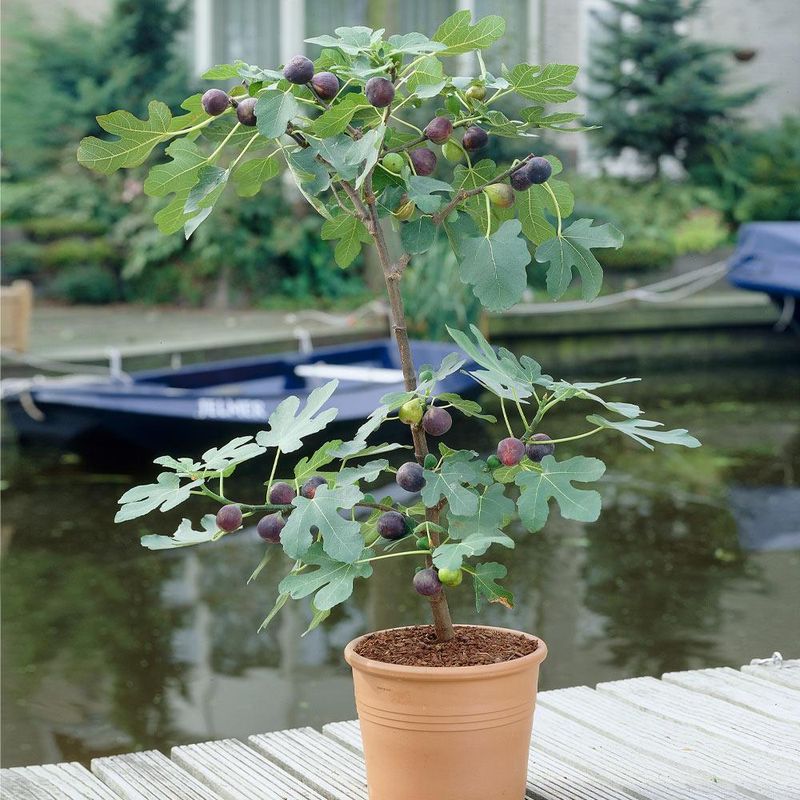
Not every nonfruiting fig tree has a fertilizer problem. Two of the most common and least obvious explanations are age and cultivar, and both are worth checking before making any care changes at all.
Young fig trees simply may not be ready to fruit. UC IPM notes that figs generally do not fruit until at least age two, and some trees may take as long as six years to reach reproductive maturity depending on conditions, rootstock, and how the tree was propagated.
Georgia Extension adds that three or four years may pass before a tree produces an edible-quality crop. A healthy, vigorously growing young tree that has never fruited may simply need more time, and changing its fertilizer or pruning it aggressively will not speed that process along.
Cultivar identification is the second piece. California home gardens grow a wide range of fig types, and they do not all behave the same way.
Black Mission and Brown Turkey are among the most widely planted common figs in the state, and both set fruit without pollination and without a second tree nearby. UC ANR confirms that common figs are the standard choice for home gardens precisely because they do not require a pollinator.
Desert King is a San Pedro type that shows up in California gardens, particularly in cooler coastal areas. It can produce a reliable breba crop, the early-season crop that develops on older wood, without pollination.
However, its main crop requires pollination by a fig wasp and a compatible caprifig, which are rarely present in home settings. A Desert King tree producing only a breba crop, or no main-season crop at all, may be behaving exactly as expected for its type.
Smyrna figs require pollination for any crop and will not produce reliably in a typical backyard without the fig wasp and caprifig system. UC ANR’s fig resource and UF/IFAS extension both note that Smyrna and some San Pedro types will not bear reliably without these specific pollination conditions.
If your tree was sold under an uncertain or mislabeled name, its actual cultivar type may explain years of puzzling behavior.
Pruning can remove the crop you expect
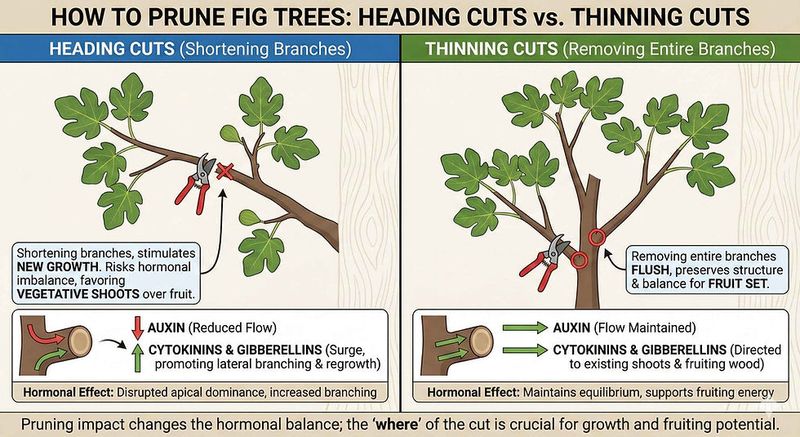
A vigorous fig tree that gets cut back hard every winter may look perfectly healthy come spring and still produce almost no fruit. Pruning history is an underappreciated reason for low yields, and it is worth reviewing before assuming the problem is fertilizer, water, or disease.
Figs can produce two distinct crops depending on cultivar. The breba crop develops on wood that grew during the previous season, appearing in late spring or early summer before the main crop arrives.
The main crop develops on current-season growth and ripens in late summer through fall. UF/IFAS warns that heavy winter pruning can eliminate the following year’s breba crop entirely by removing the older wood those early figs depend on.
The proportion of fruit that comes from older versus newer wood varies by cultivar. Black Mission and Brown Turkey both produce reasonable crops on current-season growth, so they tolerate moderate pruning better than some other types.
A San Pedro type like Desert King, which is grown primarily for its breba crop in many California gardens, can lose its entire productive season to a single aggressive winter cutback.
UC IPM notes that mature figs generally do not require heavy dormant pruning to produce fruit wood. The practical recommendation is to prune mainly for structure: remove dead, broken, crossing, or structurally weak branches, and cut back selectively to manage the tree’s size and shape.
Avoid taking out large amounts of healthy older wood until you understand your tree’s crop type and timing.
If you have been pruning heavily and the tree is otherwise healthy, try a season of minimal pruning and observe whether a breba crop appears in late spring. UC ANR’s fig guidance supports a light-handed approach for established trees, focusing cuts on improving airflow and removing problem wood rather than forcing new growth.
Use symptoms to investigate problems beyond nitrogen
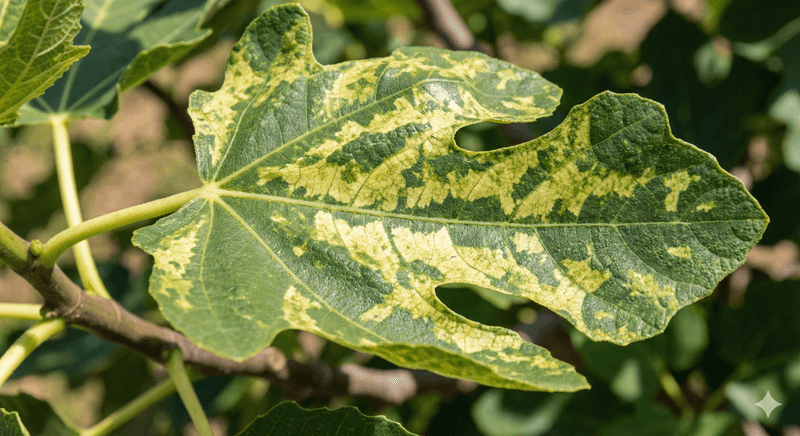
Some fig trees stay unproductive even after you stop supplemental nitrogen, confirm adequate sun, and correct drainage and irrigation. When basic care improvements do not change the pattern, a closer look at the tree’s symptoms can point toward less common causes.
Fruit drop that happens after small figs form is a different problem from a tree that never sets fruit at all. Heat spikes, sudden changes in soil moisture, and prolonged drought can all trigger fruitlet drop in an otherwise healthy tree.
UC IPM identifies inconsistent moisture and heat as contributors to this pattern. Cultivar behavior also plays a role: Georgia Extension reports that Celeste, a cultivar occasionally grown in California, is prone to dropping fruit prematurely in hot weather even with attentive care.
Leaves that show mottled yellow-green patterns, ring spots, or distortion are a separate concern. These symptoms can suggest fig mosaic, a viral disease that UC IPM notes can slow growth, reduce yield, and cause premature fruit drop.
There is no practical residential cure once a tree is infected. A tree with these symptoms should not be assumed to have a fertilizer imbalance, and adding nitrogen or other amendments will not resolve the underlying viral problem.
Root-knot nematodes are another possibility, particularly in warm, irrigated, sandy soils. The symptoms, which can include stunted growth, reduced fruiting, and general decline, overlap significantly with drought stress and nutrient problems, making them difficult to diagnose by observation alone.
UC IPM’s fig nematode page notes that fig-specific nematode damage has not been extensively studied and provides no specific residential treatment recommendation. UC IPM’s root-knot nematode resource makes clear that these symptoms do not justify routine fumigation or chemical treatment at the homeowner level.
When symptoms suggest something beyond a basic site or nutrition issue, the most useful next step is soil testing or a consultation with your local UC Cooperative Extension office. Professional assessment can distinguish between overlapping conditions and help you avoid treating the wrong problem.
Follow a conditional reset instead of chasing a guarantee
When a well-established California fig tree is producing unusually lush foliage and long vigorous shoots but little or no fruit, the most logical first step is to pause all supplemental nitrogen and give the tree a full growing season to respond. Stop lawn fertilizer applications within the root zone, hold off on manure, poultry composts, blood meal, and high-nitrogen blends, and let the tree work with what the soil already provides.
While the nitrogen pause is in effect, confirm that the tree receives at least eight hours of direct sun, that the soil drains well after rain or irrigation, and that watering reaches the drip line deeply rather than wetting the trunk with frequent shallow cycles. UC IPM’s fig drop resource identifies these site conditions as first-line checks alongside nitrogen reduction.
Identify your cultivar if you have not already. Knowing whether you have a common fig, a San Pedro type, or a Smyrna type will tell you whether pollination requirements could explain a persistent lack of fruit.
Avoid heavy pruning until you understand your tree’s crop timing, particularly whether it produces a breba crop on older wood.
Track what the tree actually does over the season: whether it sets any fruit, whether fruitlets form and drop, or whether fruit holds but fails to ripen. Each pattern points to a different next step.
UC IPM’s cultural tips reinforce that observation across a full season gives you better information than any single care change. Reducing nitrogen addresses one specific imbalance when that imbalance is the actual cause.
A fig tree that still does not improve after a full season of corrected care deserves a closer look at age, cultivar, disease, and site, not another round of the same fix.