
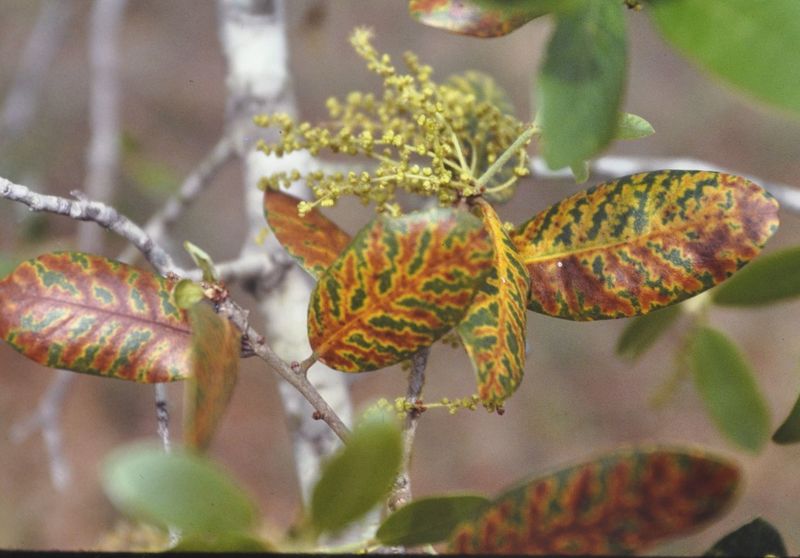
You walk past your live oak and notice leaves with veins that have gone yellow, then brown. Many Texans hear that and think of oak wilt right away.
That worry is fair, but the leaf alone does not tell the whole story. Here is how to read the clues, keep your tree safe, and know when to call for help.
Yellow veins are a warning sign, not a diagnosis
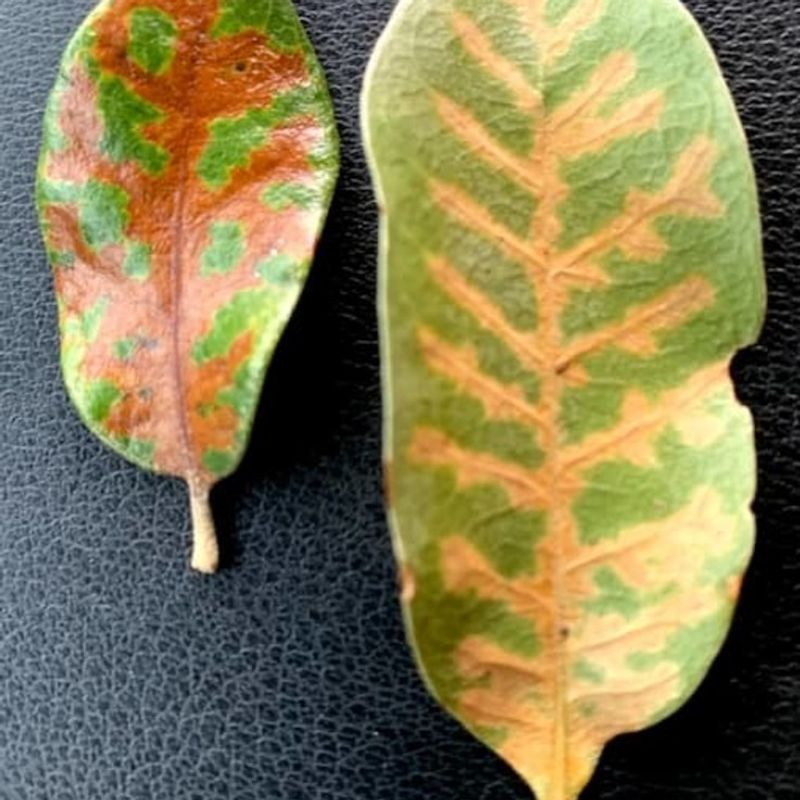
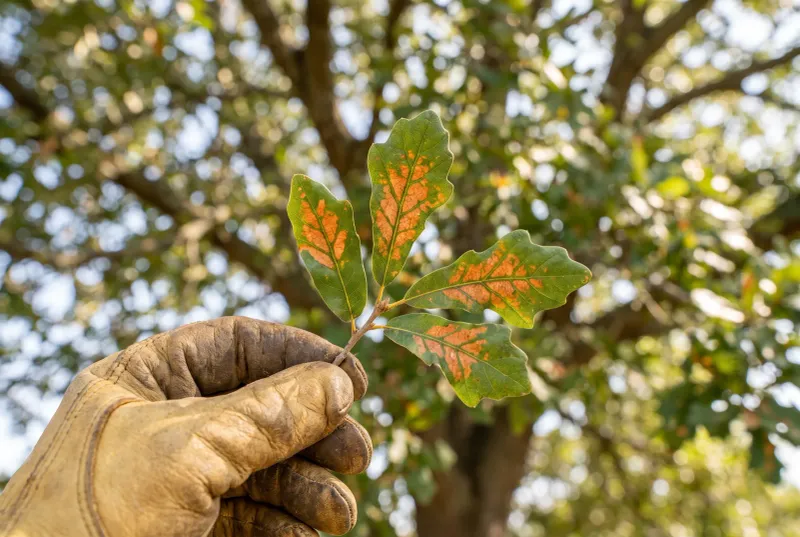
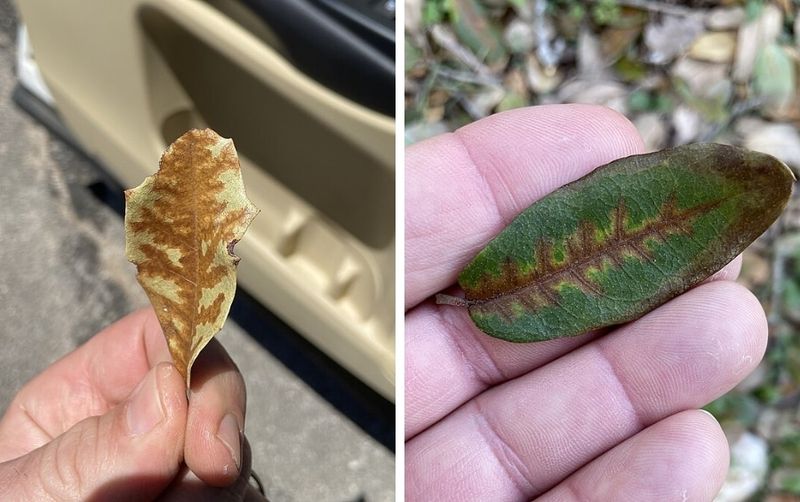
Veinal necrosis is the term for a leaf pattern where the veins turn yellow and then brown. In live oaks, this is one of the characteristic symptoms associated with oak wilt, so it deserves a closer look when you spot it.
Still, a leaf is only one piece of evidence. Texas A&M AgriLife Extension identification guidance says diagnosis should weigh other symptoms and the pattern of decline, and that laboratory testing is recommended when confirmation matters.
Appearance alone cannot establish infection.
It also helps to be picky about what you are seeing. The pattern to look for is the veins themselves changing color, first yellow and then brown.
General yellowing across a leaf, browning along the leaf edge (scorch), and burned tips are different. Those are less reliable indicators and show up with many kinds of stress.
Try this: pick a few affected leaves and look at where the color change starts. If the veins are the first thing to turn, note it.
If the damage begins at the edges or tips, that is a different clue. Jot down what you see, snap a few clear photos, and keep them handy.
Dated photos can help a professional later, especially if the tree changes over a few weeks.
Fall color can have more than one cause
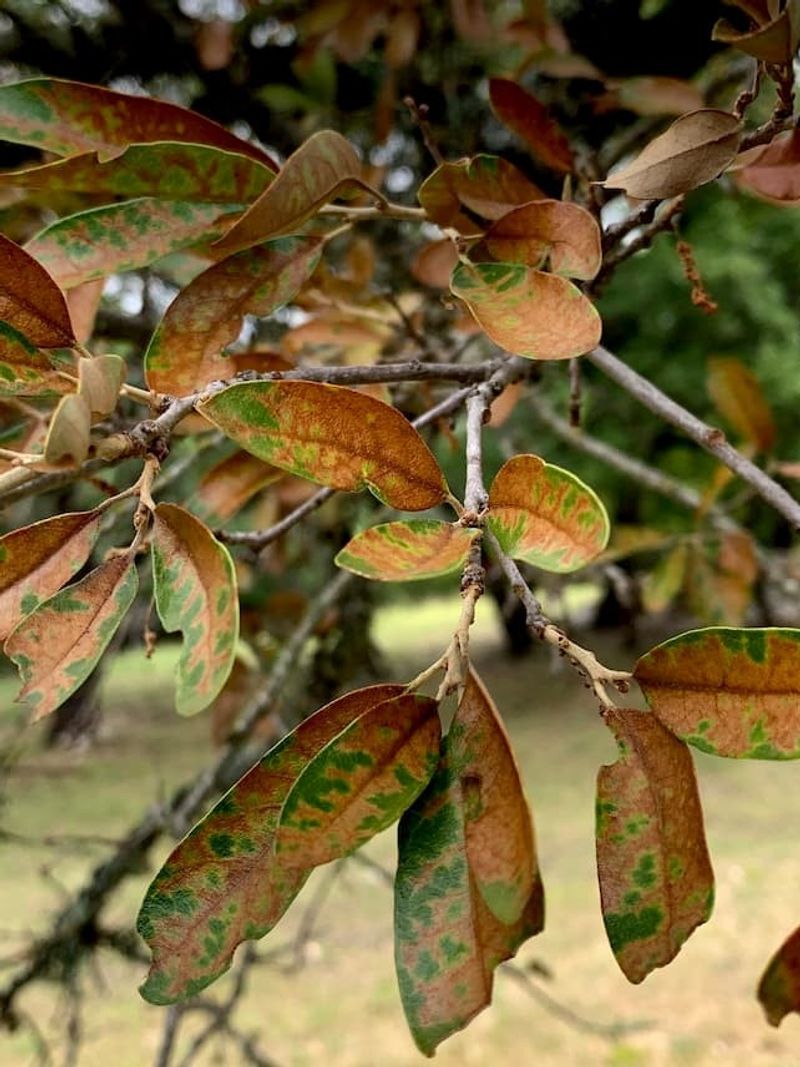
Autumn leaves can fool anyone, and Texas weather makes it trickier. On September 17, 2026, the Texas A&M Forest Service reported that prolonged drought and heat were causing some East and Central Texas oaks to yellow, scorch, and show fall-like color early.
That report was tied to that date, that region, and those conditions.
Drought stress can cause yellowing, scorch, premature leaf drop, and even veinal necrosis. Overwatering can also produce the vein symptom, according to the Texas Oak Wilt Partnership drought comparison.
So yellow-then-brown veins can show up with dry soil, soggy soil, or disease.
Live oaks are not true evergreens. They normally shed older leaves as new growth pushes out in spring, and Texas A&M plant clinic notes that this spring shedding can include yellowing and brown veins that get mistaken for oak wilt.
That explanation belongs to spring, though. It does not excuse unusual symptoms in fall.
The season itself will not settle the question either way. Fall timing does not rule oak wilt in, and it does not rule it out.
Treat the symptom as a reason to look at the whole tree.
Look at the tree and its neighbors
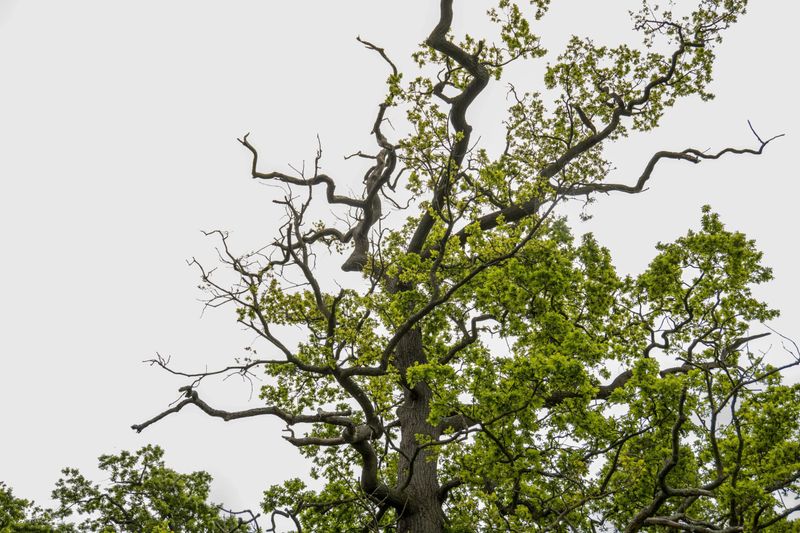
Step back from the single leaf and study the whole canopy. Rapid leaf drop, limb or canopy decline, and nearby oaks dying over time are the kinds of clues that raise concern.
AgriLife Extension guidance treats them as reasons to investigate, not as proof.
Walk the property and the block. Is it one live oak with vein discoloration and thinning limbs, while neighboring trees look fine?
Has an oak close by died over the last year or two? Those details are worth writing down with dates.
Now picture a different scene. After a hot, dry stretch, your live oak, a pecan, and a cedar elm all show yellowing or scorch at once.
When several trees or species react together, Texas Oak Wilt Partnership material points to a shared stressor, such as drought, as a likely explanation.
That does not clear the oak. A stressed tree can still have a disease, and one pattern does not cancel the other.
Keep your notes and photos together so an expert can see the full picture.
How professionals assess and confirm oak wilt
When confirmation matters, ask someone trained in oak wilt to look at the tree. Good starting points are a Texas A&M Forest Service representative, your county AgriLife Extension office, or an ISA Certified Arborist familiar with oak wilt.
They can read the canopy, the site, and the neighborhood pattern together.
Lab testing may come next. AgriLife guidance says oak wilt is hard to confirm from looks alone, and that a negative result can come from poor or unsuitable tissue.
Sample quality matters, so symptomatic, viable material is needed.
The Texas A&M diagnostic lab, through its FAQ page, currently asks for symptomatic branches roughly 1 to 2 inches in diameter, kept cool and shipped promptly. It also lists a minimum three-week turnaround.
Treat that as current lab guidance, since timelines can change.
Please do not collect samples on your own without guidance. Ask the expert how and where to cut, and which branches to choose.
You may also read online that you should peel back bark to look for fungal mats. The mats described in Texas guidance, such as the Texas Oak Wilt Partnership identification page, form on certain diseased red oaks, not live oaks.
Cutting into your tree to look for them will not help and creates a wound.
Protect the tree while you investigate
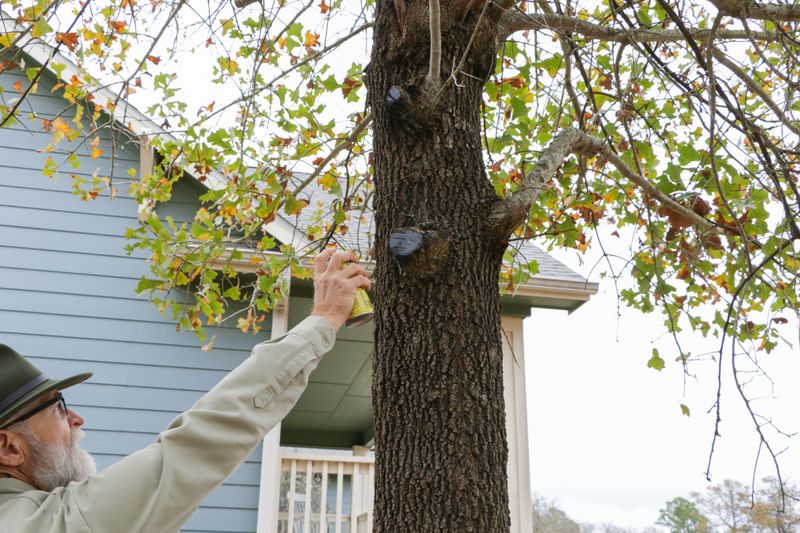
While you wait for answers, the best move is often to hold back. Skip pruning that is not needed, and avoid anything that wounds the bark, like careless trimming, nails, or equipment bumps.
Texas guidance covers timing. In oak-wilt-affected areas, Texas Oak Wilt Partnership pruning guidelines recommend avoiding oak pruning or wounding from February through June.
If a fresh wound happens in any season, paint it immediately. The partnership’s pruning FAQ goes into the reasoning for homeowners.
Safety comes first. If a limb is hanging over the house, driveway, or play area and looks hazardous, call a qualified professional rather than climbing up with a saw.
Mention your oak-wilt concern when you call so they can handle cuts and paint properly.
Water is the other question. Appropriate watering may ease drought stress, and a thirsty tree can be helped.
But watering cannot confirm oak wilt, rule it out, or cure it, as the drought and oak wilt comparison makes clear. Overwatering can even create vein symptoms of its own, so a deep, occasional soak beats a daily sprinkle.
Oak-wilt treatment is not a home cure
If an evaluation does find oak wilt, expect a plan built with professionals, not a quick fix from the garden center. Oak wilt has no home cure.
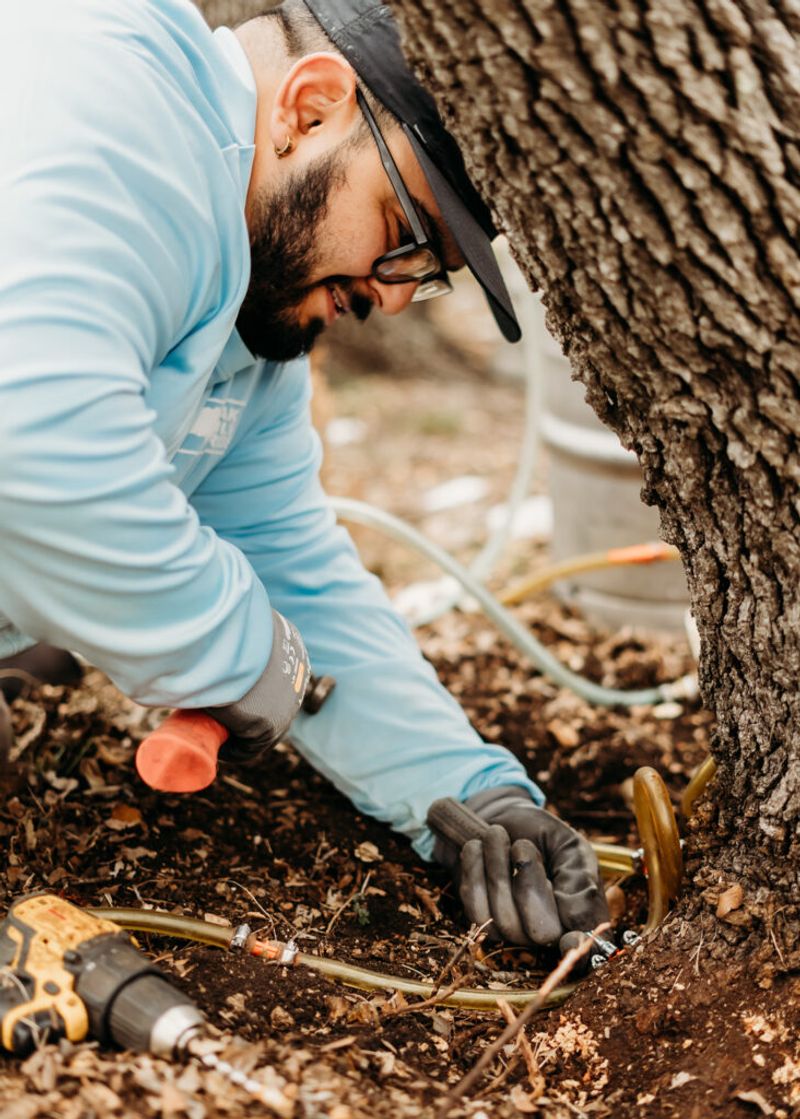
Fungicide injections may help protect selected high-value trees or limit crown loss, according to AgriLife Extension guidance. They do not cure the disease, and they do not stop spread through connected roots.
No one can promise a particular outcome for a particular tree.
Roots matter because live oaks in a neighborhood are often joined underground. Managing that spread is a separate job from treating one tree, and it usually involves site-specific decisions.
The Texas Plant Disease Handbook’s eight-step program lays out the stages of oak wilt management that experts walk through.
Ask any professional you hire what they expect treatment to do, what it will not do, and what it costs over time. Be cautious about anyone who guarantees a save.
A calm, honest conversation now is worth more than a rushed injection.
Treat the symptom as a reason to investigate
Yellow veins that turn brown call for a closer look, not a verdict. Photograph the leaves, note any thinning limbs or ailing oaks nearby, and hold off on unnecessary cuts.
If the worry lingers, contact an oak-wilt-informed professional, as AgriLife Extension advises when confirmation matters.
Fall color cannot hand you a diagnosis, since drought can mimic the same symptom. A leaf asks a question, and a trained eye answers it.