
Walking out to your garden on an August morning to find a healthy squash plant flopped flat on the ground is one of the more unsettling surprises a Central Texas gardener can face. The plant looked fine the evening before, and now it looks finished.
Before you pull it and move on, there is a real possibility that something is tunneling inside the stem, and finding it changes what you do next.
A sudden wilt points you to the lower stem first
Finding a squash plant collapsed at the base, leaves hanging flat in the morning heat, is the kind of discovery that tempts a gardener to blame the Texas sun or a missed watering. Resist that impulse for a moment.
The plant is trying to tell you something specific, and the clue is almost always sitting at ground level, right where the stem meets the soil.
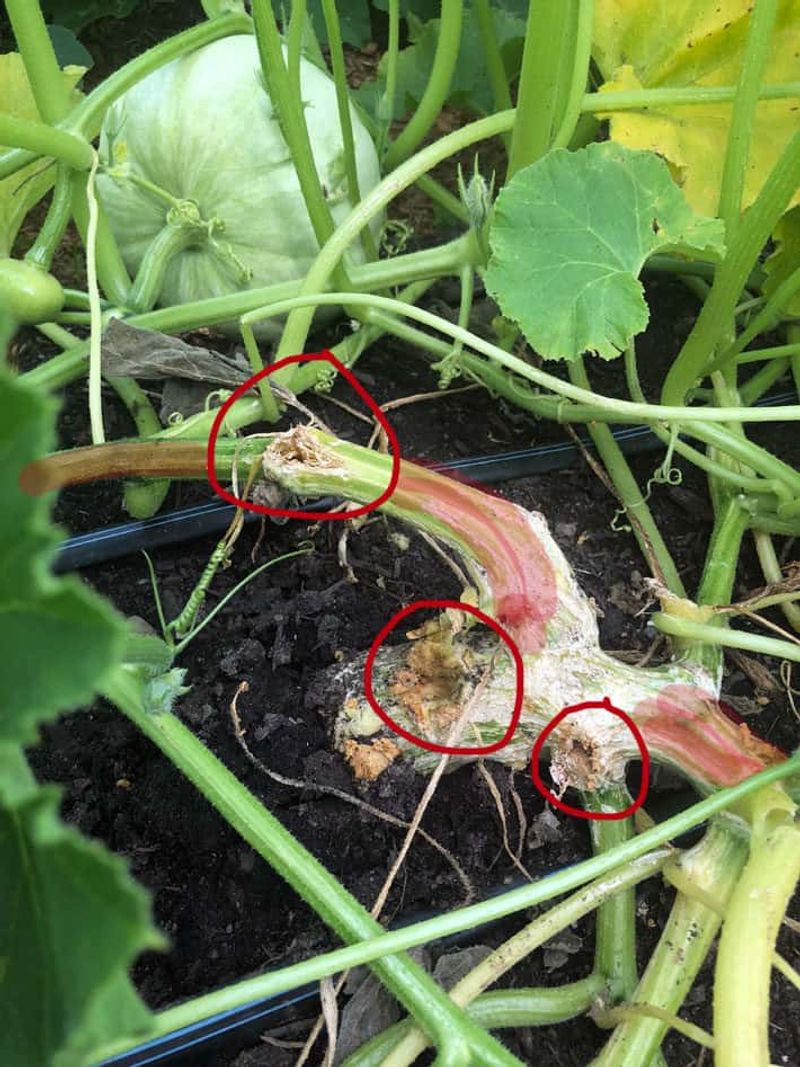
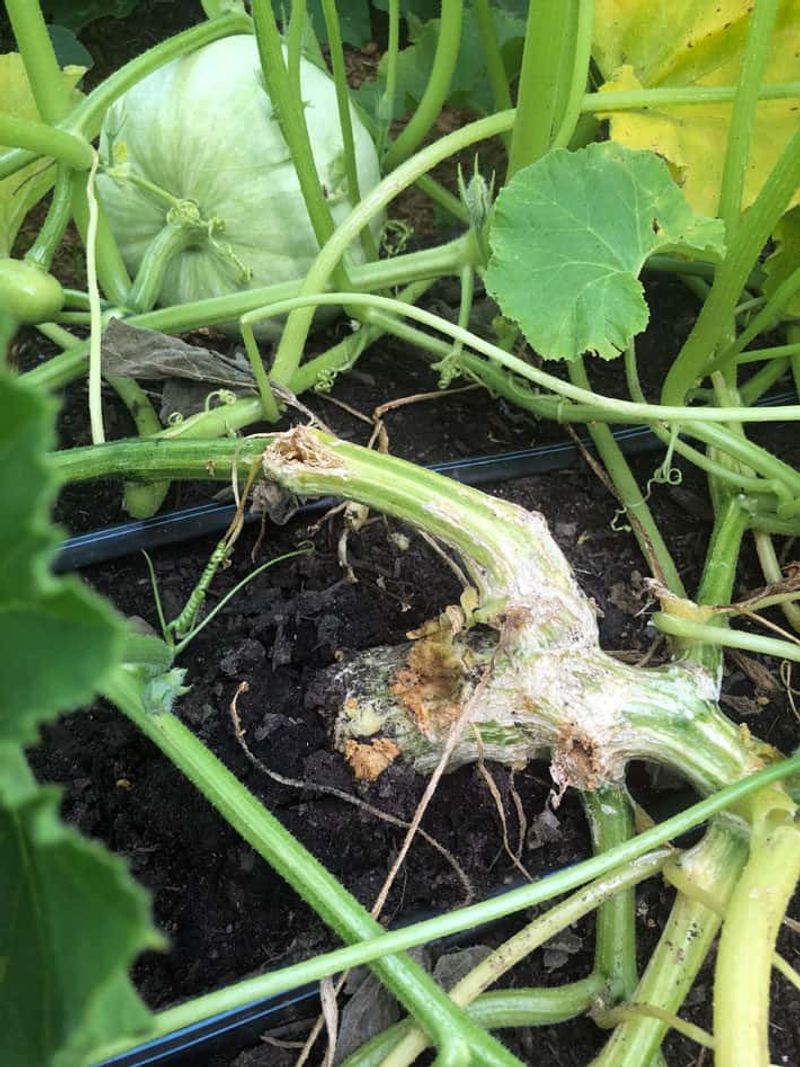
Before assuming heat stress or drought, get down and look at the lower six inches of the stem and the crown. You are searching for small entry holes, usually round or slightly ragged, where something bored in from outside.
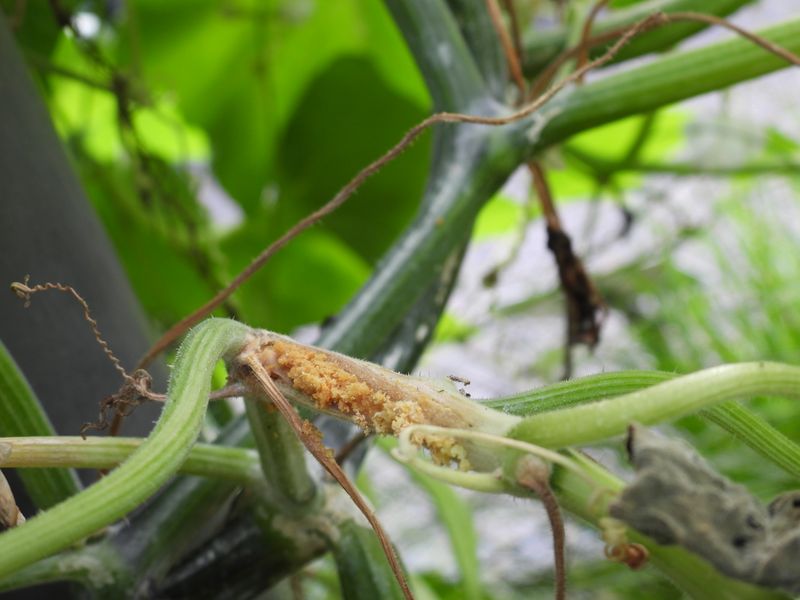
Around those holes, look for frass: a wet, sawdust-like material that ranges from orange to yellow-green. That frass is a combination of plant tissue and larval waste pushed outward as a larva tunnels deeper, and its presence on the outside of the stem is one of the most useful field clues a gardener can find without cutting anything open.
Soft or spongy stem tissue near the crown, or a stem that appears split or water-soaked, also points toward internal damage. Texas A&M’s guide to the southwestern squash vine borer describes larvae burrowing into stems and producing frass as a characteristic sign of their presence.
When the leaves of an otherwise unremarkable-looking plant have wilted with no obvious surface damage, no fungal lesions, and no other clear explanation, the combination of frass and entry holes makes squash vine borers a reasonable working hypothesis.
A working hypothesis is exactly what it remains at this stage. Frass and holes are suggestive, not conclusive.
Your next step is to compare what you see against other possible causes before deciding whether to cut into the stem or remove the plant entirely.
The unseen larva can interrupt the plant’s plumbing
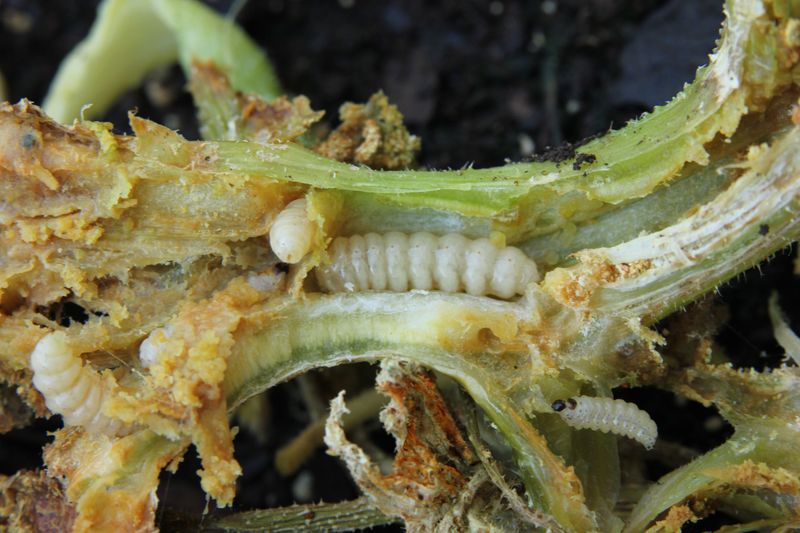
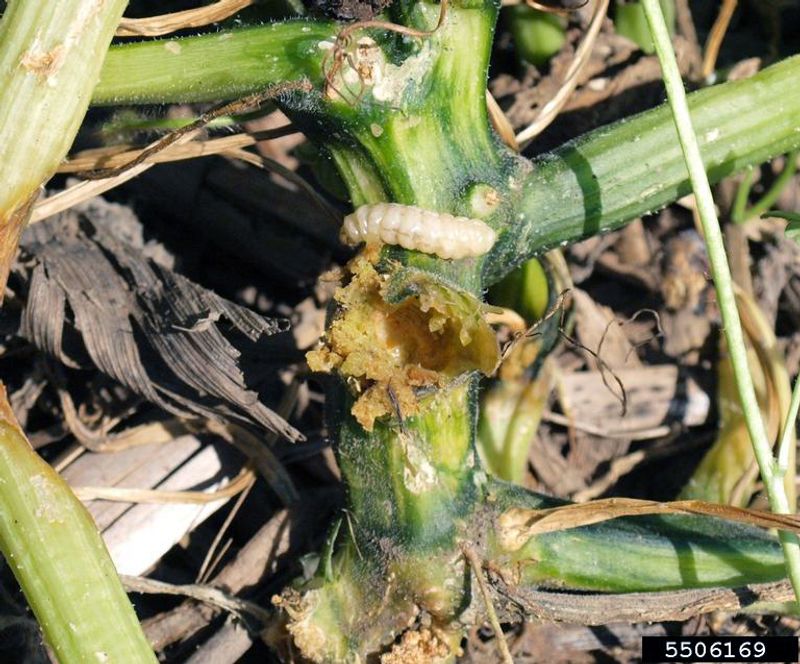
Once a squash vine borer larva hatches from an egg laid on the stem or at the base of the plant, it does not stay on the surface where you might notice it. It bores inward almost immediately, heading toward the water- and nutrient-conducting tissues that keep the plant alive.
The tunneling produces frass and destroys the vascular channels the plant depends on to move water from the roots to the leaves above.
That destruction does not always produce a sudden, dramatic collapse. A plant with limited larval damage may look slightly stressed for several days before anything alarming happens.
What makes Central Texas summers particularly unforgiving is that extreme August heat and uneven irrigation leave a damaged stem with almost no margin. Texas A&M’s cucurbit problem-solver notes that infested mature plants may begin wilting under only mild stress because so little conductive tissue remains functional.
The heat does not cause the collapse by itself; it simply removes the buffer that was masking damage already done.
Texas gardeners should also set aside any expectation of a single, predictable pest season. Texas A&M reports at least two squash vine borer species in the state, including Melittia calabazaMelittia cucurbitae and , and notes there are probably two broods in Texas.
That means adult moths may be active across a broader window than gardeners in other regions expect, and a collapse in August does not confirm that the infestation began in August.
The adult that lays the eggs is a moth, not a wasp, though it mimics one convincingly with its black-and-orange coloring and clear hind wings. Seeing a wasp-like insect near your squash does not confirm the diagnosis; the adult is easy to misidentify, and many other insects visit squash plants for legitimate reasons.
Confirm the cause before cutting into the stem
External signs point you in a direction, but they do not close the case. Before making any cut in the stem, work through the visible evidence one more time.
Entry holes and frass are suggestive of squash vine borers; a stem that looks clean on the outside but has soft, discolored tissue may point somewhere else entirely.
Cucurbit yellow vine decline deserves serious attention in the Texas region. Oklahoma State’s yellow vine resource describes a bacterial disease transmitted by squash bugs that can cause cucurbit plants to collapse rapidly, sometimes without the obvious yellowing a gardener might expect.
A 2025 Oklahoma State pest alert on reemergent cucurbit disease noted its continued relevance in the region. If you find honey-colored or tan discoloration inside the crown tissue rather than a larva, yellow vine decline becomes a stronger candidate than squash vine borer.
Bacterial wilt, spread by cucumber beetles, can also cause rapid collapse. Root diseases and stem injuries from cultivation tools are additional possibilities.
Oklahoma State’s squash bug guide clarifies that squash bugs can cause wilting, particularly in young or stressed plants, but generally do not kill plants overnight. If you see clusters of bronze-colored eggs on leaf undersides or adult squash bugs feeding near the crown, that changes your diagnosis.
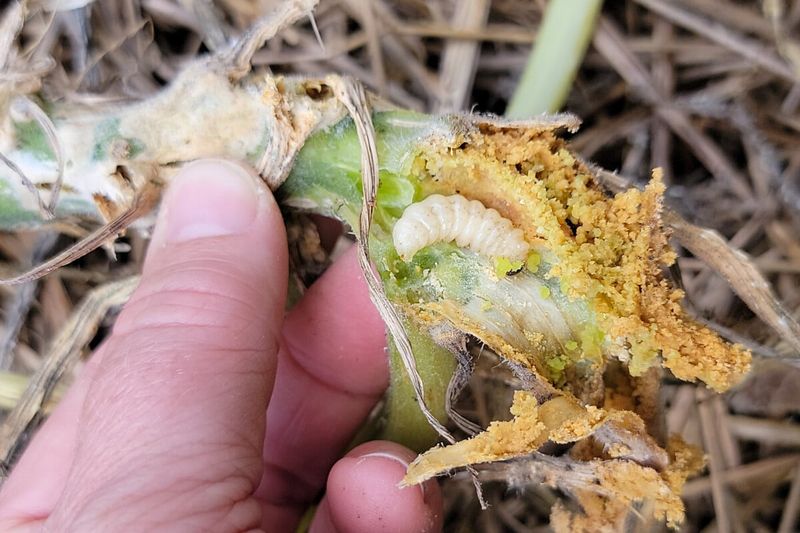
When external evidence makes squash vine borers the most likely explanation and the plant still has green, viable tissue, a careful lengthwise incision near the crown is a reasonable next step. University of Minnesota Extension’s squash vine borer guide recommends looking for a white, grub-like larva inside the stem after cutting.
Make the incision as shallow as possible; cutting into the stem adds its own damage to a plant already under stress. If no larva appears and the internal tissue looks healthy, the collapse likely has a different cause, and further investigation should focus on roots, crown tissue color, and pest activity elsewhere on the plant.
Rescue is possible, but the plant may not recover
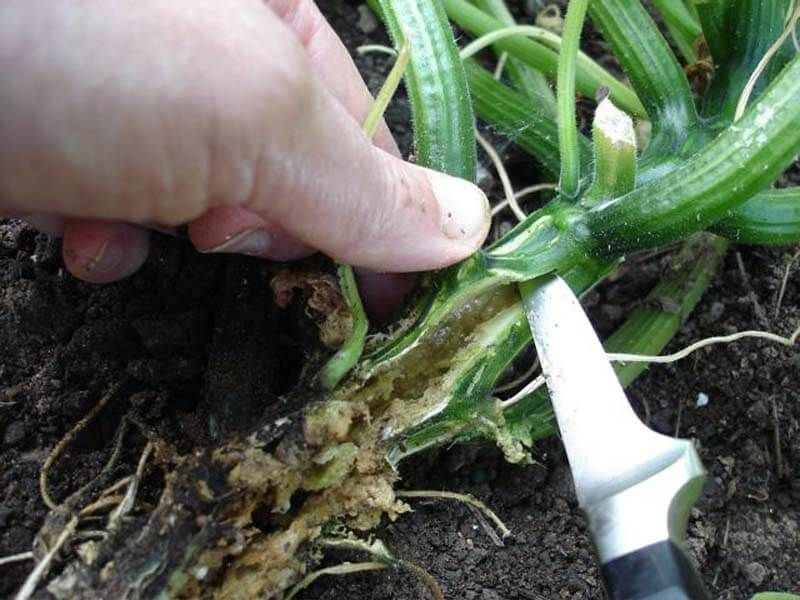
Locating a larva inside the stem is not the end of the plant’s story, but it is the moment to be realistic about what a rescue attempt can and cannot accomplish. The goal is straightforward: remove or kill the larva, then give the plant a chance to form new roots along the buried stem tissue.
After extracting the larva, cover the cut section of stem with several inches of moist soil and keep that area consistently watered over the following week. New roots can sometimes develop along the buried stem, allowing the plant to partially bypass the damaged section.
University of Minnesota Extension cautions plainly that the plant may not survive this process. A stem that has been tunneled through extensively has lost most of its structural and vascular integrity, and no amount of careful aftercare reverses that.
Treat the attempt as a reasonable effort, not a guaranteed fix.
When the plant is clearly dead, or when the stem damage is so extensive that recovery looks implausible, the right move is to remove the plant promptly and destroy it. Do not leave it in the garden bed or add it to a compost pile.
Larvae eventually exit the stem and burrow into nearby soil to pupate, so removing the plant before they complete that journey can reduce the number of adults that emerge to lay eggs on your next crop.
That said, prompt removal cannot reliably stop pupation once larvae have already entered the surrounding soil. Texas A&M’s southwestern squash vine borer page notes that larvae leave the host plant to pupate in soil, which is why sanitation alone is not a complete solution.
Removing dead plants reduces future pressure without eliminating it, and that distinction matters when you are planning the next season’s approach.
Use row covers before flowers need pollinators
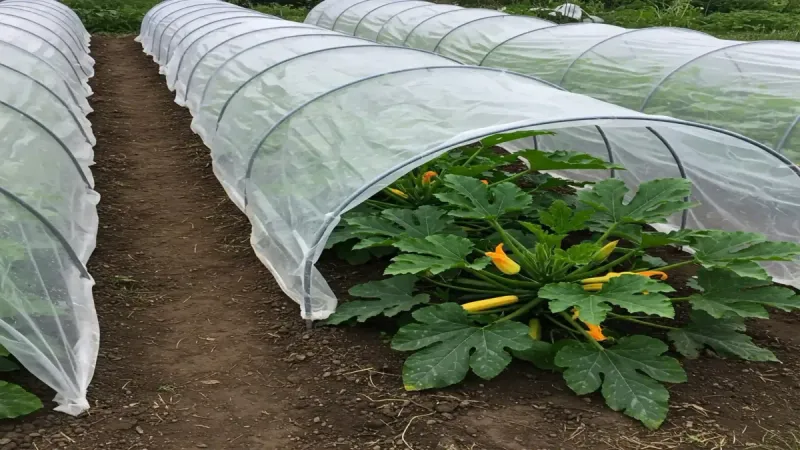
Protecting the next planting starts well before you see any sign of adult moths. Row covers made from lightweight floating fabric can physically block adult squash vine borer moths from reaching the stems and crowns where they lay their eggs.
The key is installation timing: covers need to go on before adults are active in your area, and they need to be secured tightly at the edges so moths cannot crawl underneath.
That second point deserves emphasis. A loosely draped cover with gaps at the soil line offers much less protection than one pinned down with soil, staples, or weights along every edge.
Adults are persistent, and any gap is an opportunity. University of Minnesota Extension’s squash vine borer resource recommends removing covers or otherwise providing pollinator access once flowers open, because squash depends on insect pollination and a covered plant in full bloom will set little or no fruit.
There is a less obvious risk with row covers that Central Texas gardeners should think through carefully. If squash vine borer pupae overwintered in the soil beneath the bed where you grew cucurbits last year, placing a cover over that same bed can trap emerging adults inside with your new transplants.
The cover that was meant to exclude pests instead creates a protected environment for them. Rotating your cucurbit bed to a different location before installing row covers makes the exclusion strategy far more reliable.
Where rotation is not possible, be aware that the soil beneath the cover may harbor pupae from the previous season.
Row covers are a genuinely useful tool when applied correctly and removed at the right time. They work best as part of a broader strategy that includes scouting, rotation, and sanitation, rather than as a standalone fix that removes the need to monitor the rest of the garden.
Plan timing, crop choice, and cleanup around local conditions
Adjusting when and what you plant can reduce how much pressure squash vine borers put on your garden, though no single calendar rule applies across all of Central Texas. In some regions, a later summer planting of squash may allow young plants to develop after the main adult flight period has passed.
Texas A&M AgriLife Extension in Williamson County has discussed squash vine borer timing in the context of local conditions, and Texas A&M’s statewide borer page describes a longer, more variable activity pattern for Texas than gardeners in northern states typically encounter. Borrowing a planting date from a Minnesota or Oklahoma guide and applying it directly to the Austin metro area or the Hill Country is not a reliable strategy.
Sanitation and rotation work together as a longer-term pressure-reduction approach. When a plant dies from borer damage, removing it promptly and destroying it, rather than leaving it to decompose in the bed, can reduce the number of larvae that successfully exit the stem and pupate nearby.
University of Minnesota Extension recommends crop rotation specifically to avoid repeatedly providing host plants in soil where pupae may be overwintering. Moving your cucurbit bed even a short distance from its previous location can interrupt that cycle.
Crop selection is another lever worth considering. University of Minnesota Extension’s common vegetable insects guide notes that cucumbers, melons, watermelons, and some Cucurbita moschata varieties, such as butternut squash, tend to be less susceptible to squash vine borers than summer squash.
Less susceptible is not the same as immune. A butternut planted into heavily infested soil with no other management steps in place can still sustain damage, but mixing in less-vulnerable cucurbits can reduce the overall risk profile of your summer garden.
None of these steps eliminates squash vine borers from a Central Texas garden. Used together, they lower the odds that a single pest pressure event wipes out your entire cucurbit planting at once.
Use pesticides only when timing and the label support them
Reaching for an insecticide after you already have a wilted plant is usually too late to help that plant. Once larvae have bored into the stem, a foliar spray cannot reliably reach them, and the stem damage is already done.
The practical window for insecticide use, if you choose to pursue that option, is preventive: applications timed to contact newly hatched larvae before they enter the stem, during the period when adult moths are actively laying eggs.
Before purchasing or applying any product, the current label is the controlling document. The EPA’s introduction to pesticide labels explains that the label is a legally enforceable document, and EPA pesticide registration means that product formulations and registrations change over time.
A rate or product name from a publication printed several years ago may not reflect what is currently registered for home vegetable garden use in Texas. Check that the current label lists squash as the crop, squash vine borer or the relevant pest category, your application site, and the required harvest interval.
Squash flowers complicate the timing considerably. Squash depends on bees and other pollinators to set fruit, and many insecticides carry pollinator restrictions that prohibit or limit applications when blooms are present.
EPA pollinator protection guidance describes the kinds of label restrictions that apply to many registered products. University of Minnesota Extension’s borer guide cautions against casual spray applications during flowering specifically because of pollinator risk.
Applying a product before flowers open, or strictly following any label-specified timing restrictions around bloom, is not optional; it is a condition of legal and responsible use.
Insecticides are one tool in a broader management approach, not the first response to a wilted plant. Scouting, exclusion, rotation, and sanitation reduce pressure before a spray decision becomes necessary.
Treat overnight collapse as a signal to investigate
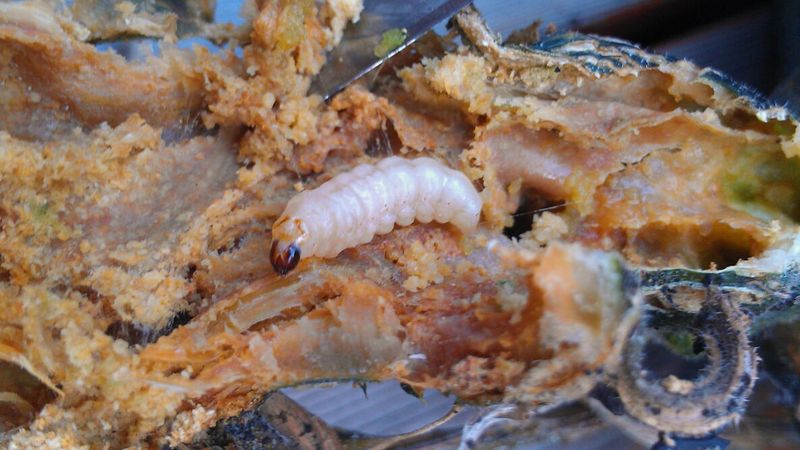
A squash plant that collapses between evening and morning deserves a careful look before you draw any conclusions. Start at the crown: check for entry holes, frass, and soft or split stem tissue.
If those signs are present and the plant retains viable green growth, a careful stem incision may reveal a larva worth removing. If the internal tissue shows honey-colored discoloration and no larva, cucurbit yellow vine decline or another cause deserves equal attention.
A wasp-like insect seen near the plants, or an August date on the calendar, does not confirm squash vine borers as the culprit. Texas carries at least two related borer species with a variable activity pattern, and multiple other problems can produce an identical symptom.
Remove dead plants promptly to reduce future larval pressure, then plan the next crop around scouting, properly timed and secured row covers, bed rotation, and locally appropriate planting windows.
Any pesticide decision should follow the current product label and account for pollinator restrictions, as EPA pollinator protection guidance outlines. Good management here means protecting pollinators and your future harvest at the same time.
A collapsed squash plant is a frustrating loss, but it is also the most specific clue your garden will give you about what to do differently next season. University of Minnesota Extension’s borer resource puts it well: the gardener who investigates the stem rather than simply pulling the plant walks away with far more useful information for the next planting.