
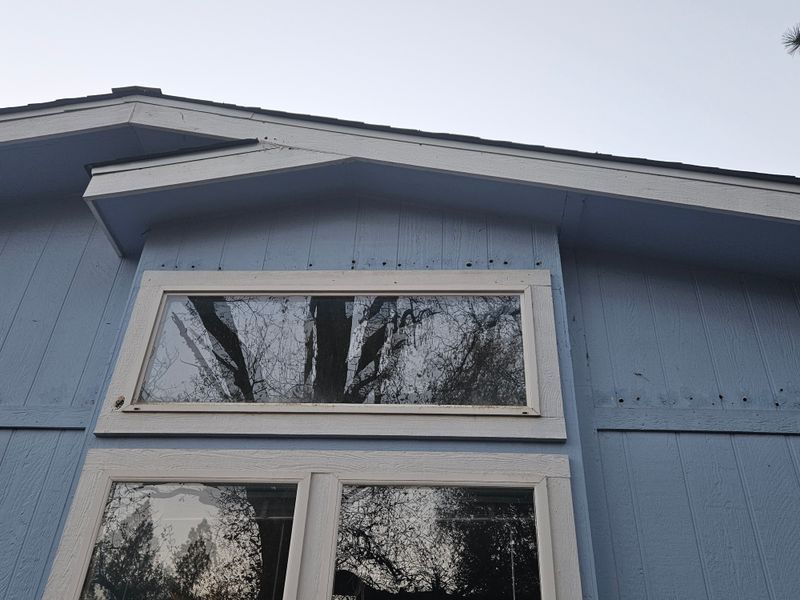
A woodpecker hammering on your siding is telling you something, and the message is that the spot deserves a closer look. Sometimes the bird is after insects in or under the siding, and sometimes it is drumming, checking out a nesting spot, or storing food.
The tapping alone cannot tell you what is behind the boards, so a quick inspection beats guessing. Knowing what to check can save you from needless pest treatments and from harming a bird that is protected.
Why woodpeckers choose houses
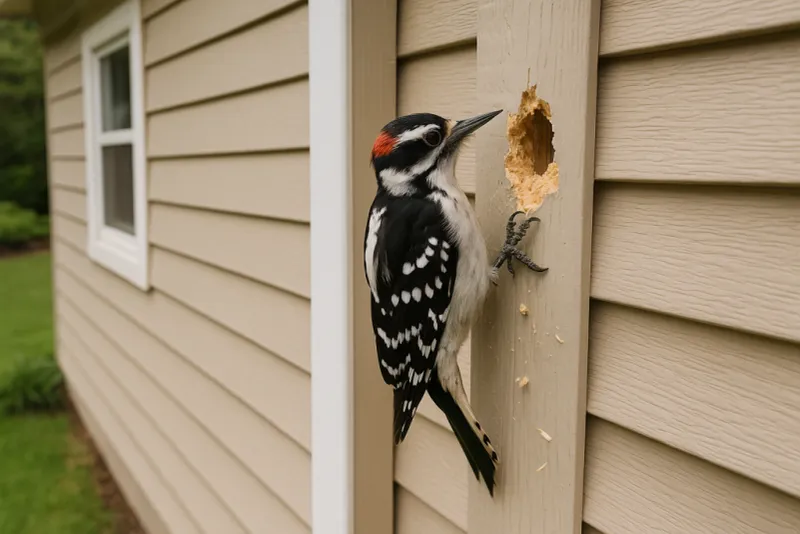
Woodpeckers do not hit a house for just one reason. They may drum to communicate, test a surface, search for food, dig out a nesting cavity, or tuck food away for later, as U.S.
Fish & Wildlife Service guidance describes.
Insects in or beneath the siding are one possible draw. Wood-boring insects or decaying wood can attract a hungry bird, so the tapping is a fair reason to take a look.
Still, a rapid knock cannot show what is inside a wall. Insects living under the siding are not the same as insects living in the interior wall space, and many pecking visits have nothing to do with either.
University of California IPM guidance also lists communication and nesting as common reasons, so treat the sound as a nudge to investigate, not as proof of an infestation.
What different marks can tell you
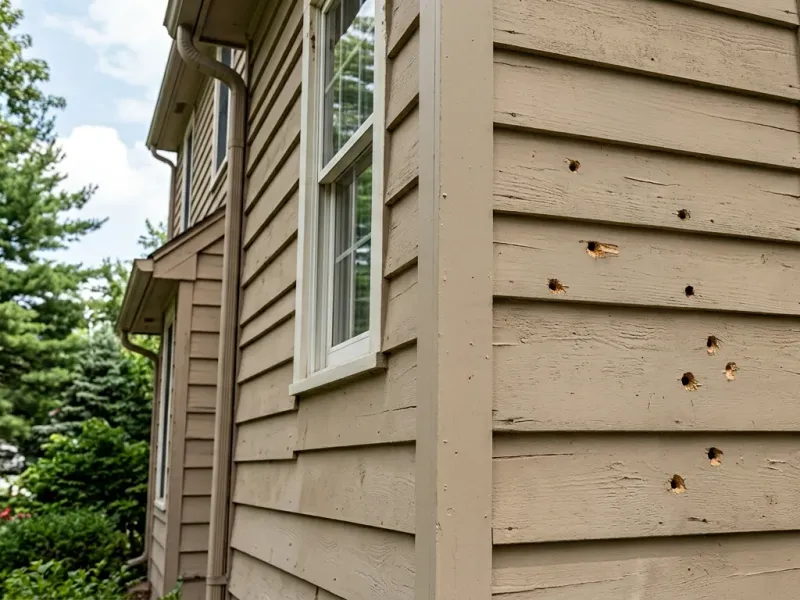
The marks left behind can hint at what the bird was doing. Shallow, repeated dents fit drumming better than anything else, and drumming often sounds far worse than it looks.
Scattered or irregular holes may point to foraging, and Virginia Cooperative Extension links that kind of spread-out damage to a bird hunting for food. A larger, round hole focused in one spot can suggest the bird is testing out a nesting cavity.
UNH Extension separates small dents from bigger foraging holes in a similar way.
Treat these patterns as clues. They help you decide where to look, but they cannot confirm the behavior, name a pest, or tell you how far any damage reaches.
Winter tapping does not settle the question
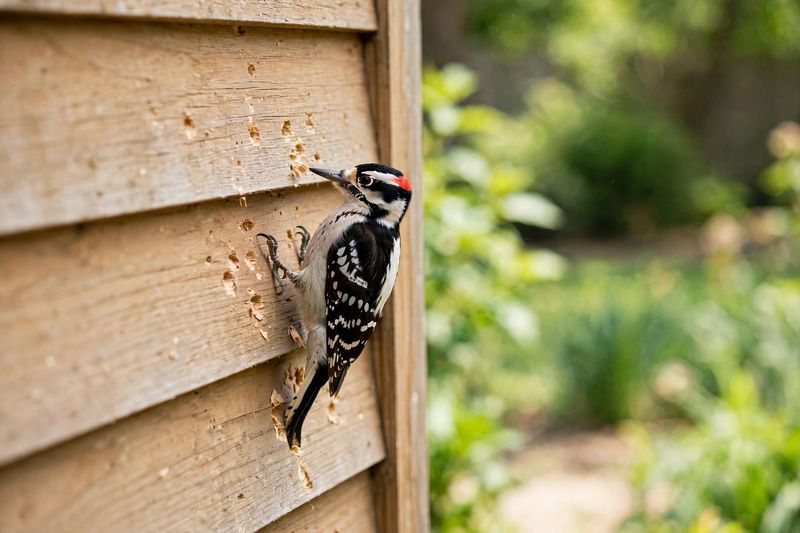
Spring is the busy season for territorial drumming, according to Iowa State Extension and Colorado State University Extension. That does not mean winter is quiet.
UNH Extension documents woodpeckers tapping on houses in cold months too.
So a January knock could be drumming, foraging, or a bird poking around a possible cavity. The calendar cannot tell you which.
It also cannot tell you that damage will spread before spring. Look at the wood itself, and let what you find guide your next step.
Inspect the siding before treating for pests
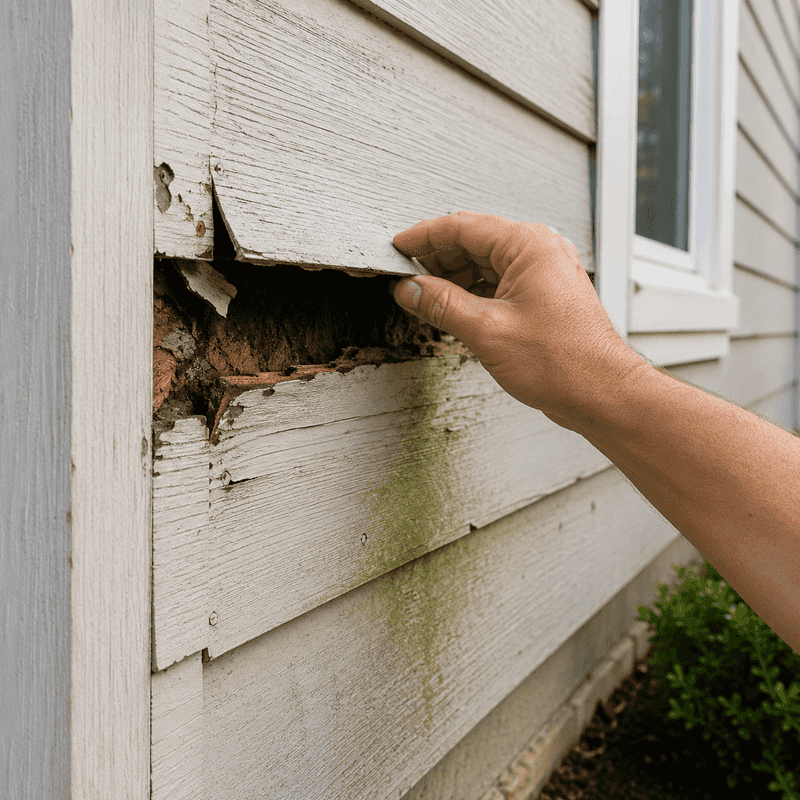
Start by walking up to the damaged area. Check the siding, trim, and nearby wood for holes, soft or rotting spots, and other visible damage.
The U.S. Fish & Wildlife Service suggests inspecting siding for insect damage and notes that rot can attract cavity-nesting birds.
If the holes are scattered and look like foraging, have the wood checked for insects. Virginia Cooperative Extension connects irregular damage with foraging, though it does not point to any one pest.
A flashlight and a gentle probe with a screwdriver can reveal soft wood. Carpenter bees and ants are sometimes mentioned, but the bird’s visit cannot tell you which insect, if any, is present.
Treat for insects or repair rot only once you have confirmed it. The bird’s presence alone is not a diagnosis.
Use barriers carefully and expect limits
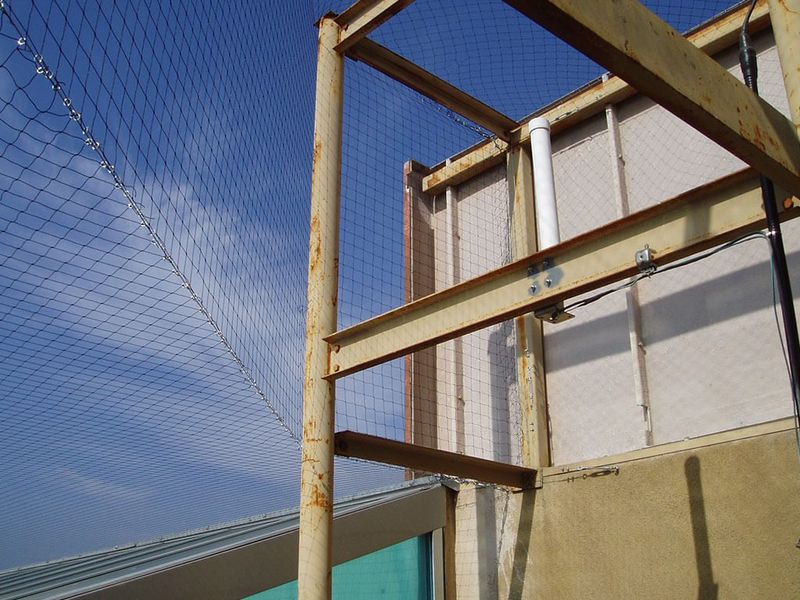
When damage keeps happening, physical exclusion is the practical choice. The U.S.
Fish & Wildlife Service calls bird netting one of the most effective methods, as long as it is taut, maintained, and set up so birds cannot reach the siding through it.
Scare tools are less dependable. Visual deterrents have had inconsistent success, and Iowa State Extension notes birds can get used to sights and sounds.
Feeders and nest boxes are not a sure fix either. UC IPM says they do not consistently solve the problem and may bring in more woodpeckers.
Skip sticky or tactile repellents. UNH Extension warns they can stain siding and foul feathers, making it harder for a bird to fly and stay warm.
Leave a possible active nest alone
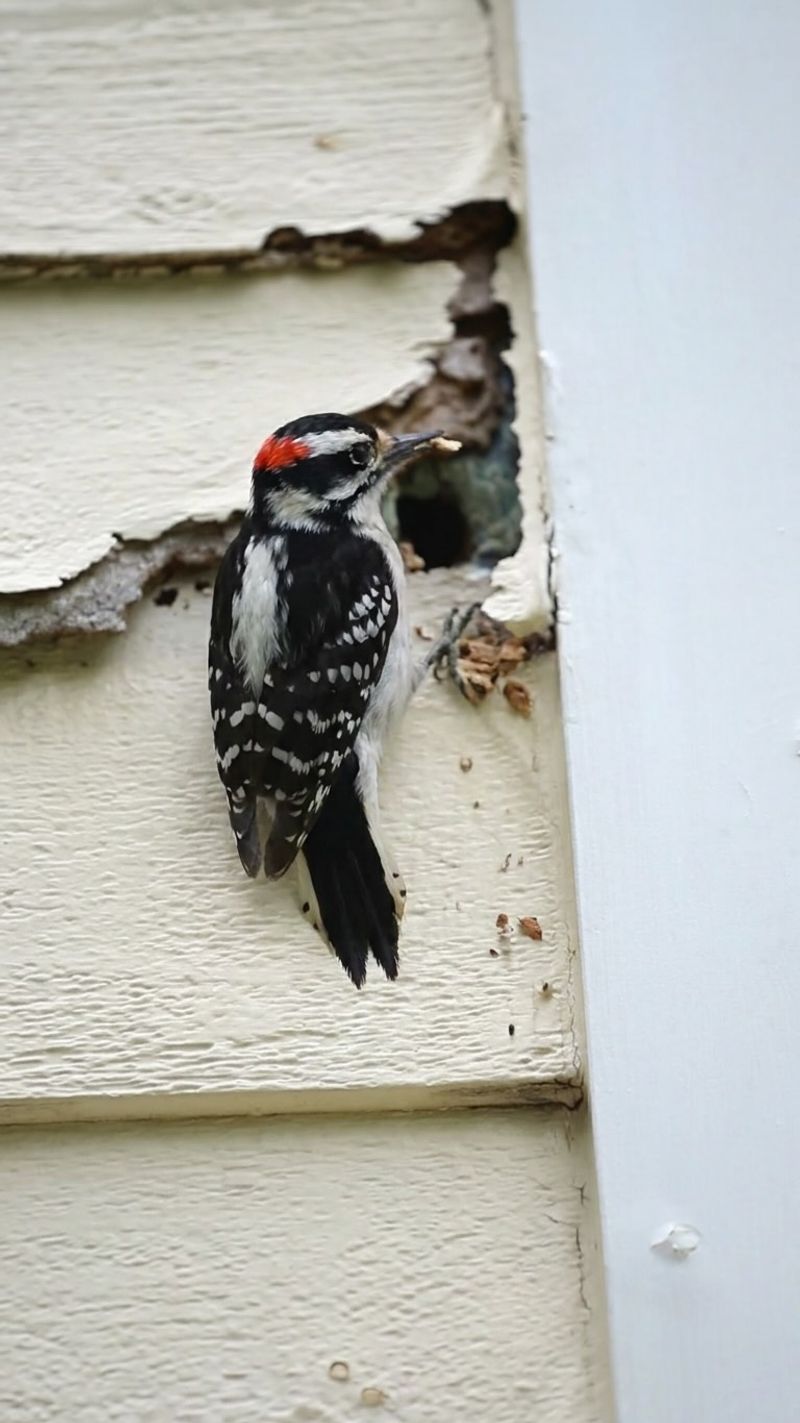
If a hole might hold an in-use nest, do not plug it, fill it, or poke around inside. Woodpeckers are protected, and a U.S.
Fish & Wildlife Service nest memorandum says destroying an in-use migratory-bird nest requires authorization.
Watch from a distance for a few days. Birds going in and out, or chirping from inside, suggest the cavity is in use.
If you are unsure, contact your state wildlife agency or the Fish & Wildlife Service before doing anything.
Harming, trapping, or removing the bird is never the answer, as the agency’s woodpecker guidance makes clear.
The order is simple: inspect first, read the marks cautiously, and pick a response that protects both the house and the bird. A knock on the wall is a question, and you get to answer it calmly.