
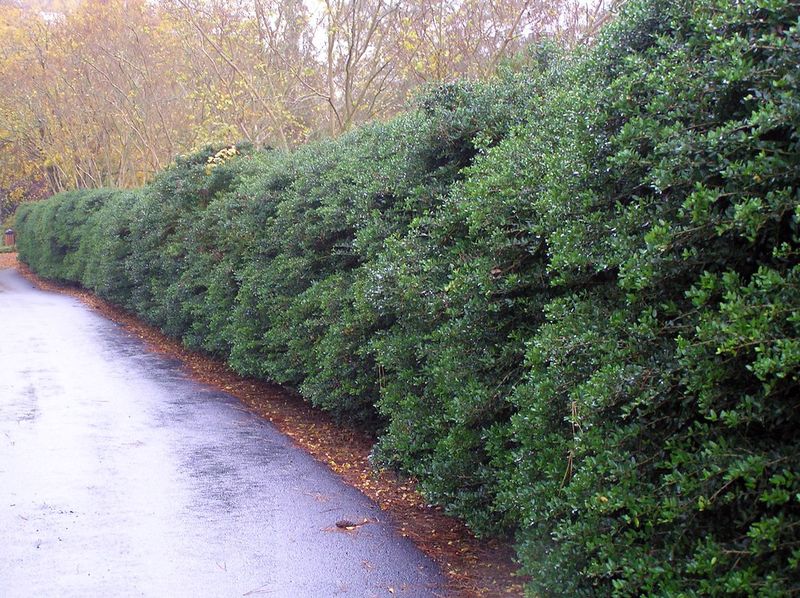
A bare chain-link fence shows your neighbors everything and gives birds nothing. Yaupon holly is a tough Southern native shrub that can be pruned into a thick evergreen screen along a fence line.
Female plants can also carry red berries that birds eat, and the dense leaves give them cover. Before you plant this fall, it helps to know where yaupon fits, which plants to buy, and how much care it takes.
Yaupon can screen a fence, but it will not close overnight
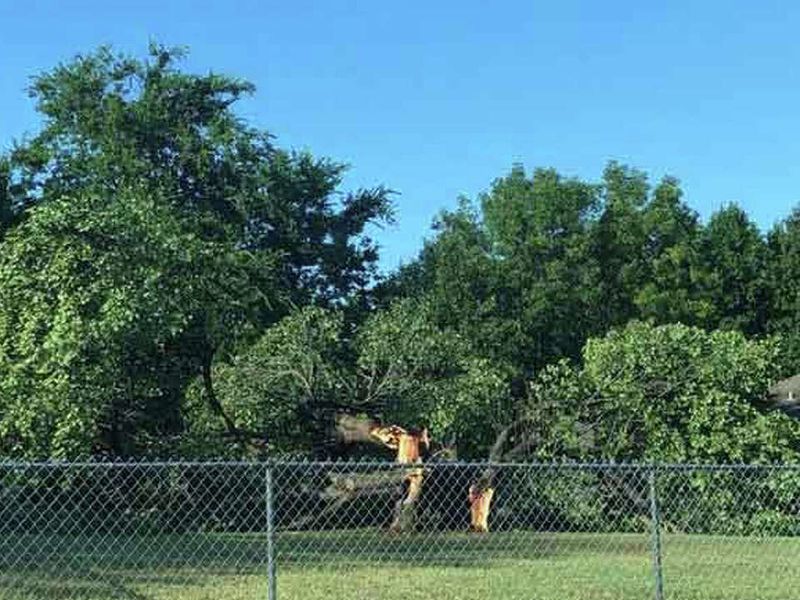
Picture a row of dark green, small-leaved shrubs standing shoulder to shoulder along a fence that used to be see-through. That is the picture yaupon holly (Ilex vomitoria) can paint over time.
North Carolina State Extension describes it as an evergreen that can be sheared into a screen or hedge when planted in masses.
Here is the honest part. Sources describe yaupon as growing at a moderate to moderately fast pace, and none of them promise a finished privacy wall by the next summer.
A young shrub from a one-gallon or three-gallon pot has plenty of daylight showing between it and its neighbors for a while.
Mature size is a separate question from speed. UF/IFAS Extension lists the species as a large shrub or small tree, but that describes where a plant may end up, not how quickly it will get there.
Think of this as a screen you build in stages. In the first seasons you may still see through gaps, so some gardeners tuck in a temporary measure while the shrubs fill out.
Birds may eventually find the cover and fruit useful, but how many visit depends on your neighborhood and your plants, so treat any wildlife benefit as a bonus and not a promise.
Check your region, site, and available space
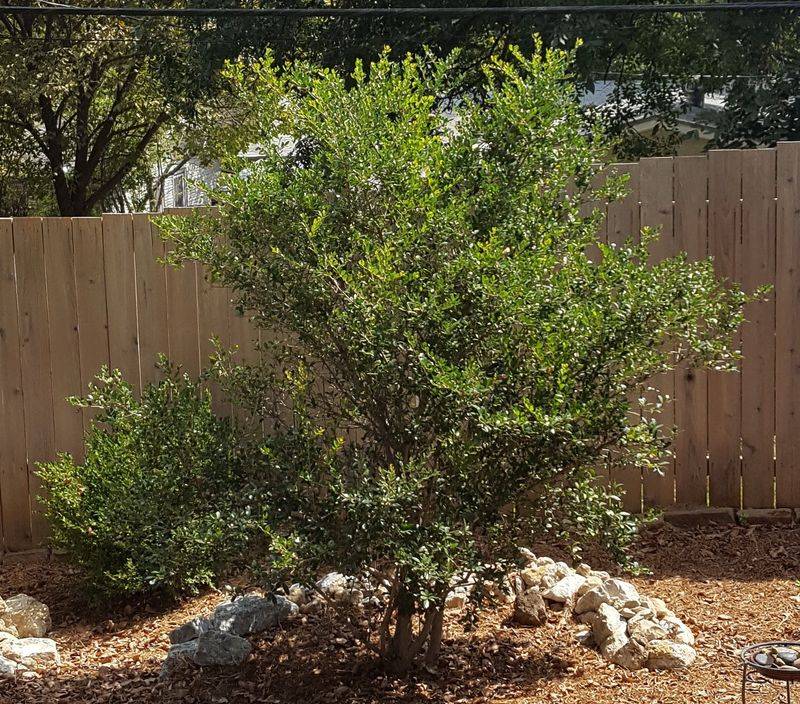
Yaupon is native to the Southeast, but Texas does not welcome it equally everywhere. Texas A&M AgriLife lists it in several ecological regions, including the Pineywoods, Gulf Prairies and Marshes, Post Oak Savannah, Blackland Prairies, South Texas Plains, and Edwards Plateau.
Not every region is on that list, so ask your county Extension office or a local native plant nursery whether it suits your area.
Light and soil are forgiving. The plant tolerates sun or shade and both clay and sandy soils, and it handles drought once it is established.
More sun generally gives a thicker canopy and more fruit, while a shady fence line may produce thin, open growth.
Now measure. North Carolina State Extension gives 10 to 20 feet tall and 8 to 12 feet wide for the species, while UF/IFAS gives 15 to 25 feet tall and 15 to 20 feet wide.
Those are mature-size references, not growth predictions, so look up the expected dimensions of the exact cultivar on the plant tag before you buy.
One more site check matters near the house. N.C.
State Extension rates yaupon as highly flammable and advises against planting it within a home’s defensible space. If your fence runs close to the house in a fire-prone area, keep yaupon farther out.
Choose plants for the screen and berry goals you have
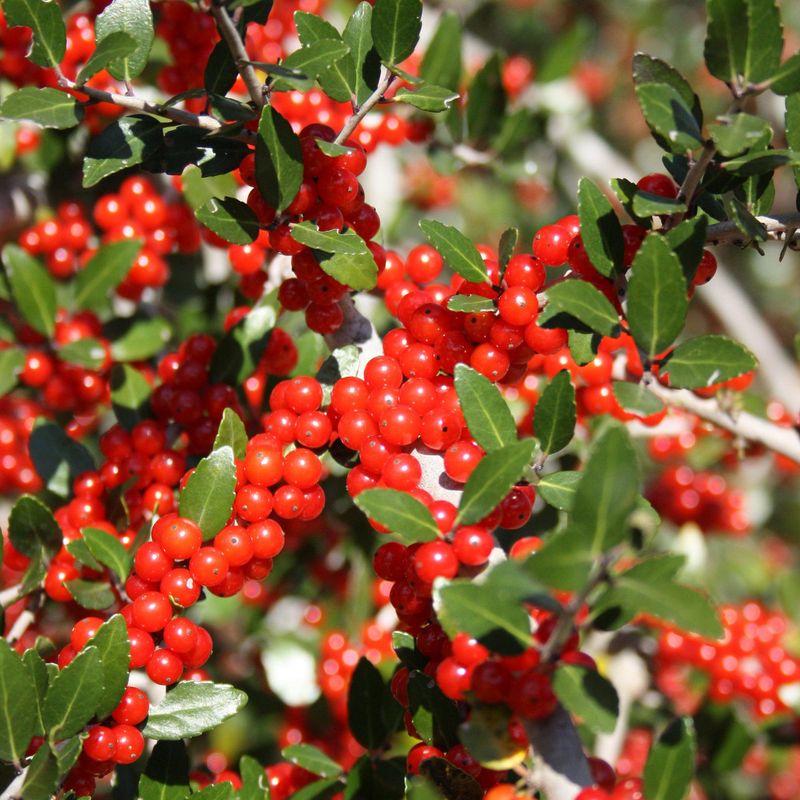
Walk into a nursery and every yaupon can look alike, yet the label matters. Yaupon is dioecious, meaning male and female flowers grow on separate plants.
Only females can set the red fruit, and only if a male yaupon is flowering nearby at the same time.
That means buying a single female and hoping is a gamble. If berries are part of your goal, plan for at least one compatible male in the neighborhood, either in your yard or close enough that pollinators can carry pollen between them.
Cultivar names help. UF/IFAS identifies ‘Nana’ as a male dwarf that does not produce berries, and ‘Pride of Houston’ as a female cultivar with heavy fruit production.
A dwarf male like ‘Nana’ can still be a fine evergreen plant, but it will not feed birds with berries.
If you mainly want a screen, berries are optional, and a male or dwarf selection may work well. If you want fruit, N.C.
State Extension confirms the female-plus-male rule. Ask the nursery how each plant was labeled, and check the cultivar’s mature size so it fits your fence line.
Fall planting begins the screen; it does not finish it
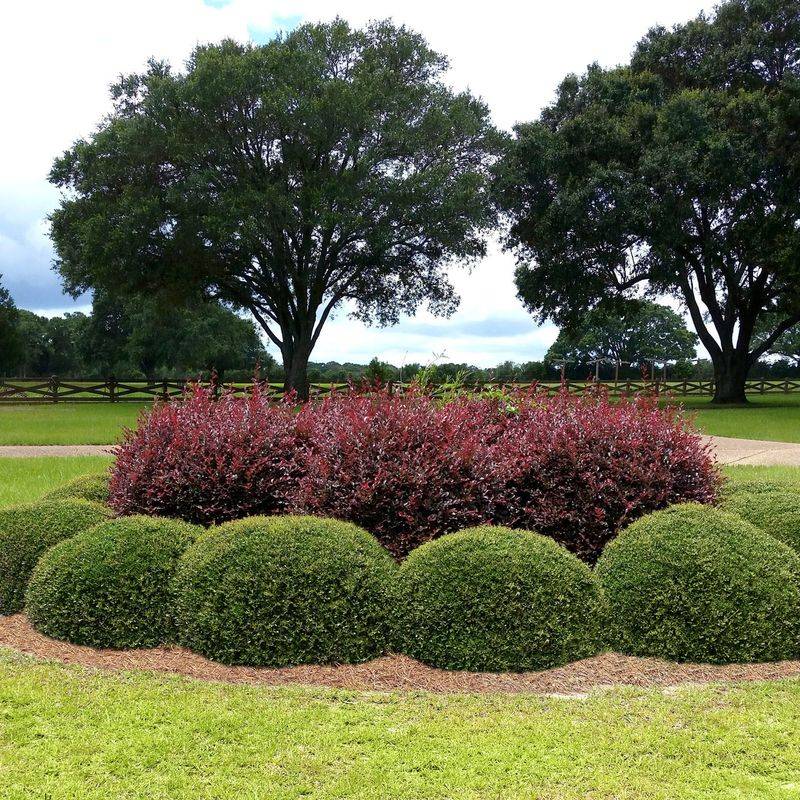
October and November are comfortable for planting in much of the South, and there is a good reason. The USDA fact sheet says transplants may be dug in spring and fall to avoid summer heat stress.
Cooler air and warm soil give roots a chance to settle in before the next Texas summer arrives.
A fall planting is a start, not a finish line. Dig the hole wider than the root ball, keep the top of the root ball level with the soil, and spread a few inches of mulch without piling it against the stems.
Water is where people slip. Yaupon handles drought well once established, as N.C.
State Extension notes, but a shrub that went into the ground last month is not established yet. Check the soil by hand every few days at first and water when the top couple of inches feel dry, especially during dry spells or warm spells that stretch into winter.
Do not expect a solid wall by next summer. You may see new growth and a sturdier plant, and that is the real progress.
How fast the gaps close depends on your soil, sun, rainfall, spacing, and the cultivar you chose.
Pruning shapes the hedge and manages suckers
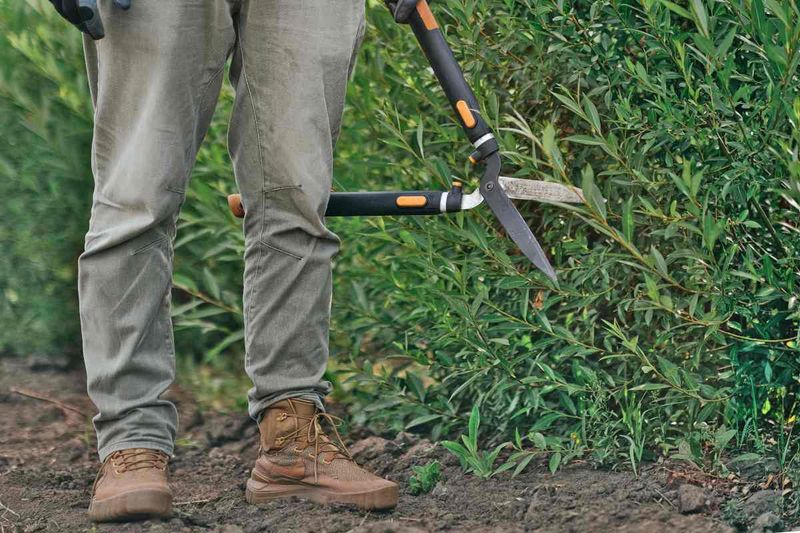
Yaupon takes pruning well, which is the reason it works as a hedge. N.C.
State Extension says mass plantings can be sheared into a screen or hedge. Light, regular trimming of tips encourages the plant to branch, which can make the face of the hedge denser.
A neat fence line does take upkeep, though. Left alone, shrubs can drift into a loose, uneven shape, and the result depends on the cultivar, the light, and how you cut.
Try not to promise yourself one particular shape or density.
Then there are suckers. Yaupon can send up new shoots from its roots and slowly form a thicket.
N.C. State Extension advises removing suckers if that spread is unwanted, and UF/IFAS also flags sprouting from roots and the potential need for repeated pruning in some settings.
In practice, walk your fence line a few times a year. Snip suckers that pop up in the lawn or the neighbor’s yard, cut stray branches back to a side shoot, and step back to check the overall outline.
Wear gloves and sturdy sleeves, since cut stems can be stiff.
Birds may use yaupon’s cover and fruit
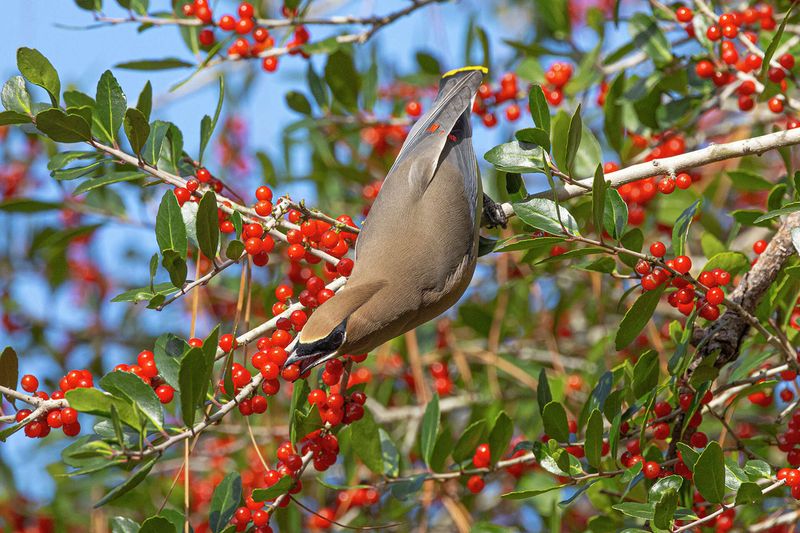
Dense evergreen foliage gives small birds a place to duck out of wind and hide from hawks. Yaupon fruit adds a food source when female plants set berries.
Audubon notes that the berries of female plants usually attract birds in late winter.
Timing is not settled, though. The USDA fact sheet says birds use the berries in fall, so there is no fixed feeding window to count on.
Local conditions, nearby food, and the birds in your area all play a part, and a single hedge will not guarantee a crowd.
Keep wildlife food separate from people food. The same USDA fact sheet warns that ingestion can cause nausea and vomiting, and Texas Parks and Wildlife likewise says not to eat the berries.
Birds eating them says nothing about whether they are safe for children or pets.
If a child or pet swallows berries, call a poison center right away. The National Capital Poison Center explains the concern with holly berries, and Poison Control can advise on next steps.
If berries are a worry in your yard, consider a male or non-fruiting selection.
Plan for a screen that grows over time
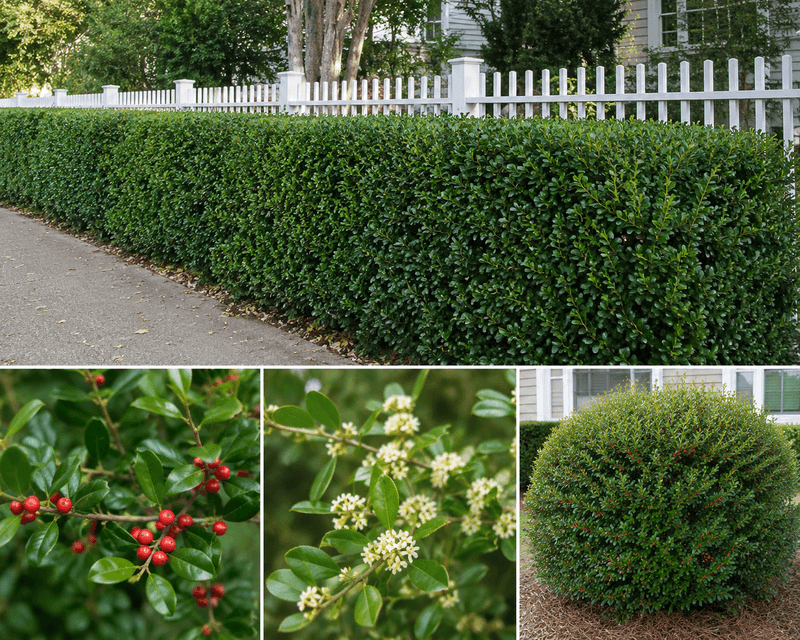
Run through this checklist before you buy: confirm yaupon suits your region and site, check the cultivar’s mature size, and keep it out of a home’s defensible space per N.C. State Extension.
Pick female and male plants if you want berries, and plant in fall with steady watering, as the USDA fact sheet suggests.
Done well, yaupon can become an evergreen fence screen that may also support birds, as Audubon describes. A hedge is a slow project, and the first leafy gap you stop noticing is the sign it is working.