
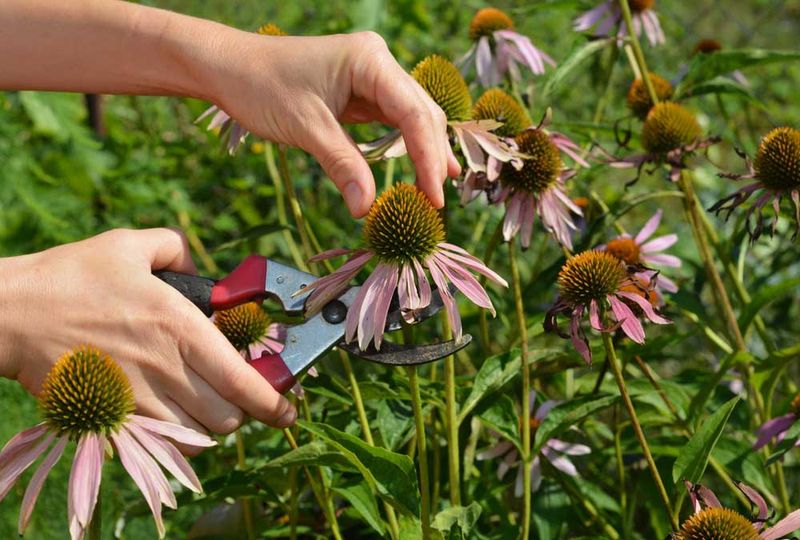
Your purple coneflowers looked great in July, but now some of those spiky centers are sitting on drooping, faded petals while fresh buds wait just below. Many gardeners either ignore spent blooms entirely or grab the shears and cut everything back at once, and neither approach is quite right. There is a simple, selective cut you can make on healthy plants that tidies up the display and may encourage a few more flowers before the season ends. It does not guarantee a wall of color through October, but understanding exactly where to snip, and when to skip the pruning altogether, puts you in charge of what your coneflowers do next.
Deadheading is an option, not a coneflower rescue rule
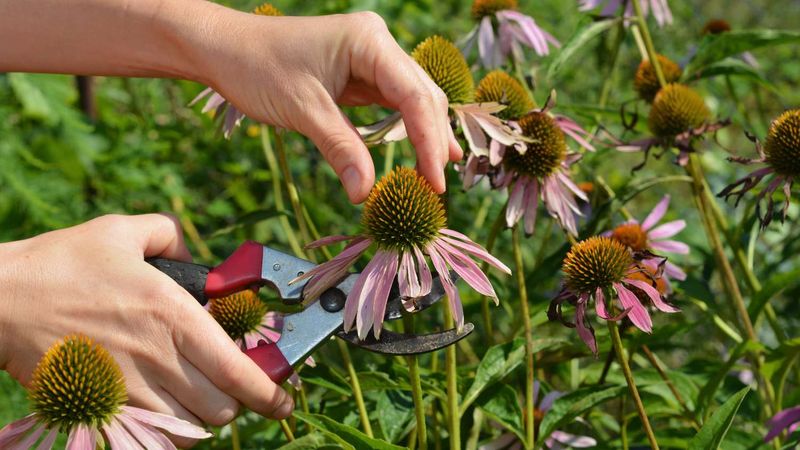
Picture a purple coneflower stem in mid-summer: the top flower has gone papery and its petals are drooping, but two or three tight green buds sit lower on the same stem, waiting to open. That plant is not failing. Removing the spent flower is something a gardener can do, not something the plant requires for survival.
Selective deadheading means removing individual spent flower stems during the growing season, one at a time, while leaving the rest of the plant untouched. Clemson University Extension’s coneflower guide notes that purple coneflower can bloom well without regular deadheading, which makes the technique an optional grooming choice rather than a plant-health requirement.
Cutting every stem back to the ground is a separate operation entirely and is not the recommended move when the goal is encouraging more flowers soon. The focus here is on purple coneflower, Echinacea purpurea, where most of the Extension guidance applies most directly. Results from deadheading do not automatically carry over to every Echinacea species, hybrid, or cultivar on the market, since those plants differ in branching habit, flowering duration, and how readily they produce additional blooms. University of Maryland Extension’s perennial care resource confirms that deadheading is optional and that leaving seed heads has its own legitimate benefits, a tradeoff covered later in this article.
Follow the spent stem to its next healthy growth point
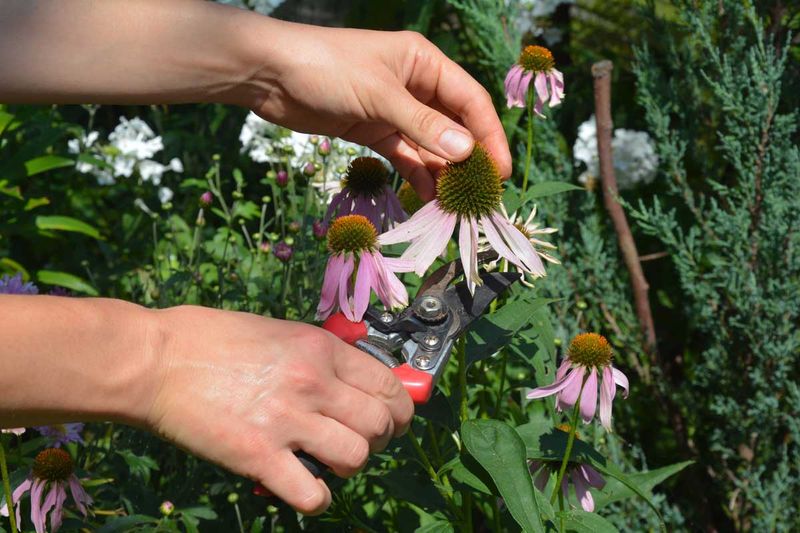
Start at the faded flower and trace the stem downward with your eyes. You are looking for the first sign of active growth below the spent head: a full, healthy leaf, a lateral bud beginning to swell, a secondary flower that has already opened, or a visible branching point where the stem forks.
Make one clean cut just above that growth point. University of Illinois Extension’s guide to perennial pruning methods identifies this cut, removing the spent flower stem back to a healthy leaf, lateral bud, or branching point, as the appropriate in-season approach for coneflowers. Sharp, clean pruners reduce the chance of crushing the stem and make the job faster.
Two things to avoid: leaving a long, bare stub above the cut, and accidentally removing an unopened bud sitting close to where you plan to cut. Penn State Extension’s deadheading guidance specifically advises cutting below the faded flower and just above the first full, healthy leaves or a lateral bud, while preserving nearby buds that have not yet opened. A stub left above a leaf node looks untidy and serves no purpose; cut close enough that the leaf or bud is the clear top of the remaining stem, but not so close that you nick it.
Cut when the flower fades, not while new buds are forming
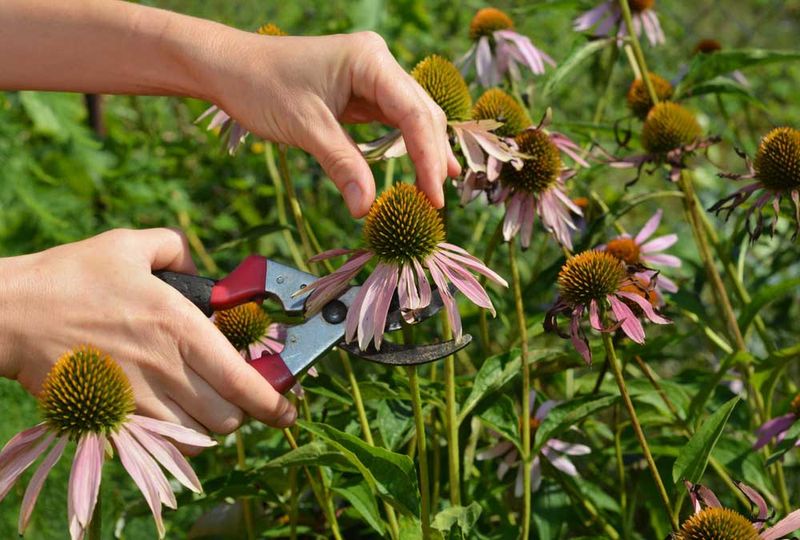
Timing the cut correctly matters as much as placing it correctly. A flower is ready to remove when its petals are visibly declining, drooping, or turning papery and the center cone is darkening. At that stage, the bloom has finished its main job of attracting pollinators and is beginning to set seed.
Penn State Extension recommends deadheading before a mature seed head fully develops if reducing self-seeding or encouraging more flowers is the goal. An unopened bud, by contrast, is firm and tightly closed, often with a greenish or slightly pointed tip, and should never be removed by mistake.
Some gardeners assume that a coneflower stops blooming because all its resources are flowing into seeds. That framing is an oversimplification. Iowa State University Extension’s coneflower guide points out that lower buds may continue to mature with or without the spent flower being removed, which means the plant can keep going on its own schedule. Removing a fading bloom may reduce seed production and may support additional flowering, but it does not force a rebloom response, and a plant under stress is unlikely to reward deadheading with a fresh flush of flowers regardless of timing.
University of Maryland Extension reinforces that the technique is optional and that the plant’s response is not guaranteed.
Do not confuse deadheading with a whole-plant cutback
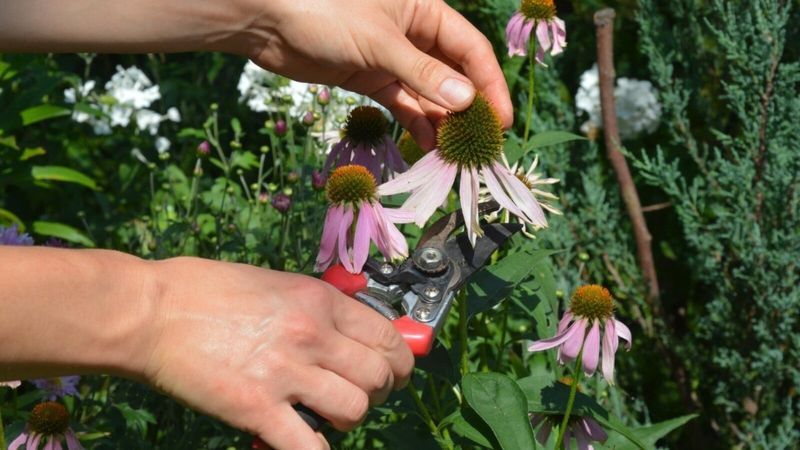
Selective deadheading and cutting back the whole plant look like they belong in the same category, but they serve very different purposes and produce very different results. Deadheading removes one spent flower stem at a time during the bloom season. Cutting back removes large portions of the plant, sometimes all the way to the base, and is a separate operation with its own timing and logic.
University of Illinois Extension is clear that cutting all stems down or shearing the whole clump during the flowering season is not the recommended method when the goal is encouraging additional blooms soon. A whole-plant cutback can serve other purposes, such as managing height, refreshing ragged or damaged foliage, or rejuvenating a clump that has become overgrown, but its effects depend heavily on when it is done, how much is removed, and the condition of the plant at the time.
Healthy coneflower stems generally do not need to be cut to the ground in summer. Clemson University Extension notes that old foliage and stems may be removed in fall, winter, or early spring, and that leaving healthy stems until later can provide wildlife habitat and winter structure. Diseased material is a different matter entirely and requires its own handling, covered in a later section. For now, keep the two operations separate in your mind: one spent flower, one careful cut, above the next healthy growth point.
A selective snip may help, but it cannot promise fall flowers
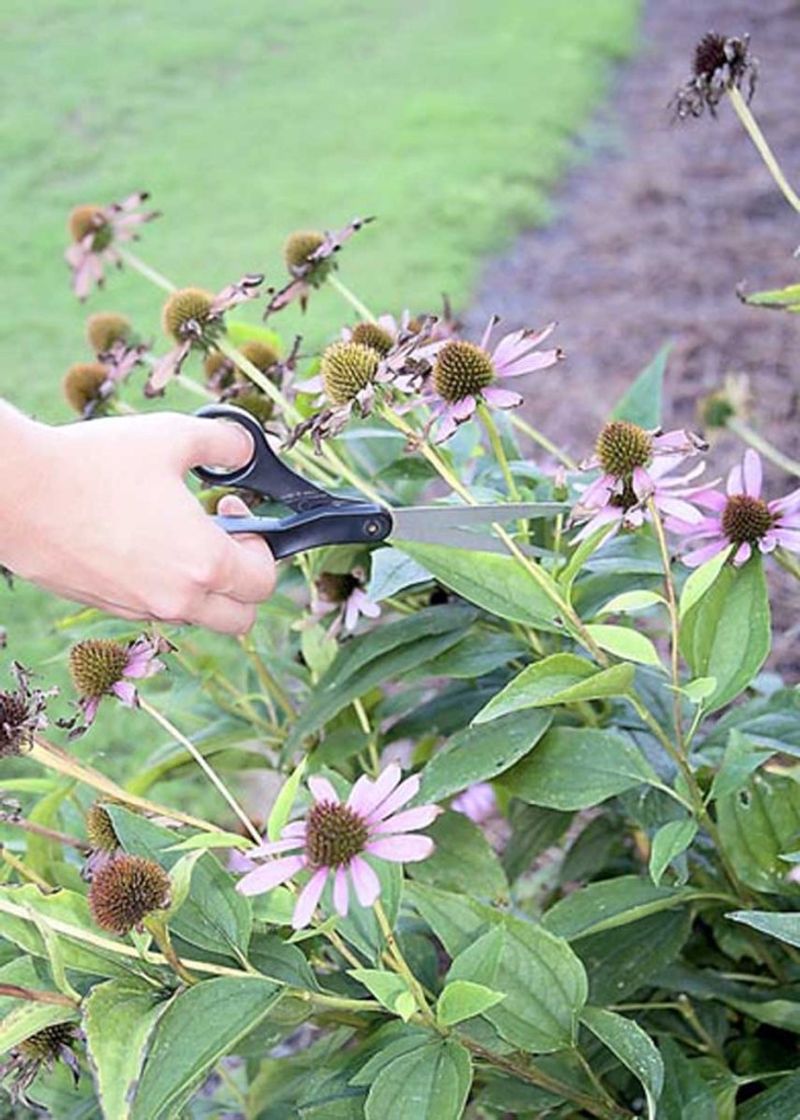
Several university Extension programs describe deadheading as a way to encourage additional or later flowers in coneflowers. The Penn State Arboretum’s coneflower feature states that proper deadheading can encourage blooms into fall, which is the basis for the popular gardening advice that one well-placed cut extends the season.
The full picture is more nuanced. Ohio State University’s three-year Echinacea trial at Secrest Arboretum found no noticeable difference in total bloom period between deadheaded and non-deadheaded plants; lower flower buds matured on their own schedule regardless of whether spent flowers were removed. Those two findings do not cancel each other out. They simply mean the outcome is not predictable for every plant in every garden.
The honest framing is this: selective deadheading is a reasonable, low-stakes technique to try on a healthy coneflower. It may produce a few additional flowers, or the plant may bloom on its own timeline without any help. Results vary by Echinacea species, cultivar, growing conditions, and how late in the season the cut is made. Clemson Extension confirms that purple coneflower commonly continues flowering toward frost, with or without regular deadheading.
Treating the snip as a guaranteed fall-bloom switch sets up an expectation the plant may not meet.
Leave selected seed heads for birds and winter interest
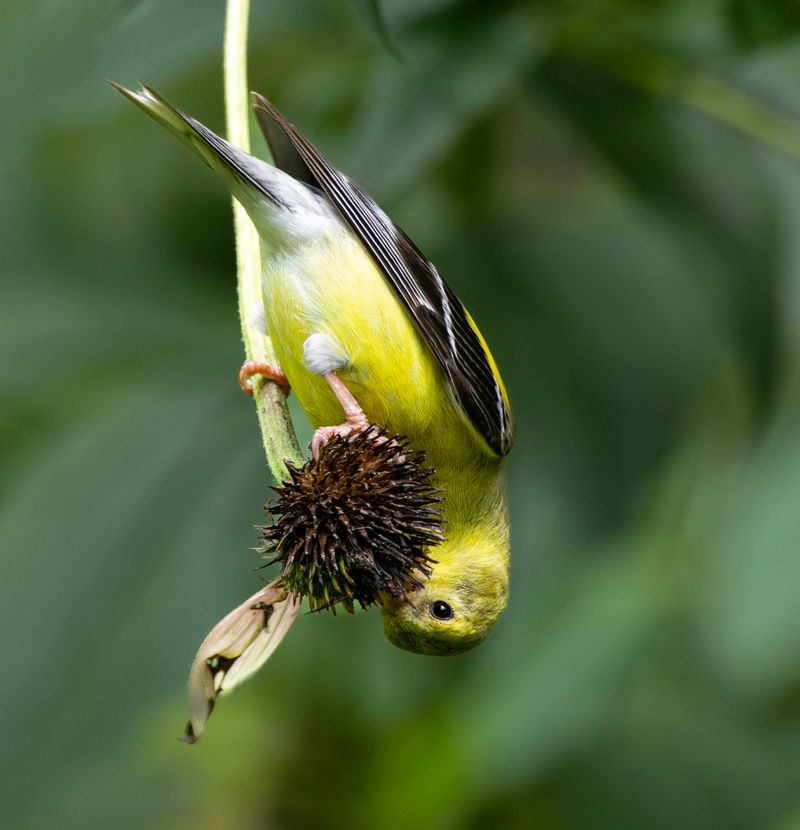
Skipping the pruning shears on some of your coneflowers is not a gardening mistake. Mature seed heads are genuinely useful: goldfinches and other seed-eating birds return to them repeatedly through fall and into winter, pulling seeds from the spiky cones in a way that is easy to watch from a window.
University of Maryland Extension notes that coneflower seed heads provide food for birds and add structural interest to the winter garden, while also acknowledging that leaving them in place increases self-seeding. If volunteers popping up in unexpected spots are a problem in your beds, removing more heads before they fully ripen keeps the population in check. If you want the birds and do not mind a few extra seedlings, leaving the heads through winter costs nothing and adds something.
Cultivar form is worth considering here. Iowa State University Extension points out that cultivars and species differ substantially in seed production and pollinator value. Double-flowered or pom-pom types, which have extra petals where the central cone would normally be, may produce fewer or no viable seeds and can be less accessible to pollinators than single-flowered forms. A practical middle ground is to deadhead the flowers at the front of your planting, where a tidy look matters most, while leaving later-season heads toward the back or edges for birds and winter structure.
That way you get a tidier display up front and some ecological value behind it.
Check growing conditions before blaming the pruning
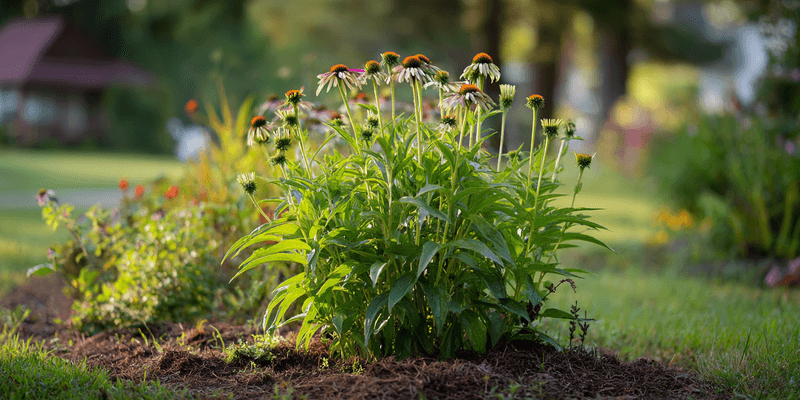
When a coneflower keeps producing few flowers or looks consistently weak even after you have been deadheading faithfully, the pruning technique is probably not the problem. Purple coneflower performs best in full sun with well-drained soil, good air circulation, and enough space so neighboring plants are not crowding the roots or shading the crown.
Clemson Extension’s Echinacea factsheet identifies insufficient light, poor drainage, and overcrowding as common contributors to weak performance, and notes that avoiding those conditions supports better flowering and helps keep foliage dry enough to resist disease. No amount of careful deadheading compensates for a plant sitting in shade, standing in wet soil, or competing with aggressive neighbors for water and nutrients.
Ohio State’s multi-year Echinacea evaluation flagged moisture, heat, light, competition, and nutrient availability as meaningful factors in plant performance across cultivars. Cultivar choice matters too: some varieties are simply shorter-blooming or less vigorous than others, and no pruning strategy changes a cultivar’s genetics. Iowa State Extension reinforces that individual species and cultivars differ in flowering duration and rebloom tendency. A fading flower at the end of summer is also often just normal seasonal aging, not a sign that anything has gone wrong.
Assess the whole plant and its environment before concluding that the cut was to blame.
Recognize when distorted flowers signal a disease problem
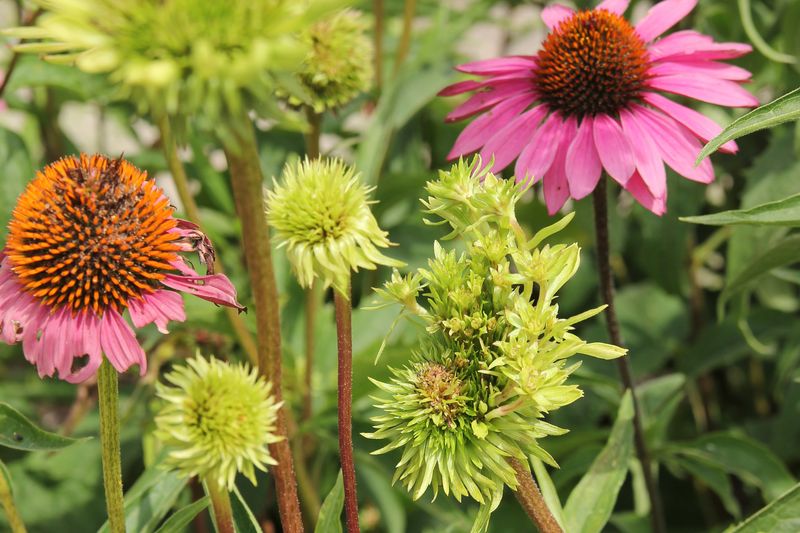
Some coneflower problems look like a pruning issue but are actually a disease signal that requires a completely different response. If you notice flowers that are green instead of purple, petals that are twisted or misshapen, growth that looks like a dense cluster of tiny shoots coming from one point, stunted stems, or overall yellowing of the plant, stop deadheading and take a closer look.
Those symptoms are consistent with aster yellows, a systemic disease caused by a phytoplasma organism spread by leafhoppers. University of Maryland Extension’s aster yellows resource explains that the disease is systemic, meaning it has moved through the entire plant, and that removing individual abnormal flowers will not cure it or stop its spread. The recommended action is to remove and destroy the entire infected plant, following Extension guidance, rather than composting it or leaving it in place where leafhoppers can continue to pick up the pathogen and carry it to healthy plants.
Handling a diseased plant is a separate task from routine deadheading of healthy spent blooms. University of Maryland Extension’s perennial guide notes that removing visibly diseased material and improving sanitation can reduce disease carryover, while healthy stems can be left for wildlife and overwintering insects. The key distinction: normal deadheading is grooming, and disease management is a different category of care that demands a different set of actions.
Choose the cut that matches your garden goal
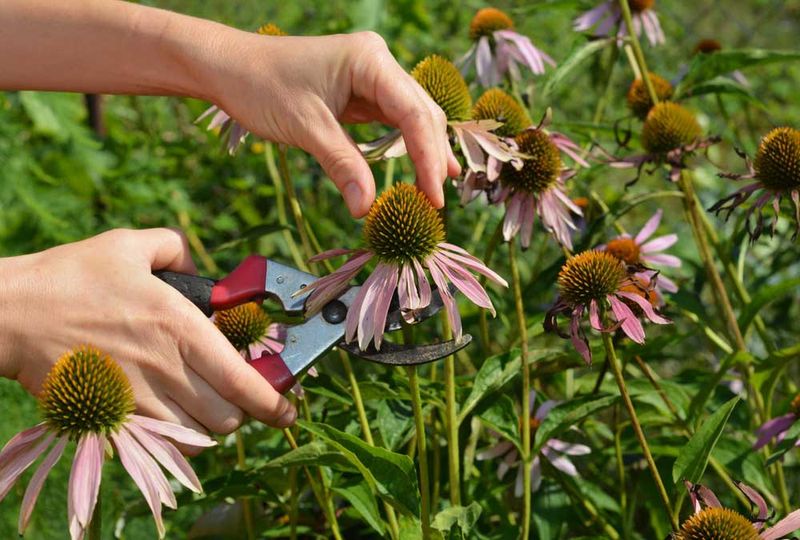
Deciding whether to deadhead comes down to what you want from your coneflowers right now. Remove a spent flower stem above the next healthy leaf, lateral bud, or branching point when you want a tidier bed or when you would like to give the plant a chance at producing additional blooms. Leave selected seed heads when birds, winter structure, or a few volunteer seedlings next season are more valuable to you than a cleaner look.
University of Illinois Extension supports the selective, stem-by-stem approach as the appropriate in-season method for coneflowers, and University of Maryland Extension confirms that neither deadheading nor leaving seed heads is universally correct. Both are reasonable choices depending on your priorities. Healthy coneflowers can thrive without any deadheading at all, and the technique cannot substitute for adequate sun, well-drained soil, proper spacing, or attention to disease symptoms.
Ohio State’s Echinacea trial is a useful reality check: across three years of observation, deadheading did not reliably extend the total bloom period. Treat selective deadheading as an optional experiment worth trying on a healthy plant, not as a guaranteed switch that keeps coneflowers blooming into fall. The best outcome from a well-placed snip is a slightly tidier plant that may surprise you with one more round of color before frost.