
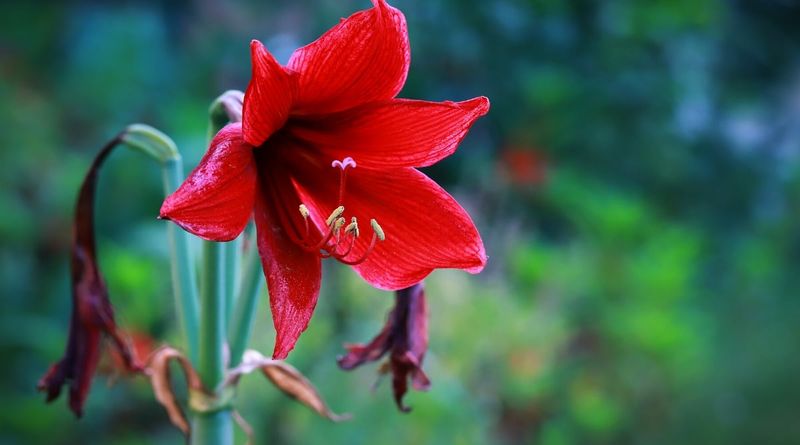
Holiday amaryllis bulbs are one of the easiest ways to bring bright color indoors during the winter, but plenty of Central Texas gardeners end up staring at a pot of leaves with no flower stalk in sight. The most common explanation floating around is that the bulb missed its fall chill, but that diagnosis skips over some important details about how these plants actually work.
Whether your bulb is fresh from the store or a survivor from last season changes everything about why it might not be blooming and what you should do next.
The fall-chill diagnosis needs one important correction
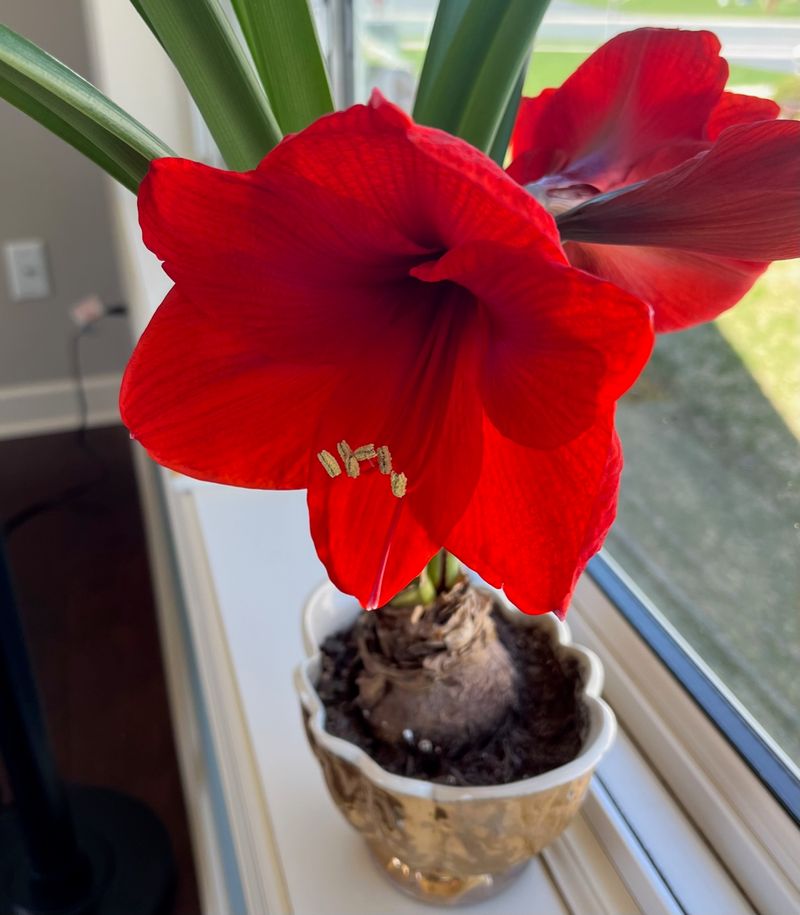
Holiday “amaryllis” bulbs almost always turn out to be Hippeastrum hybrids, a group of plants native primarily to South America. True Amaryllis is a separate genus from South Africa and is far less common in the commercial holiday bulb trade.
Knowing which plant you actually have matters, because the care requirements are not the same, and the popular fall-chill story is built on a misunderstanding of what Hippeastrum needs.
Refrigerator-style chilling is the cold treatment required by tulips, daffodils, hyacinths, and many other hardy spring bulbs. Those plants need weeks of near-freezing temperatures to break dormancy and flower reliably.
Hippeastrum is specifically listed as an exception: University of Wisconsin Extension guidance on forcing bulbs confirms that amaryllis does not require the cold pre-treatment needed by most spring-flowering bulbs, a point echoed by Penn State, Iowa State, Mississippi State, and Colorado State Extension as well.
A cool, dry dormant rest is a different practice entirely. It is used mainly with established, previously flowered Hippeastrum bulbs to help schedule or encourage a new bloom cycle, not to satisfy a hard chilling requirement.
Wisconsin’s Hippeastrum care page and NC State’s Hippeastrum profile both draw this distinction clearly.
Before blaming a skipped fall chill, the more useful first question is whether your bulb is a brand-new purchase or a bulb you saved from a previous season. Those two situations call for completely different diagnoses, and treating them as identical is where most bloom-failure confusion starts.
First determine whether the bulb is new or reblooming
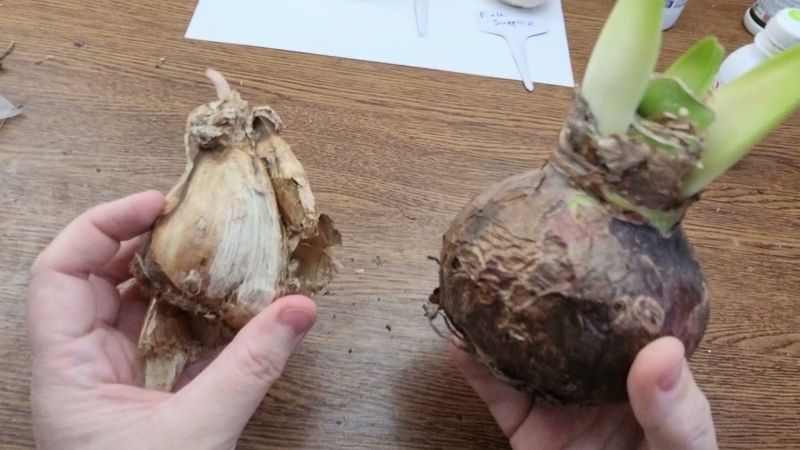
Pick up the bulb and think about where it came from. A firm, large bulb purchased from a garden center, hardware store, or online nursery this season is usually a commercially grown Hippeastrum that was raised to a mature, bloom-ready size and then dried down for shipping.
That bulb arrived in a dormant state already prepared for forcing, and its main needs are proper potting conditions, bright light, and careful watering, not a fall cold treatment it missed before you bought it.
A bulb you saved after it flowered last year is a completely different story. That plant spent energy producing a flower stalk and blooms, and it needs to rebuild its carbohydrate reserves through healthy foliage growth before it can flower again.
Iowa State Extension’s amaryllis bloom troubleshooting page and University of Maryland Extension’s amaryllis care guide both note that a bulb without sufficient stored energy may produce foliage without ever sending up a flower stalk, regardless of what else you do right.
Check the bulb’s size and firmness as well. A soft, shriveled, or very small bulb may be too immature or too depleted to flower this season no matter how carefully it is managed.
Iowa State’s comprehensive amaryllis guide points out that bulb size is directly linked to flowering potential, with larger, well-nourished bulbs far more likely to produce a stalk.
The answer to “why won’t it bloom” genuinely depends on which bulb you have. Start there before looking at any other variable.
New Hippeastrum bulbs need a good start, not refrigerator treatment
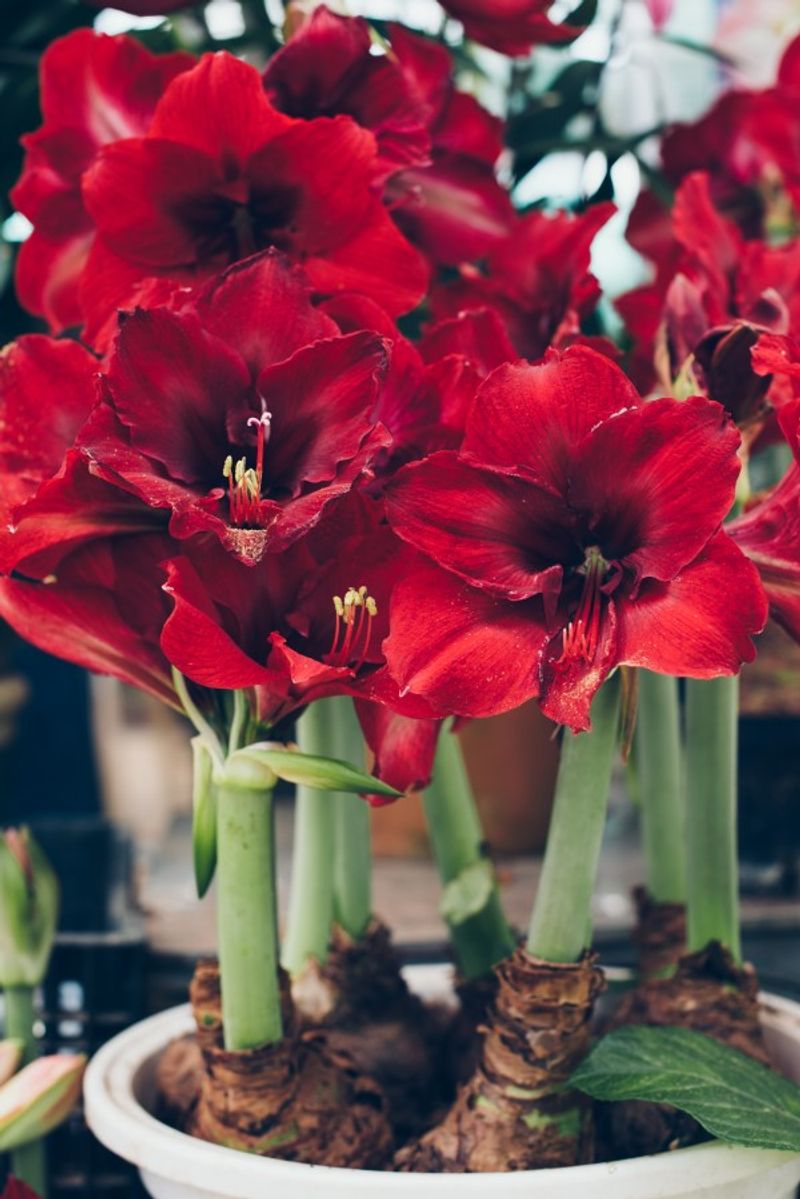
Potting a fresh commercial Hippeastrum bulb correctly does more to determine whether you get flowers than any chilling treatment. Choose a pot only slightly wider than the bulb itself, typically leaving about an inch of space on each side.
A container that is too large holds excess moisture around the roots and raises the risk of rot before the plant even gets started.
Fill the pot with a well-drained potting mix, and position the bulb so that roughly one-third to one-half of it sits above the soil line. Penn State Extension’s guide to forcing flowering bulbs and University of Maryland Extension’s amaryllis care resource both specify this exposure as standard practice.
Burying the bulb too deeply can interfere with stalk emergence and promote neck rot.
Water thoroughly once after potting to settle the mix around the roots, then hold back on additional watering until you see active growth. Mississippi State Extension’s bulb publication cautions that keeping the mix wet before growth appears is one of the most common ways gardeners lose a bulb to root rot before it ever has a chance to bloom.
Once a shoot emerges, you can water more regularly, keeping the mix evenly moist but never soggy.
Bright light is essential from the moment growth appears. Place the pot in your sunniest window and rotate it every few days if the stalk starts leaning toward the light source.
Wisconsin Extension’s Hippeastrum article notes that low light can cause weak, elongated growth that reduces the bulb’s ability to store energy for future flowering cycles.
A newly potted commercial bulb commonly blooms in roughly 6 to 8 weeks, though some sources give a wider range of about 4 to 12 weeks depending on cultivar, bulb condition, and room temperature. Holiday timing should be treated as approximate.
A bulb potted in mid-October may or may not be in full bloom by December 25, and no single technique can guarantee a specific date.
A reblooming bulb must rebuild its reserves before dormancy
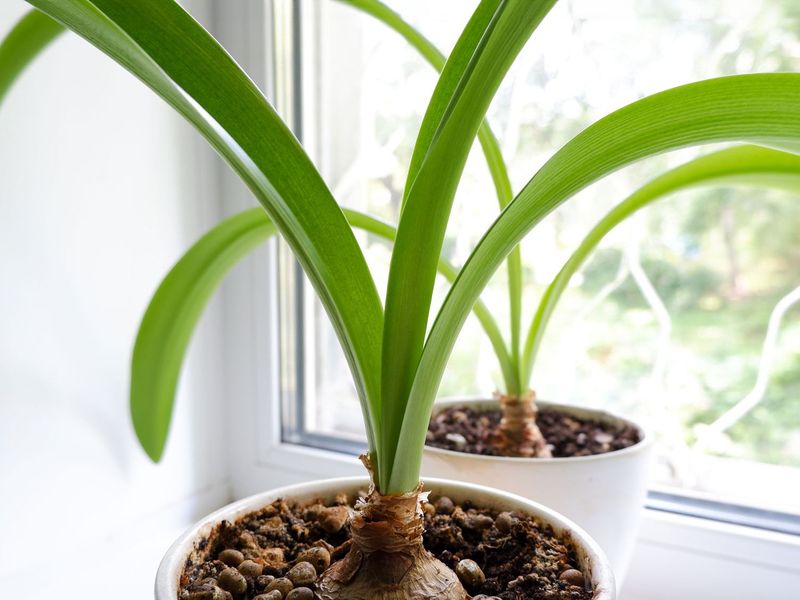
After the flowers fade, the real work of reblooming begins, and it happens in the leaves. The broad, strap-like foliage that follows a bloom cycle is not decorative filler.
It is the plant’s primary tool for capturing sunlight and rebuilding the carbohydrate reserves stored in the bulb. Cut those leaves off early, and you are removing the factory that produces next year’s flowers.
University of Minnesota Extension’s amaryllis page advises keeping the foliage growing through the warm season with adequate light, regular watering, and a balanced fertilizer. Avoid high-nitrogen formulas during this period.
Too much nitrogen pushes leafy growth at the expense of the stored energy the bulb needs to produce a flower stalk later. A balanced fertilizer applied at normal houseplant rates gives the bulb what it needs without tipping the balance toward unproductive leaf mass.
Weak light during the growing season is another quiet way to undermine next year’s bloom. Iowa State Extension’s full amaryllis guide and University of Florida IFAS guidance on amaryllis both connect poor light conditions to reduced flowering potential, because a bulb that cannot photosynthesize efficiently simply cannot store enough energy to support a stalk.
In Central Texas, potted Hippeastrum can spend the warm season outdoors after a gradual acclimation to outdoor conditions, which often provides more light than an indoor window. Bring the pot back inside before any freeze is forecast, since these bulbs are cold-sensitive even though they do not need chilling.
Illinois Extension’s rebloom guide makes the point plainly: a dormant rest cannot compensate for a bulb that spent its growing season in poor conditions. Dormancy helps schedule flowering; it does not manufacture stored energy that was never built in the first place.
A controlled rest can schedule flowers in Central Texas
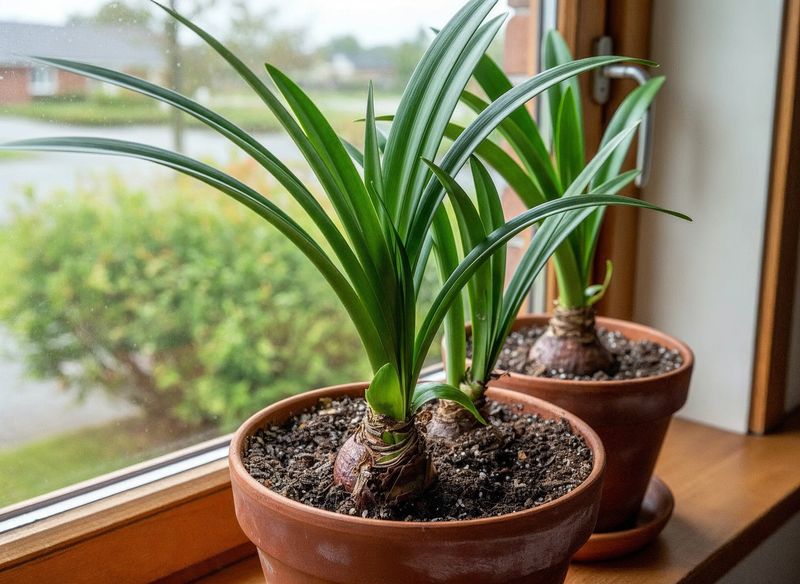
Once a previously flowered Hippeastrum bulb has had a full growing season to rebuild its reserves, a controlled dormant rest becomes a useful scheduling tool. For gardeners who want flowers at a specific time, such as Thanksgiving or Christmas, the rest period gives them a way to count backward from the target date and restart the bulb on schedule.
The process starts in late summer or early fall. Stop watering gradually and allow the foliage to yellow and dry down on its own.
Do not cut green leaves to hurry the process along; let them die back naturally so the bulb can pull back as much stored energy as possible before the leaves are removed. Once the foliage is dry and papery, trim it off, brush away loose soil, and move the bulb to a cool, dry, dim location.
Illinois Extension recommends a rest of about 8 to 10 weeks, while University of Maryland Extension suggests a range of 6 to 8 weeks depending on the timing goal. Keep the storage location above freezing at all times.
Central Texas falls present a real challenge here. Warm September and October temperatures, continued irrigation from automatic systems, and consistently warm indoor environments can all delay or disrupt natural dormancy.
Leaving a potted Hippeastrum outdoors and assuming the season will do the work is less reliable than actively controlling the rest by withholding water and moving the bulb to a cooler spot. McLennan County Master Gardeners’ amaryllis notes acknowledge this regional timing challenge for Texas growers.
Wisconsin Extension and Minnesota Extension both note that Hippeastrum does not require dormancy to rebloom, but that a controlled rest helps regulate timing and may encourage flowering in bulbs that are otherwise reluctant. This is not the refrigerator-style cold treatment used for tulips and hyacinths.
A cool, dry garage or interior closet that stays between roughly 50 and 65 degrees Fahrenheit is sufficient for most established bulbs.
When no flower stalk appears, check the whole growing history
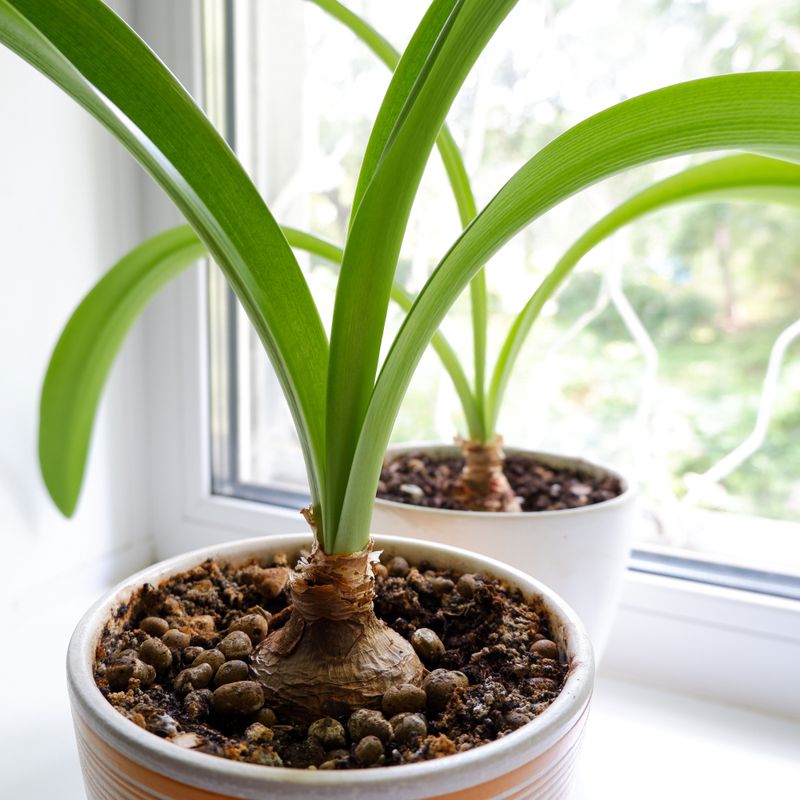
A missing flower stalk rarely has a single cause, and blaming a skipped fall chill without checking anything else leads to the same mistake year after year. Run through the full growing history before drawing a conclusion.
Start with the bulb itself. A bulb smaller than about 26 to 28 centimeters in circumference may simply be too immature to flower yet, regardless of how well it was cared for.
Iowa State Extension’s amaryllis guide connects bulb size directly to flowering potential. Squeeze the bulb gently: soft spots, a mushy base, or visible mold suggest rot from overwatering or poor drainage, and a rotting bulb will not produce a stalk no matter what else is done.
Next, think about the previous growing season. Did the foliage get at least six hours of bright light per day?
Was it cut off while still green? Were the leaves yellowed by nutrient deficiency or pest damage?
Iowa State’s bloom troubleshooting FAQ and University of Florida IFAS amaryllis guidance both identify insufficient light and premature leaf removal as leading causes of bloom failure in established bulbs.
Watering habits matter at every stage. Mississippi State Extension’s bulb publication and University of Maryland Extension both flag overwatering as a common problem that leads to root and bulb rot before the plant can build reserves or initiate a bloom cycle.
Keeping the mix barely moist during active growth, and nearly dry during dormancy, protects the bulb at both stages.
Fertilizer choice also plays a role. Heavy applications of high-nitrogen fertilizer push leafy growth and can reduce flowering.
A balanced formula used at moderate rates during the active growing season supports both foliage health and bulb energy storage without tipping the balance the wrong way.
A proper dormant rest cannot rescue a bulb that entered storage already depleted, damaged, or diseased. Think of dormancy as a scheduling mechanism, not a repair tool.
The reliable forcing plan starts with the bulb’s history
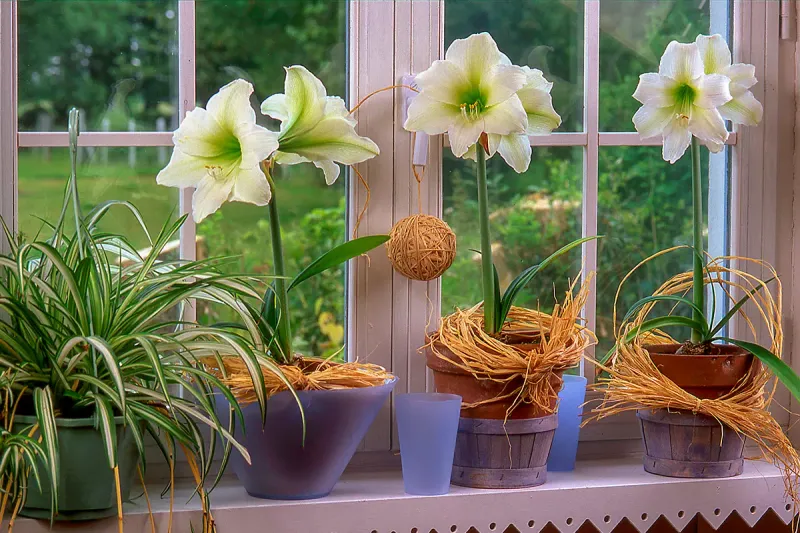
Two different pathways lead to indoor Hippeastrum flowers, and which one applies depends entirely on the bulb’s history. A firm, large, newly purchased commercial bulb does not need refrigerator treatment or any special fall preparation.
Pot it correctly with good drainage, leave the upper third to half of the bulb above the soil, water once thoroughly and then sparingly until growth appears, and place it in your brightest window. Penn State Extension confirms that Hippeastrum can be forced indoors without any cold pretreatment, making it one of the more forgiving choices for holiday forcing.
A previously flowered bulb follows a longer road. It needs a full growing season with adequate light, careful watering, and balanced fertilizer to rebuild the stored energy that flowers require.
After that nourishing season, a controlled cool and dry rest of roughly 6 to 12 weeks, as outlined by Minnesota Extension and Illinois Extension, can help schedule or trigger flowering. University of New Hampshire Extension notes that after dormancy, returning the bulb to warm, bright conditions and resuming gradual watering may produce a flower stalk in roughly 4 to 6 weeks, assuming the bulb has sufficient reserves.
For Central Texas gardeners, the warm fall climate means you may need to actively manage dormancy rather than rely on outdoor temperatures to do it for you. Keep outdoor plants protected from freeze events and bring them inside before cold snaps arrive.
NC State’s Hippeastrum profile notes these bulbs are cold-sensitive and should not be exposed to freezing temperatures.
Set realistic expectations: holiday bloom timing is approximate, and a bulb with depleted reserves may give you leaves before it ever gives you flowers. The gardeners who rebloom Hippeastrum most reliably are the ones who treat the whole year as part of the process, not just the weeks before Christmas.