
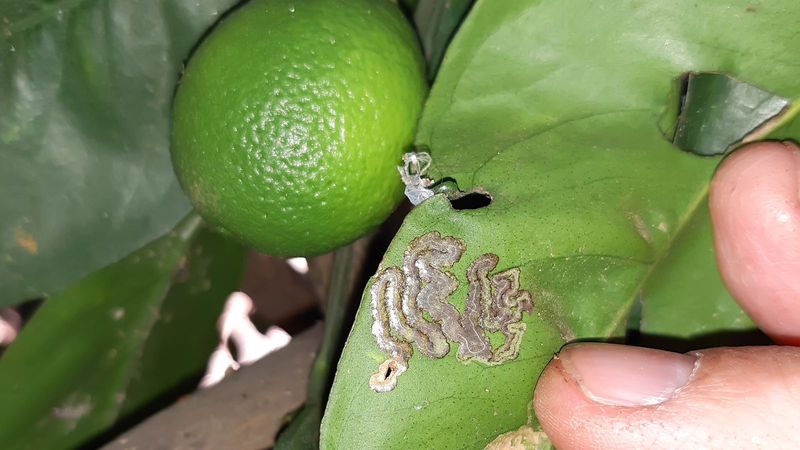
If your potted lemon or backyard citrus tree has leaves that are curling, turning yellow, or showing strange squiggly lines, you are not alone. Central Texas growers see this kind of damage regularly, and a tiny moth larva called the citrus leafminer is often behind the worst of it.
But not every curled or yellowed leaf means leafminers are at work, and knowing the difference can save you from treating the wrong problem. A closer look at the leaf surface tells you more than the color ever will.
The mine pattern matters more than the yellow color
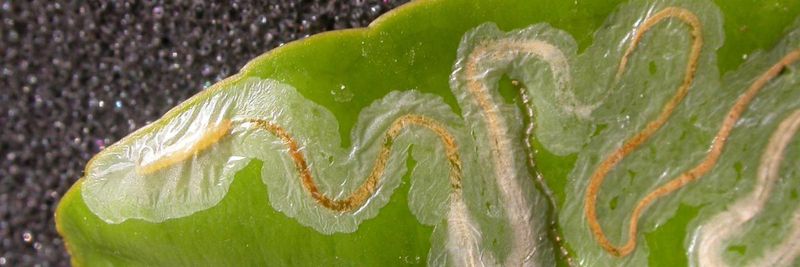
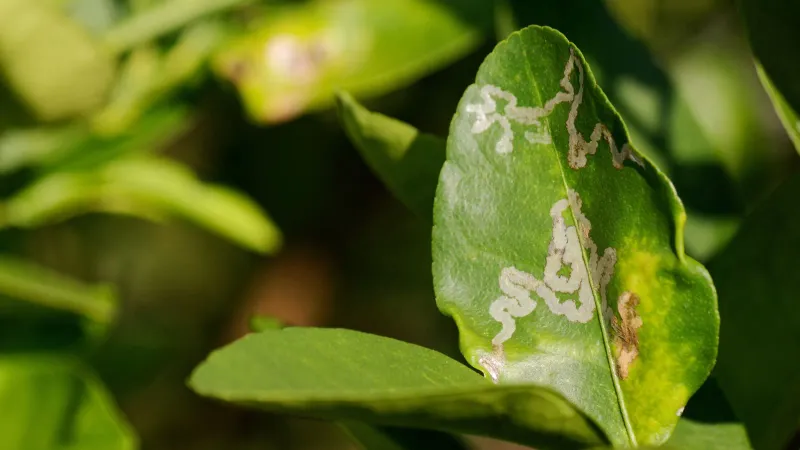
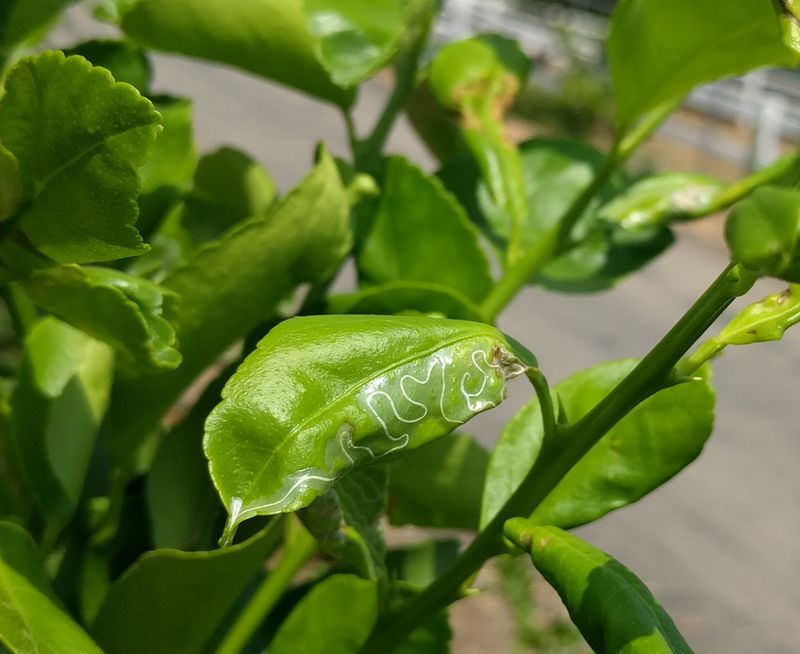
Picking up a curled citrus leaf and flipping it over is the single most useful diagnostic step a Central Texas grower can take. What you are looking for is a thin, winding tunnel just beneath the shiny leaf surface, pale silver or whitish in color, often with a dark thread of frass running through its center.
That winding trail, called a serpentine mine, is the work of a citrus leafminer larva feeding inside the leaf tissue rather than on top of it.
According to UC IPM’s citrus leafminer guidance, the larva tunnels just under the upper or lower epidermis, leaving a visible track that widens as the larva grows. Damage concentrates on shiny, tender new leaves produced during warm-weather growth flushes.
Hardened, older leaves are far less susceptible because the surface is tougher and less appealing for egg-laying moths.
The curling at the leaf margin comes later in the process. As the larva matures, it moves toward the leaf edge and pupates beneath a rolled flap of leaf tissue, which is what creates the characteristic curl.
So the curl you see is often a sign that the larva has already finished feeding, not that feeding is actively happening right now.
Identifying citrus leafminer versus other leaf-surface pests requires checking both the upper and lower surfaces of several leaves across different parts of the tree, not just one symptomatic leaf. Yellowing by itself is not a mine.
A leaf can turn yellow from water stress, nutrient problems, disease, or other insects without a single winding tunnel present. The mine pattern is the evidence; the yellow color is only a prompt to go look more carefully.
Why fall activity is possible without proving the season caused it
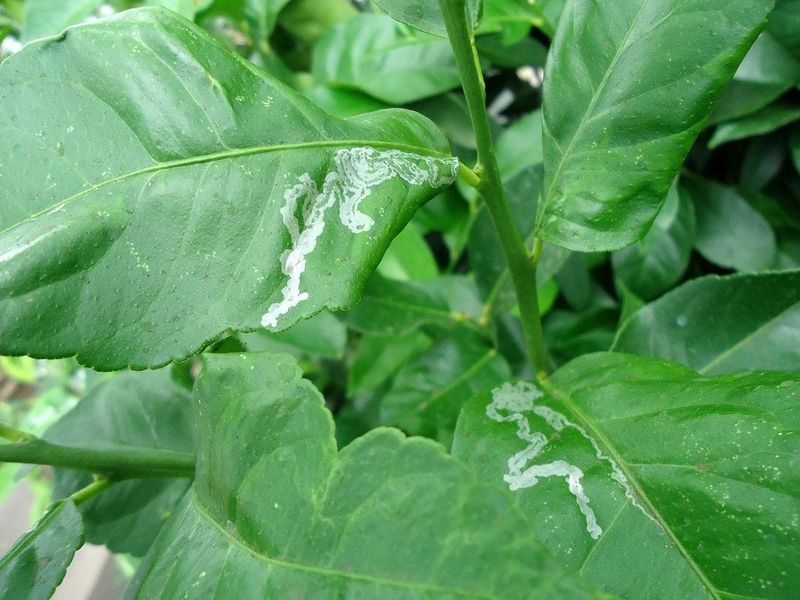
Citrus leafminer targets new flush, not the older hardened canopy. The moth lays eggs on the smoothest, most tender emerging leaves, so the pest’s activity is tied directly to when your tree pushes that kind of growth rather than to any fixed point on the calendar.
UC IPM’s agricultural citrus management guidelines describe leafminer activity as running through warm months and extending into fall and early winter in regions where temperatures stay mild enough to support adult moth flight and larval development. That makes a fall infestation entirely plausible in Central Texas, where warm spells can persist well past the official start of autumn.
Regional timing, though, is not fixed. Texas A&M AgriLife Extension in Galveston County places leafminer activity roughly from March through October on the Upper Gulf Coast, while Central Texas growers may see different windows depending on local temperatures, humidity, and how many times their tree flushes in a season.
A tree that has been recently fertilized, pruned, or stressed into pushing new growth in September or October gives leafminer moths exactly the egg-laying sites they prefer. Conversely, a tree that hardened off its summer flush early and is not actively pushing new leaves may show very little new damage even if moths are flying nearby.
Use fresh flush and actively expanding new leaves as your real evidence of current risk, not the season name alone. If new growth is present and you can see mines forming, the timing lines up.
If the tree is dormant or the leaves are all hardened, fall on the calendar does not mean leafminers are the current culprit.
Yellowing without mines requires a different investigation
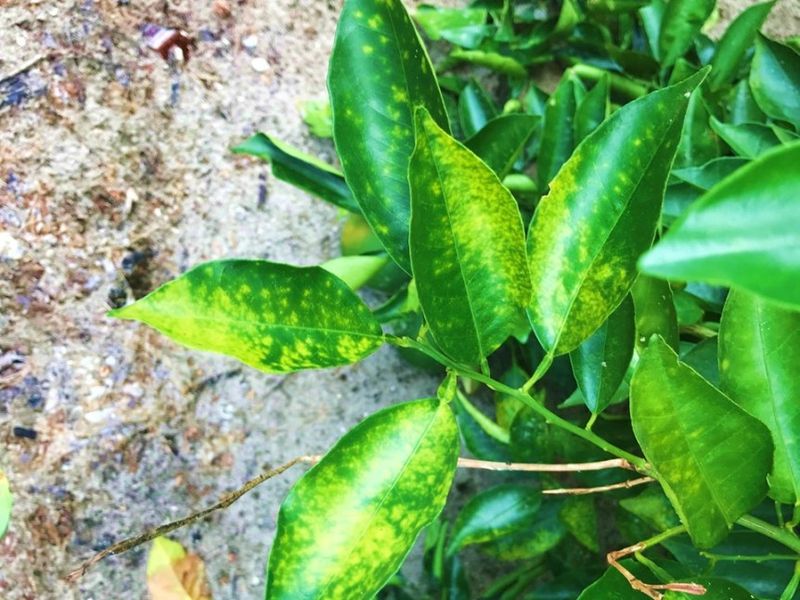
When citrus leaves turn yellow and no winding tunnel is visible on either leaf surface, leafminer moves down the suspect list considerably. Several other problems common to Central Texas container citrus and backyard trees can produce yellowing, and some of them need a completely different response.
Start with water. University of Arizona Cooperative Extension guidance on irrigating citrus notes that both overwatering and underwatering cause leaf symptoms that can look alarming, including yellowing and leaf drop.
For container plants, check that the pot drains freely and that you are not letting the root zone stay waterlogged between waterings. Stick a finger two inches into the soil; if it feels soggy, drainage is the first thing to fix.
University of Arizona’s guide to diagnosing home citrus problems walks through nutrient deficiencies, aphid colonies, spider mites, and citrus thrips as additional causes of leaf discoloration and distortion. Aphids cluster on new growth and leave sticky honeydew; mites produce a stippled, dusty look on leaf surfaces; thrips cause silvery scarring.
None of these leave a winding mine.
More serious concerns deserve their own category. Huanglongbing (HLB), also called citrus greening, produces sector-wide yellowing that does not follow the vein pattern and often appears asymmetrically across the canopy.
Fruit from affected trees may be misshapen or bitter. HLB is a bacterial disease spread by the Asian citrus psyllid and has no cure; it cannot be diagnosed from a photograph or from yellowing alone.
A Texas A&M Plant Disease Diagnostic Laboratory presentation on citrus greening emphasizes that professional or laboratory testing is required for a reliable HLB diagnosis. Separately, USDA APHIS describes citrus canker as a bacterial disease producing raised brown lesions with yellow halos on leaves, fruit, and twigs.
In Texas, the Texas Department of Agriculture advises that suspected canker should go through state plant-health authorities rather than casual sample movement. If yellowing is widespread, declining vigor is obvious, or symptoms extend well beyond new leaves, get a professional diagnosis before taking any treatment action.
Most mature citrus can tolerate the injury
Seeing mines on your citrus tree is unsettling, but the scale of concern should match the scale of the tree. For an established, mature backyard citrus, leafminer injury is primarily cosmetic.
The distorted new leaves look bad, but the older hardened foliage that makes up most of the canopy is doing the heavy photosynthetic work, and leafminers do not attack it.
UC IPM’s home-landscape citrus leafminer guidance describes the damage on mature trees as generally tolerable, with healthy established trees considered unlikely to die from leafminer injury alone. The pest slows or distorts new growth during active flushes, but a tree with a strong root system and a well-developed canopy has reserves to draw on.
Young trees, newly planted trees, and trees that flush repeatedly with soft growth face more meaningful risk. A one- or two-year-old citrus in a five-gallon container has far less mature foliage as a buffer, and repeated damage to its new growth can genuinely slow establishment.
If most of a young tree’s active growth is being mined every flush, that warrants closer attention than the same level of damage on a ten-year-old tree in the ground.
Tree age, current vigor, and the proportion of new growth being affected are the right measures for deciding how concerned to be. A mature Meyer lemon with a few curled tips and a solid canopy of dark green hardened leaves is in a very different situation from a recently transplanted tree struggling to push its first healthy flush.
Match your response to the actual vulnerability of the tree in front of you, not to the worst-case scenario.
Leave most mined leaves attached and avoid forcing new flush
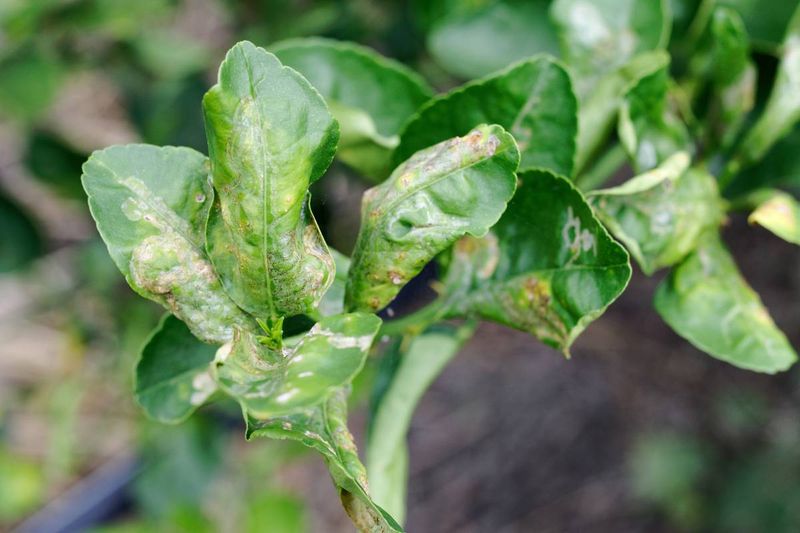
One of the most common instincts when you spot mined, curled leaves is to pull them off. Resist that urge for most of the canopy.
Even a leaf that has been tunneled through still has undamaged green tissue on either side of the mine, and that tissue is still producing food for the tree through photosynthesis. Removing it takes away something the tree can use.
Beyond losing that photosynthetic capacity, stripping leaves off sends a signal to the tree to replace what it lost. That replacement growth comes in as tender new flush, and tender new flush is exactly what citrus leafminer moths are looking for when they lay eggs.
Pruning away damaged growth during active leafminer periods can inadvertently create more egg-laying opportunities, not fewer.
UC IPM advises against routine removal of mined leaves for this reason, and also recommends avoiding unnecessary pruning and nitrogen fertilizer when leafminer populations are active and new flush is likely to be damaged. Nitrogen pushes soft, fast growth that the tree cannot harden quickly, giving moths a longer window to find and colonize new leaves.
Pruning live branches should generally happen no more than once a year, and timing it away from periods of high leafminer activity reduces the risk of stimulating a vulnerable flush at the wrong moment.
There is a targeted exception worth noting. Vigorous water sprouts growing straight up from major scaffold branches, and rootstock suckers emerging from below the graft union, can push long, succulent growth that provides extended egg-laying sites for leafminer moths.
Removing those specific shoots when they appear makes sense as a cultural practice, but that is different from broadly trimming the canopy in response to seeing mined leaves. Targeted removal of problem shoots, combined with restraint on fertilizer, gives your tree a calmer environment to work through the damage it already has.
Protect a valuable young tree as new leaves expand
Treatment becomes worth considering when a young or newly planted citrus tree is actively pushing new growth and leafminer damage is extensive enough to threaten its ability to establish. The key phrase is “actively pushing new growth.” Once mines are already winding through fully expanded leaves, the larvae inside are close to finishing their work and treatment to those leaves has little practical effect.
Horticultural oil works best as a preventive barrier applied to very young, just-expanding flush rather than as a rescue treatment for leaves already filled with tunnels. University of Florida IFAS guidance on lemon growing in the home landscape describes a 0.5 to 1 percent horticultural-oil solution applied to new flush when leaves are roughly one-half to one inch long as a reference approach for protecting young trees.
That is a Florida-specific recommendation offered here as a regional reference point, not a direct prescription for Central Texas conditions.
Texas summers and warm falls create temperature concerns that matter for any oil application. Horticultural oils can burn foliage when temperatures are high, and container plants in full sun heat up faster than trees in the ground.
Apply oil during cooler parts of the day, check the forecast for the following 24 to 48 hours, and follow the current product label precisely. Labels carry legal weight and reflect the most current safety and efficacy guidance for that specific formulation.
Timing between products also matters. Texas A&M AgriLife Extension in Galveston County references guidance warning against applying oil and sulfur within three weeks of one another, as the combination can damage foliage.
If your tree is blooming, most labels and extension sources recommend holding off on oil applications entirely to avoid harming pollinators visiting the flowers. Check bloom status before any spray decision, and when in doubt, consult a local Texas AgriLife Extension office for current region-specific advice.
Preserve natural enemies before considering stronger pesticides
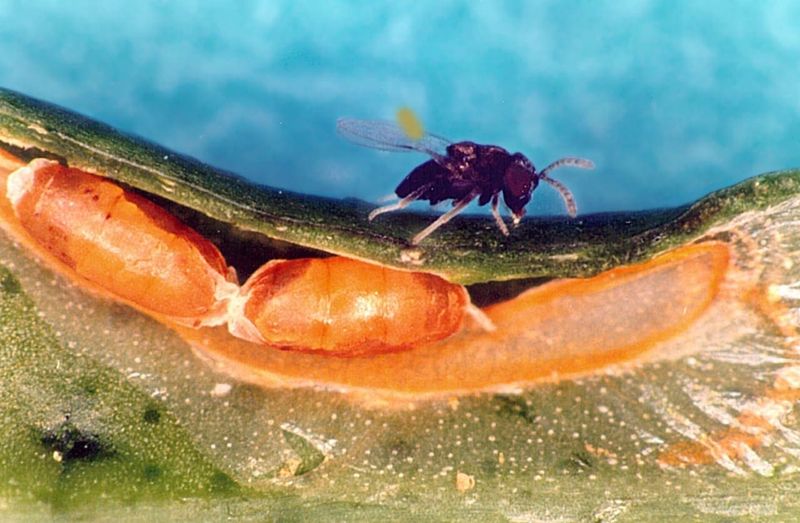
Backyard citrus trees are not isolated from the rest of the garden ecosystem. Parasitic wasps and generalist predators attack citrus leafminer larvae inside their mines, and in many home landscapes these natural enemies keep leafminer populations at levels the tree can handle without any spraying at all.
Reaching for a broad-spectrum insecticide at the first sign of mines removes that biological buffer and can leave the tree more vulnerable to secondary pest outbreaks in subsequent flushes.
UC IPM’s home-landscape guidance on citrus leafminer consistently favors tolerance and cultural controls over routine spraying for mature backyard citrus, partly because natural enemies can provide meaningful suppression when they are allowed to operate. Killing them with a contact insecticide does not solve the leafminer problem; it solves the next spray application cycle.
Pheromone traps, which attract adult male leafminer moths, are sometimes marketed as a control tool. They are useful for monitoring adult flight activity and helping you understand when moths are flying in your area, but they do not catch enough adults to reliably reduce the population.
Use them as a timing signal, not as a substitute for other management steps.
For severe infestations on young trees where cultural controls and horticultural oil have not been adequate, some extension sources discuss additional options. UGA Extension guidance on leafminer control in citrus mentions spinosad and soil-applied imidacloprid as situation-specific tools for young trees, each with significant conditions attached.
Spinosad residues break down relatively quickly and may need repeat applications timed to new flush; it can also harm beneficial insects if applied when they are active on the plant. Imidacloprid is a systemic neonicotinoid that moves into plant tissue including nectar and pollen, creating pollinator exposure risk that makes it unsuitable during bloom.
Any pesticide must be registered for use on citrus in your situation, applied strictly according to the current label, and chosen only after confirming active infestation on vulnerable young growth. These are not default treatments for a mature tree with a few curled leaves.
Use the visible mine to choose a calm, proportionate response
A practical decision tree for Central Texas citrus starts with one question: can you see a winding, pale tunnel on tender new leaves? If yes, citrus leafminer is a strong suspect.
If no tunnel is visible, shift your attention to watering, drainage, nutrients, and a careful look for aphids, mites, or disease symptoms before drawing any conclusion.
When mines are confirmed, check the tree’s age and overall vigor. A mature tree with a full canopy of hardened leaves can almost certainly tolerate the damage with no treatment beyond leaving mined leaves attached and avoiding unnecessary fertilizer or pruning that would push more susceptible flush.
A young tree actively flushing with widespread mine damage is the situation where carefully timed horticultural oil on new expanding growth makes the most sense, following the product label and local extension guidance.
UC IPM’s citrus leafminer resource and University of Arizona’s citrus problem diagnosis guide both reinforce that fall damage, while visually alarming on new growth, is manageable in most home-landscape situations. When symptoms go beyond the leafminer pattern, with sector-wide yellowing, declining vigor, bitter or misshapen fruit, or raised lesions on leaves and twigs, seek a professional or state plant-health diagnosis before taking action.
Fall damage on a lemon tree looks worse than it usually is; the mine tells you what happened, and the tree’s own reserves often handle the rest.