
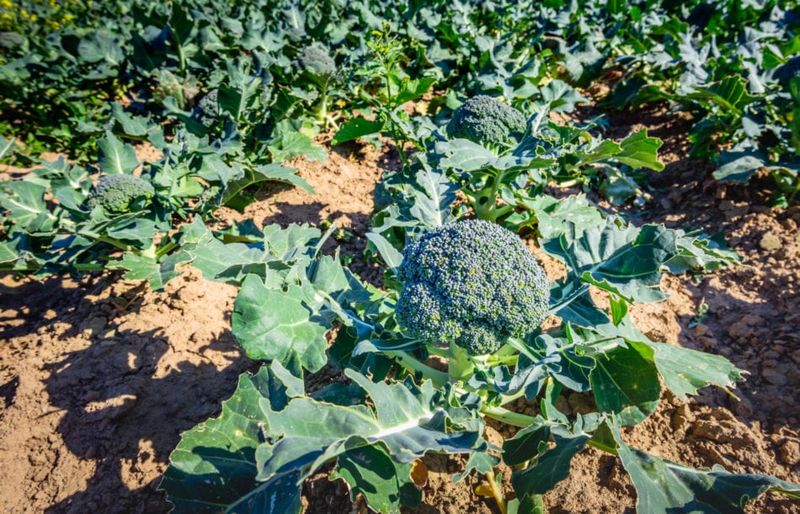
Fall broccoli is one of the most satisfying vegetables you can grow in Central Texas, but watching a plant throw out leaf after leaf with no sign of a central head is genuinely frustrating. Before you reach for more fertilizer or blame the seed packet, it helps to know that several things can stop a broccoli plant from forming a crown.
Late or excessive nitrogen is one real possibility, but Central Texas heat and planting timing are just as likely to be involved, and sometimes all three are working against you at once.
Lush leaves are a clue, not a diagnosis
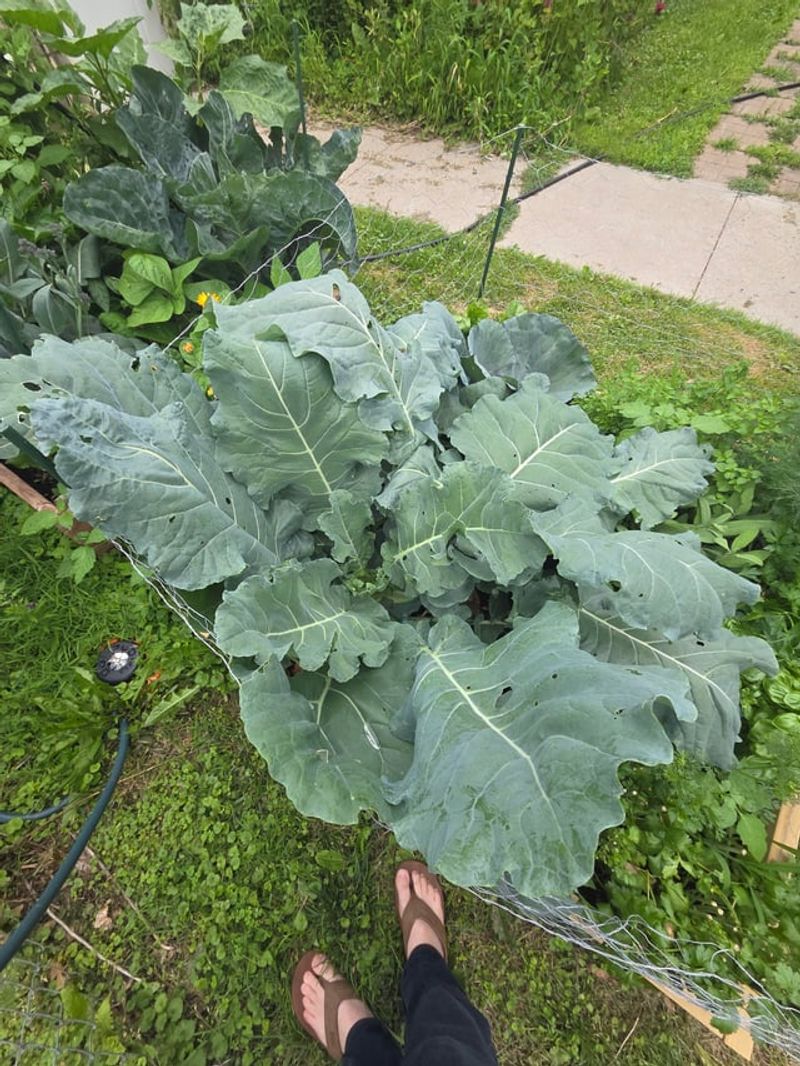
A broccoli plant that keeps producing big, dark-green leaves while refusing to form a crown can feel like a personal insult, especially after weeks of watering and weeding. The frustration is understandable, but the leaves alone cannot tell you what went wrong.
Before drawing any conclusions, it helps to understand what a broccoli head actually is: according to UC Davis Postharvest Research, the edible head is a cluster of immature flower buds, and the plant must reach a specific developmental stage under the right conditions before those buds appear.
Lush foliage can reflect several things at once: healthy growth driven by good soil, adequate water, warm temperatures, a vigorous cultivar, or yes, extra nitrogen. Large, dark-green leaves are not proof of nitrogen toxicity on their own.
Residual organic matter in the soil, consistent irrigation, and warm fall weather can all push leaf size and color without any fertilizer being applied at all.
The second thing worth sorting out before blaming fertilizer is exactly what kind of problem you are looking at. A plant with no head at all is a different situation from one that formed a small, loose, leafy, or otherwise abnormal crown.
University of Minnesota Extension’s broccoli diagnostic guide lists growing-point injury, insects, disease, cold damage, and transplant stress alongside nutritional issues as causes of complete failure to form a head. A hollow stem or a loose, leafy head has its own overlapping set of causes that are not identical to a plant that never produced a crown at all.
Getting the diagnosis right matters because the corrective steps are different depending on what is actually happening. The rest of this article walks through the most likely causes for a Central Texas fall crop, using symptoms, timing, temperature, and growing conditions to narrow things down rather than blaming fertilizer or seed without evidence.
How late nitrogen can keep broccoli excessively leafy
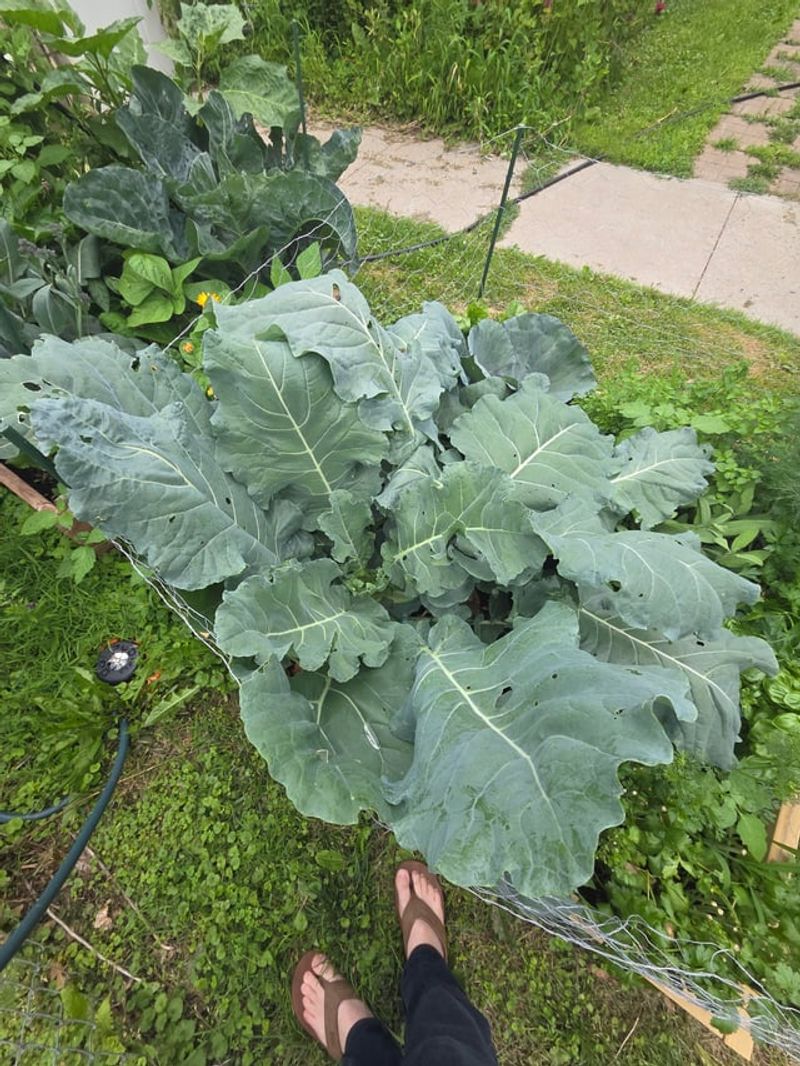
Nitrogen is not the enemy of a good broccoli crop. The plant genuinely needs it.
A peer-reviewed study published on PubMed found that properly timed nitrogen supply improved broccoli shoot growth and head fresh weight compared with a fixed nitrogen regime, meaning the timing of applications matters as much as the total amount. Cutting nitrogen out entirely is not the answer, and a plant that runs short on nitrogen during establishment can produce small heads, poor growth, or buttoning just as easily as one that got too much.
The real problem comes when nitrogen keeps arriving late in the crop cycle, after the plant is already well established and moving toward head formation. Oregon State University Extension notes that leafy, loose heads are associated with high temperatures combined with lush growth from excess water and nitrogen.
When the plant has more nitrogen than it can use for reproductive development, it tends to keep channeling energy into leaves and side branches instead of pushing toward a central crown.
Cornell Cooperative Extension’s guidance on managing nitrogen timing in broccoli makes the distinction clear: the recommendation is to complete the final nitrogen application well before harvest rather than continuing to push late-season growth. Repeated side-dressing after the plant is established and nearing head formation can extend side-branch elongation and loosen head structure.
The takeaway is not to stop fertilizing broccoli but to stop adding nitrogen once the plant no longer needs it for vegetative establishment.
For a Central Texas fall crop, this means front-loading nitrogen during transplanting and early establishment, then holding off once the plant is large and healthy. If you applied a second or third round of fertilizer in the weeks before you expected a head and the plant responded by pushing more leaves, late nitrogen is at least a contributing factor worth considering alongside heat and timing.
Heat and planting timing can block head formation
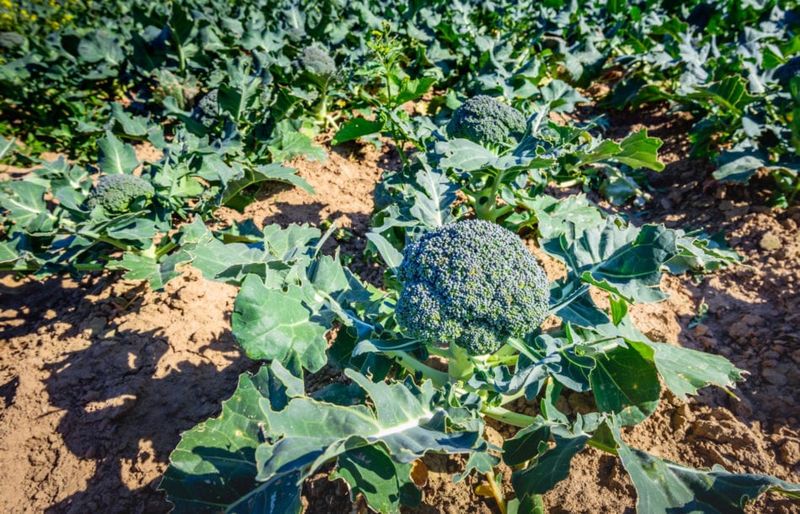
Broccoli is a cool-season crop that initiates its head in response to cooler temperatures, and that basic biology creates a serious challenge for Central Texas gardeners. When daytime temperatures stay above roughly 86 degrees Fahrenheit and nighttime temperatures remain above approximately 77 degrees Fahrenheit, plants may stay in a vegetative state and skip head formation entirely.
University of Minnesota Extension’s broccoli guide identifies these thresholds as conditions under which plants may fail to form a crown, and Central Texas falls well within that range during August and early September.
This is where planting timing becomes critical. A fall crop set out too early spends its most important developmental weeks in summer-like heat.
The plant grows vigorously because temperatures support vegetative growth, but it cannot move to head initiation until conditions cool enough to trigger that shift. By the time temperatures drop in October or November, the crop may be running out of growing season, or the plant may have already been stressed past the point of producing a quality head.
Texas A&M AgriLife Extension provides regional planting guidance, but the dates are not uniform across the state. The Fall Vegetable Gardening Guide for Texas lists early September as a typical fall transplant window for broccoli in the central region of the state, while a separate planning table identifies September 20 as a last optimum date for transplants or direct seeding in that region.
Those two numbers serve different purposes: the earlier date represents the average planning window, while the later date marks the outer edge of the window for that region specifically. Neither applies statewide, and gardeners in the Hill Country, the Blacklands, or the eastern edge of the region may find slightly different timing works better for their microclimate.
Heat and nitrogen can also interact. A plant dealing with warm nights and a recent side-dressing of fertilizer gets a double push toward leafy growth and away from head formation.
Neither cause alone tells the whole story, and diagnosing one without checking the other leaves the problem only half understood. If your crop was planted before mid-September and your fertilizer applications continued past early establishment, both factors deserve attention before the next season.
Inspect the growing point before blaming fertilizer
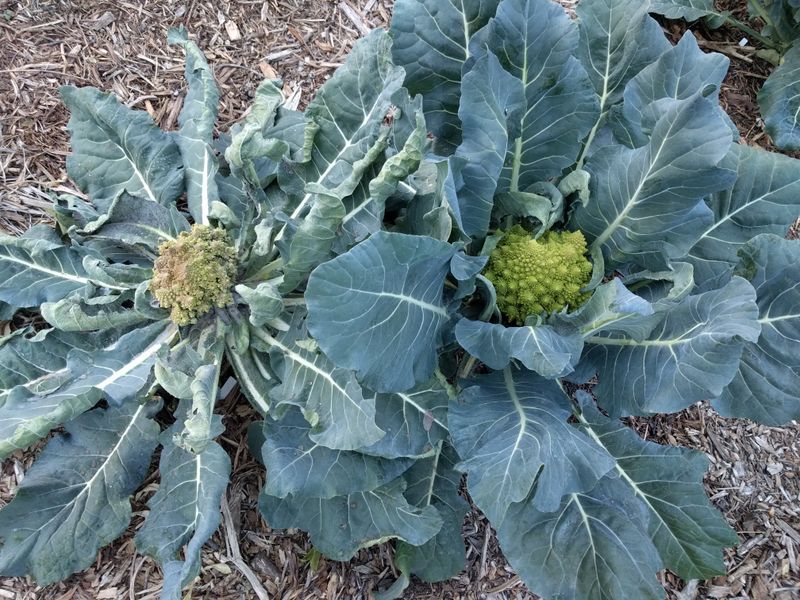
Fertilizer and heat get most of the attention when a broccoli plant refuses to head, but sometimes the answer is sitting right at the center of the plant. Before drawing any conclusions, get close and look at the growing point, the cluster of tightly packed new leaves at the very top of the stem.
Physical damage there can stop head formation completely, and it has nothing to do with how much nitrogen you applied.
According to the University of Minnesota Extension broccoli diagnostic tool, “blindness” – the failure to form a head – can result from growing-point injury caused by insects, cold damage, or rough handling during transplanting. Look for chewing around the crown, distorted or missing new leaves, and signs of caterpillar or aphid feeding.
Harlequin bugs, imported cabbageworm, and cabbage loopers are common in Central Texas and can damage tender growth at the center of the plant early in the season before gardeners notice.
Root problems are another avenue worth checking. Swollen, club-shaped roots point toward clubroot, a soil-borne disease that disrupts water and nutrient uptake.
A plant wilting during the hottest part of the day but recovering at night may be dealing with root damage or disease rather than a nutrition imbalance. Utah State University Extension’s brassica production problems guide documents transplant shock, water stress, and disease as distinct causes of poor head formation that require different responses from a fertilizer problem.
Cultivar and seedling factors also deserve a fair look. Some broccoli varieties are simply better suited to fall production in warm climates, and a heat-tolerant variety planted at the right time has a better chance of heading than an unadapted one planted too early.
Seedling age at transplanting matters too: leggy transplants that have been in their cells too long can struggle to establish quickly. University of Minnesota Extension notes that cultivar differences affect head development and maturity timing.
Seed quality is not the most common culprit, but it should not be dismissed without checking environmental and cultural factors first.
Respond without shocking the plant
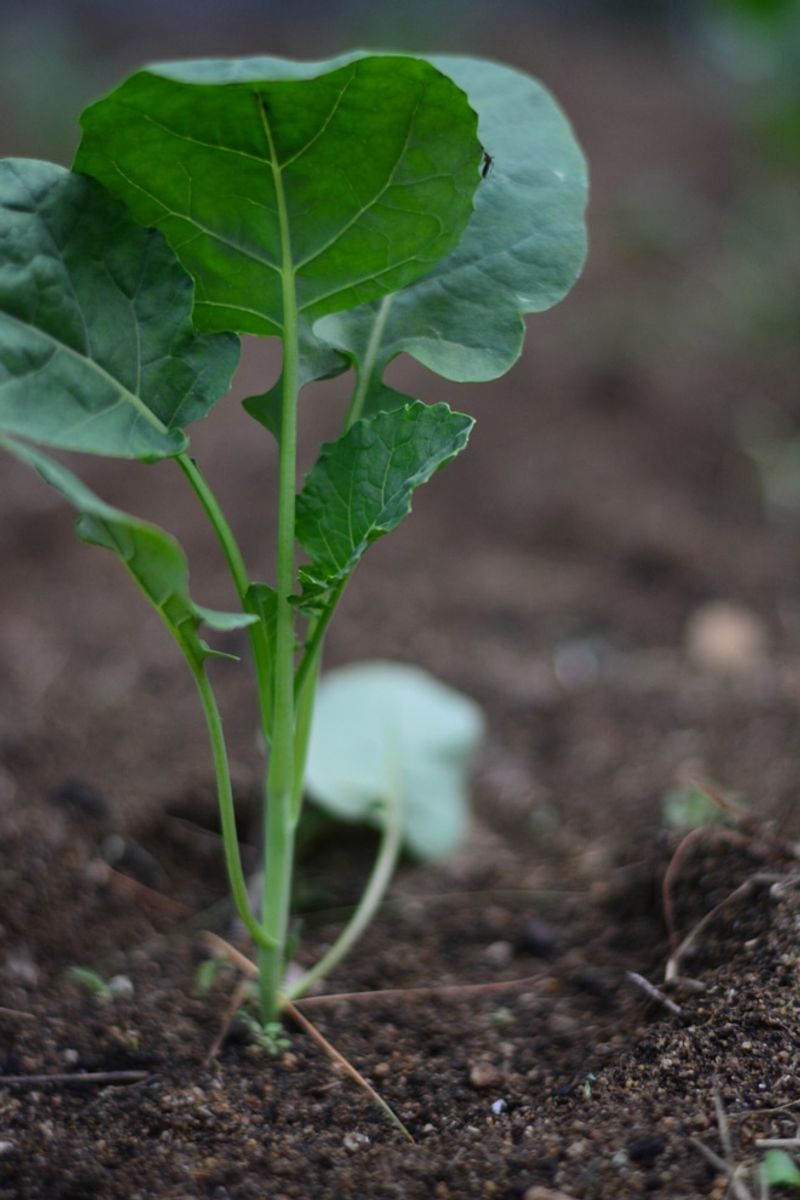
Once you have a reasonable suspicion that late or excess nitrogen played a role, the temptation is to correct aggressively, either by flushing the soil, adding a different nutrient, or stripping leaves to force a head. All three of those responses can make things worse.
The better path is measured and deliberate.
Start by pausing any additional nitrogen applications. Check what product you used, how much the label recommended per application, how many times you applied it, and what stage the plants were at when you last fertilized.
Utah State University Extension’s guidance on fertilizers classifies broccoli as an intermediate nitrogen-demand vegetable and recommends following the soil-test report rather than applying by feel or by leaf appearance alone. If you applied more than the label recommended or fertilized repeatedly after the plants were well established, a pause is appropriate.
If you applied only the recommended amount once or twice, nitrogen may not be the primary issue at all.
Do not add manure, compost, phosphorus, calcium, boron, or any other amendment as a corrective measure without a soil test or a clearly diagnosed deficiency. Untested organic amendments can add significant nitrogen and other nutrients on top of what is already in the soil, compounding the problem rather than solving it.
Blanket nutrient treatments are not justified when the diagnosis is still uncertain.
Water management matters just as much as fertilizer management. Use even, consistent irrigation rather than flooding the bed in an attempt to dilute soil nutrients.
Overwatering damages roots, worsens disease conditions, and moves nitrogen into groundwater. Texas A&M AgriLife Extension’s cole crops guide recommends keeping soil moist but not saturated and using mulch to regulate soil temperature and reduce moisture loss between waterings.
If temperatures are still running warm, a temporary shade cloth over the bed during the hottest part of the day can help moderate conditions. Do not strip leaves from the plant to try to force a head.
Utah State University Extension notes that leaves supply the photosynthate the plant needs to develop and that deliberate defoliation is not supported as a remedy. Withholding water is equally counterproductive: water stress causes its own set of problems, including small heads, buttoning, and poor yield.
Use testing and better timing to reduce fertilizer mistakes
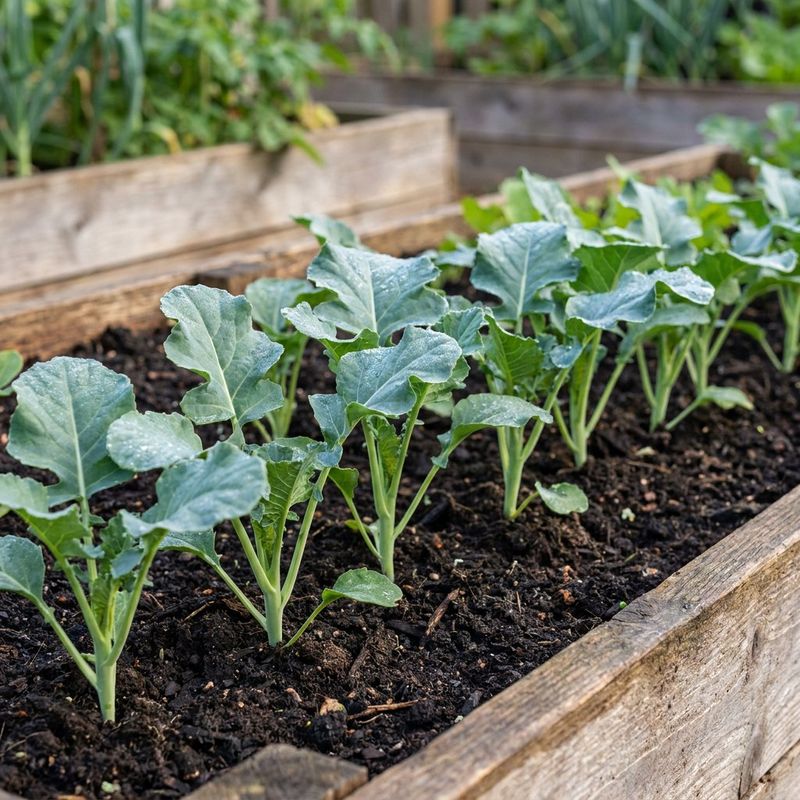
Fixing the current crop is one thing; making sure the next one goes better is another. A soil test is the single most useful tool for avoiding fertilizer guesswork.
Without one, it is easy to apply nitrogen to soil that already has plenty from previous compost, manure, or organic matter breakdown. Utah State University Extension recommends basing fertilizer decisions on a soil-test report and splitting nitrogen applications rather than delivering a large amount at once.
Split applications give the plant what it needs at each growth stage without overloading the soil at any one time.
For a Central Texas fall crop, the timing of transplanting is just as important as the fertilizer plan. The Texas A&M AgriLife Extension fall vegetable gardening guide provides regional planting windows for the central part of the state.
Aim to transplant within that window so the plant’s head-initiation period lands during cooler October and November weather rather than in the heat of late August and September. A well-timed crop that receives appropriate nitrogen during establishment and early vegetative growth is far more likely to head than one planted early and pushed with repeated fertilizer applications.
Cultivar selection is part of the plan too. Heat-tolerant varieties bred for fall production in warm-climate regions give the plant a better chance of heading before cold weather closes out the season.
Check seed catalogs and local extension recommendations for varieties that perform well in Central Texas rather than defaulting to whatever is on the shelf in spring.
The environmental side of fertilizer management also matters. EPA guidance on nutrient pollution notes that excess fertilizer can be carried away by runoff or leach through the soil, especially when applied in excess or followed by heavy watering.
Apply only the amount the label and your soil test support, avoid fertilizing just before a forecasted rain event, and keep fertilizer away from hard surfaces and storm drains. Good nutrient stewardship protects both your garden and the waterways near your neighborhood.
University of Minnesota Extension also reminds gardeners that even a well-managed crop may produce a loose or small head if temperatures swing unexpectedly, so building a realistic expectation into your planning helps avoid overcorrecting when conditions are simply difficult.
Harvest a formed head before it loosens
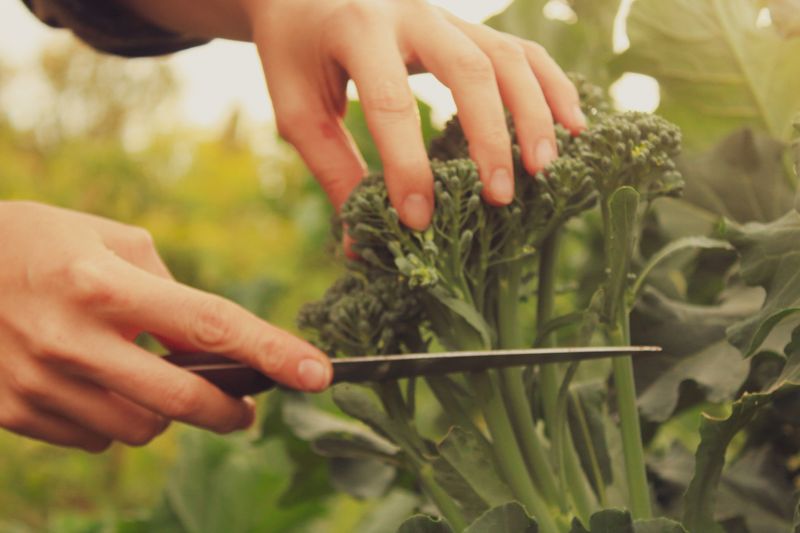
When a head does form, the window for harvesting it at peak quality is shorter than most gardeners expect. The edible part is a cluster of immature flower buds, and once those buds start to loosen or show yellow petals, the head has passed its best eating quality.
UC Davis Postharvest Research confirms that broccoli should be harvested while the flower buds remain tight and compact, well before any yellowing begins.
If the head is starting to open up or feel spongy, cut it promptly rather than waiting and hoping it will tighten or grow larger. Applying more nitrogen at that point will not reverse loosening and may push the plant further toward flowering.
University of Minnesota Extension notes that side shoots may develop after the central head is harvested, depending on the variety, giving you a second round of smaller but usable heads over the following weeks.
A Central Texas fall broccoli problem rarely comes down to a single cause. Heat, planting timing, nitrogen management, growing-point health, and cultivar choice all interact, and getting the next crop right means paying attention to all of them.
The best harvest starts well before the seed goes in the ground.