
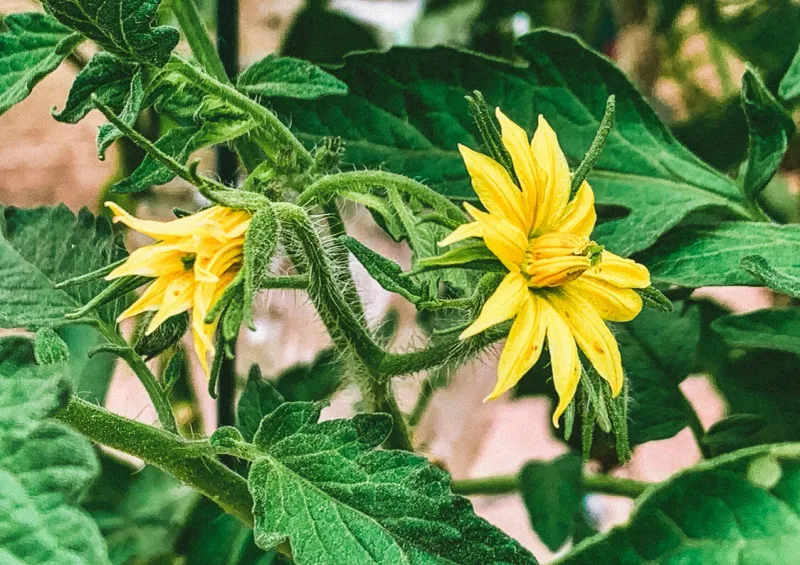
Watching your tomato plants push out a flush of fall flowers only to see every bloom fall to the ground before a single fruit forms is one of the more frustrating moments in a Central Texas garden. The calendar says October, so cooler weather should be on its way, but the plants seem to disagree.
Warm temperatures can disrupt the flowering process in ways that are not always obvious from the outside, and heat is likely the first thing worth investigating when blooms drop without setting fruit. Understanding what is happening inside those flowers, and what you can actually do about it right now, makes the difference between a productive fall harvest and an empty vine.
October does not guarantee tomato-setting weather
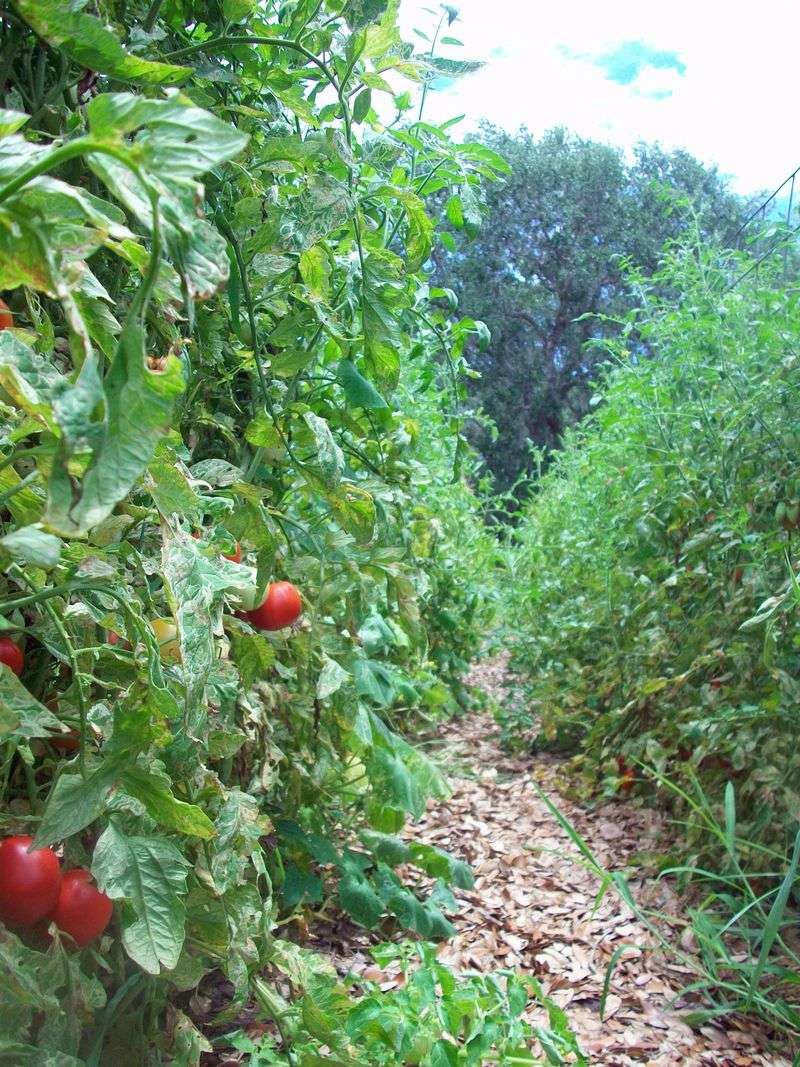
Gardeners across Central Texas often plant a fall tomato crop with the reasonable expectation that October will bring relief from summer heat. That expectation is partially correct but not guaranteed.
Austin’s October climate records show average daily highs near 87 degrees Fahrenheit early in the month, and recorded October highs have reached 98 to 100 degrees on some dates, meaning the calendar alone does not confirm that your flowers are blooming in suitable setting conditions.
The more useful question is what temperatures your specific plants actually experienced during the days surrounding bloom. If daytime highs stayed above roughly 90 to 92 degrees Fahrenheit or nighttime lows held above about 70 degrees Fahrenheit, those are practical warning ranges that Texas A&M identifies as associated with bloom drop and poor fruit set.
These figures are not hard biological switches. Cultivar, humidity, wind, how long temperatures stayed elevated, and the plant’s overall vigor and moisture status all affect the outcome.
Checking a nearby weather station or backyard thermometer for the days surrounding your bloom period gives you one important piece of evidence. That evidence can support the heat hypothesis but cannot confirm it by itself, because water stress, disease, nutrient imbalance, or other causes can produce similar results.
Central Texas also spans a wide area, from Austin to San Antonio to the Hill Country, and conditions vary considerably across that range, so a neighbor’s garden a few miles away may have seen meaningfully different temperatures during the same week.
Heat can make a tomato flower fail before fruit forms
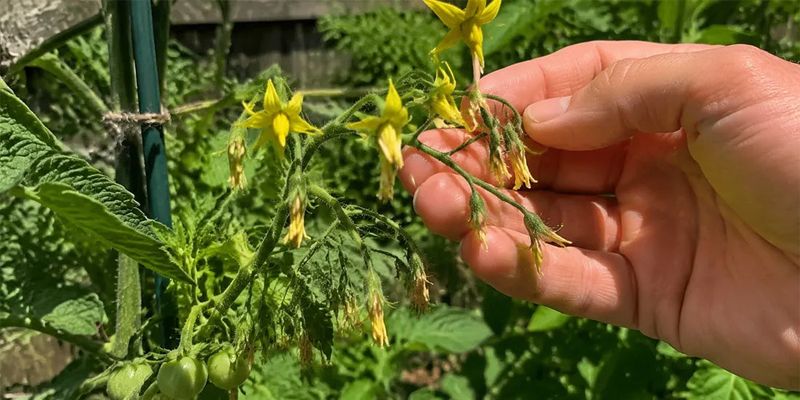
A tomato flower that blooms during a stretch of excessive heat can fail before it ever develops into fruit, and the plant may look perfectly healthy while this is happening. The problem occurs inside the flower itself.
High daytime temperatures can reduce pollen viability and impair the release of pollen from the anthers, while sustained nighttime heat interferes with the fertilization process even after a flower opens normally. Oklahoma State Extension notes that poor fruit set becomes common when days consistently exceed 92 degrees Fahrenheit or nights stay outside the approximate 60-to-70-degree range.
Hot nights deserve particular attention because many gardeners focus only on afternoon highs. When nighttime temperatures remain above about 70 degrees Fahrenheit, the plant does not get the overnight recovery period it needs, and flowers that open the next morning may already be compromised.
The result is blossom abortion, where the flower drops cleanly from the stem before any tiny fruitlet appears. This is different from a fruitlet that begins to develop and then falls, which can point toward a separate set of causes.
Lush green foliage and a plant loaded with flowers can coexist with complete failure to set fruit during a hot window. The plant is not sick in the conventional sense; it is responding to conditions that make successful fertilization unlikely.
University of Minnesota’s vegetable IPM blog explains that vegetables exposed to heat stress during flowering often fail to yield even when they appear vigorous, because the damage happens at the cellular level where pollen forms and travels. Abundant blooms, in other words, are not a promise of tomatoes.
The missing-bees theory usually points in the wrong direction
Blaming absent honeybees for dropped tomato flowers is one of the most common garden misconceptions, and for tomatoes specifically, it usually leads the investigation away from the real problem. Unlike cucumbers, squash, or melons, tomatoes carry both male and female flower parts within the same bloom and are generally self-pollinating.
University of Minnesota Extension confirms that tomatoes do not require insect visitors to move pollen between separate flowers, which means a yard with no visible bees can still produce a full crop under suitable temperatures.
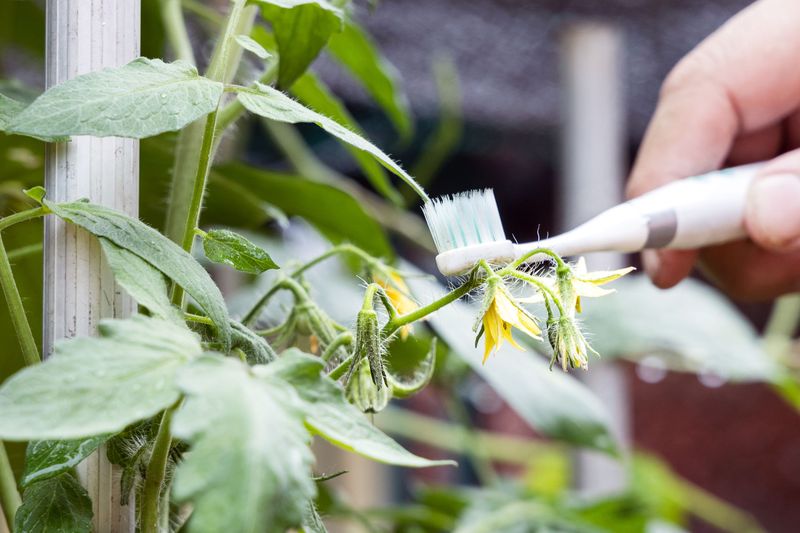
Pollen does benefit from movement. Wind, the vibration of a passing bumblebee, or a gentle tap on the flower cluster can help shake pollen loose from the anthers so it reaches the stigma more reliably.
Texas A&M AgriLife’s fall vegetable guide acknowledges that vibration can assist pollen release, and lightly tapping a flower cluster in the morning is a low-risk experiment worth trying when temperatures are otherwise within a workable range.
The critical qualifier is that tapping or shaking flowers cannot repair pollen that heat has already damaged, and it cannot compensate for nighttime temperatures that are disrupting fertilization overnight. If daytime and nighttime readings are sitting in the warning ranges described above, adding pollinator activity to the garden or tapping flowers more aggressively will not produce tomatoes from that flush of blooms.
Correct the temperature-related stress first, and reserve hand-vibration techniques for the next round of flowers that open under cooler conditions.
A symptom check separates heat from look-alike problems
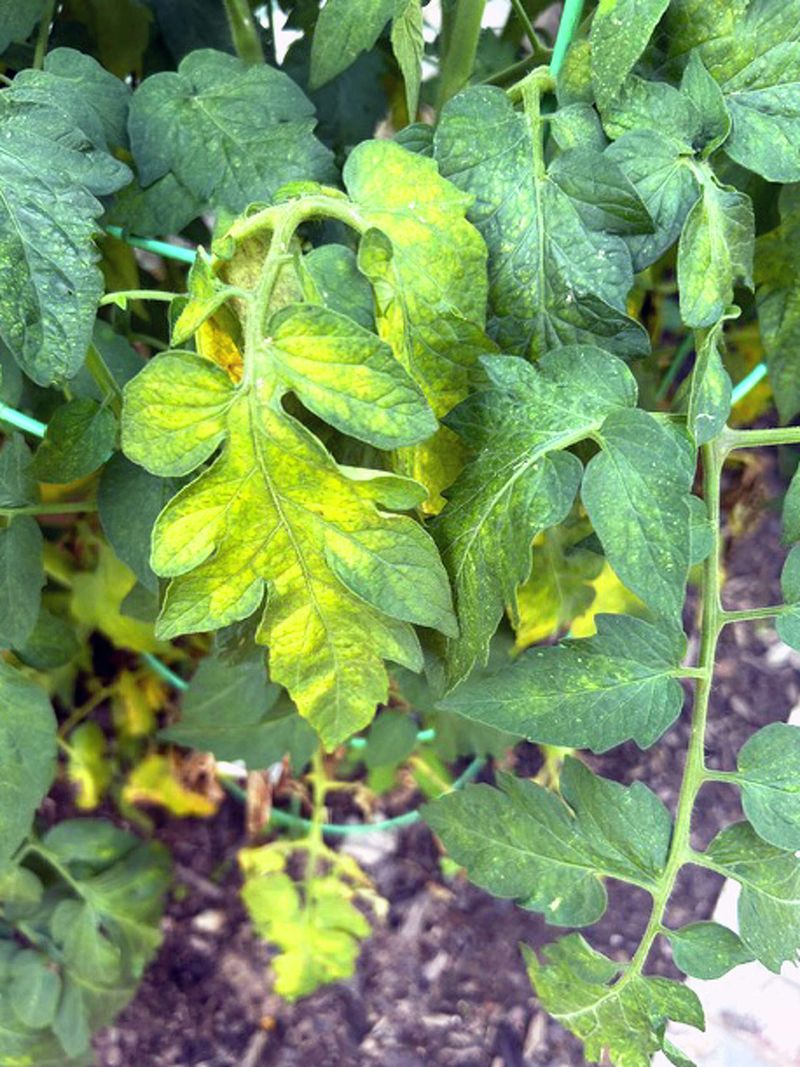
Heat-related blossom drop is the leading suspect when Central Texas tomatoes bloom and fail to set during a warm October, but it is not the only possibility. A quick symptom check can help separate straightforward heat stress from other causes before you decide how to respond.
Start by confirming exactly when the flower is falling. If the blossom drops cleanly before any tiny fruitlet appears, that pattern fits heat-related abortion.
If a small green fruitlet forms first and then falls, the cause is more likely inconsistent watering, excessive fruit load, or another stress that hits after fertilization.
University of Arizona Cooperative Extension lists water stress, excessive nitrogen, strong wind, disease, herbicide drift, heavy pruning, and unsuitable nighttime temperatures as contributors to poor fruit set. Look at the leaves and stems as well.
Distorted new growth or cupped leaves can signal herbicide exposure. Yellowing in a pattern that moves from older leaves to newer ones may indicate a nutrient problem.
Visible insects, sticky residue, or stippled leaf surfaces point toward pest pressure rather than temperature alone.
Oklahoma State Extension also draws a clear line between blossom drop and blossom-end rot, which is a separate disorder that affects fruit that has already formed. Blossom-end rot appears as a sunken, dark, leathery patch on the bottom of an existing tomato and is linked to disrupted calcium movement, usually tied to inconsistent soil moisture.
Adding calcium to the garden is not a useful response when flowers are dropping before any fruit develops, because the two problems occur at completely different stages. Texas A&M’s home vegetable gardening guide emphasizes consistent watering as the primary management tool for calcium-related fruit disorders, not calcium supplementation.
Reduce the plant’s heat and water stress now
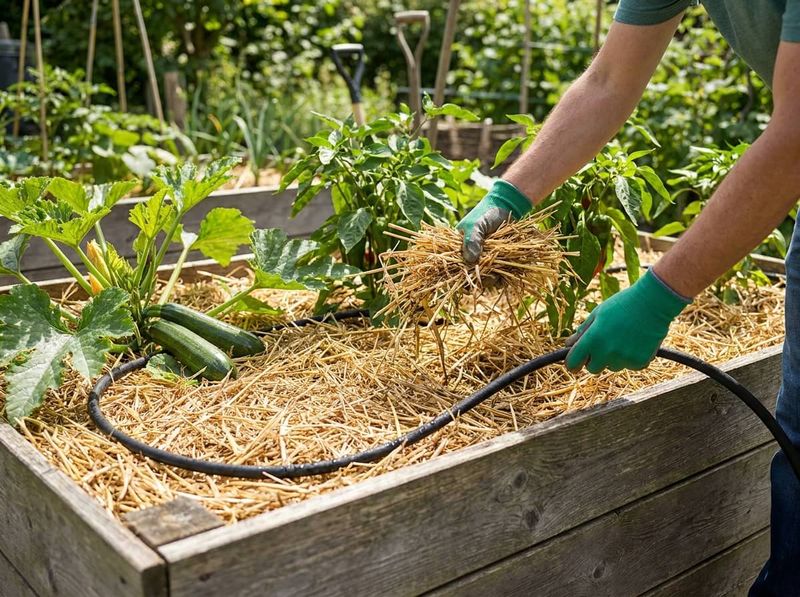
Once you have identified heat and moisture stress as likely contributors, the most productive steps are the ones that reduce the burden on the plant right now. Start with soil moisture.
Check the root zone before reaching for the hose by pressing a finger or a small trowel a few inches into the soil. Texas A&M’s vegetable gardening guide recommends thorough root-zone irrigation and mulch as the primary response to tomato blossom drop during hot, dry periods.
Water deeply enough to wet the root zone thoroughly, then let the soil approach dryness before watering again rather than cycling between bone-dry soil and saturated conditions.
Mulch is one of the simplest and most effective tools available right now. A layer of organic mulch around the base of the plant moderates soil temperature and slows evaporation significantly.
Both effects reduce the stress load on roots during hot afternoons, which in turn supports more stable water uptake and flower development. Aim for a layer two to three inches deep and keep it a few inches back from the main stem to avoid trapping moisture against the crown.
Temporary, breathable afternoon shade is worth considering during extreme heat stretches. A loosely draped shade cloth that blocks 30 to 40 percent of direct afternoon sun can lower the temperature the plant experiences during the hottest part of the day.
Texas A&M’s fall vegetable gardening guide notes that row covers and shade materials can help manage heat, but they should remain breathable and must not be sealed tightly during hot afternoons. Tomatoes still need full sun for healthy growth, so shade should be a short-term intervention during peak heat rather than a permanent fixture.
Oklahoma State Extension also cautions against heavy pruning during hot weather, because the foliage that remains on the plant helps shade developing fruit and reduces the overall heat load the plant absorbs. Removing leaves in an attempt to redirect energy toward flowers is likely to make conditions worse, not better.
Skip quick fixes that cannot correct a hot flowering window
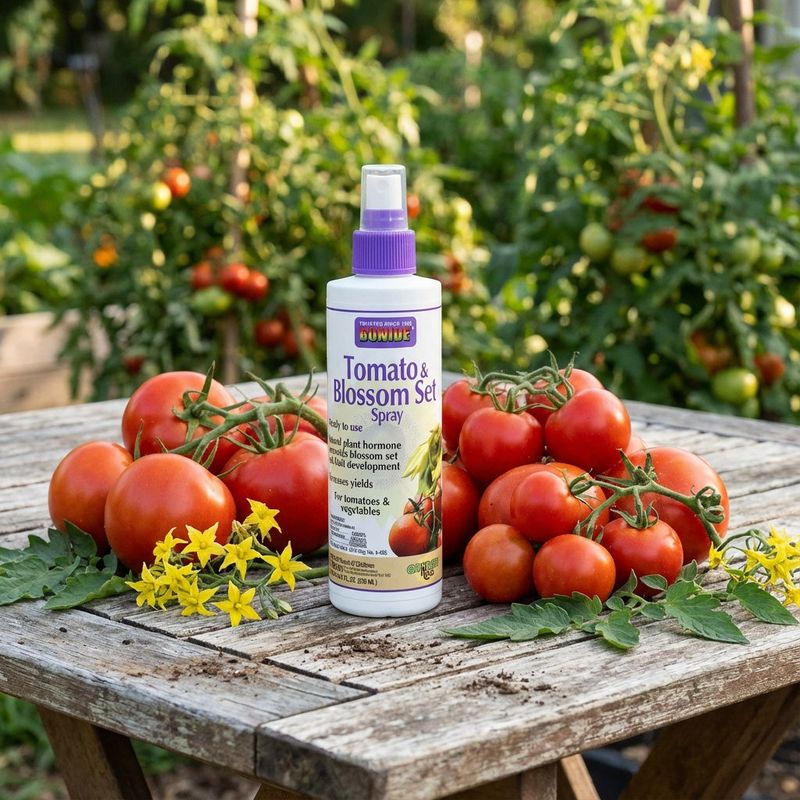
When tomatoes are blooming and dropping flowers without setting fruit, the temptation to reach for a product that promises to fix the problem is understandable. Most of those quick fixes, however, either address a different problem entirely or simply do not work under high-temperature conditions.
Knowing which steps to skip protects your time, your plants, and your wallet.
Excess nitrogen is a common mistake when fruit fails to set. A plant that is already producing vigorous green growth does not need more nitrogen, and adding it can push even more leafy growth at the expense of flowers and fruit.
A soil test and label-directed fertilizer application are far safer than adding fertilizer simply because tomatoes are not forming. Oklahoma State Extension’s column on tomato blossom drop points out that hormone-type blossom-set sprays may help with some low-temperature spring situations where cold is preventing set, but have little practical effect under high-temperature conditions.
Using a blossom-set spray marketed as a universal solution to October heat is unlikely to produce tomatoes from flowers that are already being compromised by excessive warmth.
Calcium products are another frequent misdirection. As described in the symptom-check section, calcium-related disorders affect fruit that has already formed, not flowers that drop before any fruit develops.
Spraying or adding calcium to address pre-fruit blossom drop does not match the biology of the problem. Oklahoma State Extension consistently emphasizes water management rather than calcium supplementation as the appropriate response to calcium-related fruit disorders.
For any spray product you are considering, the product label is the legal and practical guide for safe use. The EPA advises that pesticide labels carry the force of law, and applying any product in a way that is inconsistent with label directions, including spraying open flowers when the label prohibits it, is both unsafe and illegal.
New flowers may need time after the weather breaks
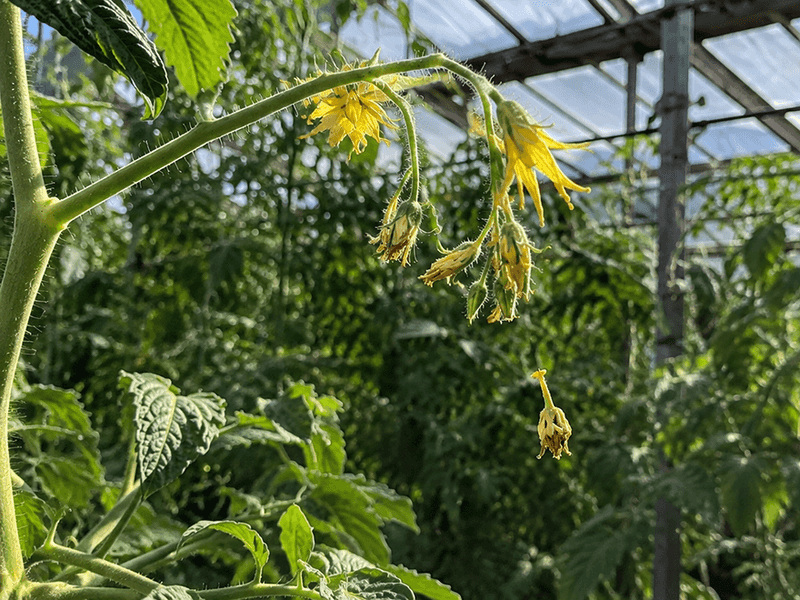
Flowers that opened during the hottest part of a warm October stretch are very likely already lost, even after temperatures begin to moderate. Each tomato flower has a limited window during which fertilization can occur, and once that window closes with the flower damaged or dropped, nothing you do will recover that individual bloom.
University of Minnesota’s vegetable IPM blog describes how vegetables exposed to heat stress during their flowering window often fail to yield from that flush even when conditions later improve, because the damage to pollen and flower tissue is already done.
The more productive focus is on the next round of flowers. Tomato plants continue to produce new flower buds as long as conditions remain within a workable range, and those later buds may open during cooler days and nights that allow normal pollination and fertilization.
Consistent care in the meantime, including even soil moisture, protective mulch, and avoiding unnecessary disruption to the plant, keeps the vine in good condition to take advantage of a better window.
Oklahoma State Extension notes that temperature fluctuations during a season mean some flower flushes will succeed and others will not, which is why gardeners who maintain plant health through a difficult period often see fruit set resume when conditions moderate. There is no reliable way to predict exactly when that shift will happen or how many tomatoes will result.
Watch the next flush of flowers carefully, track temperatures during that period, and resist the urge to intervene aggressively while the plant is still under stress. Progress shows up as tiny fruitlets holding on the vine, not as a fixed date on the calendar.
Plan the next fall crop around Central Texas conditions
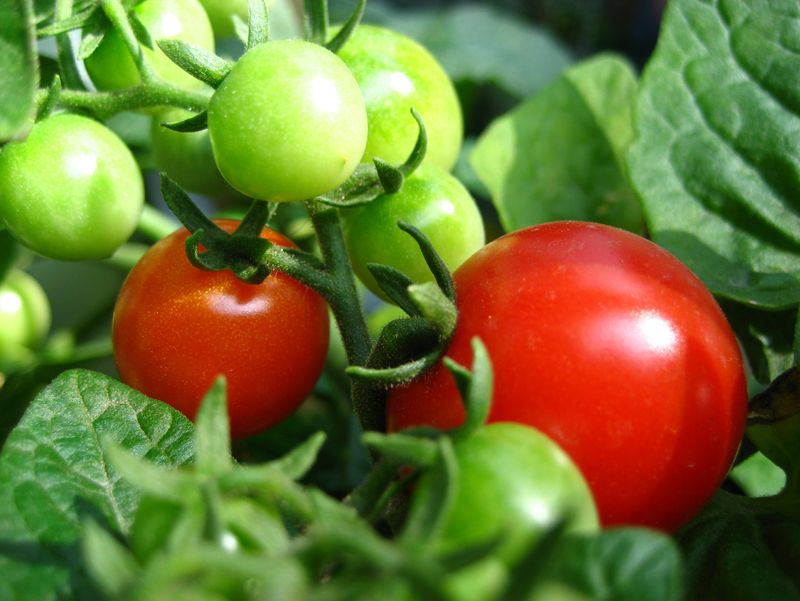
The best time to address October blossom drop is before the plants ever go in the ground. Central Texas fall tomatoes need to be established well ahead of the month when fruit is expected to set, and treating October as a transplanting month misreads the regional calendar entirely.
Texas A&M AgriLife’s fall vegetable gardening guide places the fall tomato transplanting window in the July-to-August range for Central Texas, with harvest expected from October through the first frost. Plants that go in the ground in late summer have time to develop strong root systems and begin flowering before the most difficult heat has passed.
Variety selection also matters more than many gardeners realize. Small-fruited types, including cherry and grape tomatoes, tend to set fruit more reliably in warm conditions than large-slicing varieties, though no cultivar is immune to sustained extreme heat.
University of Florida IFAS notes that cherry tomatoes often outperform larger types during hot periods and recommends heat-tolerant cultivars for warm-climate production. Cultivars listed in Florida production guides, such as Heat Wave II, Solar Fire, and Florida 91, were developed and tested in Florida conditions and should not automatically be assumed to perform the same way in Central Texas yards without local trial results.
Texas A&M does maintain variety recommendations with heat-tolerance ratings, and those are a more regionally grounded starting point.
Texas A&M’s commercial tomato guide identifies improper temperatures as one of the primary causes of failure to set fruit, which reinforces why timing the planting window to match the region’s actual climate is more reliable than trying to correct heat problems after they occur. For next season, the practical rule is straightforward: use transplants, stick to the regional planting calendar, choose varieties with documented heat tolerance, protect the root zone with mulch from the start, and monitor actual temperatures rather than assuming the calendar guarantees suitable conditions.
The gardeners who harvest the most fall tomatoes in Central Texas are usually the ones who gave the plants the best possible start before the heat of the season arrived.