
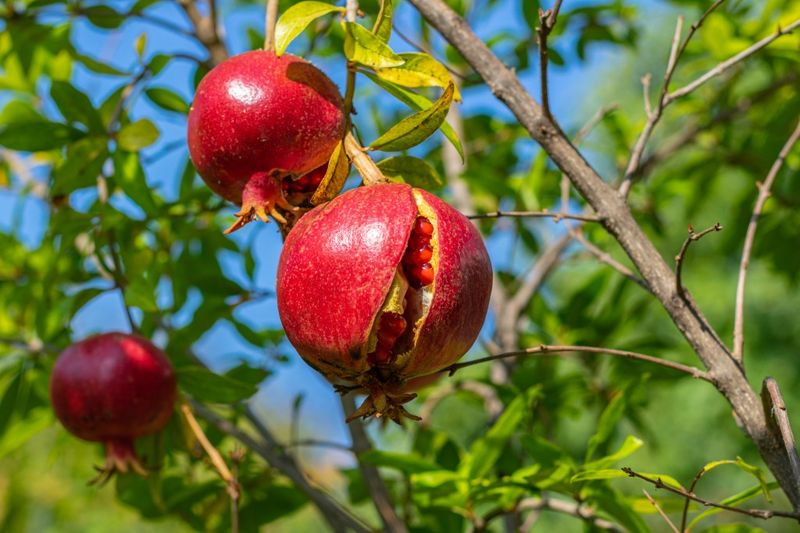
Few things sting more than watching a pomegranate you’ve tended all season crack open just days before you planned to pick it. For Central Texas gardeners, this late-season heartbreak happens more often than it should, and a sudden swing in soil moisture is one of the most common reasons.
Understanding what triggers the split, and what you can do about it now and next season, makes the difference between a frustrating harvest and a much better one.
A sudden change in water availability can trigger splitting near harvest
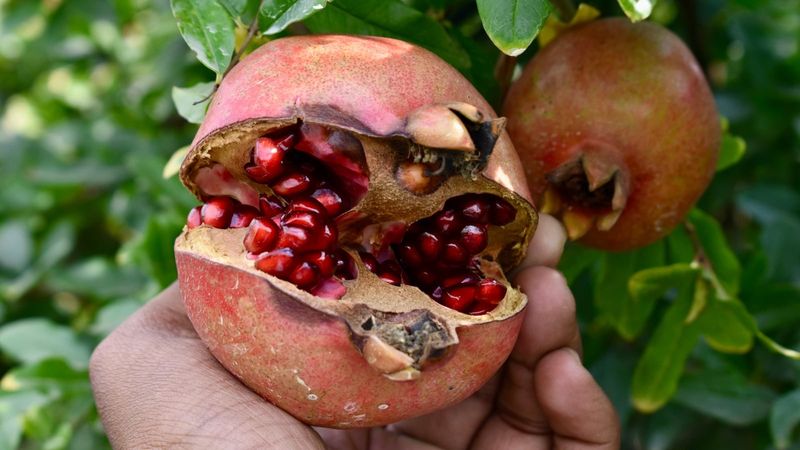
Pomegranates are not especially fragile trees, but their fruit has a window of real vulnerability in the final weeks before ripening. During that period, the rind has limited ability to stretch, and the arils inside are still expanding.
When the tree has gone through a dry stretch and then receives a large amount of water, whether from a thunderstorm or a heavy irrigation session, the internal pressure can build faster than the rind can accommodate, and the fruit cracks open.
Field research on pomegranate water status near harvest documented exactly this pattern: trees that experienced dryness before a rainfall event showed increased aril turgor that outpaced peel turgor, creating the pressure that splits the fruit. A broader review of cracking research, published in a recent pomegranate physiology study, confirms that fluctuating water availability during late fruit development is a recognized, recurring risk factor across growing regions.
That said, a crack alone does not prove that uneven watering was the cause. Genetics, heat, sunburn, insects, disease, and other environmental pressures can all contribute, and sometimes several factors overlap in the same season.
Before drawing any conclusions, think back over the past several weeks: did the soil stay consistently moist, or did it go bone dry between waterings? Did a heavy rain follow a long dry spell?
Did you notice the first cracks within a day or two of a big irrigation or storm? UC IPM guidance on pomegranate production cautions against both water stress and overwatering, which underscores that the problem is the swing itself, not any single irrigation event viewed in isolation.
Matching the timeline of cracks to recent moisture events is the most useful first step. If the pattern fits, uneven watering is a credible, fixable contributor worth addressing going forward.
Why nearly ripe fruit can split when water returns
The inside of a pomegranate near harvest is packed with arils, the juice-filled seed sacs that give the fruit its value. Each aril is essentially a small pressurized container, and when the whole tree absorbs water rapidly after a dry period, those arils can rehydrate and swell faster than the surrounding rind is able to expand along with them.
Think of it this way: during a dry stretch, the fruit may slow its growth or even lose a small amount of moisture. The rind, which is already beginning to firm and mature, does not simply bounce back like a rubber band when conditions change.
Research on pomegranate fruit cracking physiology describes the rind’s reduced elasticity near maturity as a key factor that makes late-season moisture swings particularly damaging. When water becomes suddenly available again, the arils regain turgor pressure while the rind resists stretching, and something has to give.
The same mechanism applies whether the water comes from a drip line, a garden hose, or an afternoon thunderstorm. A field study tracking aril and peel turgor after rainfall found that aril pressure increased more sharply than peel pressure following a moisture event in previously stressed trees, confirming that the mismatch in expansion rates is the physical cause of the split.
A comprehensive review of pomegranate cracking research identifies this turgor imbalance as one of the most consistently documented contributors across cultivars and climates.
Understanding this mechanism matters because it reframes the problem. Watering itself is not the enemy; the rapid shift from dry to wet is.
Keeping the root zone at a reasonably stable moisture level throughout fruit development removes the extreme contrast that triggers the split, which is a more achievable goal than avoiding irrigation altogether.
Check the tree’s history and other sources of stress
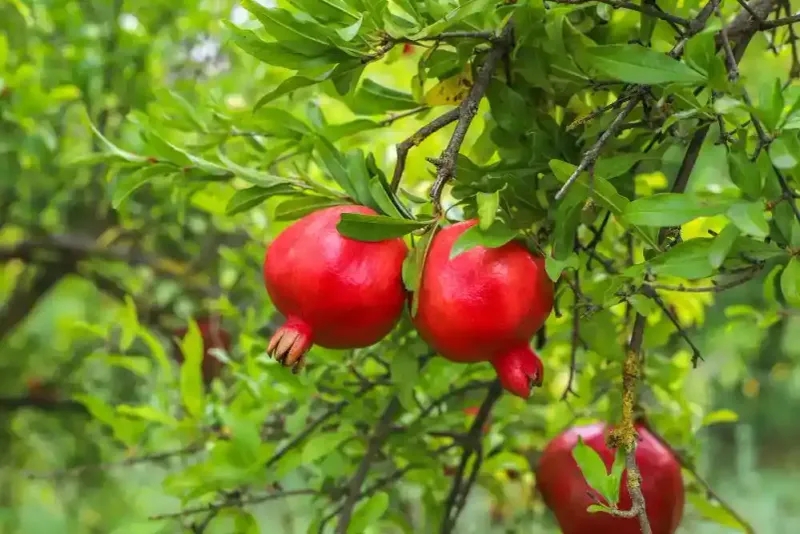
Before adjusting the irrigation schedule, spend a few minutes as a detective rather than a gardener. Walk around the tree and look at where the cracks appear: are they concentrated on the sun-exposed side of the fruit, which might point to sunburn and heat stress?
Are they scattered across multiple fruit in one cluster, or isolated to a single fruit that may have suffered insect or mechanical damage? The location and pattern of cracks can help narrow down what actually happened.
Next, reconstruct the recent moisture history as honestly as possible. Did you miss a week of watering during a hot spell?
Did you compensate with a long, heavy soak right after? Did a pop-up storm drop an inch of rain after two weeks without any?
Drainage matters too: if your soil holds water for days after rain, the tree may have experienced a wet-to-dry-to-saturated cycle even if you never touched the hose. Mulch depth, sun exposure, and the presence of nearby pavement that radiates heat can all amplify moisture swings at the root zone.
Texas A&M extension guidance on pomegranates specifically identifies splitting near maturity as an ongoing challenge for the ‘Wonderful’ cultivar in Texas, which is one of the most widely planted varieties in the state. That does not mean ‘Wonderful’ always splits or that other cultivars are immune.
Splitting has been documented across many pomegranate types, and a research review on cracking factors lists cultivar genetics as an independent variable that interacts with environmental conditions.
Other contributors worth ruling out include insect feeding wounds that weaken the rind, fungal disease that softens the skin, and possible nutrient imbalances. Studies examining nutritional influences on pomegranate cracking suggest that relationships between specific nutrients and splitting are complex and vary by cultivar and growing conditions.
Do not apply calcium, boron, or potassium supplements without a soil or leaf test confirming a deficiency; blind fertilization can create new problems without solving the cracking. Recent physiological research notes that nutrient treatments for cracking have produced inconsistent results across regions, which makes testing before treating the more sensible approach.
Keep root-zone moisture reasonably steady
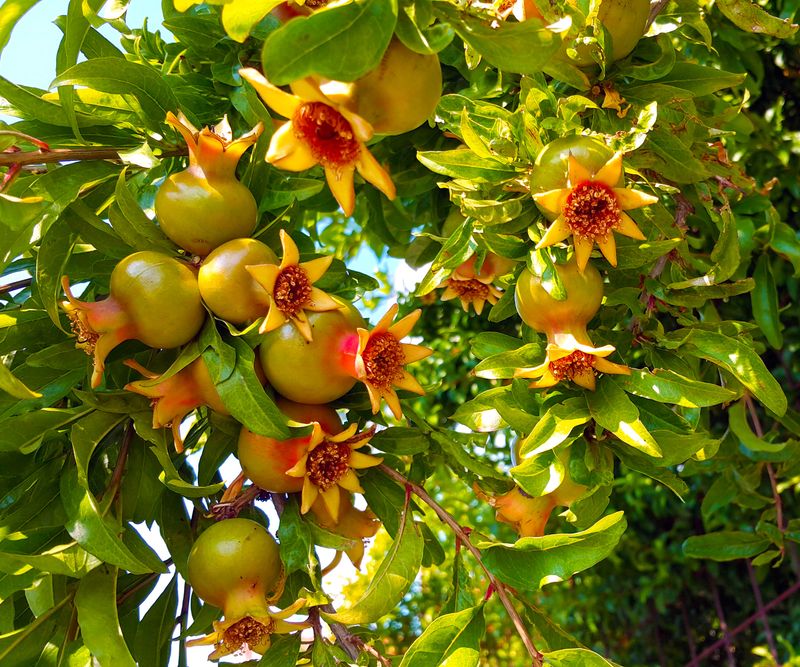
The most practical correction available to a Central Texas homeowner is also the most straightforward: stop letting the root zone swing between parched and saturated. During fruit development and ripening, consistently moist soil gives the tree a stable supply of water, which means the arils expand at a gradual, manageable rate rather than in a sudden rush after a dry stretch.
University of Georgia extension guidance on pomegranate production advises regular irrigation throughout the growing season while explicitly warning against excessive fall irrigation, which it identifies as a contributor to fruit splitting. That two-sided caution matters: the goal is neither to flood the tree nor to let it go dry, but to keep conditions in a reasonable middle range.
Utah State extension research on pomegranates similarly recommends consistent watering and notes that water stress followed by heavy irrigation or rain is a recognized trigger for cracking.
What consistent moisture looks like in practice varies considerably from one Central Texas yard to the next. Heavy clay soil holds water much longer than sandy loam, so the same irrigation interval that keeps one tree in good shape might leave another waterlogged or bone dry.
Tree size, canopy spread, root depth, mulch coverage, shade, and local watering restrictions all factor in. UC IPM’s pomegranate production guidelines caution against both water stress and overwatering without prescribing a universal schedule, and that flexibility is appropriate given how much conditions vary.
Two things to avoid: cutting off water abruptly as harvest approaches, and compensating for a missed session with a prolonged heavy soak. Abruptly stopping irrigation can create the very dry-to-wet contrast that increases cracking risk when rain eventually returns.
Texas A&M EarthKind water efficiency guidance supports deep, infrequent watering adjusted to actual soil and weather conditions rather than a fixed calendar schedule. Check the soil at root depth before irrigating, and let that reading drive the decision rather than the calendar.
Use deep, ground-level irrigation and protective mulch
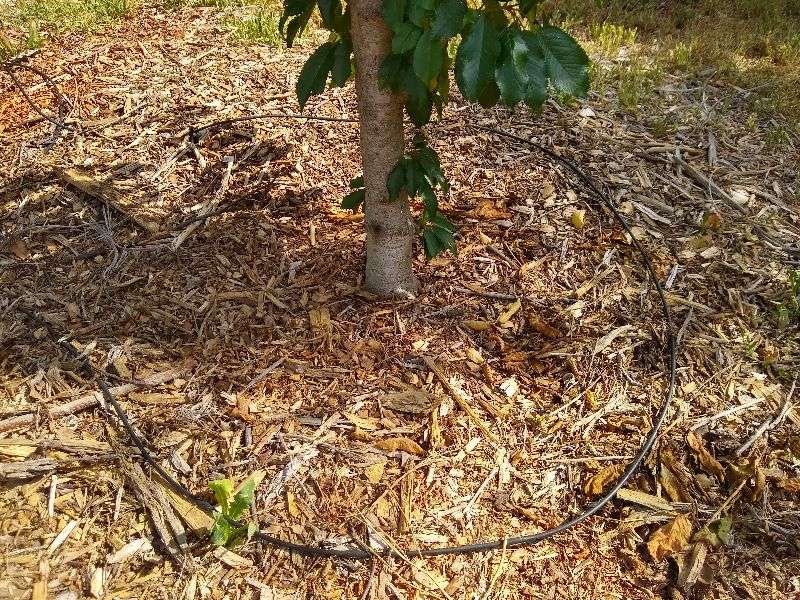
How water reaches the root zone matters almost as much as how much water the tree receives. Frequent, shallow watering wets only the top few inches of soil, which dries out quickly under Central Texas summer heat and encourages roots to stay near the surface where they are most vulnerable to moisture swings.
Deep watering, by contrast, moves moisture down into the active root zone where it stays available longer and moderates the extremes that trigger cracking.
Texas A&M EarthKind irrigation guidance recommends watering deeply and then allowing appropriate drainage before the next irrigation event, rather than applying light, frequent applications. For a fruiting pomegranate, that means wetting the soil to a depth that reaches the bulk of the feeder roots, then letting the soil partially dry before watering again.
The exact depth and interval depend on your soil type, drainage, and current weather, not a fixed number of gallons or days.
Ground-level delivery methods, such as drip emitters, soaker hoses, or a slow-running hose laid at the base of the tree, are preferable to overhead sprinklers for fruiting pomegranates. UGA pomegranate production guidance favors drip irrigation because it distributes water more evenly through the root zone and avoids wetting flowers and developing fruit, which can raise concerns about fungal pathogens.
Overhead watering that wets the fruit surface repeatedly is worth avoiding during the ripening window.
A 3- to 4-inch layer of organic mulch spread over the root zone, kept at least a few inches away from direct contact with the trunk, can meaningfully buffer soil-moisture swings between irrigation events. Texas A&M pomegranate production notes identify mulch as a practical tool for conserving soil moisture, and research reviews on cracking management associate reduced moisture fluctuation with lower cracking incidence.
Mulch will not replace attentive irrigation, but it gives the soil more time to stay in a useful moisture range between waterings, which is exactly the condition that supports stable fruit development.
Harvest mature fruit before cracks spread
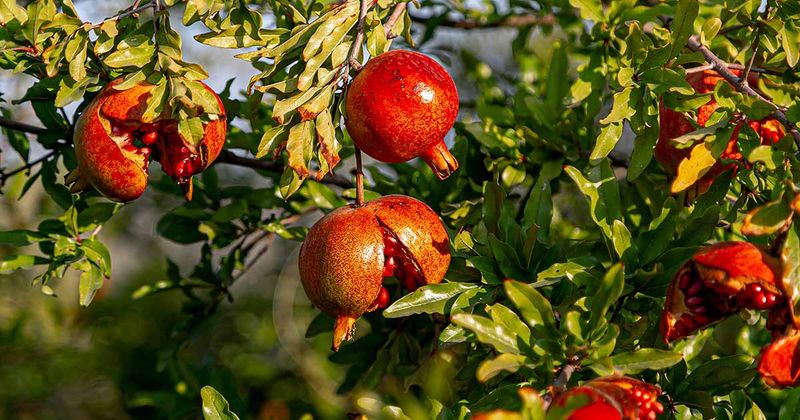
One of the most reliable ways to protect your harvest is to pick fruit as soon as it reaches maturity rather than waiting for a convenient weekend or hoping for a few more days of color development. Pomegranates do not continue to ripen after they are removed from the tree, so picking immature fruit is not a useful shortcut.
At the same time, leaving mature fruit on the tree through a rain event or irrigation cycle extends its exposure to the moisture swings most likely to cause splitting.
Maturity signs vary by cultivar, but several markers apply broadly. Utah State extension guidance on pomegranate harvest points to cultivar-appropriate skin color, a more angular or slightly squared shape as the arils press against the rind, and a noticeably heavy feel for the fruit’s size.
Tapping the fruit and listening for a metallic ring rather than a dull thud is another indicator some growers use. When you are unsure, cut open one representative fruit and taste it: mature arils are full, juicy, and sweet-tart rather than pale, watery, or astringent.
UC Master Gardeners’ pomegranate harvest guidance advises clipping fruit from the stem rather than pulling or twisting it off the branch. Pulling can tear the calyx or create wounds that invite decay.
UC Cooperative Extension postharvest handling notes reinforce gentle handling after picking, because any crack or bruise on the rind creates an entry point for mold and bacteria.
Do not use a crack as your primary ripeness signal. Cracking often occurs near maturity, but it can also result from sunburn, insect damage, disease, or a moisture event affecting fruit that still has days or weeks to go.
Relying on color, shape, weight, and a taste test from a representative fruit gives you a far more accurate picture of where the crop actually stands. UC IPM pomegranate guidelines similarly caution against using cracking alone as a harvest trigger.
Inspect split fruit and adjust the next crop’s care
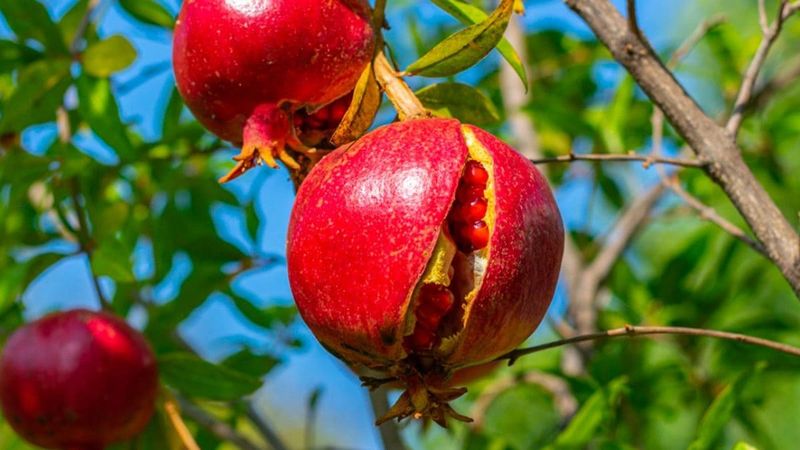
Once a pomegranate has cracked, irrigation management cannot close it back up. The rind has separated, the interior is exposed, and the practical question shifts from prevention to triage.
A fruit that split recently and cleanly, with no visible mold, no foul smell, and no sign of heavy insect activity inside, may still be perfectly usable if you act quickly. Bring it inside, rinse it, and use or refrigerate it within a day or two.
Utah State extension guidance on pomegranate care recommends prompt inspection of cracked fruit and immediate use of any that remain sound. UC IPM’s information on pomegranate blue and green mold explains that fungal spores are common in the environment and can colonize exposed fruit tissue quickly, especially in humid or warm conditions.
Fruit showing visible mold, soft or discolored aril masses, a sour or fermented odor, or heavy insect damage should be discarded rather than eaten or salvaged.
UC Master Gardeners’ pomegranate recommendations and UGA pomegranate production guidance both reinforce that split fruit left on the tree deteriorates quickly and can attract pests that create problems for remaining fruit. Remove damaged fruit promptly rather than leaving it to fall or dry on the branch.
For the season ahead, the adjustments most likely to reduce cracking risk are the ones described in the preceding sections: steadier root-zone moisture through fruit development, deep ground-level irrigation, appropriate mulch, and timely harvest. Current pomegranate cracking research acknowledges that no single management change eliminates the risk entirely, because cultivar genetics, weather patterns, and other variables remain outside a gardener’s control.
What you can control is the moisture environment at the root zone, and getting that right gives your next crop a meaningfully better chance of making it to the bowl intact.