
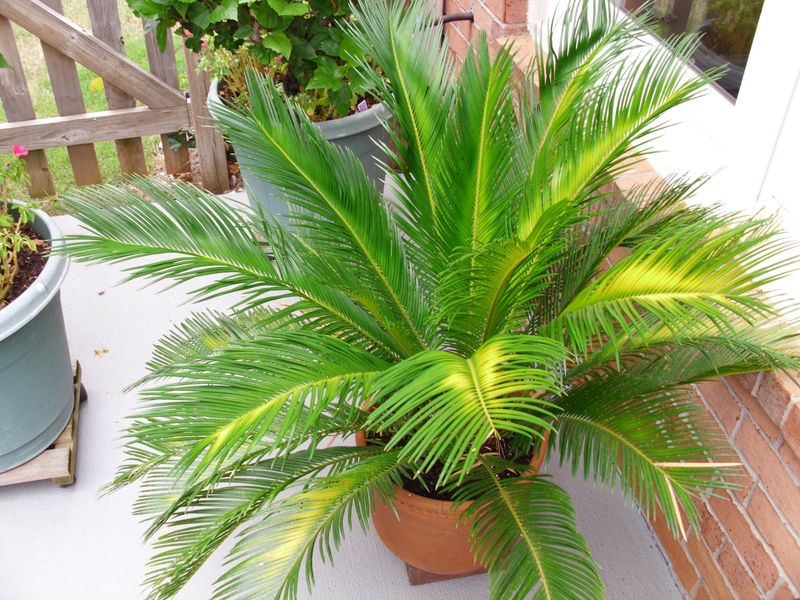
Sago palms are tough, dramatic plants that anchor Central Texas landscapes, but a spread of yellow fronds can send any homeowner into a panic. Before you reach for a bag of fertilizer, the location of that yellowing matters enormously because it points toward very different causes.
Bottom-up yellowing and new-growth yellowing look similar at a glance but require completely different responses, and getting this wrong can make the problem worse.
The newest fronds reveal whether manganese belongs on the suspect list
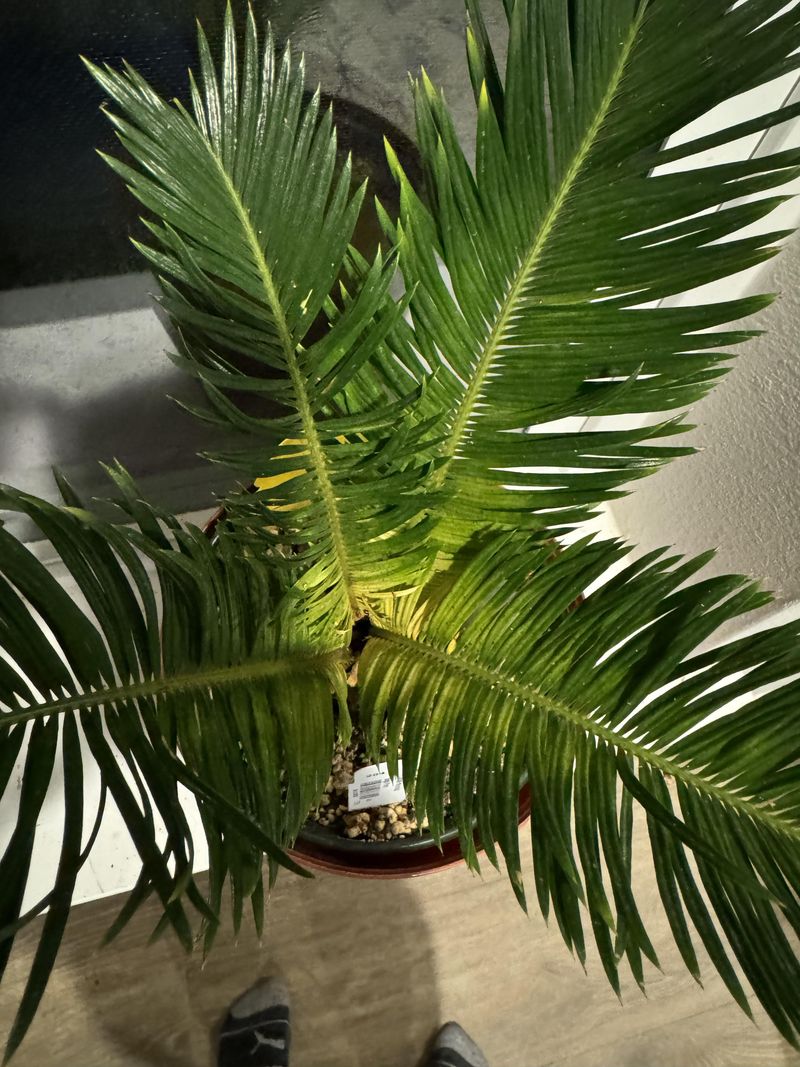
Manganese deficiency earns a specific nickname in the palm world: frizzle top. That name exists for a reason.
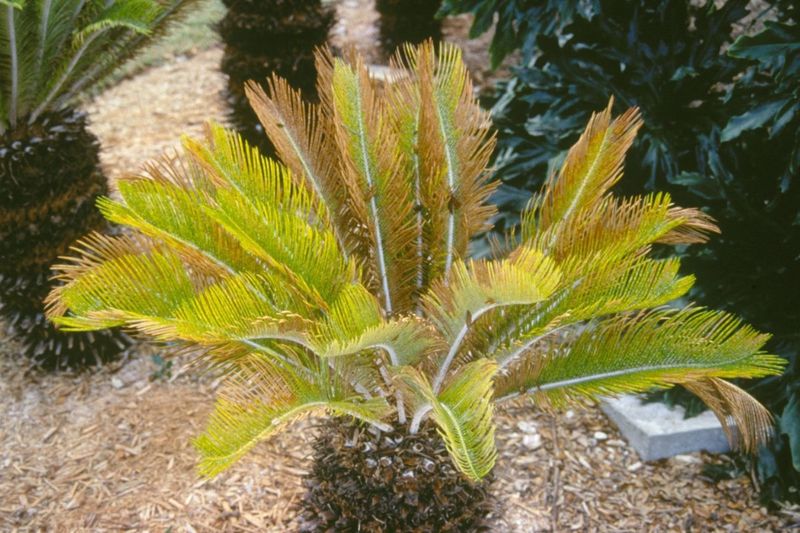
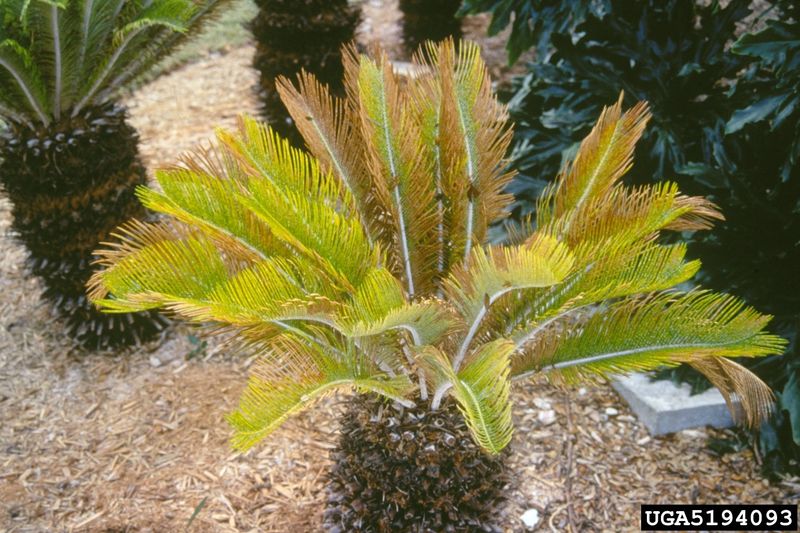
UF/IFAS research on palm nutrition disorders consistently places the first symptoms of manganese deficiency in the newest, uppermost fronds, not in the oldest growth at the base of the plant. New leaves may emerge pale yellow or washed out, develop brown spots or streaks running along the leaflets, and appear noticeably smaller than normal fronds from the same plant.
As the deficiency worsens, those young fronds can take on a frizzled or crinkled texture and may turn brown and die before they fully open. Severe, prolonged manganese shortage can threaten the entire plant because the growing point at the center of the crown depends on steady micronutrient supply.
The damage can progress downward over time as each successive flush of new growth fails, but the starting point is always the top.
That distinction matters for diagnosis. Walk up to your sago and look at the center of the crown before you interpret anything else.
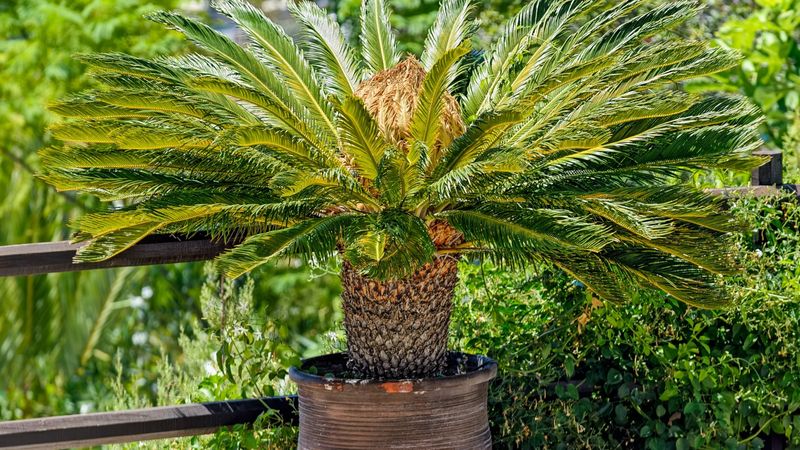
If the newest spear leaves and the most recently opened fronds look healthy, normal in size, and a good green color, manganese deficiency is unlikely to be driving whatever yellowing you see lower on the plant.
One more thing worth knowing before going further: sago palms are not actually palms. NC State Extension identifies Cycas revoluta as a cycad, a primitive plant group that predates flowering plants by millions of years.
Palm fertilizer is commonly recommended because their nutritional needs overlap, but the sago is its own category of plant, and that distinction occasionally matters when reading product labels or extension guidance written specifically for true palms.
Why Central Texas and fall can raise the question without answering it
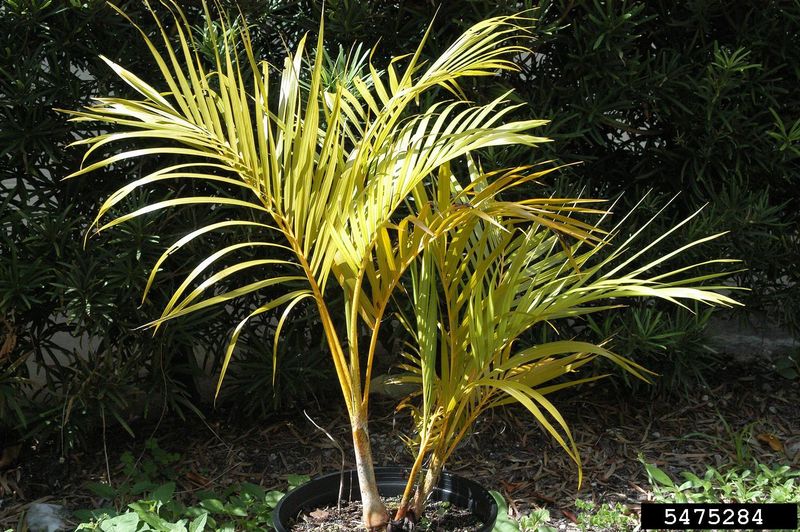
Central Texas sits on some of the most alkaline, calcium-rich soil in the country. Much of the region is underlain by limestone, and Texas A&M AgriLife research on Texas soil chemistry confirms that significant free limestone is common across the southern and western two-thirds of the state.
High soil pH is a real problem for micronutrient availability because it can lock manganese into forms that plant roots cannot absorb, even when the element is physically present in the soil.
Fall adds a second layer of plausibility. As temperatures drop, soil cools and root activity slows.
UF/IFAS micronutrient guidance for palms notes that cool soil can temporarily reduce root uptake of nutrients including manganese, particularly where availability is already marginal. A sago growing in alkaline soil that was borderline on manganese all summer might show more obvious symptoms once fall lowers soil temperatures and root efficiency.
That said, plausible is not the same as proven. The strongest research on cool-season manganese stress comes from work on coconut palms and other species in Florida, and it does not establish that every Central Texas sago palm develops a predictable, calendar-driven fall manganese shortage.
Central Texas yards also vary enormously: imported topsoil, raised planting beds, drip irrigation, concrete hardscape, compacted subsoil, and years of past fertilizer use can all shift soil chemistry in ways that diverge from the regional baseline. A neighbor’s sago two streets over may be in completely different growing conditions than yours.
The regional and seasonal context is worth keeping in mind, but neither factor substitutes for looking at the plant and, when needed, testing the soil.
Older, lower fronds point toward a different first diagnosis
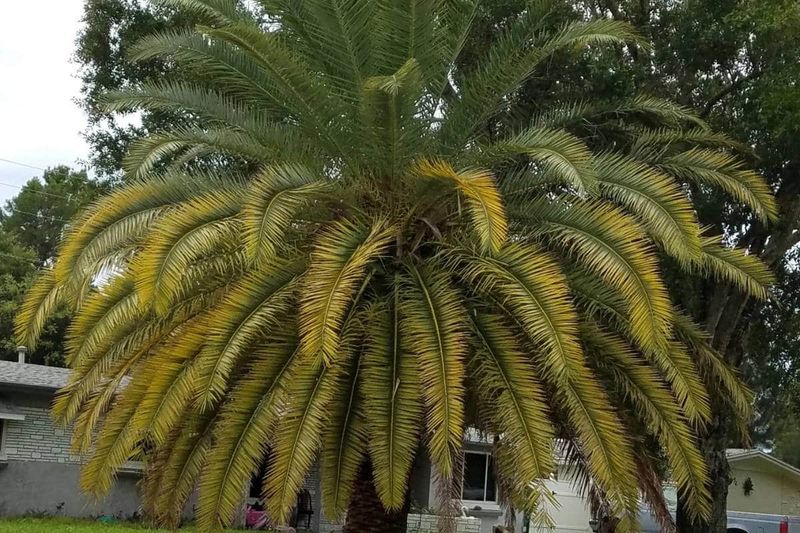
Yellow fronds climbing upward from the base of a sago palm while the crown stays green and healthy is a pattern that points away from manganese before it points toward it. UC IPM guidance on nutrient deficiency patterns makes clear that nutrients which move freely within a plant, including magnesium, potassium, and nitrogen, are pulled from older tissue to support new growth when supplies run short.
That internal redistribution is why their deficiencies tend to appear first in the oldest, lowest fronds.
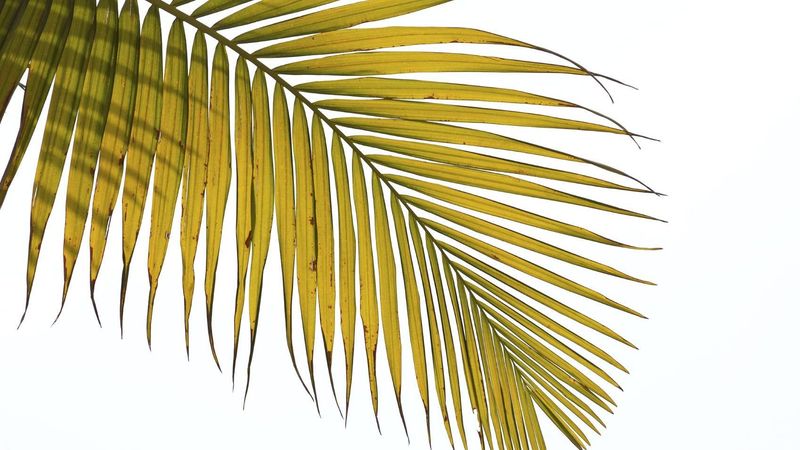
Magnesium is the most commonly confused culprit in this pattern, and it deserves a direct comparison to manganese. UF/IFAS Polk County Extension’s palm yellowing guide explains that magnesium deficiency typically produces yellowing along the margins or tips of older fronds while the center stripe or midrib of the leaflet stays a darker green.
Manganese deficiency, by contrast, hits new growth and can produce frizzling, streaking, and distortion in the youngest leaves. Epsom salts are magnesium sulfate and address a magnesium shortage, not a manganese one.
Reaching for Epsom salts when manganese is the actual problem accomplishes nothing useful and can create nutrient imbalances.
Potassium and nitrogen shortages can also cause older-frond yellowing, and UC IPM’s palm mineral deficiency reference notes that potassium deficiency in palms often appears as translucent yellow-orange spotting on older leaves that progresses to necrosis. Normal aging also causes older fronds to yellow and eventually die, which is simply part of a sago’s growth cycle.
Root stress from compacted soil, overwatering, underwatering, or transplant shock can reduce nutrient uptake across the board and mimic multiple deficiencies at once.
Nutrient symptoms overlap significantly, and University of Arizona Extension’s nutrient deficiency guide cautions that visual diagnosis alone is often not enough when more than one problem is occurring simultaneously. The frond location gives you a starting hypothesis, not a confirmed answer.
Inspect the roots, fronds, and weather history before adding fertilizer
Fertilizer is not a safe default when you are unsure of the diagnosis. Running through a practical inspection sequence first can save the plant from an unnecessary chemical load and redirect you toward the actual problem faster.
Start with the soil around the base of the plant: probe it with a screwdriver or a finger to check whether water is draining freely or pooling. Soggy soil around the root zone signals drainage trouble that will interfere with nutrient uptake no matter what you apply.
Next, think through your recent watering history. Both overwatering and underwatering stress roots in ways that cause yellowing across multiple frond ages and can look like nutrient deficiency.
Compacted soil from foot traffic or equipment near the plant’s drip line restricts oxygen and root growth. If the sago was transplanted recently, transplant stress alone can produce widespread yellowing for a full growing season as roots reestablish.
Then flip the fronds over and look at the undersides carefully. UC IPM’s cycad scale identification page describes cycad aulacaspis scale as a fast-spreading pest that produces white, crusty coverings on frond undersides and can cause yellow spotting or mottling that closely resembles nutrient problems.
Heavy infestations spread to the trunk and roots, and UF/IFAS guidance on cycad scale notes that severe cases can deform new growth and kill the plant. Treating for a nutrient deficiency while scale is destroying the plant from the outside in wastes time the sago does not have.
Cold injury is another fall and winter confounder. UF/IFAS palm disorder research describes cold-damaged sago fronds as showing uneven or sectional browning that does not follow a clean nutrient-deficiency pattern.
Upper leaves are often affected, and damage may not be fully visible until days or weeks after a cold event. If your area had a cold snap before the yellowing appeared, temperature injury belongs on the suspect list ahead of manganese.
A soil test keeps a plausible deficiency from becoming a fertilizer mistake
Soil testing is the step most homeowners skip, and it is often the one that would have prevented a costly error. Texas A&M AgriLife Extension’s fertilizing guidance recommends testing before adding nutrients because both deficiencies and excess fertilizer can damage plants.
Over-applying micronutrients is a real risk: manganese toxicity can injure roots and foliage, and adding manganese to soil that already has enough of it in plant-available form creates an imbalance rather than solving one.
A basic soil test from a Texas A&M-affiliated lab will report pH along with major nutrients. High pH results, generally above 7.5, support the concern that manganese may be less available even if it is present in the soil.
That result, combined with a convincing new-growth symptom pattern, builds a reasonable case for a manganese-targeted response. Healthy new growth above yellow older fronds, combined with a soil test that shows adequate pH or flagged levels of other nutrients, should redirect the investigation toward magnesium, potassium, nitrogen, or root stress before manganese.
Soil testing does not catch everything. Texas A&M AgriLife’s plant nutrition reference notes that tissue testing can sometimes reveal what soil tests miss, because a nutrient can be present in the soil but still unavailable or unabsorbed by the plant.
For a sago that continues declining despite a reasonable soil test result and corrective action, tissue testing or a consultation with a local certified arborist or extension agent is a more reliable next step than adding more product.
When manganese is supported, use the right product and no universal dose
Getting the product right matters as much as the decision to treat. Manganese sulfate and magnesium sulfate are different compounds with different uses.
Magnesium sulfate is Epsom salt, a common garden product that addresses magnesium shortages. UF/IFAS Nassau County Extension’s sago palm guidance specifically flags this confusion and confirms that Epsom salt does nothing to correct a manganese deficiency.
If you pick up the wrong bag, you are not treating the problem you diagnosed.
When manganese deficiency is confirmed or strongly indicated by new-growth symptoms and supporting soil information, extension sources support two main options: a palm fertilizer that includes micronutrients in its formulation, or a direct soil application of manganese sulfate. UF/IFAS Santa Rosa County Extension describes broadcasting manganese sulfate evenly across the root zone beneath the canopy and watering it in thoroughly so the product moves toward the roots.
The amount to use is not a fixed number, and treating it as one is a mistake. UF/IFAS palm fertilization guidelines give a broad range that spans from roughly 8 ounces for a small plant in sandy, lower-pH soil to around 5 pounds for a large specimen growing in high-pH limestone conditions.
Plant size, soil type, soil pH, and deficiency severity all shift that number significantly. Applying the high end of that range to a small sago in average soil can injure the plant and create new problems.
The product label is your legal baseline for application. Pair it with your soil test results and, when possible, guidance from your local Texas A&M AgriLife Extension office, which can account for your county’s specific soil conditions.
UF/IFAS palm nutrition disorder research also supports foliar manganese applications in some cases, but soil application is more commonly recommended for cycads, and foliar rates carry their own label-specific instructions.
Recovery takes new growth, not a greener version of the damaged fronds
One of the most common disappointments after treating a manganese-deficient sago is expecting the yellow fronds to turn back to green. They will not.
UF/IFAS palm nutrition guidance is direct on this point: tissue that has already been damaged by a nutrient deficiency stays damaged. The meaningful sign of recovery is a future flush of growth that emerges healthy, properly sized, and free of streaking or frizzling.
That flush may take several months to appear, and patience is genuinely required.
While you wait, leave green or partly green fronds on the plant. UF/IFAS Nassau County Extension advises against removing fronds that still carry green tissue because those leaves continue contributing energy to the plant through photosynthesis.
Removing them to improve appearances adds stress to a sago that is already working to recover. For fronds that were browned by cold injury specifically, hold off on removal until the risk of frost in your area has clearly passed, because damaged fronds may offer some insulation to the crown and lower growth beneath them.
Routine fall or winter fertilization is not something to plan around as a seasonal habit. Growth slows significantly as temperatures drop, and UF/IFAS palm disorder research does not frame a fall manganese application as a standard preventive measure.
Any application should follow the product label, reflect your soil test results, and account for current growth conditions rather than the calendar.
Safety deserves prominent attention here. The ASPCA lists sago palm as highly toxic to dogs, cats, and horses, with seeds being especially dangerous and capable of causing liver failure and death.
NC State Extension confirms that all parts of Cycas revoluta are toxic to humans as well, and UC ANR plant safety guidance reinforces that seeds pose the greatest risk. Wear gloves and long sleeves when working around sago palms because the frond tips are sharp enough to puncture skin.
Keep children and pets away from the work area, pick up any fallen seeds, fronds, or fertilizer immediately, and store unused product securely out of reach.
Use the crown, not the calendar, to decide your next step
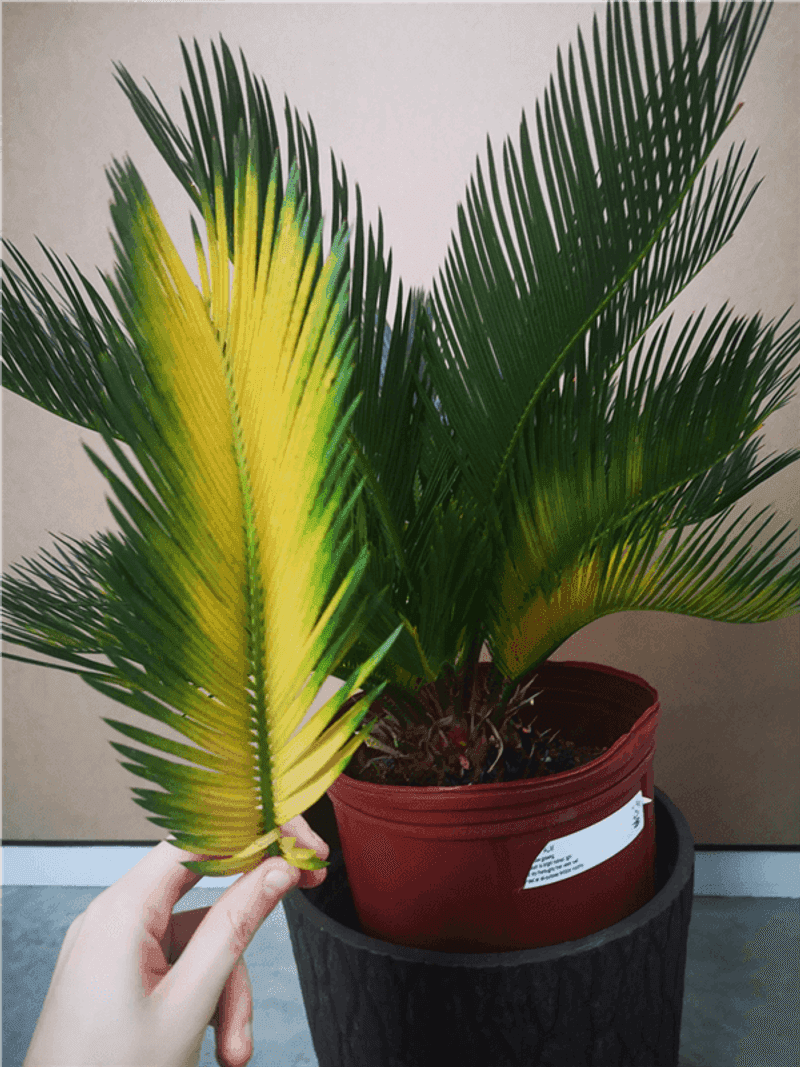
The crown is your most reliable diagnostic tool. When new fronds emerge yellow, streaked, undersized, distorted, or frizzled, especially in a yard with alkaline or limestone-influenced soil, manganese availability deserves serious investigation.
Get a soil test, confirm the symptom pattern matches new-growth involvement, and then choose a product and rate based on that evidence rather than assumption.
When the crown looks healthy and the problem is concentrated in older, lower fronds, UF/IFAS palm micronutrient guidance and UC IPM nutrient deficiency pattern references both support looking at magnesium, potassium, nitrogen, root stress, or pest damage before manganese. Fall timing can influence uptake when soil is cooling and root activity is slowing, but the season alone does not tell you which nutrient is short or whether any nutrient is short at all.
The goal of any treatment is healthier future growth, not a cosmetic fix for leaves that are already yellow. A sago palm that puts out a strong, full, green flush of new fronds next season is a sago that was diagnosed and treated correctly, and the crown is where that story either begins well or does not begin at all.