
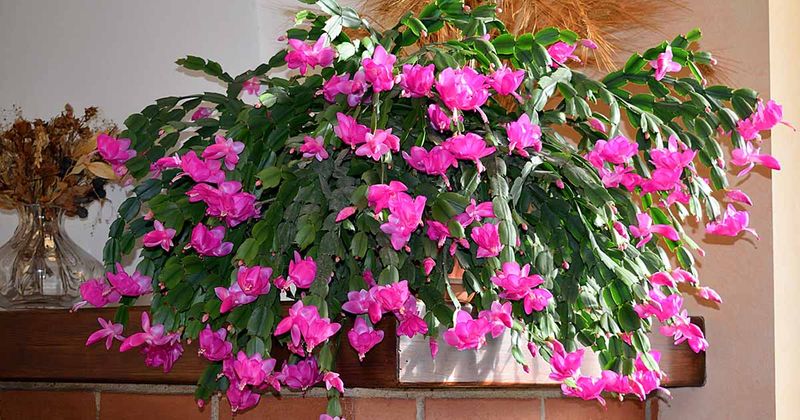
Many Southern gardeners have watched a holiday cactus sit quietly through fall and winter without a single bud, wondering what went wrong. The plant is alive, the leaves look fine, but December comes and goes with no flowers.
Getting a holiday cactus to bloom reliably comes down to a few environmental cues you can start creating right now, before fall arrives. Understanding what those cues are, and what they are not, makes the difference between hoping for flowers and actually setting the stage for them.
An interrupted night signal can block bud formation
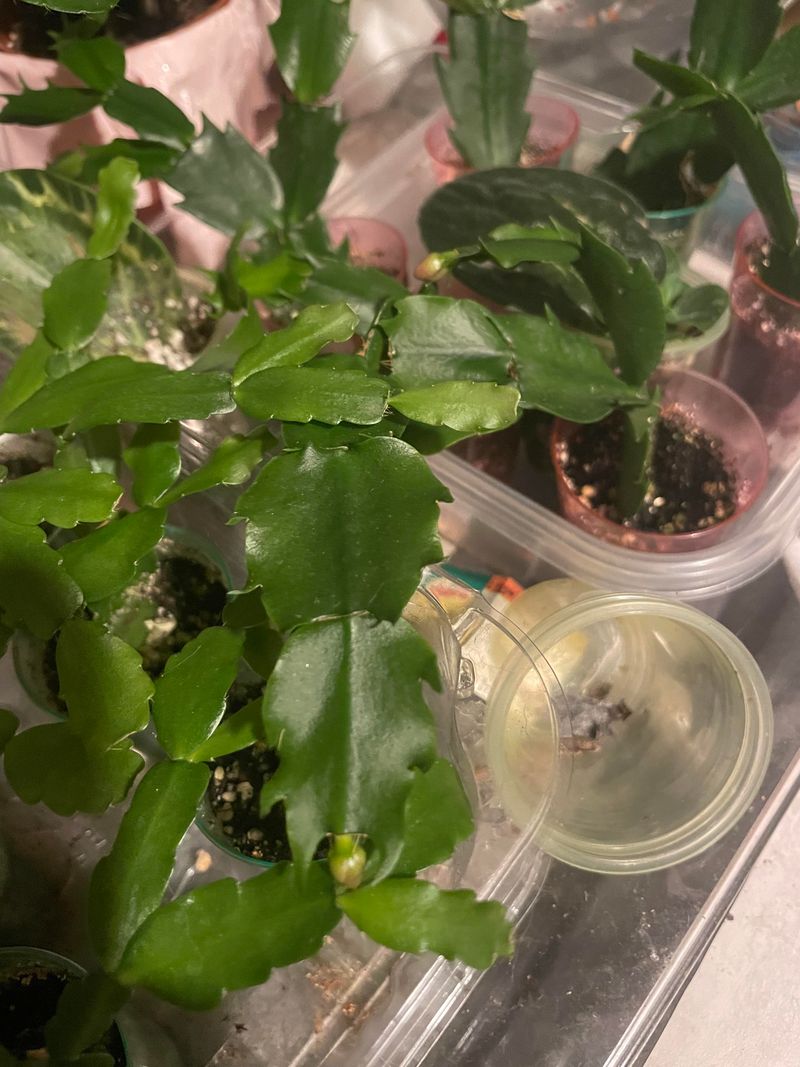
Holiday cacti are short-day plants, meaning they generally start forming flower buds as nights grow longer and temperatures begin to ease off the summer heat. That response to lengthening darkness is one of the main triggers for bud initiation, but it is far from the only factor at work.
Root health, plant maturity, cultivar type, and overall care history all play a role in how generously a plant blooms.
An interrupted dark period is one practical reason a holiday cactus may miss its bloom window. Iowa State University Extension guidance on holiday cacti explains that these plants need roughly 12 to 16 hours of uninterrupted darkness each night for several weeks to encourage bud formation, and that even brief nighttime light exposure can disrupt the signal.
One idea that circulates among gardeners is that withholding water forces a holiday cactus to bloom out of stress. Research from commercial production does not support that approach.
UMass Extension’s commercial holiday cactus production guidance notes that water stress has not been shown to reliably initiate flower buds and can actually reduce bud set. The goal of a late-summer and fall care routine is to provide the right environmental cues, not to push the plant to its limits.
Identify the holiday cactus before choosing a bloom date
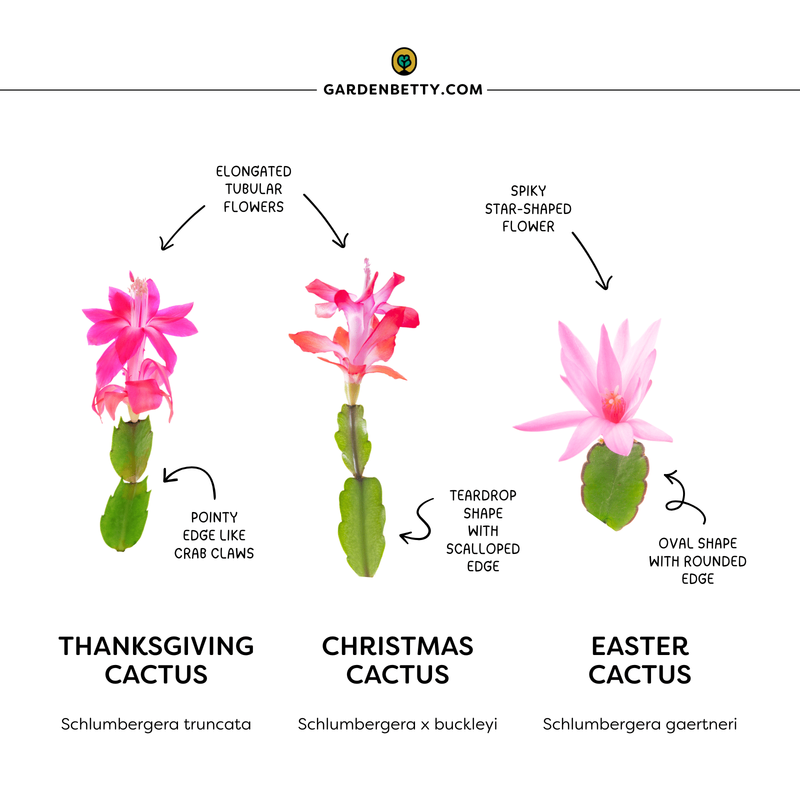
The tag at the garden center probably says “Christmas cactus,” but that label covers a wide range of plants. Many of them are actually Thanksgiving cactus, Schlumbergera truncata, or hybrids that share traits of both.
Knowing which one you have helps you set a realistic bloom expectation and choose the right preparation window.
The easiest way to tell them apart is to look at the edges of the flat stem segments. Iowa State Extension’s holiday cactus overview describes Thanksgiving cactus as having pointed, claw-like teeth along its margins, while true Christmas cactus, Schlumbergera x buckleyi, has rounded or scalloped margins.
Thanksgiving cactus tends to bloom earlier, often in November, while true Christmas cactus generally flowers closer to December or even January.
If your plant bloomed in November last year, that is not a failure. It may simply be a Thanksgiving cactus doing exactly what it is supposed to do.
UConn’s holiday cactus factsheet points out that commercial growers also manipulate light and temperature before sale, so a plant’s first bloom in your home may not reflect its natural timing at all. Treat late summer through early fall as a flexible preparation window rather than a fixed start date, and let the plant’s stem shape guide your bloom-date expectations.
Give the plant bright days and uninterrupted darkness
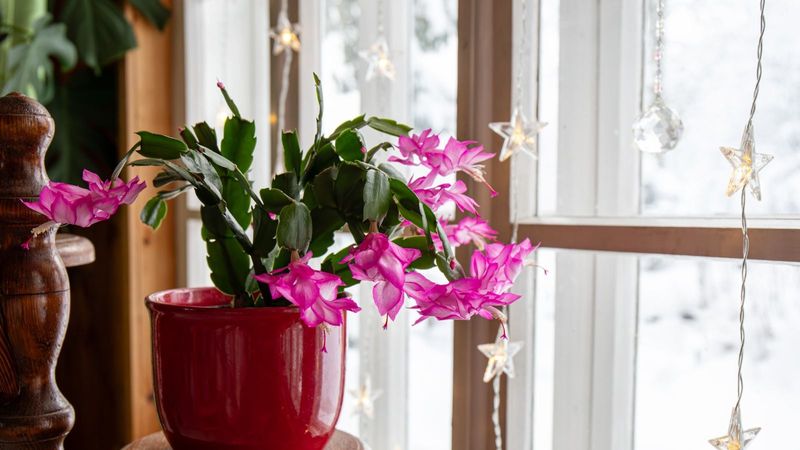
Bright, indirect light during the day and complete darkness at night form the core of the bud-initiation routine. Holiday cacti thrive in filtered or diffused light rather than harsh, direct sun, so a spot near a window with a sheer curtain or in a well-lit room away from a south-facing pane works well.
The daytime light keeps the plant actively photosynthesizing while the long dark period sends the flowering signal.
For the dark treatment, UF/IFAS Gardening Solutions recommends placing the plant in darkness from roughly 5 p.m. to 8 a.m. for about six weeks, after which buds typically appear within ten weeks of starting the treatment, though exact timing varies by cultivar. A spare bedroom, a hallway closet, or any room that stays genuinely dark after sunset can serve as the controlled dark location.
The tricky part for most households is light leaks. A lamp switched on briefly, kitchen overhead lights, a porch fixture, or even a streetlight shining through a thin curtain can break the dark period and prevent or reduce bud formation.
Iowa State Extension confirms that artificial nighttime illumination can interfere with the flowering signal in holiday cacti. If a closet is the chosen spot, make sure the door seals out hall light.
Darkness must be uninterrupted to give the plant the clearest possible cue, but providing the right conditions encourages buds rather than guaranteeing a particular flower count.
Pair the dark period with cooler, stable conditions
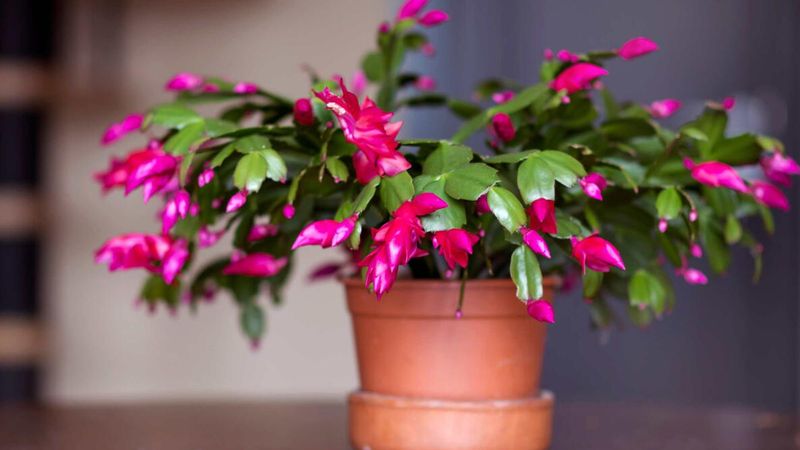
Darkness alone does not always complete the picture. Temperature works alongside the night signal to encourage bud formation, and warm nights can undercut an otherwise well-managed dark routine.
Iowa State Extension notes that temperatures above 70 degrees Fahrenheit can prevent flowering in many cultivars, which is a meaningful concern for gardeners in Florida, Texas, and other parts of the South where fall nights stay warm well into October.
A commonly cited cool-night target falls around 55 to 65 degrees Fahrenheit. UConn’s holiday cactus factsheet gives a comparable range of 60 to 70 degrees during the day and 55 to 60 degrees at night, while also noting that either long dark periods or cool nighttime temperatures can independently encourage bud set in some cultivars.
These ranges are useful targets, not strict thresholds every plant requires.
For Southern gardeners, a cool indoor room is often more reliable than an outdoor porch during early fall. UF/IFAS Bay County Extension advises Florida growers to bring holiday cacti inside when temperatures approach 50 degrees Fahrenheit and to protect plants from full summer sun.
Texas A&M’s plant-care guidance similarly recommends shade outdoors during summer and about 12 hours of constant darkness in fall. A consistently dark, reasonably cool interior room gives Southern plants a more controlled environment than a warm, light-polluted porch ever could.
Maintain healthy roots while the plant sets buds
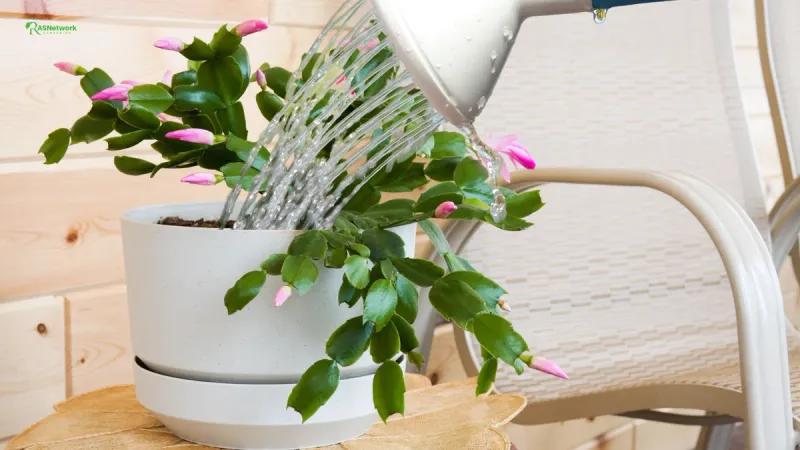
Getting the light and darkness right matters, but none of it helps much if the plant’s roots are struggling. Holiday cacti are rainforest epiphytes, not desert cacti, and they need consistent moisture rather than drought cycles.
UConn’s holiday cactus care guidance warns against allowing severe shriveling, a practice sometimes recommended as a bud-forcing trick that has no reliable scientific backing and can actually stress the plant into dropping buds rather than forming them.
A freely draining pot is the foundation of healthy watering. Water consistently enough to prevent the soil from staying bone dry for extended periods, but never let the pot sit in standing water or the soil stay constantly saturated.
Iowa State Extension recommends emptying standing water from saucers and avoiding both prolonged drying and waterlogged soil during the budding and flowering period. Overwatering can rot roots, which limits the plant’s ability to take up water and nutrients just when it needs them most.
Filtered or indirect light during the day supports continued photosynthesis without scorching the stems. Keeping the watering routine steady and the soil moderately moist through the bud-initiation period gives roots the stable conditions they need to support whatever flowering display the plant is capable of producing.
Keep the plant steady after buds become visible
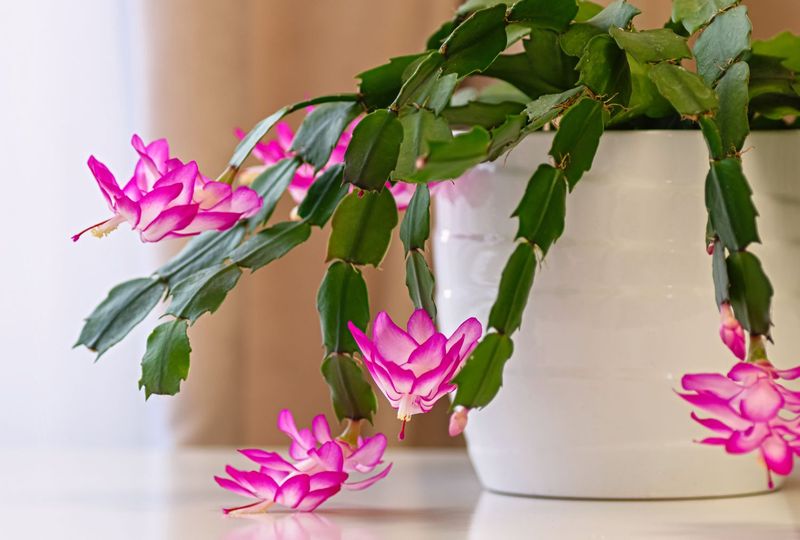
Once buds appear, the job shifts from encouraging formation to protecting what is already there. Bud drop is one of the most frustrating outcomes after a successful dark-period treatment, and many cases trace back to a sudden change in the plant’s environment rather than any single catastrophic mistake.
The clearest advice is to leave the plant alone. Iowa State Extension advises against moving, rotating, or substantially changing the plant’s environment once buds have formed, noting that drafts, heaters, vents, sudden temperature swings, abrupt light changes, and watering inconsistencies can all contribute to developing buds falling before they open.
A plant that has been sitting in a cool spare room for six weeks should stay in a stable display spot rather than being shuttled between rooms.
Heating vents are a particular concern in Southern homes during the cooler months when central heat kicks on. A vent blowing warm, dry air directly onto a budded plant can cause rapid moisture loss and bud drop within days.
Choose a display location away from vents, exterior doors, and drafty windows. The transition from the dark-period location to the display spot should be gradual in terms of light and temperature, not an abrupt move from a cool closet to a warm, sunny mantle.
Understand why good conditions may not produce a full display
Providing the right light, darkness, and temperature sets the stage for bud formation, but it does not write the whole script. The number of flowers a plant produces also depends on factors that were established long before fall arrived.
Cultivar genetics, plant maturity, the number of mature stem segments, how well the plant branches, root health, and nutrition all contribute to the final display.
A younger plant or one that has not been repotted in years may respond to the dark-period routine and still produce fewer buds than a well-established, freely branching specimen. UF/IFAS Gardening Solutions notes that late-spring pruning encourages branching, which creates more flowering tips later in the season.
That kind of structural pruning is a separate practice from the fall light-and-temperature routine, and neither one substitutes for the other.
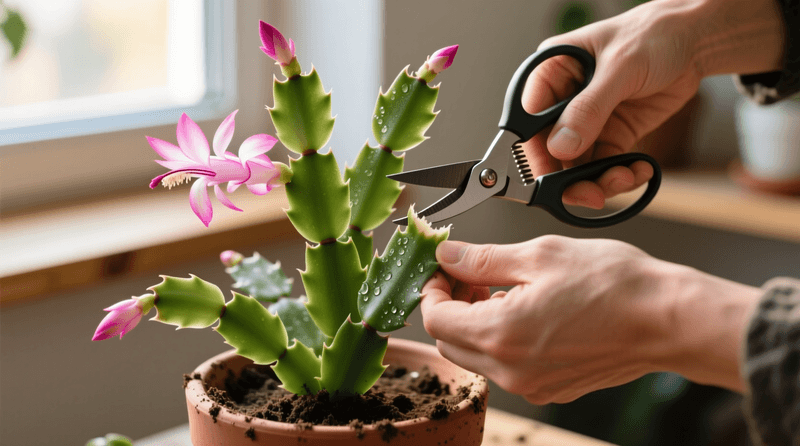
Pruning in late spring, roughly after the plant finishes its current bloom cycle, can be as simple as pinching or twisting off one or two stem segments at the tips to encourage the plant to branch. More branching points mean more potential flowering sites by the time fall conditions come around.
Iowa State Extension reinforces that overall plant health, including nutrition and root condition, plays a role in bloom quality. A plant that has been well fed through the growing season and sits in fresh, well-draining soil is simply better positioned to respond when the flowering cues arrive.
Use a flexible fall plan for better winter flowering
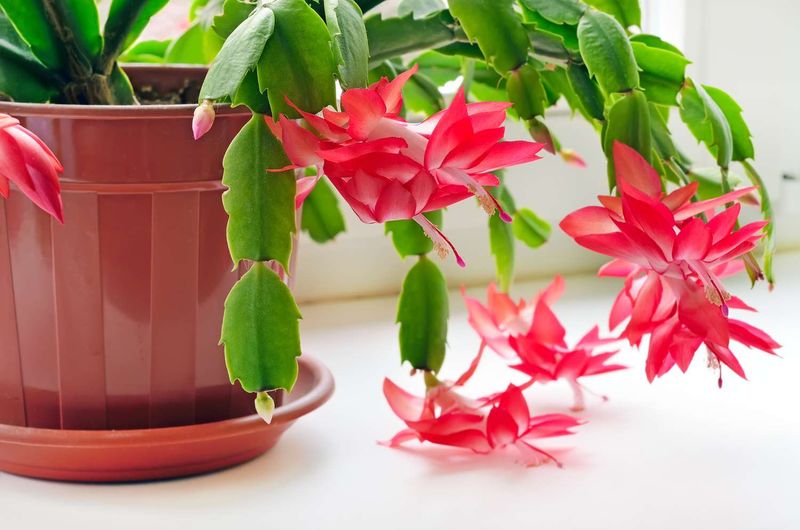
A practical fall plan starts with knowing what you are working with. Check the stem margins to identify your plant as a Thanksgiving cactus, Christmas cactus, or likely hybrid, then count back from your target bloom date to set a rough start window for the dark-period treatment.
UConn’s holiday cactus guidance suggests beginning short-day treatment in September for Thanksgiving cactus and around October 1 for Christmas cactus, though those dates are starting points rather than universal deadlines.
Choose a spot that gets bright, indirect light during the day and stays genuinely dark from early evening through mid-morning. Seal off light leaks, keep the room reasonably cool, water steadily without letting the soil dry out completely, and plan to leave the plant undisturbed once buds appear.
Some plants will respond to naturally shortening days without a controlled schedule; others benefit from the deliberate closet routine. UF/IFAS Gardening Solutions recommends the structured 5 p.m. to 8 a.m. dark schedule for about six weeks when more control is needed.
Following this routine will not guarantee a specific bloom date or a plant covered wall to wall in flowers. What it does is give your holiday cactus the clearest possible set of environmental signals to work with, and a healthy, well-prepared plant is far more likely to reward that effort than one left to guess.