
Coneflowers are one of the most cheerful plants you can grow in a Southern garden, but when the blooms start looking sparse or faded round after round, it’s easy to wonder what you’re doing wrong. The frustrating truth is that there’s no single magic date in late summer that fixes every coneflower in every yard.
What actually works is reading the plant itself, not the calendar, and knowing exactly which cut to make and when.
Let the plant set the timing
Coneflower bloom timing is not a fixed event on the calendar. Missouri Botanical Garden lists the typical bloom window for purple coneflower as June through August, while Clemson Extension’s general Echinacea guidance notes that flowering may continue sporadically until frost, depending on species, cultivar, and site conditions.
Those two windows can look very different in a Texas border bed versus a central Florida garden, where UF/IFAS notes that purple coneflower may begin blooming as early as spring rather than midsummer.
Picking an arbitrary August date and cutting everything back ignores all of that variation. A plant still pushing out fresh buds in late summer does not need to be chopped just because a calendar says so.
The more reliable approach is watching the plant for the cues it actually sends.
Look for flowers that have dropped their petals, blooms that look visibly spent or washed out, or cones that are beginning to dry and harden. Illinois Extension’s deadheading guidance points to these visible changes as the practical signal to act.
If a stem still carries a healthy, open flower or a visible bud, leave it alone and move to the next one. Sparse or thinning blooms can also reflect light, water, drainage, or disease issues that no pruning date can fix, so resist the urge to treat a calendar cut as the automatic answer.
Deadhead one spent stem at a time
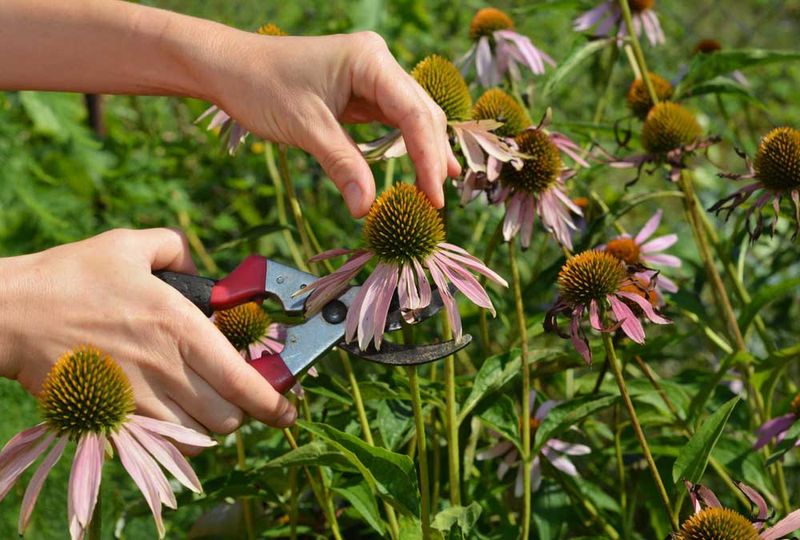
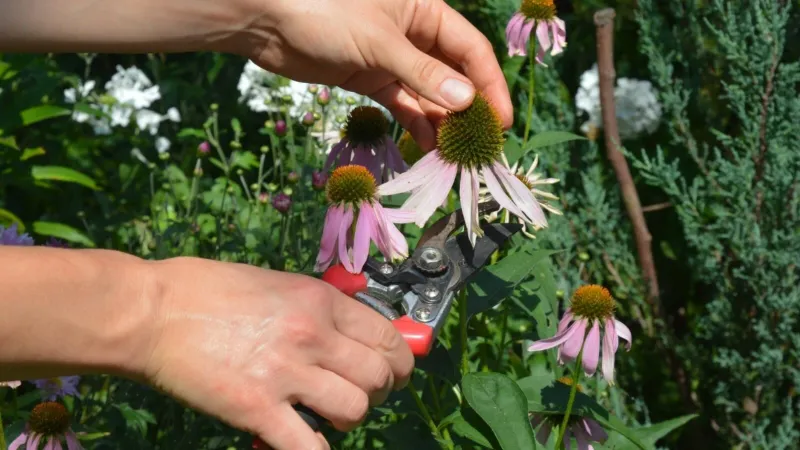
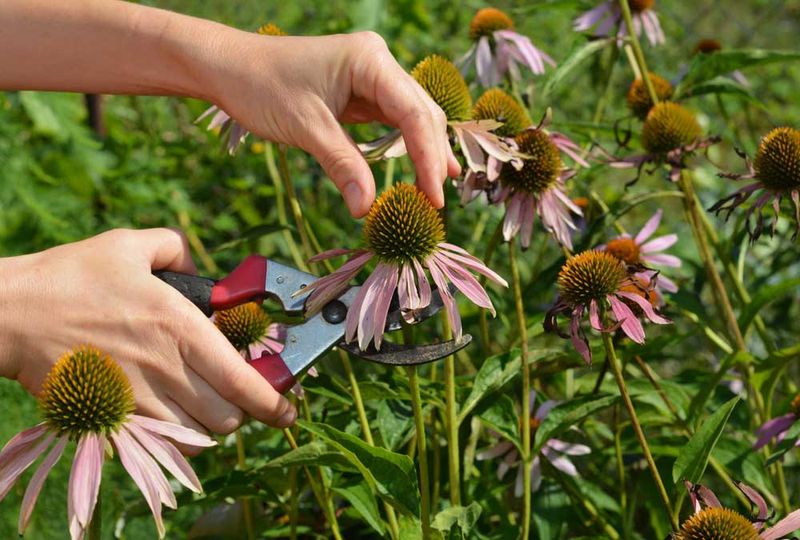
Grab a pair of clean, sharp pruners and start at the top of the plant. Find a flower that has clearly finished, one where the petals have fallen away or the bloom looks bleached and ragged, then trace that stem downward until you reach the next healthy leaf, lateral bud, or side shoot.
Cut cleanly just above that growth point and move on to the next spent stem.
That single action is deadheading. Illinois Extension specifically names purple coneflower among perennials that should be deadheaded to the next lateral flower, bud, or leaf, and their follow-up deadheading guide reinforces that the cut should land above the next healthy growth point rather than stripping the stem bare.
Removing just the finished flower keeps the plant’s remaining productive foliage and buds intact.
The honest benefits of deadheading are tidier appearance, reduced unwanted reseeding, and the possibility of an extended display. Missouri Botanical Garden notes that coneflowers may rebloom after deadheading but also states that deadheading is not necessary for plant health.
Expect a possible extension of the display rather than a guaranteed second wave, and do not worry if you miss a stem here and there. The plant will not suffer for it.
Save whole-plant cleanup for the end

Deadheading one stem at a time and cutting back the whole plant are two completely different actions. Deadheading removes a single finished flower while leaving the plant’s structure and foliage in place.
Cutting back removes a substantial portion of the stems and leaves, which is a much larger intervention that carries real risk if done at the wrong time.
Illinois Extension warns that removing more than half a perennial’s foliage can stress the plant, and their guidance treats whole-plant cutbacks as a separate technique from deadheading. The practical takeaway is that you should not reach for a hedge trimmer and shear your coneflowers to the ground mid-season just because summer is winding down.
A plant that is still actively flowering has foliage it needs.
Wait until the flowering season is clearly finished or the foliage is visibly declining before doing a larger cleanup cut. Fall, winter, or early spring are all reasonable windows depending on your location.
Missouri Botanical Garden also distinguishes whole-plant shearing as a separate technique from individual deadheading. Worth noting: an Ohio State coneflower trial at Secrest Arboretum found that deadheading did not encourage rebloom in its tested plants, which is a direct check on the idea that any late-summer cut reliably produces stronger successive blooms.
Investigate the site before blaming pruning
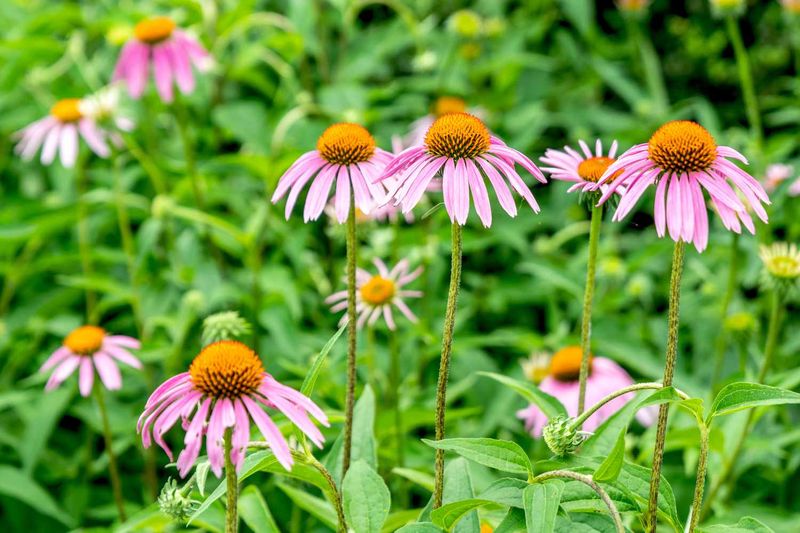
When coneflowers put out fewer or smaller flowers than expected, pruning timing is rarely the first thing to examine. The more likely culprits are the growing conditions around the plant.
Clemson’s general Echinacea guidance describes established coneflowers as preferring full sun to part shade and well-drained soil, and University of Vermont Extension notes that low light produces fewer flowers. If your plants are getting fewer than five or six hours of direct sun, moving or thinning nearby shade sources may do more for bloom count than any pruning adjustment.
Heat and drought stress can also reduce flowering, even in plants that tolerate dry spells once established. In Florida and Texas, summer heat extremes and inconsistent watering can push a plant into survival mode rather than flowering mode.
UF/IFAS notes that coneflowers prefer well-drained soil, and poor drainage is a common hidden stressor across heavy clay soils found in many Southern yards.
Overcrowded clumps are another factor. Clemson recommends dividing established Echinacea every three to four years to prevent overcrowding and improve airflow, and UF/IFAS similarly notes that dividing clumps periodically can help keep plants blooming.
Cultivar differences matter too. Chicago Botanic Garden’s Echinacea cultivar evaluation notes that hybrid coneflowers can differ considerably from straight Echinacea purpurea in vigor, fertility, and overall flower production.
Before adding fertilizer, consider soil testing first; Clemson describes Echinacea as a non-heavy feeder, and amending without knowing your soil’s baseline can create new problems rather than solve existing ones.
Balance a tidy bed with wildlife value
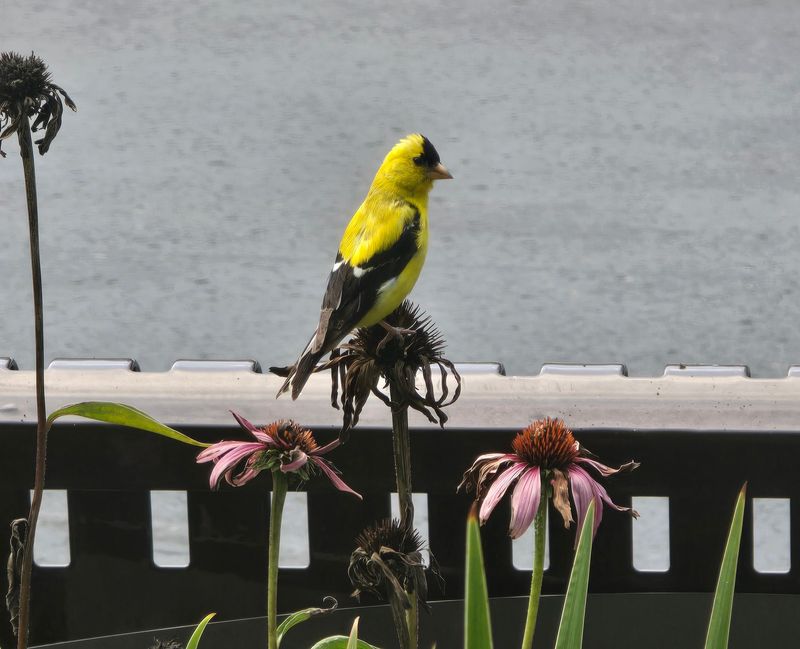
Removing every spent coneflower cone keeps the bed looking clean, but it also removes something the yard’s wildlife depends on. Clemson Extension and Missouri Botanical Garden both identify dried coneflower seedheads as a valuable late-season food source for goldfinches and other seed-eating birds.
If you have ever watched a goldfinch cling to a dried cone in fall, you already know the appeal.
University of Vermont Extension also notes that old standing stems can provide nesting sites for native bees, which adds a second layer of wildlife value to what might otherwise look like garden neglect. Illinois Extension’s coneflower overview and Iowa State University Extension both note that leaving some cones also supports natural reseeding, which can gradually fill in gaps in a planting over time.
A practical middle-ground approach is to deadhead the most visually obvious spent flowers during the season for appearance, then leave a portion of the final seedheads standing once the main flush is over. Complete deadheading is a design preference, not a plant health requirement.
Choosing to leave some cones is a legitimate and ecologically useful option, not a sign that you are behind on maintenance.
Treat distorted flowers as a warning sign
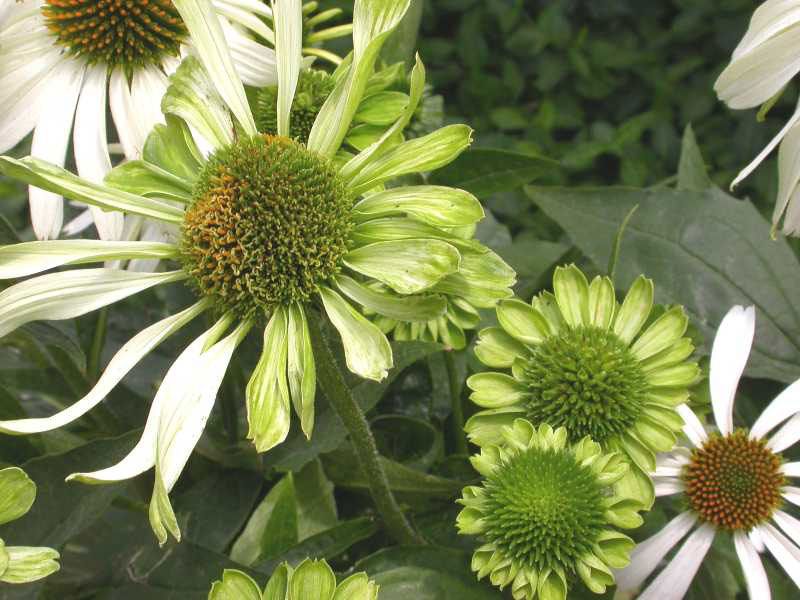
Not every struggling coneflower has a pruning problem. If you notice flowers that are green instead of purple, spoon-shaped, unusually tufted, or severely distorted, and especially if nearby foliage looks stunted or yellowed, stop before reaching for the pruners.
Those symptoms can point to aster yellows, a systemic disease spread by leafhoppers that no amount of cutting will cure.
Illinois Extension’s aster yellows guidance is direct on this point: infected plants should be removed entirely, including their roots, and destroyed rather than composted. Trimming away only the distorted blooms and leaving the plant in the ground does not stop the disease.
The pathogen is systemic, meaning it has moved throughout the plant’s tissue, so the whole plant needs to go.
Clemson Extension also identifies aster yellows as a concern for Echinacea and recommends removing affected plants. Keep this diagnosis clearly separate from ordinary fading or weak flowering.
A bloom that has simply lost its petals and is forming a seedhead is a normal, finished flower. A bloom that is green, contorted, or growing in strange directions alongside stunted leaves is a different situation entirely and needs a different response.
Follow a condition-based maintenance checklist
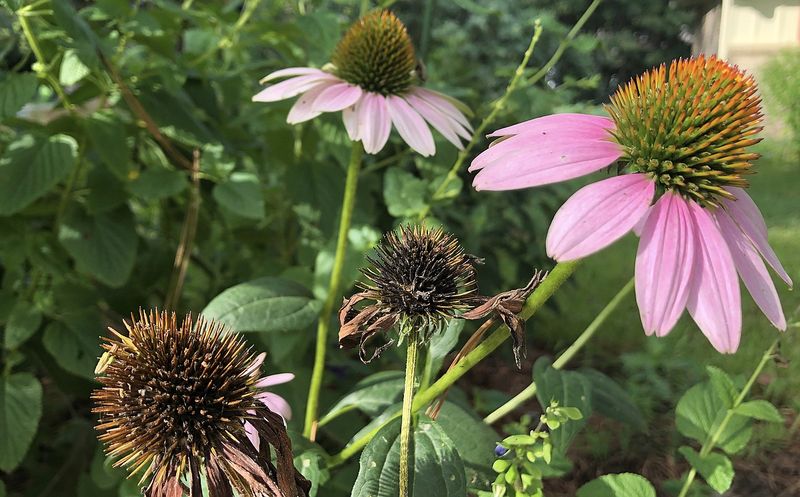
Rather than marking a date on the calendar, work through a short inspection each time you visit the bed. Look at individual flowers first: any stem with a petal-free, faded, or drying cone is ready to deadhead.
Trace it down to the next healthy leaf, bud, or side shoot and cut there. Leave every stem that still carries a fresh flower or an active bud, and avoid cutting back the whole plant while it is actively flowering.
If bloom count stays low despite regular deadheading, shift your attention to the site. Check sun exposure, watering consistency, drainage, and how crowded the clump has become.
Consider dividing if the planting is more than three or four years old. Illinois Extension’s perennial pruning guide and Missouri Botanical Garden’s deadheading FAQ both support condition-based decisions over fixed-date interventions.
If flowers are distorted or green, suspect disease and remove the whole plant rather than pruning around the problem.
When the season winds down, leave some mature cones for goldfinches and native bees before doing any larger cleanup cut. The Ohio State Secrest Arboretum trial is a useful reminder that deadheading did not produce rebloom in every tested plant.
Selective deadheading can tidy the bed and may help extend the display, but the plants, not the pruning schedule, ultimately decide how the season goes.