
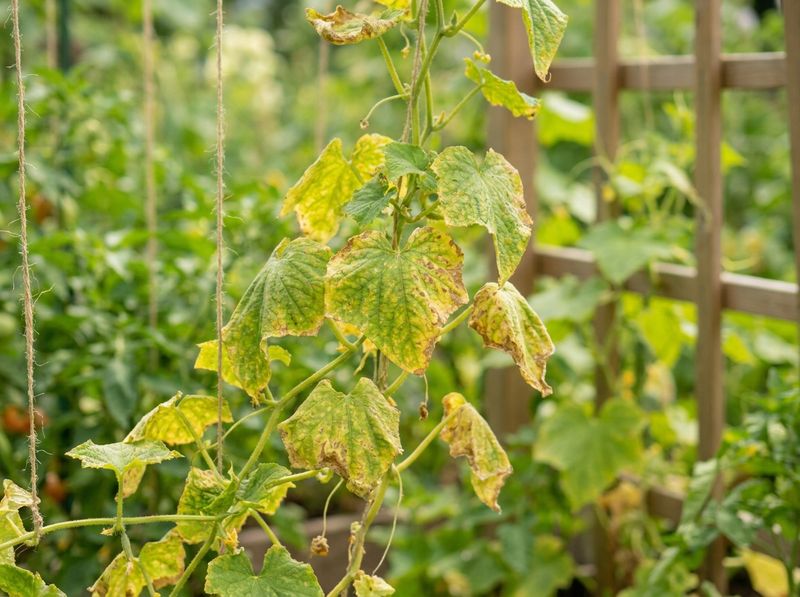
Walking out to your garden and finding cucumber leaves gone yellow since yesterday is genuinely alarming, especially when the plants looked fine the day before. The good news is that yellowing alone does not mean your cucumbers are doomed, but it also does not point to one single cause or one easy fix. Several things, from nutrient shortages to pests to watering problems, can turn cucumber leaves yellow, and figuring out which one is happening in your garden is the step that actually saves the plant.
Yellow leaves do not identify one cause
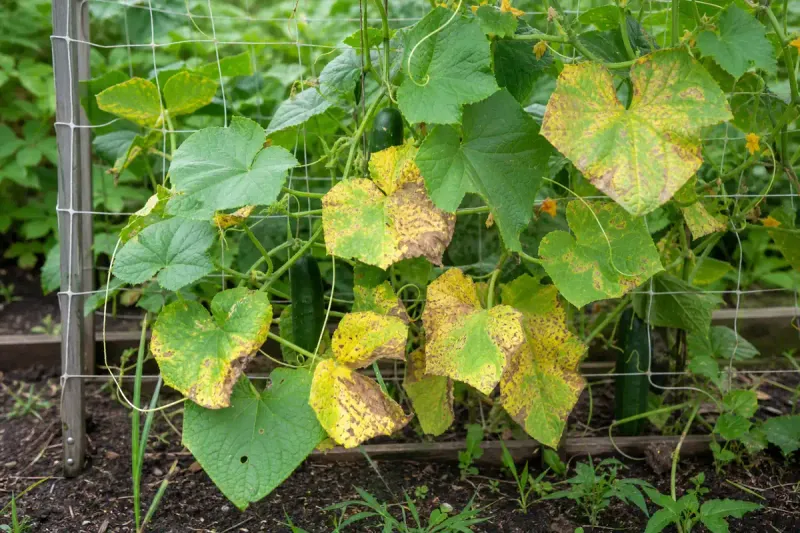
Cucumber leaves can turn yellow for a surprising number of reasons, and no single nutrient explains every case. Michigan State University Extension specifically cautions gardeners against assuming yellow leaves automatically signal a nitrogen shortage, because the same symptom can come from several nutrient problems, water stress, root damage, insect feeding, or plant diseases. Jumping to a fertilizer fix before identifying the real cause can waste money, injure roots, and leave the underlying problem untouched.
The most useful clues are not the color itself but the context around it: which leaves are affected, whether the yellowing is uniform or forms patterns, and what the rest of the plant looks like. University of Minnesota Extension’s cucumber diagnostic guide lists causes that range from nutrient deficiencies to downy mildew to spider mites, all of which can produce some form of leaf discoloration. Older lower leaves turning yellow tell a different story than young top leaves developing spots or streaks.
One more thing worth keeping in mind: noticing the yellowing overnight does not mean the problem started overnight. Diseases, pest feeding, heat stress, and root damage can all build quietly for days before becoming visible enough to catch your eye. The timing of your observation is useful, but it is not the same as the timing of the cause.
Uniform yellowing on older leaves makes nitrogen plausible
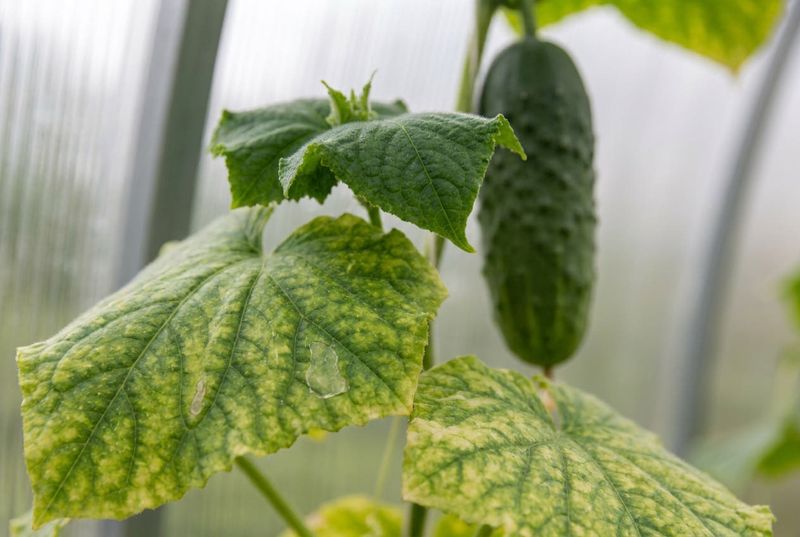
When the oldest leaves at the base of the plant turn evenly yellow or yellow-green while the newer growth at the top still looks reasonably healthy, nitrogen moves up the suspect list. Nitrogen is a mobile nutrient inside the plant, meaning cucumbers can pull it out of older tissues and redirect it toward actively growing shoots when the supply in the soil runs low. Virginia Cooperative Extension describes this pattern – uniform yellowing beginning on older foliage and progressing toward newer growth – as a characteristic sign of nitrogen deficiency in vegetables.
Weak or noticeably slow growth often accompanies the yellowing when nitrogen is genuinely short. If the plant looks stunted, produces few new leaves, and the vines seem to have stalled, that combination makes the nitrogen hypothesis more credible. University of Hawaii research on vegetable nutrient deficiencies notes that reduced vigor and pale older foliage together are more telling than color change alone.
Still, this pattern supports a hypothesis rather than proving a cause. Watering problems, root damage, and some diseases can produce overlapping symptoms on older leaves. Yellowing that starts on young leaves, or that forms distinct spots and patches rather than a uniform fade, generally points away from nitrogen and toward a different problem entirely. Treat the older-leaf pattern as a reason to investigate nitrogen, not as a confirmed diagnosis.
Compare the pattern with other nutrient problems
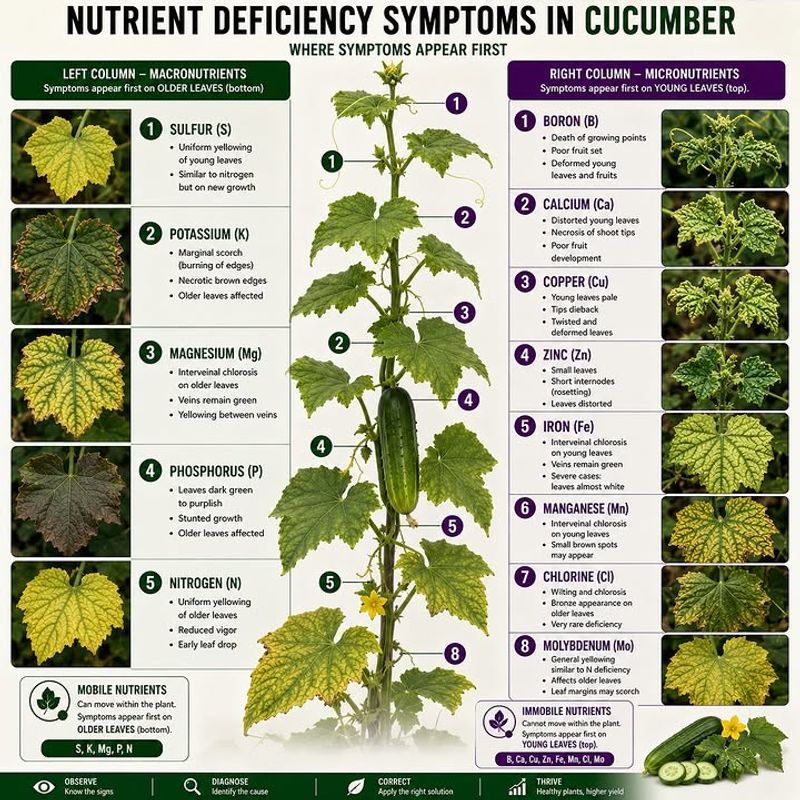
Before reaching for a nitrogen fertilizer, spend a minute comparing what you see against other common nutrient patterns. Magnesium deficiency shows up as yellow tissue between the veins on older leaves while the veins themselves stay green – a symptom called interveinal chlorosis. University of Hawaii plant nutrient research distinguishes this clearly from nitrogen deficiency, where the whole leaf fades rather than just the tissue between veins. Applying nitrogen to a magnesium problem would not help and could make soil balance worse.
The same interveinal pattern appearing on young, newly emerged leaves instead of old ones shifts the suspect toward iron or another micronutrient. UC IPM guidance on nutrient deficiencies explains that iron deficiency typically appears first on the youngest growth because iron is less mobile within the plant and cannot be easily relocated from older tissue. Treating an iron problem with nitrogen fertilizer addresses nothing.
Potassium deficiency often looks different again: yellowing or a scorched brown edge along leaf margins, sometimes paired with puckered young leaves or poorly shaped fruit. Virginia Cooperative Extension nutrient guidance describes this marginal pattern as distinct from the overall fade of nitrogen shortage. One more factor complicates all of this: soil pH can lock up nutrients already present in the soil, so adding more fertilizer may not solve an availability problem. University of Florida IFAS soil testing guidance recommends a soil test for both nutrient levels and pH to understand what the plant can actually access.
Check the undersides for disease and mites
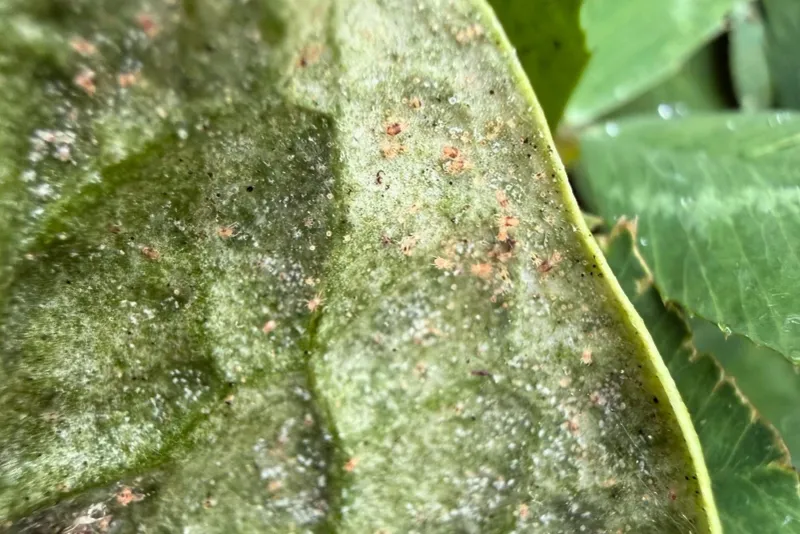
Flipping the leaf over before doing anything else is one of the most useful moves a worried gardener can make. Angular pale yellow or greenish patches on the top surface of a cucumber leaf, paired with gray, purple, or dark fuzzy growth on the underside, are a strong signal of downy mildew rather than a nutrient shortage. University of Minnesota Extension’s downy mildew guide describes how the disease produces angular lesions bounded by leaf veins, and notes that it can spread rapidly under humid conditions. UC IPM’s cucurbit downy mildew page adds that the fuzzy sporulation underneath the leaf is a reliable distinguishing feature.
Fine yellow stippling across the leaf surface, a dusty or dirty appearance on the underside, and thin webbing in heavier cases point toward spider mites rather than disease or nutrient deficiency. University of Maryland Extension’s cucumber problem guide identifies mite feeding as a cause of yellow speckling that can expand into larger yellow patches if the population goes unchecked. Hot, dry weather can favor mite buildup, but the stippling pattern and underside evidence are what confirm the identification.
Wilting that moves progressively along a vine, especially when cucumber beetles are present nearby, raises concern for bacterial wilt, a disease managed through pest control rather than fertilizer. Cornell Cooperative Extension’s cucurbit wilt key outlines this progression. Any of these signs should redirect attention toward pest or disease investigation, and it is worth remembering that some problems become conspicuous quickly without having started overnight.
Review watering, drainage, and root conditions
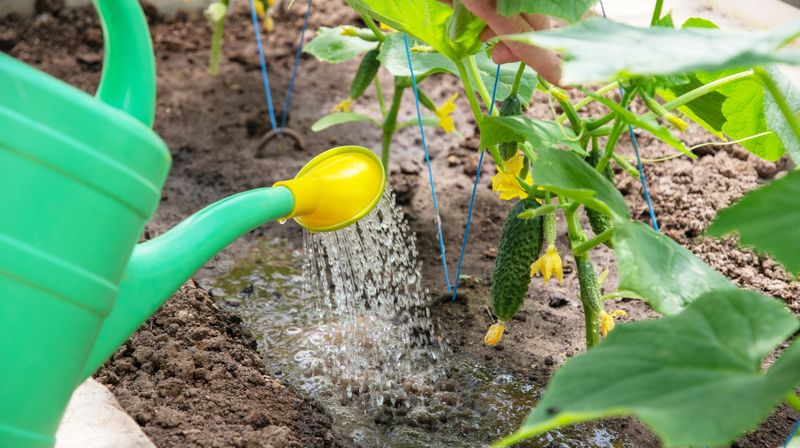
Nutrient symptoms and water problems can look remarkably similar from a distance, so checking soil moisture is a logical early step. Push a finger two to three inches into the soil near the root zone and notice what you find: bone-dry soil in a wilting plant tells a different story than soggy, waterlogged soil around a yellowing one. UC IPM’s cucumber cultural care guidance recommends watering cucumbers deeply enough to wet the root zone without creating chronic saturation, since both extremes can stress the plant.
Excessive moisture or poor drainage can contribute to root problems that show up as yellowing, wilting, or general decline above ground. If the soil stays wet for extended periods, roots may be struggling to function, and no amount of fertilizer will help a plant that cannot absorb nutrients through damaged roots. Checking whether water pools in the planting area after rain or irrigation is a quick way to assess drainage.
Overhead watering adds another variable: consistently wet foliage raises the risk of foliar diseases, including downy mildew. University of Maryland Extension notes that watering at the base of plants rather than overhead can reduce that disease pressure. Hot, dry stretches can increase water stress and favor spider mites, but summer heat alone does not prove a root problem or explain sudden yellowing without other supporting evidence. Assessing moisture, drainage, and watering method together gives a clearer picture than any single factor on its own.
Test before you feed the plant
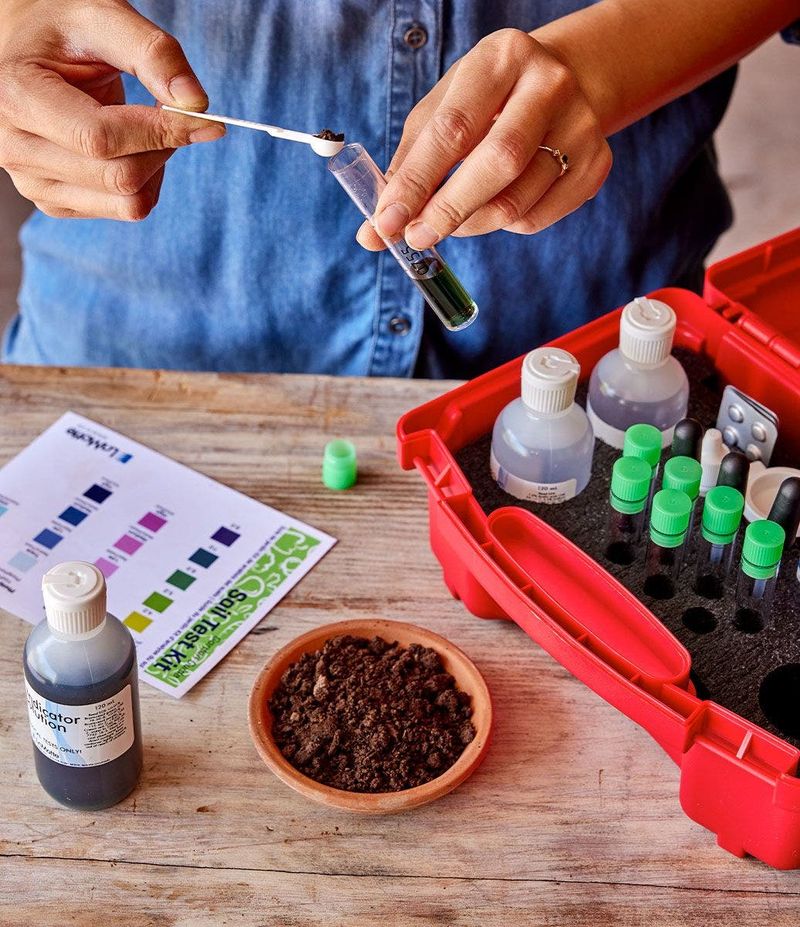
A safe diagnostic sequence starts with observation, not the fertilizer bag. Photograph the affected leaves, note whether the symptoms are on old or new growth, map how far the yellowing has spread, and inspect both leaf surfaces for disease signs or pest activity. University of Florida IFAS soil testing guidance recommends a soil test for nutrient levels and pH when the cause is uncertain, because a test result interpreted alongside the plant’s symptoms gives a much more reliable picture than either one alone.
If the full inspection, combined with a soil test or strong symptom evidence, points clearly toward nitrogen deficiency, a modest correction is reasonable. University of Georgia Extension fertilizer guidance recommends applying fertilizer beside the row rather than against the stem, watering it in as directed, and following label rates rather than guessing. The right amount depends on your soil’s existing fertility, organic matter level, and the product’s analysis, so keep the application conservative.
Several shortcuts carry real risk. Iowa State Extension notes that foliar fertilizers usually deliver little of the total nutrient needed and can cause salt injury, especially above 80 degrees F or in low humidity. Epsom salt supplies magnesium and sulfur but University of Nebraska Extension cautions against applying it without evidence of a deficiency, since unnecessary salts can accumulate in soil. UMass Extension guidance on over-fertilized soils explains that excess fertilizer can injure roots, raise soluble salts, and worsen the stress you were trying to relieve.
Treat the soil before treating the symptom.
Use the symptom pattern to choose the next step
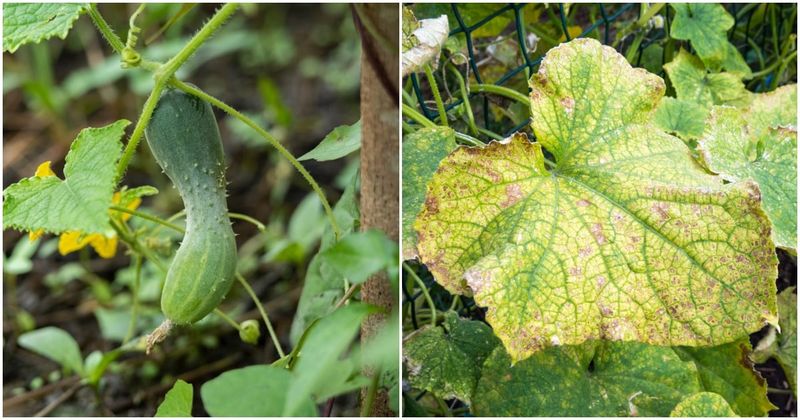
Pulling the right thread starts with knowing which pattern you are actually looking at. Uniform yellowing on older, lower leaves combined with slow or weak growth makes nitrogen a plausible suspect, and a soil test or careful symptom review can help decide whether a modest, label-directed application is warranted. That combination of clues matters – yellow color alone is not enough to act on.
Any other pattern shifts the focus away from nitrogen. Interveinal yellowing on old leaves points toward magnesium; the same pattern on young leaves suggests iron or another micronutrient, possibly worsened by a pH problem. Angular spots, fuzzy undersides, rapid spread, fine stippling, webbing, or progressive wilt all point toward disease or pests, and Iowa State Extension’s nutrient deficiency guide reinforces that visual diagnosis is a starting point for triage, not a definitive answer. Adding fertilizer to a mite or mildew problem will not help the plant and may delay the response it actually needs.
The practical sequence is: inspect first, test when possible, and treat the confirmed or best-supported cause rather than reacting to the color alone. UC IPM’s cucumber care guidance supports this measured approach. One honest caveat worth carrying forward: existing yellow tissue may not return to green even after the right correction, because recovery depends on the diagnosis being accurate and the roots being healthy enough to respond. What you are working toward is stopping the spread and protecting the growth that is still healthy.