
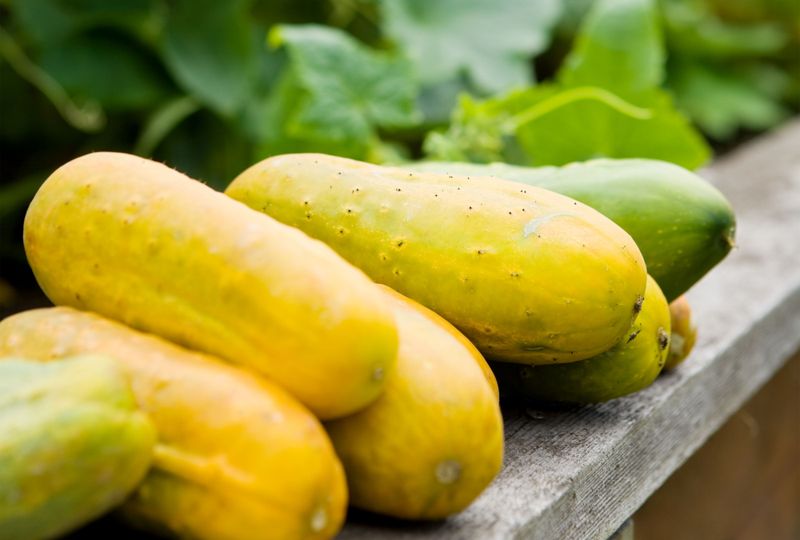
Walking out to your cucumber patch and finding yellow fruit and a vine that has basically stopped producing is genuinely discouraging, especially when you have been watering all summer. The good news is that yellow cucumbers and stalled growth are common late-summer problems with more than one possible explanation, and many of them are fixable.
Before you start watering more or less, a quick look at your soil, your leaves, and your fruit can point you toward the real cause.
Yellow fruit does not prove a watering problem
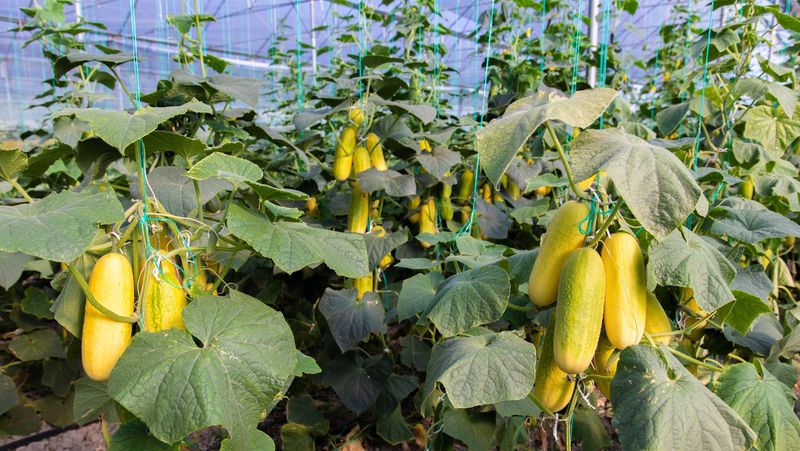
Picking up a yellow cucumber off the vine and immediately blaming a watering mistake is a very understandable reaction, but the fruit color by itself does not confirm that the plant is thirsty. Standard slicing cucumbers are meant to be picked while they are still green and immature.
When a cucumber is left on the vine too long, it commonly turns yellow, orange, or even white as it passes its prime. That color change is normal overmaturity, not necessarily a distress signal from the plant’s root zone.
Some cultivars also produce fruit in colors other than green at full maturity, so knowing your variety matters before drawing any conclusions. Oregon State University Extension guidance on cucumbers notes that harvest timing and cultivar characteristics both affect the color and quality of the fruit you pull off the vine.
Yellow fruit and yellow leaves are also two different things with different causes, and they should not be treated as the same symptom. A yellow cucumber hanging from an otherwise healthy-looking vine probably got missed at harvest, while yellow leaves spread across the plant suggest something else entirely.
Illinois Extension cucumber guidance and UGA Extension cucumber production recommendations both emphasize frequent harvesting as a basic management step. Remove any oversized or yellow fruit you find, then take a full look at the plant’s soil moisture, leaves, and stems before deciding that a watering change is what the vine actually needs.
Shallow, inconsistent watering can stress cucumbers
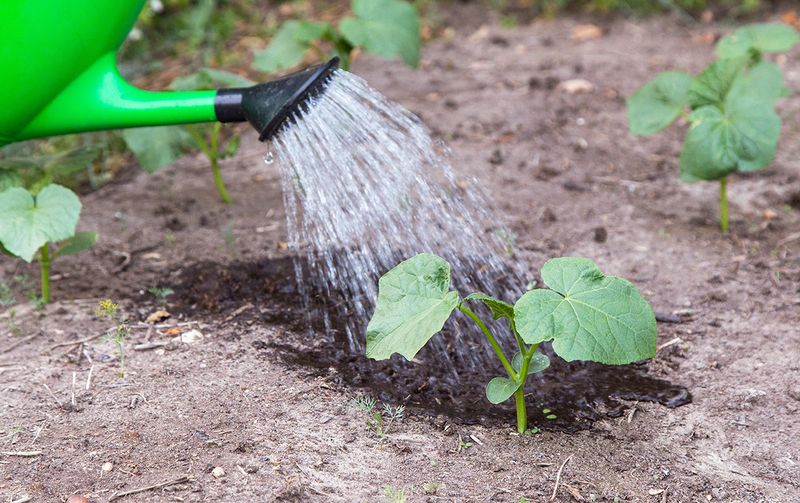
Even though yellow fruit is not proof of a watering problem, shallow or inconsistent irrigation is a real and common source of cucumber stress, particularly during late summer heat. The mistake most gardeners make is giving plants a brief daily sprinkle that wets only the top inch or two of soil.
That shallow moisture evaporates quickly in Southern heat, and the roots sitting a few inches deeper never receive a reliable drink.
UGA Extension irrigation guidance advises deep watering rather than light daily spraying, because frequent shallow applications encourage roots to stay near the surface where they are most vulnerable to heat and rapid drying. When moisture becomes erratic, cucumbers respond in ways that go well beyond simple wilting.
Uneven soil moisture during flowering, fruit set, and fruit enlargement can contribute to stalled growth, bitter-tasting cucumbers, and misshapen fruit. Illinois Extension explains that ample, fairly uniform soil moisture is important at every growth stage, and becomes especially critical as fruit is setting and sizing up.
The problem is not missing one scheduled watering on a single hot afternoon. The issue is a pattern of moisture that swings between briefly wet and bone-dry at the top of the soil while the root zone stays chronically underfed.
Correcting that pattern is worth investigating, but it should follow a proper soil check rather than precede one.
Check the root zone before you water again
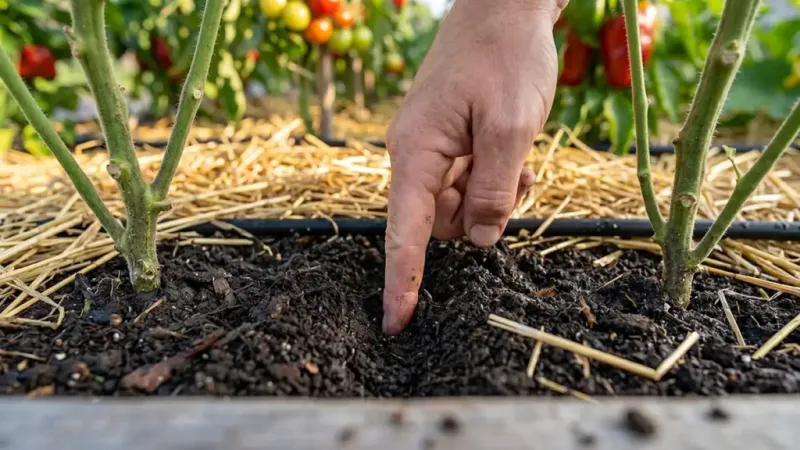
Before adjusting anything about your watering routine, find out what the soil is actually doing a few inches below the surface. Push your finger or a wooden dowel roughly 4 to 6 inches into the ground near the base of the plant.
Dry, crumbly soil at that depth is a clear sign the root zone needs water. Soil that feels cool, damp, or sticky at that depth means the plant already has moisture available, and adding more water will not help.
UGA Extension’s Goldilocks watering guidance points out that overwatering can look almost identical to underwatering from above ground. Both conditions can cause yellowing, wilting, and stalled growth, because saturated soil squeezes out the oxygen that roots need to function.
Adding more water to an already wet root zone speeds up that damage rather than reversing it.
Wilting is another clue that requires careful reading. A cucumber plant that droops noticeably during the hottest part of a summer afternoon may simply be responding to heat, and it often recovers on its own once temperatures drop toward evening.
Morning wilting is a different matter. A vine that is still limp at 8 or 9 in the morning, especially if the soil at depth feels dry, is a stronger signal that the root zone is genuinely short on moisture.
UGA Extension irrigation recommendations and UGA Colquitt County heat-wave watering advice both recommend checking the soil before irrigating rather than reacting to leaf appearance alone.
Water slowly at the root zone
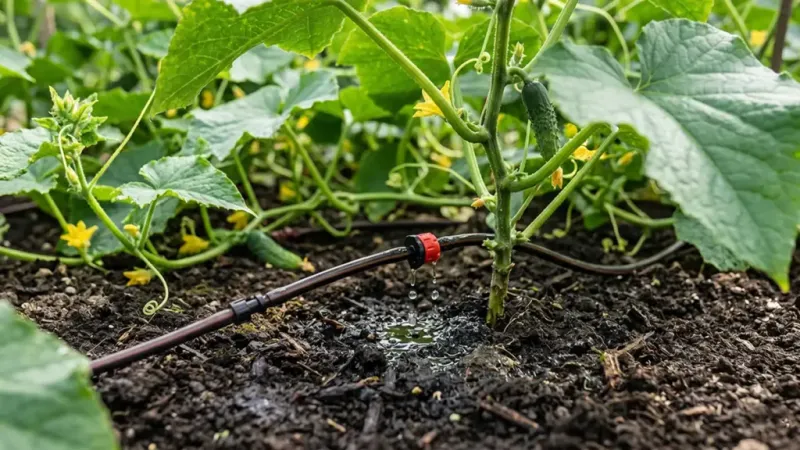
Once the soil check confirms the root zone is dry, the goal is to deliver water slowly and directly where cucumber roots can actually reach it. Drip irrigation and soaker hoses do this well.
They release water at a rate the soil can absorb without runoff, they keep foliage dry, and they lose far less moisture to evaporation than sprinklers do on a hot afternoon. UGA Extension’s home garden drip irrigation guide explains the efficiency advantages of these systems for vegetable beds in the South.
If overhead watering is the only option available, time it so leaves can dry completely before dark. Wet foliage sitting overnight raises the risk of foliar disease, which is already a concern in the humid conditions common across Florida and Texas in late summer.
UGA Extension home garden watering guidance recommends directing water to the soil rather than the leaves whenever possible.
A general starting point for vegetable gardens is about 1 to 1.5 inches of water per week, counting any rainfall that actually soaks in. UGA Extension’s vegetable gardening handbook and Mississippi State University Extension guidance on micro-irrigation both treat that figure as a rough reference rather than a firm rule.
Sandy soils, containers, raised beds, large fruiting plants, and windy days all change how fast the root zone dries out. Use the weekly estimate as a rough check, then let the actual soil moisture and the weather guide each irrigation decision.
Adjust for Southern soil, heat, and growing conditions
A single watering interval that works for every Southern gardener does not exist, and anyone who tells you to water cucumbers every three days regardless of conditions is leaving out most of the story. Florida’s coastal sandy soils drain so quickly that moisture available to roots at midday may be largely gone by afternoon.
Texas clay soils hold water longer but can become compacted and poorly drained, creating the opposite problem. Neither situation responds well to a calendar-based schedule.
UF/IFAS irrigation guidance for Florida and Texas A&M AgriLife Extension’s efficient water use guidance both emphasize that soil type, drainage, plant size, and local conditions should drive irrigation decisions rather than a fixed schedule. Sandy soils generally benefit from smaller, more frequent applications, while heavier soils need time between waterings to avoid waterlogging the root zone.
Raised beds and containers dry out faster than in-ground beds because they have less soil volume and more surface area exposed to heat and wind. A cucumber in a raised bed on a windy, 95-degree afternoon in August may need attention sooner than one planted in a shaded in-ground bed that got a good soaking rain two days ago.
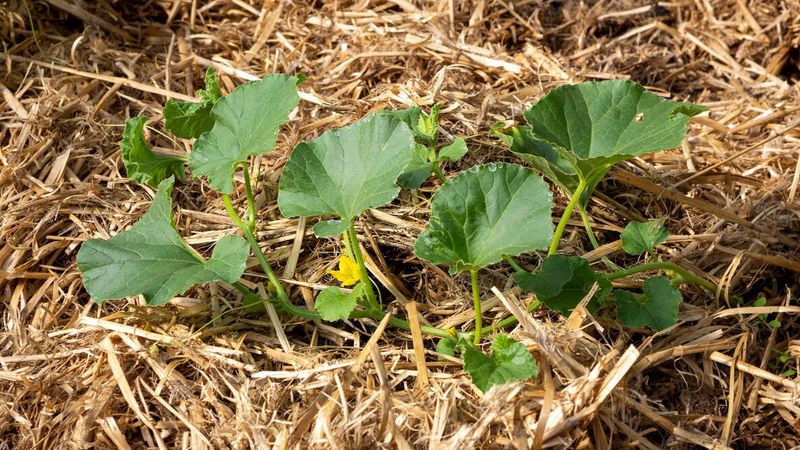
Organic mulch helps bridge some of that variability. Spreading 2 to 4 inches of straw, wood chips, or shredded leaves over the root zone, keeping it a few inches away from the stem, can slow moisture loss and moderate soil temperature.
UGA Extension recommends organic mulch as a practical tool for vegetable beds, especially during summer heat.
Remove overmature fruit and check pollination
Harvesting cucumbers on time is one of the most effective things you can do to keep a vine productive through late summer. Standard cucumbers are picked while still green and firm, well before the fruit reaches full size.
When a cucumber is missed and allowed to grow oversized and yellow, it stays on the plant and may slow the development of new fruit. Illinois Extension and Oregon State University Extension both recommend picking frequently and removing any yellow or oversized cucumbers promptly to keep production moving.
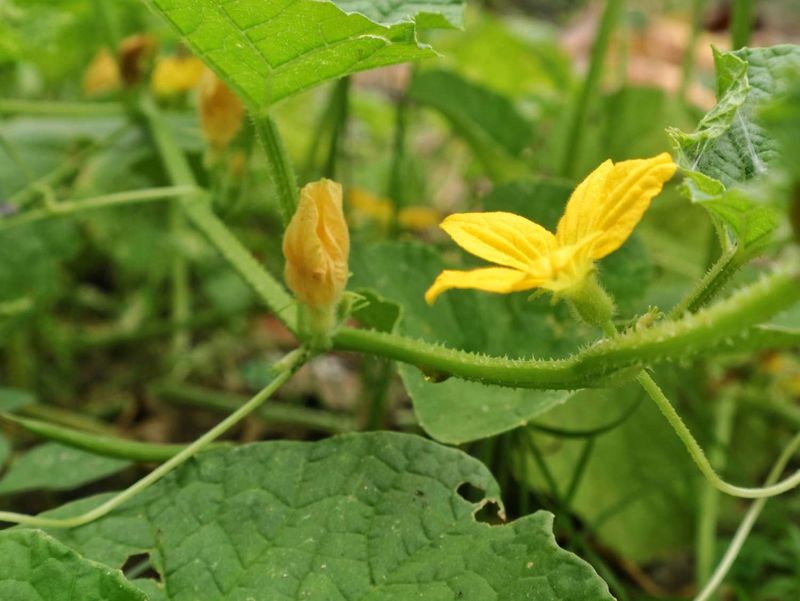
If the vine is flowering but new cucumbers are not forming, the problem may be pollination rather than water. Cucumbers depend primarily on bees and other insects to carry pollen from male flowers to female flowers.
Iowa State University Extension explains that heat, rain, low insect activity, and recent insecticide applications can all reduce fruit set. Male flowers typically appear first, so a vine producing only flowers with no tiny cucumber at the base is often just waiting for female flowers to open.
University of Minnesota Extension reporting on heat and vegetable yield makes clear that high temperatures can reduce pollinator activity and increase flower drop. Correcting the watering routine cannot reverse heat-related pollination failure or bring back flowers that have already dropped.
Removing old fruit and allowing pollinators to work the flowers undisturbed are the most direct responses available.
Inspect leaves and stems for other causes
After removing old fruit and confirming what the soil moisture is doing, turn your attention to the plant itself. Flip several leaves over and look at the undersides carefully.
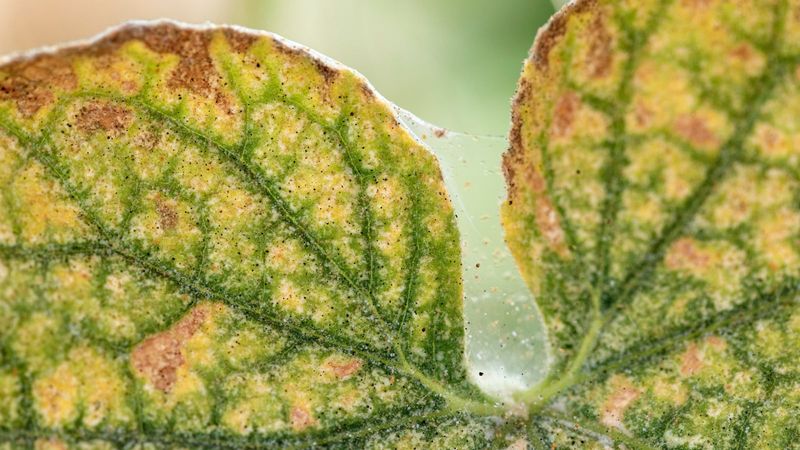
Fine pale or yellow stippling on the leaf surface, tiny moving specks, or faint silky webbing are signs of spider mites. These pests thrive in hot, dry conditions and can cause widespread yellowing across the foliage of cucumber plants.
UF/IFAS spider mite identification guidance describes the stippling pattern and webbing that distinguish mite damage from other causes of leaf discoloration.
Yellow leaves on cucumber vines can also result from excess water and root damage, nutrient deficiencies, powdery mildew, bacterial wilt, or viral disease. University of Minnesota Extension’s cucumber leaf discoloration diagnostic tool walks through the differences between these causes based on the pattern, location, and appearance of the yellowing.
Each diagnosis points toward a different response, which is why the leaf color alone cannot tell you what to do next.
Resist the urge to spray pesticides or apply fertilizer, Epsom salts, calcium products, or other amendments based on color alone. Nutrient deficiencies and root problems can look very similar to each other and to water stress.
UGA Extension’s Southeast vegetable troubleshooting guide and resources from Penn State Extension and UF/IFAS nutrient management guidance all point toward a more specific diagnosis, and soil or tissue testing when nutrient problems are suspected, before reaching for any corrective product.
Follow the evidence instead of the headline
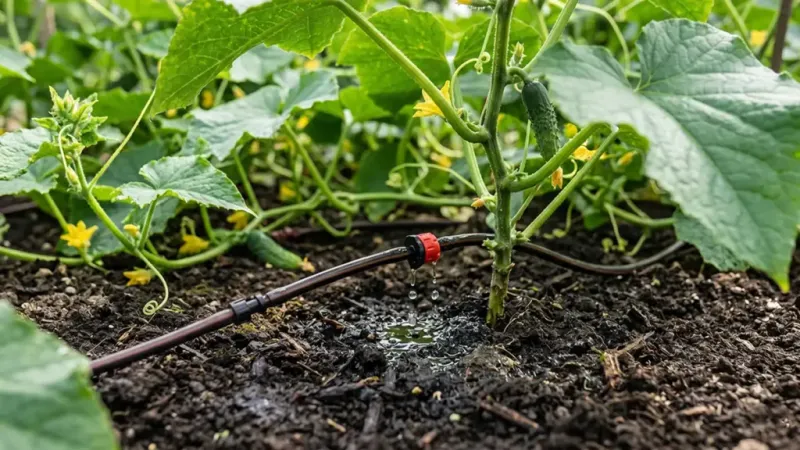
A practical diagnostic sequence is more useful here than a single prescribed fix. Start by removing any yellow or oversized cucumbers from the vine.
Then check soil moisture 4 to 6 inches below the surface before changing anything about how you water. If the root zone is genuinely dry, correct the routine by watering slowly and thoroughly at the root zone rather than with brief daily sprinkles.
If the soil is already wet, hold off and look harder at drainage and root health.
From there, inspect the leaves, stems, flowers, and newly forming fruit for signs of heat stress, pollination gaps, spider mites, disease, or drainage problems. University of Minnesota Extension guidance on keeping gardens productive in heat reinforces that heat stress can slow or stall cucumbers even when soil moisture is adequate, so watering more is not a guaranteed fix for every late-summer slowdown.
Steadier, root-zone-focused moisture may remove one source of stress from a struggling vine, and that is worth doing when the soil check confirms it is needed. What it cannot do is reverse overmature fruit, correct pollination failure, eliminate mites, or cure disease.
UGA Extension’s watering guidance puts it well: the goal is soil that is moist but not saturated, checked regularly and adjusted based on real conditions. Your cucumber vine will tell you more from a close inspection than any headline about a single watering slip ever could.