
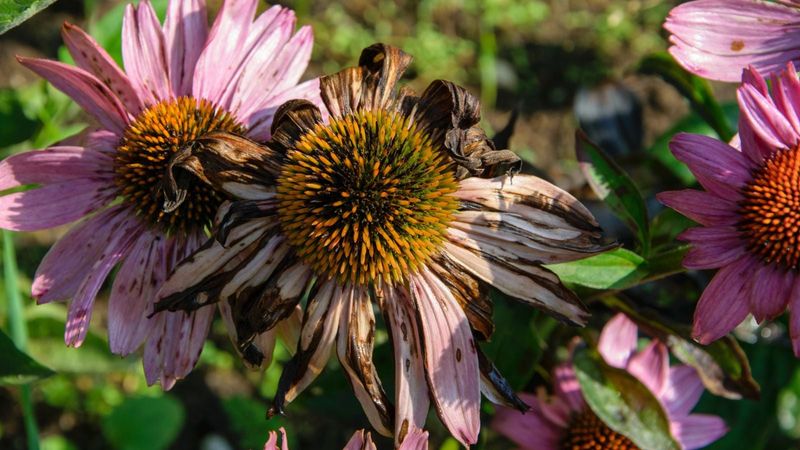
Purple coneflowers are tough plants, but even they can collapse dramatically on a sweltering August afternoon, leaving gardeners scrambling for the hose. Before you water, though, the most useful thing you can do is slow down and investigate.
A wilted plant is a symptom, not a verdict, and the fix depends entirely on what is actually happening in the soil below the surface.
A wilted coneflower is not automatically thirsty
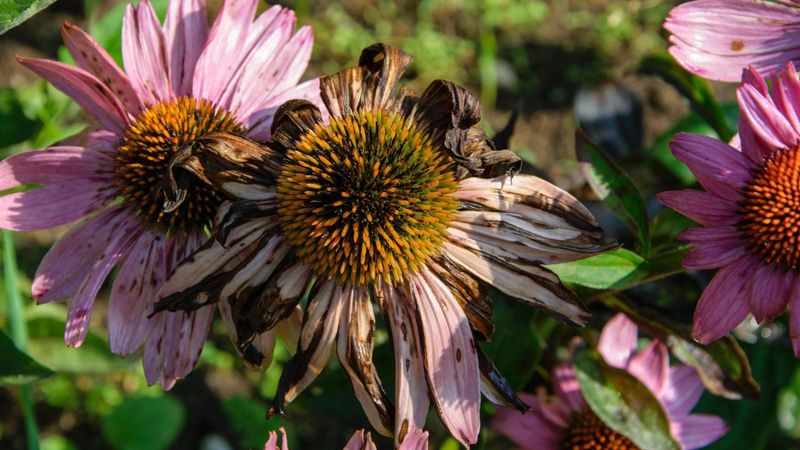
Purple coneflower has a reputation for toughness, and that reputation is largely earned. Missouri Botanical Garden plant records describe its water needs as dry to medium, and established plants generally handle heat and drought without much fuss.
That resilience, however, is exactly why a sudden wilt deserves a closer look rather than an immediate trip to the spigot.
Frequent shallow watering is a real and correctable mistake that can leave a plant’s deeper root zone inadequately supplied, and it is worth fixing. But no extension research establishes it as the single or predominant cause of sudden wilt specifically in echinacea.
Several things can make a coneflower collapse, and watering the wrong way is only one of them.
Intense late-summer heat can push leaves to lose water faster than roots replace it, even when soil moisture is present. UGA Extension heat-stress guidance notes that plants may flag during peak afternoon temperatures as a temporary imbalance between transpiration and uptake.
The core rule, then, is to check actual soil moisture several inches below the surface before deciding what to do next. Penn State Extension perennial guidance consistently favors that diagnostic step over reacting to foliage alone.
The common watering slip happens at the soil surface
Quick, frequent sprinkles are the watering habit most likely to undermine an otherwise healthy coneflower during a heat wave. When water hits the soil surface and evaporates or runs off before soaking deeper, the upper few inches may feel damp while the root zone several inches down stays dry.
Roots follow moisture, so a plant that gets only surface sips over time tends to develop a shallow root system that sits right in the zone that dries out fastest when temperatures climb.
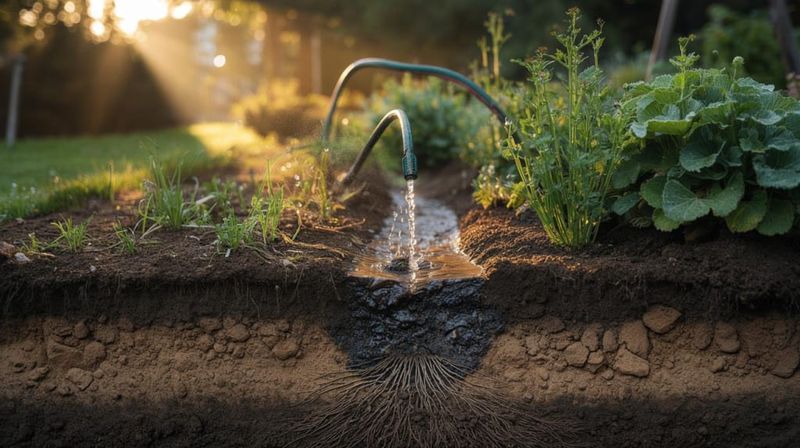
Penn State Extension guidance on perennial care recommends less frequent, deeper watering for established ornamentals rather than light daily applications. Slower irrigation gives water time to move downward into the root zone, which is exactly where a stressed plant needs access to moisture most.
Calling this mistake the single cause of every wilted coneflower would be an overstatement, but it is a genuinely useful habit to correct. Shifting from a quick daily sprinkle to a slower, less frequent soak directed at the root zone costs nothing and reduces the risk of both shallow rooting and surface evaporation loss.
The key is making sure water actually reaches the depth where the roots are working, not just wetting the top layer and calling it done.
Check actual moisture six inches down
The most reliable tool for diagnosing a wilted coneflower costs nothing and takes about thirty seconds. Push a finger, a wooden dowel, or a trowel into the soil around the plant and pull back enough material to feel what is happening about six inches down.
That depth is where an established echinacea’s root zone is actually doing its work, and the condition of the soil there tells a different story than the surface alone.
UGA Extension’s heat-wave watering guidance specifically recommends checking about six inches deep and describes dry, powdery soil at that depth as a reliable indicator that watering is needed. If the soil at depth feels dry and falls apart, that supports irrigation.
If it feels moist and holds together, the wilt is telling you something other than drought.
Missouri Botanical Garden drought guidance reinforces this point: a dry surface or collapsed foliage alone does not confirm drought stress, because the surface can dry out while deeper soil retains adequate moisture. Skipping the probe and watering based on appearance risks adding water to soil that does not need it, which creates a different set of problems entirely.
When the root zone is dry, water slowly and deeply
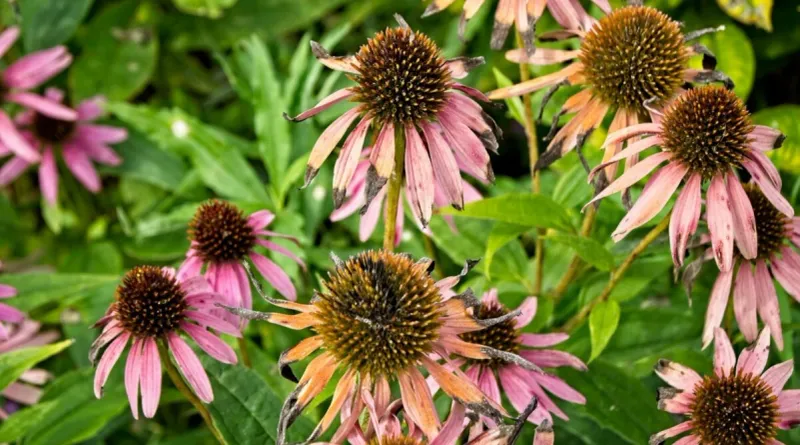
Dry, powdery soil six inches down is a clear signal to water, but how you apply that water matters as much as whether you apply it. A slow trickle at the soil line gives water time to move downward into the root zone instead of sheeting off the surface or pooling on top.
Running a soaker hose, drip line, or even a standard hose on a low setting directly at the base of the plant for an extended period accomplishes far more than a brisk overhead spray that evaporates before it reaches the roots.
Penn State Extension perennial guidance supports deep, infrequent watering over frequent light applications for established plants, and UGA Extension’s water conservation guidance recommends morning irrigation to reduce evaporation and allow foliage to dry during the day, which can lower the risk of some fungal issues. After watering, wait until the soil at depth begins to dry again before watering a second time rather than following a fixed daily or weekly schedule.
A layer of mulch spread around the bed, kept a few inches away from the crown and stems, helps slow evaporation between waterings. Missouri Botanical Garden’s plant profile for Echinacea purpurea notes its preference for well-drained soil, which points to one important safeguard: stop if water begins pooling around the base or draining unusually slowly.
UGA Extension cautions that repeatedly adding deep irrigation to a poorly draining site makes root problems worse, not better. Address the drainage first.
If the soil is moist, more water can worsen the wilt
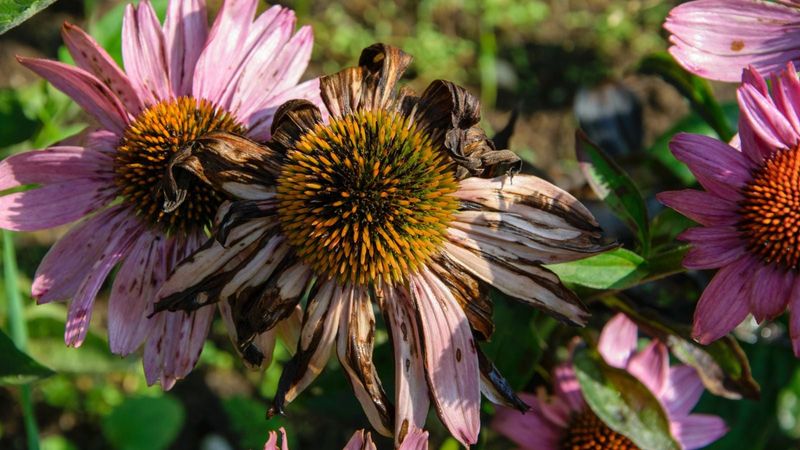
Finding moist soil six inches down when the plant looks collapsed is actually useful information. It means the wilt is not about a shortage of water in the root zone, so adding more irrigation will not help and may actively cause harm.
UGA Extension’s heat-wave guidance describes a common and damaging cycle: a gardener sees wilt, waters more, saturates the soil, reduces oxygen around the roots, and ends up with root damage that produces even more wilting.
Saturated soil limits the oxygen roots need to function, and roots that cannot breathe cannot move water to the plant effectively. The result looks exactly like drought stress from the outside, even though the problem is the opposite.
Afternoon wilting during extreme heat is especially likely to reflect this temporary imbalance rather than genuine drought, because leaves can lose water faster than roots supply it even when moisture is present.
UGA Extension heat-stress guidance notes that plants in this situation may recover on their own as temperatures ease in the evening or overnight. Morning wilt is a more meaningful warning sign than afternoon wilt, but even then it calls for a soil check rather than an automatic watering response.
Moist soil plus persistent wilt points toward heat stress, drainage problems, root damage, or disease, and those require different responses than irrigation.
New plantings need a different watering rule
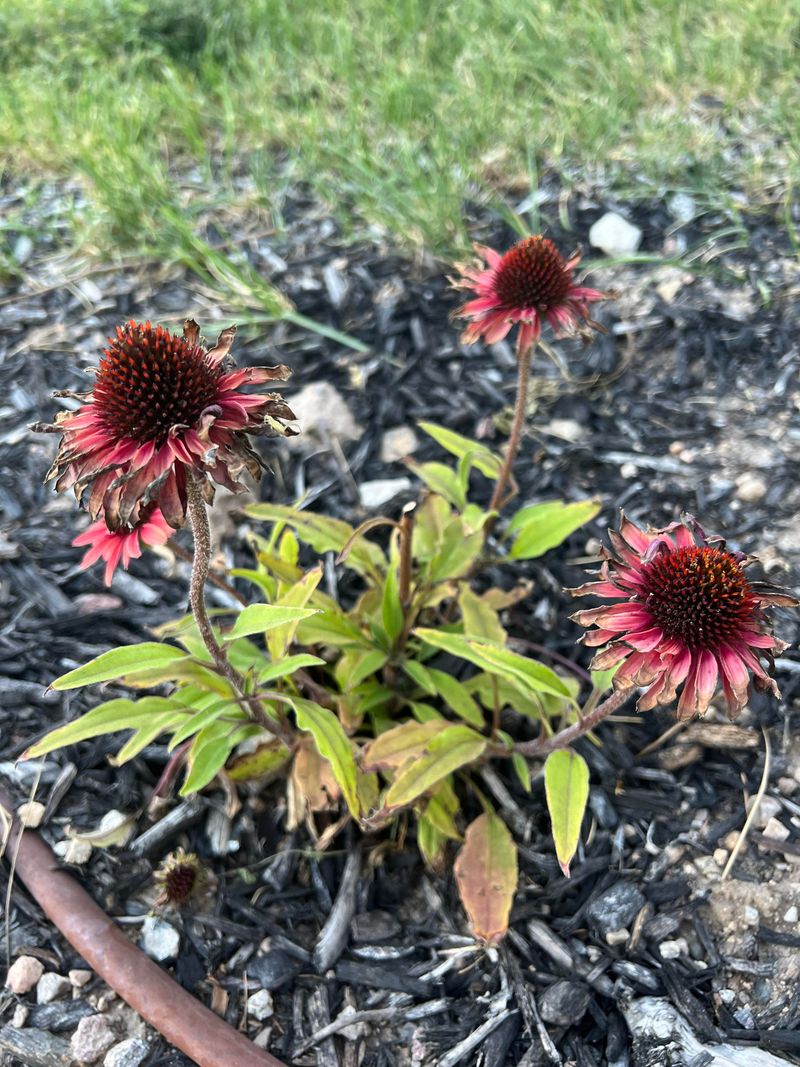
Everything discussed about drought tolerance applies to established plants, and it is worth being specific about what established means. A coneflower that has grown in place through at least one full season and developed a substantial root system can generally handle dry spells with minimal intervention.
A plant that went into the ground this season, or one that was recently divided, moved, or otherwise disturbed, has not earned that label yet and should not be managed as if it had.
Penn State Extension perennial guidance states clearly that drought tolerance in perennials typically applies only after a strong root system develops. Newly planted specimens should be watered immediately after planting and checked regularly while roots are still spreading into surrounding soil.
Missouri Botanical Garden’s profile for Echinacea purpurea lists it as dry to medium in water needs, but that description reflects mature plant performance rather than the establishment phase.
Container plants, recently transplanted divisions, and coneflowers growing in sandy or fast-draining soil all need more attentive moisture monitoring than a healthy three-year-old plant in a well-amended bed. Rainfall, site exposure, and drainage all alter how often a check is needed.
There is no rigid schedule that fits every situation, so the soil check remains the most reliable guide regardless of how recently the plant went in the ground.
Persistent wilt points beyond watering
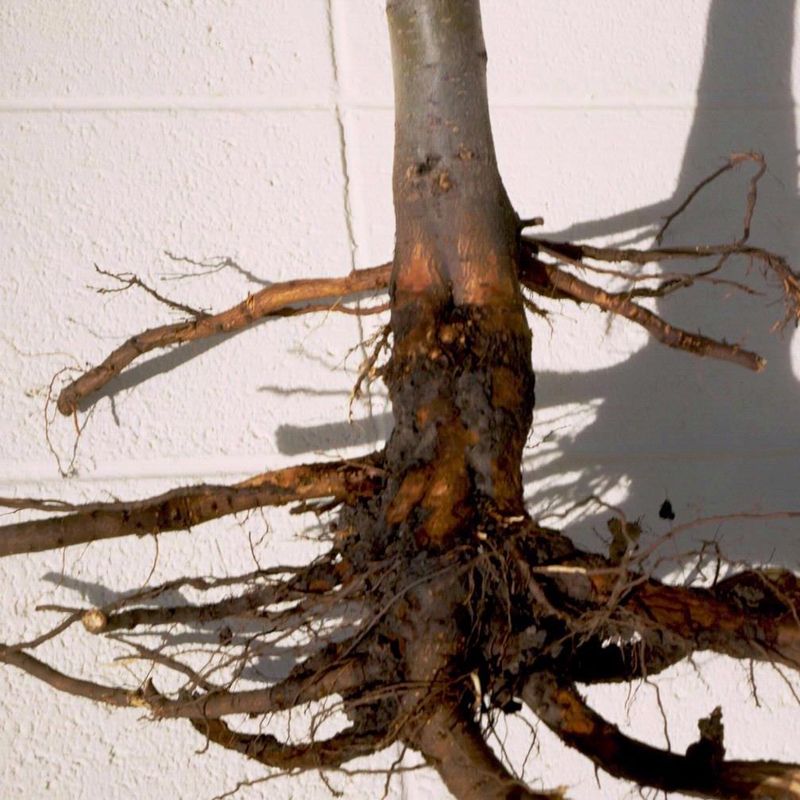
A coneflower that keeps declining despite appropriate soil moisture is signaling something that more irrigation will not fix. At that point, the most productive next step is a close inspection of the crown and lower stems rather than another adjustment to the watering schedule.
Soft tissue, darkened or sunken areas at the base, or discolored lower stems are specific warning signs worth taking seriously.
Penn State Extension’s echinacea disease guide identifies crown rots as a potential cause of wilting and plant death in coneflowers, independent of watering technique. These conditions can develop even in plants that have been watered correctly, and escalating irrigation when disease is present makes the situation worse rather than better.
If the crown is soft or the tissue at the base looks wrong, disease investigation is the appropriate path.
Species and cultivar differences also matter more than gardeners sometimes expect. Illinois Extension’s coneflower overview notes that purple coneflower and pale purple coneflower differ in root systems and preferred site conditions, and Illinois Extension’s purple coneflower profile highlights that newer hybrids may behave differently from straight species plants.
For Florida gardeners specifically, UF/IFAS Florida-Friendly Landscaping guidance notes that Echinacea purpurea’s listed USDA range reaches only through zone 8b in some references, meaning performance in hotter, more humid parts of the state can vary significantly depending on cultivar, drainage, and site exposure. Not every location sold under the coneflower name will behave identically.
Let the soil—not the wilt—set your next watering
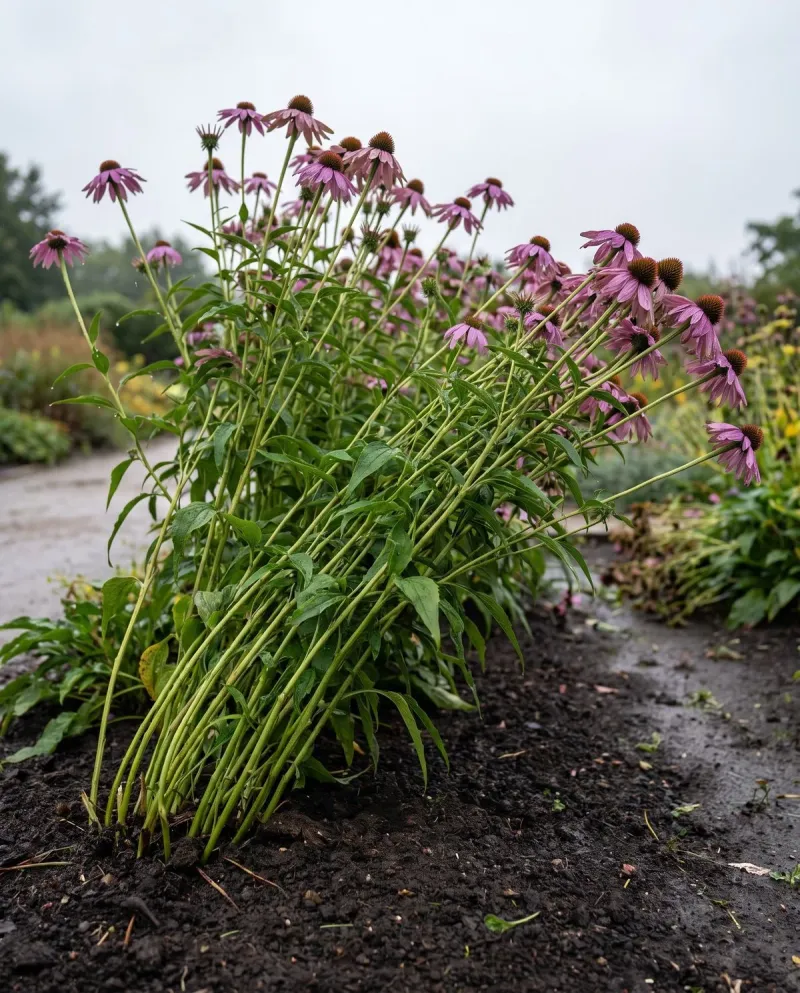
Every wilted coneflower deserves the same first response: push a finger or trowel into the soil around the plant and check what is happening six inches down. UGA Extension and Penn State Extension both support that diagnostic step over reacting to foliage appearance alone.
Dry, powdery soil at depth supports slow, deep root-zone irrigation followed by waiting for the soil to begin drying. Moist soil calls for restraint, not more water.
Frequent shallow watering is a real habit worth correcting because it can leave deeper roots undersupplied and promote shallow rooting that suffers in heat. But it is one contributing factor among several, not a guaranteed explanation for every collapsed plant.
When appropriate watering does not stop the decline, look at drainage, root condition, disease, site exposure, and whether the cultivar is a good fit for the location.
A wilted coneflower is asking a question, not delivering a verdict. Let the soil answer it first.