
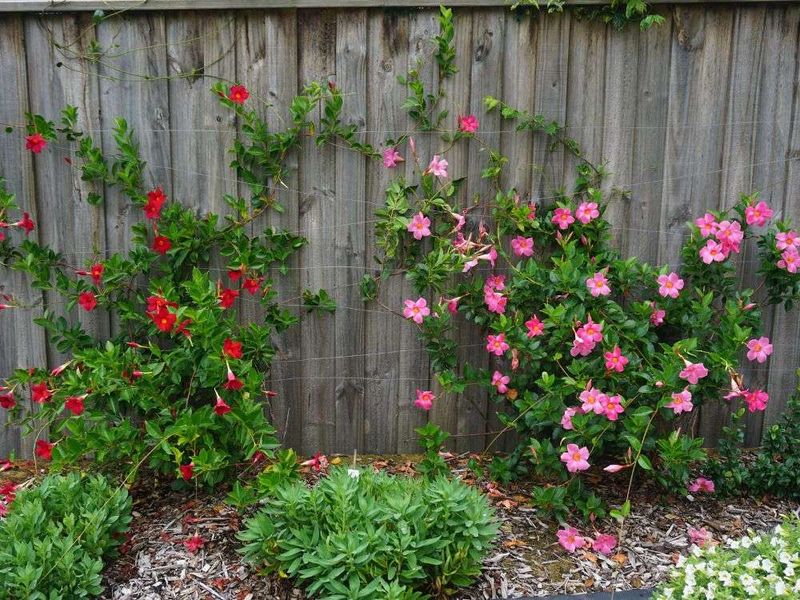
Mandevilla vines can turn from lush to leggy almost overnight during Florida’s warm growing season, sending long bare stems spiraling in every direction. Once the growth piles up at the top of a trellis or fence, the vine starts looking more like a tangle than a tropical showpiece.
A little selective shaping while the plant is actively growing can help you stay ahead of that mess. This guide walks you through reading your plant’s condition, making the right cuts, and training the stems so your mandevilla stays manageable through the rest of the season.
Thin, tangled growth calls for a condition-based decision
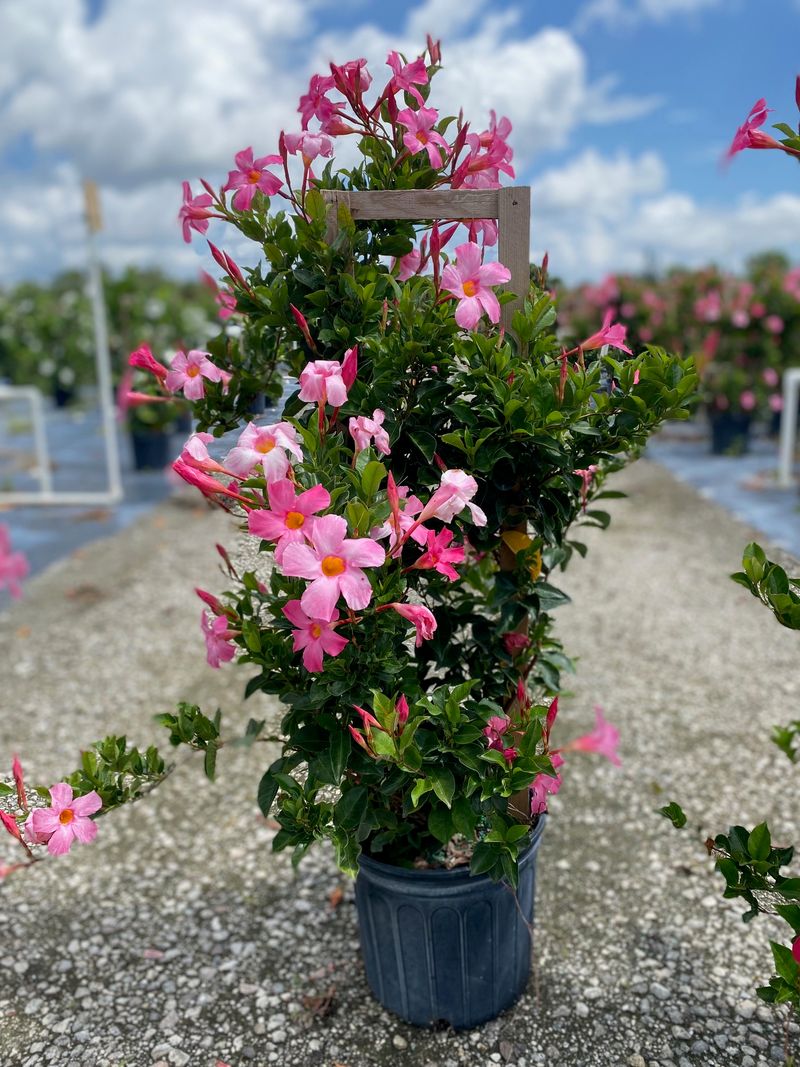
Mandevilla is a fast-growing, twining tropical vine, and Florida’s warm climate gives it a long window to produce stems that quickly outpace any trellis or fence. Growth can pile up at the top of a support while the lower portion of the plant turns bare and sparse.
That combination of top-heavy flowering and thin lower stems is exactly what sends gardeners searching for a quick fix.
The catch is that there is no single statewide deadline for addressing it. Whether to act now, and how aggressively, depends on whether your plant is actively growing, still flowering, approaching freeze risk, or scheduled for a move indoors.
UF/IFAS guidance on mandevilla notes that the plant flowers primarily during the warm growing season, and in USDA zones 10 and 11 some plants flower year-round. That means a Florida gardener in early fall may be looking at an actively flowering vine, not a plant ready for a hard seasonal reset.
The central distinction here is between light shape maintenance and a harder seasonal cut. Light shaping can happen during active growth: you shorten the longest, thinnest shoots, remove dead or weak stems, and redirect strong growth across the support.
A harder, more substantial pruning is generally better timed for late winter or early spring, when the plant can recover and push the new growth that carries summer flowers.
Florida location also matters. South Florida freeze timing differs considerably from northern or inland areas, where cold arrives earlier and mandevilla may need winter protection sooner.
A gardener in Gainesville and one in Miami are not working on the same schedule. Letting your plant’s current condition, your location, and your winter plans guide the decision will serve you better than treating “now” as a universal trigger.
Read the plant’s habit before choosing the cut
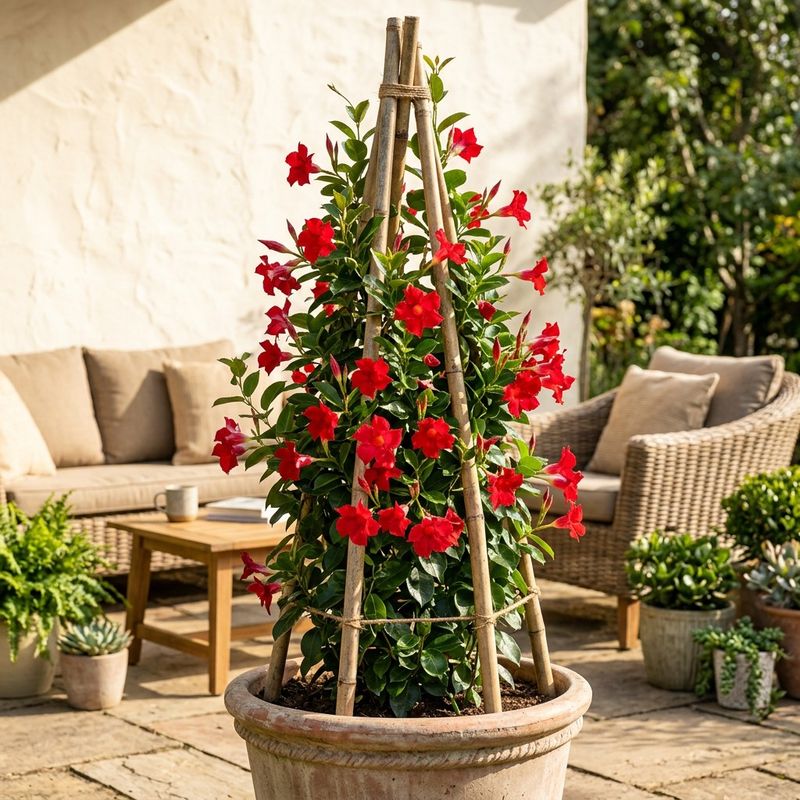
Not every plant sold as a mandevilla behaves the same way. Classic mandevilla types are vigorous climbers that produce long twining stems and depend on poles, wires, or lattice to reach their potential.
Compact cultivars, including many Sun Parasol-type plants and what are often sold as dipladenia, grow in a more shrub-like mound and are far less reliant on vertical support.
Mississippi State Extension explains that mandevilla and dipladenia are closely related and frequently sold under overlapping names, but the climbing types behave quite differently from the compact shrubby ones. Recommending aggressive trellis training or substantial stem removal to someone with a compact dipladenia in a hanging basket would be mismatched advice.
Before you decide how much to cut, confirm whether you have a vigorous climber or a self-contained mounding plant.
For climbing types, check the base of the plant before reaching for the pruners. If the lower stems still carry leaves and some flowering, you have more to work with than a vine that has gone completely bare from the ground up.
A plant with reasonable base foliage is a better candidate for selective heading and retraining. One that has lost nearly all its lower leaves may need more thought about whether light shaping will deliver visible results before a cold snap or a planned move changes the situation.
Also consider the support itself. UF/IFAS recommends growing mandevilla on poles, wires, lattice, trellises, or pergolas, and the type of structure you have will influence how you spread stems and whether retraining is practical.
A vine tied to a narrow post has fewer options than one growing on a wide lattice panel. Taking stock of the plant’s habit, current flowering, and support before making any cuts keeps the decision grounded in what is actually in front of you.
Use a light shaping prune while the plant is actively growing
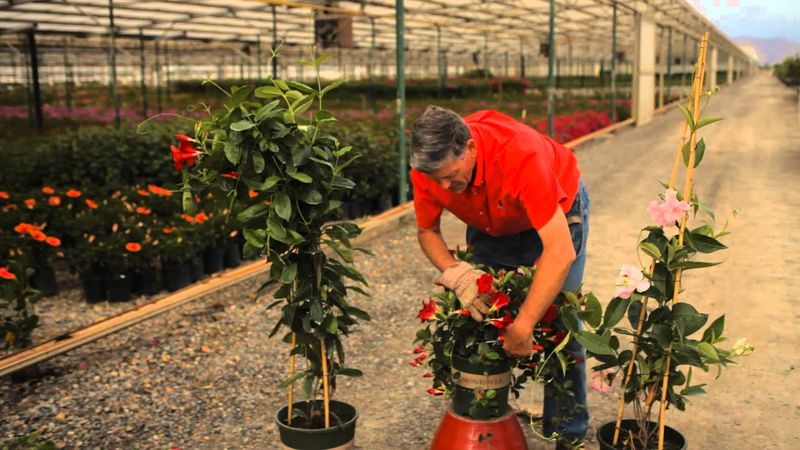
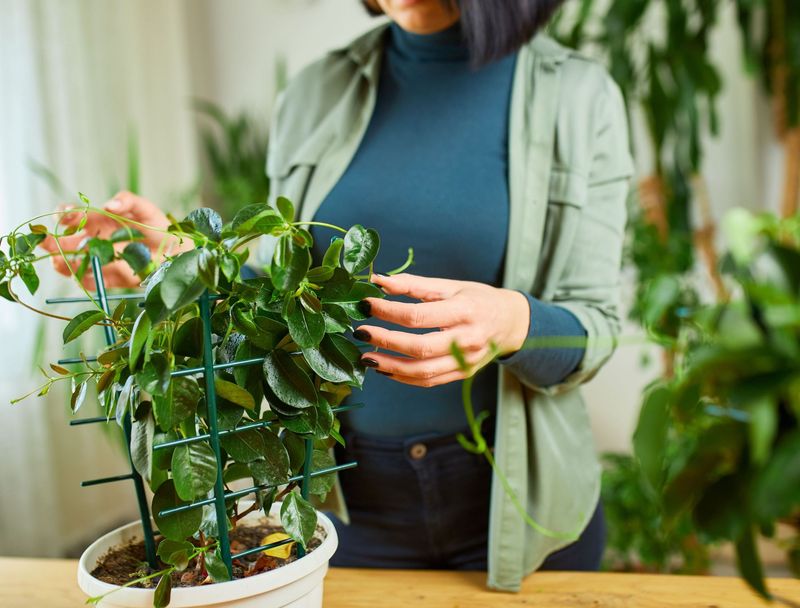
The core procedure for a thin, tangled mandevilla during active growth starts before any cutting. Gently separate the stems by hand, working through the tangle from the base upward.
Pulling stems apart carefully helps you see what you actually have: which shoots are strong and leafy, which ones are long and bare, and where dead or clearly weak growth is hiding inside the canopy.
Once you can see the structure, remove any dead, damaged, or obviously weak stems first. Then focus on the longest, thinnest shoots that have little foliage along their length.
UF/IFAS notes that pinching the tips of new shoots encourages bushier growth, so removing just the growing tip of a long bare whip is a lower-risk way to prompt branching without stripping the plant of what it has. For shoots that have run well past their useful length, you can head them back further, cutting to a point where a leaf node or a side branch remains.
UF/IFAS cultivar guidance for mandevilla specifically recommends regularly heading back selected twining stems to encourage new foliage and flowers nearer the lower part of the support, which is exactly the problem most gardeners are trying to solve when the plant goes bare at the base. Selective heading is the practical tool for that job.
Keep the cuts targeted. Removing a few of the longest problem shoots is different from cutting back most of the plant’s canopy.
A mandevilla that is still carrying a heavy flush of flowers is probably not the right candidate for a sweeping cut right now. NC State Extension also notes that pinching promotes branching, reinforcing that tip removal is the conservative, lower-risk starting point.
You can always revisit the plant in a few weeks and make additional adjustments as new growth extends.
Retrain strong stems across the support
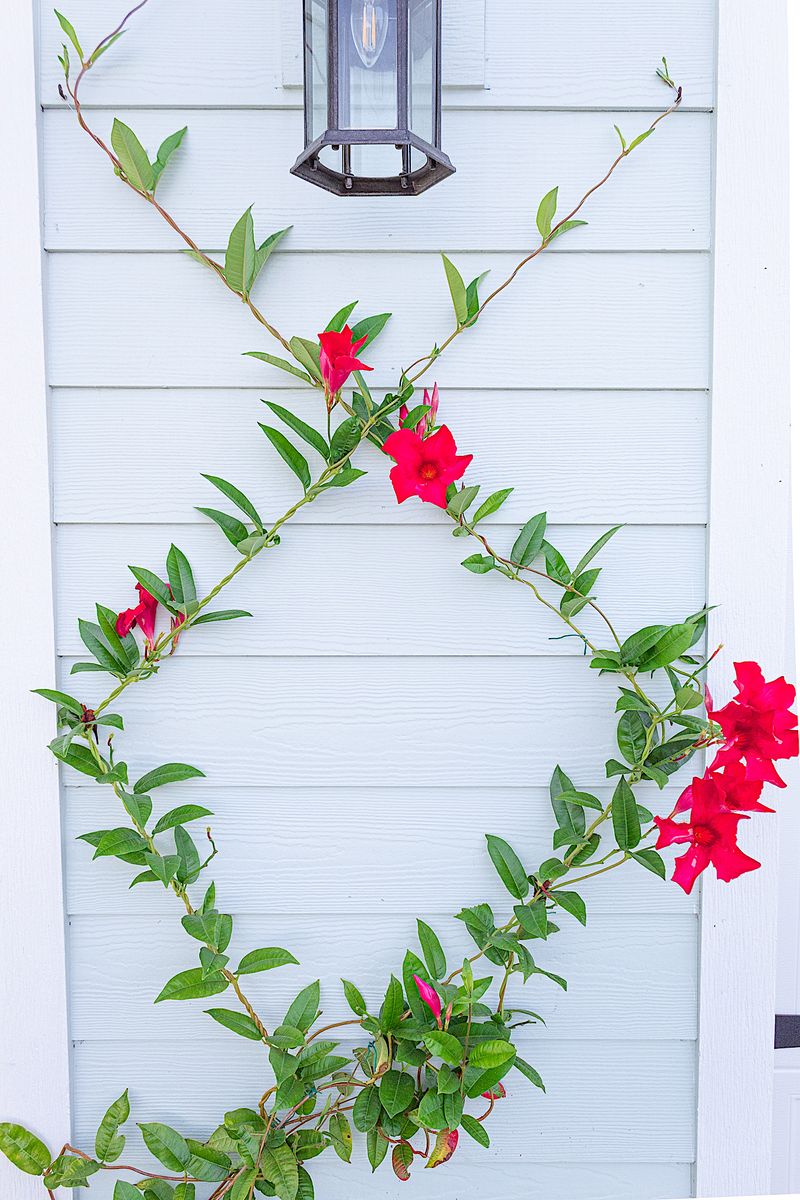
Pruning alone only solves half the problem. Once you have removed the dead growth and shortened the longest bare shoots, the stems that remain need to be deliberately placed across the support rather than left to pile up wherever they land.
Training is what turns a pruned vine into a vine with actual structure.
Select several of the strongest, leafiest stems and spread them across the available support, whether that is a trellis panel, a run of wire, a lattice fence, or a pergola post. UF/IFAS mandevilla guidance points to this kind of stem distribution as a way to get foliage and flowers working across the plant’s vertical space rather than concentrating at the top.
Tie or loosely secure stems at intervals so they hold their new position as new growth adds weight.
Untangling and retraining is a more conservative approach than cutting the plant back hard, because it leaves more existing foliage in place while giving you a chance to assess the plant’s real structure. That said, it is not a guaranteed superior method.
A plant that is very top-heavy or has very few usable lower stems may not respond to retraining the way a younger, more balanced vine would. UF/IFAS Florida-Friendly Landscaping principles support selective pruning and shape maintenance as part of responsible ongoing plant care, and retraining fits that framework well.
Plan to reassess the arrangement in two to three weeks. UF/IFAS pruning guidance reinforces that ongoing attention to new growth keeps a plant in better shape than a single intervention.
New shoots will extend quickly during warm weather, and redirecting them early is easier than untangling another month of unchecked growth. Think of retraining as the beginning of an ongoing habit rather than a one-time fix.
Protect yourself and the plant during pruning
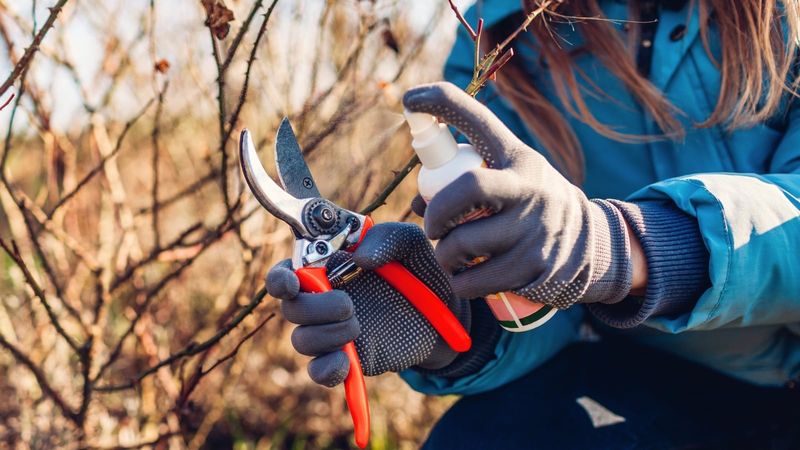
Mandevilla’s milky sap is not just a cosmetic nuisance. UF/IFAS warns that the sap can irritate skin and may be toxic if ingested.
Wear gloves before you start cutting, and keep them on throughout the job. Avoid touching your face, and wash your hands thoroughly with soap and water when you are done, even if you wore gloves the entire time.
Keep children and pets away from freshly cut stems and any trimmings left on the ground until you have cleaned up.
Sharp, clean tools matter both for the plant and for preventing the spread of pathogens between plants. A clean cut heals more efficiently than a torn or crushed stem, and dull blades tend to crush rather than cut.
Use hand pruners sized for the stems you are working with, and sharpen them if they have not been maintained recently.
For disinfecting your tools, UF/IFAS guidance on disinfecting garden tools describes 70 to 100 percent alcohol as a practical option, and also provides instructions for a 10 percent bleach solution. If you use the bleach solution, rinse the blades afterward to reduce corrosion.
Disinfecting is especially worth doing if you are moving between plants or if you notice any signs of disease on the stems you are removing. Wiping blades between cuts adds a few seconds but can prevent you from spreading a problem from one part of the vine to another.
Let Florida location and winter plans set the next pruning date
Light shaping during active growth is a separate decision from the larger seasonal pruning that sets up a mandevilla for the following year. A UF/IFAS Master Gardener pruning guide lists mandevilla as a summer-flowering plant that can be pruned in late winter or early spring to stimulate the new growth that carries summer flowers.
That timing makes sense because the plant can recover during the warming period and push vigorous new shoots before the heat of summer arrives. Treating late summer or early fall as a universal hard-pruning window is not what that guidance supports.
For gardeners in northern or inland Florida, freeze risk changes the calculation. Mandevilla can be damaged by freezing temperatures, and UF/IFAS suggests container plants that can be moved indoors for gardeners in areas where freezes are a concern.
If your plant is in a container and will need to come inside before cold arrives, cutting just enough growth to release it from the trellis or support is a reasonable approach. Save the harder pruning for spring, when the plant can recover with proper light, water, and fertilizer as it resumes growth.
Arkansas Cooperative Extension advises cutting as little as necessary during the move indoors and reserving a more substantial cut for spring recovery. That approach protects existing foliage and gives the plant resources to handle the stress of being moved to a lower-light indoor environment.
South Florida gardeners are working on a different timetable. Freeze timing in South Florida differs significantly from northern and inland areas, and a mandevilla in Miami or Naples may remain actively growing and flowering well into what the calendar calls fall or even winter.
For those gardeners, light shaping can continue as long as the plant is growing, with harder pruning still best reserved for late winter or early spring. Knowing which part of Florida you are gardening in is the first step toward getting the timing right.
Use shaping to improve structure, not to promise a permanent fix
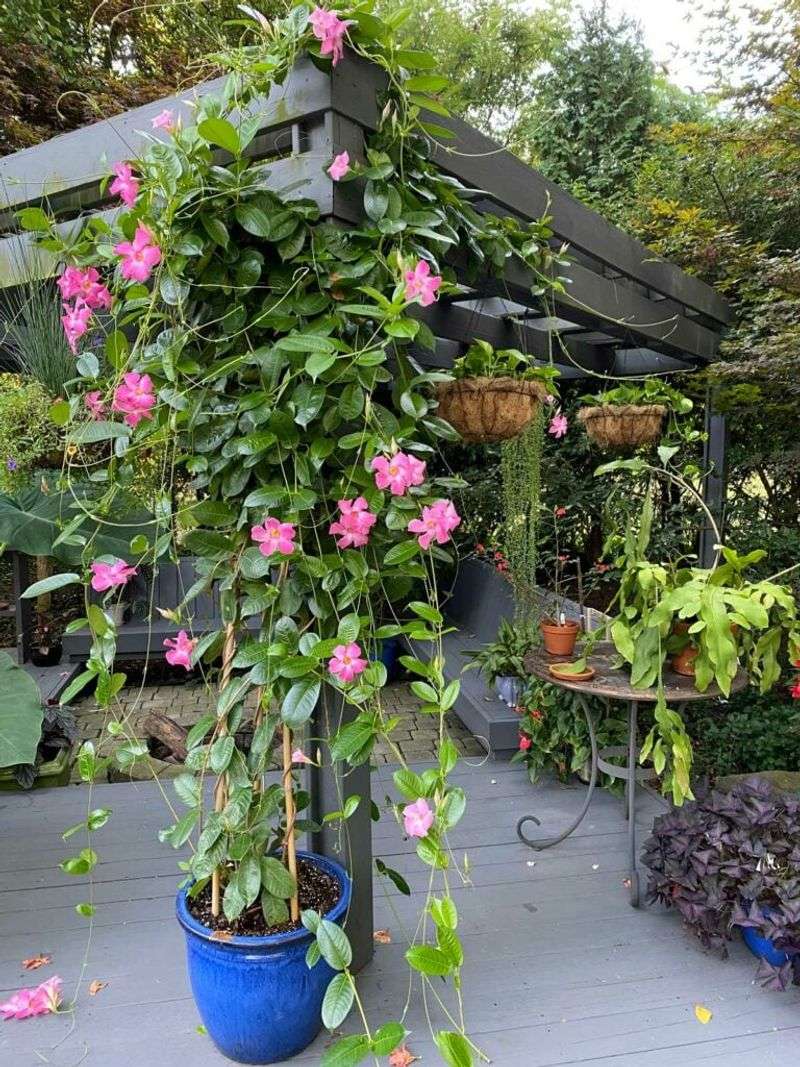
Shape the plant rather than scalp it. Shorten the longest, bare-looking shoot tips, remove dead or weak growth, and spread several strong stems across the support so the vine fills its space more evenly.
Then check back in a few weeks and redirect new shoots before they pile up again. That cycle of light maintenance is more sustainable than waiting for a major tangle to develop and then cutting back hard.
Pruning also cannot substitute for the basics. UF/IFAS notes that mandevilla prefers full sun for strong flowering and needs well-drained soil.
If the plant is growing in too much shade, sitting in poorly drained soil, or going without consistent water, thin and weak growth will keep returning no matter how carefully you prune. Address the growing conditions alongside the shaping work.
Selected heading cuts can encourage foliage and flowers lower on the support, but a naturally vigorous mandevilla will always tend toward long growth. The realistic payoff from a well-executed shaping session is a more organized vine and a manageable structure you can maintain going forward – not a guarantee that the plant will stop producing long stems or stay tidy on its own.
A Florida mandevilla that is growing well is always going to push hard; working with that energy through regular, modest shaping is what keeps it looking intentional rather than escaped.