
Watching your geranium drop yellow leaves one after another is frustrating, especially when the plant looked perfectly healthy just days ago. The good news is that most cases point to something fixable in the root zone, and catching it early makes a real difference.
Wet soil from overwatering or poor drainage is a common culprit, but it is not the only one, so a quick check before you change anything can save you a lot of guesswork.
Your “geranium” is probably a Pelargonium
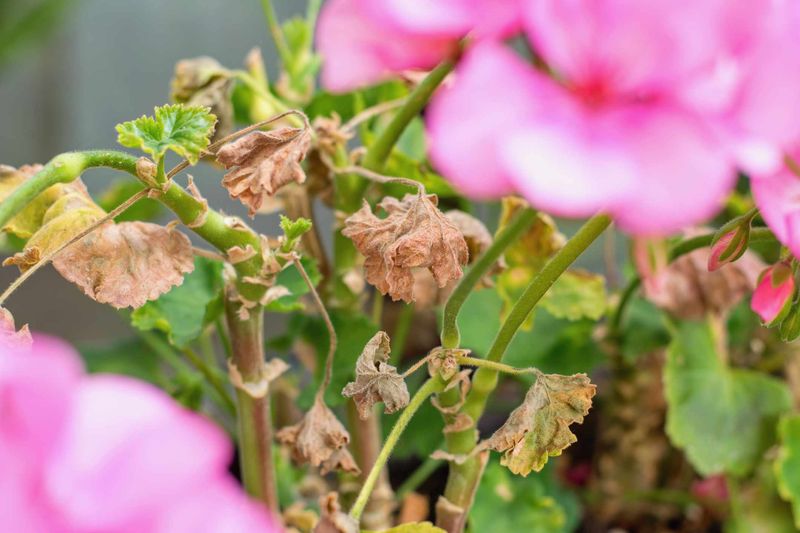
Most bedding and container plants sold as “geraniums” at garden centers across the South are actually PelargoniumGeranium, a genus native to South Africa that thrives in warm, bright conditions. The true perennial genus is a different plant entirely, and while both share the common name, their care needs are not identical.
Knowing which one you have matters because UF/IFAS guidance on Pelargonium is specific about sun and drainage requirements that differ from hardy perennial geraniums.
Pelargonium varieties perform best in full to partial sun with soil or potting mix that drains quickly. When the root zone stays wet for too long, these plants react fast, and the first visible sign is often leaves that yellow, wilt, or drop before their time.
That is the pattern gardeners in Florida and Texas tend to notice in summer, when heat and humidity make drainage problems worse.
University of Georgia extension guidance consistently points to well-drained soil and proper watering timing as the foundation of healthy Pelargonium culture. A fixed watering calendar does not account for heat, pot size, or rainfall, so root-zone conditions matter far more than any schedule.
Checking the soil before you water is the single most practical habit you can build.
Persistently wet roots are a leading suspect
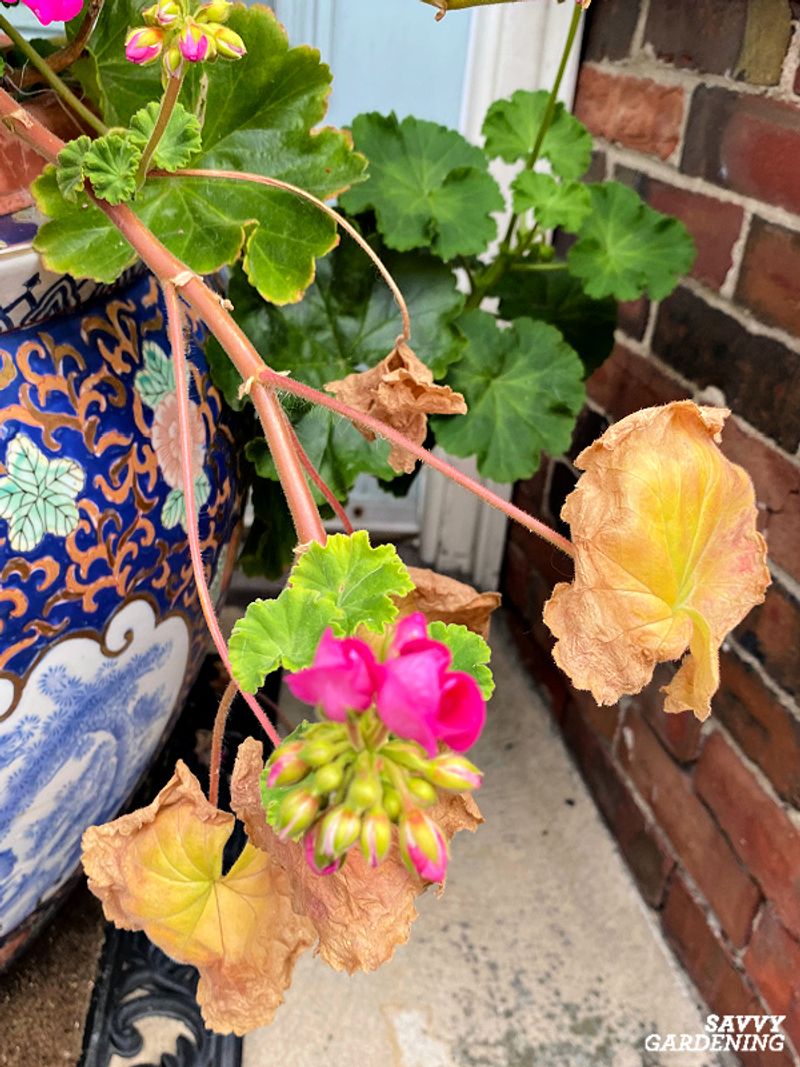
When geranium leaves yellow quickly and the plant seems to fade despite regular care, persistently wet soil is one of the first things worth checking. Saturated roots cannot take in oxygen properly, and over time that limitation damages root tissue, reduces the plant’s ability to move water and nutrients upward, and sets the stage for rot.
The result often looks like a plant that is both yellowing and wilting at the same time, which can be confusing.
Wilting does not always mean the plant is thirsty. University of Illinois extension on plant drowning explains that roots damaged by saturated soil may lose the ability to take up water at all, so a plant can wilt even while the potting mix is soaking wet.
That distinction matters because adding more water to a wilting plant in wet soil will make the problem worse, not better.
University of Minnesota’s geranium diagnostic guide lists overwatering among the recognized causes of yellowing and wilting, alongside several other possibilities. The key word here is “persistently” wet, meaning a root zone that stays saturated because of too-frequent watering, a container without drainage, or outdoor soil that does not drain.
Watering thoroughly once and letting excess drain out is not the same as keeping the mix continually wet, and that difference is worth understanding before making any changes to your routine.
Check the soil before you water again
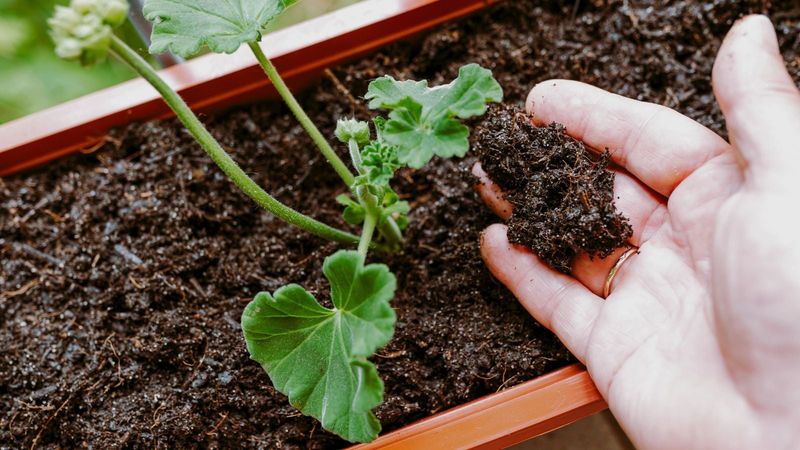
Before doing anything else, push a finger about one inch into the potting mix. If it still feels damp at that depth, the plant does not need water yet, and adding more will only extend the problem.
Illinois extension advice on geranium watering supports this simple finger-test approach over any fixed daily or weekly schedule.
Once the mix has dried out somewhat, water thoroughly until you see excess running freely from the drainage holes. The goal is to soak the root zone and then let it breathe, not to keep it constantly moist.
A pot that drains well after a thorough watering is in a very different situation from one that stays soggy for days.
Fixed schedules are unreliable because so many variables affect how fast a container dries out. A small pot in full Texas sun on a hot afternoon may need water every day or two, while the same plant in a large pot during a rainy Florida week might go ten days without needing anything.
UGA Lincoln County extension’s watering guidance frames this well: the goal is not maximum dryness or constant moisture, but a balanced root zone that gets air between waterings. Severe drought stress can cause its own yellowing and leaf drop, so letting the plant wilt repeatedly is not a solution either.
Fix the drainage before changing the care routine
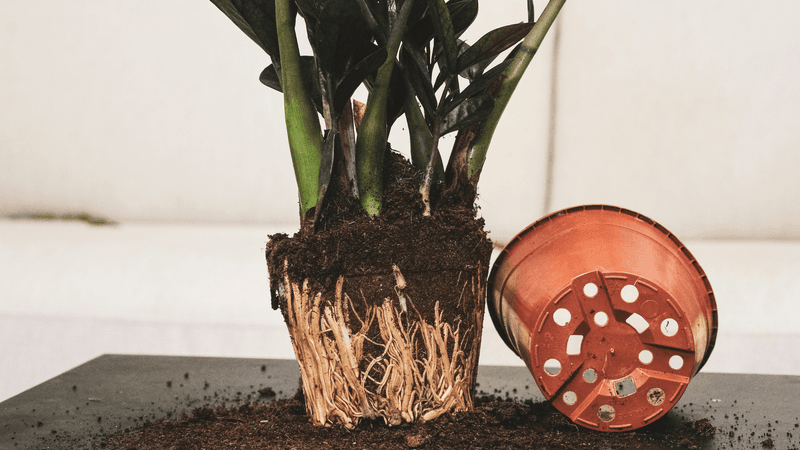
Adjusting how often you water will not help much if the container itself is trapping moisture. Any pot used for Pelargonium should have unobstructed drainage holes at the bottom.
If water cannot escape freely, the root zone stays saturated no matter how carefully you time your waterings, and the plant will keep declining.
UGA extension’s geranium bulletin recommends a porous potting mix rather than garden soil in containers. Garden soil compacts in pots, holds too much water, and does not provide enough air around the roots.
A quality commercial potting mix designed for containers gives roots the open structure they need to stay healthy between waterings.
Saucers are convenient for catching runoff, but they become a problem if you leave standing water in them. Empty saucers after watering so the container base does not sit in pooled water for hours.
For outdoor beds, UF/IFAS Pelargonium guidance notes that raised planting areas or beds amended for better drainage can help in spots where the native soil stays wet after rain. Every correction here serves the same purpose: restoring air movement and water flow around the root zone so roots can function normally again.
Inspect the roots for clues, not certainty
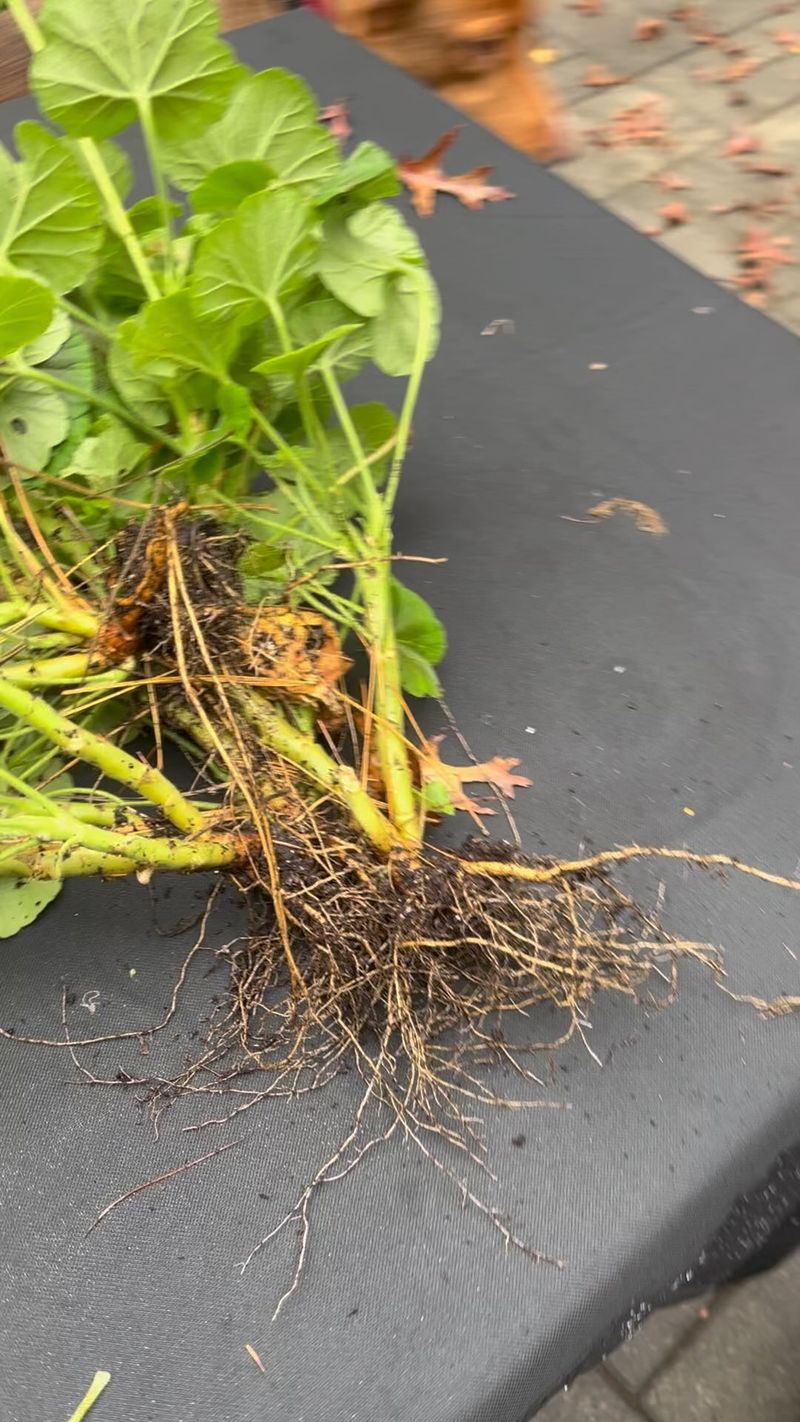
A root inspection becomes worth doing when the plant wilts in wet soil, when symptoms continue even after you have corrected watering, or when the decline has been rapid and severe. Pulling the root ball gently from the pot gives you a look at what is happening below the surface, where the real story often starts.
Healthy roots on a Pelargonium are generally white or light tan and feel firm. University of Illinois extension on houseplant health notes that dark brown to black roots are consistent with overwatering or root damage, and that contrast can be a useful clue.
If most of the root mass looks dark and feels mushy, the damage may be significant.
That said, root color and yellow leaves together cannot tell you everything. Dark roots alone do not prove that the plant has full root rot or that recovery is impossible, and they do not rule out other problems happening at the same time.
Additional symptoms, the history of how the plant was watered, and sometimes a second opinion from a local extension office or master gardener are all useful when the picture is not clear. Treat the root inspection as one piece of evidence in a larger diagnostic process, not as a final verdict on its own.
Compare the symptoms with other possible causes
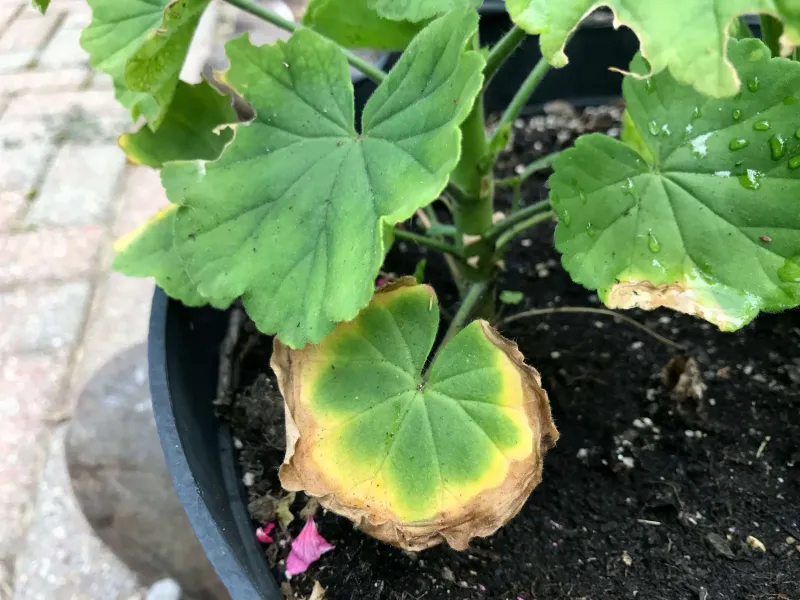
A single yellow leaf on the lower stem is not automatically a crisis. RHS guidance on houseplant leaf damage notes that occasional old lower leaves yellowing and dropping can be a normal part of a plant’s growth cycle.
The concern rises when yellowing spreads quickly, affects multiple parts of the plant, or comes with wilting, stunting, or rapid defoliation.
Underwatering produces its own version of decline. Crispy leaf edges, dry and shrunken potting mix, and leaves that feel papery are more typical of drought stress than of saturated roots.
UGA Fannin-Gilmer extension’s houseplant troubleshooting page lists both overwatering and underwatering as common sources of yellowing, which is a reminder that the same symptom can have opposite causes.
Heat and low light are separate factors worth considering, especially in the South. UF/IFAS notes that Pelargonium flowering in Florida can fade by mid- to late summer as temperatures climb.
Reduced blooming from heat is a different problem from yellowing leaves caused by root stress, and treating one will not fix the other.
Edema is another possibility that looks different up close. Penn State extension’s edema resource describes small yellow areas that progress to watery blisters or corky bumps on leaf undersides, often during cool, humid, or cloudy periods.
Improving drainage, reducing watering frequency, and increasing airflow may help with edema. Before reaching for fertilizer in response to any yellowing, check soil moisture, light levels, and the leaf surfaces first.
Illinois extension cautions that yellow leaves do not automatically signal a nutrient deficiency, and adding fertilizer to stressed roots can make things worse.
Rapid collapse calls for a disease and pest check
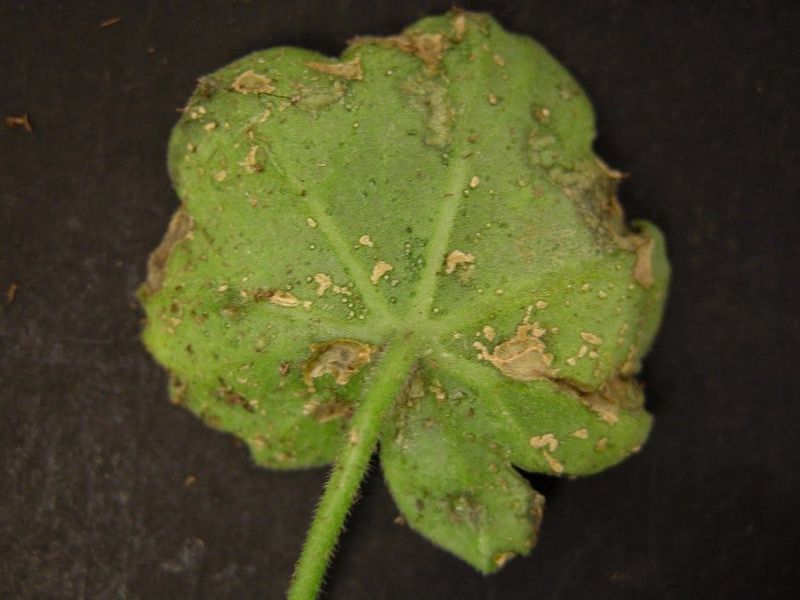
Some symptoms move too fast to be explained by watering alone. Water-soaked spots on leaves, yellow halos around brown areas, V-shaped lesions along leaf margins, black or brown tissue at the stem base, or a plant that collapses within days are all warning signs that something beyond soil moisture may be at work.
Penn State extension’s geranium disease guide and University of Minnesota’s geranium wilt diagnostic tool both describe bacterial blight and bacterial wilt as diseases capable of causing rapid, widespread decline. UF/IFAS disease guidance notes that some bacterial wilts cannot be reversed at home, and severely affected plants may need to be removed to protect others nearby.
Pests are worth checking before drawing any conclusions about the cause. Spider mites create fine yellow or pale stippling across leaf surfaces and may cause premature drop; Penn State’s resource on two-spotted spider mites is a helpful reference for identifying them.
Whiteflies tend to cluster on leaf undersides and can cause slight yellowing. UGA extension recommends inspecting beneath leaves as part of any thorough diagnosis.
Do not apply a fungicide, pesticide, or household remedy to an undiagnosed plant. Bacterial diseases, root rots, edema, mites, and watering stress each require a different response, and broad-spectrum treatments applied without a clear target can damage the plant and delay the real fix.
Restore balanced moisture, then reassess
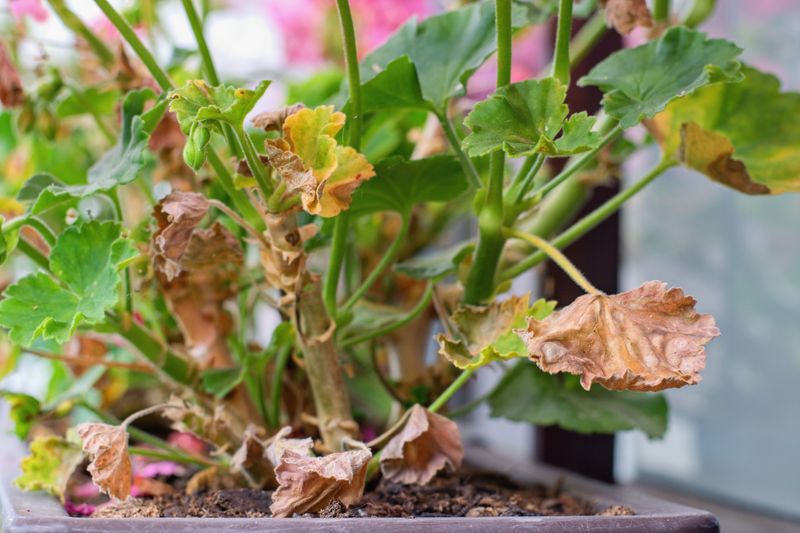
If persistently wet soil looks like the most likely cause, the first move is straightforward: pause watering while the mix remains damp, confirm that drainage holes are clear, empty any standing water from saucers, and let the root zone begin to dry out somewhat before watering again. Illinois extension’s watering guidance supports resuming thorough waterings only after the top inch of mix has dried, then allowing drainage to complete before the next cycle.
Removing yellow leaves mainly tidies up the plant’s appearance. It does not correct saturated soil, repair damaged roots, address pest activity, or resolve a nutrient imbalance.
If disease is a possibility based on the symptoms you observed, follow disease-specific management guidance from your local extension service rather than treating removal as a cure. Penn State’s geranium disease resource and the Minnesota diagnostic tool are good starting points when disease seems likely.
Correcting moisture and drainage may help the plant stabilize when water stress was the main problem, but severe root damage or an active disease can prevent recovery even with the best follow-up care. Reassess the symptoms after a week or two before adding fertilizer or applying any pest or disease treatment.
A geranium that truly just needed better drainage will usually tell you so by putting out fresh, healthy growth. UGA extension’s geranium bulletin remains a reliable reference for ongoing care decisions as the plant responds.