
Staring at a row of towering hollyhocks that refuse to flower is one of gardening’s most frustrating puzzles. Before you reach for a fertilizer bag or a spray bottle, the real question is whether your plant is behind schedule or genuinely struggling.
Most flowerless hollyhocks fall into one of two very different situations, and knowing which one you are dealing with changes everything about what you do next.
A leafy first-year hollyhock may be right on schedule
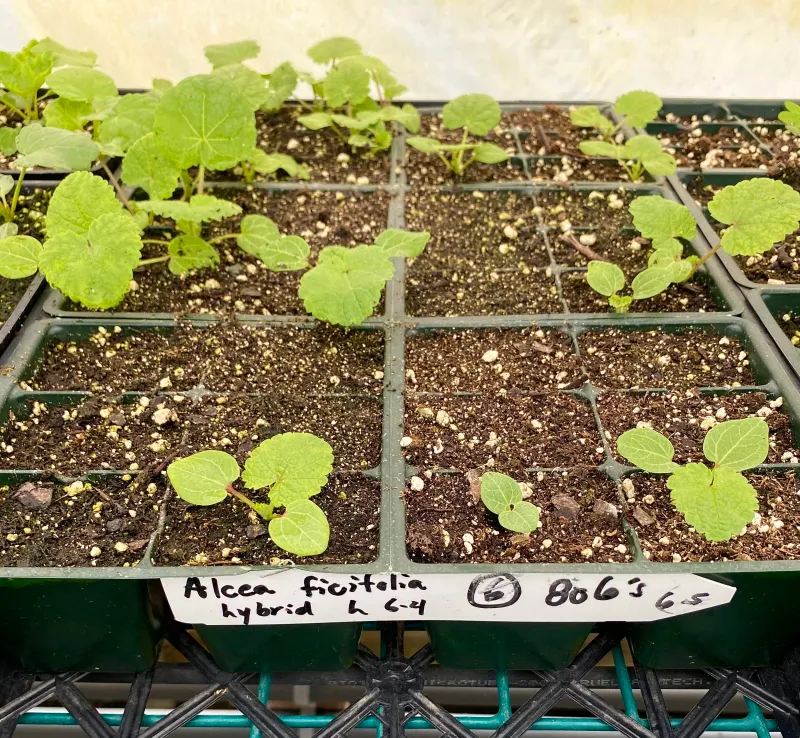
Patience is the first tool most hollyhock gardeners need, and it does not come in a bag or bottle. Most traditional Alcea rosea types are biennials, meaning they put all their energy into building a leafy plant during their first growing season and then flower after overwintering in the second.
Illinois Extension’s hollyhock growing guide confirms this two-season pattern, and University of Maine Extension notes that reseeding can make a hollyhock planting look perennial even though each individual plant follows a two-year cycle.
That cycle is not universal, though. Some newer cultivars are bred to bloom in their first year, which is why the seed packet or plant tag deserves a close look before you conclude something is wrong.
University of Kentucky Cooperative Extension reinforces that cultivar differences matter when you are setting expectations for bloom timing.
A low, leafy plant with no flower stalk and no buds is almost always telling you it needs more time rather than more fertilizer. Poor establishment, inadequate light, or an unsuitable cultivar can also delay performance, but those are secondary questions.
Start by confirming the plant’s age and checking its tag before changing anything about its care.
Check for a flower stalk before you change the care
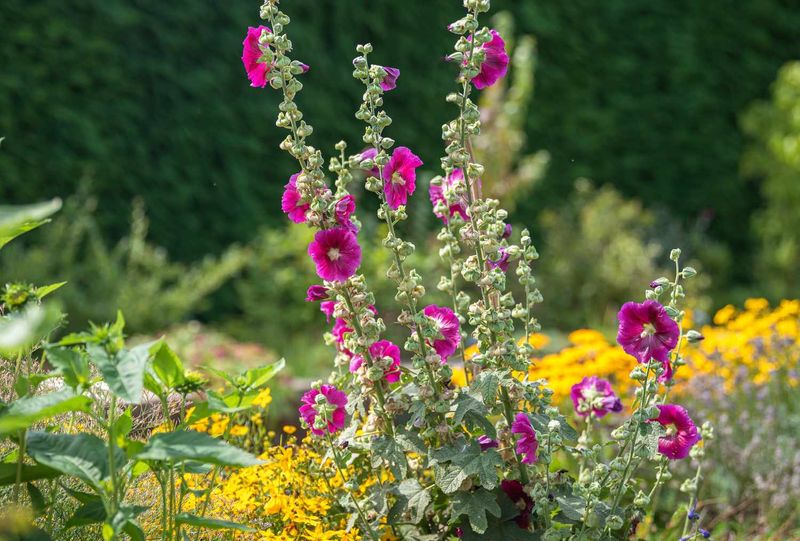
Before adjusting fertilizer, spraying anything, or pulling a plant out of the ground, spend two minutes doing one simple inspection: look for a flower stalk. Crouch down and part the lower leaves to check whether a central stalk is rising from the plant and whether small buds are forming along it.
That single observation will tell you more than any general advice can.
Two very different situations hide behind the phrase “leafy but no flowers.” A plant with no stalk and no buds at all is most likely a first-year biennial, a cultivar that does not fit the site, or a plant still establishing its root system. Illinois Extension and an Illinois Extension diagnostic response both point toward life cycle, light, and cultivar as the first questions for a plant with no reproductive growth at all.
A tall stalk with visible buds that brown, collapse, or refuse to open is a separate problem entirely. Michigan State University’s resource on flower bud abortion explains that failed buds on an otherwise vigorous plant can reflect insects, disease, fertilizer imbalance, or environmental stress.
Knowing which situation you are looking at keeps you from treating the wrong problem with the wrong tool.
Evaluate light and local growing conditions
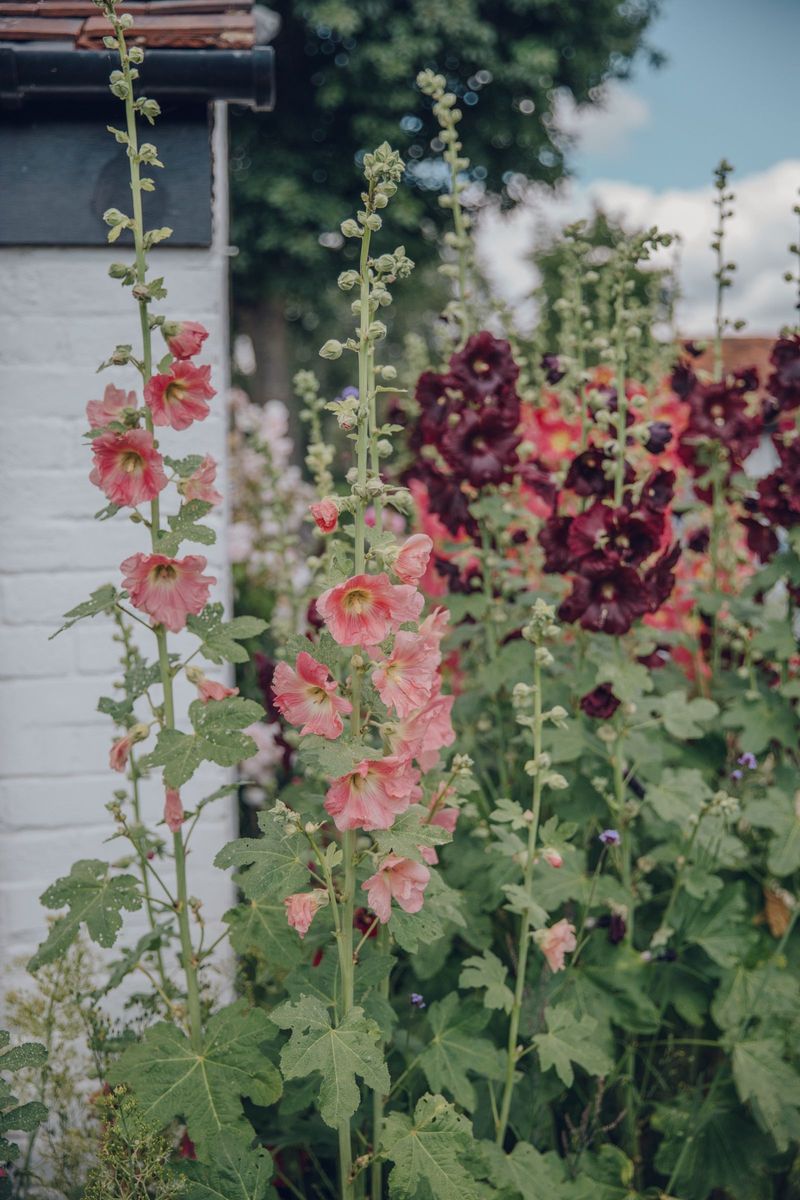
Sunlight is one of the most straightforward things to assess, and it is often underestimated in established beds where nearby trees or structures have grown to cast more shade over time. North Carolina State Extension lists full sun as six or more hours of direct light daily, paired with moist, well-drained soil, as the baseline for hollyhock performance.
Illinois Extension’s hollyhock page echoes that recommendation.
When light falls short, the plant does not necessarily die – it may just stretch toward whatever sun it can find, producing elongated growth without enough energy to support bud development. University of Minnesota Extension guidance on plant lighting notes broadly that insufficient light reduces flowering in light-demanding plants, and hollyhocks fit that category.
Southern gardeners face an additional layer of complexity. Heat and humidity can stress hollyhocks and increase disease pressure, but those factors require their own diagnosis rather than a blanket fix.
Regional advice matters too: UF/IFAS guidance applies specifically to North Florida and instructs readers to distinguish among Florida’s regions, while Texas SmartScape lists hollyhock as adapted for West Texas as a biennial, self-seeding plant. Neither source supports treating all of Florida or Texas as one growing environment with one prescription.
Do not answer missing blooms with automatic fertilizer
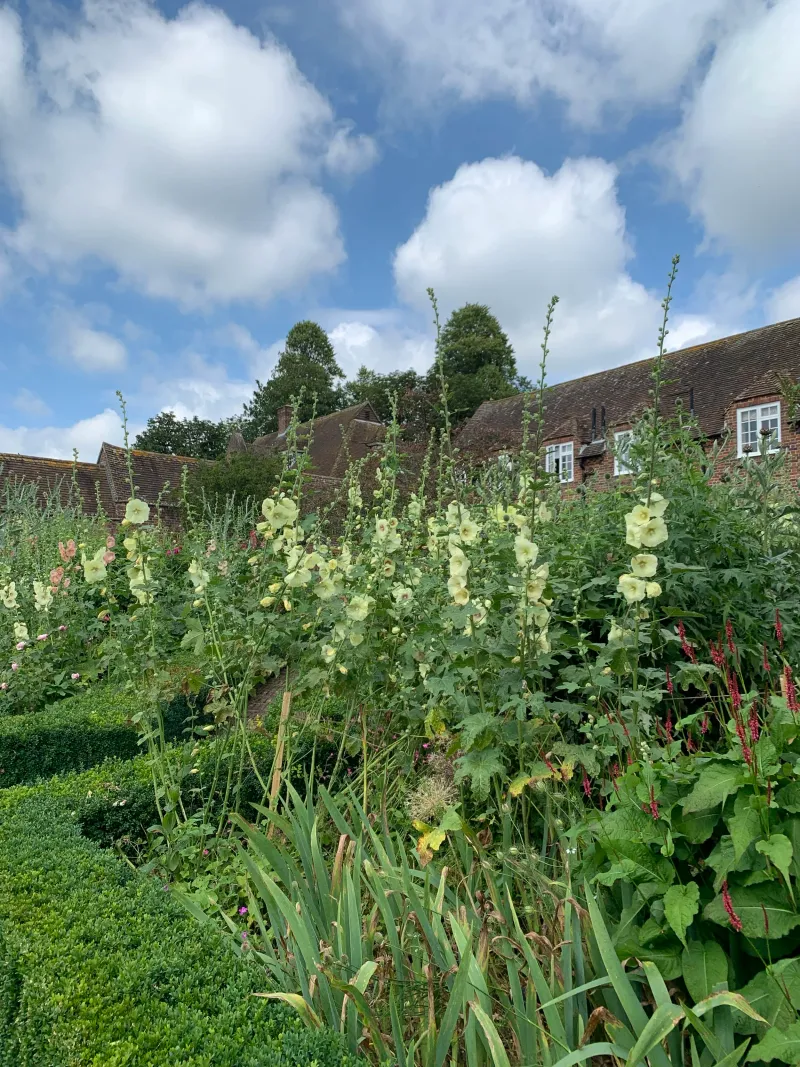
Reaching for fertilizer when a plant is not blooming feels productive, but it can make the situation harder to read. Tall, leafy growth does not automatically mean the plant has received too much nitrogen – it can also reflect cultivar genetics, the biennial growth stage, adequate soil fertility, or insufficient light pushing the plant to stretch.
Treating tall growth as proof of a fertilizer problem skips the diagnostic step that actually matters.
That said, excessive fertilizer is one real possibility when foliage is unusually lush and vigorous buds are aborting rather than opening. An Illinois Extension specialist reviewing a hollyhock with tall stems and aborted buds identified excess fertilizer as a candidate cause, but also flagged botrytis as another possibility and requested photos before committing to a diagnosis.
University of Wisconsin Extension’s hollyhock rust guidance recommends fertilizing only when needed and based on a soil test. High-nitrogen products and phosphorus-heavy bloom boosters applied without soil-test evidence are not supported by the hollyhock research and can encourage unnecessary inputs.
Holding off on unsupported fertilizer gives you time to gather better information before adding a variable that complicates the picture.
Inspect buds before blaming insects or normal fading
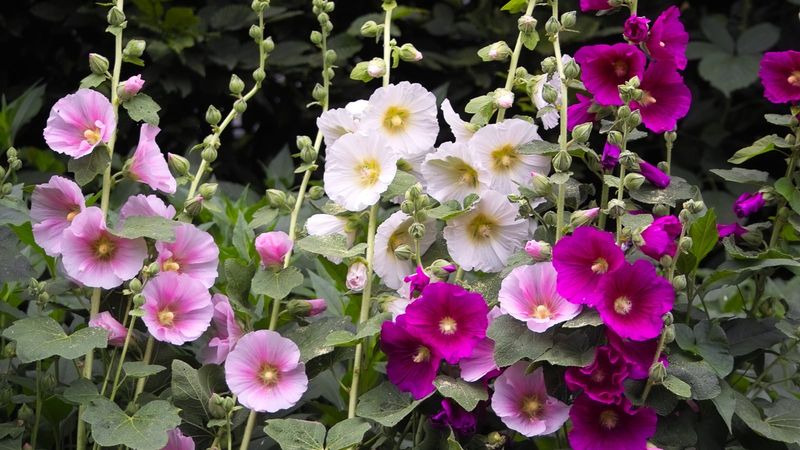
Brown or closed buds on a hollyhock stalk are not always a sign of pest damage – sometimes they are just part of the plant’s normal rhythm. Hollyhock flowers open progressively from the bottom of the stalk upward, and individual blooms may last only three to four days before fading.
Illinois Extension’s hollyhock care guide notes that brown, rounded structures appearing later in the season are often developing seed pods rather than failed flower buds, which can confuse gardeners who check the plant after peak bloom.
When actual bud damage is suspected, look closely at the buds themselves. The hollyhock weevil feeds on buds, tender stems, and emerging leaves, with larvae that develop inside seed pods.
Japanese beetles are common visitors too, though their signature damage is skeletonized foliage rather than bud failure – leaf damage alone does not confirm that beetles caused a bloom problem.
Mississippi State Extension’s coverage of the hibiscus plant bug makes a useful point: this pest is often blamed for dead-looking reproductive structures on related plants even though it primarily feeds on seed pods and seeds rather than flower buds. The same caution applies to hollyhocks.
Identify what you are actually looking at – open flower, faded flower, seed pod, or damaged bud – before concluding that any particular insect is responsible.
Leaf symptoms can suggest a disease problem
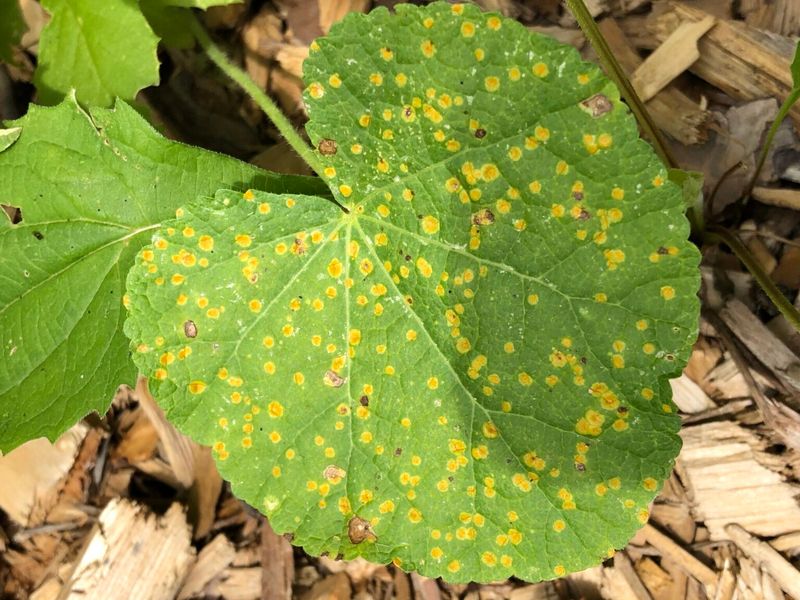
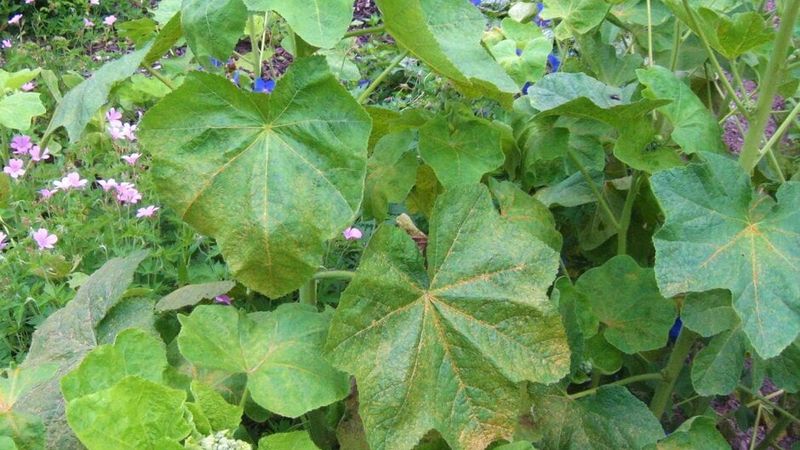
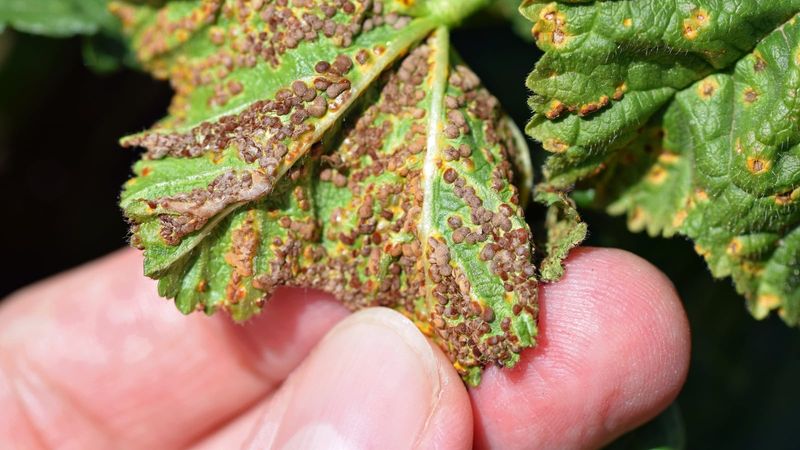
Orange or yellow spots appearing on the lower leaves of a hollyhock are one of the more recognizable visual clues in the garden, and they point toward hollyhock rust as a possibility worth investigating. University of Wisconsin Extension’s hollyhock rust resource describes the progression: spots on the upper leaf surface are followed by raised brown or dark-red pustules on the undersides, and warm, humid conditions favor the disease’s spread.
For Southern gardeners dealing with summer heat and moisture, that combination is common.
Rust is not the only disease that shows up on hollyhocks. Texas A&M’s plant disease handbook identifies rust as the most prevalent hollyhock disease in Texas but also lists anthracnose and leaf spots as concerns.
Each of these has its own visual pattern, and they do not all look alike in the field.
Brown buds or brown leaves on their own do not automatically indicate rust or any other specific disease. University of Wisconsin Extension cautions that plant disease diagnosis by sight alone can be unreliable, and a gardener looking at discolored tissue may be seeing one of several different problems – or a combination of them.
When symptoms are unclear, contacting your local cooperative extension office with a sample or clear photos is a more reliable path than guessing and treating based on appearance alone.
Use sanitation and airflow for disease management
Good cultural habits do more to manage hollyhock disease than most sprays, and they cost nothing beyond a little time. Water at the soil line rather than overhead to keep foliage dry, because wet leaves held in warm, humid air create exactly the conditions that favor rust and other fungal problems.
University of Wisconsin Extension’s rust management guidance recommends removing infected leaves as they appear, clearing plant debris at the end of the season, and providing adequate spacing to improve airflow around the plants.
Fungicides come up in disease management conversations, but their role is limited and label-specific. A properly labeled fungicide may help prevent disease spread or protect healthy new growth early in an infection, but it cannot restore leaf tissue already damaged by rust.
Always check that a product is labeled for use on hollyhocks and for the specific disease you have identified before applying anything. Michigan State University’s bud abortion resource reinforces that environmental and cultural factors often drive bud failure, meaning a fungicide alone rarely addresses the full picture.
Heat and humidity deserve their own mention here. They are possible stressors that can weaken plants and make disease worse, but they are not a condition fixed by sanitation alone.
Staking tall plants or growing them near a fence or wall – as Illinois Extension suggests – gives stems physical support and can reduce wind damage, though it does not trigger flowering. Sanitation and airflow reduce disease risk; they are not a guaranteed rescue for a plant already under environmental stress.
Match the next step to the plant’s evidence
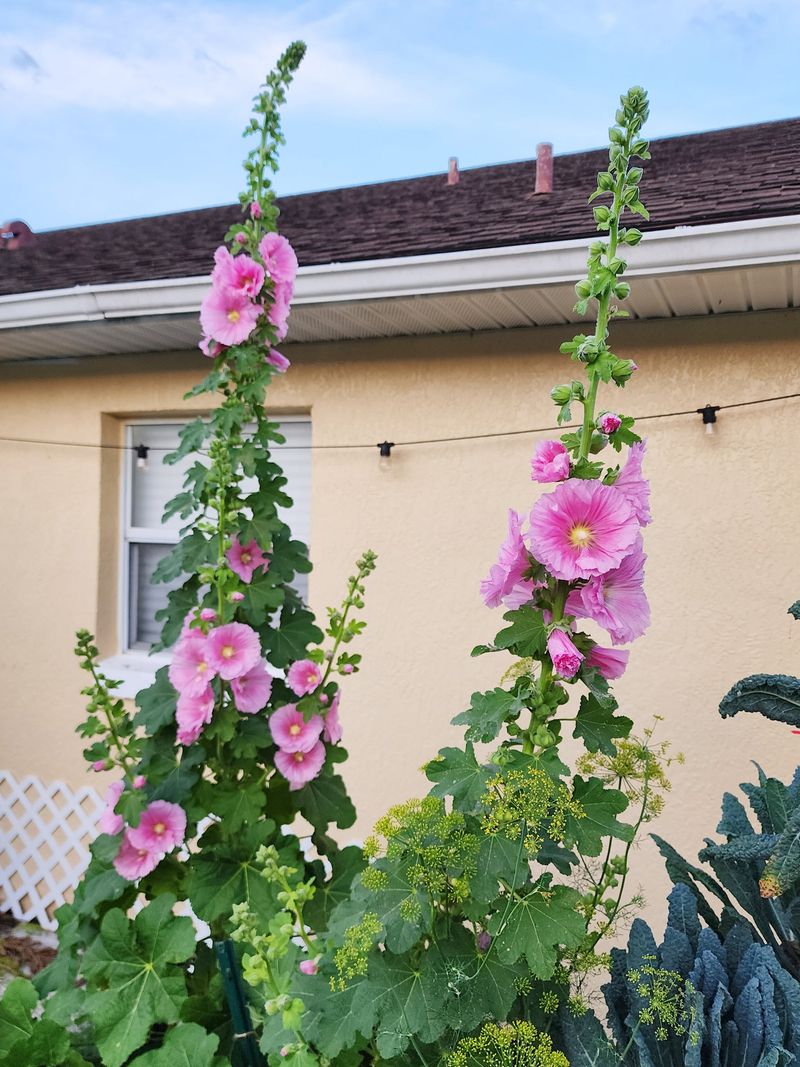
The right next step depends entirely on what the plant is actually showing you. If a traditional hollyhock has healthy leaves, no flower stalk, and no buds, the most reasonable move is to wait for overwintering and let the biennial cycle run its course.
University of Maine Extension and Illinois Extension both support that patience-first approach for first-year plants.
When the site does not offer six or more hours of direct sun, or when the plant tag points to a cultivar not suited to the region, reassessing the location or variety makes more sense than adding inputs. For a plant that has a flowering stalk but failing buds, work through the checklist: inspect buds for weevil or insect activity, review fertilizer history, check soil moisture, look at leaf symptoms for disease clues, and consider recent weather patterns.
Southern readers in particular should resist the urge to apply one regional answer to every yard. UF/IFAS guidance is specific to North Florida, and Texas SmartScape’s hollyhock listing reflects West Texas conditions.
The goal of this whole process is a better diagnosis, not a guaranteed one-step fix – and a gardener who knows exactly what the plant is doing is already most of the way there.