
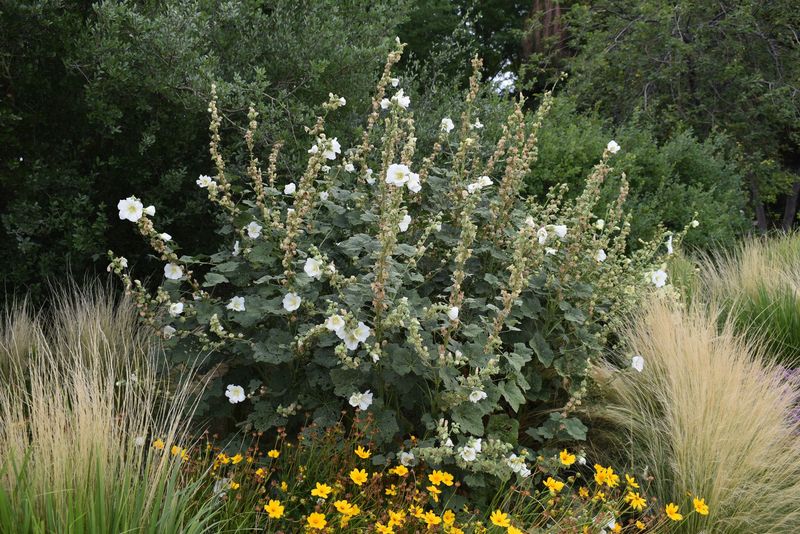
Hollyhocks are one of those plants that look spectacular in a cottage garden photo but can leave Southern gardeners scratching their heads when the real thing leans sideways and barely flowers. If your plants shot up to six feet or more, then drooped under their own weight with only a handful of blooms to show for it, you are not alone.
The good news is that this combination of symptoms has more than one cause, and most of them are fixable once you know what you are actually looking at.
Tall hollyhocks are not automatically overfed
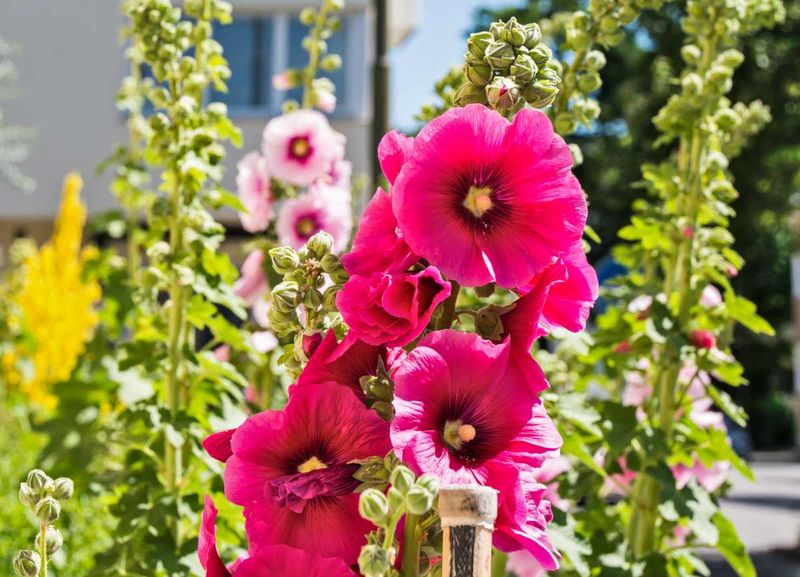
Alcea rosea is simply a big plant. North Carolina Extension lists a typical height range of roughly 5 to 8 feet, which means a hollyhock that towers over your fence is behaving normally, not signaling that you overfed it.
Height alone is not evidence of a fertilizer mistake.
The trouble comes when tall plants also flop, carry thin flower spikes, or both. Those three symptoms look related but may have completely separate causes.
A plant can fall over because of wind, rain, heavy flower stalks, soft stems, or simply because it outgrew its exposure, and any of those reasons can operate independently of how much fertilizer it received.
Sparse blooms add another layer. University of Maine Extension points out that a hollyhock may not flower at all in its first year if it is a biennial type, which means what looks like a flowering failure might simply be the plant doing exactly what it was bred to do.
Before reaching for fertilizer or a stake, the most useful step is to identify which symptom you are actually trying to solve.
Light and excess nitrogen can weaken the stems
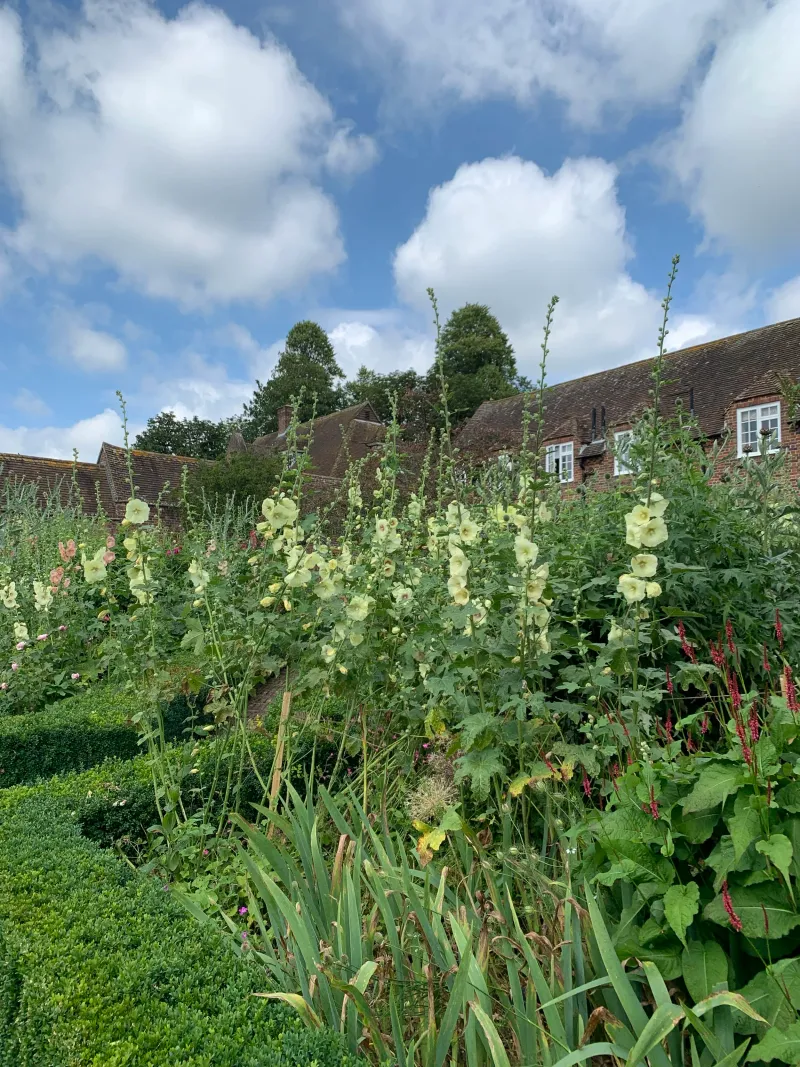
When a hollyhock grows in a spot that gets fewer than six hours of direct sun each day, it tends to stretch toward the light. That stretch produces a taller, thinner stem with less structural strength, making the plant far more likely to lean or snap under its own weight.
North Carolina Extension confirms that full sun, meaning at least six hours of direct sunlight daily, is a basic requirement for healthy hollyhock growth.
Excess nitrogen works differently but lands in a similar place. Iowa State Extension notes that too much fertilizer can push weak, leggy growth and actually reduce flowering in established perennials.
When nitrogen is abundant, the plant puts energy into leaves and stems rather than buds, which is why an overfed hollyhock can look impressively green and disappointingly bare at the same time.
UMass Extension reinforces that phosphorus and potassium should be applied only when a soil test shows a deficiency, not as a routine bloom booster. The practical move right now is to stop any automatic feeding schedule, skip the bloom-booster products, and get a soil test before adding anything else.
Penn State Extension confirms that established perennials generally need modest fertility and that routine heavy feeding often does more harm than good.
Sparse flowers require a separate diagnosis
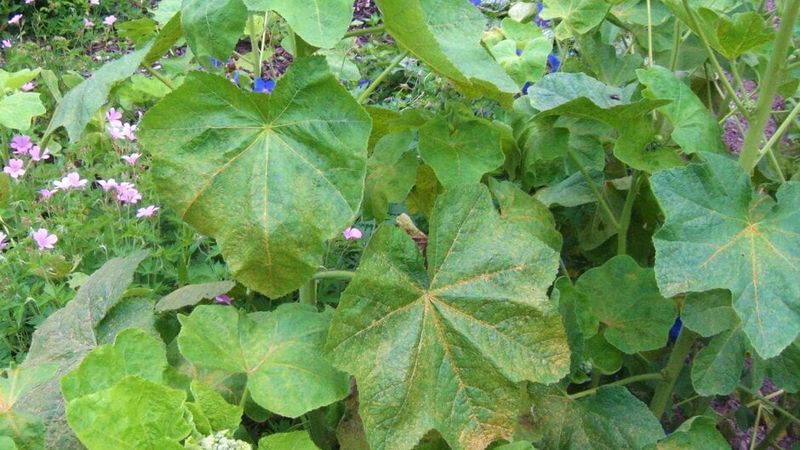
Flopping and sparse blooming can happen on the same plant for completely unrelated reasons, so it helps to treat them as two separate problems. The first question to ask about sparse flowers is how old the plant is.
Many traditional hollyhocks are biennial, meaning they spend their entire first year producing a low rosette of foliage and then flower in their second year. University of Maine Extension explains this cycle clearly and notes that gardeners often mistake normal first-year behavior for a problem that needs fixing.
Not every hollyhock follows the biennial pattern. South Dakota State Extension points out that some cultivars are bred to flower in their first year, so checking the seed packet or plant label before drawing conclusions is worth the thirty seconds it takes.
If the label says annual or first-year flowering, a plant that stays green all season genuinely has a problem worth investigating.
Once plant age is ruled out, Illinois Extension and Penn State’s plant health diagnostic guidance point toward inadequate light, excess nitrogen, heat stress, disease, and pest damage as the remaining candidates. Each of those requires a different response.
A rust-damaged plant needs sanitation and possibly a preventive fungicide, while a heat-stressed plant in Florida or Texas may simply need a better-positioned site for the next season.
Stake a vulnerable plant before wind or rain does
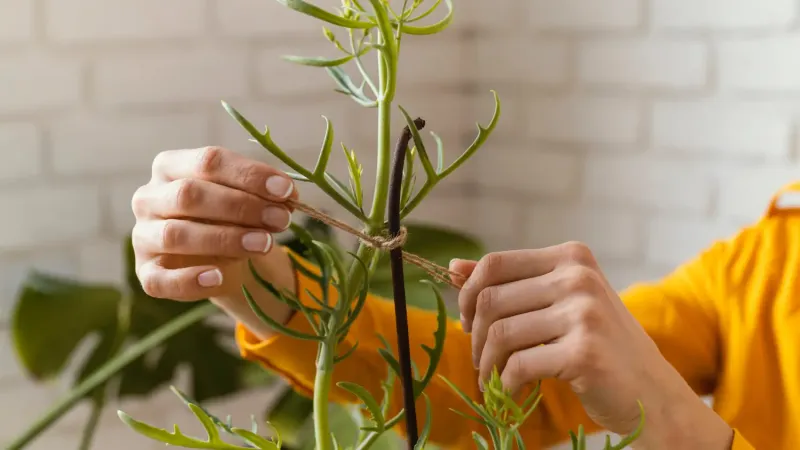
A hollyhock that already leans needs support installed before the next storm arrives, not after. Iowa State Extension recommends placing the stake when stems are near full height but before buds open, and moving that timeline earlier when the site is windy or exposed.
Waiting until the plant has already bent significantly makes recovery harder and risks snapping the stem at the base.
Technique matters as much as timing. Place the stake behind the plant so it stays less visible from the front, push it deep enough to hold against a gust, and use soft material such as cloth strips or garden twine rather than wire.
Tie the stem in a loose figure-eight so the plant can move slightly without being constricted. Very tall plants may need two ties spaced along the stem rather than one.
Staking is worth doing even if the hollyhock has rigid, naturally sturdy stems, because Texas Tech Plant Resources notes that hollyhocks in West Texas will likely need staking due to wind. Illinois Extension also identifies windy locations as a key factor in deciding whether support is necessary.
One thing support does not do is increase flower production. A staked stem stays upright and intact, but bloom count depends on light, plant age, health, and growing conditions, not on whether a stake is in the ground.
Check sun, moisture, and soil drainage
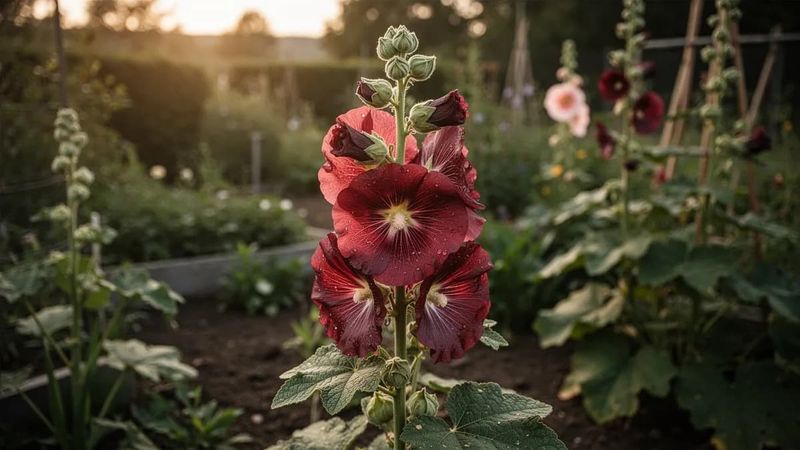
Start with sunlight. Walk outside at midday and honestly count how many hours of direct sun the bed actually receives, not just bright sky but unobstructed sun hitting the leaves.
North Carolina Extension is clear that hollyhocks need full sun, and a spot that feels open in spring may end up shaded by a fence or neighboring tree by midsummer. If the count falls short of six hours, that single factor can explain both the weak stems and the reduced flower count.
Soil drainage is the next check. Hollyhocks prefer moist but well-drained soil, and roots sitting in chronically wet ground become less vigorous over time.
Iowa State’s soil drainage guidance offers practical methods for evaluating how quickly your bed drains after rain. In the Southern heat, heavy clay soils and low spots can hold water far longer than they appear to from the surface.
Watering frequency is not a number to set and forget in Florida or Texas. Rainfall, temperature, soil type, and whether the plant is newly established all shift how often the root zone actually needs water.
The goal is to water deeply at the soil line when conditions call for it, not to keep the bed saturated. Crowding hollyhocks too closely also reduces airflow and can worsen both moisture retention and disease pressure, so spacing plants adequately from the start pays dividends all season long.
Rust and Southern heat can mimic a feeding problem
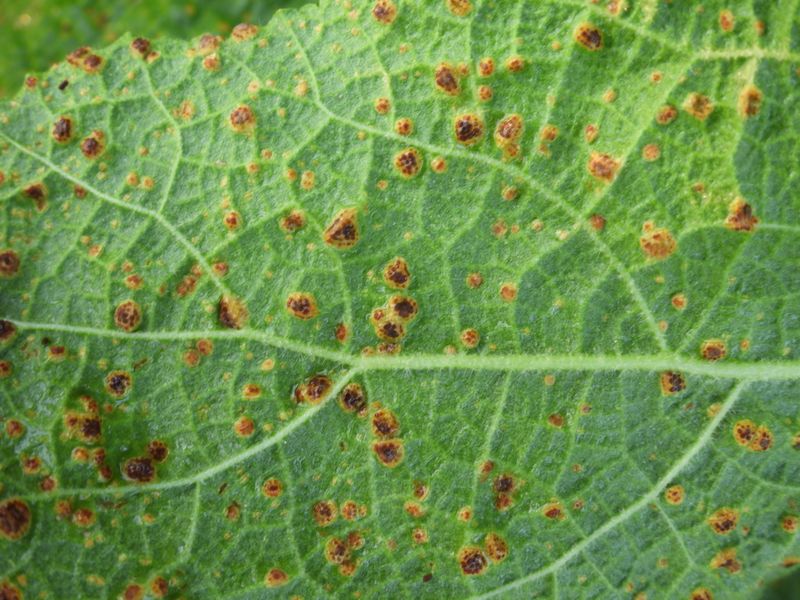
Before adding any fertilizer to a struggling hollyhock, flip the leaves over and look at the undersides. Hollyhock rust, caused by the fungus Phragmidium violaceum, produces yellow-orange spots on the upper leaf surface and raised orange-brown or dark pustules underneath.
University of Wisconsin Extension describes the disease in detail and notes that it can significantly reduce foliage quality and overall plant vigor. A plant weakened by rust may look like it needs feeding when what it actually needs is disease management.
Missouri Botanical Garden and Texas A&M’s plant disease handbook both identify rust as a prevalent and persistent problem, particularly in humid conditions. Removing infected leaves and cleaning up fallen debris at the end of the season can reduce the spore load going into the next year, but established rust is difficult to eliminate entirely.
Fungicides labeled for rust on hollyhocks can serve as preventive or protective treatments when applied according to the current product label, but removing a few leaves will not cure an active infection.
Southern heat adds its own layer. UF/IFAS notes that hollyhocks in North Florida face heat, humidity, and drainage challenges that can alter the diagnosis considerably.
In both Florida and Texas, a plant that looks nutrient-deficient in July may actually be heat-stressed, rust-damaged, or struggling with poorly drained soil. Treating the wrong problem delays real improvement.
Pinch early to prevent next season’s flop
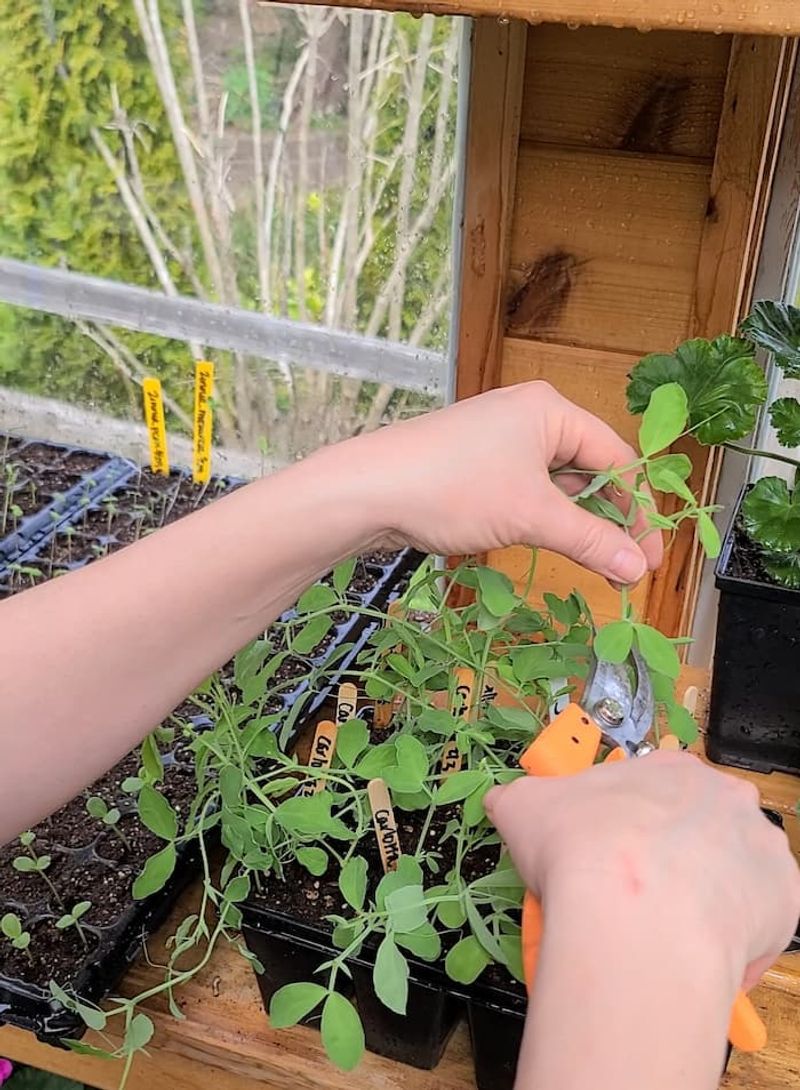
Once a hollyhock reaches full height, there is very little you can do to change its structure for the current season. The time to influence how tall and how sturdy the plant grows is early in the season, before it bolts.
Illinois Extension specifically recommends pinching the main stem early in the season to encourage shorter, bushier growth that is less likely to need staking later. That single early step can change the whole shape of the plant without any other intervention.
Site selection matters just as much for next year. A location with at least six hours of direct sun, good drainage, and some protection from prevailing winds sets the plant up to grow more compactly and stay upright through rain and summer storms.
Adequate spacing between plants improves airflow, which also helps keep rust pressure lower throughout the season.
For gardeners in North Florida, UF/IFAS notes that very tall hollyhock forms can be poor choices for small plots and suggests considering shorter varieties as alternatives. North Carolina Extension confirms that Alcea rosea naturally spans a wide height range, and Texas Tech places the typical range at 3 to 8 feet, which means cultivar choice can make a real practical difference in wind-exposed Texas landscapes where staking is already likely to be necessary.
Follow a symptom-first rescue plan
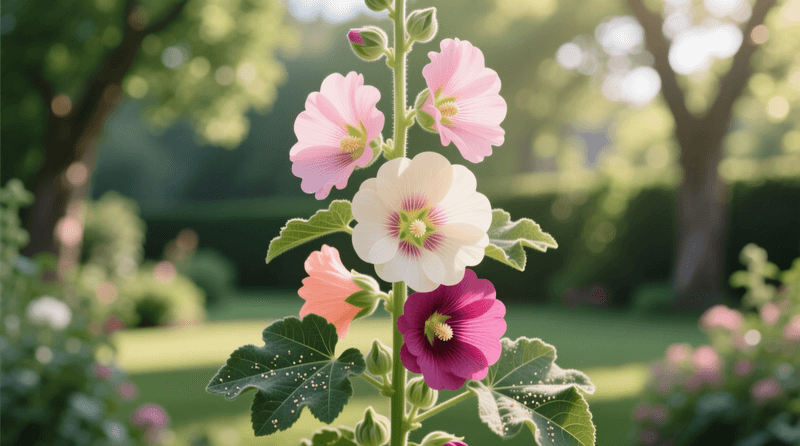
Work through the symptoms in order. Stop any automatic fertilizer routine first.
Iowa State’s fertilizer guidance is clear that established perennials need modest fertility, and adding more without a soil test risks making the problem worse. Then check plant age against the label, count sun hours honestly, and inspect leaves top and bottom for rust pustules or pest damage.
If the plant is already leaning, install a stake and soft ties now, before the next wind or rain event. Iowa State’s staking guidance covers the mechanics, but the key point is that support keeps stems upright without doing anything for sparse blooms.
Those require their own diagnosis: University of Maine Extension on plant age, University of Wisconsin on rust, and your own assessment of light, drainage, and heat.
First-year biennials and heat-stressed plants in Southern summers are not going to transform overnight. The goal this season is to stabilize what you have; next season is when smarter site selection, earlier pinching, and better drainage choices pay off in a plant that stands on its own and actually blooms.