
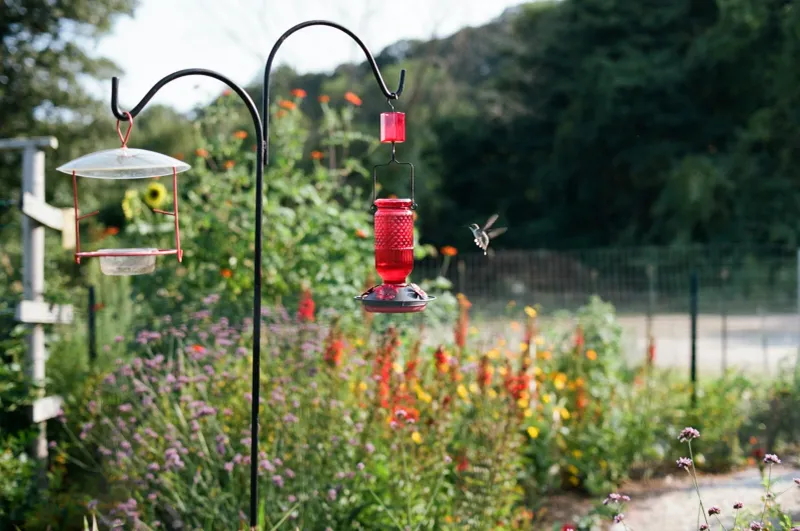
You hung the feeder, mixed up the sugar water, and waited – but the hummingbirds never really showed up. Before you swap out the recipe or toss the feeder altogether, there’s a better explanation worth hearing.
A quiet feeder usually points to a missing habitat, not a failed formula, and fixing that is a lot more satisfying than starting over.
A quiet feeder does not prove the bait failed
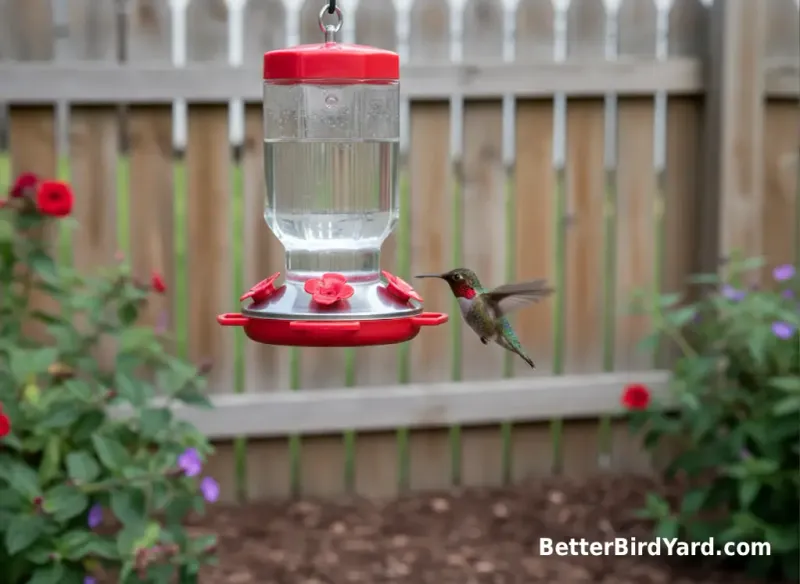
Plain sugar water has a real track record. Cornell Lab of Ornithology lists both feeders and flower gardens as effective ways to attract hummingbirds, and a large observational study published in Landscape and Urban Planning found that hummingbird sightings increased alongside both feeder presence and the number of nectar-producing plant species in a yard.
That is not the profile of a bait that does not work.
What the evidence also shows is that context matters. An Arizona field study documented in Ornithological Applications found that feeder visits declined when nearby floral abundance was high – meaning birds had more natural options to choose from.
That finding does not make the feeder ineffective; it means the yard around the feeder was doing its job well.
So a feeder that sits quiet for days may simply be sitting in a yard that lacks flowers, insects, cover, or other resources hummingbirds need. Birds may also be following a seasonal migration route, avoiding a territorial neighbor, or just discovering the area for the first time.
The practical response is not to replace the sugar water but to build a more complete habitat around a clean, safe feeder and give the birds more reasons to stay.
Add flowers that expand natural feeding opportunities
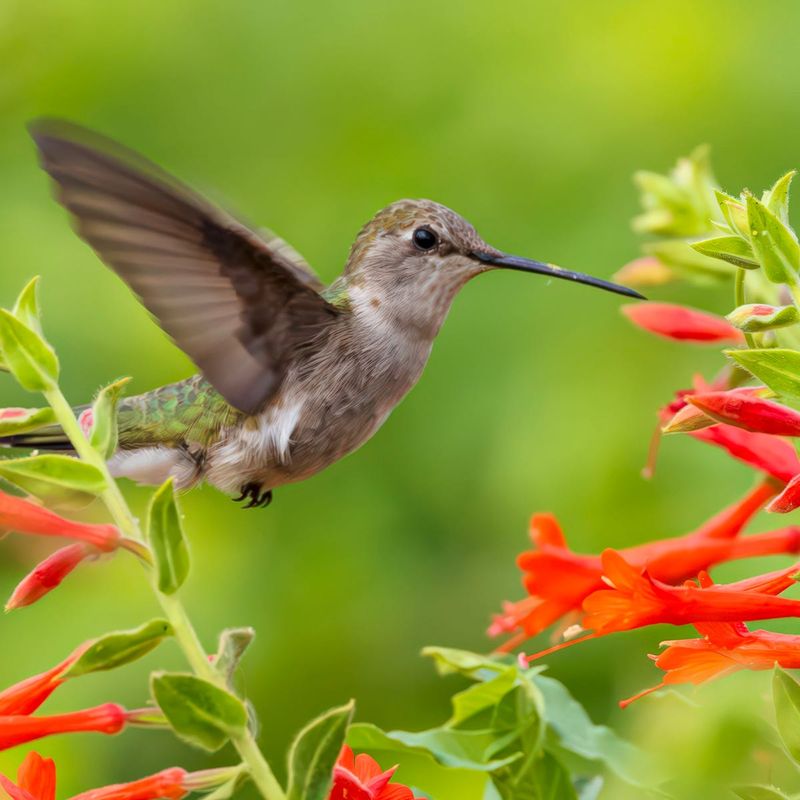
A feeder gives hummingbirds a quick energy stop, but a garden full of tubular, nectar-rich flowers gives them a reason to work the whole yard. Audubon recommends grouping plants in clusters rather than scattering single specimens, because a dense patch of blooms is far easier for a passing bird to spot than one isolated stem.
Planning for successive bloom periods matters more than any single plant choice. If your yard offers flowers only in spring, hummingbirds passing through in late summer or fall will find nothing to hold their attention.
Stagger your plantings so something is always open from early spring through the first cool weeks of fall, and you create a reliable feeding corridor rather than a one-time opportunity.
Red, orange, and pink blooms tend to catch a hummingbird’s eye first, which is why Texas Parks and Wildlife recommends tubular flowers in those colors as a starting point. That said, color is not a hard rule.
Audubon notes that color preference is largely learned through associations with rewarding nectar sources, so a hummingbird that has found good nectar in a purple salvia or a white coral honeysuckle will return to those colors too. Flowers complement a feeder; they do not replace it, and no single plant guarantees a visit.
Match Florida and Texas plants to local conditions
Generic Southern plant lists miss the point for most Florida and Texas gardeners. Climate, rainfall, soil type, and local ecoregion all shape which plants will actually thrive and bloom long enough to matter.
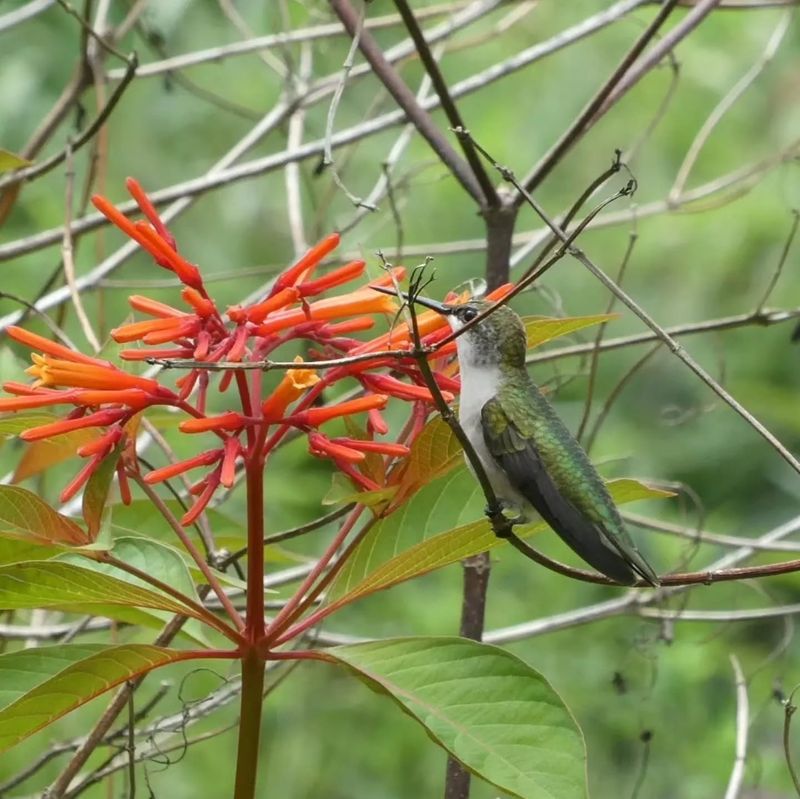
For Florida readers, UF/IFAS Extension identifies several strong nectar plants worth considering: firebush, coral honeysuckle, coral bean, red star hibiscus, scarlet morning glory, shrimp plant, and trumpet vine. Not all of these perform equally across the state.
Firebush is a workhorse in central and south Florida but may need protection from hard freezes in the north. UF/IFAS notes that Ruby-throated Hummingbirds nesting in Florida need nectar sources from roughly March through September, so pairing an early bloomer with a late-summer plant makes a real difference.
Texas presents a wider range of conditions, from the humid Gulf Coast to the dry Trans-Pecos, so plant choices should match your specific ecoregion and water budget. Texas Parks and Wildlife’s backyard wildlife guide and their hummingbird habitat brochure highlight flame acanthus, red yucca, cross vine, desert willow, coral honeysuckle, autumn sage, tropical sage, Turk’s cap, Texas lantana, and native hibiscus as candidates.
Texas also hosts multiple hummingbird species with strong migration concentrations along the coast, so timing your bloom sequence to overlap with fall migration can pay off. No plant on any list is a guaranteed visitor magnet, but matching the right plant to your local conditions gives you the best realistic chance.
Protect the insects that nectar cannot replace
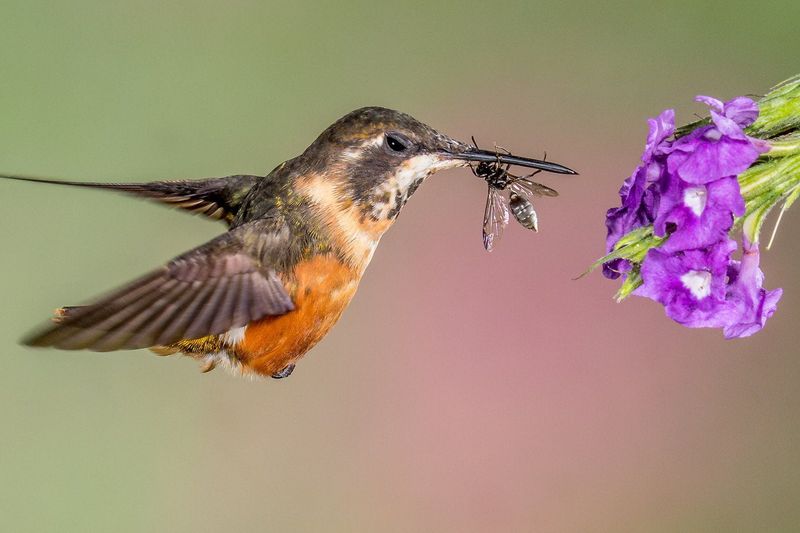
Sugar water and flower nectar supply energy, but they do not cover everything a hummingbird needs to survive. Small insects and spiders provide protein, fat, and other nutrients that nectar simply cannot deliver.
Young birds rely on arthropods heavily in their first weeks of life, and adult hummingbirds regularly hunt insects mid-flight or pluck spiders from their webs.
According to Audubon’s hummingbird habitat guidance, reducing unnecessary pesticide use is one of the most direct ways to protect this food source. Broad-spectrum insecticides do not distinguish between nuisance pests and the small insects hummingbirds hunt.
Preserving native or regionally appropriate shrubs and flowering plants also tends to support a richer insect community, which benefits birds beyond just hummingbirds.
Some gardeners place a small amount of overripe fruit near the garden to attract fruit flies, which hummingbirds will pick off. USGS research on hummingbird diet and element exposure underscores how much insects contribute to their overall nutrition.
If you try the fruit approach, treat it as an optional tactic rather than a required step, place the fruit away from the feeder to avoid drawing ants, and be aware that it can attract other wildlife or nuisance insects. Keeping a yard that simply supports insect life through reduced chemical use and diverse plantings is the lower-maintenance path to the same goal.
Make the yard more usable with cover, perches, and water
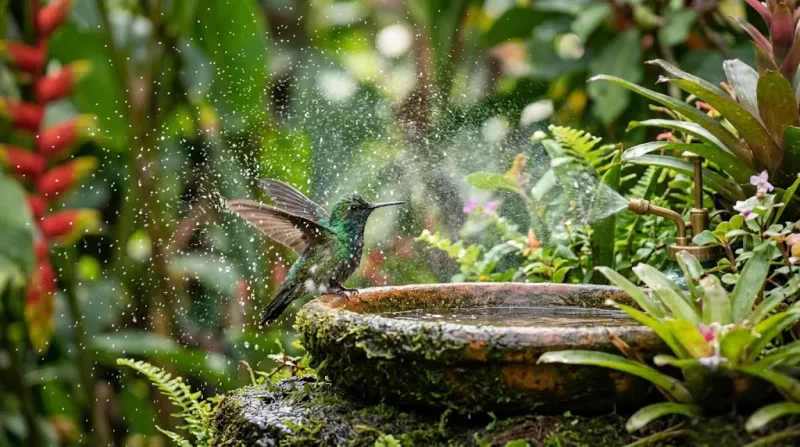
Hummingbirds do not just eat and fly. They spend time surveying territory, resting, sheltering from heat, and bathing, and a yard that supports those behaviors becomes more usable to them overall.
Small trees or dense shrubs placed near nectar sources give birds a safe place to perch between feeding bouts and a spot to retreat when they feel exposed.
Exposed perches matter for a different reason. Hummingbirds are highly territorial, and a male will often claim a high, open branch where he can watch the surrounding area and intercept competitors.
Audubon recommends providing both exposed perches and protected vegetation near nectar sources to support these behaviors. A thin dead branch, a wire, or even a clothesline can serve as a survey post if it sits above the surrounding plants.
Water rounds out the picture. Hummingbirds bathe in droplets and moving water rather than in deep, still basins, so a mister attachment, a dripper over a shallow dish, or a fountain with a gentle spray works far better than a standard birdbath.
USGS bird monitoring data highlights water features as a meaningful habitat element, and Texas Parks and Wildlife specifically recommends shallow, moving water for hummingbird yards. Moving water is a bathing and habitat feature, not a substitute for the energy-rich nectar birds still need from flowers and feeders.
Keep the feeder clean, shaded, and safe
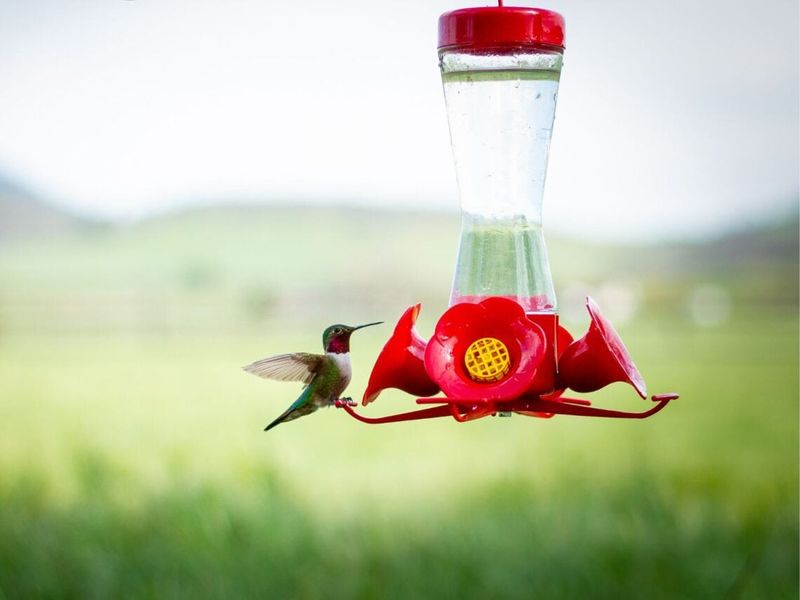
The feeder itself deserves as much attention as the garden around it. Start with the recipe: one part ordinary white granulated sugar dissolved in four parts water.
Cornell Lab of Ornithology and Audubon both specify plain white sugar and water only. Honey ferments quickly and can cause a fatal fungal infection.
Brown sugar, raw sugar, artificial sweeteners, fruit juice, and red dye are all off the list for the same reason: they either harm the birds or provide no benefit over plain sugar water.
Southern heat is the biggest maintenance challenge. Sugar water ferments rapidly in hot weather, and cloudy or discolored nectar should be thrown out immediately, not topped off.
Penn State Extension recommends cleaning feeders thoroughly every two to three days in warm conditions, and daily cleaning makes sense during the hottest weeks of a Florida or Texas summer. Make small batches so you are not storing large amounts of nectar that will spoil before it can be used.
Choose a feeder that comes apart completely so every surface can be scrubbed, not just rinsed.
Placement affects both freshness and safety. Keeping the feeder in a shaded spot slows fermentation and reduces how often you need to replace the nectar.
Spacing multiple small feeders around the yard can reduce the impact of one territorial bird monopolizing a single port. USGS guidance on backyard bird safety recommends keeping cats indoors or away from feeder areas, since cats can lie in wait beneath a feeder.
Nearby windows are a collision risk worth addressing with decals or tape patterns that make the glass visible to approaching birds.
Build the habitat package and give it time
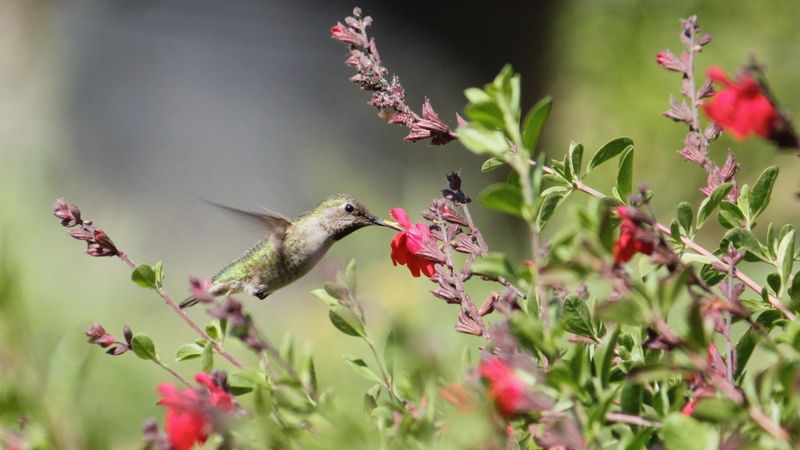
Putting the pieces together is more straightforward than it might look. Successive-bloom flowers, insect-friendly plantings, cover shrubs, an exposed perch or two, a shallow mister, and a clean feeder form a package that makes your yard genuinely more usable for hummingbirds across the season.
No single element does the whole job, but each one adds something the others cannot.
Patience is part of the process. Audubon notes that some gardens take weeks to be discovered, and birds may be following a seasonal migration route, working through a territory dispute, or simply not passing through your neighborhood yet.
Audubon’s feeding FAQ also points out that abundant nearby flowers can pull visits away from a feeder temporarily, which is a sign the habitat is working rather than a sign something is wrong.
The large observational study in Landscape and Urban Planning found positive associations between hummingbird sightings and feeder presence, plant diversity, and neighborhood greenness together – not any one factor alone. Keep the feeder clean and full, keep adding to the yard around it, and resist reading too much into a quiet afternoon.
A well-kept feeder in a habitat-rich yard is a reasonable setup; the birds just need time to find it.