
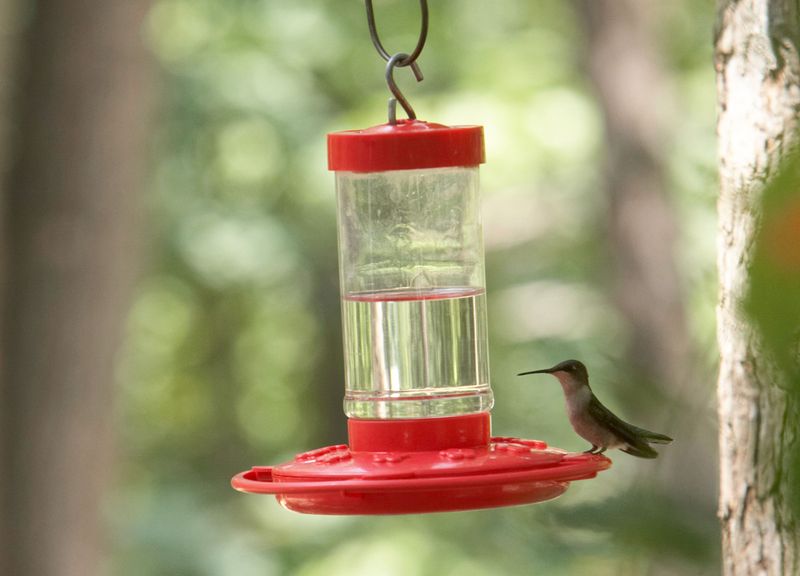
Watching a hummingbird feeder hang untouched all summer is genuinely frustrating, especially when you filled it carefully and picked what seemed like a good spot. The good news is that an empty feeder rarely comes down to one single mistake.
Working through a short checklist of placement, maintenance, habitat, and timing factors can tell you a lot more than guessing at one cause ever will.
An empty feeder does not prove the location failed
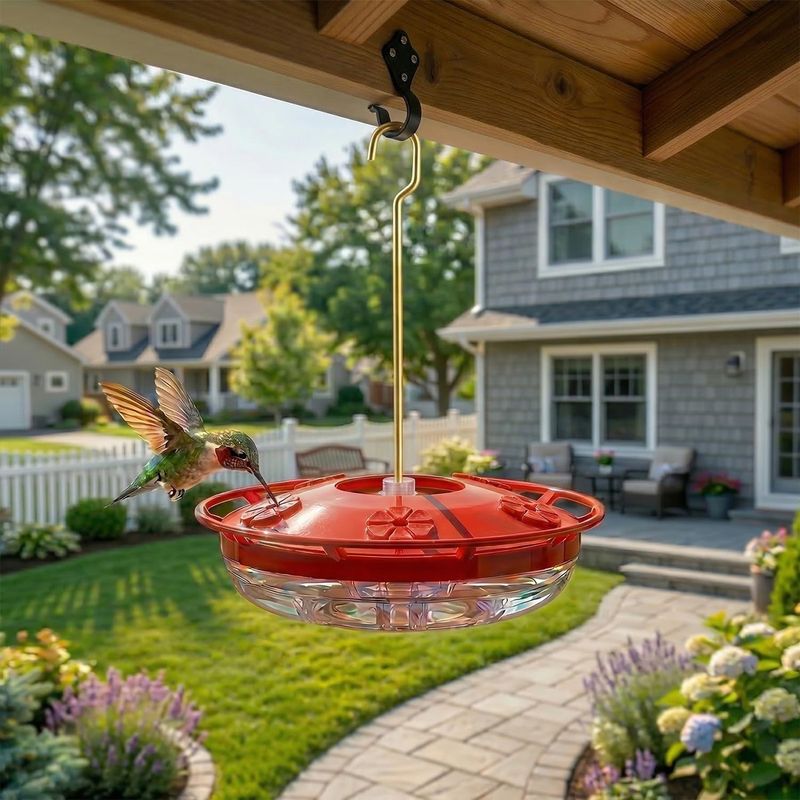
Plenty of Southern gardeners spend a full summer filling and refilling a feeder that never seems to get touched. Before blaming the spot where it hangs, consider how many other explanations fit the same symptom.
Texas Parks and Wildlife lists population cycles, habitat loss, and free-roaming cats among the documented reasons a feeder receives no visitors, and none of those have anything to do with which branch you chose.
Hummingbirds may already be feeding from a yard full of blooming native plants and treating your feeder as a backup option they simply do not need right now. They also visit at odd hours, and a feeder that looks empty all day may actually be getting quick stops early in the morning or at dusk when you are not outside to see them.
Seasonal timing adds another layer of complexity. Texas Parks and Wildlife’s hummingbird timing FAQ notes that ruby-throated hummingbird males can begin moving south as early as late July, so a feeder that goes quiet in August may simply reflect the start of fall migration rather than a problem you caused.
The sections below walk through the most useful adjustments in order, starting with placement and moving through maintenance, habitat, and timing.
Direct summer sun can degrade the nectar
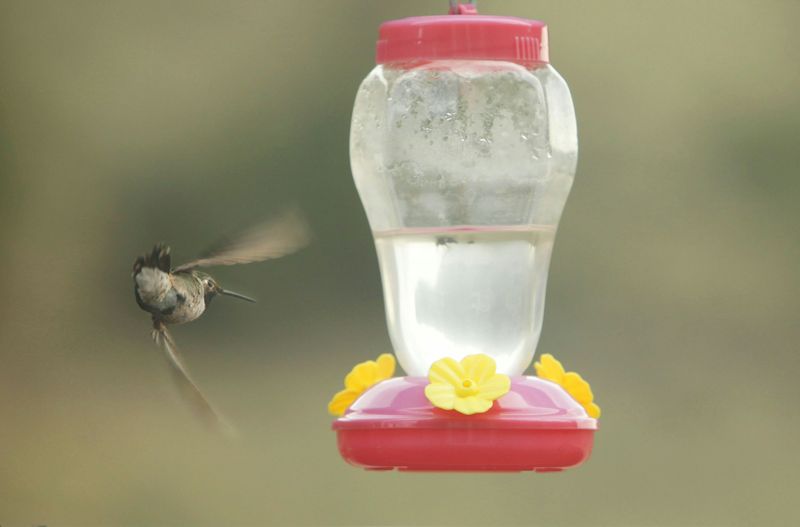
Moving a feeder out of direct afternoon sun is the most actionable placement adjustment you can make, and the reason comes down to food quality rather than bird behavior. Heat speeds bacterial growth and fermentation inside the reservoir, and UF/IFAS’s hummingbird guide for Florida specifically recommends keeping feeders out of direct sun to slow that spoilage process.
Bottle-style feeders can develop an additional problem when they warm up. As the liquid inside heats and expands, some designs will drip or leak from the ports, leaving a sticky film on the outside that attracts bees and wasps in large numbers.
A feeder covered in insects is one that hummingbirds are likely to skip, not because the location frightens them, but because the food source has become difficult or impossible to access.
Cornell Lab’s hummingbird feeding guidance and Audubon’s hummingbird yard guide both recommend shaded or partially shaded placement for the same reason. Sunlight itself has not been shown to trigger a fear response in hummingbirds.
The real problem is that direct, hot sun turns a clean food source into a degraded one faster than most gardeners realize, and a feeder with cloudy, fermented, or diluted nectar simply does not reward a visit.
Choose bright shade with open flight access
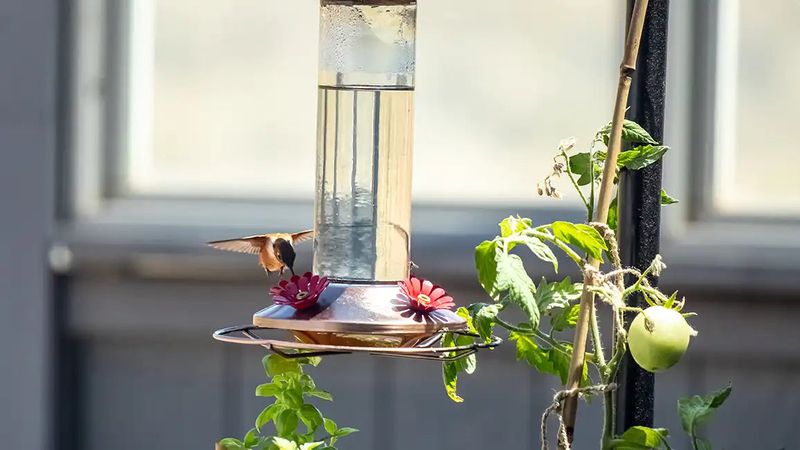
The best relocation target is a spot that stays bright but escapes the harshest afternoon sun, with clear space on all sides so a bird can approach, hover, and retreat without navigating obstacles. Cornell Lab’s feeder placement guide recommends mostly shaded or dappled-shade positions, and that guidance holds especially well in Florida and Texas where afternoon temperatures regularly push into the upper 90s.
Nearby trees or brush play a useful supporting role, but the goal is proximity rather than enclosure. Texas Parks and Wildlife’s hummingbird roundup report describes an ideal hummingbird garden as an open flight area surrounded by roughly 5 to 15 feet of trees or brush for shelter and perching.
Pushing the feeder deep into a shrub or hanging it directly against a wall removes the open airspace that makes hummingbirds comfortable and can create hiding spots for cats.
Wind protection matters too. A feeder that sways in a strong breeze spills nectar, dilutes what remains with rain, and can be harder for a hovering bird to use reliably.
Audubon’s hummingbird-friendly yard guide reinforces the combination of shade, open flight access, and shelter from the elements as the practical standard. A covered porch edge, the shaded side of a pergola, or the dappled zone just inside a tree’s canopy line can all fit that description without burying the feeder in dense vegetation.
Keep the nectar fresh and the feeder clean
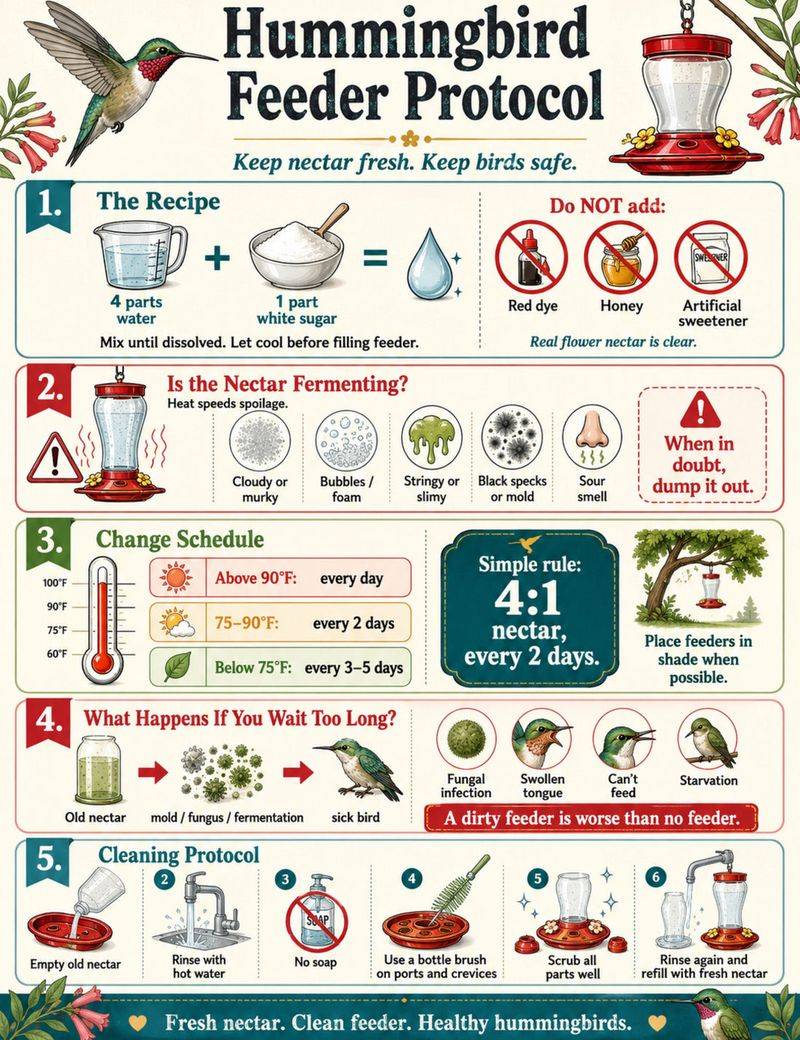
Every placement improvement loses its value if the nectar inside the feeder is already spoiled. Start with the right recipe: one part plain white granulated sugar dissolved in four parts water.
Honey, brown sugar, raw sugar, artificial sweeteners, and any additives or flavorings are all inappropriate and can cause harm. Red food coloring is unnecessary because the feeder’s red parts and nearby flowering plants already provide the visual cues hummingbirds use, and UF/IFAS’s Florida hummingbird publication confirms that plain sugar water without dye is the correct preparation.
Southern heat demands a more aggressive replacement schedule than most gardeners expect. Audubon recommends changing nectar every two to three days under ordinary warm conditions, and the Texas Audubon hummingbird feeding guide notes that particularly hot weather may require daily replacement.
Replace the nectar immediately, regardless of schedule, if it looks cloudy, discolored, or thicker than usual, or if you see mold, floating particles, or any sign of fermentation.
Clean the feeder every time you replace the nectar. UF/IFAS’s feeder selection guide and its companion bird feeder publication offer slightly different cleaning methods, so follow your feeder manufacturer’s instructions as the first reference.
Use hot water, scrub every port and internal chamber thoroughly, rinse completely, and make sure no cleaning residue remains before refilling. Cornell Lab’s ruby-throated hummingbird species account and Texas Parks and Wildlife’s hummingbird introduction guide both treat a clean feeder with fresh nectar as the foundation of a reliable supplemental food source.
Build habitat around the feeder
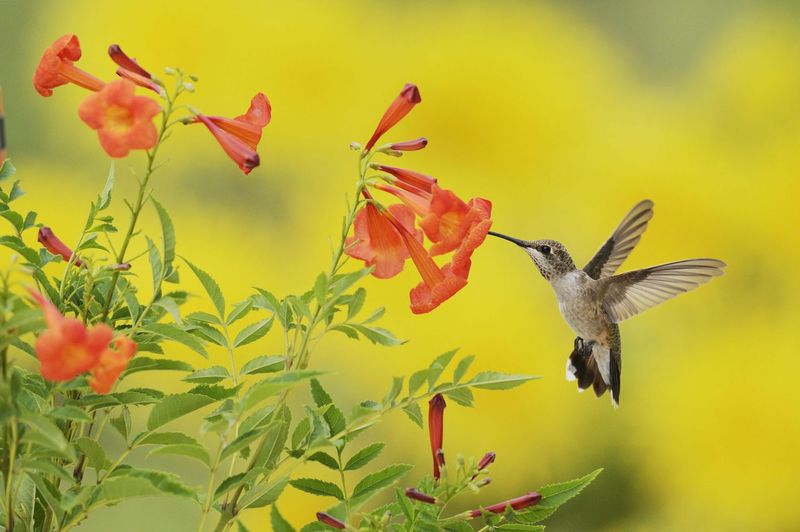
Sugar water supplies quick energy, but a feeder alone cannot meet a hummingbird’s full range of needs. The Texas Parks and Wildlife hummingbird roundup report recommends treating feeders as supplementary rather than central, with native nectar-producing plants, insect habitat, perches, and nearby shelter forming the core of a functional yard setup.
Insects and spiders are not optional extras. Hummingbirds depend on them for protein, especially during breeding season and when they are feeding young.
A yard that has been heavily treated with broad-spectrum insecticides may offer sugar water but little else, which can reduce how attractive it is to birds looking for a complete habitat rather than a single food station. Planting regionally appropriate nectar species, such as salvia, trumpet vine, coral honeysuckle, or turk’s cap in Texas and Florida, can draw birds to the area and keep them coming back.
Perches matter more than many gardeners realize. Hummingbirds spend a significant portion of their time sitting and surveying territory, and a yard with open sight lines and a few bare branches or thin stems gives them a place to rest and watch.
Texas Parks and Wildlife’s hummingbird garden guide and Audubon’s hummingbird yard resource both frame habitat improvement as a way to support visits over time, though neither promises that adding plants alone will immediately attract birds to a low-traffic yard.
Check insects, territorial birds, and cats
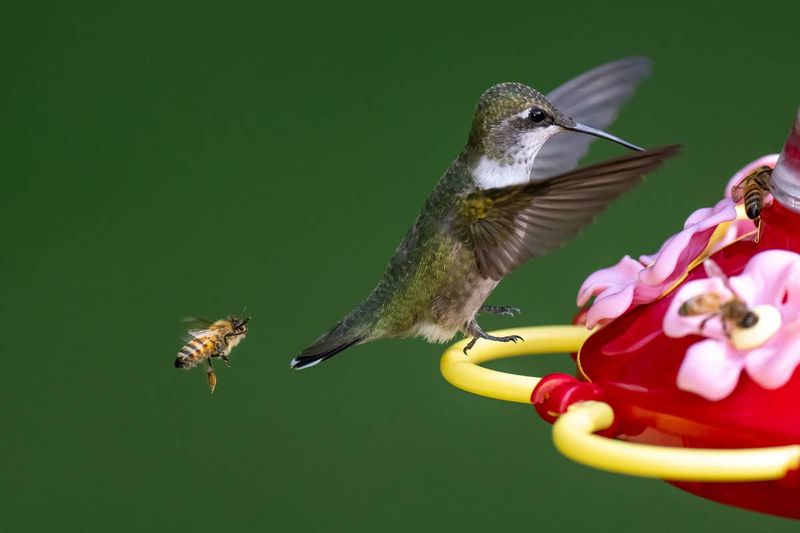
A feeder in good shade with fresh nectar can still sit empty if something is blocking access at the feeder itself. Bees and wasps clustering around the ports are a common culprit.
When insects cover the feeding holes in large numbers, hummingbirds often move on rather than compete for access. Texas Parks and Wildlife’s ants and wasps FAQ recommends bee guards on the ports, an ant moat above the feeder, and a dripless feeder design to reduce the sugar residue that draws insects in the first place.
Wipe down the exterior of the feeder whenever you refill it, and never use insecticides on or near the feeder.
Territorial behavior is a separate access problem. A single dominant hummingbird, often a male ruby-throated, can monopolize one feeder entirely and chase off every other bird that approaches.
UF/IFAS’s Florida hummingbird guide and Cornell Lab’s yard visitor management article both suggest adding multiple small feeders and spacing them at least 10 feet apart or placing them out of sight of one another so the dominant bird cannot guard all of them at once. Spacing may reduce exclusion but does not eliminate territorial aggression entirely.
Cats present a predator risk that can make hummingbirds avoid an otherwise well-placed feeder. Texas Parks and Wildlife specifically names free-roaming cats as a documented factor when feeders receive no visitors.
Keep cats indoors and walk the yard to check whether any nearby shrubs, deck railings, patio furniture, or low-hanging branches could give a cat a concealed approach toward a hovering bird.
Account for windows, migration, and regional timing
Window placement deserves its own check before you decide the feeder setup is complete. U.S.
Fish and Wildlife Service guidance and the FWS Bird-Friendly Home Toolkit treat window strikes as a serious safety concern. Cornell Lab’s feeder placement guide notes that a feeder within 3 feet of glass reduces the distance available for a high-speed collision, while Cornell’s window-strike explainer identifies the 15-to-30-foot range as particularly hazardous because a bird gains enough speed to sustain serious injury.
If your feeder sits in that zone, move it closer or much farther away and apply exterior bird-safe decals, screens, or tape to any nearby reflective glass.
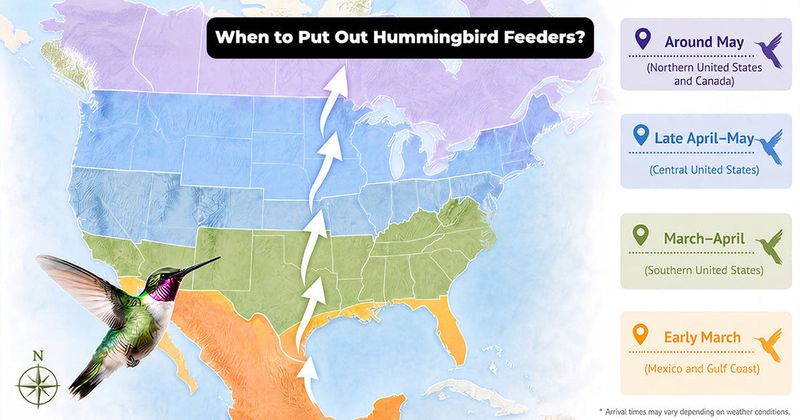
Migration and regional timing can make a correct setup look like it is failing. Cornell’s ruby-throated hummingbird range maps show that males begin heading south in late summer, sometimes as early as late July or early August, well before most gardeners expect the season to end.
Texas Parks and Wildlife’s hummingbird timing FAQ states clearly that leaving a feeder out does not stop migration. Texas hosts multiple species with varied migration and overwintering patterns, and the Texas hummingbird roundup report documents rufous, black-chinned, and broad-tailed hummingbirds moving through on different schedules.
Florida’s heat and humidity mean spoilage happens faster there than almost anywhere else in the country, so an empty feeder in Florida in July is a different problem than an empty feeder in Texas in October.
Use shade as the first test, not the final diagnosis
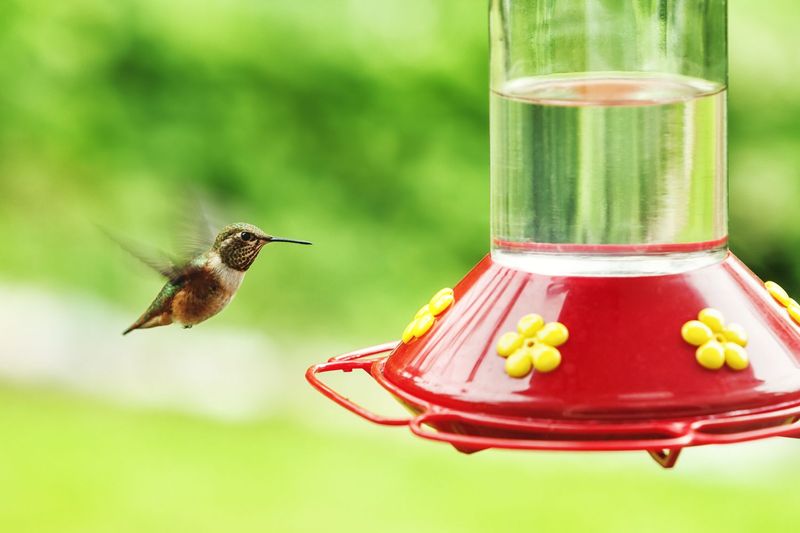
Start by moving the feeder into bright or dappled shade, away from harsh afternoon sun, with open flight space on all sides, nearby shelter from trees or brush, and some protection from strong wind and driving rain. UF/IFAS’s Florida hummingbird guide, Cornell Lab’s placement guide, and the Texas Parks and Wildlife hummingbird report all point toward this combination as the practical standard for Southern yards.
Once the feeder is repositioned, fill it with a 1:4 sugar-to-water mixture, clean it on schedule, and replace the nectar every few days or sooner in extreme heat. Then work through the rest of the checklist: insects at the ports, a territorial bird guarding the feeder, cats with a hidden approach, window hazards, nearby flowers that may be outcompeting the feeder, and whether the timing lines up with local migration patterns.
Moving to shade addresses the most practical and fixable placement concern, but no single location guarantees that hummingbirds will appear. A yard that combines good shade placement with fresh nectar, clean equipment, safe surroundings, and a bit of native habitat gives you the strongest foundation you can offer.