
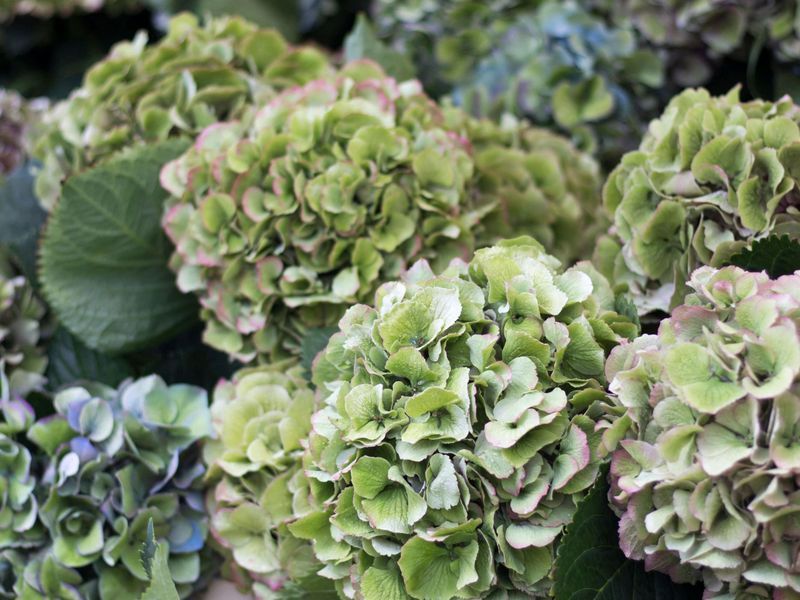
Watching a hydrangea bloom shift from a rich blue or pink to a dull, murky green can feel like something has gone seriously wrong in your garden. For many Southern gardeners in Florida and Texas, that color change triggers a scramble for fertilizers, soil amendments, and quick fixes.
Before reaching for anything, though, there is good news: a gradual green fade on an otherwise healthy plant is usually a sign that the bloom is simply getting older. Understanding why that happens, and what it actually means for your plant, can save you time, money, and a lot of unnecessary worry.
A green bloom usually signals normal aging
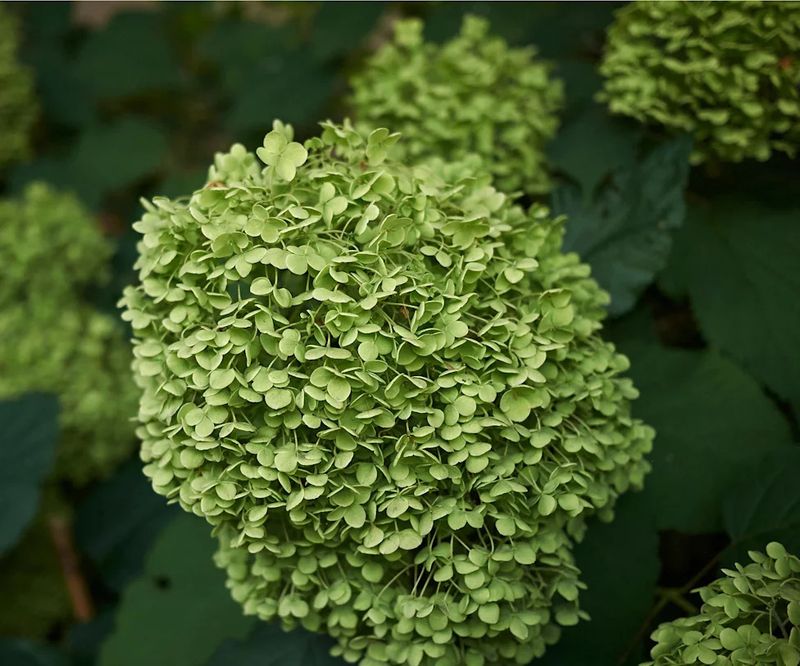
Seeing your hydrangea’s bold color drain away into flat green is unsettling, especially when you have been watching that plant all season. The reassuring truth is that a bloom gradually fading to green on an otherwise healthy shrub is most often a sign of normal aging, not a signal that your soil has failed or that the plant is in trouble.
The pattern to look for is a mature flower head losing its original color while the foliage, stems, and new growth around it remain healthy and vigorous. Extension specialists confirm that this kind of color change is a routine part of the bloom cycle rather than evidence of a deficiency or disease.
Before reaching for any product, check the bloom’s age and take a quick look at the rest of the plant.
Green does not carry one universal meaning across all hydrangeas, either. Some smooth hydrangeas, including popular cultivars like ‘Annabelle,’ naturally pass through green, white, pink, rose, and brown phases as the season progresses.
Even blue or pink bigleaf hydrangea blooms can fade toward green as they age, and certain panicle cultivars are intentionally green-flowering or transition through green as part of their normal display. Assessing the bloom’s stage and your plant’s overall health is always the right first move.
The sepal changes that make an old bloom look green
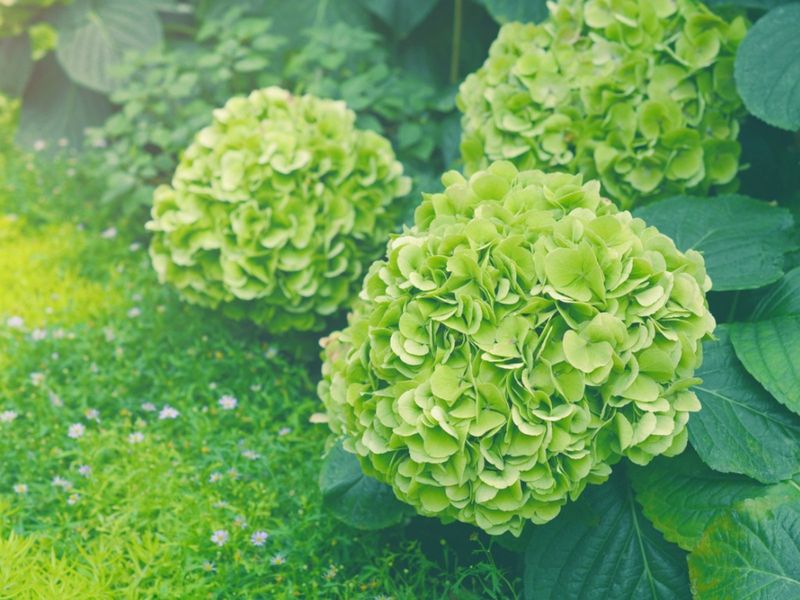
Most people point to a hydrangea’s large, showy petals, but those colorful structures are actually sepals. Sepals are modified leaf-like parts that surround and protect the true, much smaller flowers at the center of the bloom head.
Because sepals are closely related to leaf tissue, they behave like leaves in one important way: they can green up as they age.
When a hydrangea bloom is young and at its most vivid, colored pigments, including anthocyanins responsible for pinks, purples, and blues, dominate the sepal tissue. As the bloom matures and enters senescence, those pigments break down or become less visible.
Research on hydrangea sepal development documents the transition from colored tissue to green tissue as chloroplasts develop inside sepal cells, a process observed in hydrangea sepals as early as the 1960s.
The practical takeaway is straightforward: the bloom is greening because its internal biology is following a predictable path, not because the roots are struggling or the soil chemistry is off. A plant can have perfectly healthy roots, balanced nutrients, and appropriate moisture and still produce a green bloom head late in the season.
The color change lives in the sepal tissue itself, and no external treatment can reverse it once senescence is underway.
Identify the hydrangea before blaming the soil
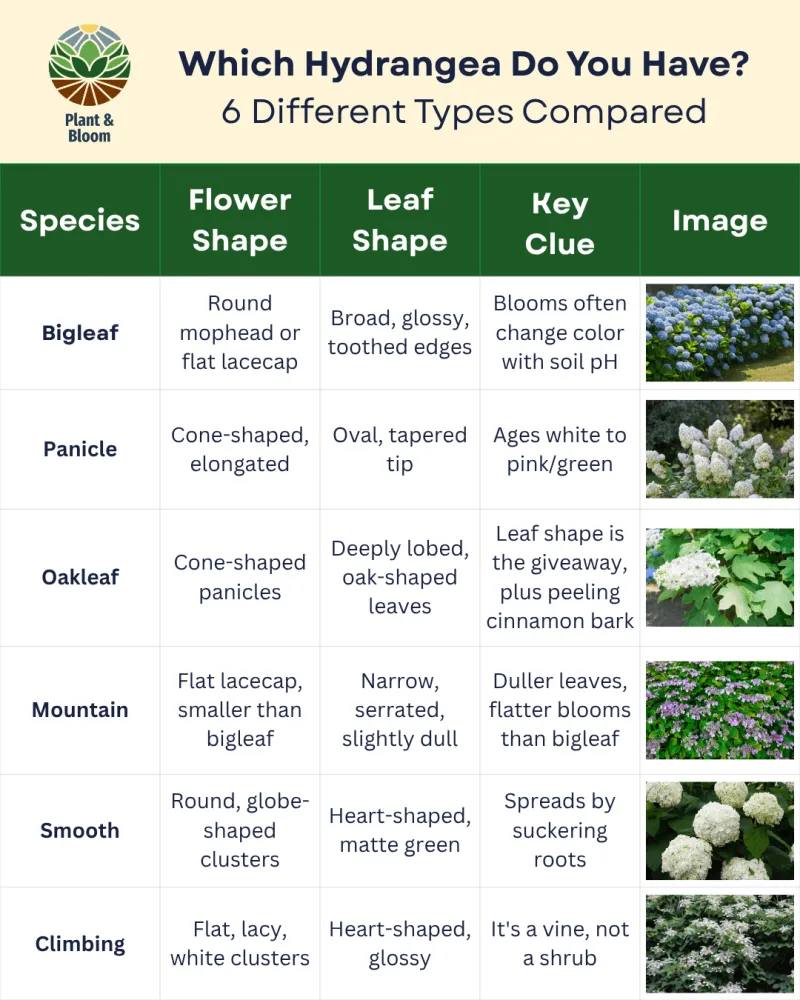
Plant identification is the essential checkpoint before any conversation about soil pH makes sense. Not all hydrangeas respond to soil acidity the same way, and applying the wrong amendment to the wrong plant can cause real harm without improving color at all.
Soil acidity and available aluminum can influence whether developing flowers on bigleaf hydrangeas (Hydrangea macrophylla) and mountain hydrangeas (H. serrata) lean toward blue-purple or pink tones. In acidic soil with aluminum present, bigleaf flowers tend toward blue or purple; in less acidic conditions, pink tones are more likely.
University of Massachusetts Extension notes that cultivar genetics still matter considerably, and some cultivars stay pink, remain white, or respond only partially regardless of soil adjustments.
Smooth hydrangeas, panicle hydrangeas, oakleaf hydrangeas, and climbing hydrangeas do not follow the same blue-versus-pink mechanism. University of Florida IFAS guidance and Alabama Cooperative Extension both confirm that pH does not control normal color in these species the way it does for bigleaf types.
Treating an oakleaf or panicle hydrangea with acidifying amendments based on green bloom color is unlikely to produce the hoped-for result and may stress the plant.
One point deserves special emphasis: even for bigleaf and mountain hydrangeas, adjusting soil pH affects the color of flowers that are still developing. UConn Extension confirms that pH changes cannot reverse the aging of an existing green bloom head.
The old flower has already completed its color journey.
Southern heat can shorten the bloom’s best display
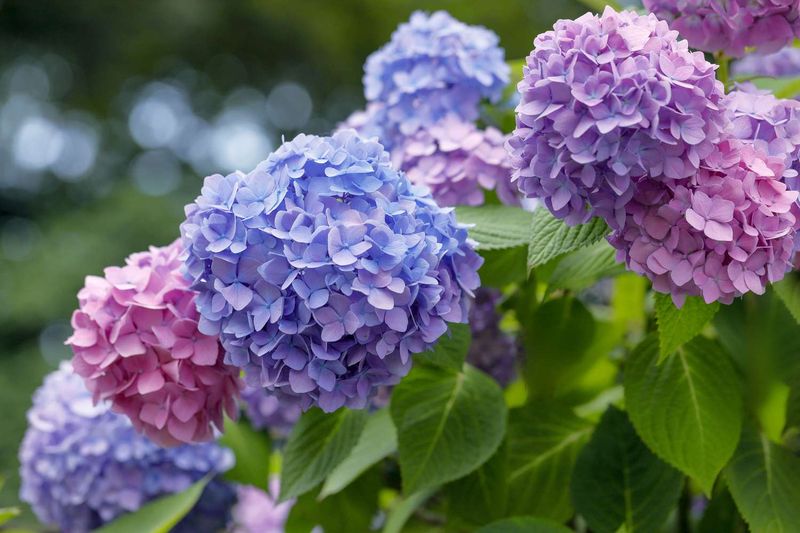
Southern summers present conditions that no hydrangea was designed to shrug off easily. Intense afternoon sun and sustained heat, especially across Florida and Texas, can accelerate wilting, bleaching, and the overall speed at which a bloom loses its most attractive appearance.
Heat and sun are contributing stressors that can shorten the display, but they are generally not the fundamental reason an aging bloom turns green. Florida Panhandle Extension and Bay County UF/IFAS both point to afternoon shade as one of the most practical tools for protecting bigleaf hydrangeas in hot Southern climates.
Morning sun with afternoon shade or filtered light gives the plant enough energy to bloom without the added stress of peak-day heat bearing down on the flower heads.
One common misread in hot weather is afternoon wilt. University of Maryland Extension explains that hydrangea leaves can lose water faster than roots can replace it during periods of intense heat, causing midday drooping even when the soil is adequately moist.
Watering in response to afternoon wilt without checking the soil first can lead to overwatering. UC ANR guidance recommends consistent root-zone moisture rather than reactive watering triggered by leaf appearance alone.
Steady moisture combined with appropriate shade gives Southern hydrangeas the best chance of holding their color as long as possible.
Protect the plant instead of trying to recolor the old flower
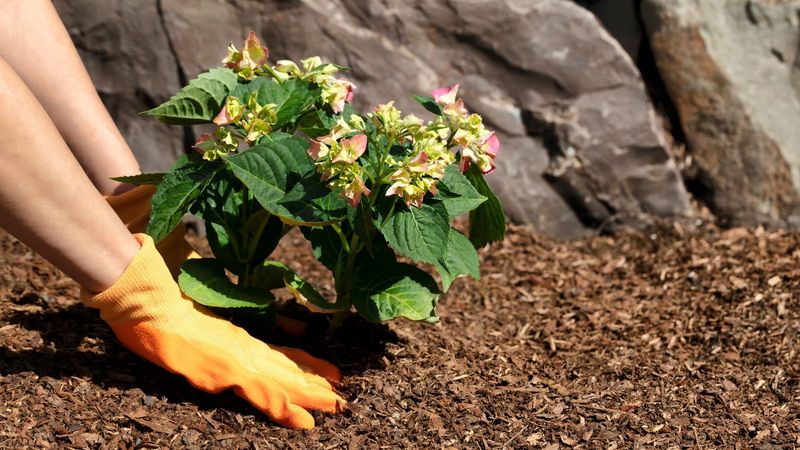
Once a bloom has started fading to green, the most useful thing you can do is shift focus from that old flower head to the conditions the plant needs going forward. Start by checking the soil moisture with your finger or a moisture meter before adding any water.
Bay County UF/IFAS recommends keeping the root zone consistently moist without allowing the soil to stay waterlogged, since both drought and soggy conditions stress the plant.
If afternoon heat is shortening the bloom display, improving shade coverage or adding filtered light can help future flowers last longer. A layer of mulch over the root zone, kept away from the main stems, helps moderate soil temperature and retain moisture through Southern summers.
University of Maryland Extension supports mulching as a practical step for managing moisture stress in landscape hydrangeas.
Deadheading, or removing spent flower heads, is optional rather than essential. It can tidy the plant’s appearance, and for reblooming cultivars it may support another flush of flowers under the right conditions.
It will not, however, restore color to the old bloom or guarantee new flowers. Extension guidance on deadheading makes clear that rebloom depends on the cultivar’s genetics and growing conditions, not on the act of removing spent heads alone.
Skip the folk remedies entirely. Coffee grounds, vinegar, and rusty nails are often suggested online, but University of Illinois Extension notes there is little research supporting coffee grounds as a reliable acidifying treatment, and vinegar can burn plant tissue.
Iowa State Extension and UMass Extension both require a soil test and correct plant identification before any pH amendment is considered, because excessive treatments can injure roots or create nutrient deficiencies.
Prune according to the plant’s flowering wood
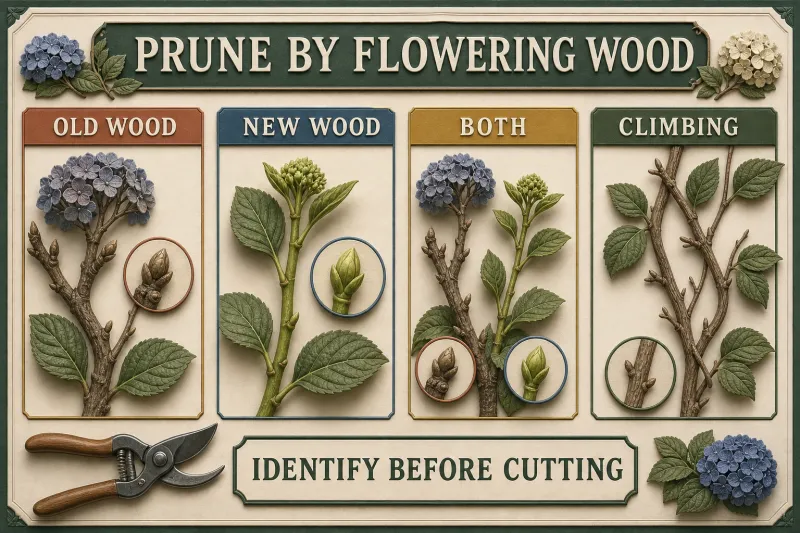
A fading green bloom can make the whole shrub look tired, and the natural impulse is to cut it back hard. That impulse, acted on at the wrong time or with the wrong species, can remove the buds that were already forming for next year’s flowers.
Pruning by species and flowering habit protects that future display.
Traditional bigleaf hydrangeas and oakleaf hydrangeas generally bloom on old wood, meaning the flower buds for next season develop on stems that grew during the current year. University of Maryland Extension’s pruning guide recommends pruning these types just after flowering if pruning is needed at all, and avoiding late-season cuts that would remove the already-set buds.
Removing a spent green head at the stem is a tidy option; cutting deep into the old wood at the wrong time is not.
Smooth hydrangeas and panicle hydrangeas bloom on new wood, producing their flower buds on stems that grow in the current season. University of Georgia Extension advises pruning these types in late winter or early spring before new growth begins, which allows the plant to push out fresh stems that will carry this season’s flowers.
Reblooming bigleaf and mountain cultivars occupy a middle ground, as they can flower on both old and new wood, giving gardeners a bit more flexibility without eliminating the need for careful timing. Pruning is a tool for plant structure and appearance, not a method for restoring bloom color.
Look closer when green flowers are malformed
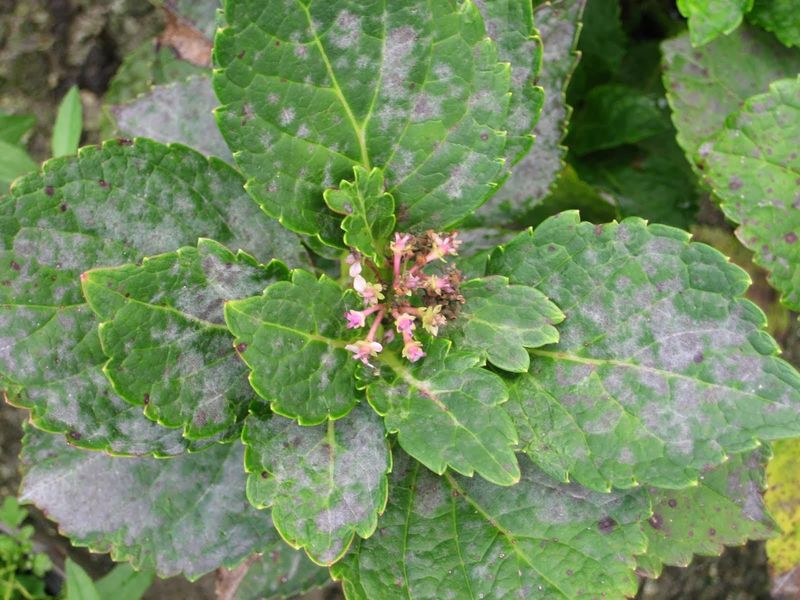
Reassurance about normal aging has a clear boundary, and knowing where that boundary sits is just as important as knowing when to relax. A bloom that simply fades from vivid to green on an otherwise healthy plant is almost certainly following its natural timeline.
A bloom that looks wrong in a different way deserves a closer look.
The warning pattern associated with virescence, a condition caused by phytoplasma infection, is distinct from ordinary color loss. Penn State Extension’s disease guide describes virescence as producing stunted or malformed green flowers, leafy shoots growing directly from flower parts, and broader plant distortion or decline.
UConn Extension similarly flags witches’-broom-type growth and abnormal leafy tissue within bloom clusters as signs that something beyond normal aging is happening.
Cornell’s greenhouse disease resource notes that phytoplasma-related symptoms often appear alongside broader plant decline rather than in isolation on a single aging flower head. Gradual greening alone, on a plant that otherwise looks healthy, does not justify a disease diagnosis.
If the bloom is simply fading but the stems are firm, the leaves are normal, and no leafy tissue is growing from the flower parts, the plant is most likely aging on schedule. When the additional warning signs are present, contact your local Extension office for an accurate diagnosis before applying any treatment.
Judge new flowers on the right timetable
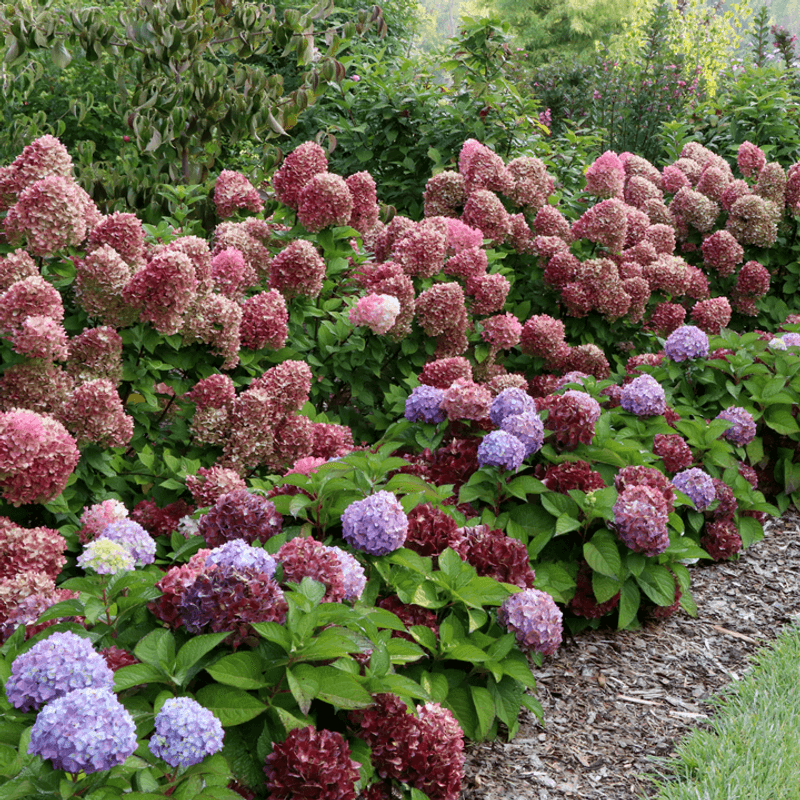
The color of an old, aging bloom head is not a useful measure of what your plant will do next. New flower development, when it comes, is the right moment to evaluate whether site improvements or soil adjustments have made a difference.
If you grow a reblooming cultivar, another flush of flowers may appear under suitable conditions during the same season. Extension guidance on reblooming hydrangeas is clear that a second flush depends on the cultivar’s genetics and the growing conditions, not simply on removing old heads.
Many hydrangeas, including most traditional bigleaf and oakleaf types, will not produce new flowers until the following season, so patience with the plant’s natural timetable is part of the process.
The practical order of steps stays consistent: identify the hydrangea species, recognize normal sepal aging as the most common explanation for a gradual green fade, correct heat or moisture stress when those conditions are genuinely present, and reserve any soil amendments for a tested, species-appropriate reason backed by a soil test. UMass Extension’s hydrangea color guide and University of Maryland’s pruning resource both reinforce this measured approach.
A green bloom at the end of its season is usually a plant doing exactly what it was designed to do.