
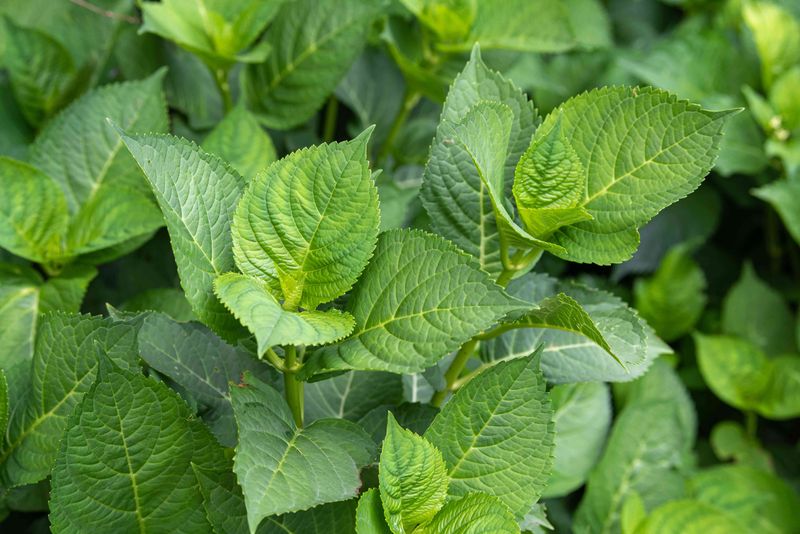
A hydrangea that is thick with leaves but has no flowers can feel like a plant that is simply refusing to cooperate. Pruning is one of the most common suspects, but it is not the only one.
The answer depends on which kind of hydrangea you grow, when it was cut, and what the weather and your yard have thrown at it. Here is how to sort out the cause and plan a better next season.
Start by identifying which hydrangea you have
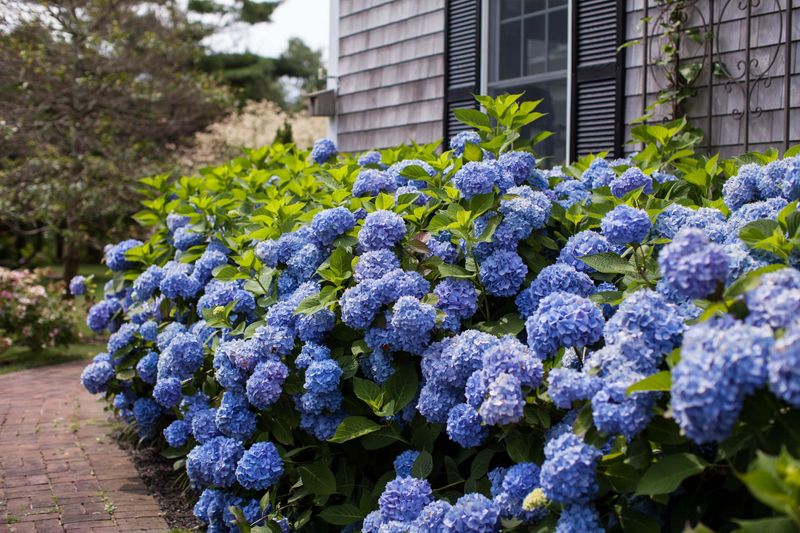
Hydrangeas do not all follow the same pruning rules. Where the flower buds form depends on the species, and sometimes the cultivar.
Bigleaf (Hydrangea macrophylla) and oakleaf (H. quercifolia) hydrangeas generally bloom on old wood, which means stems that grew last year. Smooth (H. arborescens) and panicle (H. paniculata) types bloom on new growth, so their flowers form on stems made this season.
Mississippi State Extension lays out this split clearly.
There is a twist. Some bigleaf cultivars rebloom, flowering on both old and new growth, so they are more forgiving than traditional bigleafs.
As UGA Extension in Forsyth County explains, identifying your plant first is the key to knowing when to prune.
Check the plant tag, your purchase receipt, or the leaf shape. Rounded, glossy, toothed leaves suggest bigleaf.
Lobed leaves shaped like oak leaves point to oakleaf. The same cut can protect buds on one type and remove them on another.
A late cut can remove next season’s buds
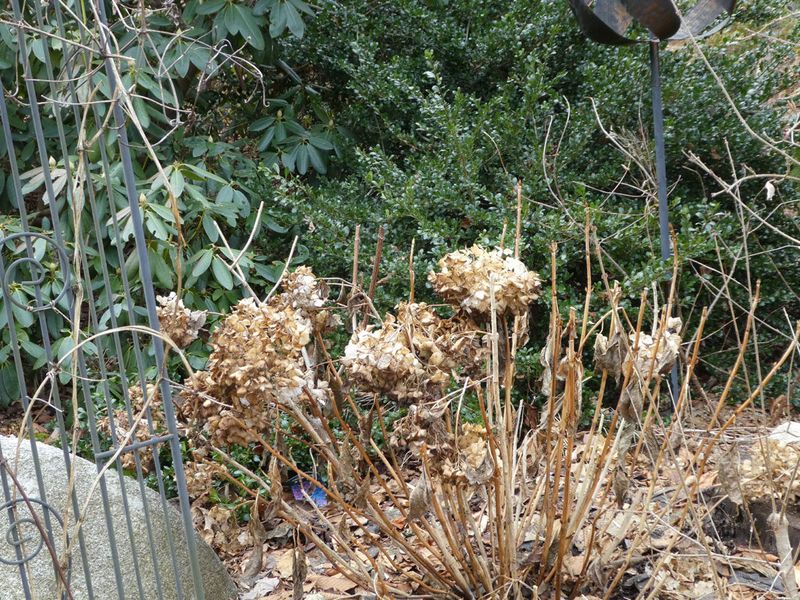
Old-wood hydrangeas set their flower buds on stems grown the year before. Cut those stems at the wrong time, and the buds go in the trash with the clippings.
The plant does not care. It keeps making leaves, and by summer it can look full and healthy.
That is how a shrub ends up big, green, and bloomless. UGA Extension’s bigleaf guide warns that late-season pruning can remove the buds that would open the following year.
New-growth types work differently. Smooth and panicle hydrangeas make flowers on the stems they grow this season, so trimming them in the dormant season does not remove the future blooms, as Mississippi State Extension notes.
Still, lush leaves cannot tell you the cause. Mistimed pruning is one plausible explanation for an old-wood hydrangea, but cold, shade, and feeding habits can leave you with the very same picture.
Check whether pruning timing fits the evidence
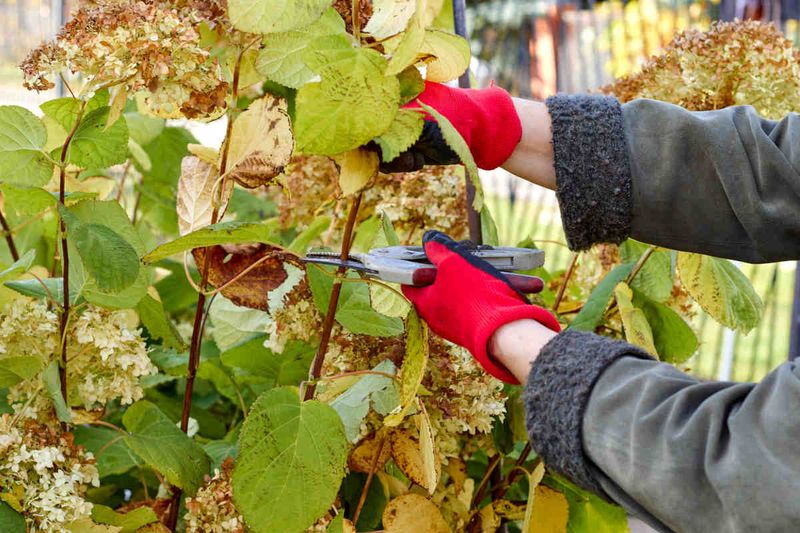
Think back to when you last picked up the shears. A haircut right after the flowers fade is generally fine for an old-wood hydrangea, and it is the usual time to prune when pruning is needed at all.
The clue worth chasing is a later cut. Did you tidy the shrub in fall, shape it in winter, or trim it hard in late summer?
Those cuts may have taken off developing buds for next season, according to UGA Extension.
Compare that history with other situations. If you never pruned the plant, pruning is probably not your culprit.
If it is a smooth or panicle type, a winter cut would not be expected to remove its flowers. Mississippi State Extension describes how timing differs by type.
Treat your timing as a clue, not proof. A late cut on an old-wood type makes pruning a strong suspect.
It does not rule out the other possibilities you will check next.
Prune by bloom type, not by one Southern calendar
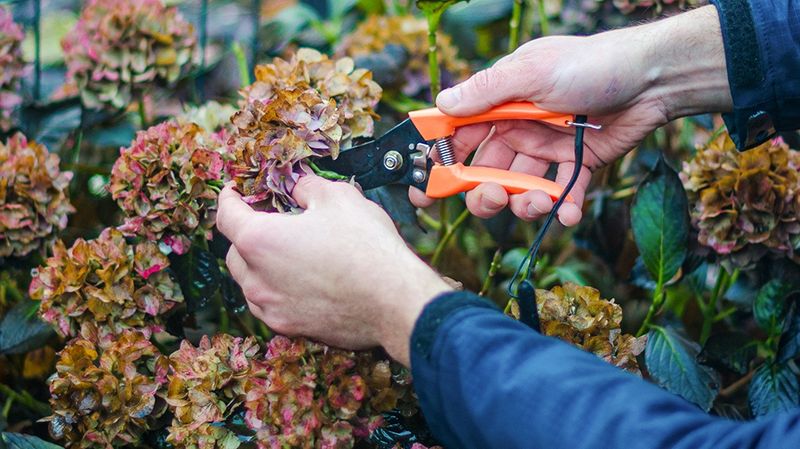
For old-wood types, prune only if the plant needs it, and do it soon after the flowers fade. Waiting longer raises the chance that you cut off next season’s buds.
Many bigleaf and oakleaf shrubs need very little pruning beyond removing dead stems and spent blooms.
Smooth and panicle hydrangeas are easier. Because they flower on current-season growth, they can generally be pruned in late winter or early spring, as Mississippi State Extension explains.
You may come across the advice to stop pruning bigleaf hydrangeas after August 1. That comes from UGA’s guidance for Georgia, and it is regional.
It is not a deadline for every garden in Florida or Texas, where bloom timing and seasons vary by location and cultivar.
A simple rule works better than a date: cut when the bloom has finished on old-wood types, and wait for late winter on new-wood types. Reblooming bigleaf cultivars are more forgiving, but check their care notes.
More detail by type appears in this Mississippi guide.
Cold and growing conditions can also limit flowers
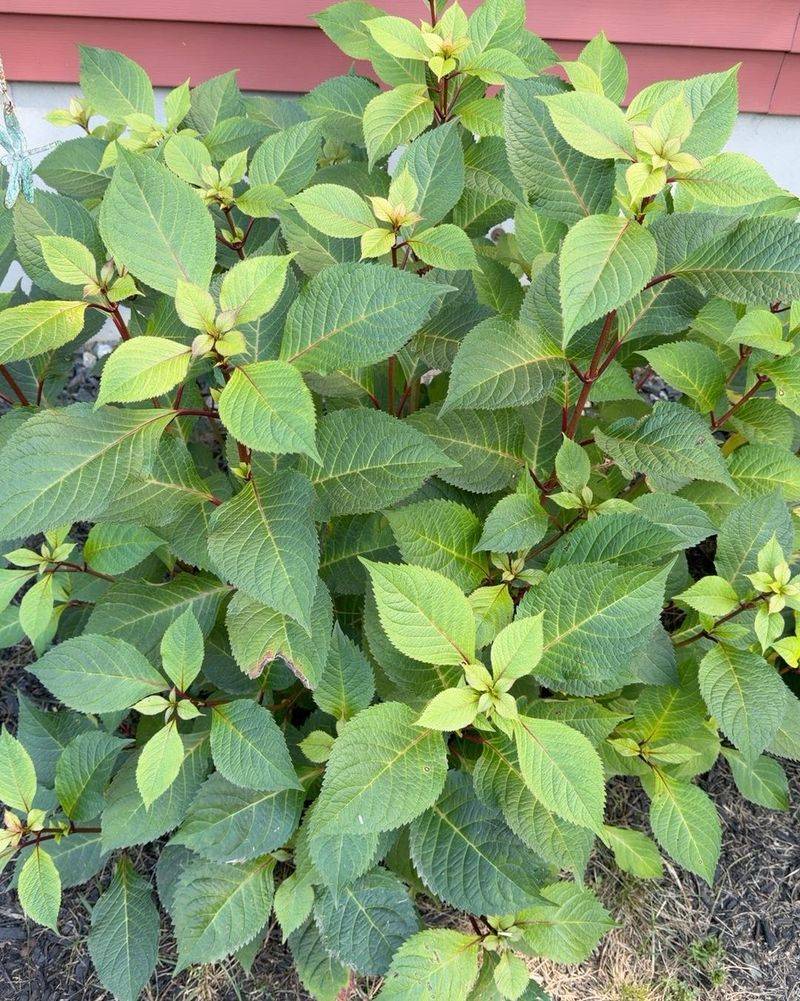
Sometimes the shears are innocent. A hard freeze in winter or a cold snap in late spring can kill flower buds on old-wood hydrangeas, even when the stems and leaves bounce back.
UGA Extension points to cold as a reason bigleafs may skip a year.
Light matters too. Too much shade can reduce flowering, and the Iowa State Extension FAQ lists poor light among common reasons hydrangeas fail to bloom.
Feeding can backfire. Too much nitrogen pushes leafy growth at the expense of flowers, and Mississippi State Extension lists it as a possible cause of poor bloom.
Drought and other stress can hold flowers back as well.
Here is the catch: a green, leafy plant looks the same whichever problem is at work. Look at the whole story, including last winter’s weather, how much sun the plant gets, and what you have been feeding the lawn and beds nearby.
Make adjustments that fit your garden
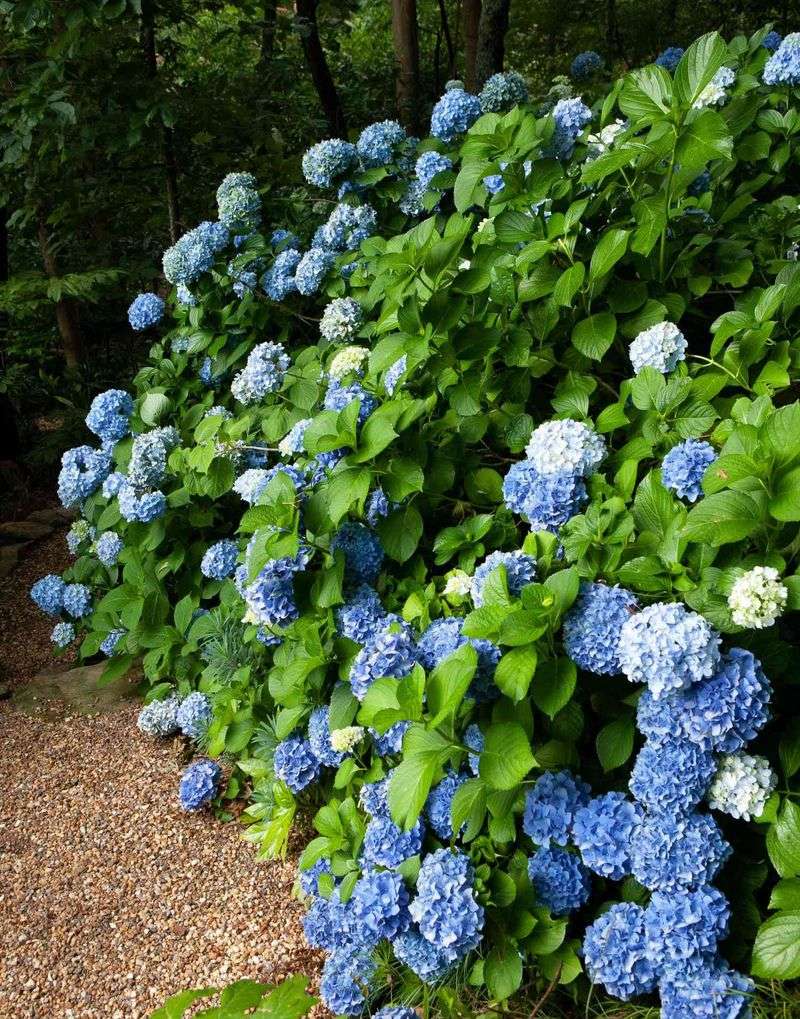
Start with a short checklist for next season. Confirm which type of hydrangea you have, hold off on any cut that lands outside its safe window, and look at light and moisture before you reach for fertilizer.
In hot Southern sites, bigleaf hydrangeas generally do better with morning sun, afternoon shade, and moist, well-drained soil, according to UGA Extension. Deep shade can limit flowering, so the goal is a balance, not the darkest corner.
The Iowa State Extension FAQ backs up the light connection.
Location matters in Florida. UF/IFAS’s shade guide lists bigleaf and oakleaf hydrangeas for North Florida rather than the whole state, so South Florida gardeners may need to choose plants more carefully.
Better-matched care can improve your odds of blooms, but it cannot promise them. Hydrangeas keep their own schedule, and a good year of notes is often the best tool you have.