
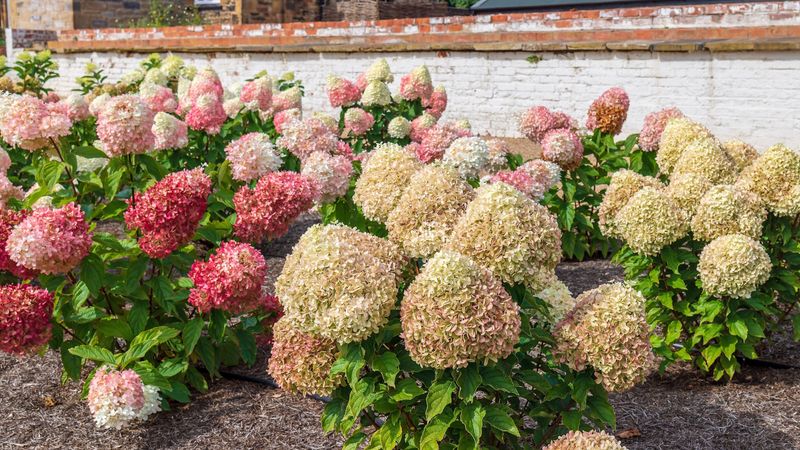
Weak, small, or washed-out hydrangea flowers are one of the most common complaints home gardeners bring up every summer. The easy assumption is that the plant needs more fertilizer, but that fix often makes things worse rather than better. Before reaching for a bag of bloom booster, it helps to understand what actually drives flower size and color – and why feeding is only one small piece of a much bigger picture.
No fertilizer guarantees fuller hydrangea flowers
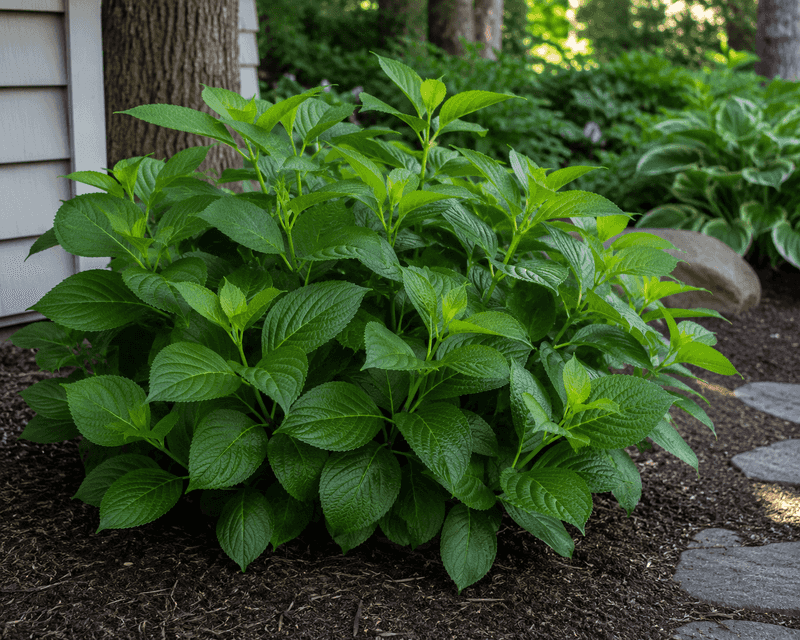
Weak flower heads on a hydrangea do not automatically mean the plant is hungry. Fertilizer is often the first thing gardeners reach for, but applying more of the wrong kind can actually push the plant in the wrong direction. OSU Extension guidance on hydrangeas notes that excess nitrogen tends to encourage lush, leafy growth at the direct expense of flowering, which means a high-nitrogen lawn fertilizer or repeated heavy feeding can leave you with a beautiful green shrub and almost no blooms.
The most defensible feeding correction is actually a subtraction rather than an addition: stop applying high-nitrogen products or piling on repeated heavy fertilizer applications. If the plant genuinely needs supplemental nutrition, a balanced, slow-release fertilizer applied in spring according to the product label is a reasonable next step. OSU and UGA Extension both note that established hydrangeas generally respond better to light, well-timed feeding than to aggressive fertilization schedules.
Even that cautious approach has real limits. Switching to a balanced fertilizer can remove a contributing problem, but it cannot guarantee larger or fuller blooms on its own. Fertilizer cannot restore buds that were removed by incorrect pruning, killed by a hard winter, or simply never formed because of insufficient light or drought. UMN Extension’s fertilizing guide reinforces that feeding should match a documented plant need, not serve as a general rescue strategy when something looks off.
Define what “pale” means before you feed
Before changing anything about how you feed your hydrangea, take a close look at what exactly is pale. Fading or color-shifting flower heads are a very different situation from pale or yellowing leaves, and the two symptoms call for completely different responses.
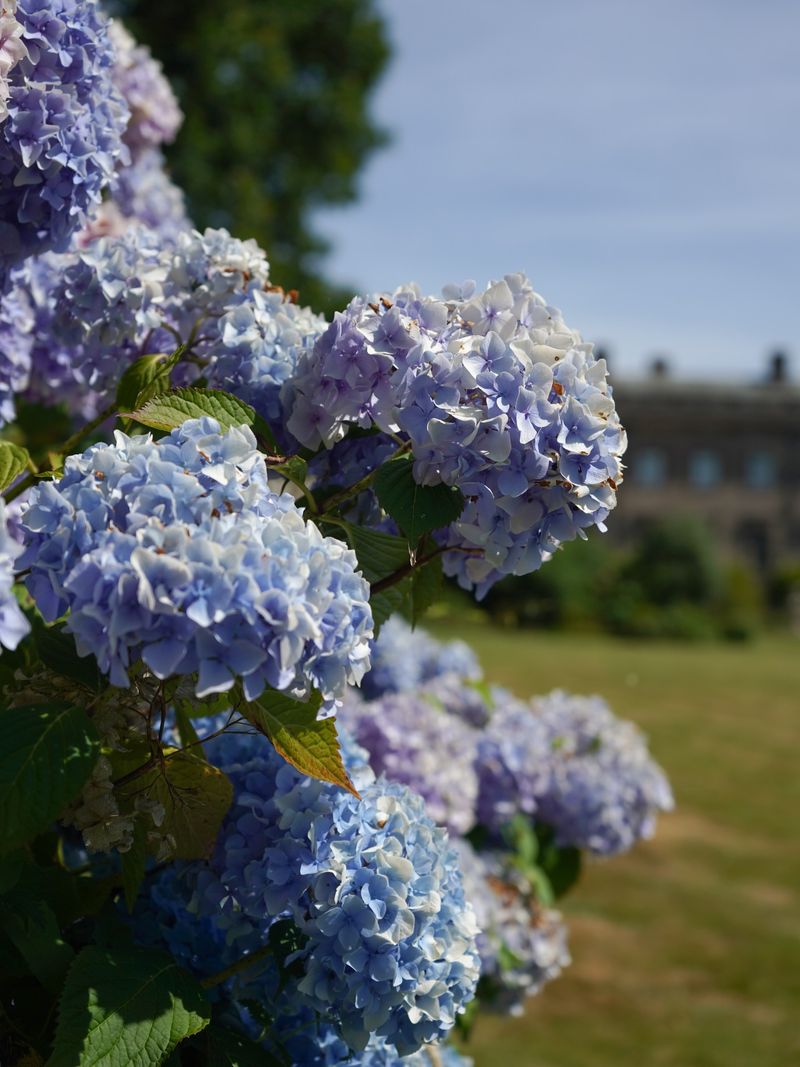
Flower color in hydrangeas can change dramatically over a single season without any nutritional problem at all. A bloom that opens deep blue or vivid pink may mature toward lavender, cream, or even green by late summer – that progression is normal for many cultivars and is driven by the plant’s own chemistry as the flower ages. UGA Cooperative Extension’s bigleaf hydrangea guide explains that in responsive bigleaf hydrangeas, soil pH influences aluminum availability, which in turn determines whether flowers lean blue or pink. Acidic soil with available aluminum tends to produce blue flowers; more alkaline conditions shift them toward pink.
That color management is specific to certain bigleaf cultivars and does not apply to white-flowered varieties, smooth hydrangeas, panicle hydrangeas, or oakleaf hydrangeas.
Pale or yellowing foliage is a separate concern that could point to nutrient imbalance, watering problems, root stress, or other causes worth diagnosing on their own. Penn State Extension’s bloom troubleshooting resource cautions that color change in the flowers themselves is not proof of a nutrient deficiency, and adjusting soil chemistry to chase a particular flower color is not the same thing as improving flower size or fullness.
Identify the hydrangea before diagnosing its blooms
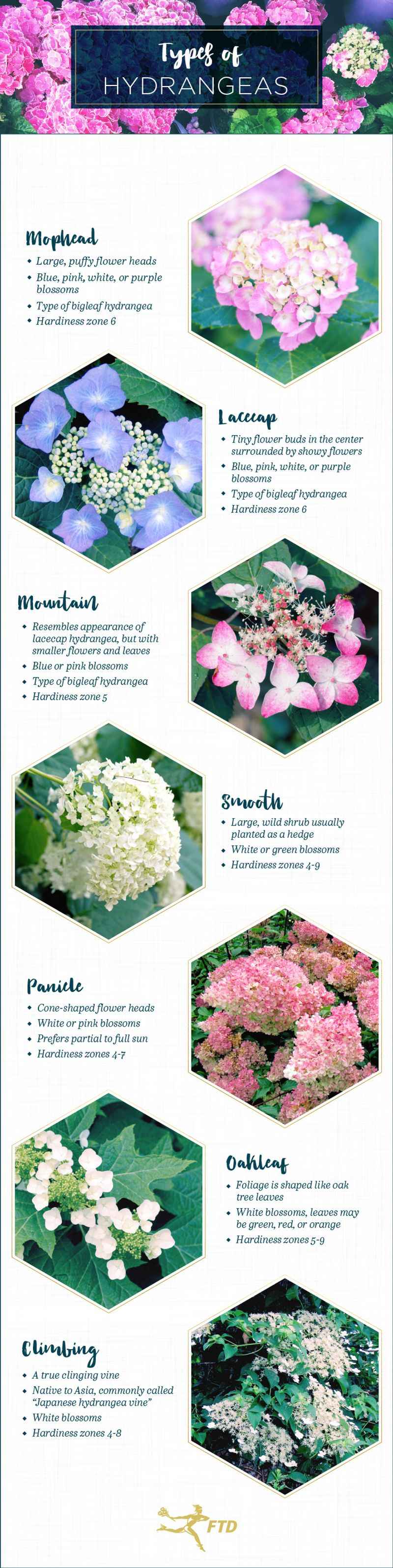
Knowing which hydrangea you actually have is one of the most practical steps you can take before changing fertilizer, pruning, or any other care routine. The four species most common in US home gardens – bigleaf, oakleaf, panicle, and smooth – behave differently enough that advice written for one can cause real problems when applied to another.
Bigleaf hydrangeas (Hydrangea macrophylla) and oakleaf hydrangeas (H. quercifolia) generally produce their flowers on old wood, meaning buds that formed during the previous growing season. UMN Extension’s pruning guide explains that these types should be pruned shortly after flowering if they need shaping, because cutting them back in fall or early spring removes the buds that would have bloomed. Panicle hydrangeas (H. paniculata) and smooth hydrangeas (H. arborescens) bloom on new wood grown in the current season, so they can generally be pruned in late winter or early spring without sacrificing flowers.
Species also differ in how they respond to light, color management, and feeding. MU Extension’s mophead and lacecap article notes that bigleaf hydrangeas need particular attention to pruning timing and soil conditions, while UGA’s bigleaf guide makes clear that the pH-and-color relationship applies specifically to that species. Applying bigleaf color advice or one-size-fits-all feeding expectations to a panicle or smooth hydrangea will not produce the expected results. Identify your plant first, then adjust your care approach to match its actual needs.
Test the soil and stabilize growing conditions first

Adding amendments to soil without knowing what is already there is one of the most common ways gardeners accidentally make a struggling hydrangea worse. Small blooms alone do not establish that the soil is deficient in phosphorus, potassium, or any other nutrient – they are a symptom with many possible causes. MU Extension’s soil test guide explains that a soil test can reveal actual nutrient levels and pH, helping gardeners avoid unnecessary applications and the nutrient buildup that follows repeated, unneeded fertilizing.
If a test or clear plant symptoms justify supplemental nutrition, a balanced, slow-release fertilizer applied in spring according to the product label is the right starting point. OSU Extension’s fertilizing guide for ornamentals emphasizes matching fertilizer choices to soil-test results rather than assumed deficiencies, and notes that phosphorus in particular should only be added where a deficiency has been documented. Excess phosphorus can accumulate in soil, contribute to runoff, and in bigleaf hydrangeas can actually reduce aluminum availability and interfere with blue flower color.
Water management matters just as much as fertility. Hydrangeas need evenly moist, well-drained soil, and drought stress can reduce both flower size and overall plant performance. Equally important: do not fertilize a plant that is already stressed by heat or drought. OSU Extension’s heat-wave guide for hydrangeas advises holding off on fertilizer during extreme heat because it can increase root stress rather than help.
Overfertilizing under any conditions risks root injury, salt buildup, wasted product, and pollution from nutrient runoff – none of which will produce fuller blooms.
Pruning and winter damage can remove the flowers fertilizer cannot replace
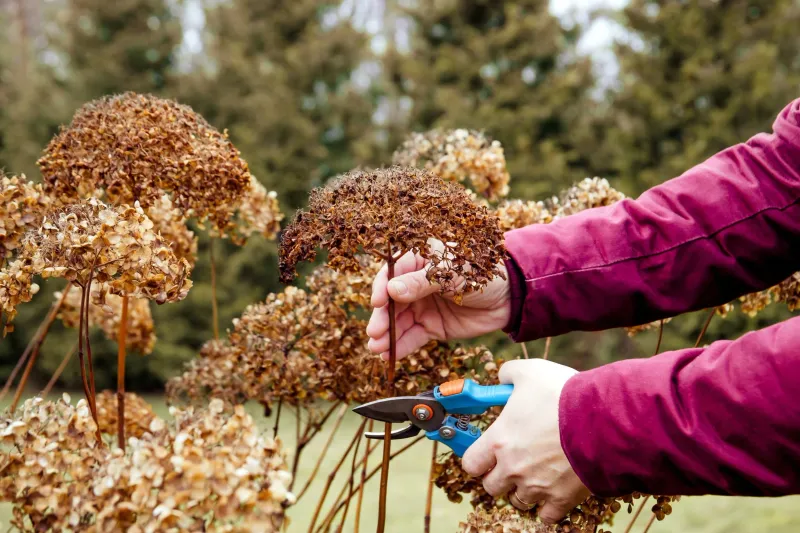
Fertilizer cannot bring back buds that no longer exist. For old-wood hydrangeas like bigleaf and oakleaf types, the flower buds for next year’s display form on the current season’s stems before the plant goes dormant. If those buds are removed by late-season pruning or killed by a hard winter, no amount of spring feeding will replace what was lost in that growth cycle.
Penn State Extension’s bloom troubleshooting article lists incorrect pruning as one of the most common reasons bigleaf hydrangeas fail to flower, noting that cutting back old-wood types in fall, late winter, or early spring removes the very buds that would have opened that summer. Winter injury follows the same logic – a cold snap that damages or kills old-wood buds leaves the plant structurally unable to bloom from those stems, regardless of how well it is fed afterward.
UMN Extension’s pruning guide recommends pruning old-wood types right after flowering ends, which lets the plant spend the rest of the season developing next year’s buds undisturbed. New-wood types like panicle and smooth hydrangeas follow a different schedule and can be pruned in late winter or early spring without losing blooms. If pruning or winter damage is the limiting factor, the honest expectation is that the plant may need a full growing season to produce new flowering wood before a full bloom display returns.
Light, water, and cultivar traits limit flower-head size
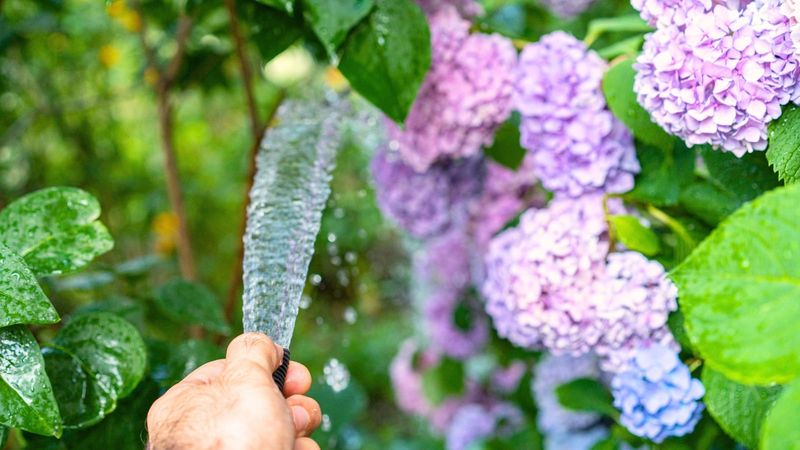
Some hydrangeas produce smaller flower heads because of where they are planted, how much water they receive, or simply because of their genetics – not because of anything that fertilizer can fix. Evaluating these factors honestly is the last step in a complete diagnosis before changing any care routine.
Light is a common culprit. Many hydrangeas struggle to bloom well in heavy shade, though ideal exposure varies by species. MU Extension’s mophead and lacecap article notes that bigleaf hydrangeas generally prefer morning sun with afternoon shade in warmer climates, while too much shade in any climate can reduce flowering noticeably. OSU Extension’s hydrangea overview similarly points out that consistent moisture and appropriate light are foundational to good performance across species.
Drought stress, poor drainage, young plant age, and cultivar genetics all play roles that feeding cannot override. Flower form matters too: lacecap hydrangeas have naturally smaller, flatter heads than mophead types, and that difference is structural rather than a sign of poor nutrition. MU Extension’s chameleon-of-plants piece mentions that for potted florist hydrangeas, limiting the plant to a few stems can encourage larger individual flower heads – but that technique applies to container-grown florist plants and should not be carried over to established landscape shrubs, where stem reduction can stress the plant or reduce overall flowering. Some size variation is simply normal for the cultivar you are growing.
Follow a diagnostic rescue plan and allow time for recovery
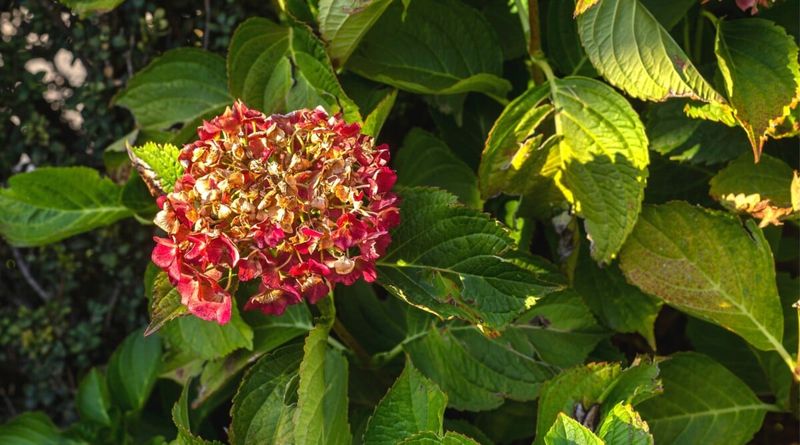
A reliable path to better hydrangea blooms starts with identification, not the fertilizer aisle. Confirm which species you have, then ask whether the flowers look genuinely abnormal or are simply going through a normal color change as they age. Those two situations call for very different responses.
From there, the sequence is straightforward. Stop any high-nitrogen or repeated heavy fertilization that may be redirecting the plant’s energy into foliage. Get a soil test before adding phosphorus, lime, sulfur, or other amendments, and apply a balanced slow-release fertilizer in spring only if testing or clear plant symptoms justify it – always following the product label. Stabilize water and light conditions, because a drought-stressed or shade-limited plant will not respond well to feeding changes alone.
Then review your pruning history against your hydrangea’s species-specific schedule. Penn State Extension’s bloom guide and UMN Extension’s pruning resource both outline how to match pruning timing to bloom wood type.
Recovery sometimes takes longer than one season. Winter damage or badly timed pruning on an old-wood type may mean waiting through the current cycle while the plant builds new flowering stems. OSU Extension’s hydrangea care guidance frames the goal well: match care to the plant’s actual needs rather than applying a generic fix. The gardener who finds and corrects the real limiting factor, whether that is excess fertilizer, poor light, irregular water, or mistimed pruning, gives the plant its best realistic chance at a stronger bloom the following year.