
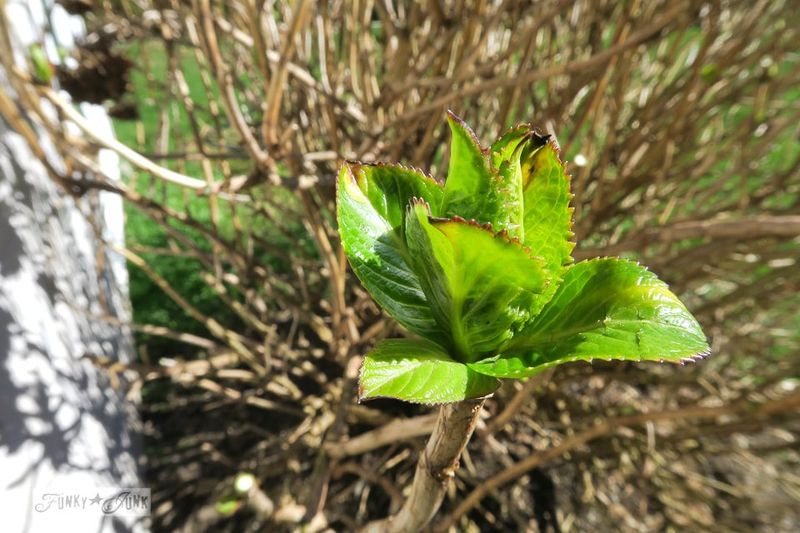
Watching your hydrangea push out wave after wave of lush green leaves while producing zero flowers is genuinely frustrating, especially when the plant looks so healthy from the outside. The good news is that the problem is usually traceable, and pruning timing is one of the first things worth checking – but it is not the only answer, and it does not apply to every hydrangea the same way.
Knowing which type of hydrangea you have changes everything about when and how you should prune it.
A leafy hydrangea can lose its flowers before you see them
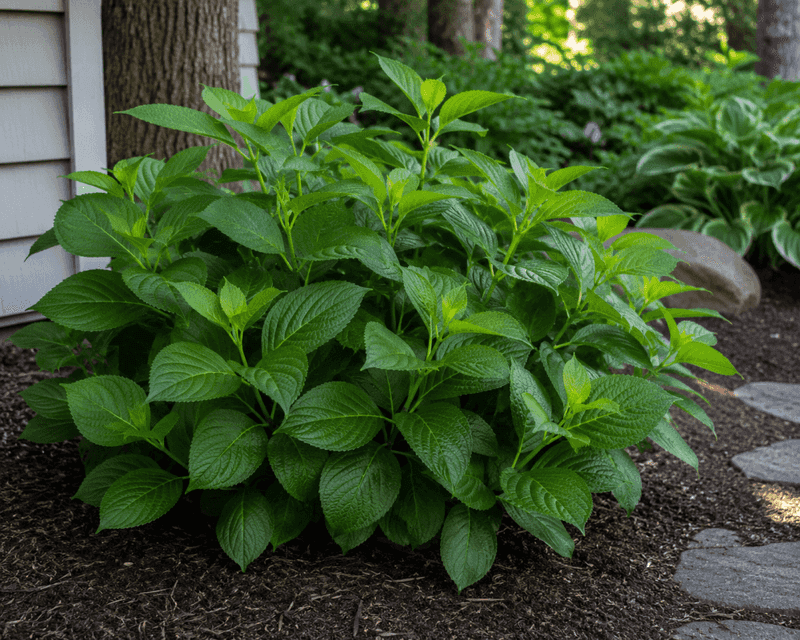
Abundant foliage does not mean a hydrangea is on track to bloom. A plant can look perfectly healthy from the outside while quietly carrying no flower buds at all, and the reason is often tied to how and when it stores those buds.
For certain hydrangeas, next season’s flowers are tucked inside stems that grew during the previous year, a growth type gardeners call “old wood.”
According to UGA Cooperative Extension guidance on bigleaf hydrangeas, flower buds for the following season may begin forming on those old stems by late summer. Any pruning done after that point – whether in fall, through winter, or in early spring – risks cutting away the very buds that would have opened months later.
By the time the plant leafs out in spring, those buds are simply gone, and the shrub has nothing to show for the growing season ahead.
Mistimed pruning is a common possible explanation for a flowerless old-wood hydrangea, but it is not a universal diagnosis. Penn State Extension notes that cold damage, browsing animals, insufficient light, and other stressors can produce the same symptom even when pruning was done correctly.
The first and most important step is identifying which type of hydrangea you have, because the fix for one species can cause exactly the problem you are trying to solve in another.
Identify the hydrangea before choosing a pruning date
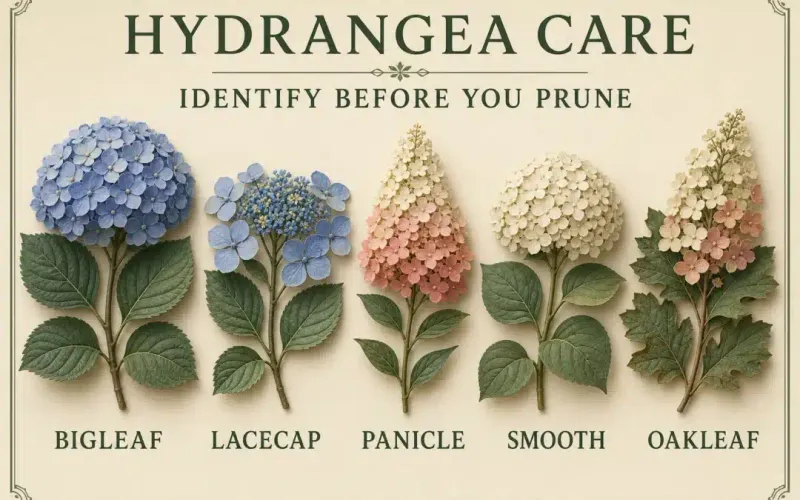
Species identification is the most important thing you can do before picking up pruners. Fortunately, most common hydrangeas give strong visual clues.
Bigleaf hydrangeas – sold as mopheads or lacecaps – produce large, rounded flower heads or flat, lacy clusters and have broad, glossy leaves. Oakleaf hydrangeas are easy to spot by their distinctively lobed leaves that resemble those of an oak tree, along with elongated, cone-shaped flower clusters that turn papery and russet in fall.
Mountain hydrangeas look similar to bigleaf types and are less common in Southern nurseries. Smooth hydrangeas, including the popular ‘Annabelle,’ produce rounded white flower heads on softer stems and have plain, oval leaves.
Panicle hydrangeas such as ‘Limelight’ carry their blooms in tall, tapered, cone-shaped clusters and tend to be the most upright and tree-like of the group. Penn State Extension confirms that bigleaf, oakleaf, and mountain hydrangeas typically bloom on old wood, while smooth and panicle types bloom on new wood grown in the current season.
Visual clues are a solid starting point, but cultivar differences can complicate things. UGA Extension recommends checking plant tags, nursery receipts, or cultivar-specific resources whenever you are unsure.
NC State Extension’s hydrangea guide also provides reliable species profiles that can help confirm what you are growing before pruning decisions are made.
Prune old-wood hydrangeas after flowering, only when needed
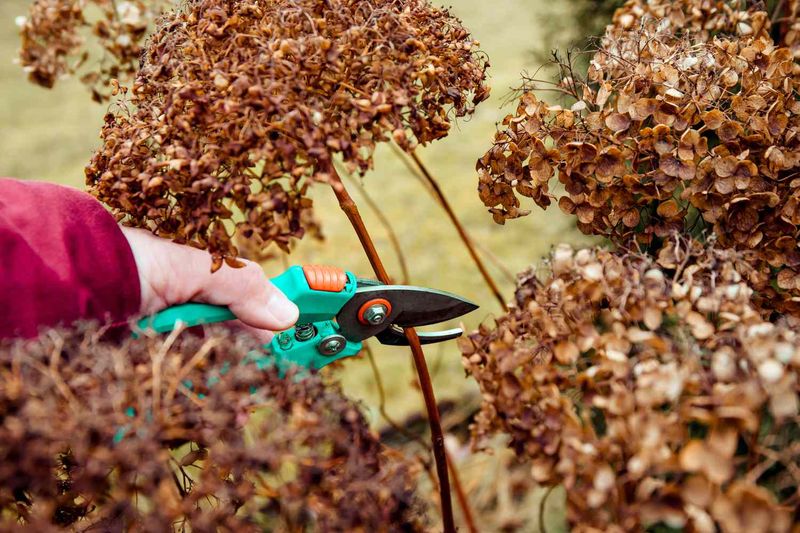
For bigleaf, oakleaf, and mountain hydrangeas, the safest approach is to make any necessary cuts as flowers begin to fade or immediately after they finish. That short window after bloom closes is the biological sweet spot: the old stems have done their job, and the new stems that will carry next year’s buds have not yet had time to set them.
Working during this period gives you the flexibility to shape, deadhead, or selectively thin without sacrificing future flowers.
The key word is “necessary.” UGA Cooperative Extension’s bigleaf hydrangea guidance and Mississippi State Extension both recommend removing spent flower heads and shortening or removing stems selectively – not shearing the whole plant on a schedule. A healthy, well-sited hydrangea may not need substantial pruning at all in a given year.
Cutting simply because the season has changed can do more harm than good on old-wood types.
Southern gardeners often ask for a calendar date to work from. One UGA county Extension office cites August 1 as a target for finishing significant bigleaf-hydrangea pruning in their area of Georgia, but that is a local guideline, not a national deadline.
Conditions vary considerably across Florida, coastal Texas, central Texas, and the Gulf Coast. The biological rule – prune after bloom, stop before new buds set – travels better than any single date.
Penn State Extension reinforces this timing principle as the safest guide regardless of region.
Make selective cuts instead of shearing the shrub
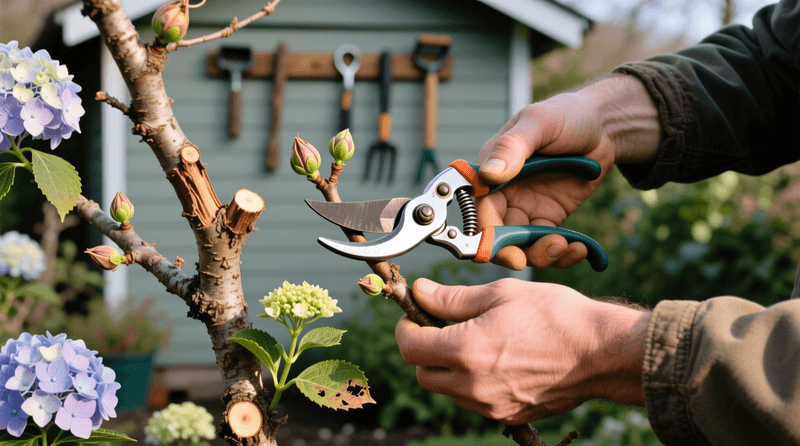
Once you know when to prune, the next question is how. The safest sequence starts with removal of anything obviously dead, damaged, weak, or rubbing against other stems.
Those cuts carry no risk of sacrificing flower buds and immediately improve airflow through the plant. On an established shrub that has grown dense or overgrown, UGA Extension’s comprehensive pruning guide recommends selectively removing some of the oldest, thickest stems at ground level rather than shearing the entire canopy.
Shearing is the approach most likely to cause trouble on old-wood types. Running hedge clippers across the top of the plant removes stem tips indiscriminately, and on bigleaf or oakleaf hydrangeas those tips are often exactly where next season’s buds are stored.
Penn State Extension’s flowering-shrub guidance and the Royal Horticultural Society’s hydrangea pruning guide both caution against this approach for bloom-sensitive species. Selective removal of a few old canes encourages vigorous new growth from the base without wiping out the stems carrying future flowers.
Tool hygiene matters more than many gardeners expect. Sharp pruners make clean cuts that heal faster and cause less stem damage.
When disease is present in the garden, UGA Extension recommends disinfecting tools between cuts or between plants using 70% isopropyl alcohol or a diluted bleach solution. Skipping this step can spread pathogens from one stem to the next.
The goal throughout is to preserve the stems most likely to carry next season’s blooms, not to force a dramatic transformation.
New-wood hydrangeas follow a different pruning schedule
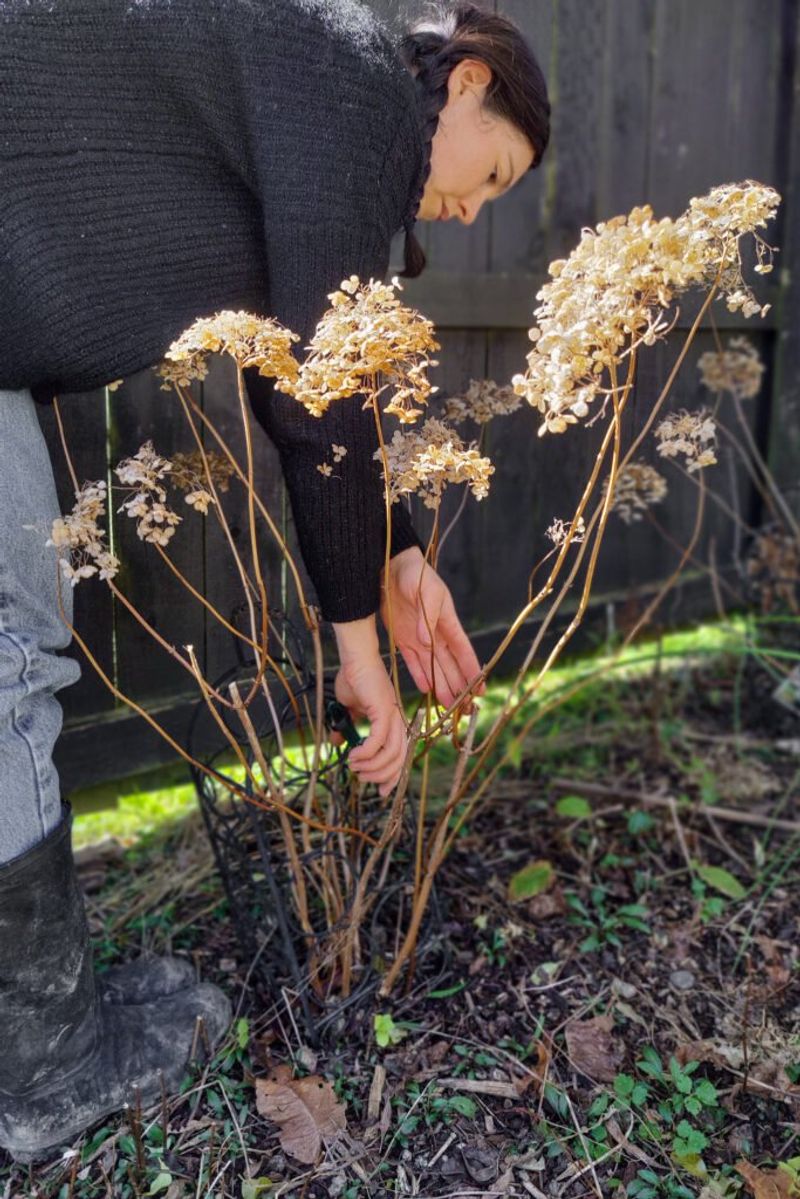
Smooth and panicle hydrangeas operate on a completely different flowering calendar, and applying old-wood rules to them is an easy mistake to make. Because both types bloom on new growth produced in the current season, late-winter or early-spring pruning – before the plant breaks dormancy – does not remove any existing flower buds.
Those buds have not formed yet. Penn State Extension confirms that smooth hydrangeas such as ‘Annabelle’ and panicle types such as ‘Limelight’ can generally be pruned during this dormant window without sacrificing that season’s flowers.
Some growers cut smooth hydrangeas back hard in late winter and see large, dramatic flower heads in response. That can work, but severity comes with trade-offs.
RHS trial results for Hydrangea paniculata note that aggressive pruning can alter flower-head size, stem strength, overall plant shape, and bloom timing – outcomes that vary by cultivar. NC State Extension and Mississippi State Extension both recommend calibrating cut severity to the result you want, rather than assuming harder always means better.
Reblooming bigleaf cultivars such as Endless Summer, BloomStruck, Twist-n-Shout, Summer Crush, and Blushing Bride occupy a middle ground. These selections can flower on both old and new wood, which makes them more forgiving of a mistimed cut or a rough winter.
Even so, their actual performance varies by cultivar and by the weather in any given year, so they should not be treated as completely pruning-proof. Identifying which category your plant falls into remains the most reliable starting point before any cuts are made.
Check cold, browsing, light, water, and fertilizer before blaming pruning
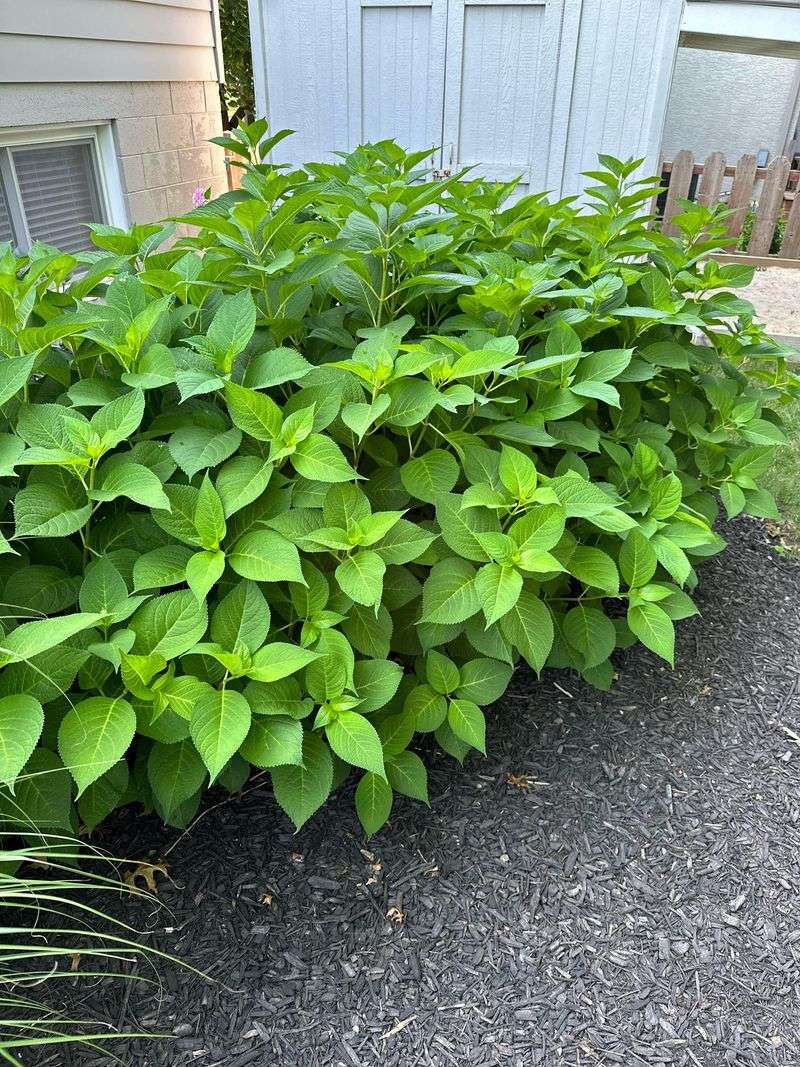
Pruning timing is one possible explanation for missing blooms, but several other factors can produce the same result even when pruning was done perfectly. Late freezes and severe temperature swings are a consistent problem for old-wood hydrangeas across the South.
UGA Extension’s guidance on spring freezes and landscape plants explains how a single cold snap after bud break can destroy the flower buds that survived the whole winter. Deer browsing causes the same outcome by physically removing bud-bearing stem tips, often leaving the lower canes intact and looking completely healthy.
Penn State Extension identifies insufficient or excessive light as another frequent culprit. For bigleaf hydrangeas, UGA recommends morning sun with afternoon shade and consistently moist but well-drained soil.
In Florida and Texas, intense afternoon sun combined with heat and drought can push a plant into stress that favors leaf production over flowering, even when everything else looks fine.
Fertilizer deserves careful attention too. Mississippi State Extension specifically identifies excess nitrogen as a factor that can reduce flower production by directing the plant’s energy into foliage instead.
Adding more fertilizer when blooms are missing can make the problem worse, not better. Soil-pH amendments such as aluminum sulfate or lime are sometimes suggested for hydrangeas, but Mississippi State Extension’s Southern Gardening column clarifies that these materials affect flower color in some bigleaf cultivars – they do not restore buds lost to cold, browsing, poor light, or stress, and unnecessary applications can damage roots or create nutrient imbalances.
Match the pruning cut to the wood that carries the bloom
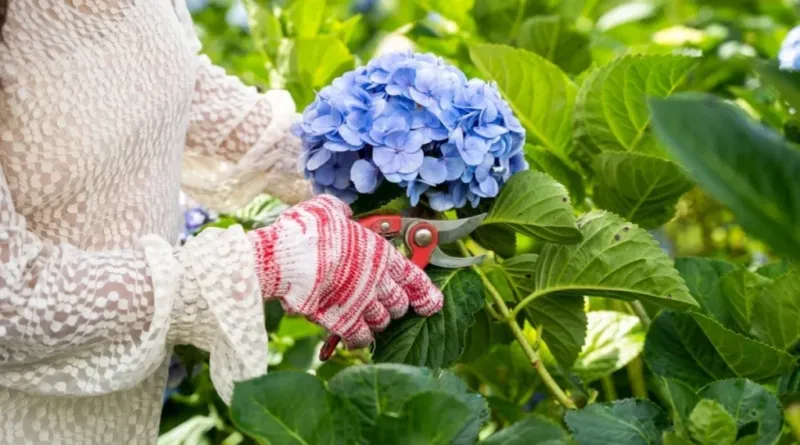
Working through this problem starts with a single question: does your hydrangea bloom on old wood or new wood? Penn State Extension’s species-by-species pruning guide is a reliable reference for confirming which category your plant falls into.
Once you know that, the pruning decision becomes straightforward: old-wood types get selective cuts soon after flowering, only when genuinely needed, while new-wood types can be pruned in late winter or early spring before growth begins.
Changing your pruning schedule will not recover buds already lost to a late freeze, a browsing deer, or months of drought stress. Penn State Extension and UGA Cooperative Extension both point to site conditions and plant history as part of any complete diagnosis.
Review where the plant is growing, what happened last winter, and whether anything has changed in the surrounding environment before assuming a single fix will solve everything.
Matching the cut to the wood that carries the bloom gives the next season its best realistic chance. A hydrangea that has been pruned at the right time, sited well, and kept free from cold damage and browsing pressure is one that can finally do what it was planted to do.