
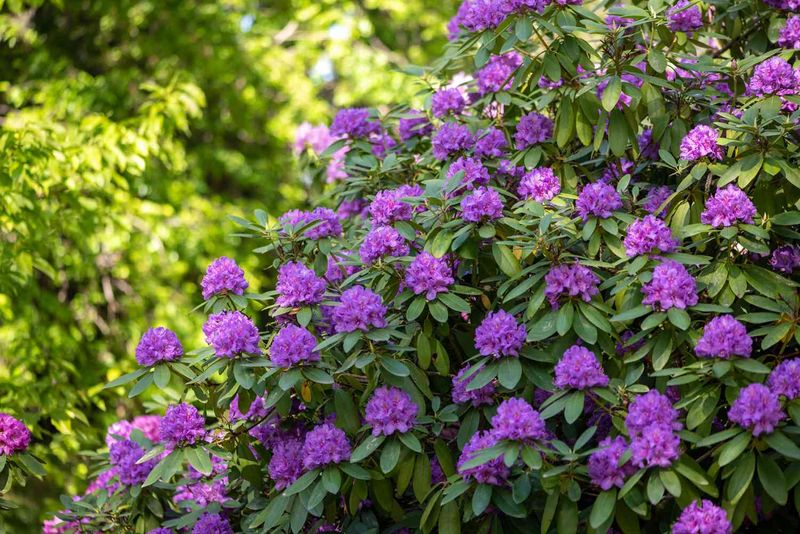
If your hydrangeas droop, brown, or barely bloom no matter what you try, you are not alone, and you are not a bad gardener. Southern heat, humidity, and long hot spells can be brutal on picky plants.
The good news is there are tough flowering shrubs that shrug off the same conditions that leave hydrangeas sulking. Here are ten dependable bloomers that reward you with color instead of frustration.
1. Drift Rose
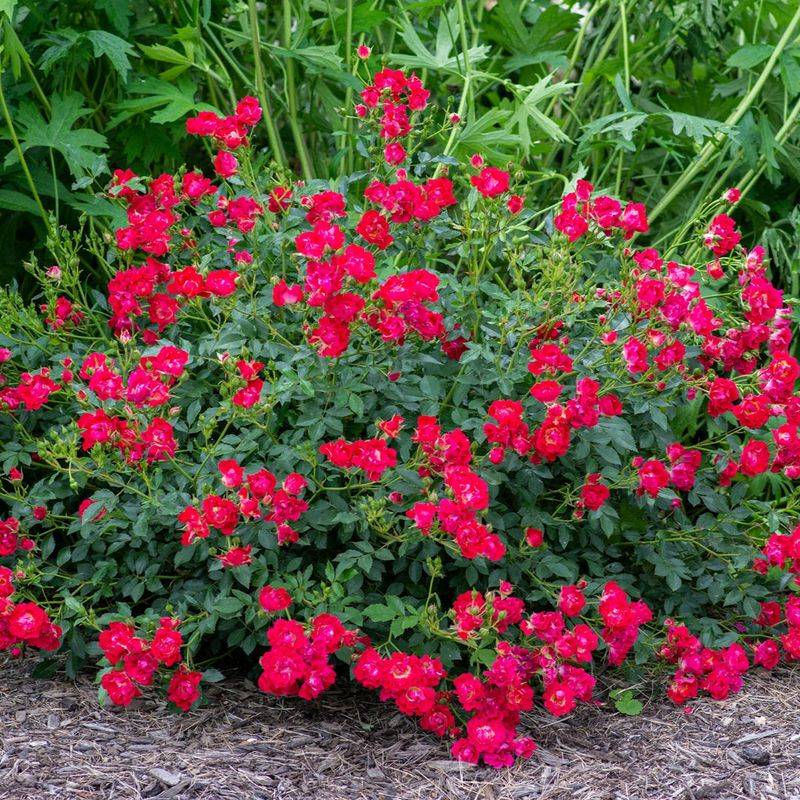
Picture a rose that blooms nonstop from spring until frost without demanding constant spraying or babying. That is the Drift rose, a compact cousin of the tougher Knock Out line.
What sets it apart on this list is its low, spreading habit. Instead of towering canes, it hugs the ground at knee height, which makes it perfect for edging walkways, softening a mailbox bed, or filling a hot slope where hydrangeas would fry.
Southern gardeners in Florida and Texas love it because it laughs at heat and keeps flowering through the long warm season. It shrugs off most of the black spot and mildew troubles that plague fussier roses.
Give it six hours of sun and decent drainage, and it may reward you with waves of color in pink, coral, peach, or red. A light shearing in late winter often keeps it tidy and encourages fresh blooms.
Fun bit: Drift roses were bred by crossing full-size groundcover roses with miniatures, so you get big-plant toughness in a small-yard package.
2. Loropetalum (Chinese Fringe Flower)
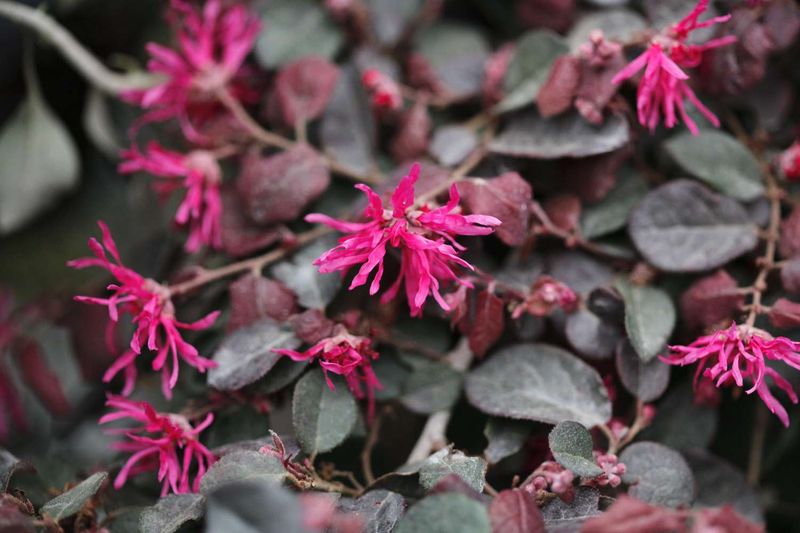
Some shrubs bring color even when they are not blooming, and Loropetalum is the star of that trick. Its deep burgundy leaves stay rich all year, giving your beds a moody backdrop that green shrubs cannot match.
Then come the flowers, wispy pink or magenta fringes that look like little bursts of ribbon draped across the branches. The heaviest show hits in spring, but light reblooming often continues through the warm months.
Heat and humidity do not faze it, which is exactly why it thrives across the South while hydrangeas wilt. It handles full sun to part shade and asks for very little once its roots settle in.
You can find compact types that stay under three feet for foundation plantings, or larger varieties you can shape into a small tree. That flexibility earns its spot here.
A once-a-year trim after the spring flush keeps it neat, though many gardeners simply let it grow into a loose, natural mound. Either way, it delivers color when other shrubs are just plain green.
3. Knock Out Rose
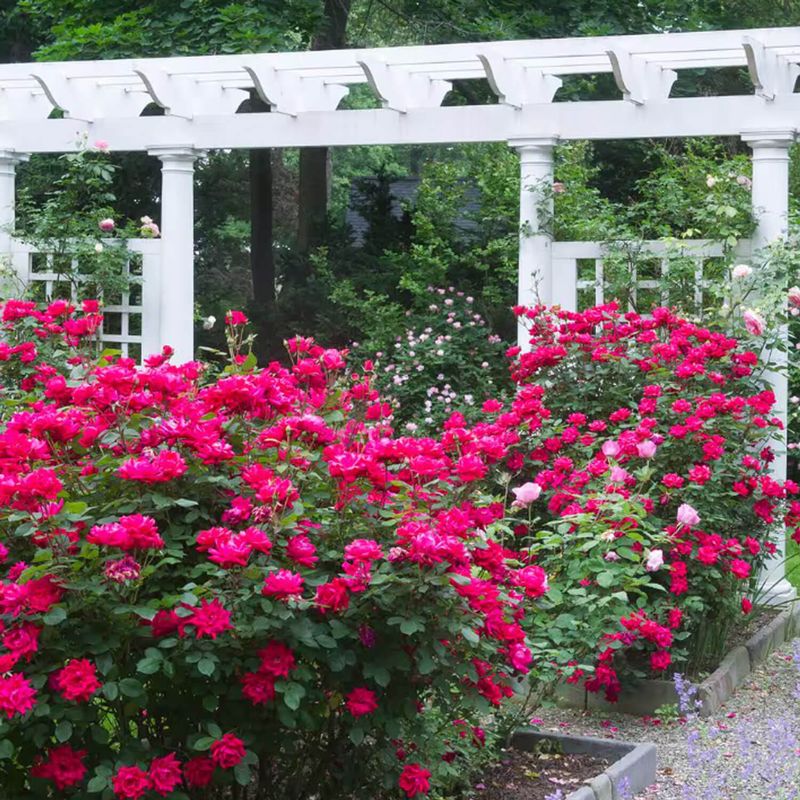
Ask ten Southern gardeners for a foolproof shrub and Knock Out roses come up again and again. They earned their reputation by blooming for months while asking almost nothing in return.
The reason they belong here is disease resistance. Traditional roses can turn into a spray-schedule chore, but this line stays leafy and healthy through the muggy stretches that ruin fussier plants.
Expect flushes of red, pink, or yellow flowers rolling in every few weeks from spring straight through fall. In the long Florida and Texas growing season, that adds up to a very long parade of color.
They grow into a rounded shrub three to four feet tall, big enough to anchor a bed but easy to keep in bounds with a quick late-winter cut. Full sun and good airflow bring out their best.
Here is a handy tip: they are self-cleaning, meaning spent blooms drop on their own, so you can skip the tedious deadheading. For anyone tired of pampering plants, this one feels like a relief.
4. Encore Azalea
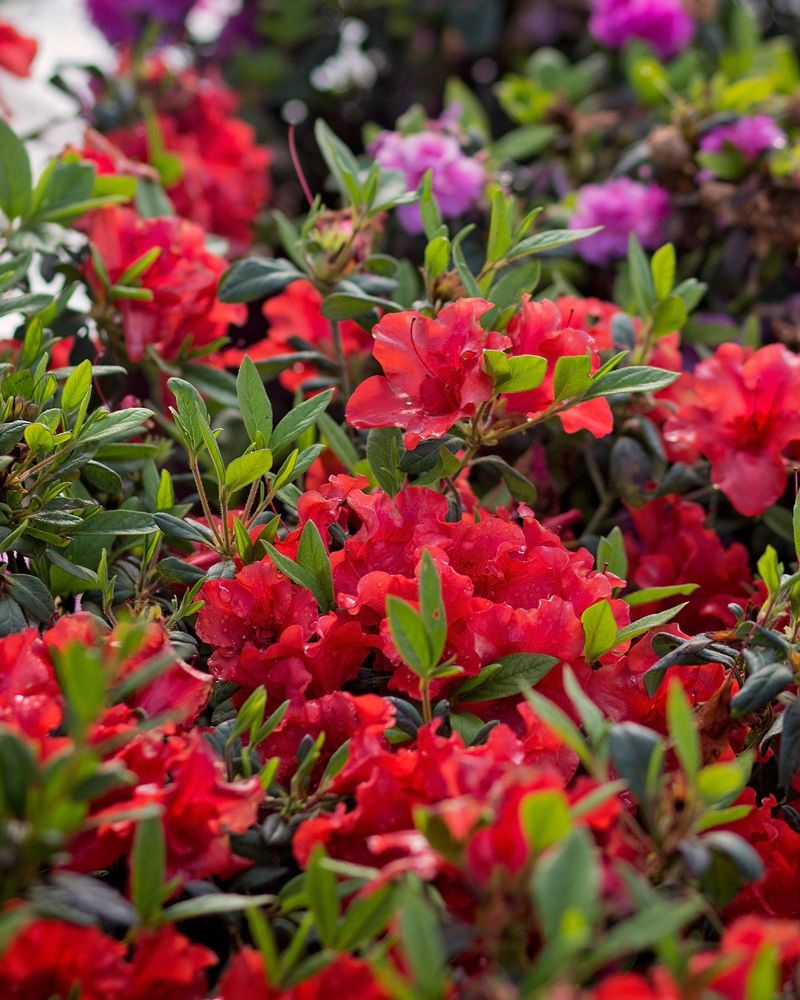
Old-fashioned azaleas dazzle for two weeks in spring, then go quiet for the rest of the year. Encore azaleas rewrote that story by blooming in spring, again in summer, and once more in fall.
That repeat performance is what lands them on this list. Instead of one short burst, you get several rounds of color across the seasons your yard is most on display.
Bred with Southern conditions in mind, they handle more sun than classic azaleas and tolerate heat better, which suits Florida and Texas beds nicely. Part sun with a little afternoon shade often gives the fullest flowering.
Colors range from soft white and blush to vivid purple, coral, and red, so you can match almost any porch or border. Sizes vary too, from low mounders to taller screening types.
Give them acidic, well-drained soil and a layer of mulch to keep roots cool and moist. A light trim right after the spring bloom keeps the shape neat without cutting off future flowers.
Reliable color, several times a year, from a plant that used to be a one-hit wonder.
5. Camellia
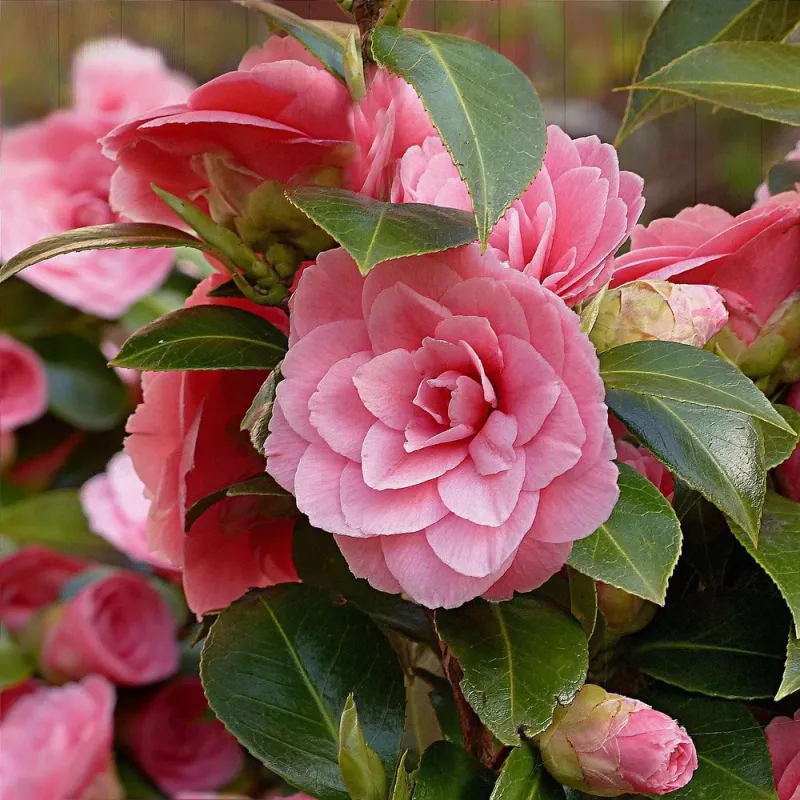
When most of the yard has gone quiet for winter, the camellia steps up and steals the show. Its waxy, rose-like blooms open in fall and winter, filling the cold-season gap that leaves so many gardens bare.
Timing is its superpower here. Sasanqua types flower in fall, and japonica types carry color deep into winter and early spring, so with a mix you can enjoy blooms for months.
The glossy evergreen leaves look polished all year, giving structure to a shaded bed even between flowering spells. They pair beautifully with the light shade cast by tall pines and oaks common across the South.
Camellias appreciate acidic, well-drained soil, a bit of protection from harsh afternoon sun, and steady moisture while getting established. Once settled, they are remarkably long-lived, often outlasting the gardeners who planted them.
Did you know some heritage camellias in Southern gardens are over a hundred years old? Plant one now and you may be starting a shrub your grandkids will admire.
Elegant, evergreen, and blooming when almost nothing else dares.
6. Oleander
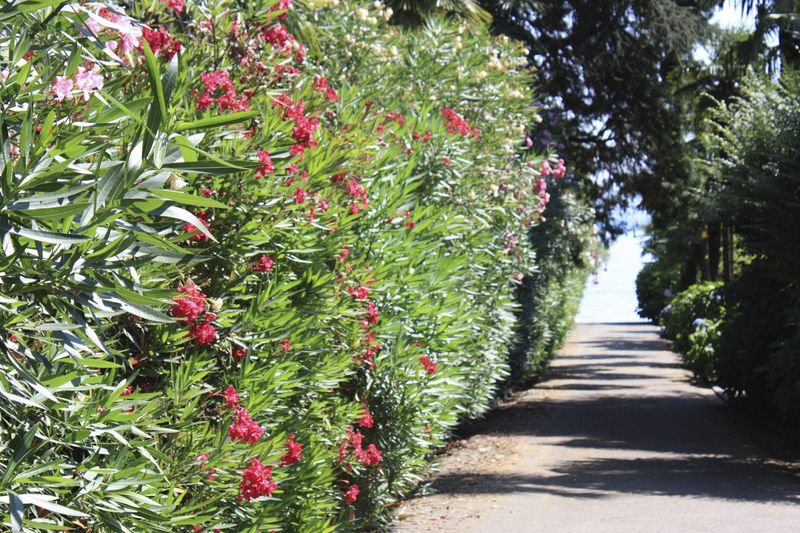
Drive through coastal Florida or Texas in summer and you will spot oleanders blooming happily in spots that would cook most plants alive. Heat, salt spray, drought, and poor soil barely slow them down.
That rugged toughness is exactly why it makes the cut. When you need color in a brutal, forgotten corner, few shrubs perform like this one.
Clusters of pink, white, red, or salmon flowers cover the plant through the long warm months, and the narrow evergreen leaves keep it looking full year-round. It can grow tall and full enough to serve as a privacy screen or hedge.
One honest note: oleander is toxic if eaten, so it is best avoided where small children or curious pets roam freely. Plant it thoughtfully, and wear gloves when pruning.
For sunny fence lines, hot driveways, and windswept coastal yards, it may be one of the easiest flowering shrubs you can grow. Give it sun and space, then mostly leave it be.
Few plants ask so little and give back so much reliable summer color.
7. Butterfly Bush (Buddleia)
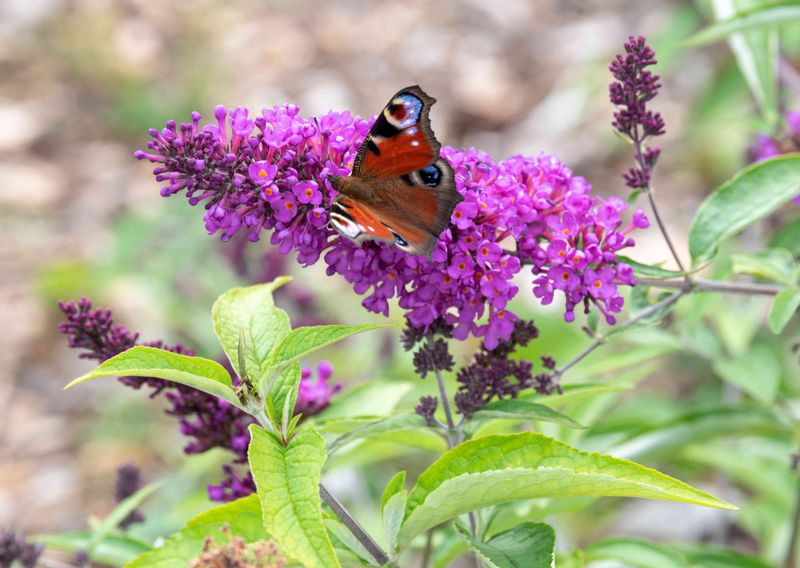
If you want your flowering shrub to double as a wildlife magnet, few beat the butterfly bush. Its long cones of purple, pink, or white blooms are practically a diner for butterflies, bees, and hummingbirds.
That pollinator pull is its calling card here. Plant one and watch the fluttering crowd it draws all summer long, turning a plain corner into a lively little habitat.
It blooms from early summer into fall, and the more you snip off faded spikes, the more new flowers it pushes out. That deadheading habit keeps the color coming and can help control its spread.
Heat and drought suit it fine once established, making it a natural for sun-baked Southern beds. Give it full sun and room to arch out, since it grows fast and loose.
Choose sterile or well-behaved varieties, as some older types can seed around more than you want. A hard cut in late winter keeps it tidy and vigorous.
For anyone hoping to help pollinators while adding easy color, this shrub delivers both in one friendly package.
8. Gardenia
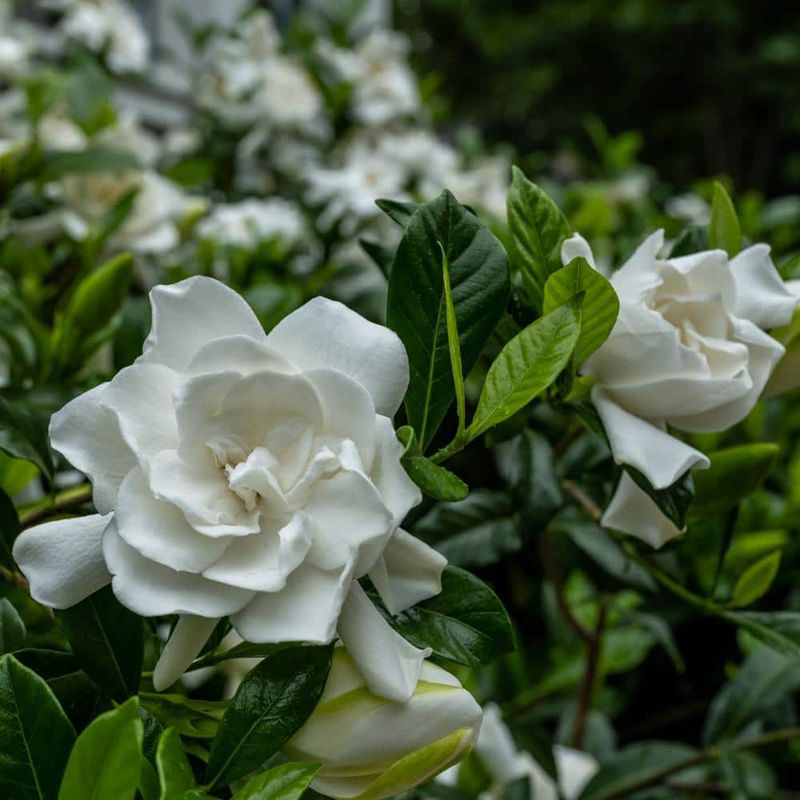
Some plants win you over with looks, but the gardenia wins you over with scent. One creamy white bloom can perfume an entire porch on a warm evening, and that fragrance is pure Southern nostalgia.
Perfume is its reason for being here. No other shrub on this list fills the air quite like a gardenia in full flower near a doorway or seating area.
The blooms appear in late spring and summer against thick, glossy evergreen leaves that stay handsome year-round. Newer repeat-flowering types stretch the show even longer.
Gardenias do have preferences: acidic soil, steady moisture, good drainage, and a spot with morning sun and light afternoon shade. Meet those needs and they settle into loyal, long-lived performers well suited to the humid South.
Yellowing leaves usually signal soil that is too alkaline or too soggy, so an acidic feeding and mulch often perk them right back up. Plant one where you sit and relax in the evenings.
The reward is not just flowers but an experience, that unmistakable sweet scent drifting across the yard on a summer night.
9. Crape Myrtle
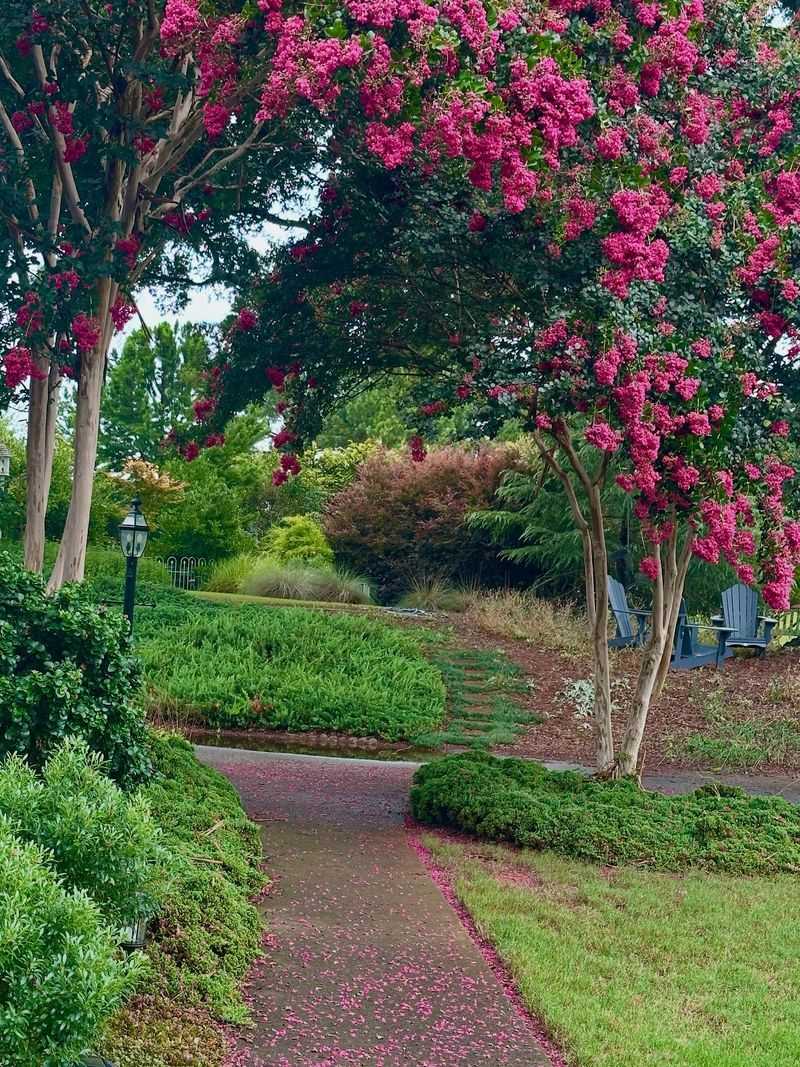
Nicknamed the lilac of the South, the crape myrtle blankets itself in frilly blooms right when summer heat peaks and other plants sulk. Few shrubs celebrate hot weather so cheerfully.
Long bloom time is what secures its place here. Depending on the variety, it flowers for weeks, sometimes months, in shades of watermelon pink, deep purple, red, or white.
Beyond the flowers, it offers year-round appeal: peeling cinnamon-toned bark, fiery fall leaf color, and a graceful branching shape. You can grow it as a full shrub, a hedge, or a small ornamental tree.
Heat and drought tolerance make it a Southern staple from Texas to Florida, and it thrives in full sun where hydrangeas would scorch. Poor soil rarely bothers it once it is established.
A quick word of caution: skip the harsh yearly topping some folks call crape murder, since gentle thinning keeps a healthier, prettier plant. Choose a size that fits your space and you will barely need to prune at all.
For dependable, drawn-out summer color with almost no fuss, this shrub is hard to beat.
10. Abelia
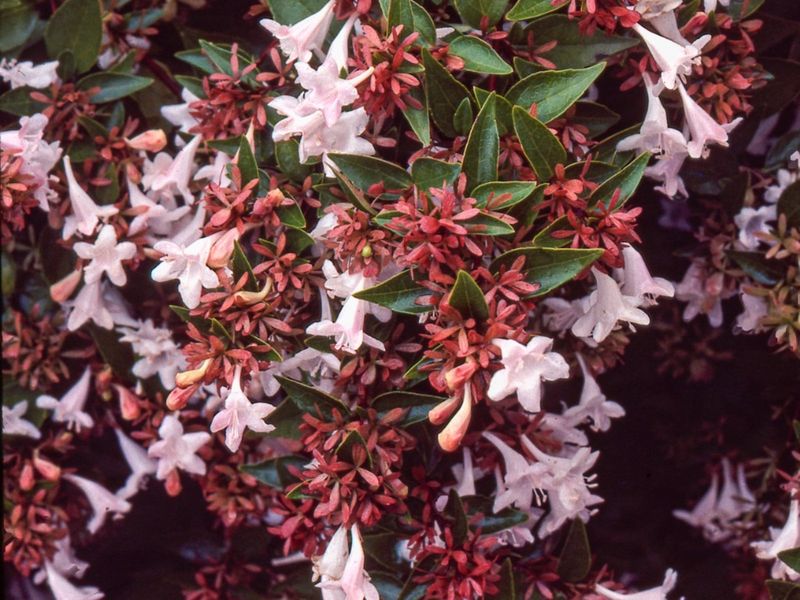
Quietly dependable, abelia rarely gets top billing, yet it may be the most fuss-free bloomer on this whole list. It keeps producing dainty bell-shaped flowers from late spring until frost with almost no effort from you.
Its steady, no-drama nature is why it earns a spot. While flashier shrubs demand attention, abelia just keeps working, drawing bees and butterflies to its sweet little blooms week after week.
Many varieties add colorful foliage too, with leaves in gold, lime, or bronze that shift tones through the seasons. That means good looks even during any brief pause in flowering.
Heat, humidity, and drought are all handled with ease, and it grows well in sun or part shade across Southern yards. Compact types suit foundation beds, while larger ones make loose informal hedges.
It tolerates a range of soils and needs only a light trim to stay shapely. Pests and diseases mostly leave it alone, which is a rare gift.
For gardeners burned by needy plants, abelia offers a gentle, reliable payoff: months of blooms, happy pollinators, and hardly any maintenance in return.