
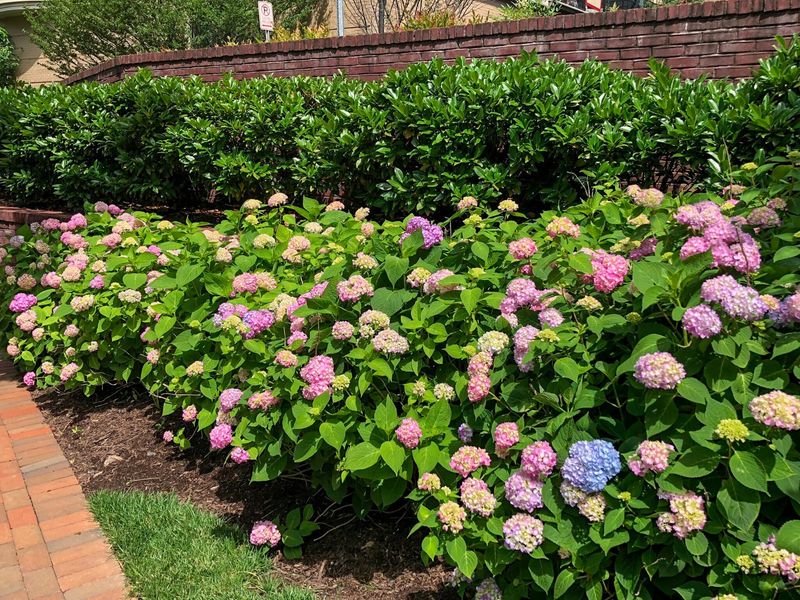
Those big, faded flower heads drooping on your hydrangea can make the whole plant look like it gave up for the season. Before you reach for the pruners and start cutting, the most important thing to know is that one simple fix does not work the same way on every hydrangea.
Whether removing spent blooms actually helps your plant depends almost entirely on which type of hydrangea you are growing. Getting that identification right first can save next year’s flowers and spare you a lot of frustration.
The comeback depends on the hydrangea you have
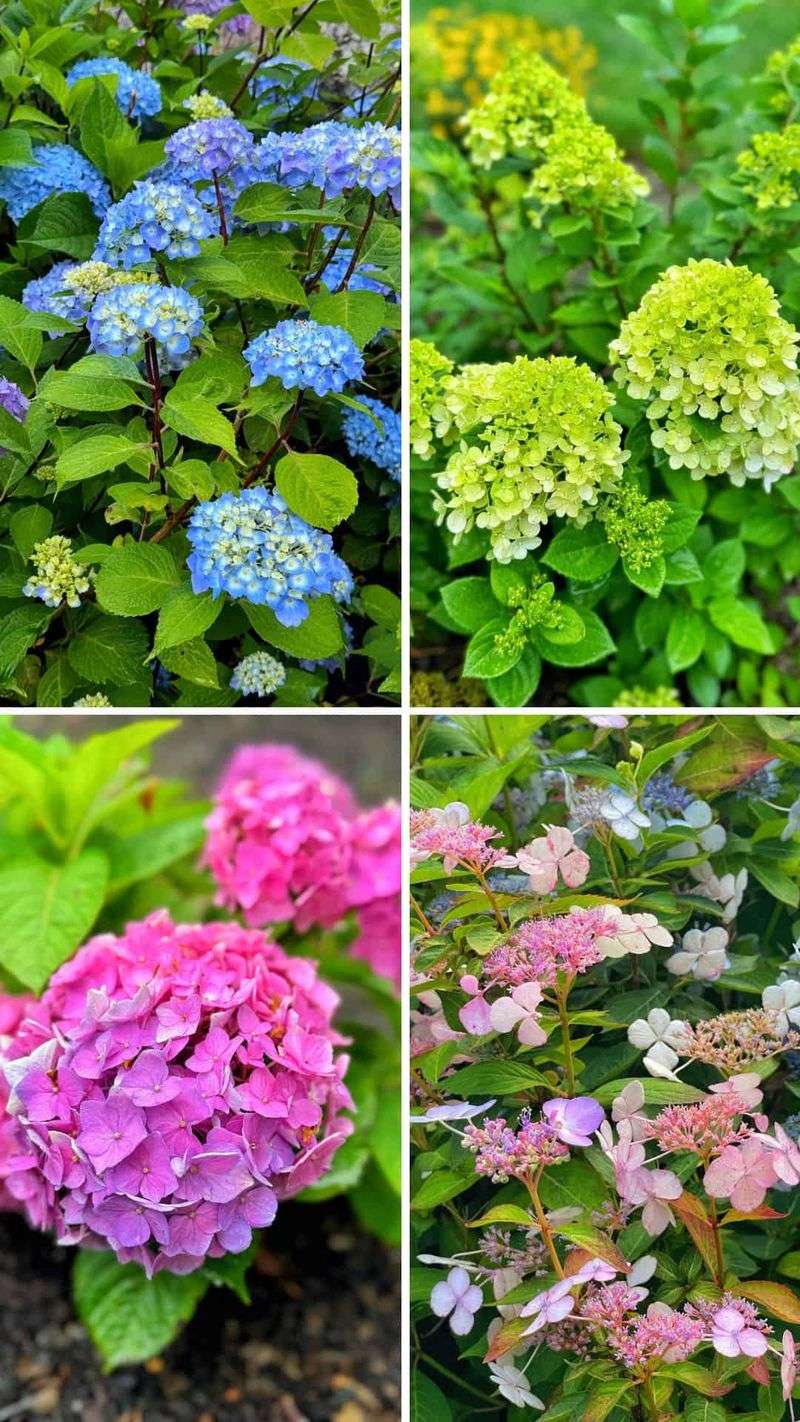
Hydrangea is a broad label that covers plants with very different flowering habits, and the name alone tells you almost nothing about whether a summer reset will help. University of Maryland Extension guidance on pruning hydrangeas explains that bigleaf and oakleaf types generally flower on old wood, meaning the buds that will open next spring are already sitting on this year’s stems by late summer.
Cut those stems back now and you remove the buds before they ever get a chance to open.
Panicle hydrangeas, such as the familiar cone-shaped Limelight, and smooth hydrangeas, such as Annabelle, work differently. They set flower buds on the current season’s new growth, so their flowering cycle does not hinge on protecting last year’s wood through winter.
A third category sits in between. Some bigleaf and mountain hydrangea cultivars are described as reblooming, remontant, or repeat-blooming, meaning they carry the genetic ability to flower on both old and new wood.
Genome-wide research on remontancy in Hydrangea macrophylla confirms that this trait is cultivar-specific, not shared by every plant sold under the bigleaf name. Branded lines such as Endless Summer include reblooming cultivars, but that label does not apply to every mophead or lacecap on the market.
Knowing your exact cultivar, not just the common name, is the decision that determines every step that follows.
What a bloom reset actually removes
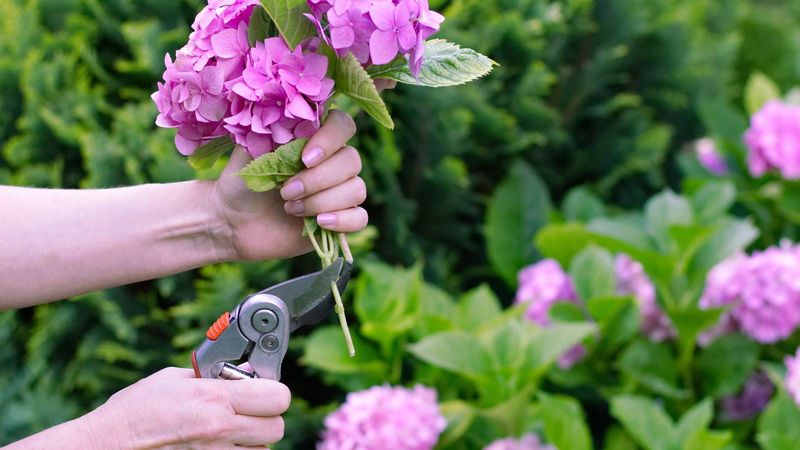
The phrase “bloom reset” gets tossed around as if it means one thing, but the action it describes can range from a light tidy to a cut that sets the plant back a full growing season. Understanding the difference between deadheading and pruning is not just a vocabulary exercise; it protects your plant’s future flowers.
Deadheading means removing only the spent flower head at the very tip of a flowering stem. You are not shortening the stem, not cutting back to a lower leaf node, and not reshaping the plant in any meaningful way.
University of Maryland Extension notes that deadheading can be done on any hydrangea type after flowers fade, but it is not required for plant health. A hydrangea will not suffer or decline simply because its old flower heads stay in place through the season.
Pruning, by contrast, shortens stems or changes the plant’s structure. That distinction matters enormously on old-wood types, where next year’s buds are already developing on this year’s stems.
Cutting several inches below a spent bloom to reach a leaf node is pruning, not deadheading, even if the intention was just to tidy things up.
For a reblooming cultivar, removing only the faded flower head cleans up the appearance and leaves the stem intact so any new growth that emerges below the cut can potentially carry another round of buds. That possibility, not a guarantee, is the most honest version of what a summer reset offers.
Match the summer decision to the flowering habit
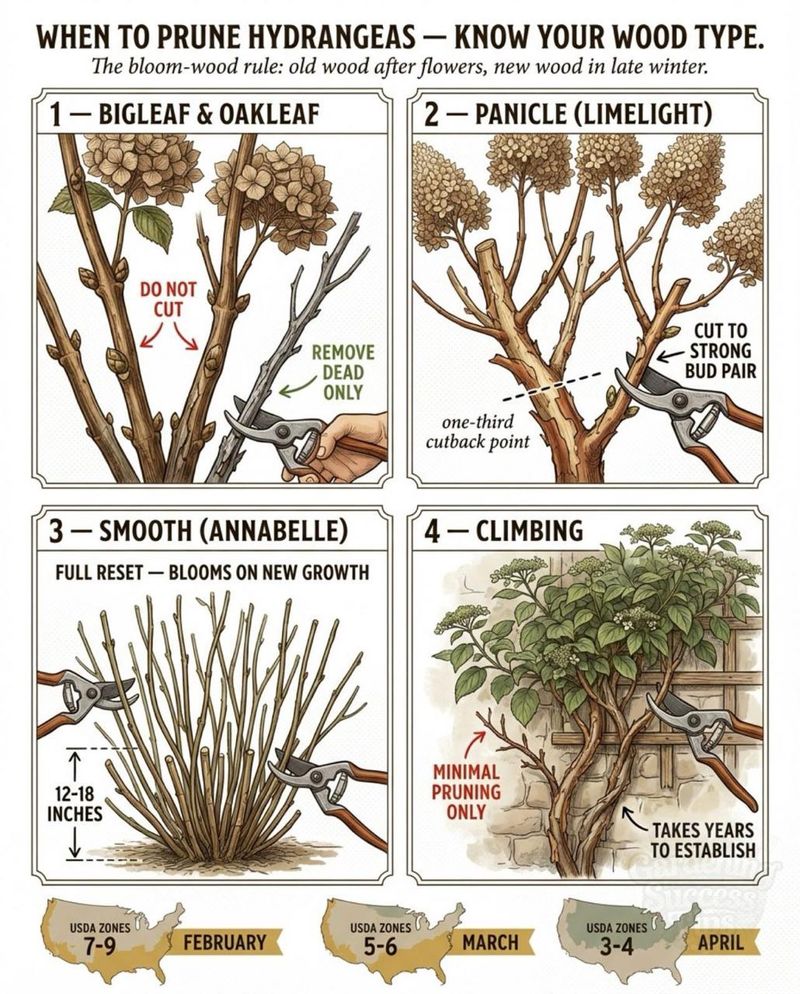
Once you know what type of hydrangea you have, the summer decision becomes much clearer. For traditional bigleaf and oakleaf hydrangeas that bloom on old wood, the safest move is to remove only the spent flower head and stop there.
Cutting deeper into the stem, even to reach a tidy leaf node, risks clipping off buds that have already formed for next spring. UGA Cooperative Extension’s guide to growing bigleaf hydrangea advises that if structural pruning is truly necessary on these old-wood types, it should happen immediately after flowering ends, before new buds set on the stems.
Late summer, fall, winter, and early spring pruning on old-wood types regularly costs gardeners the following year’s display.
Panicle and smooth hydrangeas follow a completely different calendar. Because they build their flower buds on the current season’s new growth, they are not harmed by waiting until late winter or early spring to prune.
University of Minnesota Extension’s pruning guidance confirms that late-winter or early-spring pruning is the standard recommendation for panicle types such as Limelight and smooth types such as Annabelle. A summer reset is simply not the key mechanism for these plants.
Reblooming bigleaf and mountain cultivars fall somewhere in between. Deadheading after the first flush is reasonable and safe, but deeper summer cuts still carry the risk of removing old-wood buds that could open later or next season.
Oklahoma State University Extension also notes that hydrangea varieties require genuinely different pruning approaches, so treating every plant the same way is the most common mistake home gardeners make.
A second flush still depends on growing conditions
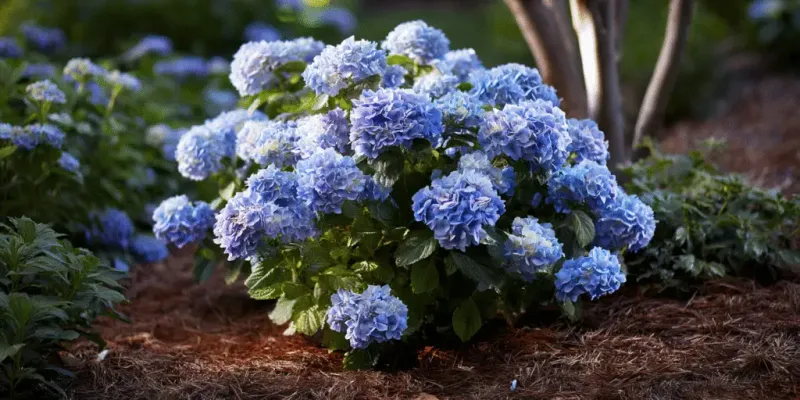
Removing spent flower heads on a reblooming cultivar positions the plant to try for another round of blooms, but it does not guarantee one. Cultivar genetics provide the capacity; everything else in the environment determines whether that capacity gets used.
Research published on remontancy in Hydrangea macrophylla shows that reblooming performance varies significantly between cultivars, and that a second flush may be smaller, later, or absent depending on conditions during the growing season.
Heat is one of the biggest limiting factors in the South. Extended periods above 90 degrees Fahrenheit can slow or stop new bud development even on cultivars that are perfectly capable of reblooming under milder conditions.
Soil moisture plays an equally direct role. Keeping the root zone consistently moist but well drained gives the plant the resources it needs to push new growth, and a two- to three-inch layer of mulch over the roots helps hold that moisture without creating the saturated conditions that cause root problems.
Fertilizer is not the quick trigger many gardeners reach for when flowering stalls. UGA Cooperative Extension cautions that excess nitrogen encourages leafy growth at the expense of flowers.
If you want to fertilize, base the decision on a soil test and a reputable regional recommendation rather than adding heavy doses in hopes of restarting the bloom cycle. Patience and consistent moisture management will do more for a late-summer flush than a quick fertilizer application.
Check for summer stress before making more cuts
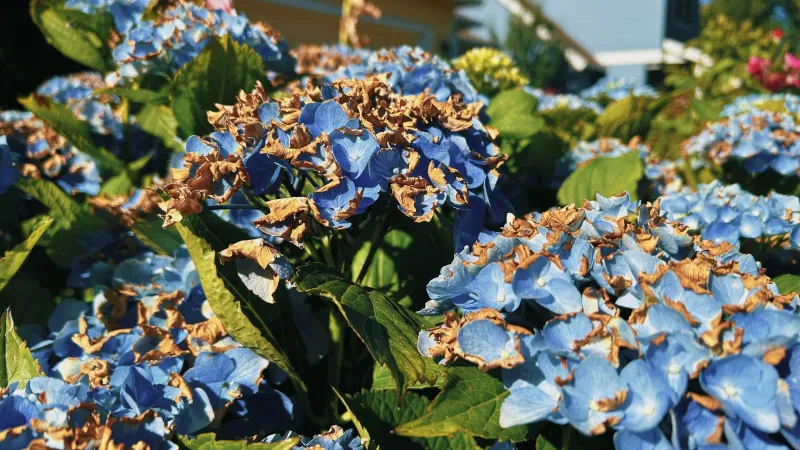
A hydrangea that looks completely finished by midsummer may not be waiting for a deadheading at all. Several problems can shut down flowering or make a plant look spent, and cutting the stems will not solve any of them.
Running through a short checklist before reaching for the pruners can save you from compounding the problem.
Afternoon wilting is one of the most misread symptoms in Southern gardens. University of Maryland Extension’s hydrangea problem guide explains that leaves can droop dramatically in afternoon heat even when the soil holds adequate moisture.
If the foliage recovers overnight and the soil feels moist a few inches down, the plant is responding to heat exposure rather than drought. Adding heavy irrigation in that situation does not solve the problem and can damage roots in poorly drained soil.
Poor flowering can also trace back to causes that happened months earlier. A late frost in spring can kill the buds that were just beginning to swell on old-wood types, leaving the plant with healthy stems but nothing to show in summer.
Dead or hollow-feeling overwintering buds on bigleaf stems tell a similar story. Deer browsing through late winter or early spring can remove entire stem tips, taking the season’s buds with them.
Excessive sun exposure, particularly unshielded afternoon sun in a Southern location, can bleach and damage flowers, stress foliage, and reduce the plant’s overall ability to set new buds. Where leaf-spot problems have appeared in past seasons, switching from overhead irrigation to ground-level watering reduces the splashing that spreads bacterial and fungal disease between leaves.
Address the site and stress conditions first, then reassess what, if anything, needs to be cut.
Southern placement changes the odds
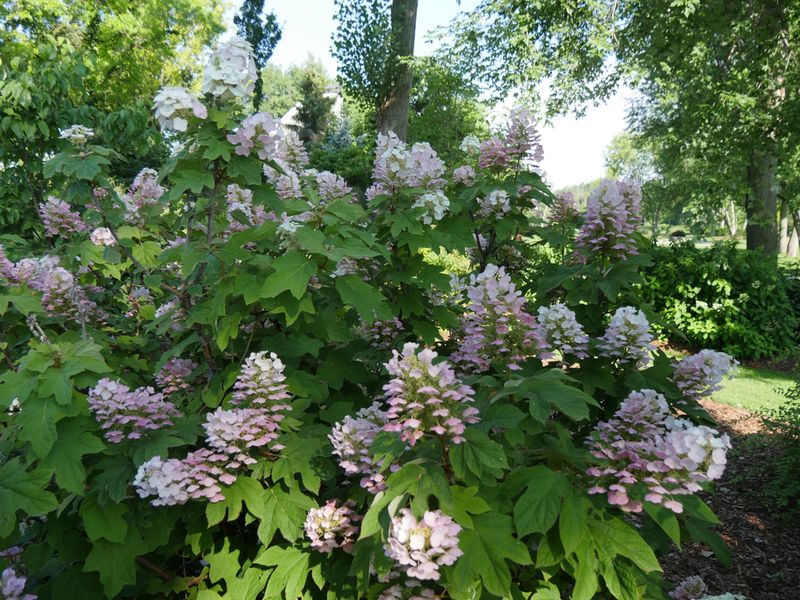
Growing conditions across the South vary enough that a single placement rule cannot cover every yard or every state. That said, one recommendation holds up consistently for bigleaf hydrangeas in hot locations: morning sun with afternoon shade reduces heat stress, protects flowers from bleaching, and gives the plant a better chance of completing a second flush on reblooming cultivars.
A spot on the east side of a structure or under the canopy edge of a tall tree often provides that balance without creating the deep shade that reduces flowering altogether.
Florida gardeners face an especially wide range of conditions depending on whether they are gardening in the Panhandle, central Florida, or the southern peninsula. UF/IFAS guidance on landscaping in Florida shade identifies bigleaf hydrangea as a shade-oriented option relevant to northern and central Florida, not a uniform statewide recommendation.
Oakleaf hydrangea, which is native to Florida, carries different site tolerances and generally handles heat and dry spells better than bigleaf types once established. UF/IFAS notes on oakleaf hydrangea confirm its value as a regionally adapted landscape plant with ornamental appeal across multiple seasons.
Texas gardeners should resist the temptation to apply any single Southern recommendation across the entire state. The Texas A&M AgriLife Earth-Kind plant selector evaluates plants by regional heat, drought tolerance, soil type, pest pressure, and fertility needs, reflecting the reality that East Texas, the Hill Country, and the Gulf Coast present genuinely different growing challenges.
Choosing a cultivar and a planting site based on local conditions rather than a broad Southern label is the most reliable path to a hydrangea that performs well year after year.
Leave the flowers if you prefer their dried display
After working through identification, deadheading technique, timing, and site conditions, the final decision is simpler than it might seem. Identify your hydrangea type first.
If you want a tidier plant, remove only the faded flower head at the tip of the stem and leave the rest of the stem untouched. Reserve any deeper or structural pruning for the right season: immediately after flowering for old-wood bigleaf and oakleaf types, and late winter or early spring for panicle and smooth types.
A reblooming bigleaf or mountain cultivar may reward that light deadheading with another flush of flowers later in the season. Cultivar-level research on remontancy makes clear that the second flush may be smaller or later than the first, and some plants will not produce one at all depending on heat, moisture, and how the season unfolds.
Traditional bigleaf and oakleaf types will not gain a new bloom cycle from deadheading under any conditions.
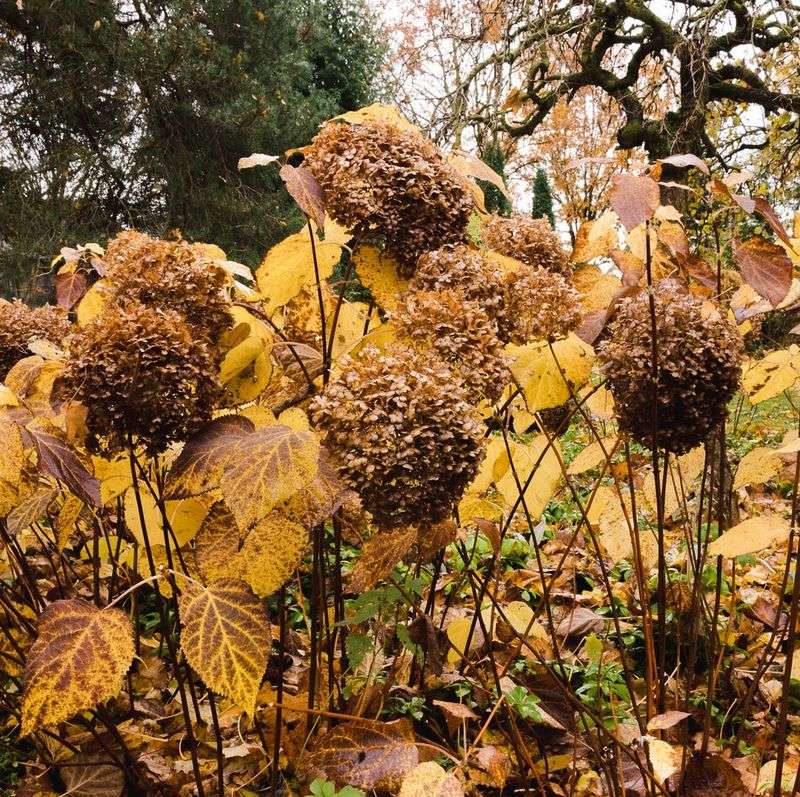
University of Maryland Extension makes a point that is easy to overlook: deadheading is not required for plant health. Hydrangea flower heads often dry to attractive papery shades of tan, antique pink, or pale green that hold their shape through late summer and into fall.
Leaving them in place is a legitimate choice, not a sign of neglect. A plant that looks “done” may simply be resting between acts, and the best thing you can do is give it shade, consistent moisture, and the time to show you what it has left.