
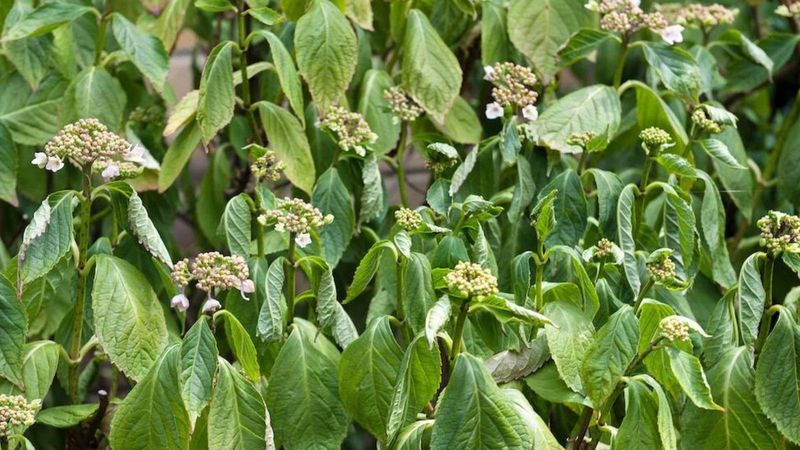
Watching your hydrangeas droop in the afternoon heat is genuinely alarming, especially right after you’ve watered them. Many Southern gardeners assume the wilting means the plant needs even more water, so they keep adding it – and the problem doesn’t improve.
The real issue usually isn’t when you water, but whether you’re watering by reaction instead of checking what the root zone actually needs. Understanding that difference can save your plants from both drought stress and the quieter damage of too much water.
Afternoon Droop Often Signals Heat, Not Immediate Thirst
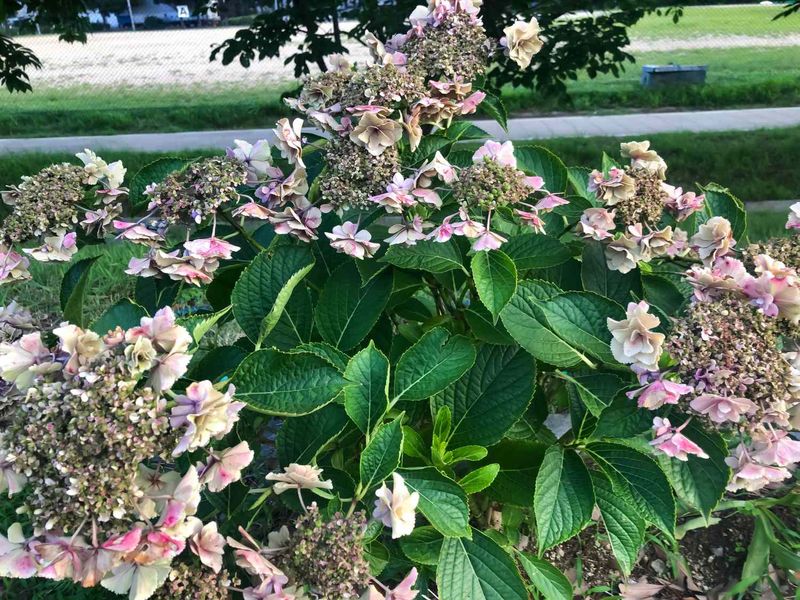
Hydrangea leaves drooping on a hot July afternoon in Georgia or Texas can look alarming, but that slump is often a normal heat response rather than a cry for water. On scorching days, plants lose moisture through their leaves faster than their roots can pull it up from the soil – a process called transpiration.
When that gap gets wide enough, leaves wilt temporarily even when the root zone has plenty of moisture available.
University of Arizona Extension’s summer garden guidance identifies temporary midday wilting as a common heat response and flags morning wilting or wilting that fails to recover overnight as the more serious warning signs. If your hydrangea looks limp at 3 p.m. but stands upright again by the next morning, that recovery is meaningful information – it suggests the plant had enough water to get through the night.
Wilting that shows up early in the morning, worsens rapidly before the day gets hot, or persists through cooler evening hours tells a different story. Those patterns suggest the root zone may genuinely be running dry, or that something else – root damage, disease, or drainage problems – is interfering with water uptake.
Afternoon droop alone, especially on a plant that bounces back by morning, does not justify an immediate watering response when the soil beneath the surface is still moist.
The Costly Mistake Is Watering by Reaction
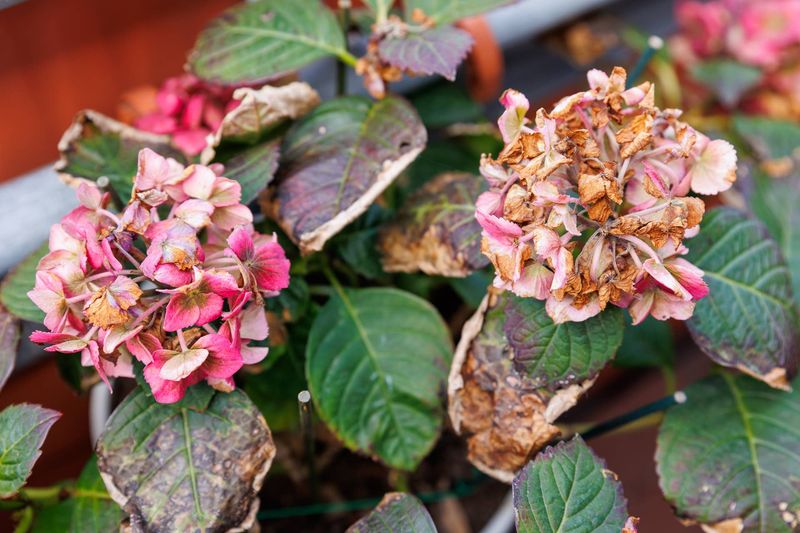
The watering habit that quietly hurts hydrangeas most is not a specific time on the clock – it is reaching for the hose every time leaves look sad, without first checking whether the soil actually needs water. Gardeners who water on a fixed schedule or who respond to every afternoon droop with an overhead sprinkle during the hottest hours are doing two things at once: potentially adding water a plant doesn’t need, and losing much of what they do apply to evaporation before it reaches the roots.
Oklahoma State University Extension’s landscape water conservation guidance notes that midday watering is less efficient because heat and sun increase evaporative loss, meaning a meaningful portion of the water never penetrates to the root zone. UGA’s Best Management Practices for the Landscape recommends early morning as the default window for irrigation because conditions are cooler and evaporation is lower.
Early morning is the preferred routine – not an absolute rule. If you check the soil and find it genuinely dry at 2 p.m. on a hot afternoon, watering then is better than waiting until the next morning and risking further stress.
The goal is to match water delivery to actual need, not to follow a rigid timetable. University of Minnesota Extension reinforces that soil moisture and plant condition should guide the decision more than the time of day alone.
Check Moisture Below the Surface Before You Water
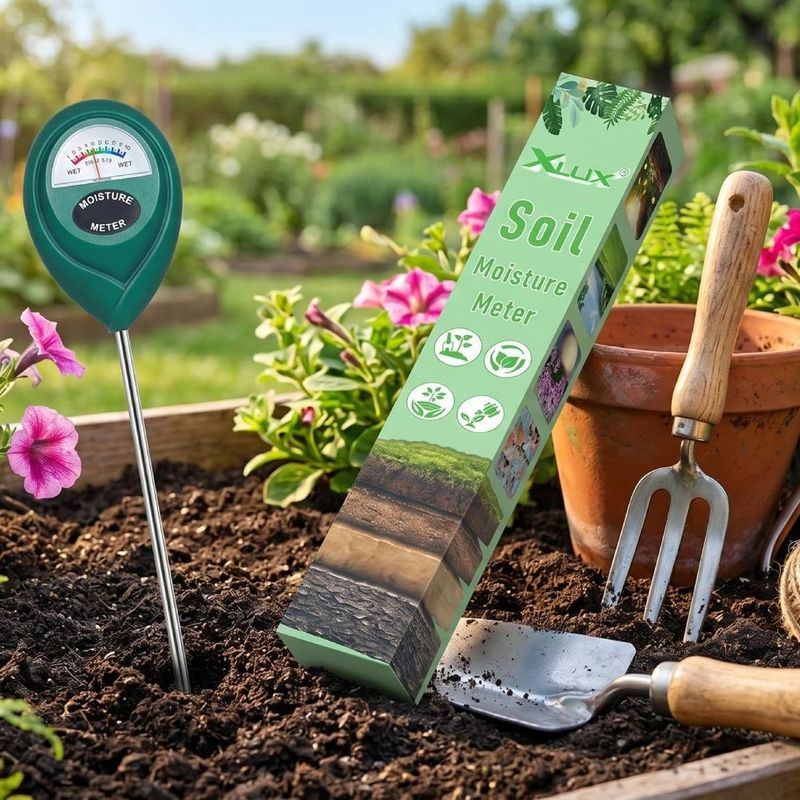
Surface soil can feel dry to the touch within an hour of a light rain or a shallow sprinkle, while the root zone a few inches below remains adequately moist. Trusting the surface alone leads to overwatering, which can be just as damaging as drought.
A quick check below the surface gives you real information before you commit to turning on the hose.
For an established in-ground hydrangea, push a finger, a wooden dowel, or a screwdriver several inches into the soil near the drip line – roughly 6 inches is a practical starting benchmark. UGA Extension’s heat-wave watering guidance describes dry, powdery soil at that depth as a clear signal to water, while soil that still feels cool and slightly moist at the same depth suggests waiting.
The difference between those two textures is easy to feel once you start checking regularly.
Adjust that benchmark for your situation. Containers dry out much faster than in-ground shrubs and may need a check at 2-3 inches rather than 6.
Texas A&M AgriLife Extension points out that watering needs cannot be determined by schedule alone because they vary with container size, soil type, temperature, humidity, and wind. Newly planted shrubs have small root zones that dry faster than those of established plants, so they need more frequent checks.
Sandy Florida soils drain and dry quickly, while heavy clay soils in parts of Georgia and Texas hold moisture longer – both situations call for direct inspection rather than a fixed watering day. Principles of irrigation management from Texas A&M emphasize adapting frequency to the specific plant, soil, and environment rather than applying a universal interval.
Water a Dry Root Zone Slowly and Thoroughly
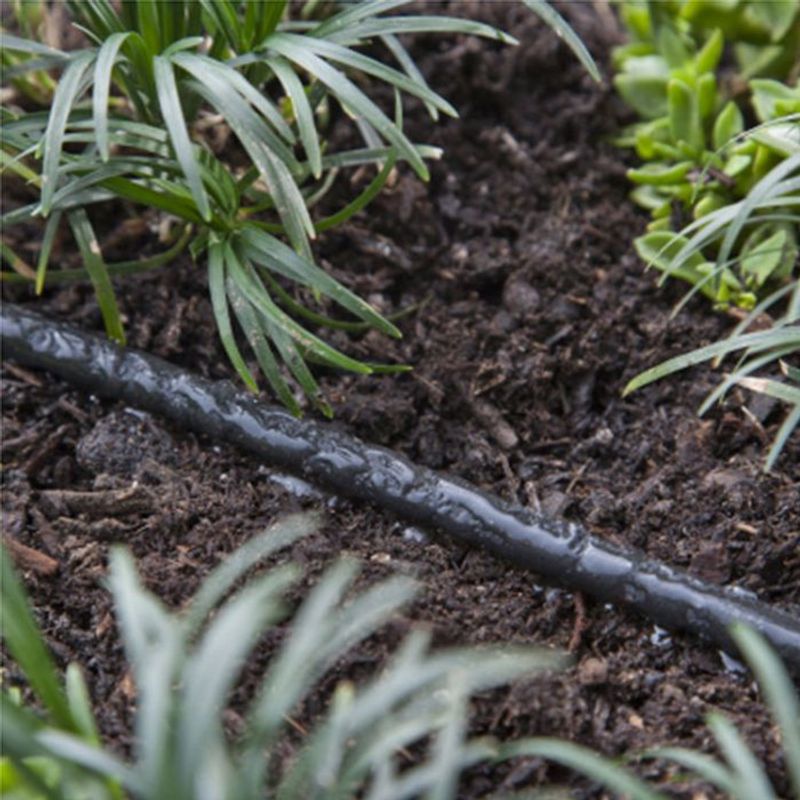
Once the soil check confirms the root zone is genuinely dry, the next step is getting water there slowly and completely – not just wetting the top inch or two. Shallow, quick applications encourage roots to stay near the surface, where they are most vulnerable to heat and drought.
A slow, deep soak draws roots downward into more stable soil and sets the plant up to handle the next hot stretch better.
Drip irrigation, a soaker hose laid around the drip line, or a slow hand application with a hose wand at the soil surface are all effective approaches. UGA’s bigleaf hydrangea growing guide recommends moist, well-drained soil and watering when the plant begins to wilt in the absence of rainfall, while UGA’s heat-wave watering guidance cautions against light watering that only penetrates the top layer.
Aim to moisten the active root zone rather than simply darkening the surface.
Organic mulch – pine straw, shredded bark, or wood chips – applied 3 to 5 inches deep over the root zone can slow evaporation and moderate soil temperature between watering sessions. Oklahoma State Extension’s water conservation guidance supports mulch as a practical way to reduce moisture loss from the soil surface.
Keep the mulch pulled back several inches from the stem to avoid trapping moisture against the crown. Deep watering is the right response to confirmed dry soil – it does not fix waterlogged roots, poor drainage, or every other cause of wilting, so apply it only when the soil check shows the plant actually needs it.
Match Watering Timing to the Irrigation Method
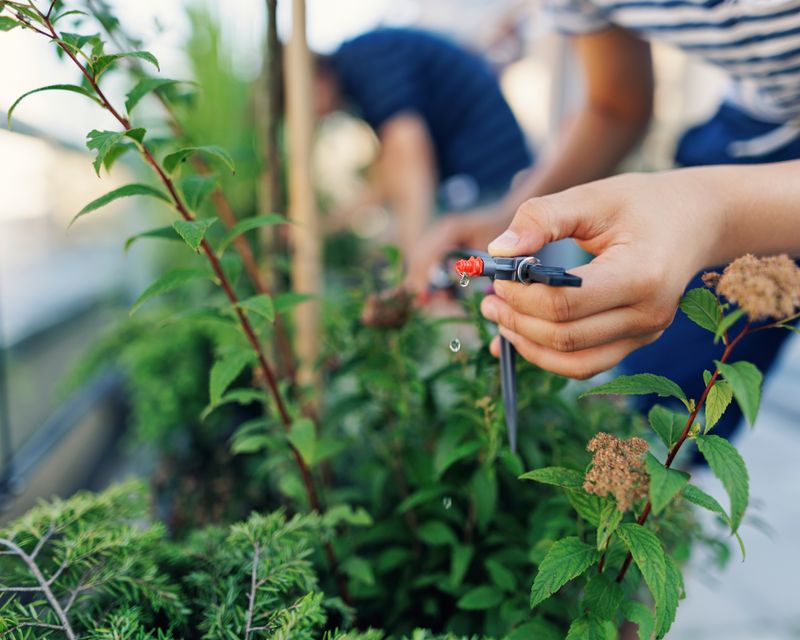
Overhead sprinklers and drip irrigation are not interchangeable when it comes to timing. Routine overhead watering – the kind that wets leaves, flowers, and stems along with the soil – leaves foliage damp for extended periods, which can create more favorable conditions for certain fungal and bacterial diseases.
Mississippi State University Extension’s plant disease and watering guidance recommends avoiding unnecessary extension of leaf wetness as a way to reduce disease-favoring conditions.
Drip lines, soaker hoses, and careful hand watering at the soil line sidestep that concern almost entirely because water goes directly to the root zone without touching the foliage. Clemson Cooperative Extension’s irrigation timing factsheet notes that routine over-irrigation is a more significant disease-risk factor than time of day alone.
When you water at the root zone rather than overhead, the timing window becomes more flexible.
Morning watering is still the preferred default for routine landscape irrigation because it reduces evaporation and gives any incidental foliage wetness time to dry before nightfall. That said, morning watering cannot guarantee disease prevention – risk also depends on the specific pathogen, plant density, weather, and how long leaves stay wet.
UGA’s irrigation and plant health guidance clarifies that irrigation delivered from 9 p.m. to 9 a.m. does not automatically increase disease problems when water is applied at the soil level rather than overhead. Choose the method first, then let the method guide how closely you need to watch the clock.
Persistent Wilting Calls for a Different Diagnosis
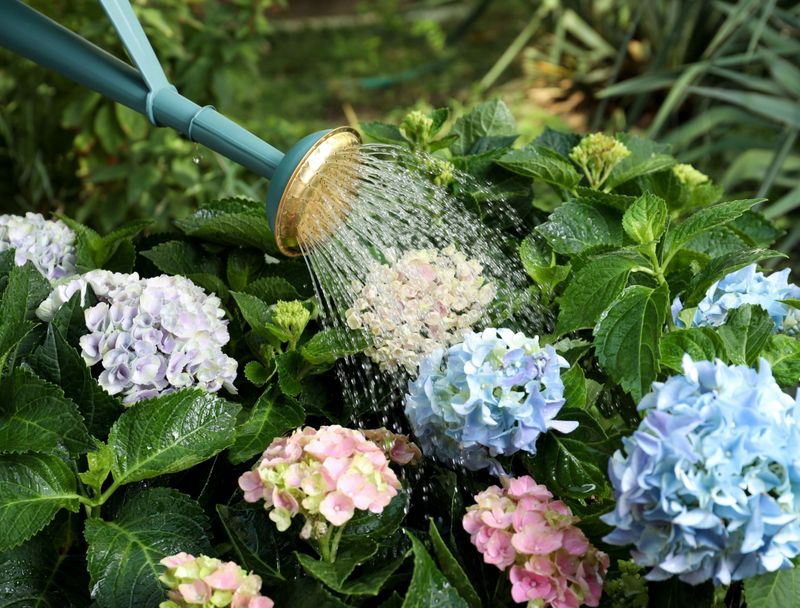
A hydrangea that stays wilted despite regular watering – or one that wilts even when the soil feels wet – is telling you the problem is not a simple lack of water. Soggy soil reduces the oxygen available to roots, and roots deprived of oxygen struggle to absorb water even when it surrounds them.
University of Arizona Extension’s overwatering reference describes how overwatered plants can show wilting and yellowing that closely mimics drought stress, making the two easy to confuse without a soil check.
Heat load, strong afternoon sun, and wind are equally common culprits that have nothing to do with the water supply. UGA’s bigleaf hydrangea guide recommends morning sun with afternoon shade and warns against planting in hot, dry, exposed locations – advice that applies directly to Southern gardens where west-facing beds can see brutal afternoon exposure.
A plant placed in full sun in central Florida or a windy Texas border may wilt reliably every afternoon regardless of how well it is watered.
Transplant stress, compacted soil, root injury from nearby digging, and certain soil-borne diseases can also interrupt water uptake and produce persistent wilting. UGA’s heat-wave plant care guidance and UGA’s Goldilocks watering discussion both emphasize that adding more water is not a safe default response when the root zone is already moist.
Newly planted hydrangeas and container-grown specimens are especially vulnerable because their limited root systems have not yet established the reach needed to buffer against heat or drainage problems. Check the soil, examine the site, and consider the plant’s age and recent history before concluding the problem is underwatering.
Adapt the Routine to Your Hydrangea and Southern Site
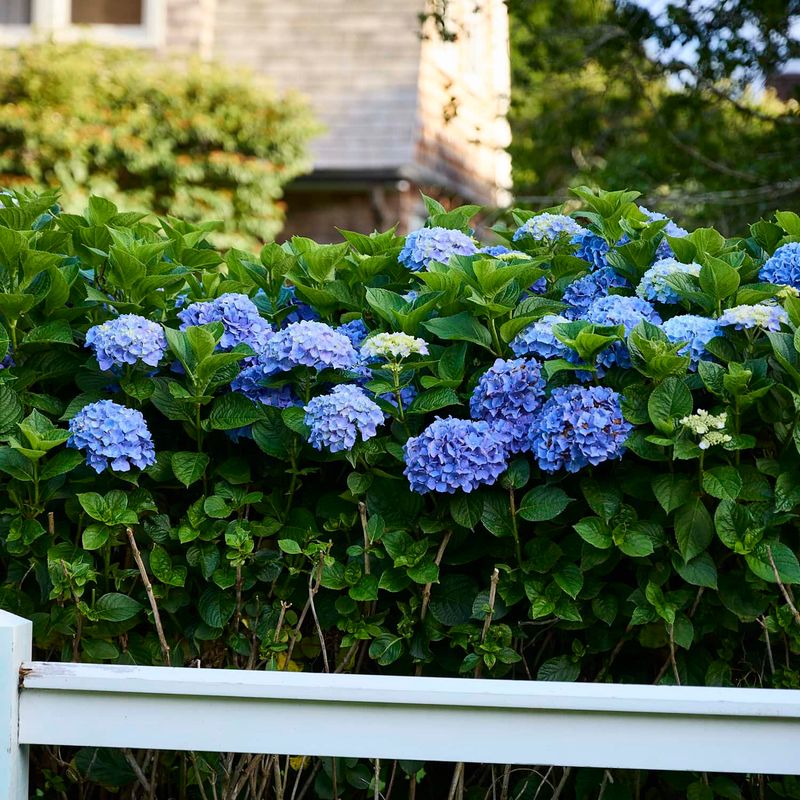
Bigleaf hydrangea, Hydrangea macrophylla, is the variety most Southern gardeners picture when they think of hydrangeas, and it has a relatively high water requirement compared with other types. UGA’s bigleaf hydrangea publication describes its preference for moist, well-drained soil and afternoon shade – conditions that are genuinely challenging in full-sun Southern landscapes.
Panicle hydrangeas tolerate more sun and heat, oakleaf hydrangeas handle drought better once established, and smooth hydrangeas are similarly more adaptable than bigleaf types.
UGA Extension’s hydrangea overview notes that matching the variety to the site conditions matters as much as any watering routine. Applying bigleaf hydrangea care guidelines to a panicle or oakleaf hydrangea can lead to overwatering, since those types have different thresholds.
Florida’s sandy soils drain fast and dry out quickly, requiring more frequent checks even for drought-tolerant varieties. Heavy clay soils in parts of Georgia and east Texas hold water much longer, and adding more water to already-saturated clay can suffocate roots.
Containers dry faster than in-ground beds and may need checking every day or two during a heat wave. Texas A&M’s irrigation management principles stress that no single schedule works across different plants, containers, soils, and climates.
UGA’s landscape basics guide reinforces adjusting frequency to soil texture, drainage, rainfall, and local heat rather than following a universal interval. Let the soil moisture and the plant’s morning condition guide how often you water, not the calendar.
Use This Soil-First Response to Afternoon Wilting
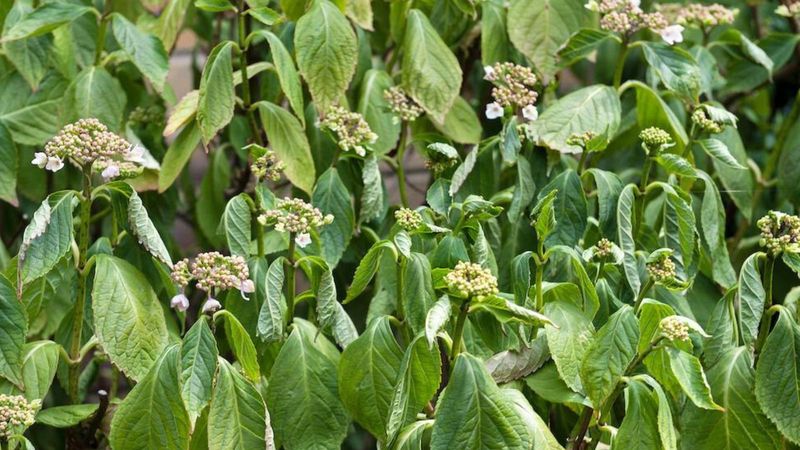
When your hydrangea droops in the afternoon, start with the soil before reaching for the hose. Push a finger or probe several inches into the root zone.
If the soil is dry and powdery at that depth, water slowly at the soil line until the root zone is thoroughly moistened – and schedule your next routine session for early morning when evaporation is lower. UGA Extension’s heat-wave watering guidance supports this soil-check-first approach as the safest way to avoid both underwatering and overwatering during hot spells.
If the soil still feels moist, hold off and watch what happens overnight. A plant that recovers by morning was likely reacting to heat and transpiration load, not a water shortage.
Reassess the site for afternoon shade, wind exposure, drainage, plant age, and hydrangea variety before deciding whether a change in watering is even the right solution. UGA’s landscape best management practices and University of Arizona’s shrub watering guidance both point toward soil condition and plant recovery as the most reliable guides.
Changing how you respond to afternoon droop – checking the soil first instead of watering automatically – prevents unnecessary water from going into an already moist root zone without ever leaving a genuinely thirsty plant to struggle. The hose is still the right answer when the soil is dry; the soil check is simply what tells you which situation you’re actually dealing with.