
If your irises gave you lots of leaves but only a few flowers last spring, you are not alone. Many Southern gardeners see clumps that look healthy yet barely bloom.
The good news is that two simple fall chores can make a big difference before next season. Spend an afternoon on them now, and your beds may reward you with a much better show.
1. Divide and Replant Crowded Clumps
Picture a clump of bearded irises that once bloomed like crazy and now sends up only a stalk or two. Nothing is wrong with the plant itself.
It has simply run out of elbow room.
Iris rhizomes multiply every year, and after three to five seasons they pile on top of each other. Crowded roots compete for water and food, and the older center pieces often stop flowering altogether.
In Florida and Texas, fall is a smart time to divide, since cooler nights give new roots a chance to settle in before spring.
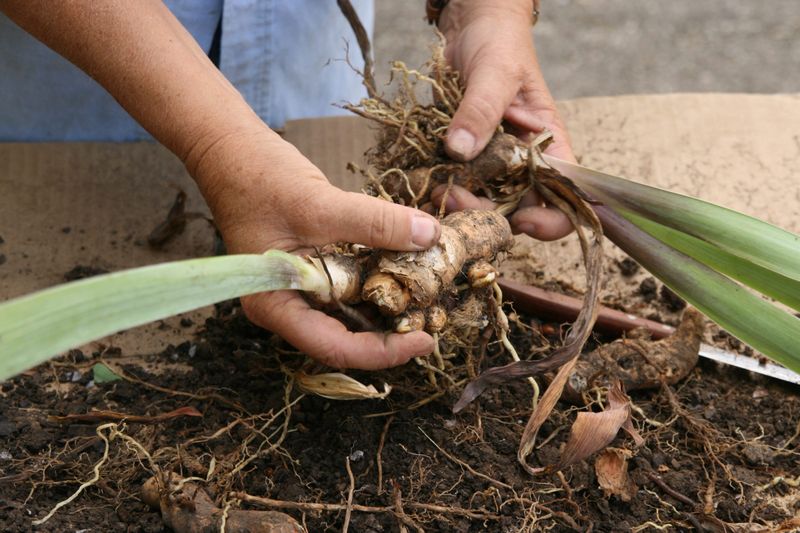
Here is how to do it. Dig up the whole clump with a garden fork, then shake off the soil.
Cut the rhizomes apart with a clean knife, keeping pieces that have healthy leaves and firm, plump flesh. Toss any parts that feel soft or smell bad, since that may signal rot.
Trim the leaves to about six inches tall in a fan shape. Replant each piece about 12 to 18 inches apart, with the top of the rhizome just peeking above the soil.
Planting too deep is a common reason irises skip blooming, especially in heavy Southern clay. Water once to settle them, then let nature take over.
2. Clean Up Old Foliage and Debris
Ever notice brown, floppy leaves piled around your irises by October? That messy look is more than a cosmetic issue.
Old foliage can hide pests and disease that wait quietly until spring.
Iris borers are a big one. Adult moths often lay eggs on dead leaves in fall, and the larvae tunnel into rhizomes later.
Bacterial soft rot also likes damp, cluttered beds, which happen a lot in humid Southern weather. Clearing debris can reduce both problems, though it will not promise a pest-free year.
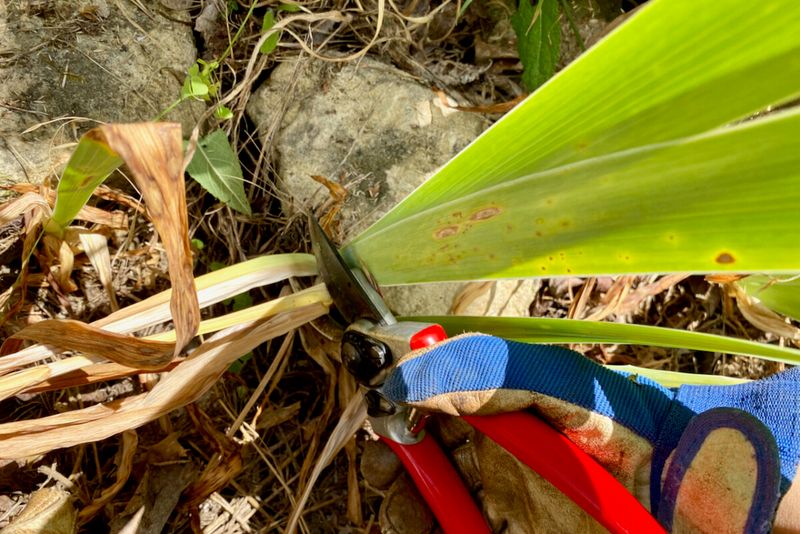
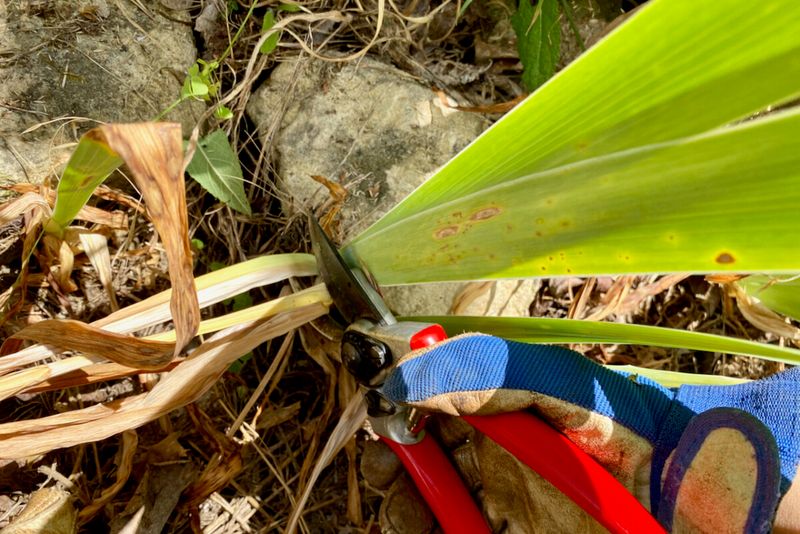
Grab your pruners and remove any brown, spotted, or yellow leaves at the base. Cut healthy green fans back to a few inches so air can move freely.
Rake out fallen leaves, weeds, and thick mulch sitting on the rhizomes. Irises like their tops to feel the sun, and that warmth often helps set next year’s flower buds.
Bag the trimmings instead of composting them, since eggs and bacteria may survive in a home pile. If you spot slimy, smelly rhizomes, cut out the bad part and let the cut dry in the sun.
A clean, airy bed gives your plants a fresh start and a much better shot at a colorful spring.