
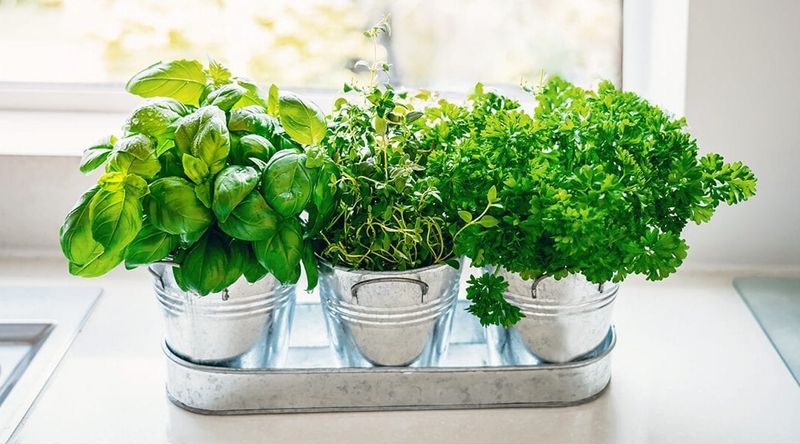
Fresh parsley is hard to replace once the garden slows down in winter. Digging up a plant and moving it indoors is one way to stretch your harvest a little longer.
It takes some care, because parsley does not like to be moved. Here is a realistic, step-by-step way to try it, along with what to expect.
Potting parsley is an option, not a frost emergency
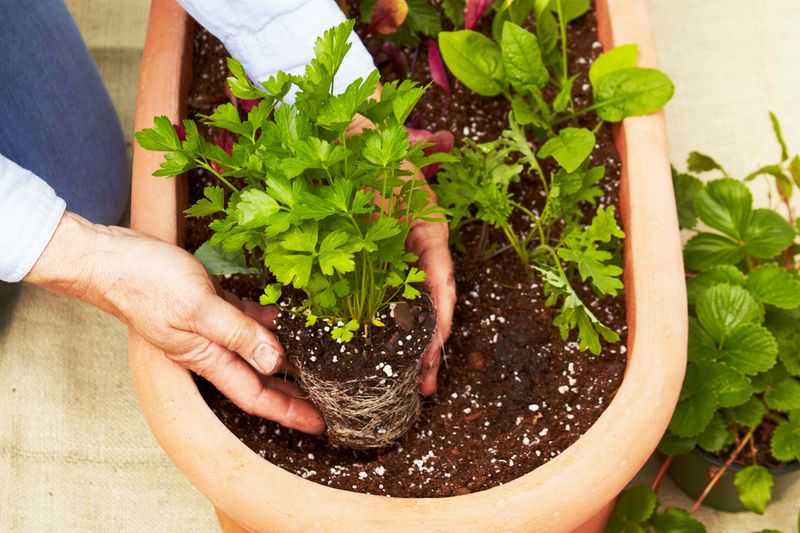
Plenty of gardeners hear that parsley must come inside before the first frost. That is not a rule.
University of Arkansas guidance describes parsley as cold-hardy and able to overwinter, and Illinois Extension says it can overwinter outdoors too.
So why pot it at all? Digging a plant in fall and growing it indoors is a way to try to extend your harvest.
Illinois Extension recommends this approach, and Texas A&M AgriLife lists parsley among herbs suited to winter pot culture.
Your location matters a lot. Parsley is a cool-season crop in North Florida, and many Texas yards have mild winters, so a plant left in the ground may do fine.
If your beds get hard freezes, or you simply want leaves within arm’s reach of the stove, potting is worth a try. Just know that not every plant will cope with the move, and not every window will support winter growth.
Protect the taproot when you dig
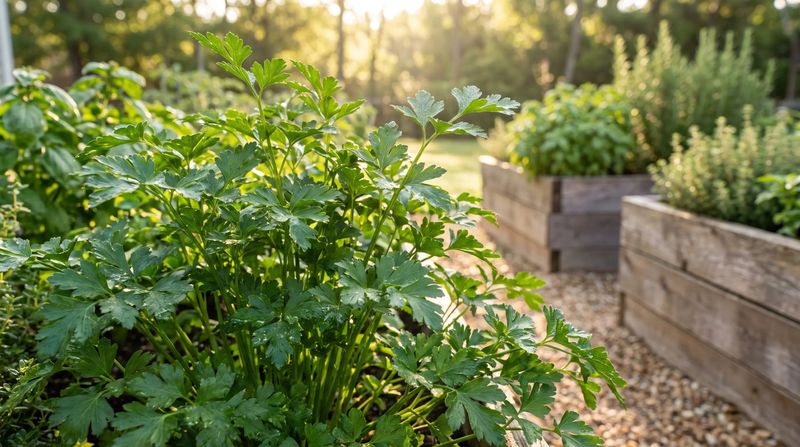
Parsley grows a long taproot, and that root is the reason it sulks when moved. Extension guidance notes that parsley is relatively hard to transplant, so treat this step as the delicate one.
Water the plant the day before so the soil holds together. Push a trowel or spade into the ground well away from the stem, and dig a wide circle rather than a tight one.
Work your way deeper, then lift the plant with as much soil around the roots as you can manage.
Skip any yanking, twisting, or prying. A bent or snapped root can set the plant back or finish it off.
If the root looks very long, dig deeper before lifting rather than cutting it short.
Choose a younger, healthy plant with fresh green leaves if you have several. Even with good technique, some plants will wilt or fail, so digging two or three gives you better odds than betting on one.
Keep the roots shaded and moist until the plant is potted.
Choose a pot that fits the root
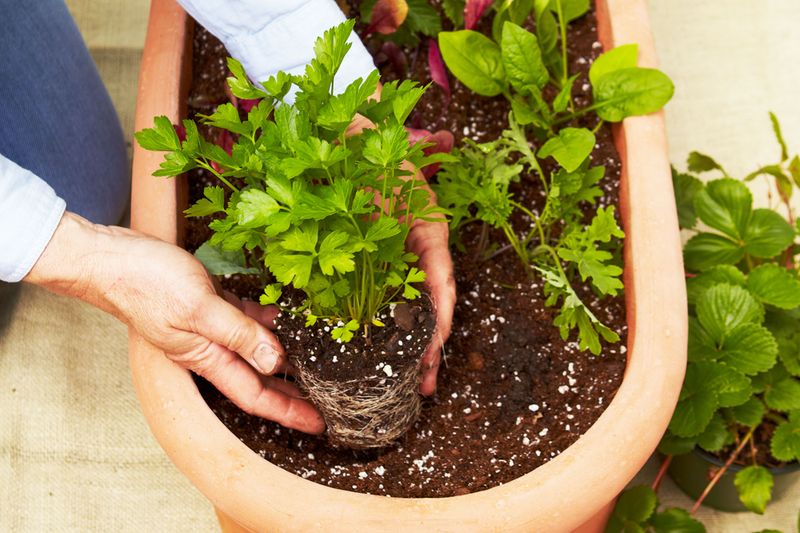
Once the plant is out of the ground, the pot decides how well that root settles in. Illinois Extension’s indoor herb advice calls for a clean container with drainage holes and prepared potting mix.
Pick a pot deep enough that the taproot can hang straight down. If the root has to curl or fold at the bottom, it can be damaged.
A pot with a width of about eight to ten inches usually gives the leaves room too.
Leave garden soil in the garden. It tends to pack down in containers, drain poorly, and may carry pests or weed seeds.
Fill the pot partway with potting mix, set the plant at the same depth it grew outdoors, and add mix around the sides.
Water it in slowly until water runs out the bottom, then empty the saucer. Soggy roots are a common reason transplanted parsley fades, so go easy on watering afterward.
Inspect the plant before it joins your houseplants
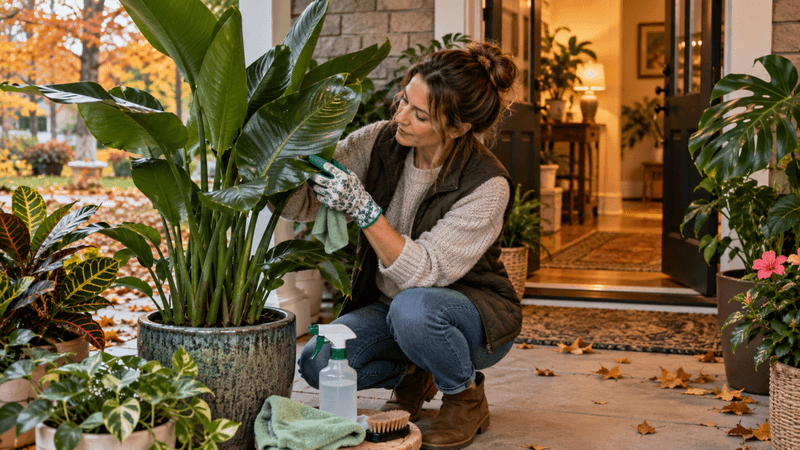
Garden plants can carry hitchhikers like aphids, mites, and scale. A little checking before the move helps.
Iowa State Extension suggests inspecting plants and pots before they come in.
Turn leaves over and look along the stems for tiny insects, sticky residue, or webbing. Check the pot’s rim and drainage holes as well.
Then rinse the foliage outdoors with a gentle spray of water, which may wash off some pests.
Rinsing does not guarantee a clean plant, so add one more step. Keep the parsley away from your other houseplants for several weeks and check it often.
A spare windowsill in another room works well.
If you spot insects during that time, rinse again and keep the plant separate a while longer. Because you plan to eat this herb, avoid reaching for strong sprays without reading the label closely.
Patience and regular checks go a long way here.
Give parsley a cool, bright indoor location
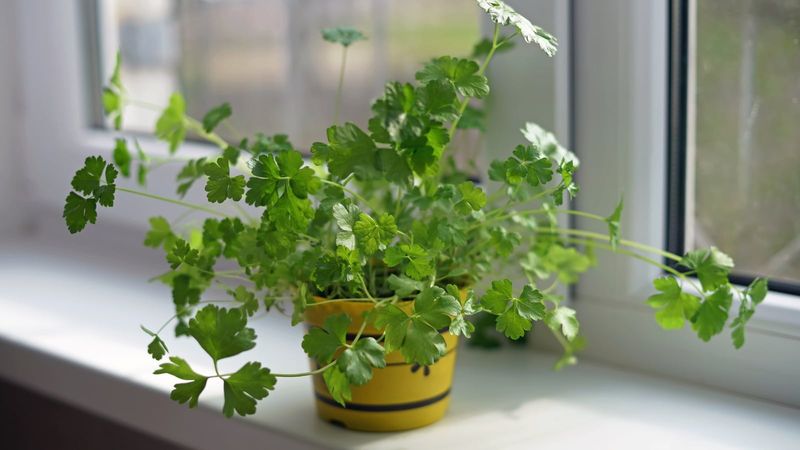
Light is where most indoor parsley stories succeed or stall. Illinois Extension says potted parsley does best with high light and a cool growing spot.
A window that looks sunny may fall short. Winter sun is weaker and lower, and trees, eaves, or double panes can cut it further.
The general rule for indoor herbs is about six hours of direct sun, and Illinois Extension’s herb guide notes a grow light may be needed when a window does not supply that.
Watch the plant for clues. Long, floppy stems and pale leaves usually mean it wants more light.
A small LED grow light set a few inches above the plant for several hours a day can help.
Keep it away from heating vents and warm appliances. A cooler room, like a sunroom or a window with a bit of chill, suits parsley better than a hot kitchen.
No window is guaranteed to carry it through winter, so adjust as you learn how the plant responds.
Harvest at the base and expect slower growth
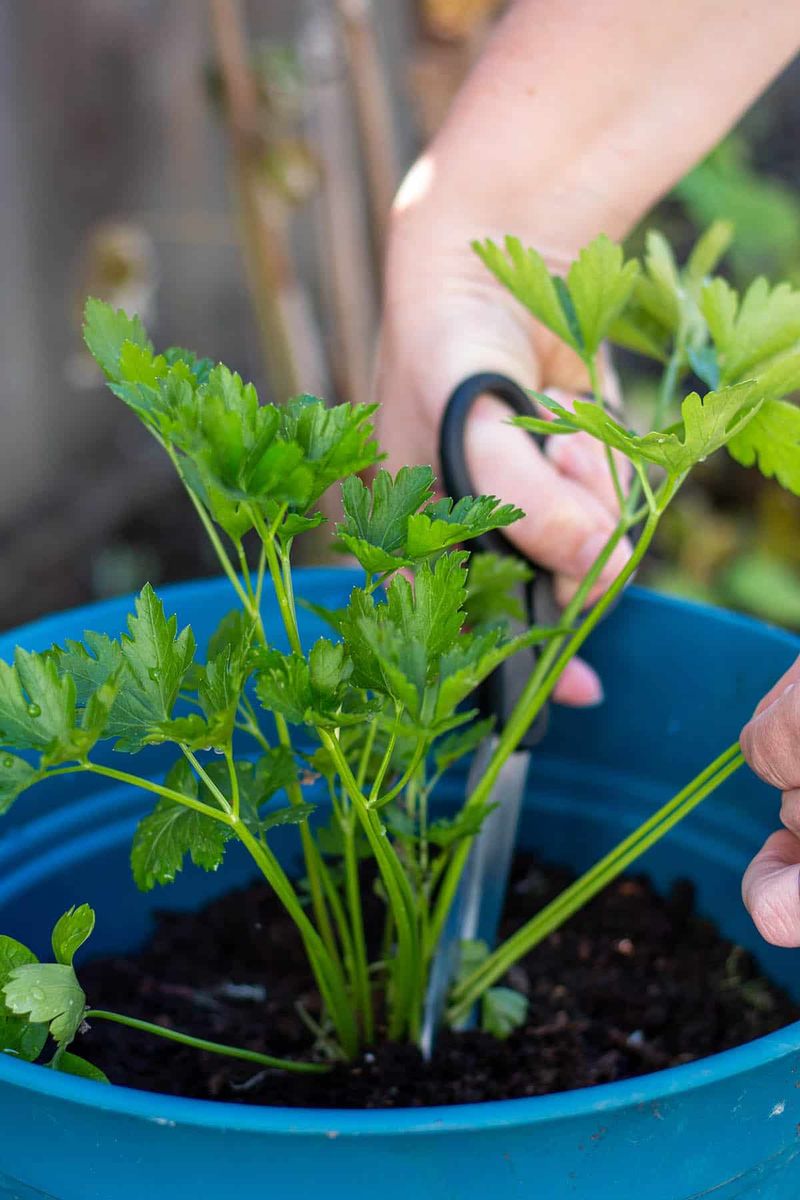
When it is time to pick, cut whole stalks near the base instead of trimming leaf tips. Illinois Extension recommends harvesting parsley stalks at the base.
Choose the outer stalks first and leave the center growth to keep producing.
Go lightly at first. A plant that was just moved is busy rebuilding roots, and it may drop a few leaves or sit still for a couple of weeks.
That pause is common and does not always mean failure.
Indoor growth is usually slower than summer growth, even when light and temperature are good. Think of this as a small supply for garnishes and soups rather than a steady, heavy harvest.
Water when the top inch of mix feels dry, and use a mild fertilizer sparingly if growth looks pale. If new leaves keep appearing, you are doing well.
If the plant sits quietly, give it time and more light before giving up on it.
An indoor winter harvest has a natural limit
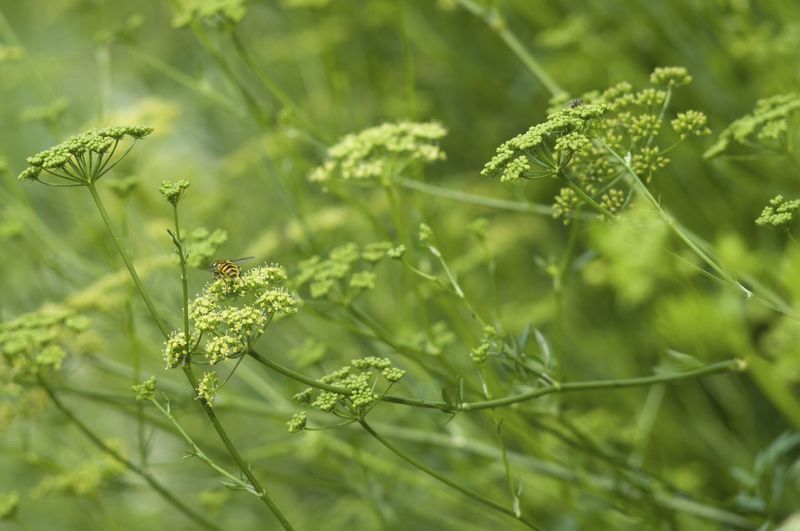
Parsley is a biennial, which means it grows leaves in year one and flowers in year two. Illinois Extension explains that an overwintered plant may send up a seed stalk in its second season, and its leaves can turn tough and bitter.
Once that happens, flavor usually does not recover.
That is why a potted plant is a bridge, not a permanent supply. It can stretch your harvest through part of winter, but it will not stay tender forever.
The same guidance advises starting new garden plants in spring.
Your local winter matters for the whole plan. A Florida gardener with mild weather, a Texas gardener facing a hard freeze, and someone in a cooler part of the South may all choose differently.
Some will leave parsley in the ground, and some will pot it up.
Pot a plant if it suits your yard and window, and plant fresh seedlings when spring returns. A pot of parsley is a nice winter bonus, not a promise.