
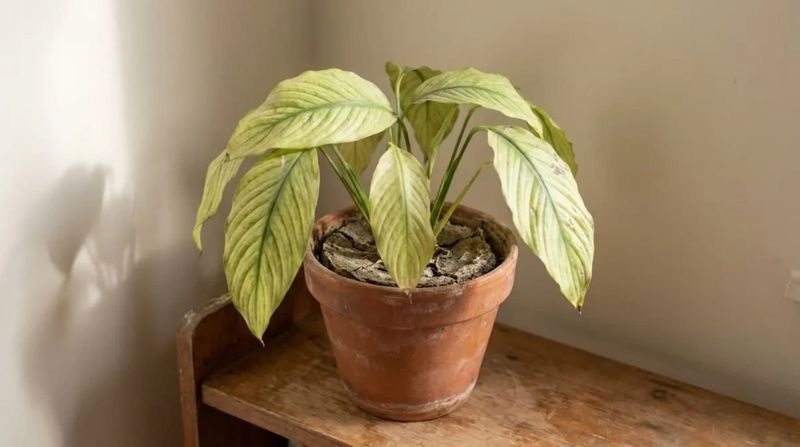
A peace lily that grows lush, dark-green leaves but never produces a single white bloom can leave you wondering what you are doing wrong. The good news is that a flowerless plant is not necessarily a failing one, and the explanation is usually something you can actually change.
Insufficient light is one of the most common reasons these plants skip flowering, but it is rarely the only possibility. Understanding what your plant actually needs, rather than chasing a quick fix, is the most useful place to start.
A leafy peace lily can still lack the light needed to bloom
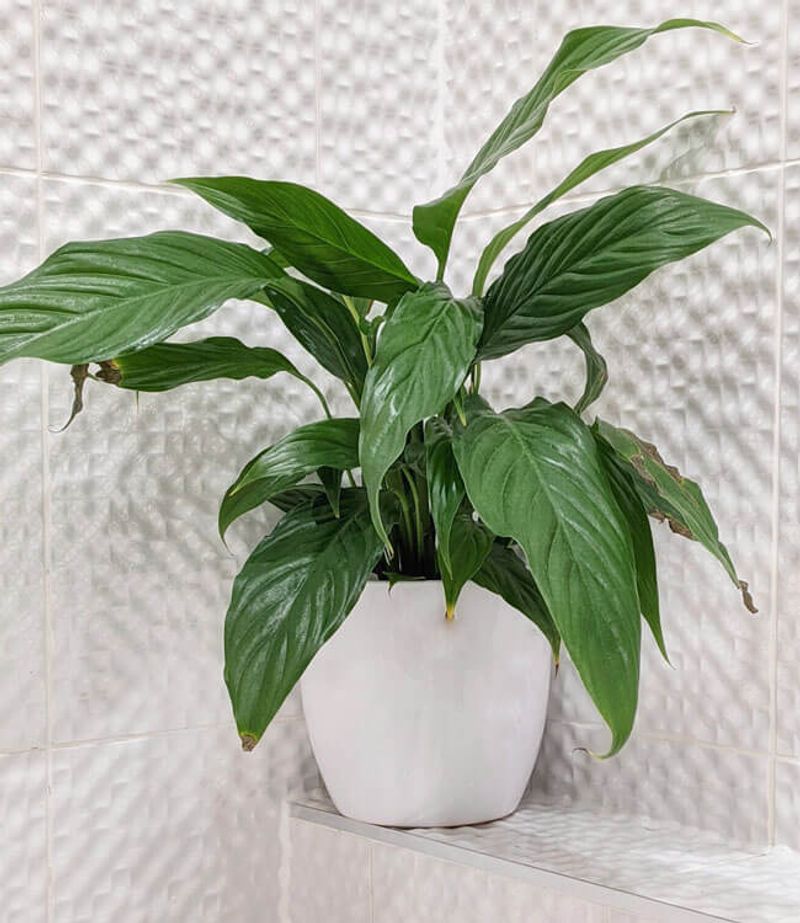
A peace lily with full, glossy leaves looks healthy, and in most ways it is. Lush foliage means the plant is surviving and photosynthesizing well enough to sustain itself.
What it does not tell you is whether the plant is receiving enough light energy to support flowering, because those are two different thresholds.
Insufficient light is a common reason a peace lily skips flowering, and it is a sensible first condition to check. Clemson Extension specifically identifies insufficient light as a common cause of missing flowers, while Iowa State Extension describes peace lilies as low-light tolerant but notes they flower best in indirect sunlight.
The plant can keep its leaves going in dim conditions long after it has stopped having enough energy reserves to push out a bloom.
That said, light is not the only factor worth examining. UF/IFAS research and related UF/IFAS production studies confirm that cultivar genetics, plant maturity, season, temperature, moisture, and nutrition all influence flowering.
A plant sitting in the right light but at the wrong stage of maturity, or during a seasonal lull, may still hold off on blooms. Checking light first makes sense, but a full picture requires looking at the other conditions too.
Why low light can preserve leaves without supporting flowers
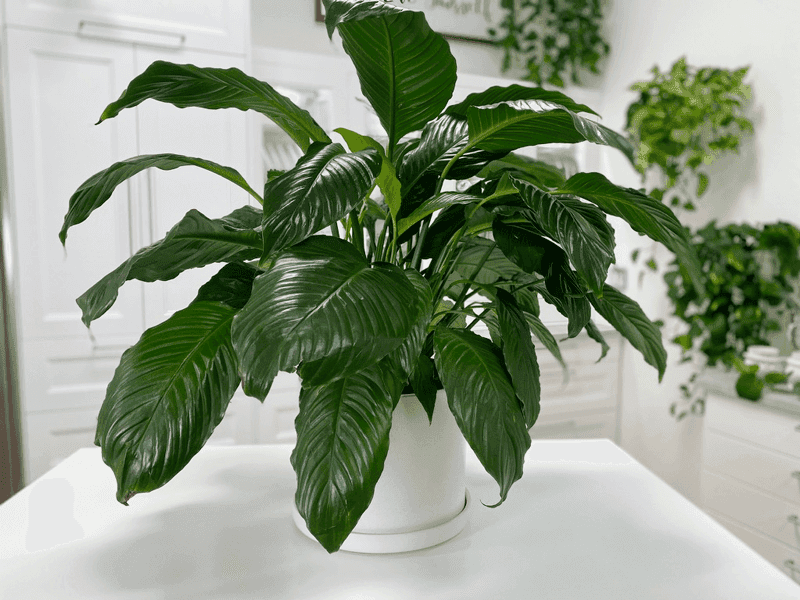
Plants use light as fuel, and different tasks require different amounts of that fuel. Keeping existing leaves alive and green is a relatively low-energy job.
Producing a flower, on the other hand, takes considerably more. A peace lily sitting in a dim room may have just enough light to maintain its foliage while running short of what flowering demands.
Arkansas Cooperative Extension makes this distinction clearly, noting that peace lilies can survive at approximately 20 foot-candles but at such low levels will probably not flower. Survival and reliable flowering are not the same benchmark.
Oklahoma State Extension lists peace lily among low-to-medium-light plants needing roughly 150 to 500 foot-candles, though these figures work best as rough diagnostic references rather than guaranteed bloom thresholds.
A room that feels bright to your eyes can still be surprisingly dim by plant standards. Windows filtered by trees, neighboring buildings, or overhangs reduce actual light levels significantly.
Oregon State Extension guidance on environmental factors affecting plant growth reinforces that light quantity and quality both shape what a plant can accomplish, and that more light does not automatically equal more flowers, since other variables interact with light to determine flowering outcomes. The takeaway is not that you need to flood the plant with sunshine, but that a genuinely useful level of indirect daylight is different from a dim corner.
Try brighter indirect light before reaching for a bloom remedy
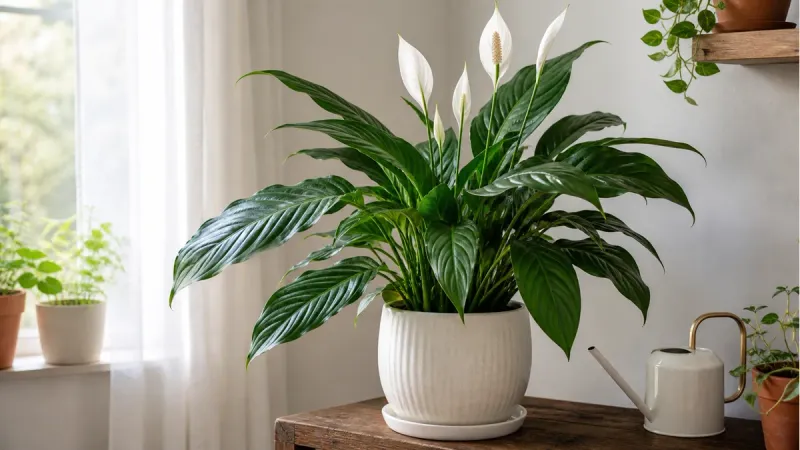
Moving the plant toward better light is the most straightforward first step, and it does not require a dramatic relocation. A spot near a bright window covered by a sheer curtain, or a position just beside a well-lit window rather than directly in its beam, gives the plant useful filtered light without the risks that come with direct sun exposure.
UF/IFAS home-cultivation guidance recommends bright, indirect light and specifically says no direct sun. That guidance matters especially for readers in Florida and Texas, where afternoon sun through south- or west-facing glass can be intense enough to scorch peace lily foliage quickly.
UF/IFAS commercial production research confirms that excessive light combined with high temperatures can burn leaves, which means a sunny patio or a south-facing windowsill without any filtering is not the right destination.
If the plant has been living in a dim room for a while, move it gradually over a week or two rather than all at once. A sudden shift from low indoor light to a much brighter position can stress the foliage even if the new light level is technically appropriate.
When natural light is simply not available in enough quantity, Oklahoma State Extension notes that supplemental grow lighting can support plants when rooms lack adequate natural light, though the fixture needs to provide genuinely useful plant light rather than ordinary ambient room illumination. Better light improves the conditions for flowering, but it does not guarantee a bloom on any particular schedule.
Check the plant’s age, cultivar, and season
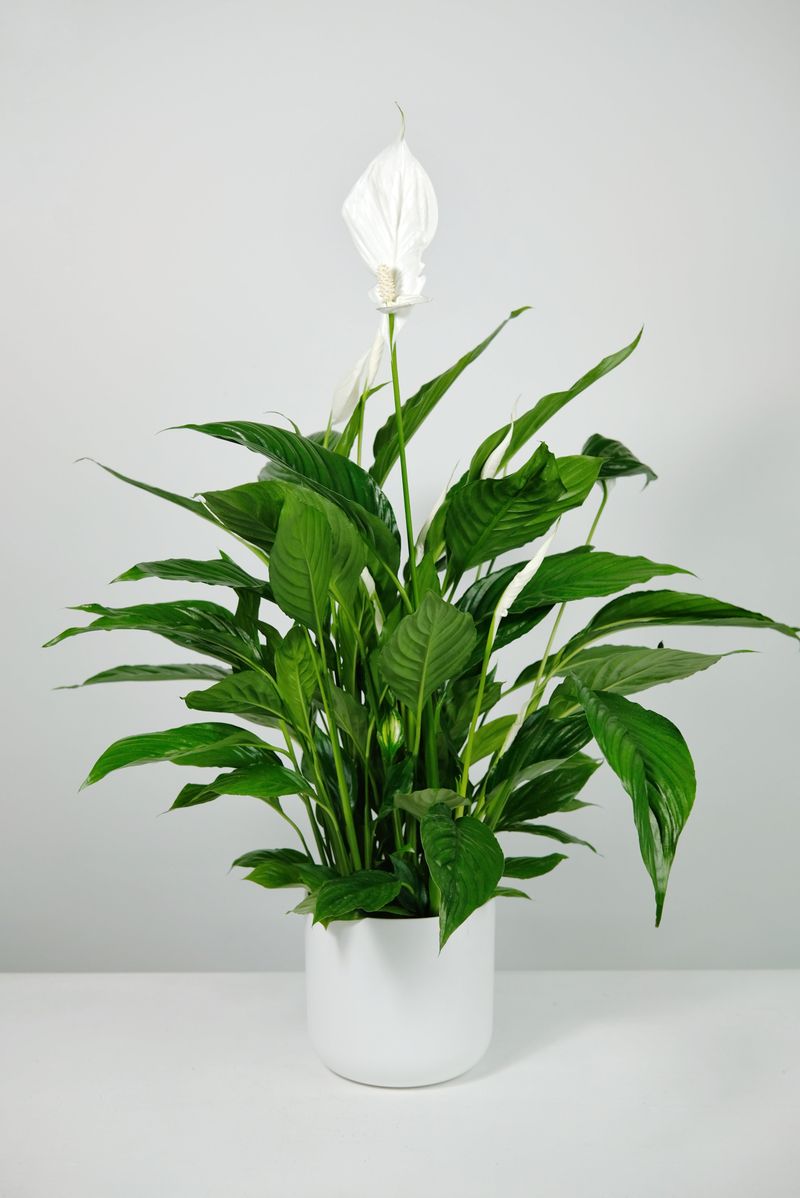
Sometimes a peace lily is doing everything right and still not blooming, simply because the timing is not there yet. Plant age matters more than many growers realize.
Young peace lilies often need to reach a certain level of maturity before they have the resources to flower, and a plant that arrived at the nursery recently may just need more time regardless of how good its care is.
Cultivar differences add another layer. UF/IFAS research on Spathiphyllum cultivars documents that different varieties have distinct flowering responses, and some are more reliably seasonal than others.
UF/IFAS production studies and the full EP320 production guide identify age-dependent, season-and-age-dependent, and multi-seasonal flowering types among commercial cultivars. One production reference notes that plants grown for roughly 9 to 15 months in controlled greenhouse conditions commonly bloom between February and April depending on winter temperatures.
That is a commercial observation, not a universal schedule for a plant living on your windowsill, but it does illustrate that flowering timing is built into the plant’s genetics and growth stage.
Additional UF/IFAS guidance and RHS peace lily growing advice both note that many cultivars flower most reliably in spring and summer, with some producing a second flush in autumn. A plant that has not bloomed during the quieter winter months may simply be following a normal seasonal rhythm rather than signaling a care problem.
Correct moisture, temperature, and feeding problems
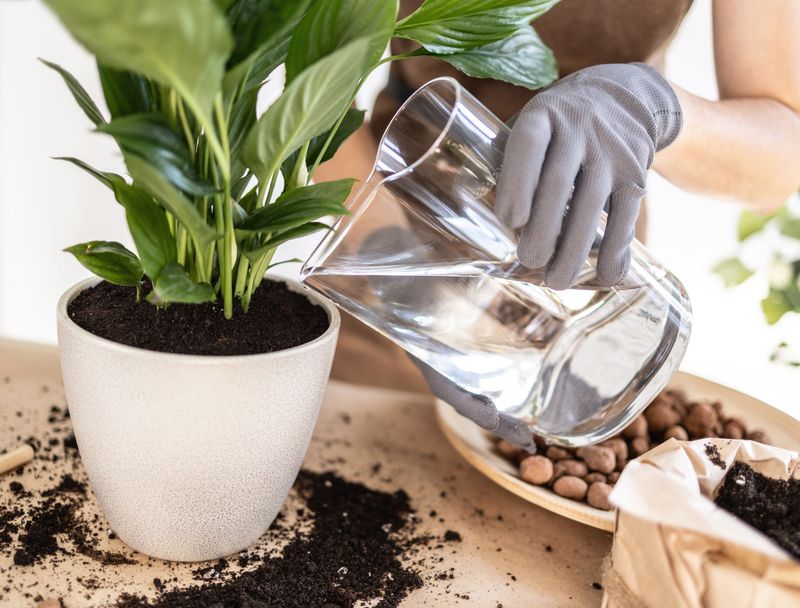
Once you have addressed light and ruled out timing issues, a secondary check of moisture, temperature, and feeding is worth doing. These factors rarely cause a healthy, well-lit peace lily to skip flowering on their own, but they can compound a light problem or create enough stress to delay blooms even when other conditions are reasonable.
Keep the potting mix moist but not saturated. Clemson Extension and NC State Extension both warn against allowing the plant to sit in standing water, since waterlogged roots can deteriorate quickly.
At the same time, letting the mix dry out severely causes wilting and leaf damage that redirects the plant’s energy away from any potential flowering. UF/IFAS home guidance reinforces the same principle: consistent, moderate moisture without excess.
Temperature stability matters too. Clemson recommends daytime temperatures of 68 to 85 degrees Fahrenheit and cautions against exposing the plant to temperatures below 60 degrees.
UF/IFAS production research documents chilling injury and delayed growth at significantly cooler temperatures. Keep the plant away from cold drafts near doors and windows, and away from both heating and air-conditioning vents, which create temperature swings and dry the air around the foliage.
For feeding, Clemson recommends a diluted balanced liquid fertilizer at about one-quarter strength every six to eight weeks during spring and summer. Penn State Extension cautions that excess fertilizer can burn roots and stress plants rather than help them.
Fertilizer is not the first-line fix for a non-flowering plant, especially one that is otherwise healthy.
Skip the popular fixes that can mislead or harm
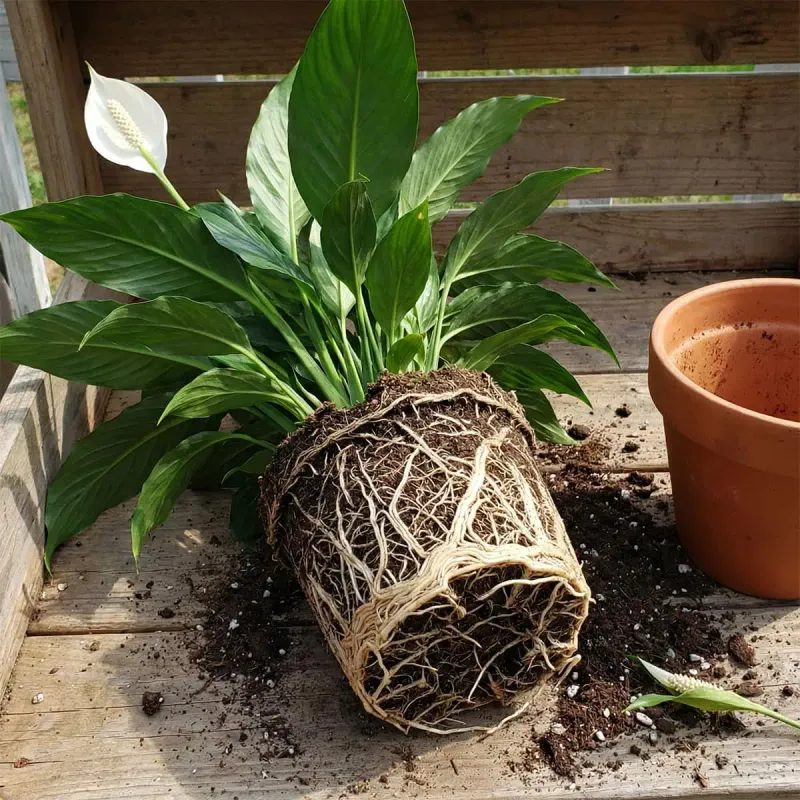
A number of popular peace lily bloom tips circulate online, and several of them are either unsupported by evidence or actively risky. Sorting out which ones to skip can save you from accidentally stressing a plant that was already on the right track.
The idea that peace lilies need a special dark-night treatment to trigger flowering does not hold up well. UF/IFAS production research and the full EP320 guide document complex, cultivar-specific flowering responses that involve interactions among photoperiod, light intensity, temperature, and plant age.
No single confirmed darkness treatment works reliably across cultivars as a home remedy. Similarly, applying a high-phosphorus bloom booster is not a safe universal fix.
Penn State Extension warns against adding nutrients without evidence of a deficiency, and the reviewed sources support balanced, diluted feeding rather than phosphorus-heavy products.
Gibberellic acid is sometimes mentioned as a flowering trigger. UF/IFAS cultivar research describes it as a commercial tool but also notes it can produce distorted flowers, stretched plants, and narrowed foliage.
It is not appropriate as a casual home treatment. Routine repotting as a bloom remedy is also questionable.
NC State Extension and Clemson Extension both indicate that peace lilies tolerate being somewhat pot-bound and should be repotted when necessary, not as a reflexive trigger for flowering. Oversized containers hold excess moisture and raise the risk of root rot.
The safer sequence is: verify useful indirect light, account for cultivar and plant age, check moisture and temperature stability, and feed modestly during active growth.
Use a patient, safe sequence for the next few weeks
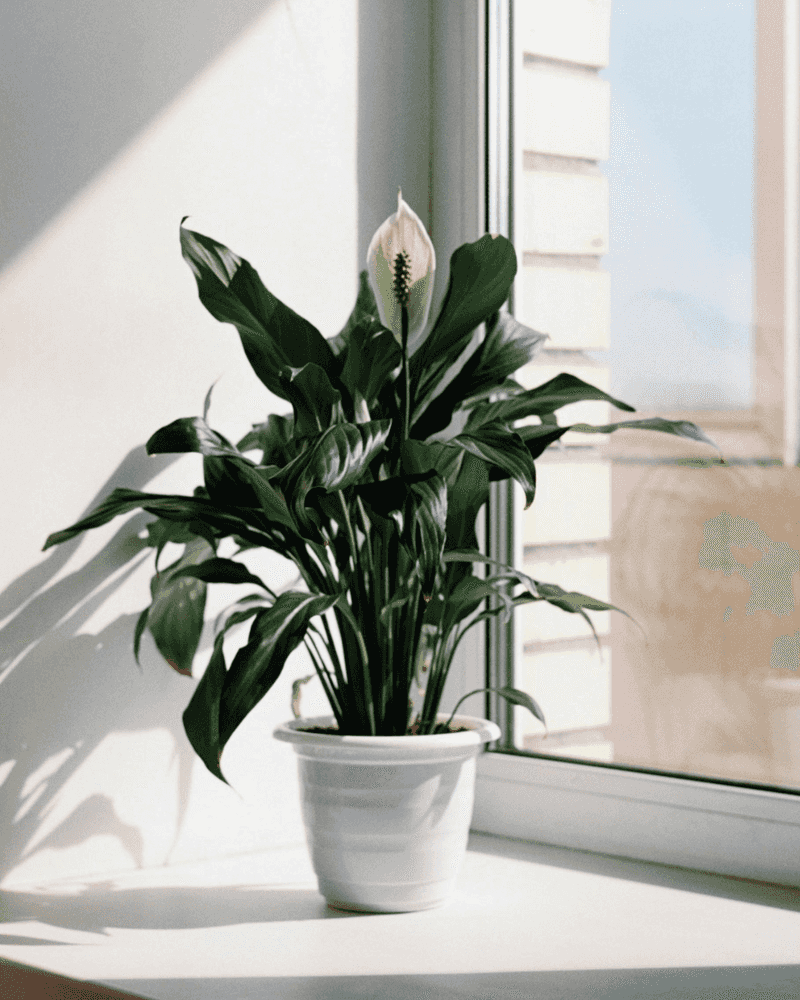
A practical plan for the next few weeks starts with one careful move: shift the plant gradually toward brighter indirect light, stepping it closer to a well-lit window over several days rather than all at once. Watch the leaves for any yellowing edges or pale patches that suggest too much direct exposure, and pull the plant back slightly if those appear.
While you wait, keep the potting mix consistently moist without letting water pool in the saucer. Protect the plant from cold drafts, heating vents, and air-conditioning streams.
Clemson Extension and UF/IFAS home guidance both support this combination of steady moisture and stable temperatures as the baseline for a healthy plant. If the plant is young or was recently purchased, allow extra time before expecting a bloom, since cultivar and maturity differences mean some plants simply need more months of good care before flowering.
One safety note worth keeping in mind: the ASPCA confirms that peace lilies contain insoluble calcium oxalates and can cause oral irritation, drooling, and vomiting in cats and dogs if chewed. Poison Control also notes similar risks for young children.
Insufficient light is a common and sensible first thing to check, but a peace lily that finally blooms is still best enjoyed from a safe distance by curious pets and little ones.