
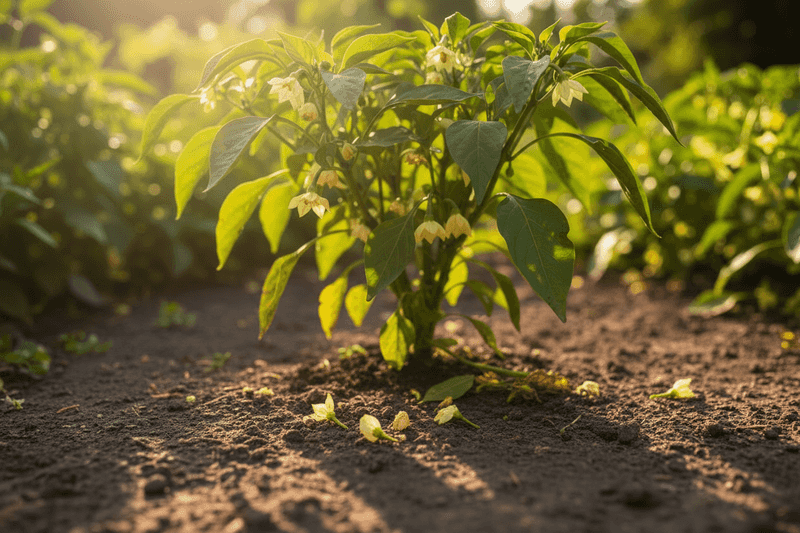
Watching your pepper plant drop its flowers in July is genuinely frustrating, especially when you have been watering and tending it all season. Many gardeners blame the heat, but the full picture is more specific than that: both scorching daytime temperatures and warm overnight lows can work against fruit set at the same time. Knowing which stage of the problem you are actually seeing, and what the weather has been doing at night, can help you make smarter decisions without reaching for fertilizers or amendments that will not help.
Start with the Flower, Not the Fertilizer Bag
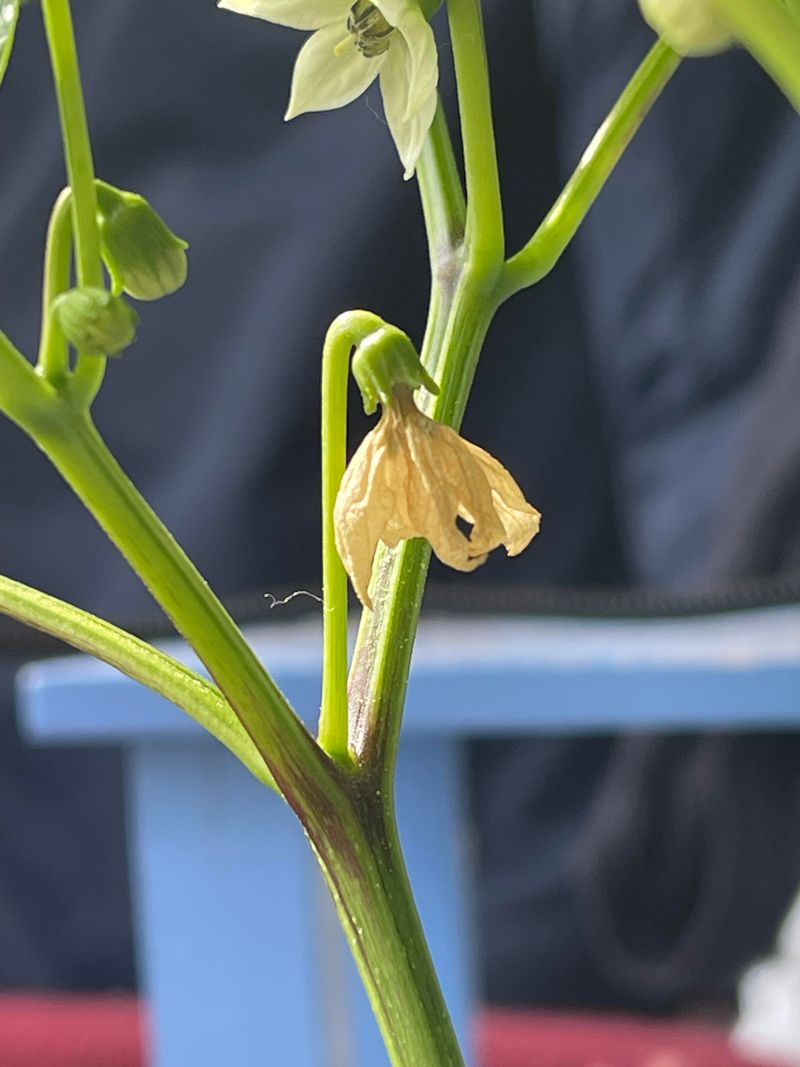
Before grabbing anything off the garden-center shelf, take a close look at what is actually falling off your plant. Blossom drop is a specific event: a bud or open flower dries up and detaches from the plant before any pepper begins to form. The plant sheds the flower entirely, leaving a clean stem where the blossom was attached.
That is a different situation from blossom-end rot, which happens later in the season on fruit that is already growing. With blossom-end rot, the pepper stays on the plant but develops a dry, dark, sunken lesion at the tip opposite the stem. Utah State University Extension guidance on growing peppers draws a clear line between these two conditions, and that distinction matters enormously for figuring out what to do next.
Calcium is strongly associated with blossom-end rot on developing fruit, but it is not a well-supported explanation for flowers falling before fruit ever forms. University of Georgia Cooperative Extension research on pepper defects reinforces that calcium-related symptoms show up on the fruit itself, not on the flower. If you misread blossom drop as a calcium problem and start amending the soil or spraying the leaves, you are treating the wrong thing entirely, and you may create new nutrient imbalances in the process.
Inspecting the plant carefully before acting is the most useful first step you can take. Identify whether the damage is happening at the flower stage or on an already-formed pepper, and let that observation guide everything that follows.
Hot Days and Warm Nights Can Work Together
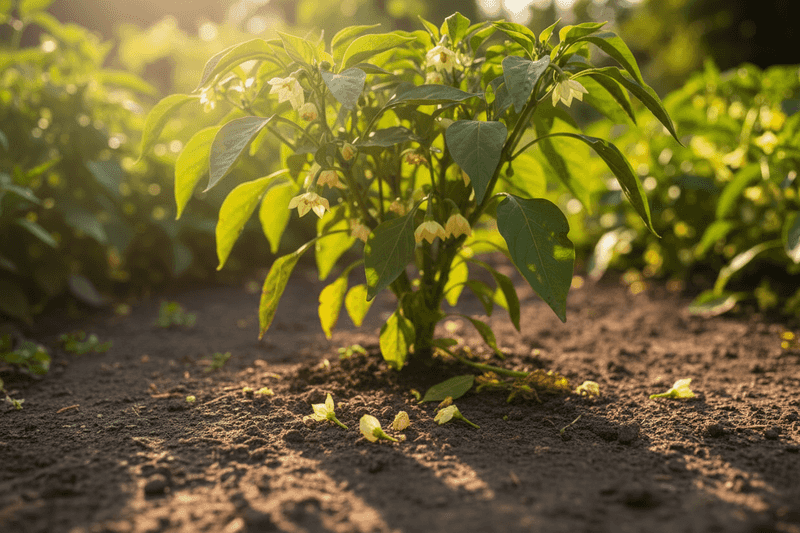
Pepper plants are particular about temperature, and their preferences cover both ends of the day. University of Minnesota Extension guidance on growing peppers places broadly favorable fruit-set conditions around 60 to 70 degrees Fahrenheit at night and 70 to 80 degrees during the day. When temperatures drift meaningfully outside those ranges in either direction, fruit set can suffer.
The daytime side of the problem is well known. Bell peppers may begin losing blossoms when afternoon highs climb above roughly 90 degrees Fahrenheit. What is less obvious is that the nighttime low matters too. Oklahoma State University Extension notes that bell peppers can drop blooms when daytime temperatures exceed about 90 degrees in combination with nights that stay above approximately 75 degrees.
Warm nights do not replace daytime heat as the cause; they compound it. The plant gets less recovery time overnight, and the combined stress can push blossom drop higher than either factor alone might.
Every threshold here is approximate. Cultivar matters: some smaller hot-pepper types tolerate heat better than bell peppers do. Humidity, wind speed, soil moisture, plant age, and how many days the heat event lasts all influence how a specific plant responds. A single afternoon at 92 degrees may produce little damage, while a week of 95-degree days with 78-degree nights can strip a bell pepper of nearly every open flower.
The practical takeaway is to check both the daytime high and the overnight low when flowers start falling, rather than focusing only on what the afternoon thermometer reads.
Read the Forecast and Inspect the Soil
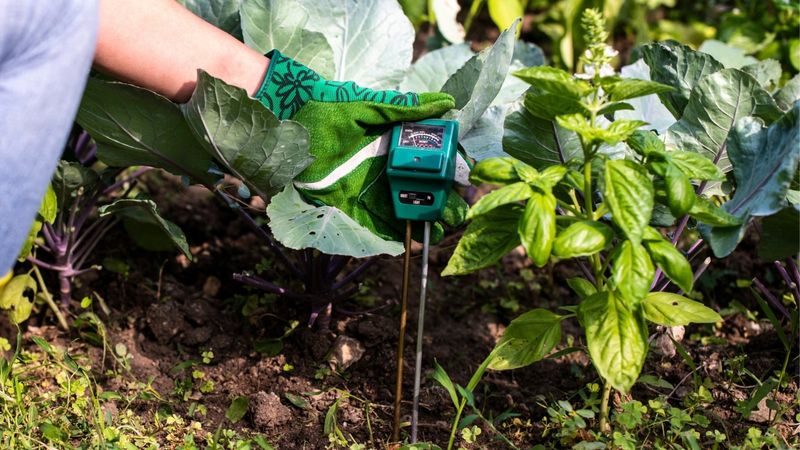
A single temperature reading on a single afternoon cannot tell you why your peppers are dropping flowers. What you are looking for is a pattern: several days of high daytime temperatures, overnight lows that stayed elevated, and soil that may have dried out between waterings. Pulling together those three data points gives you a much clearer picture than any one observation alone.
Start by looking up the forecast history for your area over the past week or two. Most weather apps and national weather service sites let you check recent daily highs and lows. Compare those numbers to the approximate ranges mentioned in the previous section, keeping in mind that your specific cultivar and microclimate can shift the response. Minnesota Extension guidance and Oklahoma State University Extension resources both point to temperature pattern and moisture consistency as key factors to evaluate together.
Then check the soil. Surface appearance can be misleading: the top inch may look moist while the root zone a few inches down is quite dry. Push a finger or a small trowel two to three inches into the soil near the base of the plant. Dry, crumbly soil at that depth is a signal that the plant may have been under water stress even if you watered recently.
Utah State University Extension identifies drought stress and irregular watering as contributors to blossom and small-fruit drop alongside temperature problems.
Wind is worth noting too. Persistent, drying wind pulls moisture from leaves faster than roots can replace it, adding another layer of stress during an already difficult stretch of weather.
Keep Moisture Even at the Roots
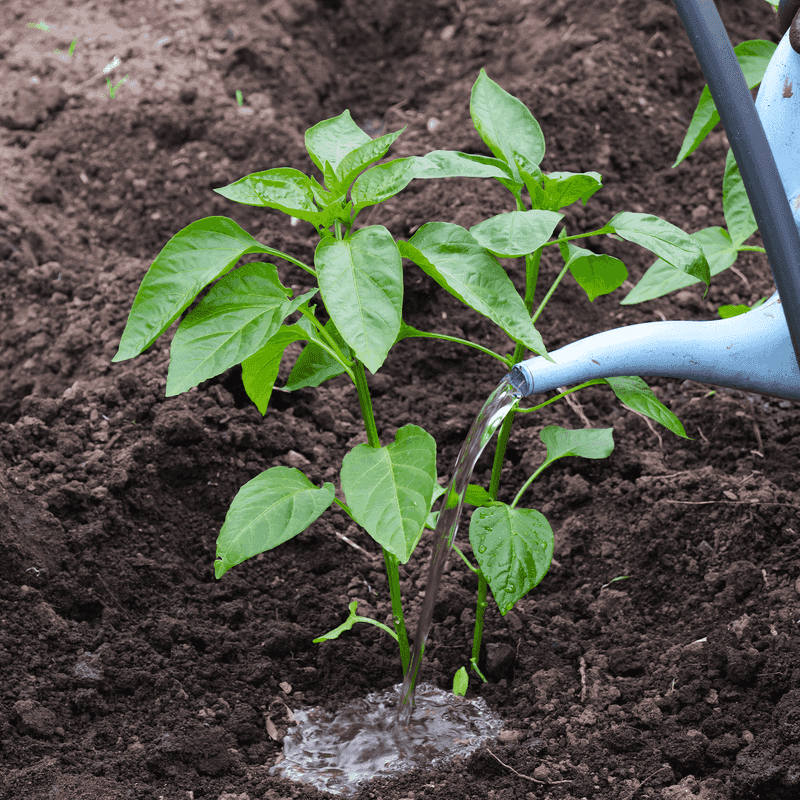
Once you have confirmed that the soil has been drying out unevenly, steadier watering is the most straightforward low-risk response. The goal is consistent moisture in the root zone, not a fixed number of gallons per week. How much water a pepper plant needs depends on soil type, container versus in-ground culture, air temperature, wind, and how much rain has fallen recently.
Water thoroughly at the soil level rather than sprinkling the surface or wetting the foliage. Deep watering encourages roots to grow downward and reach a more stable moisture supply. Shallow, frequent watering keeps roots near the surface where soil dries out fastest. University of Minnesota Extension recommends thorough watering when rainfall is insufficient, and both Utah State University Extension and Oklahoma State University Extension support deep, consistent irrigation over repeated shallow applications.
Organic mulch spread around the base of the plant can help slow moisture loss between waterings and moderate soil temperature at the root zone. Keep the mulch a couple of inches away from direct contact with the stem to avoid creating conditions that favor rot or pest damage near the crown. A two- to three-inch layer across the planting area is generally sufficient.
Avoid swinging between drought and saturation. Letting the soil go bone dry and then flooding it can stress roots and interfere with the plant’s ability to move water and nutrients into developing tissue, which can contribute to both blossom drop and, later in the season, blossom-end rot on fruit.
Reduce Afternoon Heat Without Shading All Day
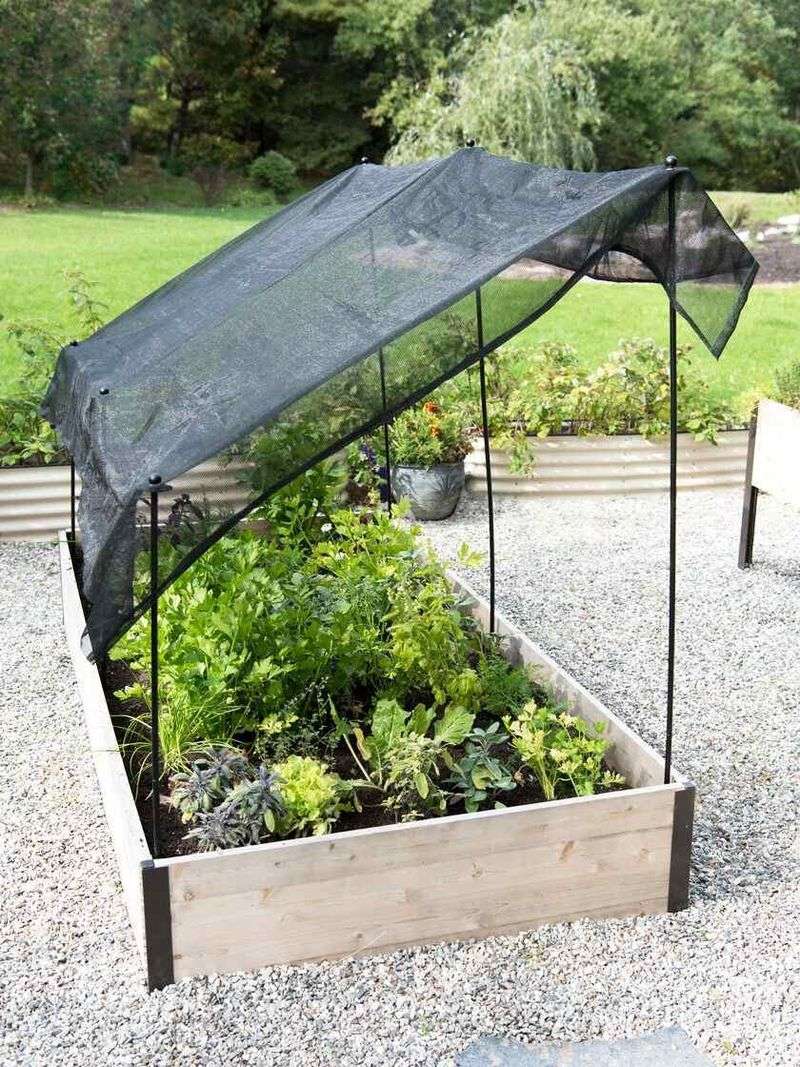
Peppers still need substantial sunlight to grow and produce well, so the goal during a July heat wave is targeted relief, not full-day shade. Blocking the harshest afternoon sun for a few hours can reduce the heat load on flowers and developing fruit without cutting into the morning and midday light the plant depends on.
A length of shade cloth stretched over a simple frame on the west-facing side of the planting area is a practical option. Natural afternoon shade from a fence, a tall structure, or a larger plant can serve the same purpose if the timing works out. Oregon State University Extension guidance on growing peppers recommends shade cloth or natural afternoon shade during heat waves and also advises paying closer attention to irrigation during those periods, since shaded soil can still dry out quickly in high heat.
Row covers and plastic tunnels require extra care in summer. Those structures trap heat effectively, which is useful in spring and fall but can create dangerous conditions for peppers in July. OSU Extension advises monitoring covered plants carefully and venting or removing covers when interior temperatures climb above 90 degrees Fahrenheit. A cover that stays closed on a hot afternoon can do more damage than no cover at all.
Temporary afternoon shade may reduce stress and help the plant retain more flowers during a difficult stretch of weather, but no shading strategy can guarantee blossom retention or fruit set when temperatures are extreme. Think of it as reducing the odds against the plant rather than solving the problem outright.
Reserve Calcium for the Right Diagnosis
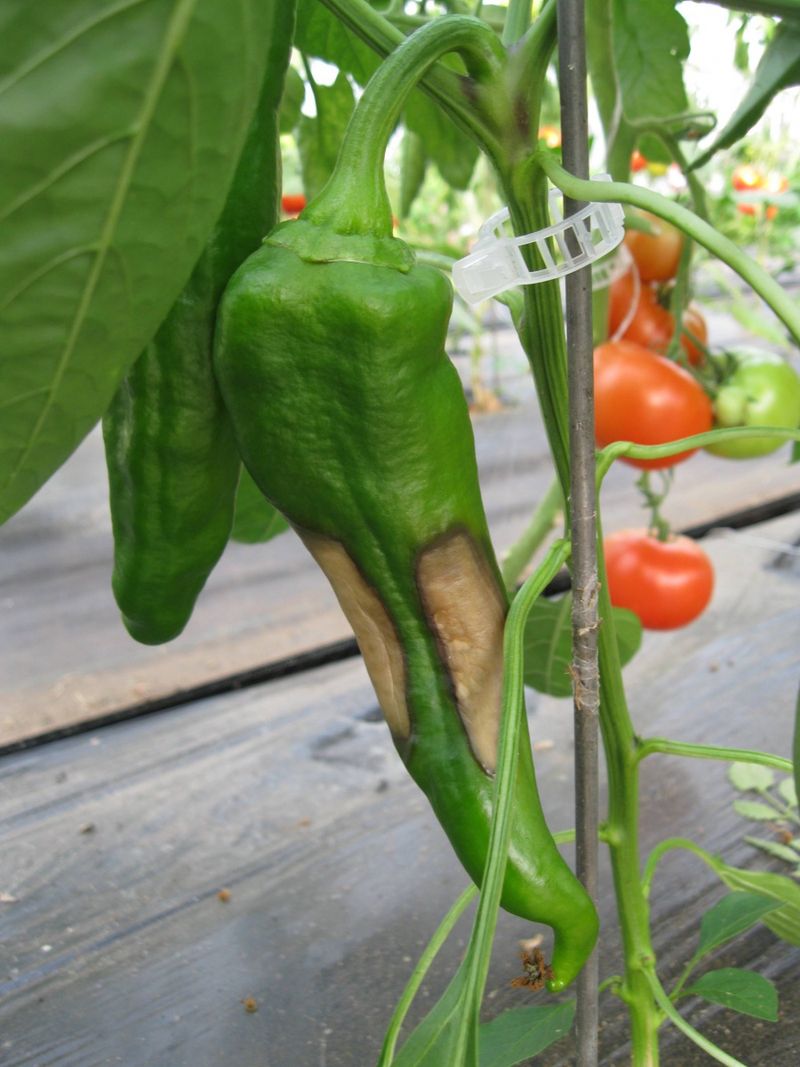
Calcium gets blamed for a lot of pepper problems it did not cause. When flowers drop before any fruit forms, calcium is not a well-supported explanation. The primary calcium-related problem in peppers is blossom-end rot, which develops on expanding fruit tissue, not on flowers or buds. Treating flower drop as a calcium deficiency sends you in the wrong direction and can introduce new problems.
Even when blossom-end rot does appear on developing peppers, the underlying issue is often not a shortage of calcium in the soil. Calcium delivery to fruit tissue depends on water movement through the plant, root health, growth rate, and the balance of other nutrients. Utah State University Extension notes that drought stress and irregular watering can interfere with calcium uptake even when the soil contains adequate calcium. Improving water management is the more consistently supported response for blossom-end rot in home gardens.
Foliar calcium sprays are often promoted as a quick fix, but University of Georgia Cooperative Extension explains that calcium does not move readily from leaves down into developing fruit, making foliar applications an unreliable correction. Clemson Cooperative Extension addresses this directly as a gardening myth, confirming that calcium sprays are unlikely to correct or prevent the disorder.
Automatic applications of lime, gypsum, calcium nitrate, or eggshells are not appropriate without a soil test. University of Minnesota Extension guidance on vegetable garden planning cautions that unnecessary amendments can alter nutrient balance and soil pH in ways that create new problems. A soil test tells you what your specific site actually needs before you add anything.
Look for Clues That Point Beyond Weather
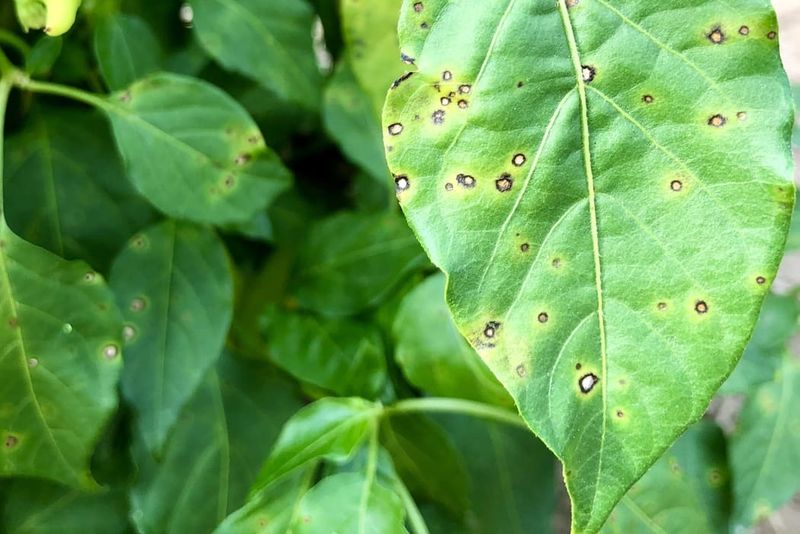
Temperature and water stress explain a lot of July blossom drop, but they do not explain everything. When flowers or small fruit show feeding damage, discoloration, distorted growth, or unusual spotting, the cause may be something other than weather. If the whole plant is declining, wilting despite adequate water, or showing stunted new growth, that pattern calls for a broader look at pests, diseases, and other stressors.
Aphids, thrips, and other insects can damage flower tissue directly. Viral diseases and wilt pathogens can affect fruit set and overall plant health in ways that mimic environmental stress. Herbicide drift is another possibility if neighboring properties were recently sprayed: distorted, cupped, or twisted new growth on peppers is a classic sign. Utah State University Extension keeps pests, diseases, and other environmental causes in the differential when visible damage accompanies flower or fruit loss.
Pollination is rarely the issue with peppers. Peppers are generally self-pollinating, meaning a single plant can set fruit without bees or other insects. Oklahoma State University Extension confirms this, so a lack of bee activity should not be the first conclusion when flowers fail to develop into fruit.
If pest pressure seems likely and you are considering a pesticide, identify the specific pest first. Read the product label carefully and follow all directions, including any restrictions on application timing around open flowers. EPA guidance on pollinator protection notes that bloom-time and time-of-day restrictions exist for good reason: spraying open flowers indiscriminately can harm beneficial insects and may not address the actual source of the problem.
A Cooler Stretch Can Restore Fruit Set
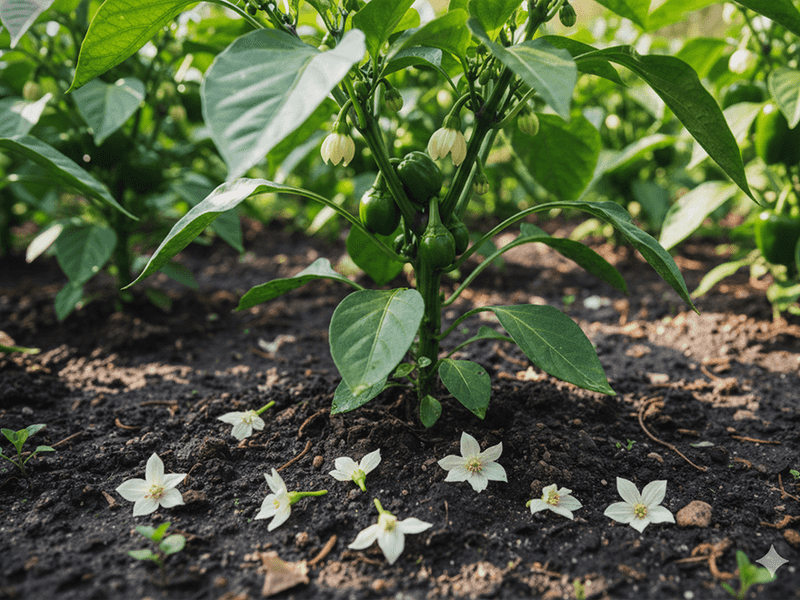
Dropped flowers in July do not mean your pepper plant has failed for the season. Utah State University Extension and Minnesota Extension both note that fruit set can improve once stressful weather moderates. Peppers continue producing new flower buds, and a break in the heat, even a few cooler nights in a row, can shift conditions back toward successful pollination and fruit development.
The practical sequence is straightforward: confirm you are dealing with blossom drop rather than blossom-end rot on existing fruit, check both daytime highs and overnight lows for the recent period, stabilize soil moisture with deep and consistent watering, and consider temporary afternoon shade during the worst heat. Hold off on calcium amendments unless a soil test points to a genuine deficiency.
If visible damage on flowers or fruit persists after the weather improves, or if the whole plant continues to decline, widen your investigation to include pests, disease, and other site-specific stressors. Sometimes the most useful thing a gardener can do is wait out a difficult week and watch what the plant does next.