
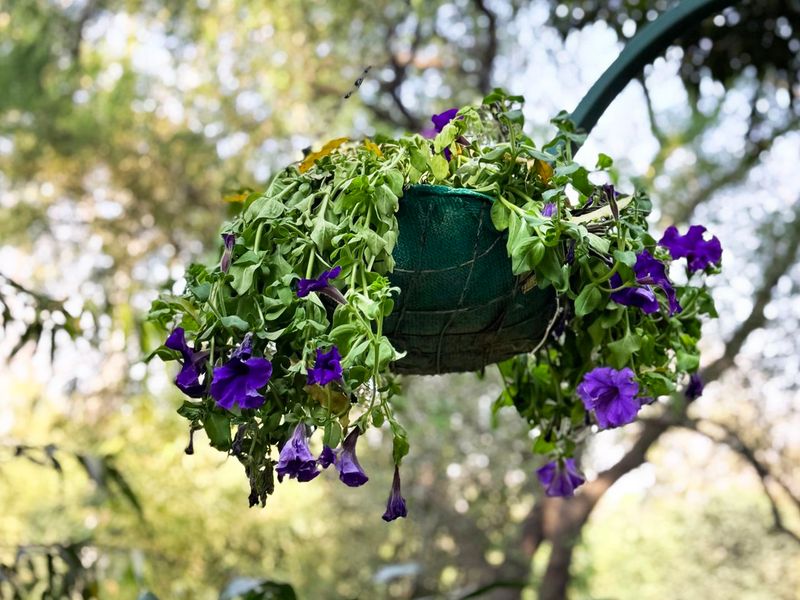
Petunias in hanging baskets and porch containers can go from lush to limp surprisingly fast once Southern summer heat sets in. Many growers reach for the hose the moment they see drooping blooms, but watering more is not always the answer.
A common and well-supported contributor to rapid fading is giving plants frequent shallow sips instead of a thorough soak, though heat, root damage, drainage problems, and cultivar differences can all play a role too. Before you water again, it pays to check what is actually happening in the root zone.
Shallow sips can leave petunia roots dry
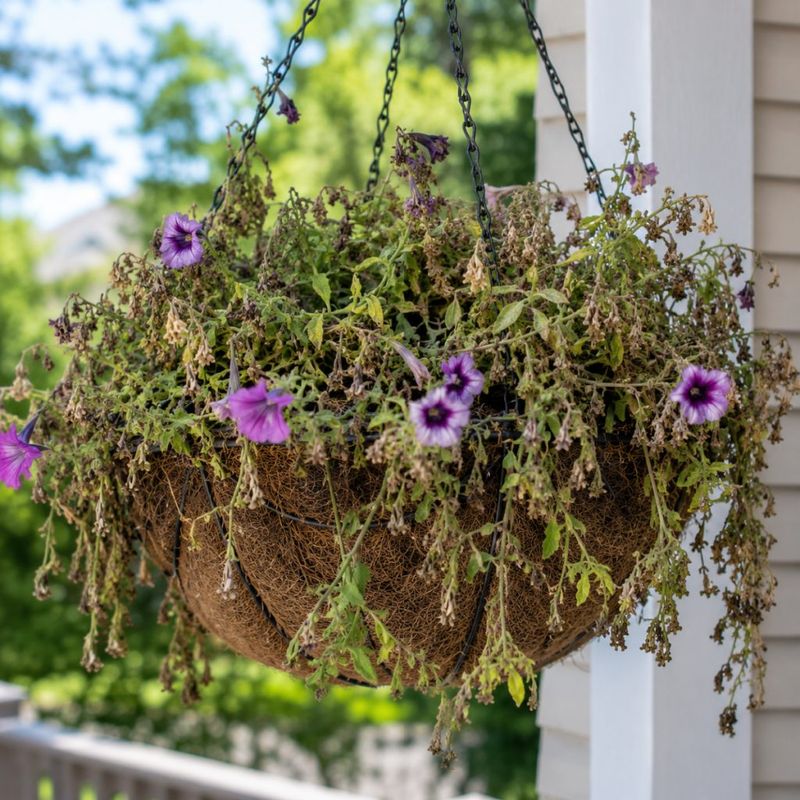
Frequent shallow watering is one of the most strongly supported contributors to petunia decline during hot weather, but it is not the only explanation. Fading flowers and drooping stems can also signal heat stress, poor drainage, root damage, or natural seasonal decline, so the diagnosis should stay conditional until you check the root zone directly.
The problem with shallow sips is straightforward: water applied in small amounts tends to wet only the top layer of potting mix or soil. The active root zone, where petunias actually take up moisture, can remain dry even when the surface looks and feels damp.
UF/IFAS petunia guidance specifically advises against light, frequent watering because it leaves the deeper root zone under-supplied and can encourage roots to stay near the surface, where they dry out fastest.
Roots that stay shallow are more exposed to heat and wind, which means a few hours of afternoon sun can push a lightly watered container into stress much faster than one that received a complete soak. University of Maryland Extension and Oregon State Extension both recommend watering containers thoroughly until water drains from the bottom, which re-wets the full root ball rather than just the surface layer.
Before treating any wilting plant as thirsty, press your finger into the mix and feel what the root zone is actually holding.
Heat exposes an under-watered root zone quickly
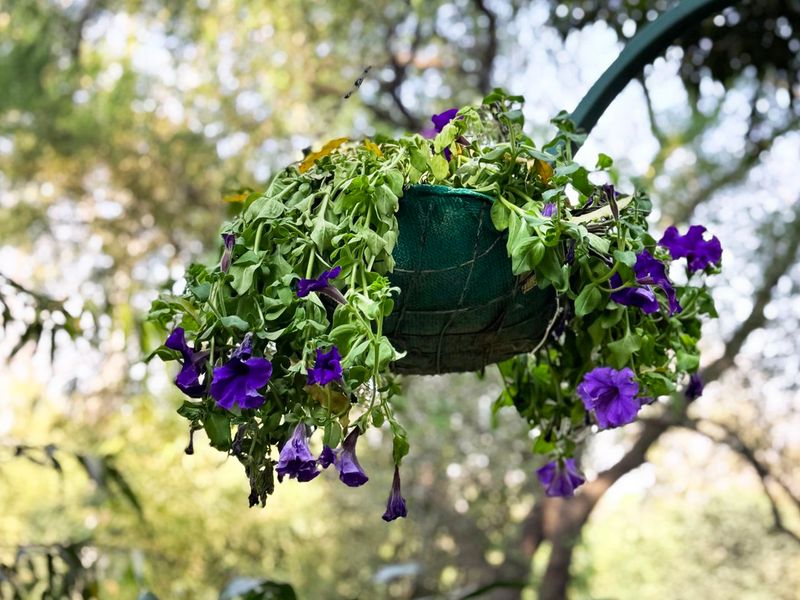
Containers and hanging baskets behave very differently from in-ground beds when temperatures climb. A small pot or wire basket holds a limited volume of potting mix, and that mix is exposed to sun and wind on multiple sides rather than insulated by surrounding soil.
The result is that moisture evaporates far faster than most growers expect, especially during the long, hot afternoons common in Florida, Texas, and similar climates.
University of Georgia Extension notes that container plants may need daily watering during hot, dry conditions, and some may require morning and afternoon attention when heat is extreme. A surface that feels barely damp in the morning can be bone dry by early afternoon if wind and direct sun are working against the plant simultaneously.
Shallow watering makes this worse because the small amount of moisture near the top disappears first, leaving roots with nothing to draw from well before the next scheduled watering.
Iowa State University Extension guidance on extreme heat reinforces that containers need more frequent monitoring than beds during heat events. Established in-ground petunias have more soil volume, better insulation, and access to a deeper root zone, so they can sometimes manage with less frequent attention.
Hanging baskets get no such buffer, and a lightly dampened surface is often not enough to carry them through a full Southern summer day.
Oklahoma State Extension’s container gardening guidance also points to limited soil volume and exposure as key factors that accelerate drying. Understanding this difference is the first step toward matching your watering habits to what the plant actually needs, rather than following a one-size schedule that works for beds but fails baskets.
Check moisture inside the active root zone
Wilting leaves are not a reliable solo indicator of drought. A petunia can droop from heat load alone on a scorching afternoon even when the root zone holds adequate moisture, and it can also wilt from root damage or disease in a pot that feels wet.
Relying on leaf appearance alone to decide whether to water can lead you in the wrong direction.
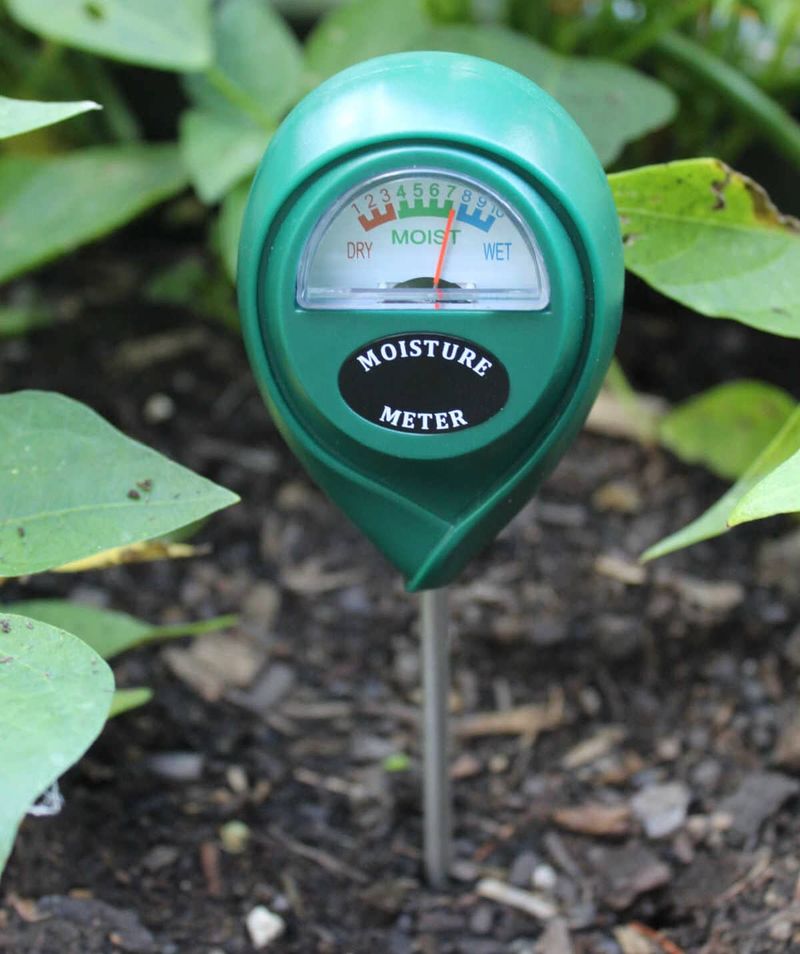
A better approach is a direct finger test in the potting mix. For containers deep enough to accommodate it, press your finger about 1 to 2 inches below the surface and feel what is there.
University of Maryland Extension’s container gardening resource recommends checking below the surface rather than judging moisture by appearance alone, because a damp-looking top layer can conceal a dry root zone underneath. Their container vegetable guidance echoes this, emphasizing that surface dampness does not confirm that the full root ball is adequately wet.
Small baskets present an added complication. Their root zone is shallower by nature, so the 1-to-2-inch guideline may reach the bottom of usable root space in a compact pot.
Check within whatever depth the roots actually occupy, and monitor small baskets more frequently since they can swing from adequate to critically dry within hours. Oregon State Extension’s watering basics also note that containers can dry unevenly, with edges drying faster than the center, which means one spot feeling moist does not guarantee the whole root ball is supplied.
For in-ground beds, check deeper in the root zone rather than stopping at the surface. University of Maryland’s drought and heat stress resource points out that soil can appear dry at the surface while retaining adequate moisture below, or conversely feel fine on top while the deeper zone is depleted.
The finger test takes seconds and gives you far more reliable information than leaf appearance alone.
Give a genuinely dry container a complete soak
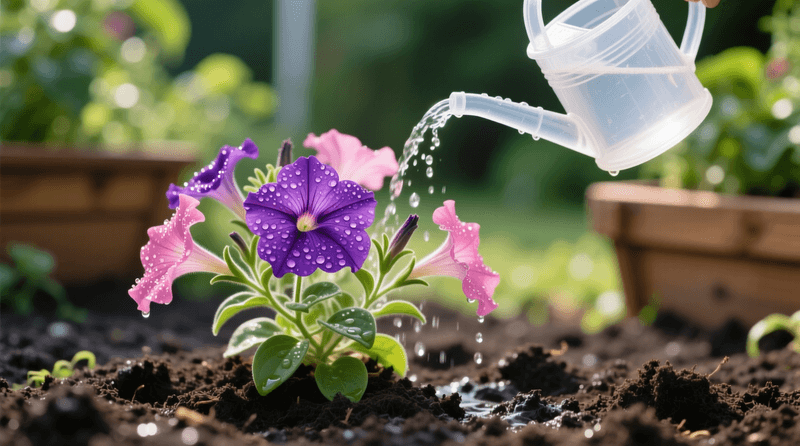
Once you have confirmed that the root zone is genuinely dry, the corrective step is a thorough soak rather than another shallow pass. The goal is to re-wet the entire root ball, not just dampen the top inch of mix.
Doing this correctly makes a real difference in how long the moisture lasts and how deeply roots are encouraged to grow.
Apply water slowly at the base of the plant, directing it to the potting mix rather than the foliage. Pour steadily and give the mix time to absorb each application before adding more.
University of Maryland Extension recommends continuing until excess water flows freely from the drainage holes at the bottom, which confirms that the full root ball has been reached. A quick pass that wets only the top layer and produces no drainage does not count as a complete soak.
UF/IFAS vegetable garden watering guidance and Iowa State University’s drought watering guidance both emphasize applying water slowly enough for the growing medium to absorb it, rather than running it through so fast that it channels along the sides without wetting the center.
Drainage holes are non-negotiable. A container without them will hold standing water around the roots, cutting off oxygen and creating conditions favorable to root rot.
University of Maryland’s container gardening resource is direct on this point: do not allow pots to sit in collected water after watering. Empty saucers and drip trays after each session so roots are never sitting in standing water.
A thorough soak promotes deeper rooting over time, but it is not a guarantee of recovery for plants already under severe heat injury or disease pressure.
Match watering frequency to the growing setup
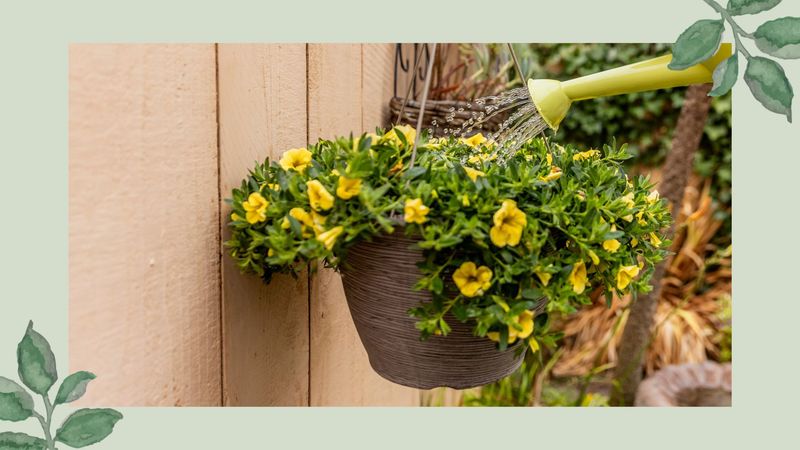
Correcting shallow sips does not mean swapping to a rigid deep-watering schedule and walking away. Frequency still matters, and the right answer depends heavily on where the petunia is growing.
Applying the same schedule to a hanging basket and an in-ground bed is a reliable way to under-water one and over-water the other.
For established in-ground petunias, a general landscape guideline of roughly 1 to 2 inches of water over a 7-to-10-day period can serve as a starting reference when rainfall and conditions permit. UF/IFAS petunia guidance and University of Georgia Extension both frame in-ground frequency around soil type, rainfall, and heat load rather than a fixed calendar.
Sandy soils, full-sun exposures, and root-bound plants all accelerate drying and may require more frequent attention than the general guideline suggests. IFAS publication EP458 reinforces that soil texture and local conditions should shape any watering schedule rather than a single statewide rule.
Containers operate on a completely different timeline. Iowa State University Extension notes that during hot, sunny, and windy weather, some containers may need to be checked and watered twice daily.
A basket that was adequately moist at 7 a.m. can reach a critically dry state by early afternoon if temperatures spike and wind is steady. Check baskets by feel, not by schedule, and adjust frequency as conditions change across the season.
Wind exposure, pot size, plant size, and whether the container is root-bound all shift the calculus, so monitoring consistently matters more than following a fixed number of days between waterings.
Use morning watering without obeying a rigid clock
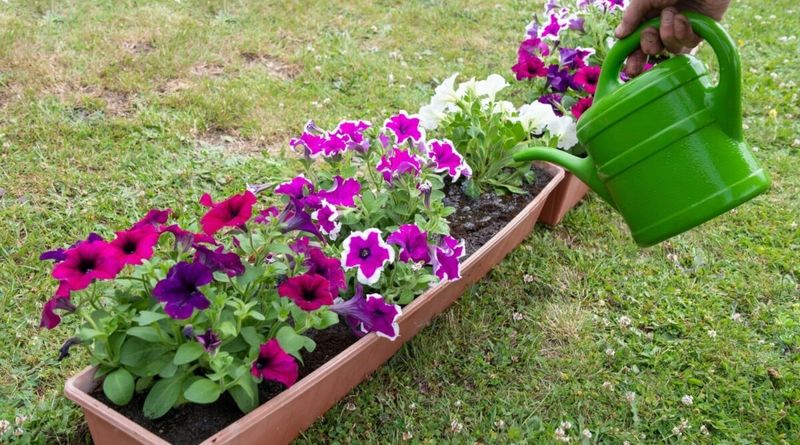
Morning is generally the most practical time to water petunias. Cooler temperatures and calmer air mean less evaporation before the water reaches the root zone, and foliage that gets incidentally wet has several hours of warmth ahead to dry before nightfall.
Wet leaves lingering overnight create conditions more favorable to fungal disease, so timing that allows drying is worth choosing when you have the option.
Oregon State Extension’s heat-wave garden guide and their watering basics resource both recommend morning watering as a general practice for reducing evaporation and disease risk. That said, morning is a preference, not an absolute rule.
If a container’s root zone is genuinely dry and the plant is severely wilted at noon or mid-afternoon, waiting until the next morning to water is not the right call. The plant’s actual water need takes priority over a time-of-day guideline.
Where you aim the water matters more than most growers realize. Direct water to the potting mix or soil at the base of the plant rather than deliberately spraying flowers and foliage.
UF/IFAS container gardening guidance and University of Wisconsin Extension both support base watering because it delivers moisture directly to the roots and reduces the leaf and flower wetness that promotes disease. The concern is not that water droplets will burn petunia leaves in sunlight – Penn State Extension’s garden myths resource addresses this as a poorly supported claim for smooth-leafed plants.
The real reasons to water at the base are efficiency and disease prevention, both of which are well-grounded.
If the root zone stays wet, investigate before watering again
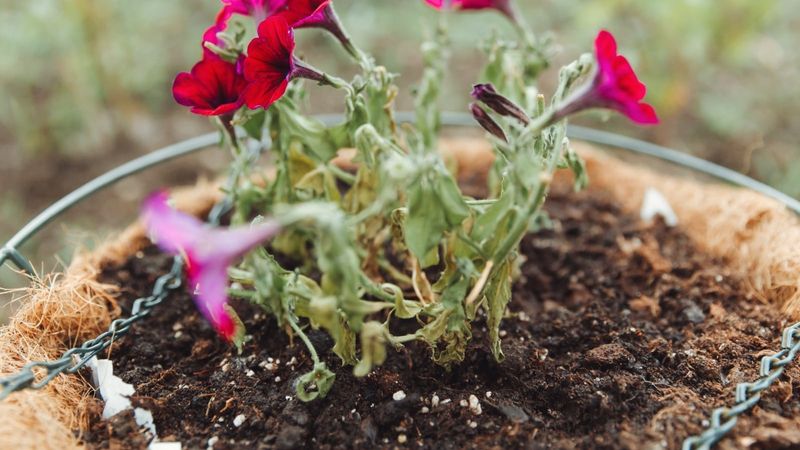
A petunia that wilts despite moist or wet potting mix is sending a different signal than one that is genuinely drought-stressed. Adding more water to an already wet root zone can make the situation significantly worse, so the first step when the mix is moist is to stop watering and start investigating.
Petunias are susceptible to root and crown rots, particularly in containers with poor drainage or in soil that stays saturated for extended periods. Penn State Extension’s petunia disease resource and the NC State Extension Gardener Handbook on diseases and disorders both note that Phytophthora and Pythium root rots can cause wilting and collapse even when the growing medium appears adequately moist.
Roots damaged by rot lose their ability to move water into the plant, so the stems and leaves experience drought-like symptoms regardless of what the soil contains.
Iowa State University Extension’s guidance on wilting plants confirms that wet soil plus wilting is a strong indicator to check drainage and root health rather than reach for the hose. Look for standing water in saucers or trays, check that drainage holes are open and unobstructed, and gently examine roots if the plant can be removed from the pot.
Healthy roots are typically firm and light-colored; rotted roots are often brown, mushy, and may smell off.
University of Illinois Extension’s heat stress discussion also points out that heat load alone can cause temporary afternoon wilting when soil moisture is adequate. If the plant perks up by evening or the following morning without any additional watering, heat stress rather than drought may be the primary driver.
In that case, the response involves reducing exposure or improving airflow, not adding water to an already moist root zone.
Support recovery when watering is not the whole problem
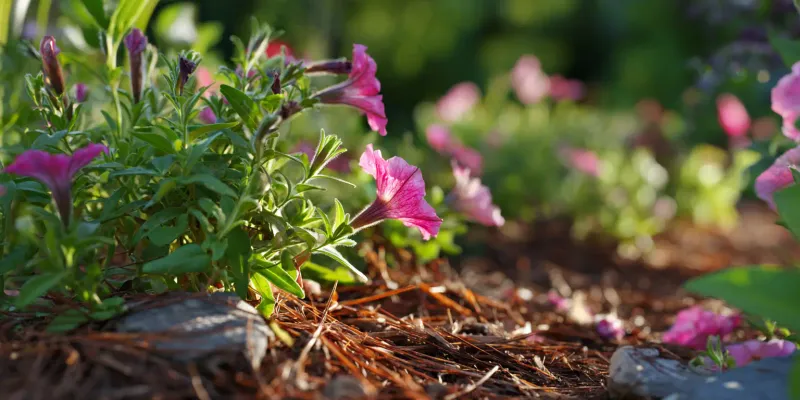
Not every struggling petunia can be rescued by correcting the watering routine alone. Afternoon wilting that resolves on its own by evening is often a sign of temporary heat load rather than drought or disease, and the appropriate response is to reduce exposure rather than increase irrigation.
Moving a basket to a spot with afternoon shade, grouping containers together to buffer heat, or adding a thin layer of mulch to in-ground beds can all help lower the temperature at the root zone without adding more water.
University of Maryland’s drought and heat stress resource and University of Minnesota Extension’s heat gardening guidance both recommend reducing plant exposure and moderating root-zone temperatures as practical responses to heat stress. UF/IFAS container care guidance and Colorado State Extension’s container garden resource also suggest grouping pots and using larger containers to slow drying and buffer temperature swings.
Cultivar differences matter too. University of Missouri Extension notes that modern Wave, Supertunia, and related hybrid petunias generally handle heat better than older types, and in parts of Florida, UF/IFAS treats petunias as cool-season plants that may decline naturally as summer humidity and heat intensify.
If your plant has become long, sparse, and bloom-poor by midsummer, University of Georgia Extension recommends cutting it back by about one-third, then watering thoroughly and applying a light fertilizer to encourage fresh growth. That pruning step is a separate maintenance tool, not a fix for root rot or severe heat injury.
The sequence that gives any petunia its best chance: check the root zone before watering, soak dry containers completely until water drains from the bottom, monitor baskets daily or more often during peak heat, and stop adding water to mix that is already wet. Those four steps address the most common and correctable contributors to fading.
When they are not enough, the answer usually lies in the roots, the drainage, or the cultivar itself rather than the watering can.