
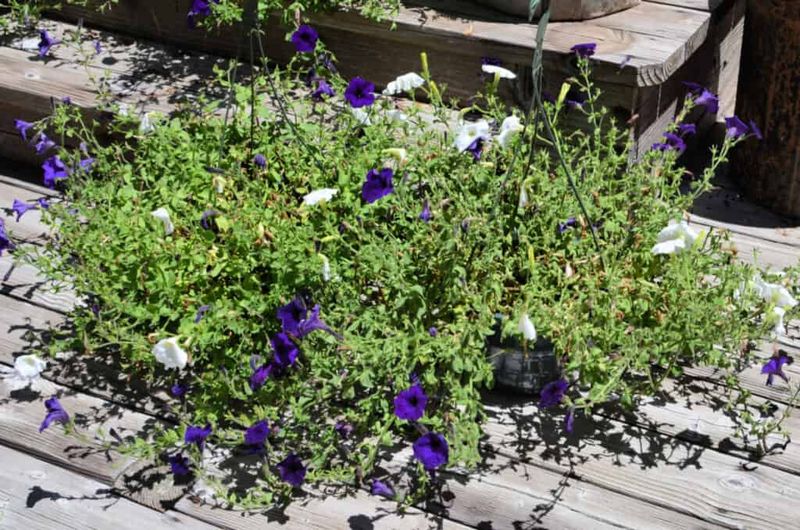
By late summer, many hanging petunia baskets start looking scraggly: long bare stems, sparse leaves, and all the flowers bunched at the tips. Most gardeners assume the plant is just worn out from the heat, but there is usually one fixable habit at the root of the problem.
Catching it early and knowing what to do next can bring a tired basket back to life before the season ends.
The tired look starts at the ends of long, bare stems
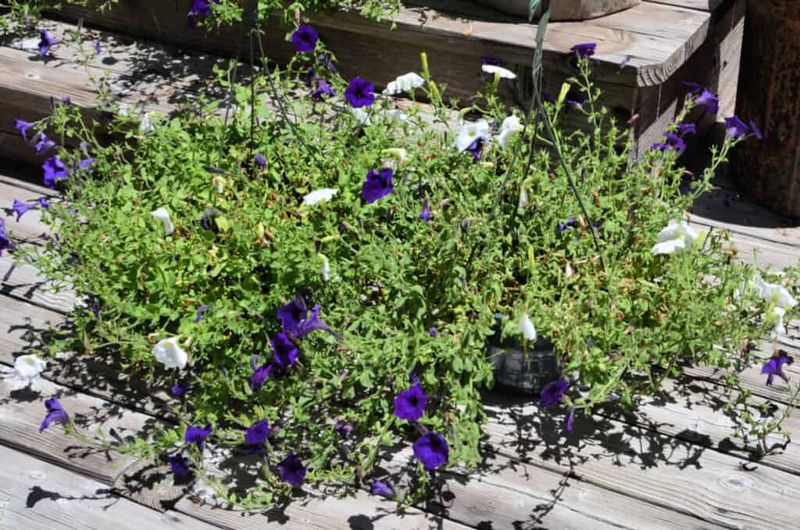
Petunias in hanging baskets often reach a point in late summer where the stems have stretched long and bare, foliage has thinned out, and whatever flowers remain are bunched at the very ends of those stems. That specific pattern, thin growth, weak branching, and blooms concentrated at the tips, is the symptom worth diagnosing before you do anything else.
North Carolina Cooperative Extension guidance on petunias lasting all season points to a missed or delayed midseason cutback as a common contributor to exactly this look, and correcting it is the most practical first step for a basket that still has healthy stems and foliage.
That said, skipped pruning is a strong first correction, not a guaranteed explanation for every case of late-season decline. A basket can develop the same scraggly appearance because of too little light, inconsistent watering, nutrient depletion, heat stress, cultivar genetics, or disease.
University of Florida IFAS petunia guidance notes that multiple factors, including light levels, moisture, and cultivar, affect how petunias perform over a long season.
Starting with a cutback makes sense because it is low-cost, reversible in the sense that growth will return, and directly targets the visible symptom. If the plant does not respond or shows signs of something more serious, those other causes deserve a closer look.
Is your petunia trailing or truly leggy?
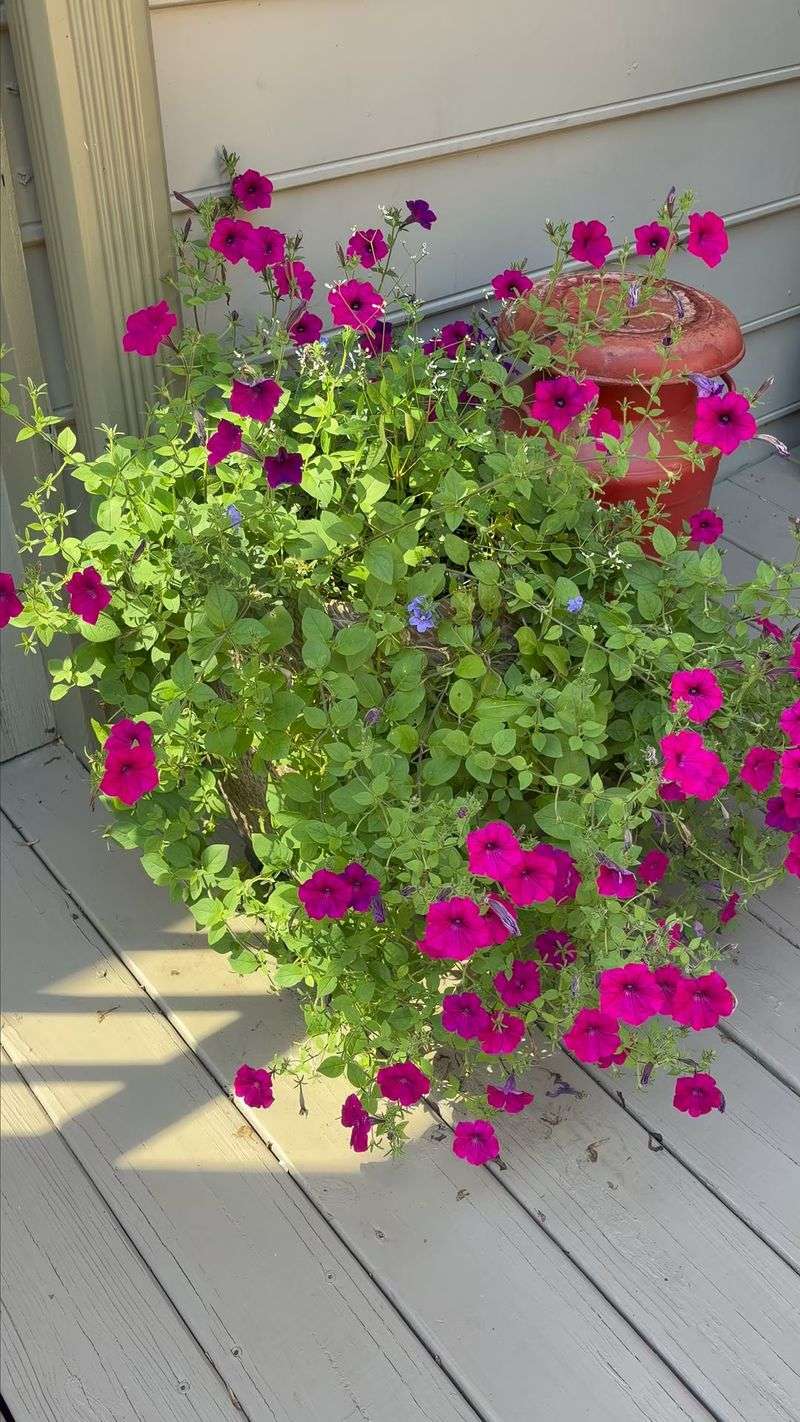
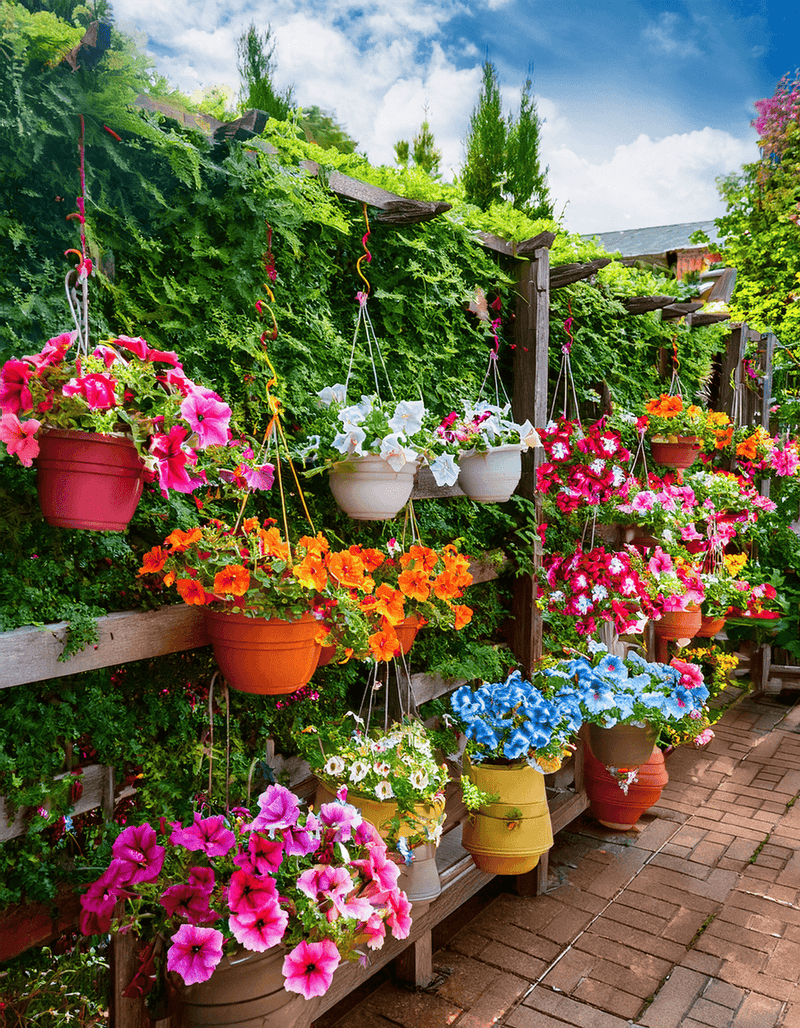
Before reaching for the pruners, run a quick visual check. Wave petunias, Supertunia varieties, and other spreading or cascading types are bred to spill over the edges of a basket and trail downward, sometimes dramatically.
Long stems on those plants are not a problem; they are exactly what the cultivar is supposed to do. UF/IFAS petunia notes highlight that cultivar habits vary widely, so stem length alone is not a reliable measure of a plant in trouble.
A genuinely leggy petunia looks different. The stems are long but also thin and weakly branched, with stretches of bare stem between widely spaced leaves.
Foliage density is noticeably low compared to what the basket looked like earlier in the season, and the flowers have retreated to the outermost tips rather than appearing along the length of the stems. NC Extension’s Petunia x hybrida profile confirms that branching density and foliage coverage are the real indicators of plant health and vigor, not how far the stems extend past the basket rim.
Judge the plant by how full and leafy it looks along those stems, not by how long they have grown. A cascading basket that is still densely covered in foliage and flowers is doing its job well, even if the stems reach two feet below the pot.
A midseason haircut restores the branching the basket has lost
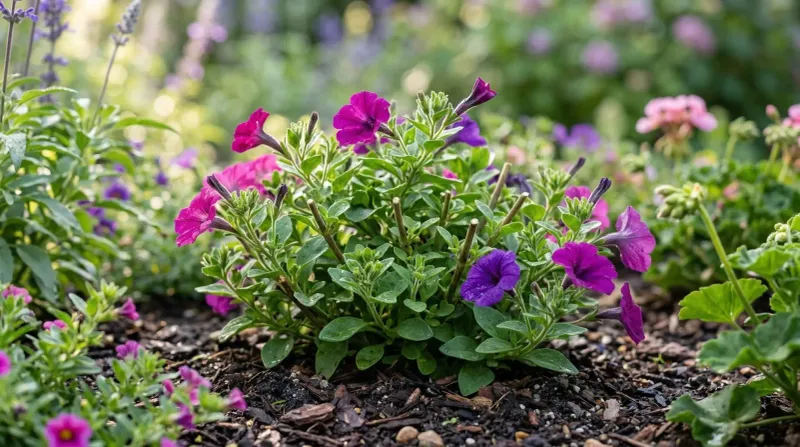
When a petunia stem grows long without being cut back, the plant keeps pushing energy toward the tip, where the growing point is. New leaves and flowers form there, while the middle and base of the stem stay bare.
Over time, the basket loses the dense, branching structure that made it look full in spring. Iowa State University Extension’s hanging basket guide recommends shearing or pinching back petunias during the season specifically because cutting a stem forces the plant to push out new side shoots below the cut, rebuilding the branching that makes a basket look lush.
A midseason cutback is the most direct correction for the thin-stem, flowers-at-the-tips pattern, but it comes with a short-term cost. Cutting the stems removes the existing flower buds along with the bare growth, so the basket will look even more sparse for a week or two while new shoots develop.
NC Cooperative Extension notes that an all-at-once cutback can delay the return of blooms while new growth establishes, so plan for a brief quiet period before the basket fills back in.
Pruning is also not a cure for every cause of decline. If the basket lacks enough sun, has been severely stressed by drought, or is showing signs of disease, cutting it back will not solve those underlying issues.
The haircut works best when the plant itself is still fundamentally healthy.
How to cut a tired hanging basket without overdoing it
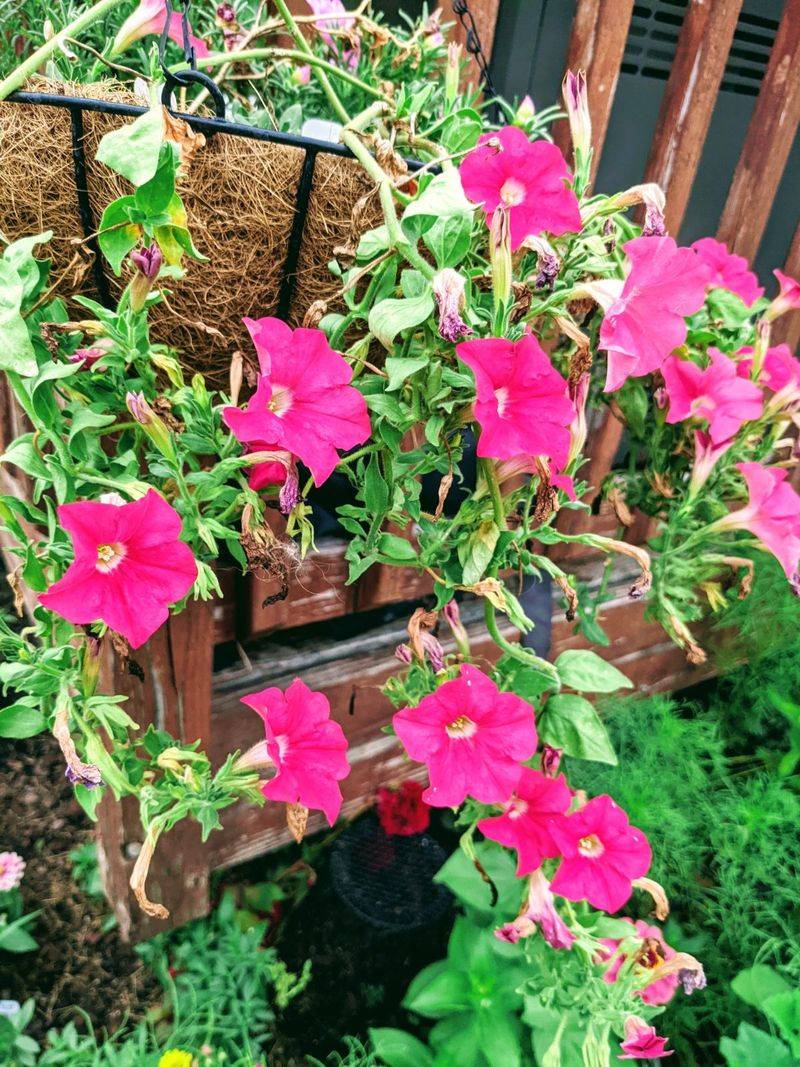
Start by removing any dead or browned flowers and damaged leaves before you make a single pruning cut. Clearing that material first lets you see the actual stem structure clearly and keeps the cuts purposeful.
Once the basket is tidied, look for the longest, barest stems and trace each one back until you find a spot with a visible leaf node or a small bud forming. That is where you cut.
For a moderately leggy basket, removing about one-third to one-half of the stem length is a reasonable starting point. NC Cooperative Extension’s petunia care guidance pairs this kind of cutback with follow-up watering and feeding to support the new growth that follows.
A lighter cut preserves more existing foliage and keeps a few flowers in place, which helps the plant continue photosynthesizing while it recovers.
Severely leggy plants that still have clearly healthy foliage and firm green stems can handle a harder cut, sometimes back to just a few inches above the basket rim, as long as viable nodes or buds remain below the cut line. Iowa State Extension guidance on hanging baskets notes that shearing annuals more aggressively can work when the plant has good underlying structure, but cutting every stem to the base or removing all viable foliage is too much for most baskets and slows recovery significantly.
Set a realistic expectation before you start: the basket will look worse for a short time after cutting. New shoots need at least one to two weeks to become visible, and a full rebound in flower coverage takes longer than that.
The goal is renewed branching, not an overnight transformation.
Check the roots before you water or feed for recovery
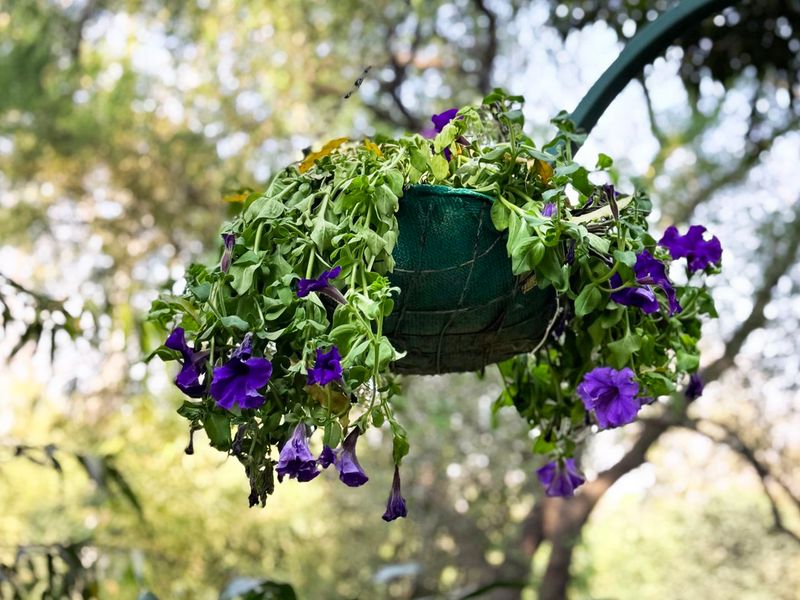
After pruning, the instinct is to water and fertilize right away, but making those moves conditional saves a lot of trouble. Before adding anything to the basket, lift it and feel its weight.
A basket that feels light and the potting mix is dry an inch or two below the surface genuinely needs water. One that still feels heavy and the mix is damp at depth does not need more moisture yet, regardless of how warm the day is.
When the basket does need water, pour slowly until water runs freely from the drainage holes, then stop. Iowa State Extension recommends watering until excess drains from the bottom to ensure the entire root zone is reached.
Oregon State University Extension’s hanging basket advice also emphasizes checking moisture before watering rather than following a fixed daily schedule, because frequency should reflect the mix, container size, weather, and drainage rather than the calendar.
RHS container watering research found that overwatering can reduce plant quality, which is a useful reminder that more water is not always better, even after a pruning stress event. Keep the mix evenly moist and well drained rather than alternating between bone dry and saturated.
Fertilizer follows the same conditional logic. Repeated watering does leach nutrients from potting mix over time, and a recovering plant benefits from nutritional support, but only when it is healthy and the root system is intact.
Use a complete fertilizer at the rate printed on the product label, nothing more. NC Extension’s season-long petunia guidance pairs pruning with a light application of fertilizer after cutting, not a heavy dose.
Excessive nitrogen in particular can push leafy growth at the expense of flowers or damage roots in a small container where salts accumulate quickly. If roots look blackened or the crown feels soft, skip fertilizer entirely and address the underlying problem first.
When pruning is not the whole diagnosis
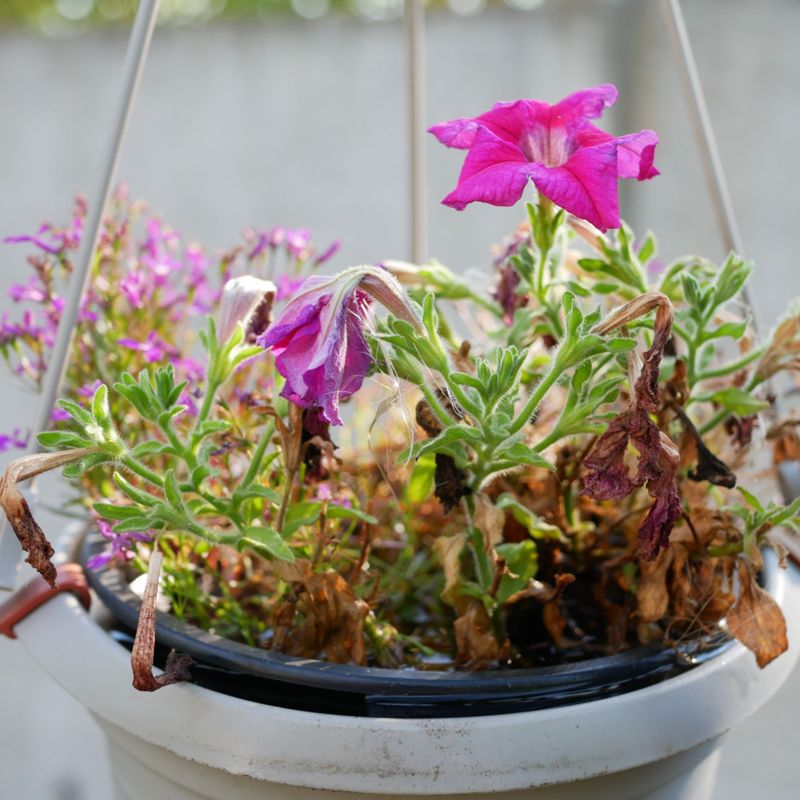
A cutback that does not produce new growth within two to three weeks is a signal to look beyond skipped pruning. Run through a short checklist before deciding the plant just needs more time.
First, count the hours of direct sun the basket receives each day. UF/IFAS petunia guidance notes that petunias perform best in full sun, and NC Extension describes six or more hours as a practical minimum for strong flowering.
A basket hanging in a spot that only gets filtered or partial light will produce weaker, sparser growth that pruning alone cannot fix.
Next, think about the pattern of moisture the basket has experienced. Repeated severe wilting followed by heavy watering stresses roots and can mimic the look of simple fatigue.
Persistent saturation from poor drainage or overwatering creates a different but equally damaging problem. Oregon State Extension’s hanging basket feature reinforces that drainage and moisture consistency matter as much as watering frequency.
Heat, reflected sun from walls or pavement, and wind can all accelerate drying and shorten a basket’s productive life even when pruning and feeding are done correctly.
Cultivar also matters. Some Wave and newer hybrid petunias were bred with better heat tolerance, but no petunia is heat-proof, and performance still varies by variety.
NC Extension’s petunia care notes acknowledge that cultivar selection affects how long a basket stays productive.
Blackened or mushy roots at the drainage holes, a crown that feels soft or collapsed, widespread stem rot moving up from the base, and soil that stays wet long after watering all point toward root disease or drainage failure rather than routine tiredness. Those plants need the source of the problem addressed, not another round of fertilizer.
Florida gardeners should also note that UF/IFAS identifies October and November as prime planting months for petunias in that state, where the species is commonly used as cool-season color. A late-summer basket in Florida may be nearing the natural end of its useful life rather than being a candidate for midseason rescue, and replacing it for the upcoming cool season is often the better call.
Deadheading keeps some baskets tidy, but the haircut does the rejuvenating
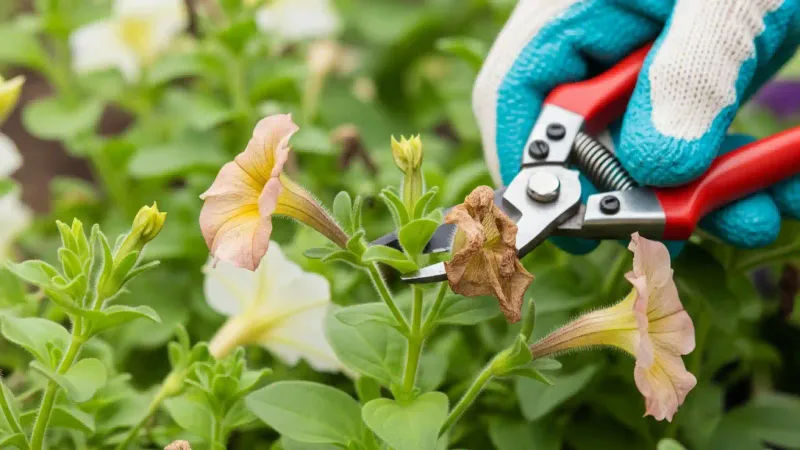
Deadheading and pruning are two separate tasks, and mixing them up leads to baskets that get tidied but never truly rejuvenated. Deadheading means removing individual spent blooms or the seed-forming structures behind faded flowers.
Pruning means cutting back the length of the stems themselves to restore branching and compact growth. One cleans the plant; the other restructures it.
Whether deadheading matters at all depends on the cultivar. Older large-flowered grandiflora types and double petunias tend to hold onto spent blooms and can benefit from having those removed to keep the plant looking clean and to reduce seed set.
Many modern spreading, milliflora, and vegetatively propagated petunias are self-cleaning, meaning faded flowers drop on their own without any intervention. UF/IFAS petunia notes confirm that routine deadheading is optional for flowering on many modern types, though removing faded material can improve the overall appearance of the basket.
The important practical point is that a self-cleaning petunia still needs a stem cutback when it becomes sparse and flower-heavy at the ends. NC Cooperative Extension distinguishes these two routines clearly, noting that pruning cuts long stems to encourage branching while deadheading only addresses spent flowers.
Skipping deadheading on a self-cleaning variety costs you nothing in flower production, but skipping the stem cutback on any variety that has grown leggy will cost you a full, dense basket.
Give healthy nodes time to rebuild the basket
Once you have confirmed the basket is genuinely leggy rather than naturally trailing, checked the root zone and moisture, and cut the longest healthy stems back by roughly one-third to one-half to visible nodes or buds, the next step is patience. New shoots take time to emerge from those cut points, and flower buds form after the shoots have put on some growth.
NC Extension’s petunia season guide makes clear that recovery is a gradual process, not a rapid transformation.
Water only when the basket needs it, fertilize at the label rate when the plant and roots are healthy, and give the basket the best light you can manage. If two to three weeks pass without visible new growth, or if the plant shows blackened roots, crown softness, or persistent saturation, stop treating it as a pruning problem and look at light, drainage, disease, or replacement.
UF/IFAS guidance reminds growers that multiple factors shape a petunia’s late-season performance. A plant that responds to a careful cutback with fresh branching and new buds is telling you the routine slip was the main issue; one that stays static or worsens is telling you something else needs attention first.