
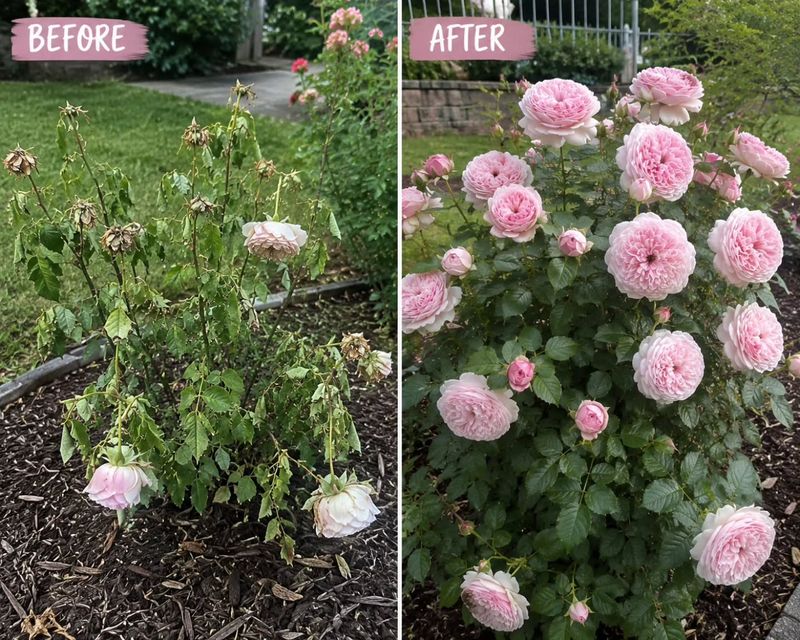
Walking out on a July morning to find your roses drooping and pale is a gut-punch for any gardener. The instinct is to grab the hose, but watering is not always the right answer, and in some cases it can make things worse.
Southern summers throw heat, humidity, sandy soil, and sudden downpours at roses all at once, and the plant’s distress signals can mean several different things. Learning to read the root zone first is the skill that separates gardeners who keep their roses healthy from those who accidentally harm them.
Wilt does not prove that a rose needs water
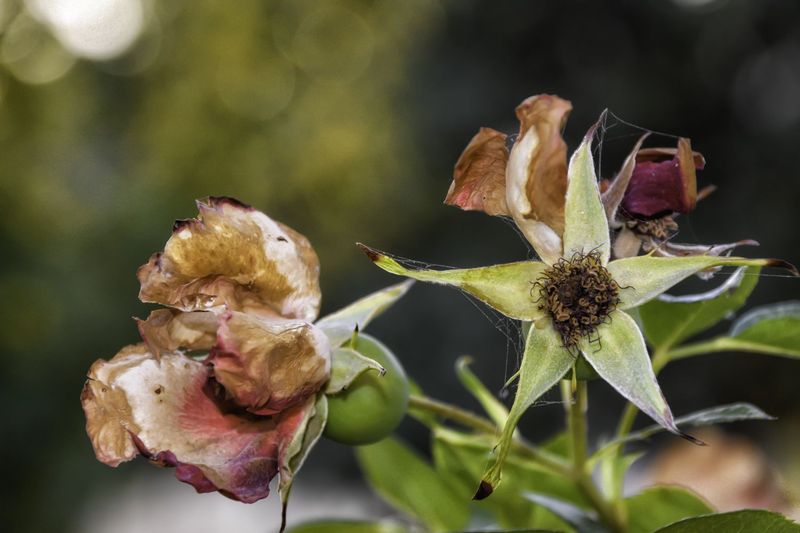
A drooping rose on a scorching afternoon feels like an emergency, but the plant may not be thirsty at all. High heat and wind push leaves to lose moisture faster than the roots can replace it, even when the root-zone soil is still adequately moist.
University of Minnesota Extension guidance on heat-stressed plants explains that temporary wilting in extreme temperatures can happen without any soil moisture deficit, and that reaching for the hose without checking the soil first can lead to overwatering.
Overwatering is not a harmless mistake. Saturated soil pushes oxygen out of the root zone, which can set off root disease, particularly in spots with poor drainage.
If a rose is already sitting in waterlogged ground, adding more water speeds up the damage rather than correcting it.
The diagnostic step that changes everything is simple: before you water, check the soil. Texas A&M Earth-Kind rose guidance is direct about this, warning that overly frequent watering promotes root disease and recommending that gardeners confirm the soil is genuinely dry at the root zone before irrigating.
Wilt is a symptom worth taking seriously, but it is a starting point for investigation, not a watering order.
Check the root zone before choosing an interval
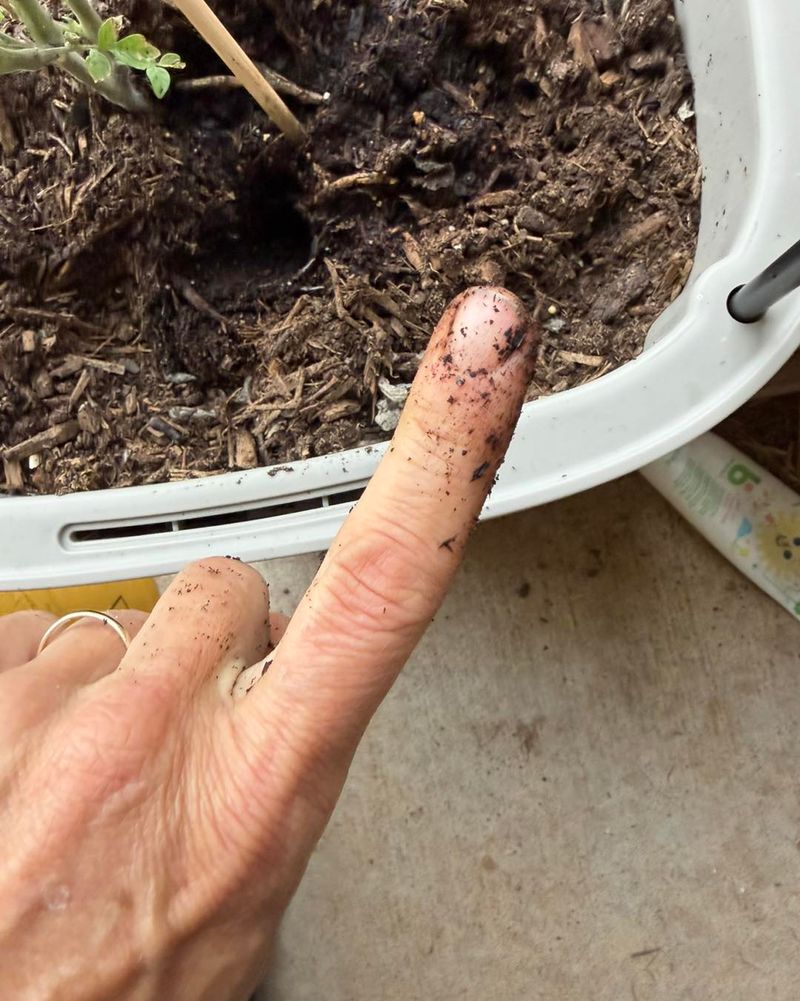
The most reliable tool for deciding when to water is already attached to your hand. Push a finger straight down into the soil at the base of the rose, aiming for about an inch below the surface.
If the soil at that depth feels dry, the plant may be ready for a soak. If it still feels cool and moist, hold off and check again the next day.
Texas A&M Earth-Kind rose guidance uses dryness at approximately 1 inch into the root zone as a practical trigger for established roses in Texas conditions. That is a useful starting point, not a universal rule that applies everywhere.
Sandy Florida soil drains fast and may dry out at that depth within a day or two, while heavy clay in parts of Texas holds moisture much longer and raises the risk of overwatering if you water on a fixed schedule regardless of what the soil tells you. A trowel or an inexpensive moisture meter can give you a more precise read if you want one.
Surface dryness alone is not enough to act on. The top layer of soil can look and feel bone dry while the root zone a few inches down remains adequately moist, especially after a mulched bed has been watered deeply.
Rainfall needs the same scrutiny: Penn State Extension’s garden watering guidance notes that a storm can produce runoff or wet only the surface without penetrating deeply enough to reach the roots. Always check the root zone after rain before skipping your next irrigation check.
South Florida rose guidance from UF/IFAS recommends 2 to 3 inches of water per week including rainfall, divided into deep soakings, but emphasizes adjusting for local conditions rather than following a rigid calendar.
Soak slowly at the base
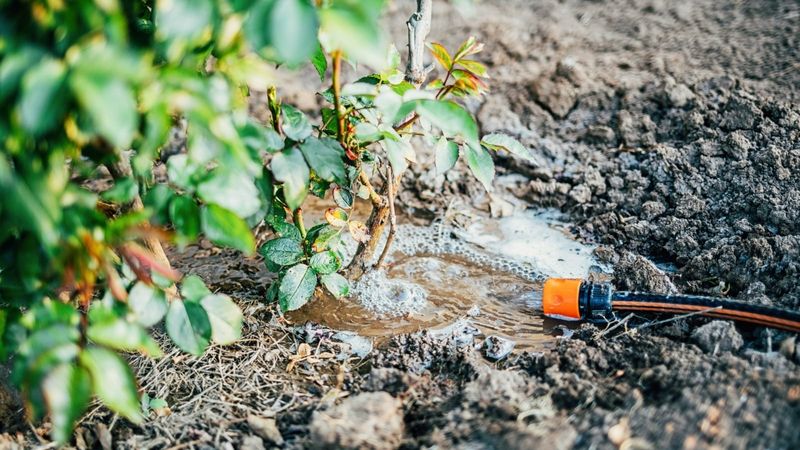
Once the soil check confirms that the root zone is genuinely dry, the goal is to move water down to where the roots actually live, not just wet the surface. Slow, thorough watering at the base of the plant gives moisture time to soak in rather than run off the surface or evaporate before it reaches the roots.
Drip irrigation is the most efficient option for roses. A soaker hose laid around the base of the plant works nearly as well and is easy to set up without a permanent system.
Both methods keep water at ground level, which means foliage stays dry. Texas A&M Earth-Kind rose guidance recommends base irrigation specifically, and UF/IFAS Florida rose guidance connects drip and base watering with reduced foliar wetness and lower pressure from diseases like black spot, which thrives when leaves stay wet.
Hand watering works fine if you keep the stream at the base and give the plant enough time to absorb a thorough soak. University of Georgia Extension June gardening guidance echoes the same principle: slow and deep beats fast and shallow every time.
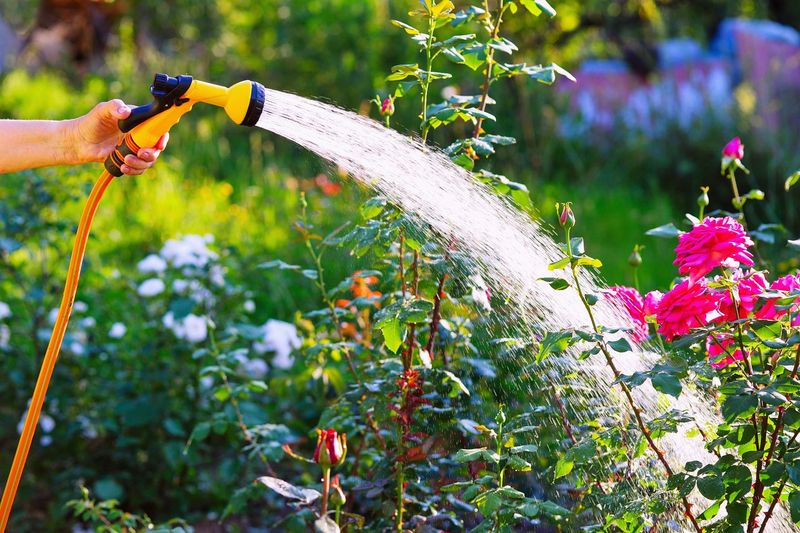
Broad overhead sprinklers are the least favorable option for roses because they wet the foliage and can waste water to evaporation during hot weather. If an overhead system is all you have, running it briefly and early in the day reduces, but does not eliminate, those drawbacks.
Use morning as a practical default
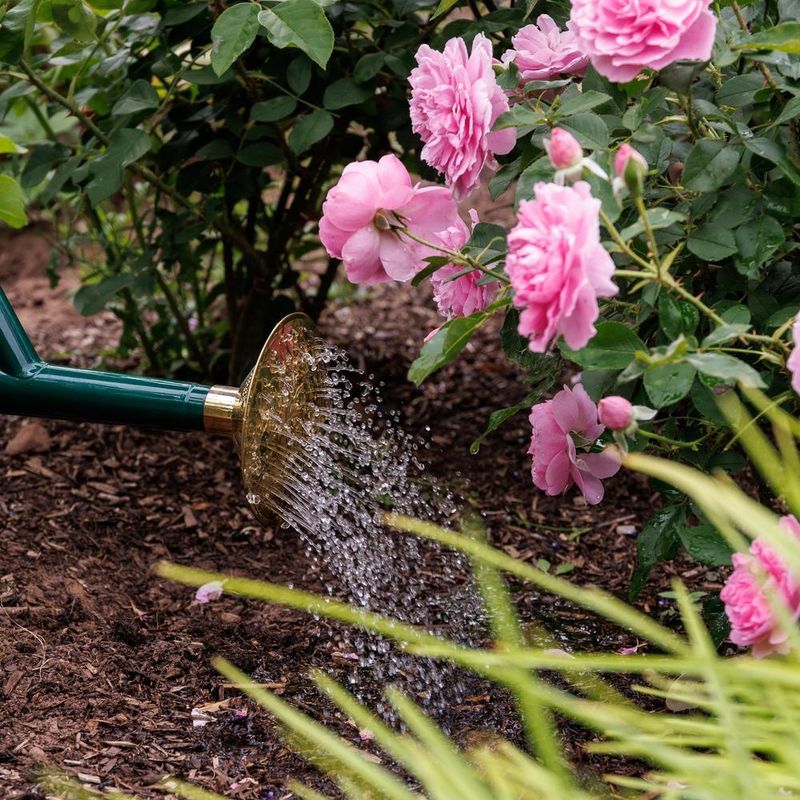
Timing matters most when water is going to touch the leaves. Early morning is the practical default for hand watering or any system that wets foliage, because the sun and rising temperatures dry the leaves quickly during the day.
Wet foliage that stays damp through the afternoon and overnight creates exactly the conditions that fungal diseases like black spot prefer.
South Florida UF/IFAS rose guidance recommends deep morning soakings, and UF/IFAS Wakulla County summer irrigation tips reinforce morning watering as a way to limit disease pressure. University of Georgia Extension guidance on common landscape diseases also links prolonged leaf wetness, especially overnight, to increased fungal problems in ornamentals.
Morning is a sensible routine, not a rigid law. Penn State Extension research on drip irrigation timing notes that drip systems, which deliver water at the soil level and do not wet foliage, are not strongly dependent on morning versus afternoon timing for efficiency.
The disease concern is wet leaves, not the clock. If you use drip or a soaker hose, the hour matters less.
One myth worth clearing up: water droplets do not burn rose leaves in sunlight. Penn State Extension identifies this as a watering myth; leaf damage comes from disease, insects, fertilizer injury, or other stressors.
The real reason to avoid wetting foliage is disease management and water efficiency. Finally, if a rose’s root zone is genuinely dry and the plant is visibly drought-stressed, University of Minnesota Extension watering guidance supports watering when the plant needs it rather than postponing until the next morning.
Let the site determine how often you check
Swapping one fixed schedule for another misses the point of the check-then-soak method. How quickly your rose’s root zone dries out depends on a combination of factors that vary by yard, by region, and by season, and the only way to know when to water is to check the soil and let it tell you.
Sandy soil, strong wind, reflected heat from walls or pavement, raised beds, and arid desert conditions all accelerate drying and may shorten the interval between checks to every day or two. University of Arizona Extension guidance on rose care in the low desert recommends slow irrigation and substantially more frequent summer watering than general Texas guidance because desert heat and soil conditions are far more demanding.
Heavy clay, compacted soil, and poor drainage slow drying and raise the risk of overwatering if you water on a fixed schedule.
Texas A&M Earth-Kind guidance on old roses offers a 7- to 10-day deep-soaking interval as a regional example for established roses under Texas conditions, while South Florida UF/IFAS rose guidance suggests two to three deep soakings per week because of that region’s heat, humidity, and fast-draining soils. Both are starting points calibrated to local conditions, not prescriptions for every garden.
UF/IFAS Florida rose guidance notes that summer rainfall can be substantial but may not penetrate sandy or compacted soil reliably, so a soil check after rain still makes sense.
Mulch makes the interval more forgiving. Texas A&M Earth-Kind rose guidance recommends about 3 inches of organic mulch around the base of the rose to conserve moisture and moderate soil temperature.
Keep the mulch pulled back slightly from the canes themselves; piling it against the wood can trap moisture and invite disease. A good mulch layer will not eliminate the need to check, but it will slow the drying cycle and give you a bit more margin.
New plantings and containers dry faster
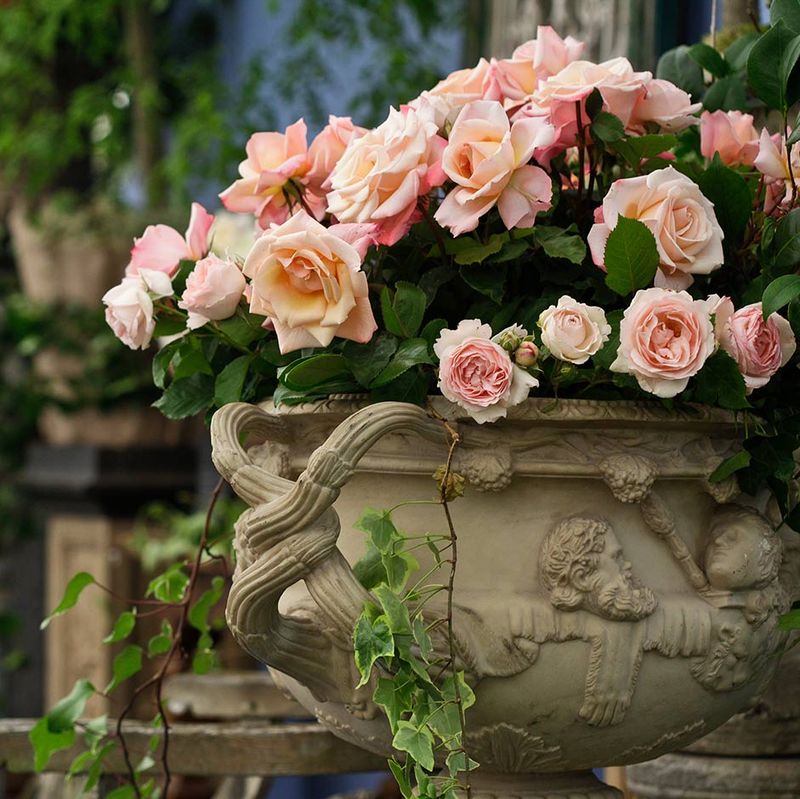
Freshly planted roses and container roses operate by different rules than established in-ground plants, and treating them the same way is one of the most common summer mistakes. A newly planted rose has not yet developed the root network it needs to pull moisture from a wider area of soil, which means the small root ball it arrived with can dry out much faster than surrounding soil suggests.
UF/IFAS Florida rose guidance recommends frequent irrigation for the first six to eight weeks after planting while the rose establishes itself. During that window, checking the root zone every day or two in summer heat is reasonable, and watering whenever the root zone is dry is appropriate even if the surrounding soil still looks fine.
Once the plant is established, you can shift to the check-then-soak rhythm used for mature roses.
Container roses present a different challenge. Pots, especially small ones, heat up quickly in direct sun and lose moisture through their sides as well as the top.
University of Minnesota Extension guidance on watering container plants notes that containers may need checking daily during hot weather. Daily checking is not the same as daily watering: stick a finger into the growing medium before each soak and water only when the top inch or so feels dry.
Automatic daily watering without checking can saturate the medium and damage roots just as easily in a pot as in the ground.
Persistent wilt means investigate before watering again
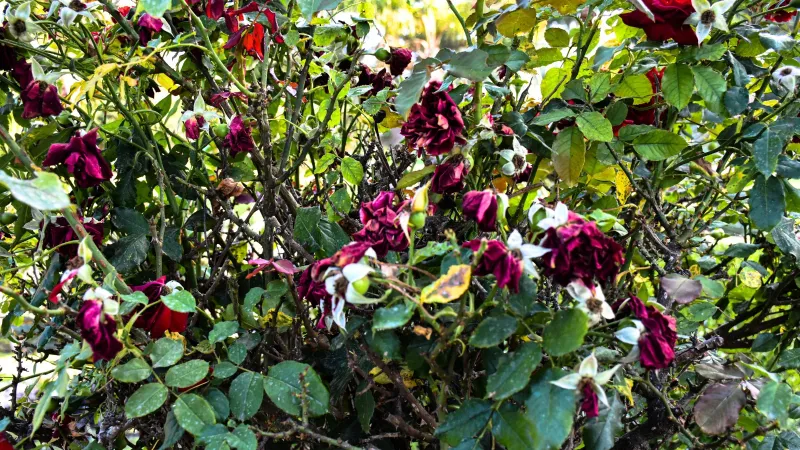
A rose that stays wilted or continues to fade after you have confirmed the soil moisture is adequate and given it a proper soak is telling you something beyond simple thirst. Heat load alone can keep leaves drooping through the hottest part of the afternoon even when the plant is well-watered; many roses recover on their own once temperatures drop in the evening.
Waiting to see whether the plant perks up after sunset costs nothing and avoids an unnecessary second watering.
When the wilt or fading does not clear up, the list of possible causes gets longer. Root injury from previous overwatering, poor drainage, transplant stress, salt buildup in the soil, vascular disease, fungal infection, or pest damage can all produce symptoms that look like drought stress.
Penn State Extension guidance on planting ornamentals points out that saturated soil displaces oxygen from the root zone, so adding more water to a poorly drained bed can accelerate root damage rather than reverse it. Penn State Extension’s overview of bacterial leaf scorch is a reminder that some vascular problems mimic drought stress closely enough to fool experienced gardeners.
Fading blooms follow their own logic. An old flower that has passed its peak will not be restored by deep watering, and neither will color loss caused by fungal defoliation, nutrient deficiency, or a cultivar that simply struggles in your local heat.
UF/IFAS Florida rose guidance notes that rose performance varies considerably by type, and that heat-tolerant shrub and old rose varieties generally hold up far better in Southern summers than many modern hybrid teas.
The practical sequence stays the same regardless of what you suspect: check the root zone, water slowly and deeply only when the soil confirms the plant needs it, then step back and watch the plant’s response before doing anything else. Watering is one tool, not a universal fix, and the rose will give you more useful information than any schedule can.