
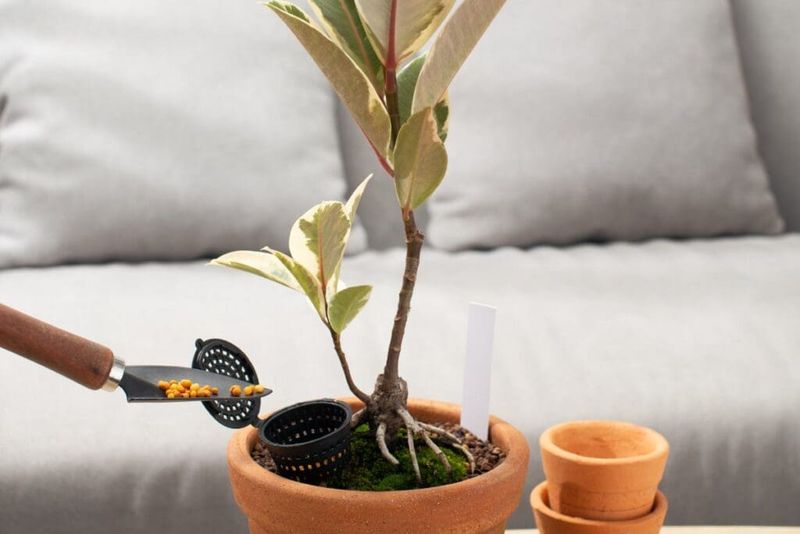
A rubber plant that shoots straight up but stays bare and narrow can feel like a plant that is quietly failing you. The good news is that a tall, sparse Ficus elastica is not automatically a sick plant, and one repotting mistake is rarely the whole story.
Light, pruning habits, and root health each play a role, and knowing which one to address first makes all the difference.
A Tall Rubber Plant May Not Need a New Pot
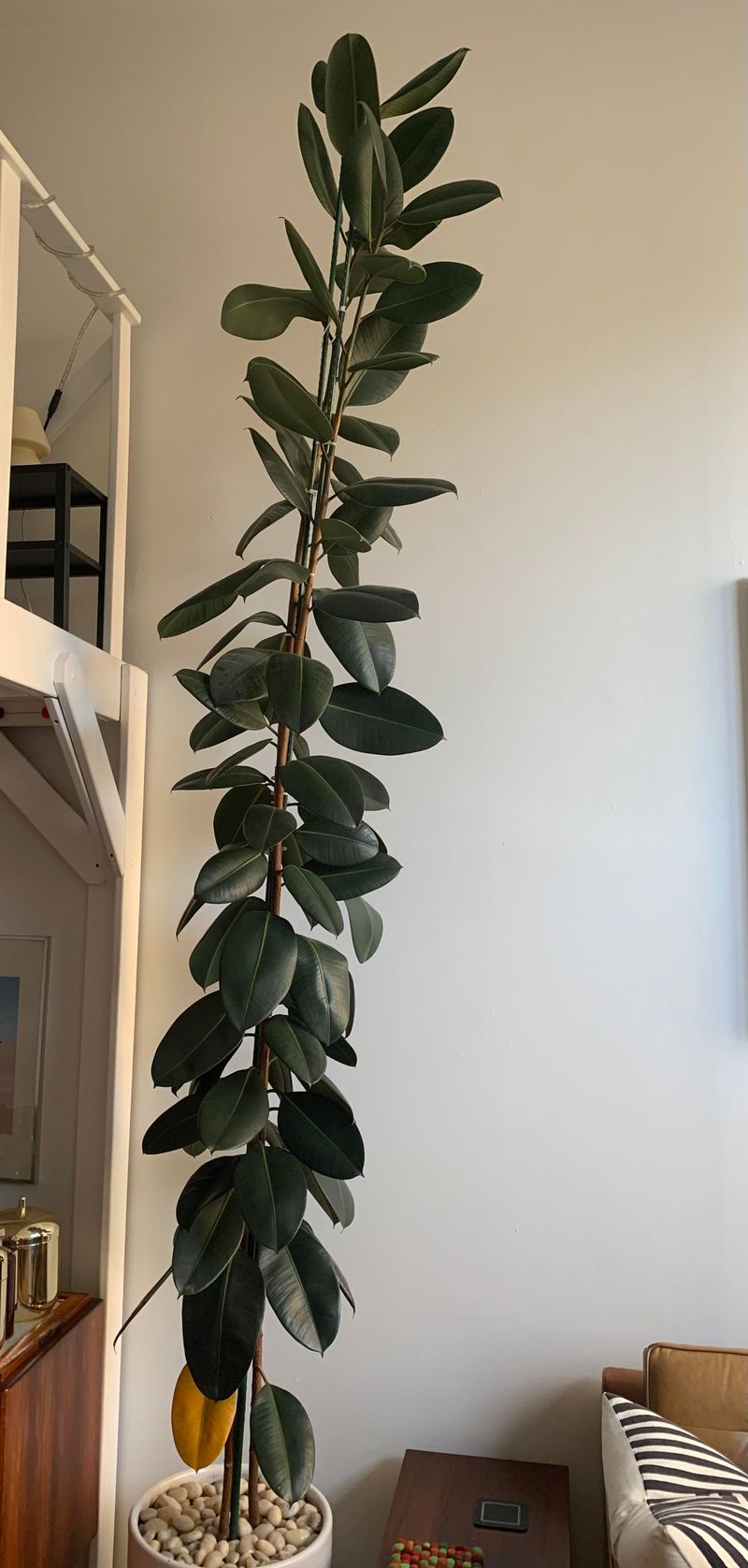
Rubber plants have a reputation for growing up rather than out, and that shape is not always a sign something has gone wrong. NC State Extension notes that an unpruned Ficus elastica naturally tends toward a tall, narrow, tree-like form, and that pruning the main branches is what encourages a bushier habit.
If your plant has never been pruned, its upright silhouette may simply reflect how the species grows.
That said, not every tall, sparse plant is just doing its thing. Low light can push a rubber plant to stretch and lean toward its nearest light source, producing elongated stems and wider gaps between leaves.
Iowa State Extension identifies low light as a cause of excessive bending and stretching in rubber plants, which looks different from the plant’s normal upright form. A plant that is reaching hard toward a window or leaning at an angle is showing a light problem, not just a growth habit.
Leaf loss adds another layer. Clemson Extension links inadequate light and excess moisture to rubber-plant leaf drop, so a plant that looks sparse because it has shed its lower leaves is a different situation from one that simply never branched.
Repotting can support root health when the roots genuinely need more room, but moving the plant to a new pot will not cause it to grow side branches on its own.
Inspect the Root Ball Before You Repot
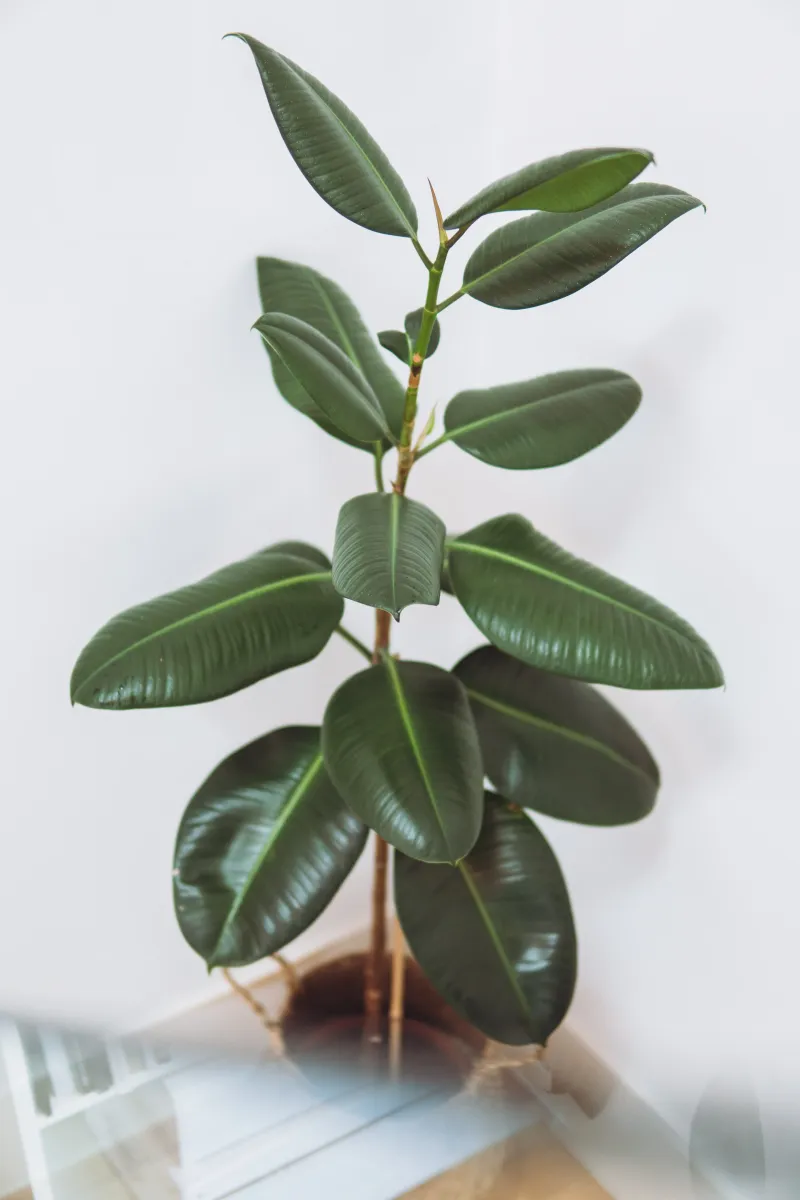
Before reaching for a bigger pot, check what is actually happening below the soil line. Tipping the plant out and looking at the root ball takes about two minutes and tells you far more than plant height ever could.
Illinois Extension outlines several clear signals that a plant may need more room: roots emerging from drainage holes, roots visible at the soil surface, a densely compacted root mass when you slide the plant free, smaller new leaves than usual, and soil that dries out unusually fast. Frequent wilting between otherwise normal waterings is another sign worth taking seriously.
When several of these show up together, repotting is a reasonable next step.
If you tip out the plant and the root ball looks loose and healthy with visible soil still surrounding the roots, the container is probably not the problem. Some Ficus tolerate a relatively snug fit without showing any decline, and Illinois Extension notes that some plants do well while pot-bound.
Repotting based on plant height alone, or on a yearly schedule, is not supported by root-ball evidence and can introduce new problems if the timing or container choice is off. Let what you see in the roots guide the decision, not how tall the plant looks from across the room.
An Oversized Pot Can Create a Moisture Problem
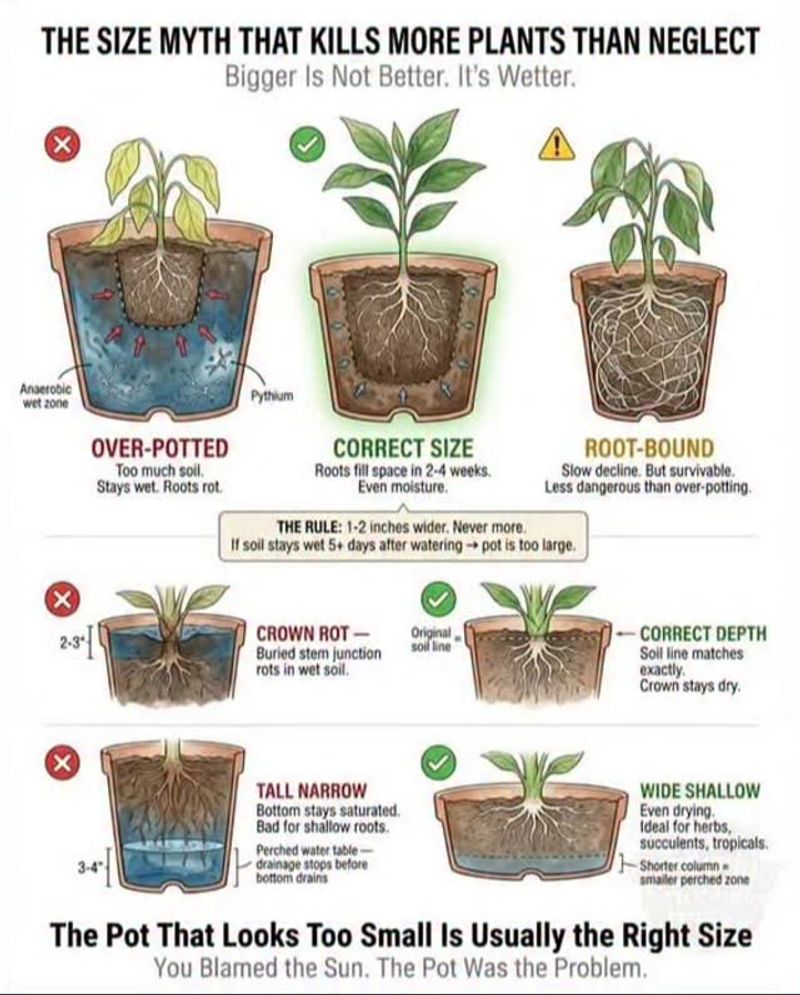
Choosing a pot that is much larger than the root ball is one potentially serious container mistake, though it is not the single most common or most harmful error every plant faces. The problem is straightforward: when a small root system sits inside a large volume of soil, the outer portion of that mix stays wet long after the roots have absorbed what they need.
Illinois Extension explains that excess soil around a small root system holds moisture longer, reduces aeration, and raises the risk of root rot, and Virginia Cooperative Extension similarly cautions that oversized containers increase disease pressure on container plants. A rubber plant already sensitive to soggy conditions becomes more vulnerable when its pot holds more water than its roots can use.
Two other container issues deserve attention. First, a pot without drainage holes traps water at the bottom with no exit, which compounds any overwatering risk.
Illinois Extension specifically rejects the common advice to place gravel at the bottom of a pot as a drainage fix, because the gravel layer actually raises the saturated zone rather than lowering it. Second, planting the trunk deeper than its original soil line can keep moisture against the stem and increase the chance of decay at the base.
None of these issues alone guarantees a sparse canopy, but any one of them can limit root health and slow the plant’s overall progress.
Repot Modestly When the Evidence Supports It
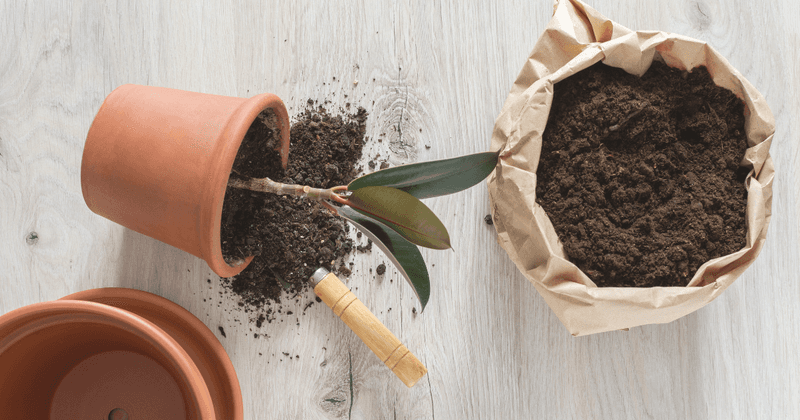
When the root ball clearly shows it needs more space, a careful repotting sequence protects the plant rather than stresses it. Timing matters: Illinois Extension recommends repotting during active growth, which for most indoor rubber plants means spring or early summer.
That timing gives the roots a full growing season to establish in the new mix.
Choose a container about 1 to 2 inches wider in diameter than the current pot, or one standard size up. The Illinois Extension Good Growing blog reinforces that modest sizing keeps moisture levels manageable and reduces the risk of waterlogged soil around a newly disturbed root system.
The pot must have drainage holes. Use a well-draining houseplant mix rather than dense garden soil or a mix that holds moisture tightly.
Before placing the plant, look at the outer roots. University of Maryland Extension advises gently loosening or trimming tightly circling roots rather than dropping the intact root-bound mass straight into the new container, where circling roots may continue to restrict growth.
Set the plant at the same depth it sat before. Burying the trunk higher than its original soil line can trap moisture against the stem and lead to problems at the base over time.
Once the plant is settled, water it thoroughly once, let the excess drain completely, and empty any water that collects in the saucer or decorative cachepot. Clemson Extension notes that rubber plants are sensitive to overly wet soil, so letting standing water sit beneath the pot defeats the purpose of a well-drained setup.
Give the Plant Bright, Filtered Light
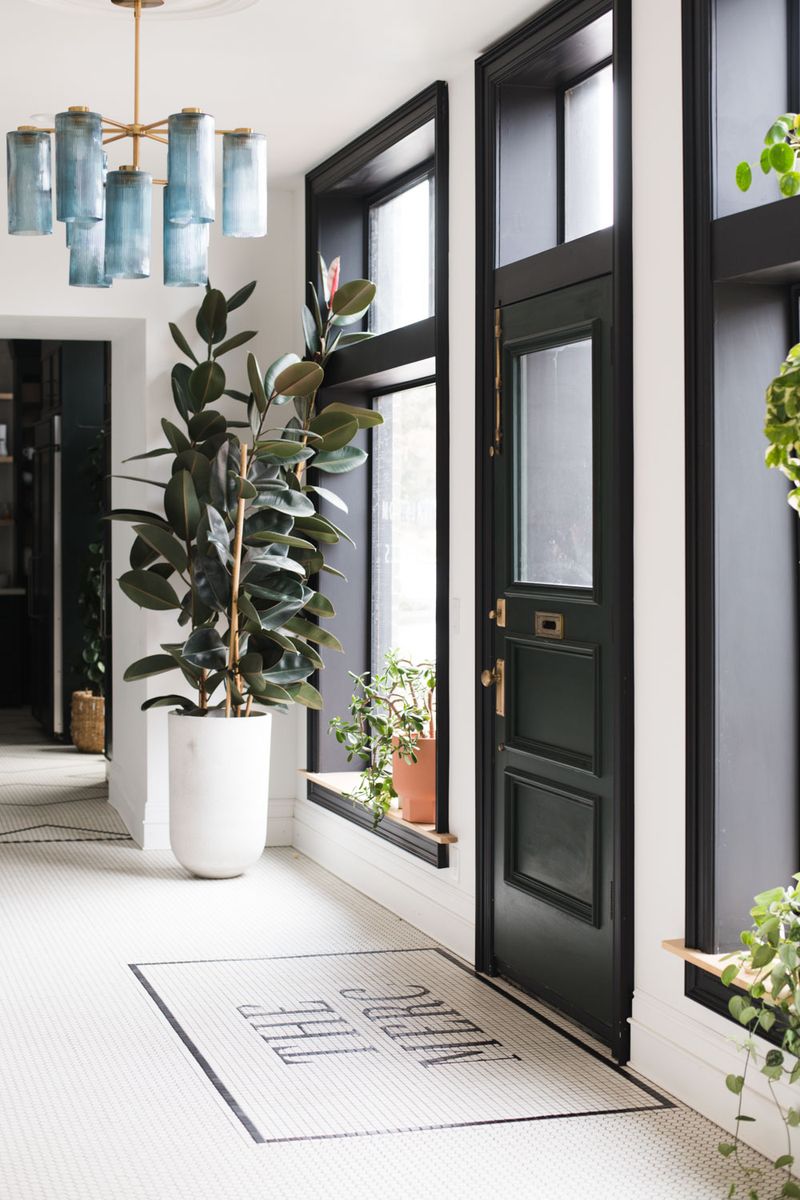
Light is one of the most direct levers a grower has over how a rubber plant develops, yet it is easy to underestimate how much the indoor position matters. Clemson Extension recommends bright light for rubber plants and notes that a spot near an east-facing window works well, providing strong morning light without the intensity of direct afternoon sun that can scorch leaves.
When light falls short, the plant responds in visible ways. Stems stretch and lean, internodes grow longer, and the overall silhouette becomes even more sparse than the plant’s natural upright form.
Iowa State Extension connects low light directly to excessive bending and stretching in rubber plants. Leaf drop in lower light is also a documented response, which can make a plant look bare from the base up rather than simply narrow.
Moving a rubber plant to a brighter location can slow continued stretching and support healthier new growth going forward. What it cannot do is reverse stems that already grew long, restore leaves that already fell, or guarantee that the canopy fills in.
Arizona Extension houseplant guidance notes that low light is a common source of decline in indoor plants and that correcting it improves the conditions for recovery rather than instantly reversing damage. Think of better light as setting the stage for improvement rather than an immediate fix.
Prune Healthy Growth to Encourage a Fuller Canopy
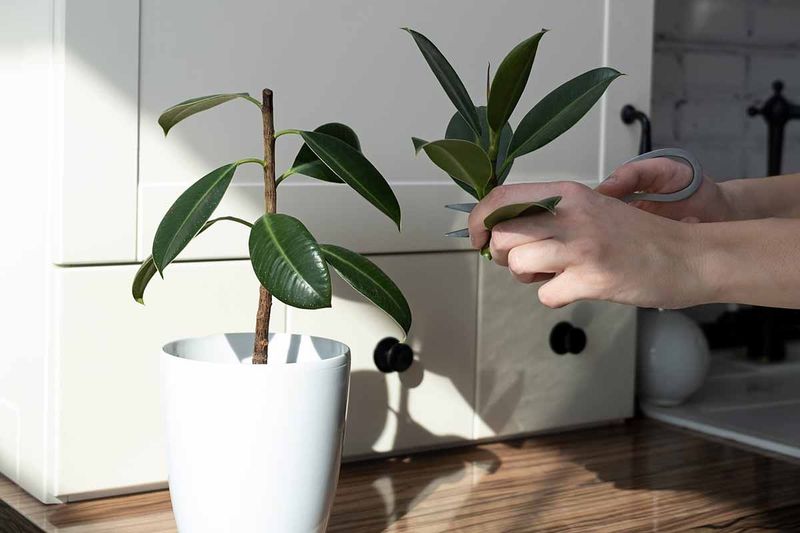
Pruning the main stem or a primary branch is the most direct action a grower can take toward a fuller rubber plant. When the growing tip at the top of a stem is removed, the hormonal signal that suppresses buds lower on the stem weakens, which can allow those dormant lateral buds to break and develop into new shoots.
UGA Extension explains that regrowth after a pruning cut depends on the plant, the amount removed, and the location of the cut, so the outcome is not guaranteed. A healthy plant in good light is more likely to respond with multiple buds than one that is already stressed.
NC State Extension recommends pruning main branches specifically to encourage a bushier habit in rubber plants, distinguishing that action from simply leaving the plant to grow on its own. Aim to prune during active growth when the plant has the energy to respond, generally in spring or early summer.
Illinois Extension supports timing significant interventions to the active growing season for the best recovery.
Safety is non-negotiable when cutting rubber plants. The milky white latex sap that flows from any cut surface can irritate skin and cause stomach upset if ingested.
Clemson Extension advises wearing gloves, avoiding contact with eyes, and washing any sap off skin promptly. Keep cuttings away from pets and children.
Use clean, sharp pruning shears to make a smooth cut rather than tearing the stem, and wipe the blade with rubbing alcohol before and after to avoid spreading any pathogens between plants.
Use a Simple Decision Path for the Sparse Plant
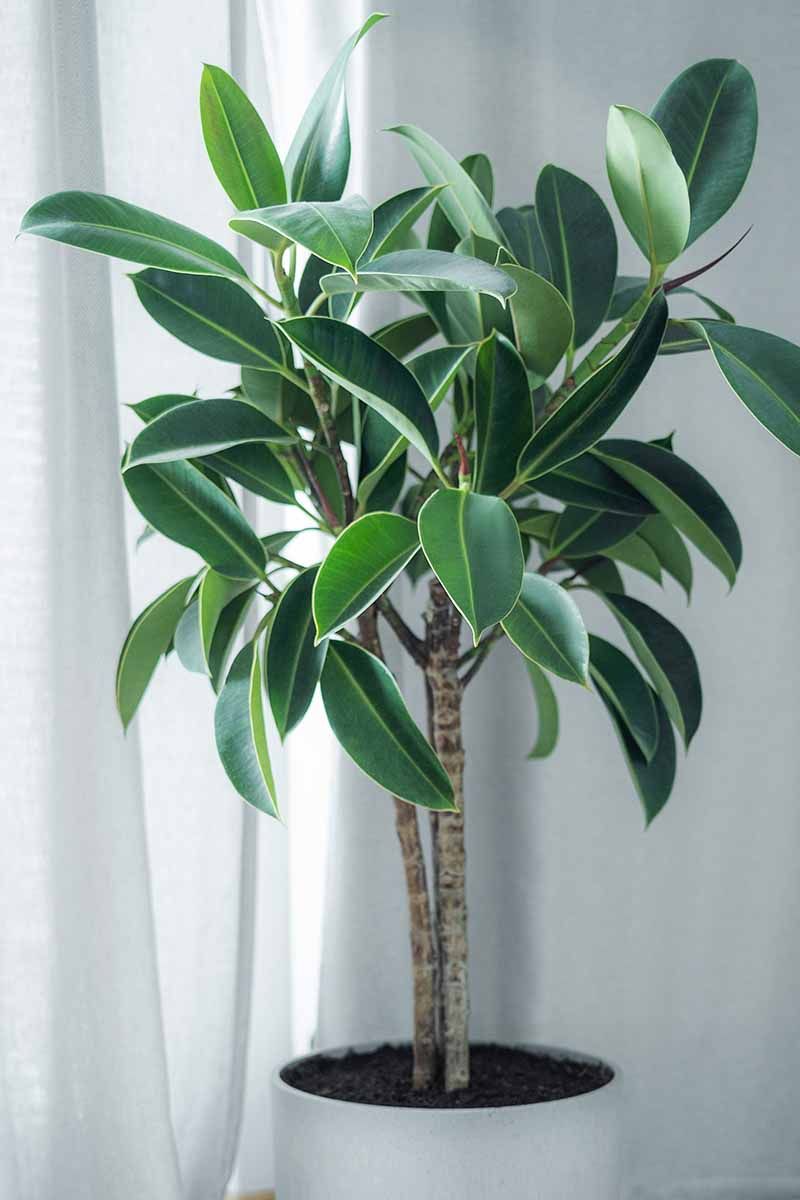
Working through a sparse rubber plant does not require guesswork. Start with the roots: tip the plant out and look at the root ball.
Illinois Extension’s repotting guidance provides a clear checklist of signs that justify a container change, including tightly packed roots, roots at the surface or exiting drainage holes, and soil that dries unusually fast. If those signs are absent, leave the pot alone.
When repotting is warranted, go up only one modest size, use a pot with drainage holes, and keep the plant at its original planting depth. If the roots look healthy and the pot seems fine, shift your attention to light and pruning instead.
Brighter indirect light slows continued stretching and supports new leaf growth. NC State Extension confirms that pruning the main stem or branches is the practical route to a bushier rubber plant, while UGA Extension qualifies that branching response depends on plant health, light, and cut placement.
A snug pot may be perfectly fine. An oversized, wet pot can cause real harm.
And repotting by itself will not make a naturally upright rubber plant branch. How well the plant responds to any of these steps depends on its overall health and the growing conditions you can provide.
Clemson Extension puts it plainly: good light, appropriate watering, and attentive care are the foundation every other improvement builds on.