
Something is quietly working against your tomato plants, and it might not be the heat, your watering schedule, or bad luck. A nearby black walnut tree is worth investigating when your tomatoes wilt unexpectedly, yellow, stunt, or struggle despite decent care.
That said, a disappointing harvest alone does not point the finger at any one cause, and this guide will help you sort through the real possibilities before making any big decisions about your garden or your tree.
Check for Black Walnut Before Blaming the Tree
Before any tree in your yard earns the blame for a struggling tomato crop, it needs to be identified. The tree most consistently flagged by university extension sources as a potential problem for tomatoes is black walnut, known botanically as Juglans nigra.
It produces a compound called juglone, which has been associated with yellowing, stunting, wilting, and decline in tomatoes, peppers, potatoes, and eggplants.
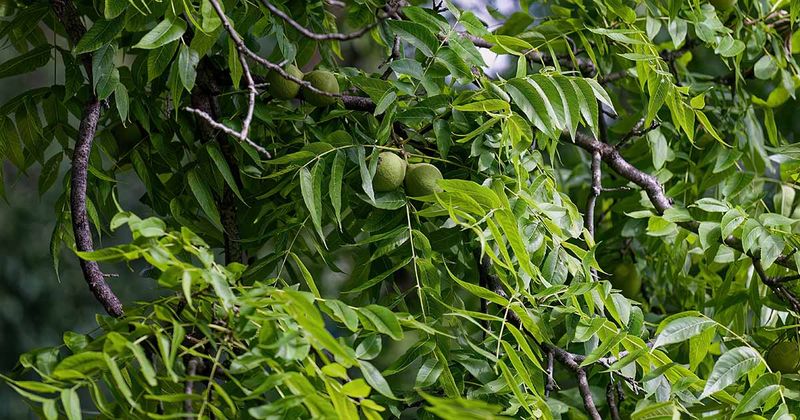
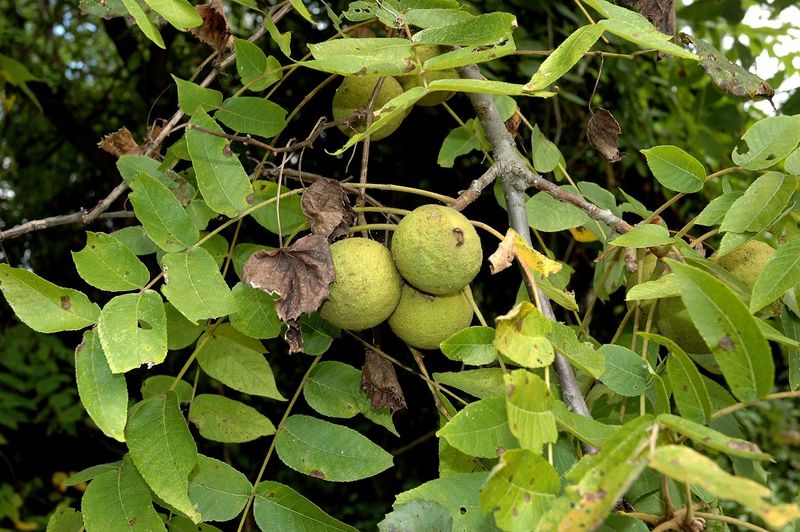
Spotting a black walnut takes a closer look than you might expect. Utah State University’s tree identification resource describes the tree as having long, pinnately compound leaves, typically with 15 to 23 leaflets arranged in pairs along a central stem.
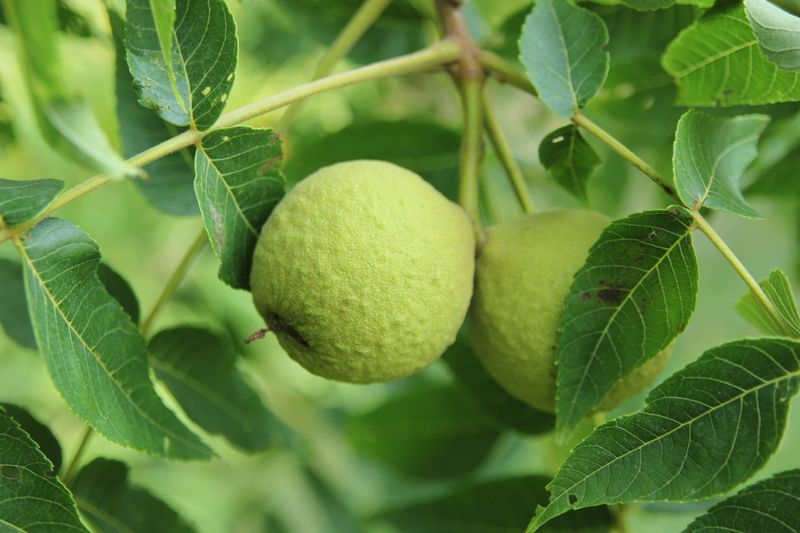
In late summer and fall, the nuts appear as round, green-husked fruits roughly the size of a tennis ball. The bark on mature trees is dark and deeply furrowed in a distinctive diamond-ridged pattern.
Not every walnut-like tree carries the same risk. Penn State Extension identifies black walnut and butternut as the most recognized problem species, while English walnut, pecan, and hickory produce juglone or related compounds at lower concentrations and are less consistently linked to garden-plant injury.
The tree becomes a more credible suspect when its roots may overlap your tomato bed and your plants show signs beyond a disappointing harvest. Poor fruit count by itself is not a diagnosis.
A specific tree, a plausible root-zone overlap, and a recognizable stress pattern together make black walnut worth investigating as a site problem rather than assuming it is the automatic cause.
Few Tomatoes Do Not Prove Juglone Injury
A light tomato harvest is frustrating, but it is not enough on its own to point to black walnut as the cause. Juglone-related stress tends to show up as a cluster of visible problems, not just a quiet shortfall in fruit production.
Knowing which symptoms make the tree more suspicious helps you ask better questions before pulling plants or making any big landscape changes.
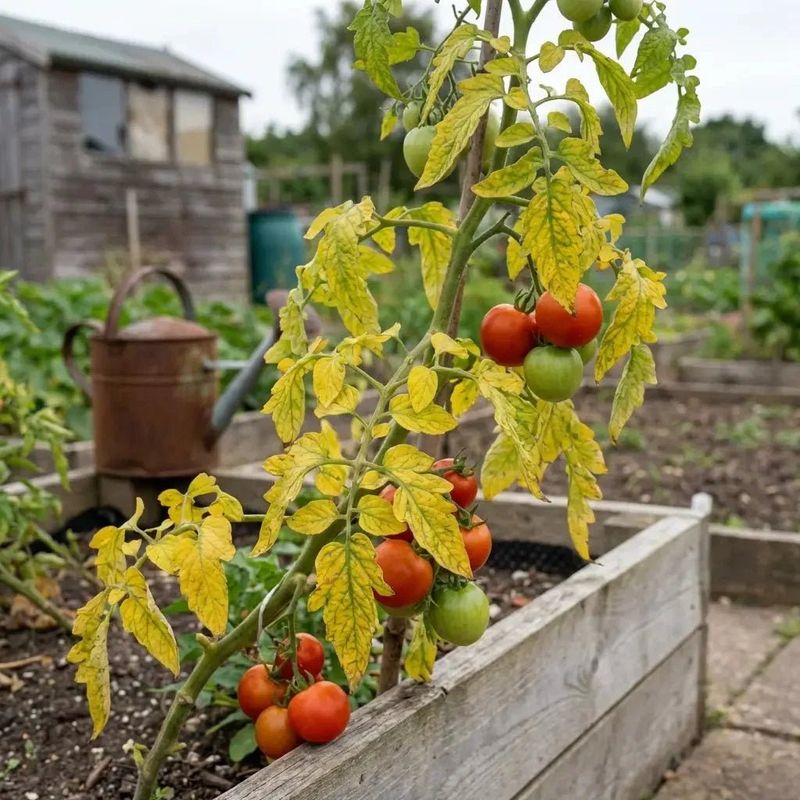
According to University of Wisconsin Extension’s black walnut toxicity guide, the pattern most associated with juglone injury includes rapid wilting even when the soil is adequately moist, followed by yellowing, browning, stunting, twisted or distorted leaves, vascular discoloration, and eventual plant death. That combination, especially the unexplained wilt in wet soil, is what makes black walnut worth adding to your list of suspects.
Rapid wilting is not specific to juglone, though. Fusarium wilt, Verticillium wilt, bacterial or root diseases, drought stress, herbicide injury, and heat stress can all produce similar-looking collapse.
A plant that wilts suddenly and does not recover overnight, even with moist soil and shade, deserves a closer look that includes disease as a possibility.
Compare that to a tomato plant that looks vigorous, holds its leaves, and grows well but simply drops its blossoms or sets very little fruit. That pattern points toward a different set of causes entirely, ones covered in the heat and pollination section below.
Washington State University Extension cautions that much of the landscape evidence on juglone is incomplete, anecdotal, or based on older observational lists rather than controlled garden trials. One poor harvest season is not enough to justify uprooting a tree or discarding an entire crop without more investigation.
Map the Tree’s Root Zone, Not Just Its Shade
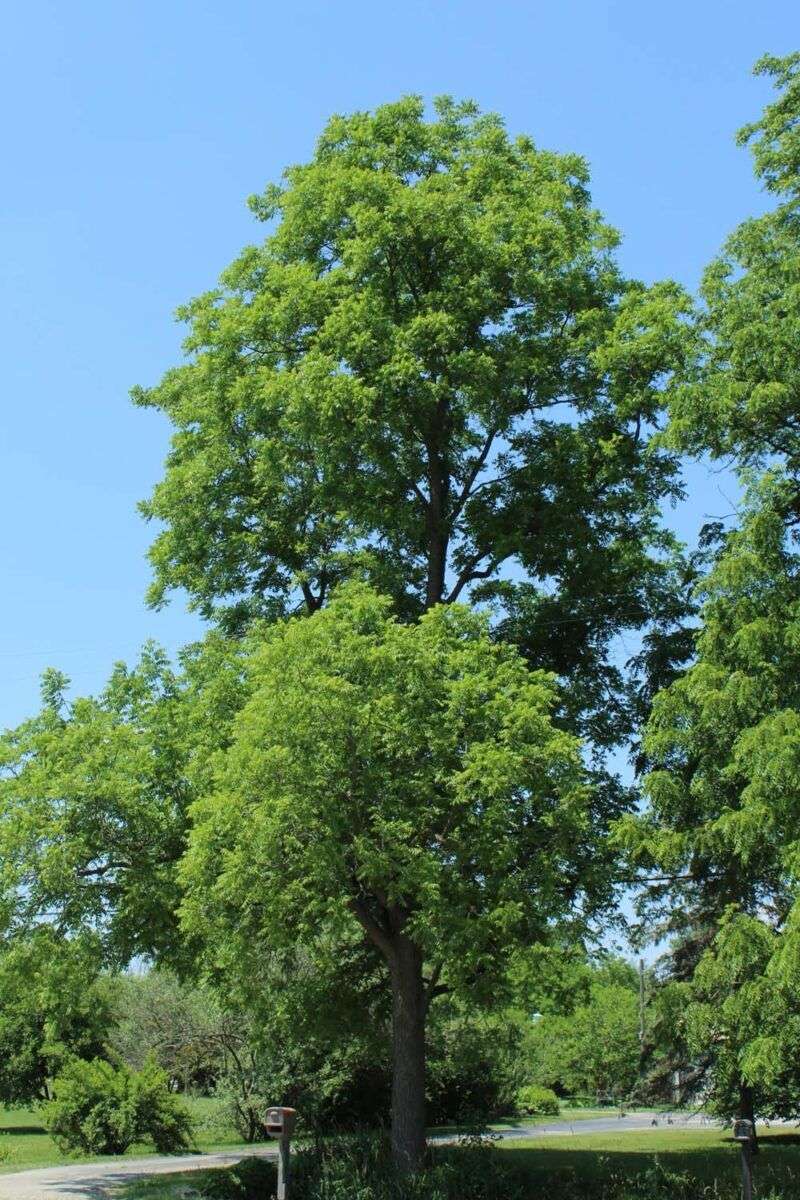
Most gardeners measure a tree’s influence by where its canopy ends, but roots tell a more useful story. A mature black walnut’s roots can extend well beyond the drip line, which means a tree that appears to be a comfortable distance from your tomato bed may still have roots running underneath it.
The Morton Arboretum describes the risk zone for a mature black walnut as roughly 50 to 80 feet from the trunk, with the greatest concentration of concern beneath and near the canopy. These figures are practical cautionary estimates, not measured universal boundaries.
Tree size, root distribution, soil texture, drainage, permeability, and plant sensitivity all affect how that range plays out on any specific property.
Soil conditions matter more than many gardeners realize. A peer-reviewed soil study on juglone in black walnut alley soils found measurable juglone concentrations in the rhizosphere but also found that the compound degrades quickly in soils with active microbial communities.
Clay soils, organic matter, and good drainage can all influence how juglone moves or breaks down, which is part of why some gardens near walnuts show obvious injury while others seem unaffected.
Black walnut also affects nearby plants through mechanisms beyond juglone alone. Shade reduces fruit set in tomatoes even without any chemical involvement.
Ask Extension notes that a nearby tree can compete for water and nutrients and cause root disturbance, all of which can stress a tomato planting independently. Treating a nearby walnut as a single-chemical threat misses the full picture of what the tree’s presence means for your garden site.
Check Southern Heat Before Blaming the Walnut
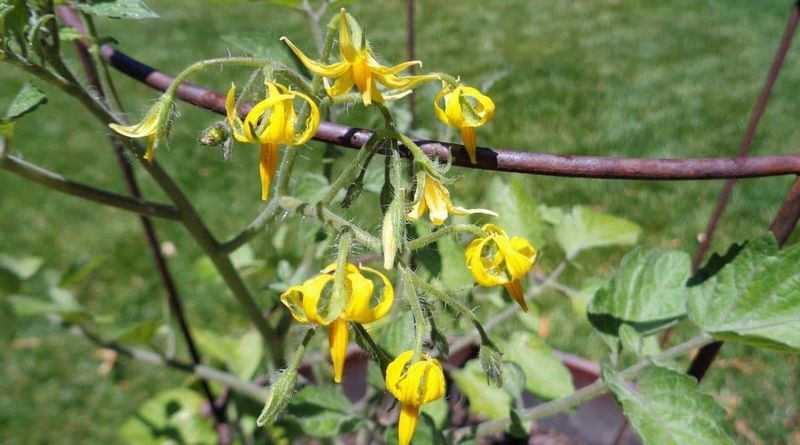
Florida and Texas gardeners deal with a heat-related tomato problem that has nothing to do with neighboring trees. When daytime temperatures climb too high or nighttime temperatures stay above roughly 70 to 75 degrees Fahrenheit for extended periods, tomato flowers drop before they can set fruit.
The plant may look completely healthy, putting out new growth and holding its foliage, while the blossoms simply fall away.
Texas A&M AgriLife Extension’s vegetable growers handbook lists high heat, cool snaps, irregular watering, excess nitrogen, insect damage, shade, and variety selection as documented contributors to poor fruit set. A companion Texas A&M resource on tomato production reinforces that blossom drop during peak summer is one of the most common complaints from Southern gardeners and that the cause is usually environmental rather than disease or chemical injury.
Pollination plays a role too. Tomato flowers are self-pollinating, but pollen needs to move for fertilization to happen.
Outdoors, wind usually handles this well enough. University of Florida IFAS Extension guidance on greenhouse tomato production notes that gentle vibration of flower clusters can improve pollen release when airflow is limited, which is more relevant to enclosed growing situations than to an open garden bed.
University of Georgia Cooperative Extension’s tomato production handbook also identifies irregular irrigation and nutrient imbalances as factors that reduce fruit set, independent of any tree influence. A plant with healthy foliage that drops blossoms during a heat spell makes temperature the stronger competing explanation.
Rapid wilt in moist soil, by contrast, warrants investigation of the root zone and possible disease, including but not limited to walnut exposure. Neither pattern on its own proves juglone injury.
Relocate Sensitive Tomatoes When the Evidence Fits
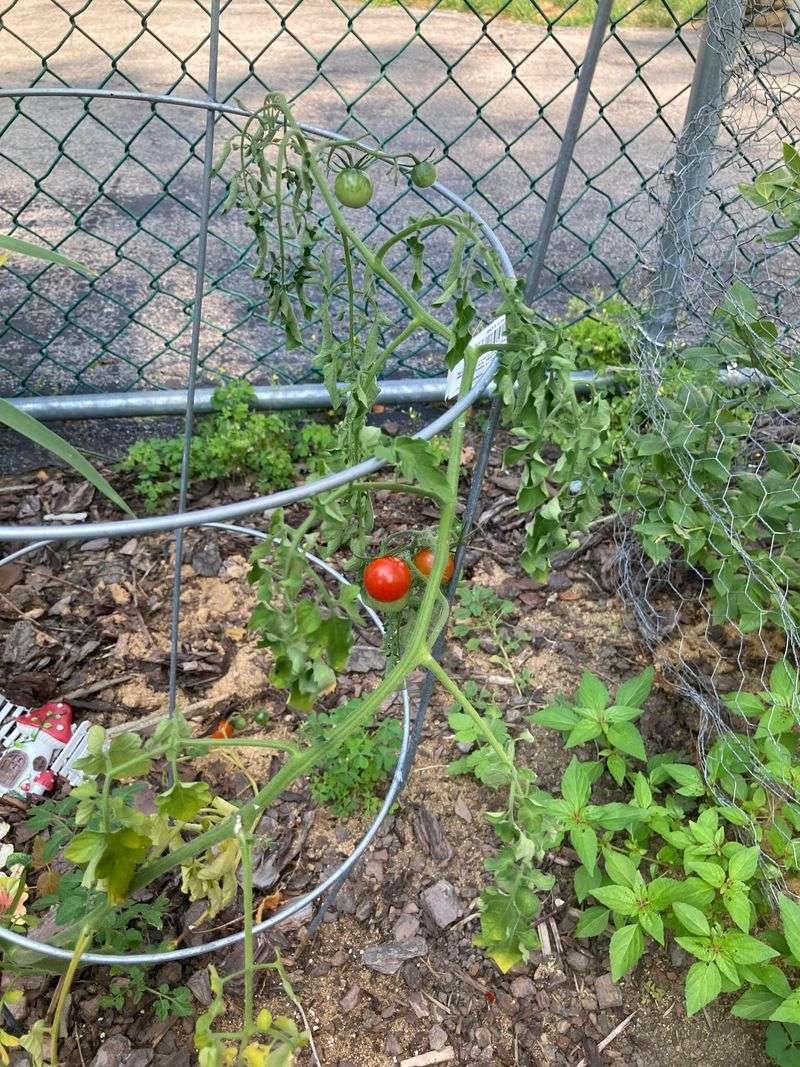
When tree identity, root-zone proximity, and the symptom pattern all point toward black walnut as a credible contributor, moving your tomatoes is the most dependable response available to a home gardener. No fertilizer, soil spray, or compost tea has reliable support for neutralizing juglone in an active garden bed.
The practical answer is physical distance.
University of Wisconsin Extension states plainly that there is no cure once a plant is affected by juglone, which means the effort is better spent protecting replacement plants than trying to rescue a declining one. Tomatoes, peppers, eggplants, and potatoes are among the vegetables most commonly listed as sensitive by extension sources, so any new site for these crops should be chosen with that sensitivity in mind.
A good relocation site gets at least six to eight hours of direct sun, drains well, and sits outside the tree’s likely root zone. Keep the new bed away from walnut leaves, nuts, hulls, and twigs, since those materials carry juglone and can reintroduce the compound to soil you have worked to keep clear.
Relocation does not come with a guarantee. If the new site still falls within reach of walnut roots, or if the original problem was heat, disease, or something unrelated to the tree, the move may not produce the improvement you expect.
Watch new growth over the following weeks rather than drawing immediate conclusions. Improvement after relocation adds weight to the walnut theory, but it does not conclusively prove it was the only factor at work.
Build a Raised Bed That Actually Separates the Roots
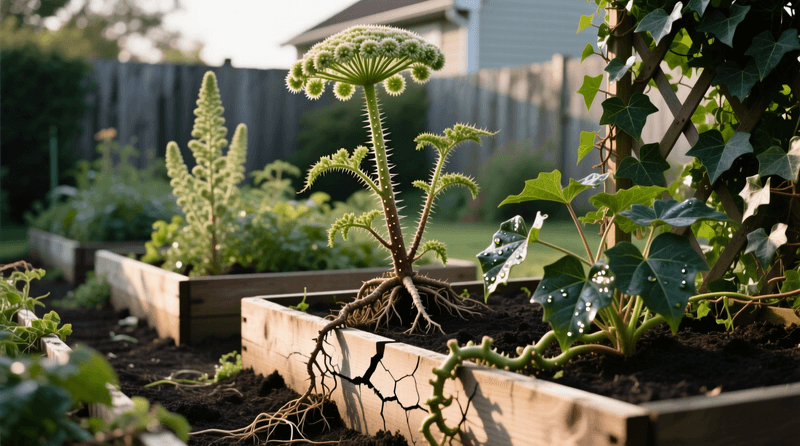
Moving tomatoes far enough from a black walnut is not always possible on a smaller property. A raised bed or container can work, but only if the separation is real rather than symbolic.
Fresh soil piled on top of the ground does not create a barrier if tomato roots can grow down into the surrounding earth or walnut roots can grow up into the bed from below.
Effective physical separation means lining the base of the raised bed with a solid barrier material, filling it with fresh growing medium that has no contact with the native soil, and keeping the walls high enough that roots cannot easily escape or enter. Wisconsin Extension recommends keeping walnut leaves, nuts, hulls, twigs, bark, and roots entirely out of any bed where sensitive plants are grown, because all of these materials can introduce juglone into the growing environment.
Mulch choice matters here. The Morton Arboretum advises against using fresh black-walnut material as mulch around sensitive plants, and sources differ on how thoroughly composting breaks down juglone.
The safest approach for an edible bed is to use a mulch from a different source entirely rather than depend on partially decomposed walnut material.
Tree removal deserves a separate and cautious conversation. Taking down a mature black walnut does not immediately create a safe tomato site.
Residual roots left in the ground can continue releasing compounds as they slowly decay, potentially for several years. Removal also involves safety, ecological, and property considerations that go well beyond the garden.
Treating tree removal as a quick fix for tomato problems is not well supported by the available evidence.
Follow a Cautious Diagnosis-and-Action Path
A sound approach to this problem starts with the tree, not the symptom. Identify whether the tree is actually a black walnut, estimate whether your tomatoes sit within a plausible root-zone range of roughly 50 to 80 feet, and then look honestly at the symptom pattern.
Rapid wilting in moist soil combined with yellowing, stunting, or browning warrants root-zone investigation and disease diagnosis. Texas A&M AgriLife Extension and Wisconsin Extension both support checking heat, watering, nutrients, and disease before assigning blame to the tree.
The action hierarchy is straightforward. Relocate sensitive tomatoes beyond the likely root zone when you have the space.
If relocation is not practical, use a genuinely isolated raised bed or container with a physical barrier and fresh growing medium, and keep all walnut debris out. Do not expect a soil amendment to detoxify the bed, and do not assume removing the tree solves the problem right away.
The Morton Arboretum puts it well: black walnut is a credible suspect, but only when the tree, the site, the symptoms, and the competing causes all point in the same direction. A careful look at all four is what turns a suspicion into a useful plan.