
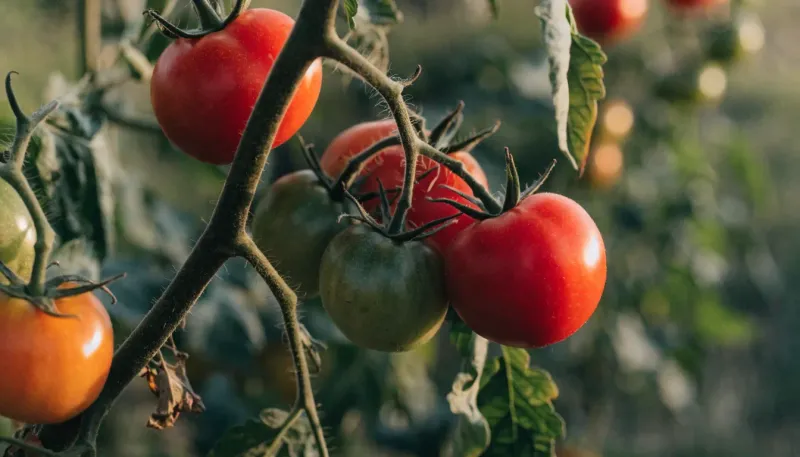
Watching your tomato plants go quiet in late summer is frustrating, especially when the vines still look green and the season feels far from over. A viral idea floating around says one kitchen ingredient can jolt them back into full production, but the real story is more nuanced and more useful.
Before you reach for anything from the pantry, understanding why the slowdown is happening puts you in a much better position to actually help your plants.
A late-summer slowdown does not prove your tomato needs a kitchen remedy
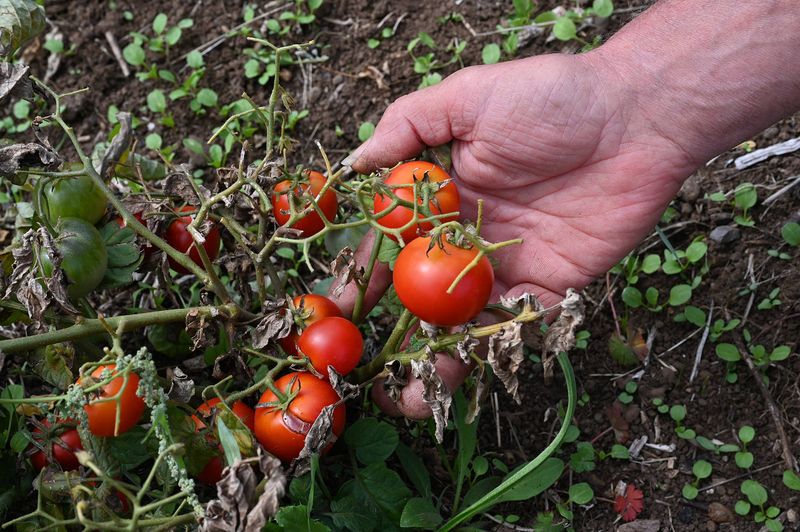
Grabbing a kitchen remedy feels like action, but a slower harvest does not automatically mean your tomato plant is missing a household nutrient. Several completely unrelated factors can reduce production at this point in the season, and applying the wrong fix can waste time or even make things worse.
Heat is one of the most common culprits in Southern gardens. UF/IFAS guidance on Florida tomato production notes that high temperatures can disrupt pollination and dramatically reduce fruit set, meaning a plant can look perfectly healthy while producing almost nothing new.
Inconsistent watering, disease pressure, pest damage, and plain plant age can all produce a similar result.
The type of tomato matters too. Determinate varieties are bred to ripen a concentrated crop and then naturally wind down, so a fading harvest may simply be the variety doing exactly what it was designed to do.
Indeterminate varieties can keep flowering and fruiting for a longer stretch, but only if heat, disease, and general plant health cooperate.
Regional timing adds another layer of complexity. While some parts of the continental U.S. begin cooling in late summer, Florida and much of Texas often remain intensely hot and humid well into fall, according to Texas A&M AgriLife Extension’s fall vegetable gardening guide.
The right starting point is not a pantry ingredient but a clear-eyed look at what is actually limiting your plant right now.
Heat and hot nights can interrupt fruit set
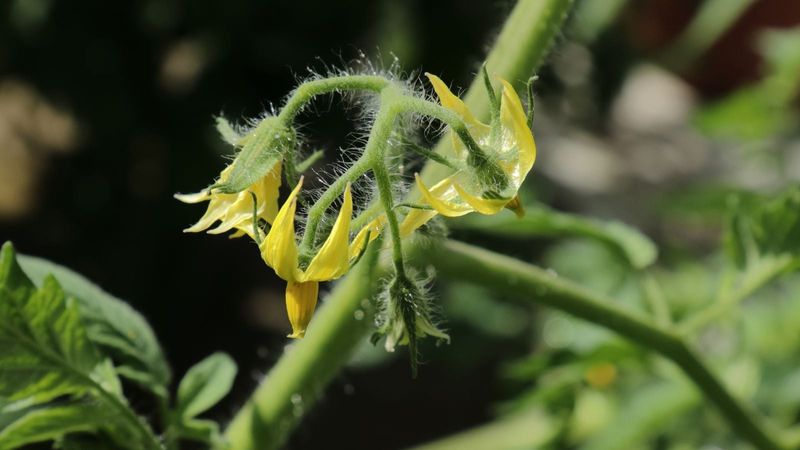
When Southern gardeners wonder why a well-watered, otherwise green tomato plant suddenly stops producing fruit, summer temperatures are usually the first place to look. Tomatoes rely on viable pollen to set fruit, and that pollen becomes less effective as heat climbs.
Florida Extension research on tomato production documents that temperatures above 90 degrees Fahrenheit can impair pollination and fruit set. Arizona Extension puts the threshold even more precisely, reporting that fruit set can stop around 94 degrees Fahrenheit or when nighttime temperatures stay above 75 degrees Fahrenheit, according to their updated tomato production publication.
These thresholds vary by cultivar and are not universal guarantees, but they give a useful frame for what is happening in a hot-season Southern garden.
Hot nights are a particularly important piece of the puzzle. A plant can survive scorching days if nights cool enough for pollen to recover, but when nighttime temperatures stay elevated, that recovery window disappears.
Flowers may drop before they ever get a chance to set.
Consistent watering absolutely supports plant health through these periods, but it cannot directly override heat-induced pollen sterility. A plant can be well-hydrated and still produce no new fruit until temperatures moderate.
For gardeners planning ahead, UF/IFAS guidance on Florida tomato varieties recommends hot-set cultivars bred to perform under higher temperatures, which can be a more reliable long-term strategy than any additive.
Check whether the plant is stressed, diseased, or naturally past its peak
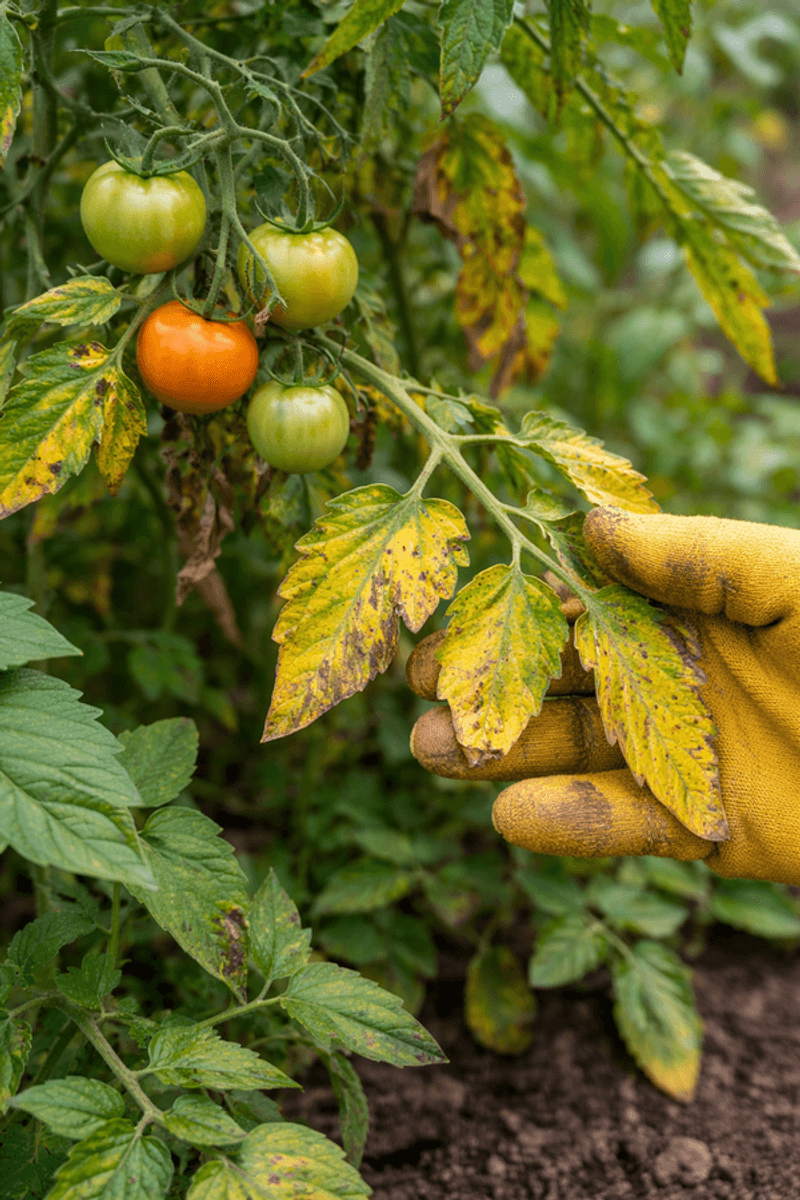
Before adding anything to the soil or spraying anything on the leaves, spend a few minutes reading what the plant itself is telling you. A slower harvest, yellowing leaves, flower drop, blossom-end rot, and fruit that refuses to ripen are four different problems with four different sets of causes, and they are easy to conflate when you are worried about your garden.
Work through the plant systematically. Check lower leaves first for yellowing, spotting, or unusual patterns, then move up to mid-plant growth.
Look at flowers to see whether they are dropping before or after opening. Examine fruit for dark, sunken patches at the bottom, which point to blossom-end rot, versus slow color change, which is more likely a ripening or heat issue.
Texas A&M AgriLife Extension recommends diagnosing the cause before applying any treatment, because the same yellowing symptom can result from disease, herbicide drift, insect feeding, heat, water stress, or a nutrient problem.
Florida gardens face significant disease pressure in late summer, and UF/IFAS documentation on tomato diseases covers several pathogens that can cause yellowing, defoliation, fruit drop, and reduced yield that look similar to nutrient deficiency. Knowing whether you are dealing with a determinate plant that has simply finished its main flush or an indeterminate plant struggling under disease or stress changes the response completely.
An improvised treatment applied without that diagnosis may address nothing while adding new stress to an already struggling plant.
Steady moisture protects fruit quality without forcing new fruit
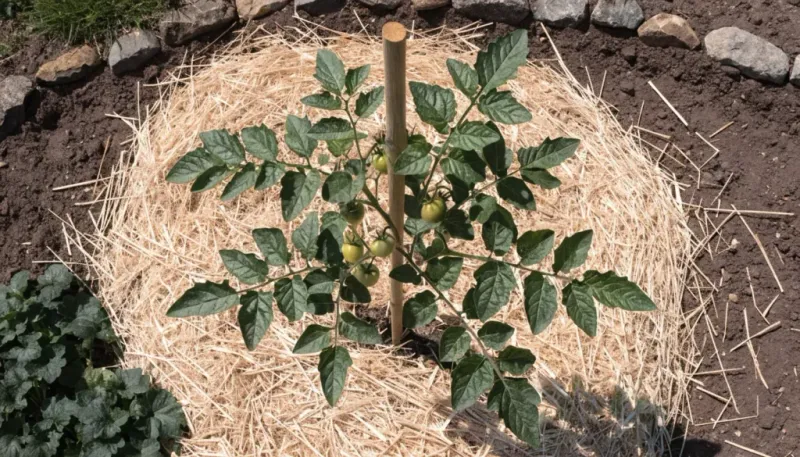
Swings between dry soil and sudden heavy watering put real stress on tomato fruit. When moisture delivery is erratic, developing fruit cannot consistently move calcium from roots to the tissue at the blossom end, and that disruption shows up as blossom-end rot: the dark, leathery patch that appears on the bottom of the fruit.
Blossom-end rot is a calcium-transport problem, not automatic proof that the soil is low in calcium. Uneven moisture, damaged roots, rapid vegetative growth, and excessive ammoniacal nitrogen can all interfere with calcium reaching the fruit even when adequate calcium is present in the soil.
UGA Extension’s tomato production guidance connects moisture fluctuations directly to blossom-end rot and cracking, and recommends consistent deep watering as a management approach. Epsom salt, which is magnesium sulfate, contains no calcium at all and should not be used as a treatment for this condition.
Practical moisture management means watering deeply at the soil line rather than frequently and shallowly, and avoiding overhead irrigation that leaves foliage wet and promotes disease. A layer of mulch, several inches deep, helps buffer soil temperature and slow moisture loss between watering sessions, which is especially valuable during the intense heat that Florida and Texas gardeners face in late summer.
Keeping moisture steady may help protect fruit already on the vine and support root function, but it cannot override the heat-related pollination failures described earlier. Iowa State Extension’s tomato growing guidance reinforces that deep, consistent watering is a foundation of fruit quality, not a production accelerator on its own.
Epsom salt is not an all-purpose tomato fertilizer
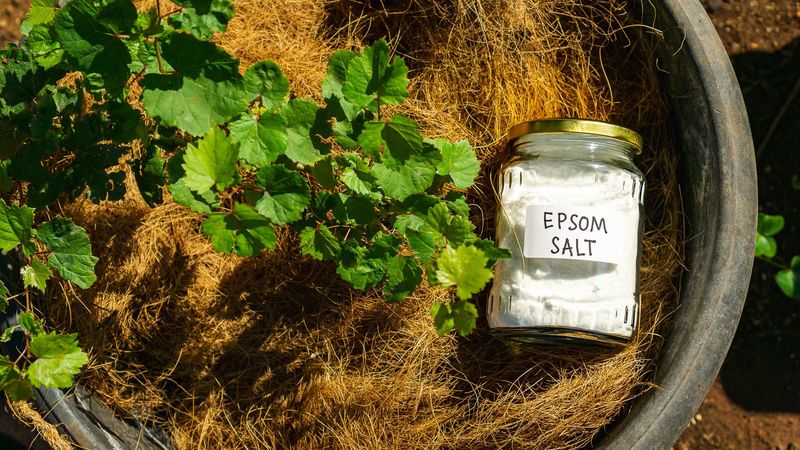
Epsom salt is one of the most widely shared garden remedies online, and it is the kitchen ingredient most likely implied by articles promising a quick harvest revival. The chemistry is straightforward: Epsom salt is magnesium sulfate, meaning it supplies magnesium and sulfur, and nothing else.
It provides no nitrogen, no phosphorus, no potassium, no calcium, and no other micronutrients that tomatoes need to flower and fruit.
Washington State University Extension’s analysis of Epsom salt in the garden cautions that routine use can create nutrient imbalances, contribute to salt injury, and interfere with calcium uptake, particularly when magnesium is already adequate in the soil. Adding more of a nutrient that is not deficient does not help the plant and can actively compete with nutrients that are needed.
Magnesium deficiency does occur in tomatoes, especially in intensively cropped or unusual soils, and the typical symptom is interveinal yellowing on older leaves, where the leaf tissue between the veins turns yellow while the veins themselves stay green. However, that pattern overlaps with several diseases and other stresses, so the symptom alone is not a reliable diagnosis.
NDSU Extension’s review of the Epsom salt myth recommends confirming a deficiency before applying any amendment.
When a soil test or credible extension guidance confirms magnesium deficiency, Epsom salt applied at appropriate rates may help correct it. Outside of that specific situation, it functions as a targeted mineral supplement, not a harvest booster, and certainly not a substitute for the complete nutrition a tomato plant needs to produce fruit.
Use complete fertilizer only when the evidence points to nutrition
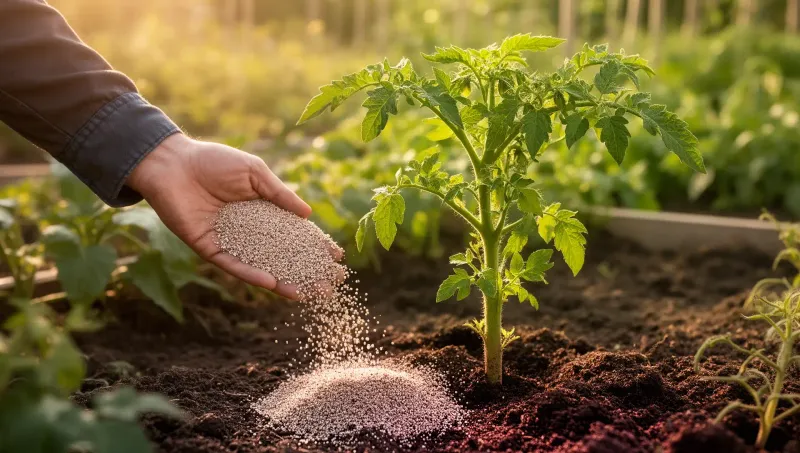
Once you have ruled out heat, moisture problems, disease, pests, and natural plant decline, nutrition becomes a reasonable next question. The key word there is “ruled out,” because fertilizing a plant that is struggling from heat or disease can push leafy growth at the expense of flowers and fruit, or add unnecessary salt stress to roots that are already compromised.
Soil testing is the most reliable starting point for a nutrition decision. Many state extension services offer affordable testing, and the results tell you what is actually present in your soil rather than what you assume is missing.
UGA Extension’s tomato production guide recommends soil testing and warns explicitly that excessive nitrogen produces lush, dark-green foliage with fewer flowers and fruit, which is the opposite of the outcome most gardeners want.
When a soil test or container conditions indicate a nutritional need, a labeled complete tomato or vegetable fertilizer applied according to product directions is the appropriate response. Root-zone application or side-dressing, placing fertilizer in a band near but not touching the stem, is generally more effective than routine foliar spraying.
Penn State Extension explains that tomato leaves cannot absorb enough macronutrients through foliar application to meet the plant’s needs, making soil-level feeding the better default.
Container tomatoes are a partial exception. Frequent watering can leach nutrients from potting mix more quickly than from in-ground soil, so regular feeding with a complete fertilizer may be appropriate based on the container size, plant stage, and product label.
That is a different situation from automatically adding a kitchen ingredient to an in-ground plant that has not been tested or diagnosed.
Treat disease, pests, and plant structure as separate problems
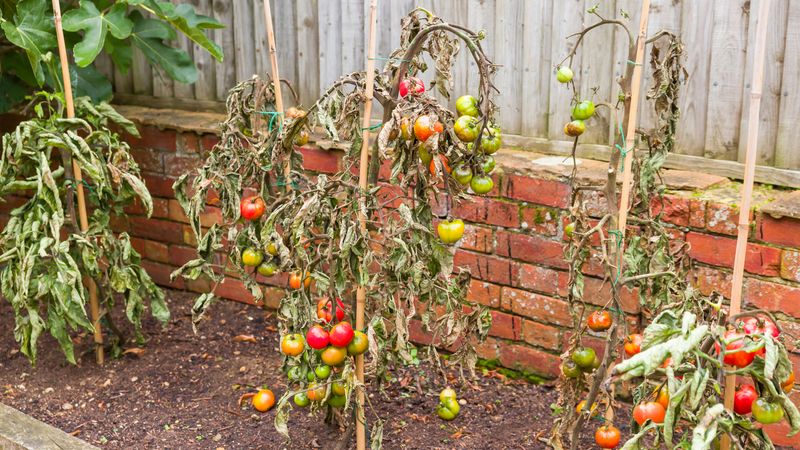
Fertilizer cannot fix a fungal infection, and pruning cannot eliminate a pest infestation. When disease or insects are reducing your harvest, treating those problems directly is the only effective path, and adding nutrients on top of biological damage often just feeds the problem.
Look carefully for signs that go beyond a simple slowdown. Spots with defined edges or concentric rings on leaves often point to fungal or bacterial disease.
Curling, stippled, or sticky leaves can signal insect feeding. Defoliation moving up from the bottom of the plant is a common pattern in several tomato diseases that are especially prevalent in hot, humid Southern summers.
UF/IFAS documentation on tomato diseases covers pathogens that can reduce yield significantly and that require sanitation, spacing, and resistant varieties rather than fertilizer.
Structural improvements can support a struggling plant without the risks of heavy intervention. Keeping foliage dry by watering at the soil line, improving airflow between plants, maintaining cages or stakes so stems do not sprawl in wet soil, and removing clearly diseased tissue can all reduce disease pressure.
UGA Extension’s staking and pruning guidance supports selective pruning of lower or nonbearing growth to improve airflow and access, but cautions that heavy pruning in hot weather can stress plants and expose fruit to sunscald.
Plant age matters here too. A determinate variety that has completed its main crop flush will not restart production regardless of what you add or remove.
Recognizing that distinction saves time and prevents unnecessary intervention on a plant that has simply done its job.
Protect ripening tomatoes while conditions improve
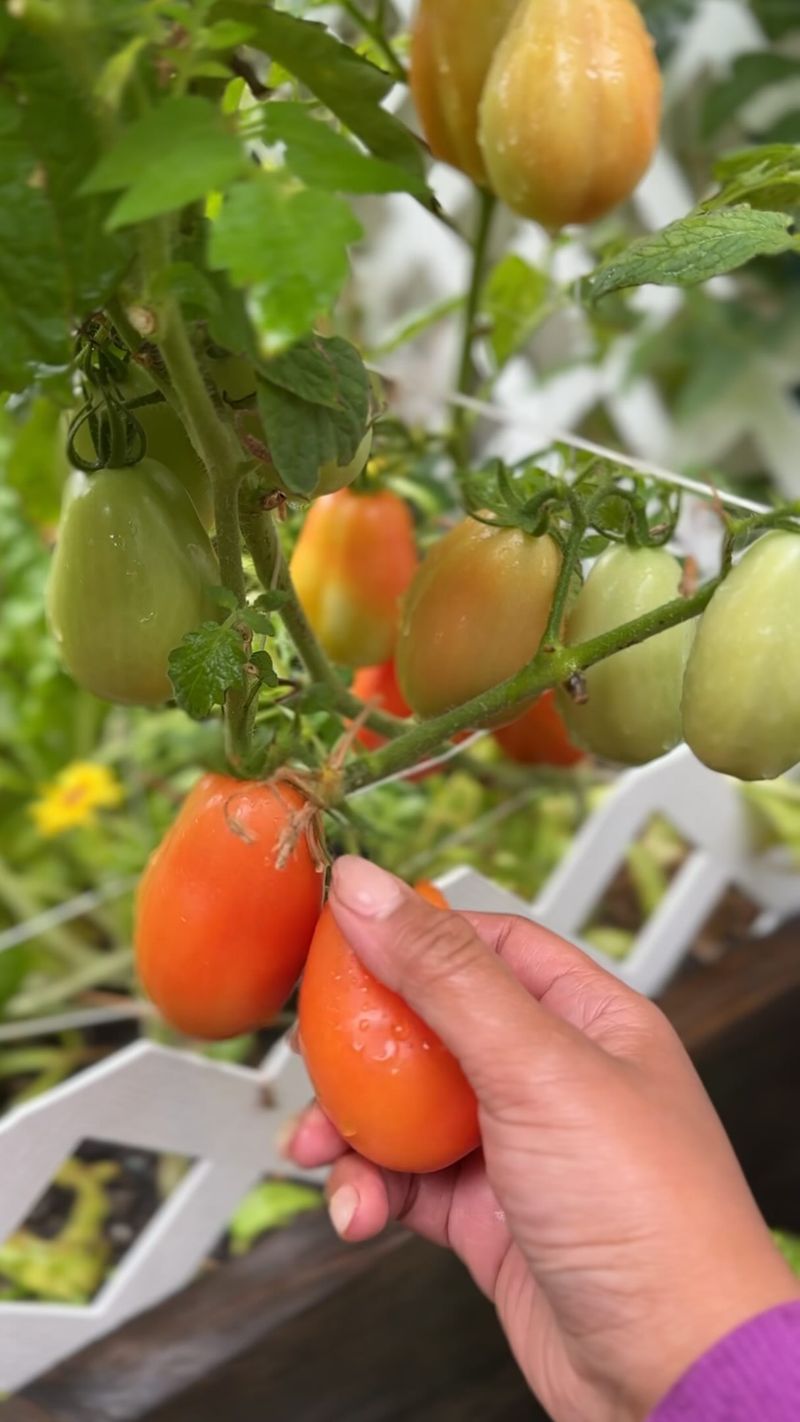
When heat or disease is limiting new fruit set, protecting the tomatoes already on the vine becomes the most productive thing you can do. Leaving fruit on the plant too long in hot, humid conditions exposes it to cracking, sunscald, insect damage, and bird pecking, all of which reduce the usable harvest.
Harvesting at the pink or breaker stage, when the fruit has just begun to show color, is a practical strategy during difficult conditions. Texas A&M AgriLife Extension notes that harvesting at the pink stage and finishing ripening indoors does not sacrifice flavor, and it protects fruit from the damage that accumulates when tomatoes stay on the vine through intense heat.
Ripening indoors at room temperature, out of direct sunlight, typically takes just a few days.
A healthy plant that has been kept watered, mulched, and free of disease may resume setting fruit when temperatures moderate in early fall. That is a realistic possibility for indeterminate varieties in many Southern gardens, though no household ingredient is proven to force that transition on its own timeline.
The clearest path forward is also the simplest: inspect the plant, stabilize moisture, address any documented disease or pest problem, follow product label directions if a fertilizer is genuinely warranted, and skip improvised pantry additions that have no established benefit. The best tool for a struggling tomato is an honest look at what it actually needs.