
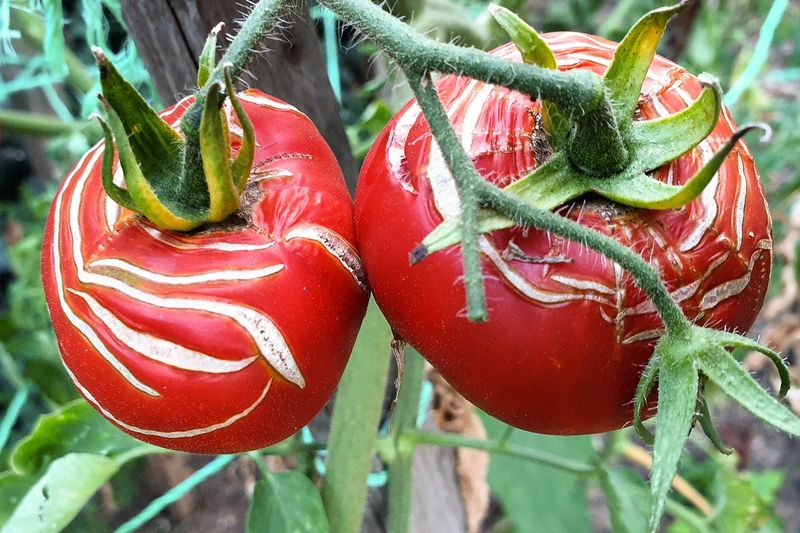
Pulling back the leaves to find a tomato cracked wide open just days before picking is one of the most frustrating moments in the garden. The good news is that a split tomato usually points to a growing problem you can manage, not a disease spreading through your plants.
Whether that fruit is still worth eating depends on what you see when you look closely. Understanding the cause and knowing exactly what to check can save you time, protect your health, and help you grow better tomatoes next season.
The crack usually points to a water-and-growth problem
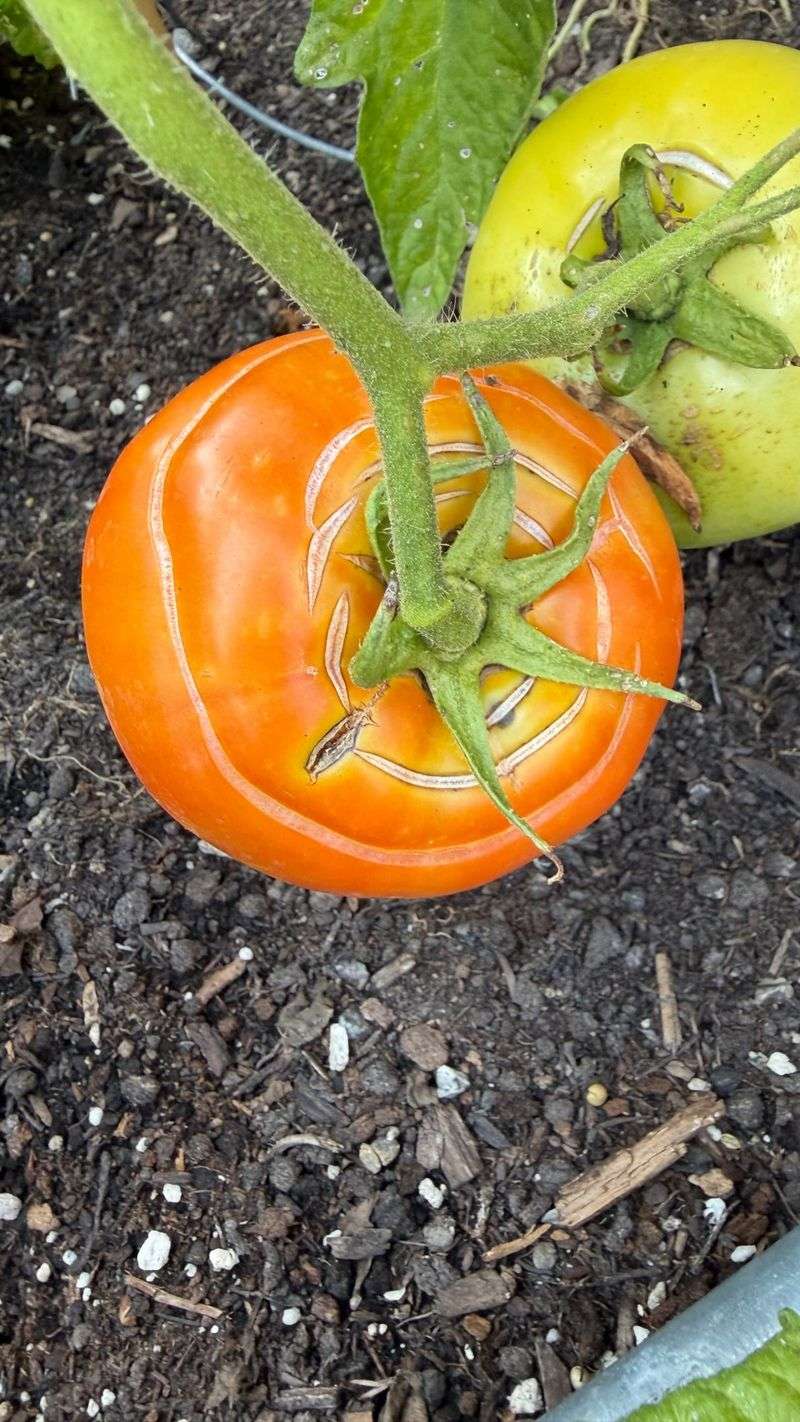
Tomato skin is remarkably elastic when the fruit is young and growing fast, but as ripening progresses the skin firms up and loses much of that stretch. When the root zone suddenly receives a large influx of water after a dry spell, the inner flesh expands faster than the toughened skin can accommodate, and the result is a split.
Heavy rain following a week of dry soil is one of the most common triggers in Southern gardens, and uneven irrigation that lets soil swing between dry and saturated produces the same effect. Penn State Extension’s guidance on tomato cracking identifies this rapid moisture change as the central driver, alongside heat and intense sunlight that accelerate skin toughening while fruit continues to swell.
Large-fruited tomatoes and heirlooms are especially prone because their skin-to-flesh ratio makes them more vulnerable when internal pressure builds. Fruit that is already at or near the color-break stage cracks more readily than younger green fruit, because the skin has already done most of its stretching.
Excessive pruning can compound the problem by removing foliage that normally shields fruit from sharp swings in temperature and direct sun exposure.
Cracking itself is not a sign of a contagious plant disease. University of Minnesota Extension’s fruit crack diagnosis resource classifies it as a physiological disorder rooted in growth conditions, not an infection spreading from plant to plant.
That said, the open wound does create a route for bacteria and fungi to enter, so secondary decay can follow if the fruit is left on the vine or handled carelessly after cracking.
The pattern helps separate growth cracks from other damage
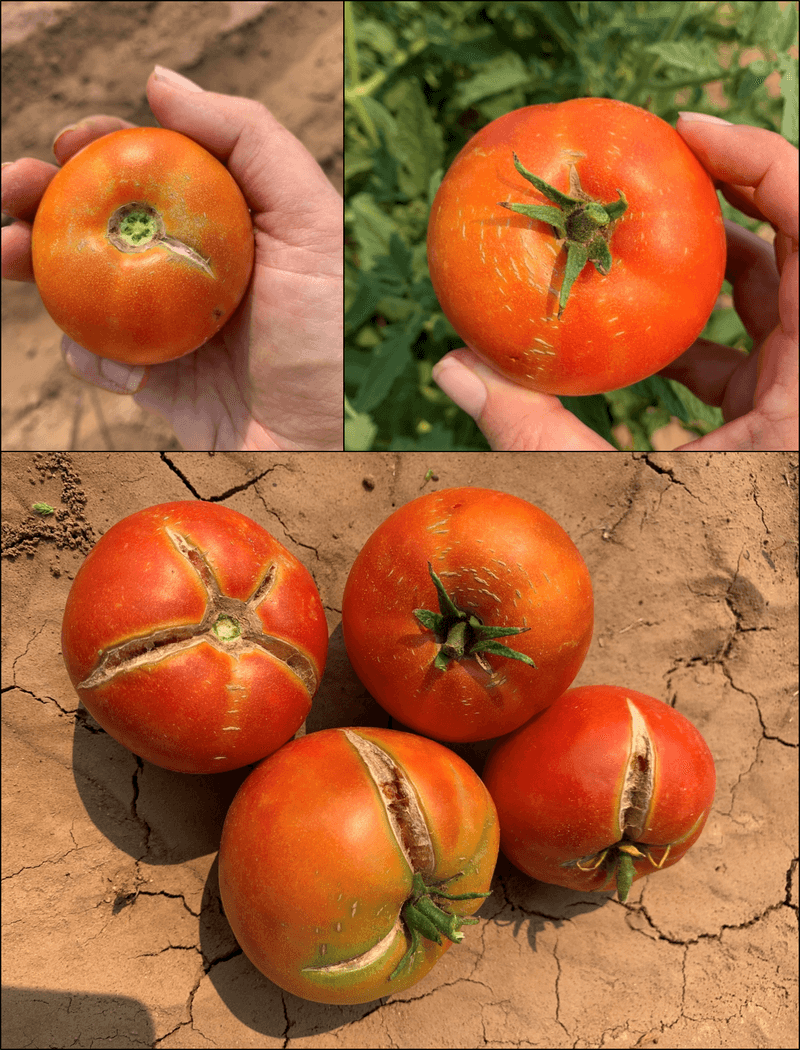
Not every mark on a tomato is the same kind of problem, and the shape of the damage tells you a lot before you even smell or press the fruit. University of Minnesota Extension distinguishes three common crack patterns: radial cracks that run outward from the stem scar like spokes on a wheel, concentric cracks that form rings around the stem end, and small transverse surface cracks sometimes called rain checking.
Radial cracks tend to be deeper and open more dramatically; concentric cracks and rain checking are usually shallower and may even heal over with a corky layer if the fruit had time to recover.
A dry, corky-edged growth crack with firm surrounding flesh is a different situation from a fresh, wet split where the tissue inside looks water-soaked or discolored. Run your finger along the crack and press gently on the flesh around it.
Sound fruit stays firm; decaying tissue feels soft, mushy, or slippery. A sour or fermented odor is a reliable sign that microbes have already moved in.
Other fruit problems can mimic or accompany cracking and deserve their own diagnosis. Clemson Cooperative Extension’s tomato disease and disorder guide describes sunscald as a pale, papery, or bleached patch on the sun-exposed side of the fruit, while blossom-end rot appears as a dark, leathery collapse at the bottom.
Anthracnose and other fungal lesions typically show as circular, sunken spots that may have colored spore masses. Animal or insect damage tends to leave irregular holes or excavated tunnels rather than clean splits, and any damage that extends into the seed cavity warrants immediate discard.
Can you eat a lightly cracked tomato?
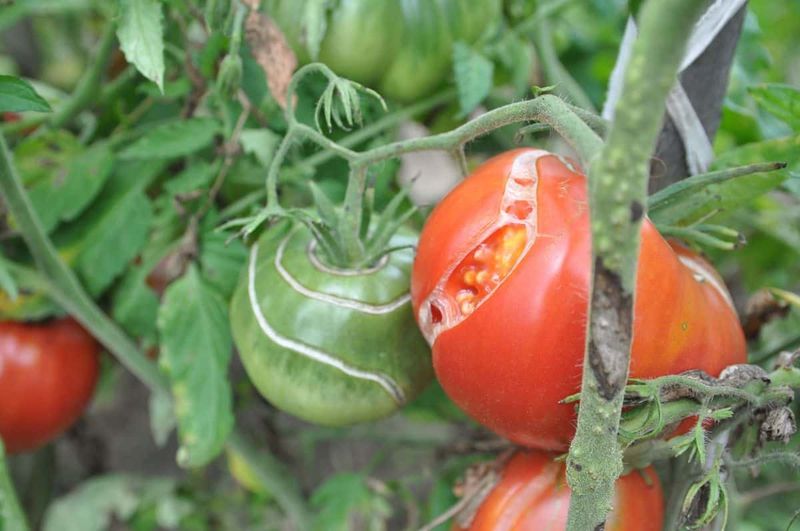
Holding a cracked tomato and wondering whether to eat it or toss it is a genuinely reasonable question, and the honest answer is that it depends on what you find when you inspect the fruit carefully. Some Extension guidance takes the position that a tomato with only a surface crack and no accompanying spoilage can be washed, trimmed, and used promptly for fresh eating.
An Ask Extension food-safety response on cracked tomatoes acknowledges this salvage approach while noting that the fruit should be free of mold, ooze, bad odor, and soft decay before that judgment is made.
Federal consumer guidance takes a more cautious position. USDA/NIFA recommends discarding damaged or cracked produce because the wound provides an entry point for harmful microbes that washing cannot remove.
Rinsing a cracked tomato under running water cleans the surface but does not reach bacteria or fungi that may have already moved below the skin. That distinction matters: surface cleanliness and internal safety are not the same thing.
Eating a lightly cracked homegrown tomato is ultimately a risk-based household judgment, not a guaranteed-safe action. A small, dry, recently formed crack on an otherwise firm, odor-free, mold-free fruit carries a different profile than a wide-open split that has been sitting on the vine through rain and heat.
When the crack is extensive, the flesh around it is soft, the smell is off, or you have any doubt about the fruit’s condition, the practical choice is to discard it. Households with young children, elderly members, pregnant individuals, or immunocompromised family members should apply the more conservative standard and discard cracked produce.
Handle sound-but-cracked fruit promptly
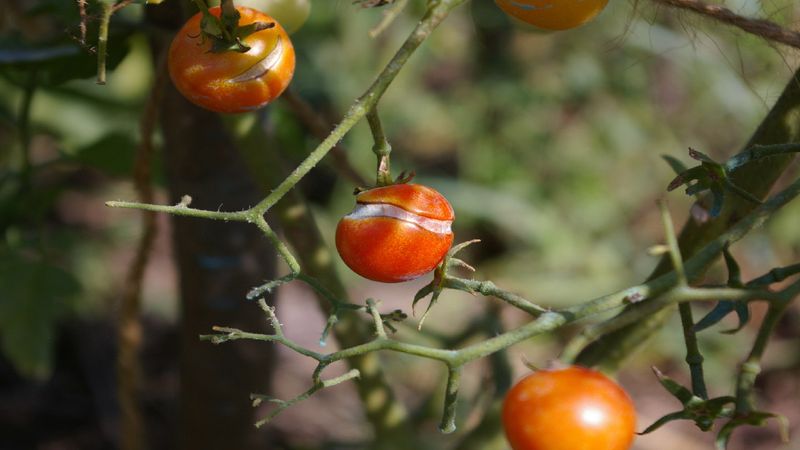
When a gardener decides that a lightly cracked tomato is otherwise sound and worth using, a careful handling sequence can reduce the window for further spoilage. Start by washing your hands thoroughly before touching the fruit.
Then rinse the whole tomato under clean running water, rubbing the surface gently with your hands. FDA guidance on produce safety specifically advises against soap, detergent, bleach, vinegar, and commercial produce washes for fresh fruit and vegetables; plain running water is the correct tool.
After rinsing, cut away the cracked tissue and a generous margin of flesh around it before slicing the rest. An Ask Extension response on split tomato edibility reinforces that damaged tomatoes spoil faster than intact ones, so prompt use is not optional.
These steps support cautious handling and limit the time available for spoilage to progress, but they do not sterilize the wound or undo any microbial entry that already occurred.
Keep cracked fruit separate from your undamaged harvest so that any decay does not spread to sound tomatoes. Store the inspected fruit dry and with airflow rather than sealed in a bag or stacked in a bowl.
Once cut, refrigerate the tomato promptly and plan to use it within a day. Use cracked fruit before your unblemished tomatoes, not after.
Mold, rot, leaks, and contamination make the decision simple
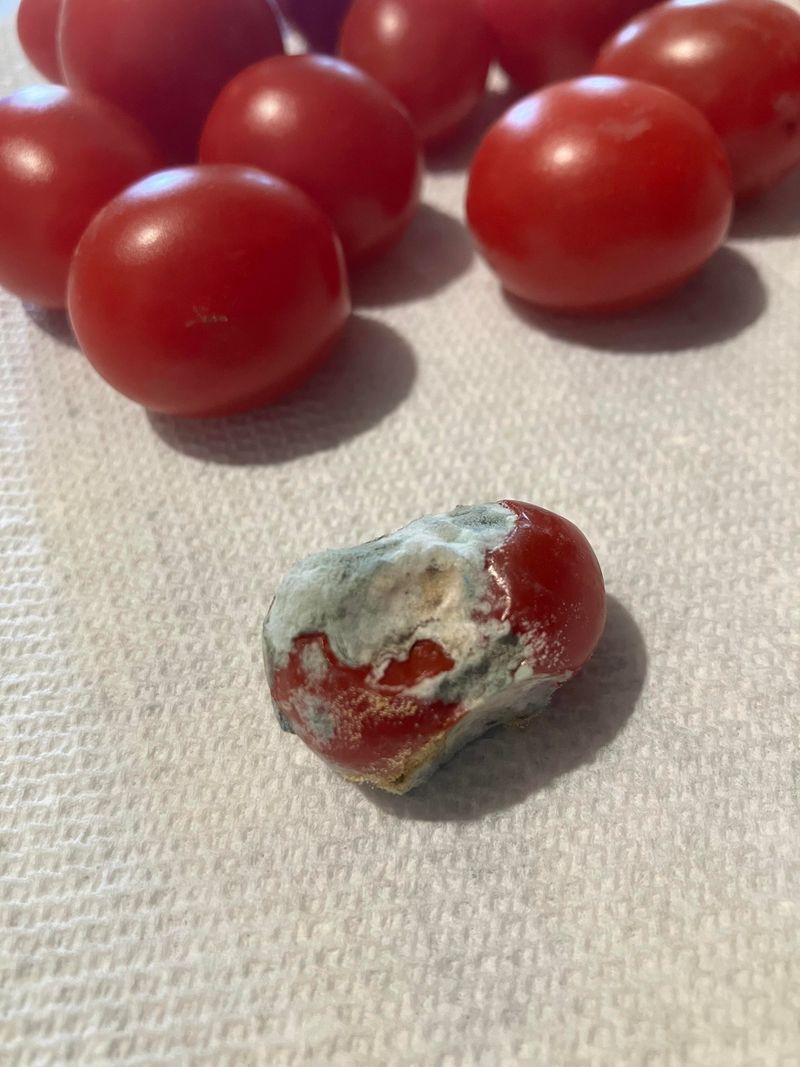
Some tomatoes do not require careful deliberation. Throw out any tomato that shows visible mold, soft or water-soaked decay, leaking juice, a foul or sour odor, extensive splitting that exposes the seed cavity, signs of animal chewing, or insect holes that reach into the flesh.
These are not borderline cases. Each of those conditions signals that microbial activity has already progressed beyond what trimming or washing can address.
USDA FSIS guidance on molds in food is explicit on this point for soft, high-moisture produce like tomatoes: mold may extend below the visible surface into tissue that looks normal, so cutting the moldy portion away and eating the rest is not a safe practice. Cooking a moldy tomato does not rescue it either, because heat does not reliably destroy all mold toxins that may have penetrated the flesh.
Home canning requires an even stricter standard than fresh eating. Colorado State University Extension’s canning guide is clear that cracked, bruised, overripe, moldy, or decayed tomatoes should not be canned, both because of safety risk and because tomato acidity varies and tested recipes require proper acidification.
If you suspect that a tomato was exposed to a misapplied pesticide or chemical contamination, do not rely on your own judgment about safety. Check the product label and contact your local cooperative extension office, state department of agriculture, or a poison-control authority for guidance specific to the product and situation.
Steadier soil moisture is the main prevention strategy
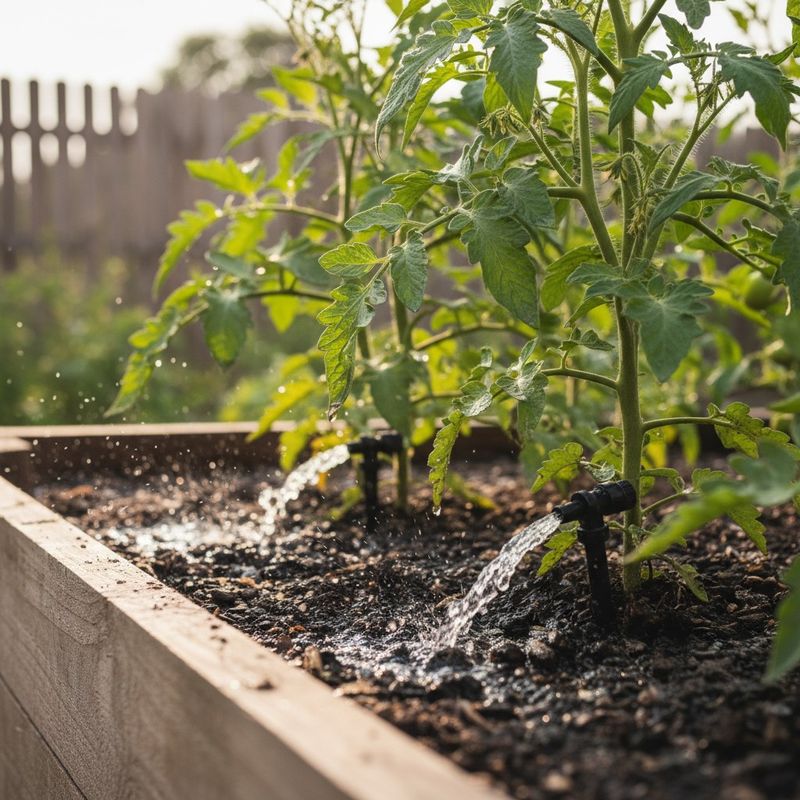
Cracking follows a predictable pattern: soil dries out, then water arrives suddenly, and the fruit pays the price. The most direct way to reduce that cycle is to keep root-zone moisture as consistent as conditions allow.
That does not mean watering on a fixed daily or weekly schedule. The University of Georgia Cooperative Extension Commercial Tomato Production Handbook recommends watering based on actual soil moisture, plant size, weather, and growth stage rather than a calendar routine.
Sandy soils common in parts of Florida drain quickly and may need more frequent attention; heavier clay soils hold moisture longer and can become waterlogged if overwatered.
Drip irrigation and soaker hoses deliver water directly to the root zone at a slower rate that the soil can absorb steadily. They also keep foliage and fruit surfaces drier than overhead sprinklers, which reduces conditions that favor fungal problems.
UGA Extension’s guidance on watering practices for healthy tomatoes supports drip and soaker systems as practical tools for reducing the wet-dry swings that drive cracking.
Organic mulch, such as clean straw, chopped leaves, or finished compost, applied two to three inches deep across the root zone can slow evaporation and moderate soil temperature during hot Southern afternoons. Leave a small gap around the stem to avoid holding excess moisture against the plant base.
Mulch does not eliminate cracking, but it can smooth out the moisture fluctuations that make cracking more likely. Avoid flooding or saturating the soil as a compensation strategy; excess water after fruit set can worsen cracking, and waterlogged soil harms tomato roots regardless of the season.
Protect ripening fruit with foliage, timing, and cultivar choice
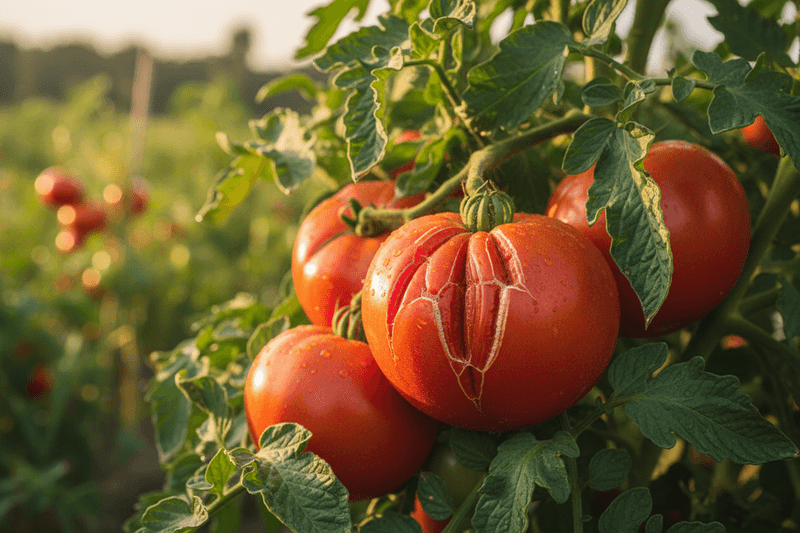
Leaf cover does more than photosynthesize. Foliage shields developing fruit from direct sun, moderates surface temperature, and buffers the sharp temperature swings that can make ripening skin less flexible.
Removing too many leaves in the name of airflow or pest management can leave fruit exposed to conditions that accelerate skin toughening while the flesh is still expanding. Penn State Extension’s cracking article notes that maintaining adequate leaf cover is one of the practical steps gardeners can take to reduce fruit vulnerability, without suggesting that all pruning is harmful.
Remove only what is clearly diseased or blocking necessary airflow, and leave healthy foliage in place around clusters of ripening fruit.
During stretches of frequent rain, consider harvesting tomatoes at the breaker-to-pink stage rather than waiting for full vine ripeness. A tomato that has reached the color-break stage has completed its major growth and will finish ripening indoors without the vine connection that drives further water uptake.
Keep harvested mature-green or breaker-stage tomatoes in a single layer with airflow between them, at room temperature, away from direct sun. Do not refrigerate uncut tomatoes before they ripen fully, and do not pack them tightly together in a box or bag.
Cultivar selection can also reduce how often cracking occurs. Clemson Cooperative Extension lists several crack-tolerant varieties suitable for Southern gardens, including Celebrity, Juliet, Mountain Spring, Pink Girl, and Rutgers.
Florida extension materials also recognize crack resistance as a selection criterion, with Amelia among the noted options. No variety is immune; crack resistance means less susceptibility under comparable moisture and weather conditions, not a guarantee against splitting when conditions are extreme.
Use a simple inspection-and-prevention routine
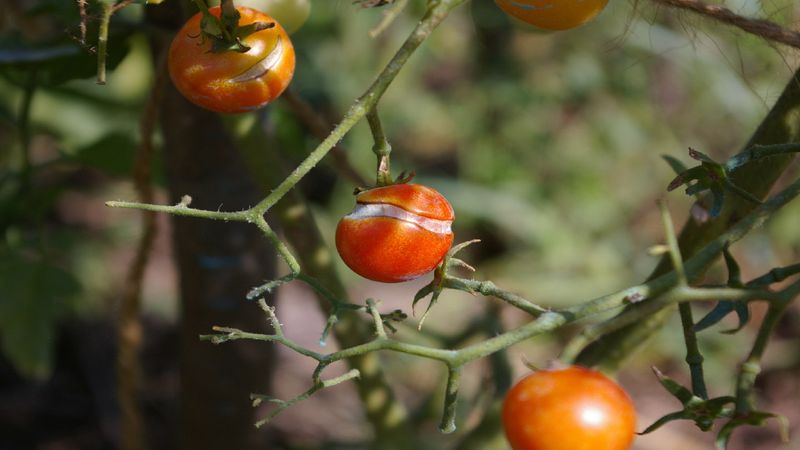
When you find a cracked tomato, work through a short checklist before deciding what to do. Identify the crack pattern: a dry, corky, shallow crack on otherwise firm fruit is a different situation from a wide, wet split with soft surrounding flesh.
Press the area gently, smell the fruit, and look for mold, leaking juice, insect holes, or animal damage. Discard without hesitation if any of those are present.
Ask Extension’s food-safety guidance on cracked tomatoes supports this inspect-first approach, with the understanding that a lightly cracked, otherwise sound fruit may be salvageable for prompt fresh use after washing and trimming, while federal guidance favors discarding cracked produce. Make the call that fits your household’s risk tolerance.
On the prevention side, steady root-zone moisture, a layer of organic mulch, protective leaf cover, timely harvest during wet spells, and crack-resistant cultivars are the tools that give you the most control. None of them guarantees uncracked fruit when a Florida or Texas summer delivers a week of drought followed by two inches of rain overnight.
The gardener who checks plants daily, harvests at the right moment, and keeps soil moisture consistent will crack fewer tomatoes than one who waters on a fixed schedule and waits for full vine ripeness in every condition.