
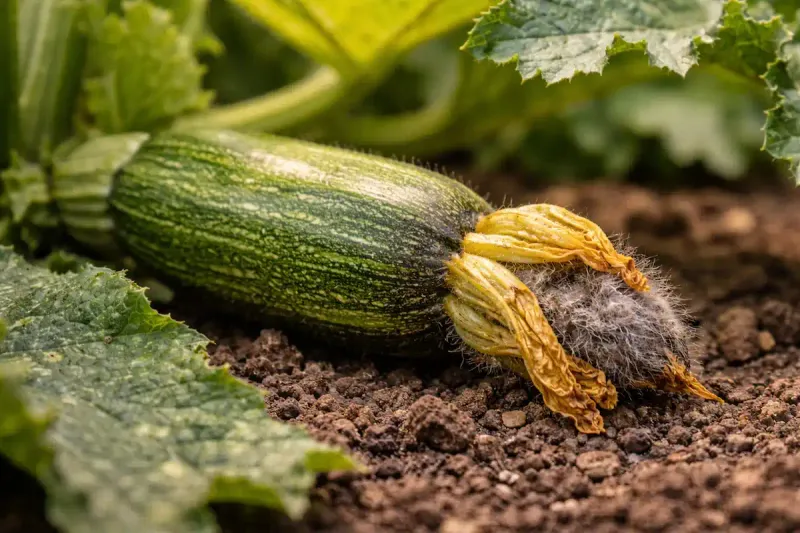
Watching a tiny zucchini form on the vine, then shrivel up and drop before it ever reaches your kitchen, is one of the most discouraging things a summer gardener can face. The good news is that most cases have a diagnosable cause – and incomplete pollination is often at the top of the list, especially for Southern gardeners dealing with heat, rain, and unpredictable bee activity.
But not every failed fruit tells the same story, and chasing the wrong fix wastes time while the plant keeps struggling. Learning to read the symptom carefully is the fastest route to getting your zucchini back on track.
A tiny zucchini can fail without being rotten
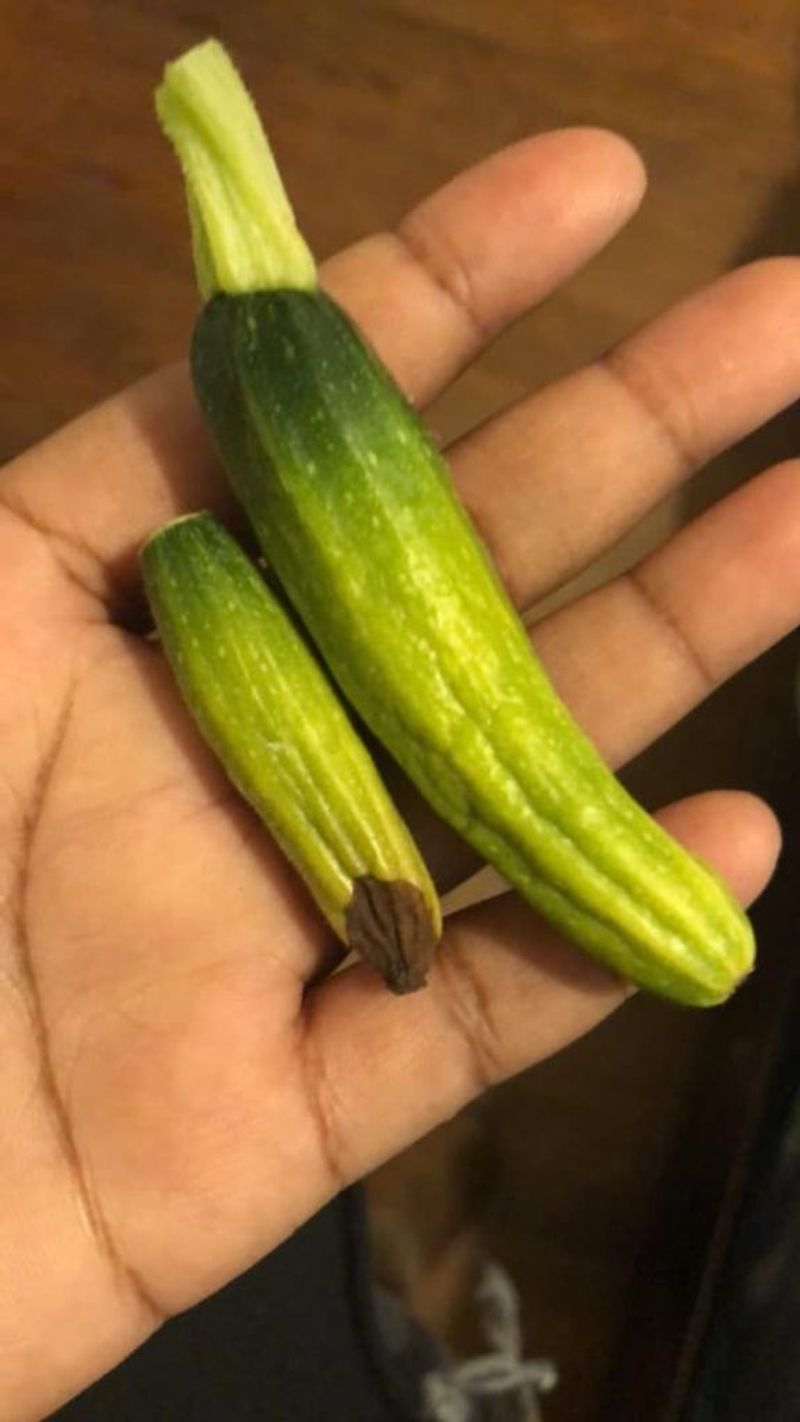
When a baby zucchini stops growing and falls off the vine, the first instinct is often to blame rot – but shriveling and dropping alone do not confirm that diagnosis. A female flower that was never fully pollinated will produce a tiny fruit that stalls, yellows, softens, and eventually drops without ever enlarging.
That pattern, a miniature zucchini that simply fails to develop rather than decaying with obvious signs of disease, points more toward incomplete pollination than toward a pathogen or a single care mistake.
Yellowing, softening, and decay are nonspecific symptoms on their own. They become more meaningful when paired with other clues: mushy or water-soaked tissue, white, gray, purple, or black fuzzy growth, a firm dark sunken lesion at the blossom end, or visible decline spreading to the rest of the plant.
University of Minnesota Extension guidance on Choanephora rot describes the fuzzy fungal growth that distinguishes true fruit rot from a fruit that simply aborted after poor pollination.
Other possible explanations include blossom-end disorders, environmental stress from heat or flooding, root damage, and pest injury. UF/IFAS guidance on squash disorders reinforces that the visible pattern – not one assumed care slip – should guide the next step.
Start by observing the fruit closely before deciding on a response.
Female flowers make zucchini; male flowers supply pollen
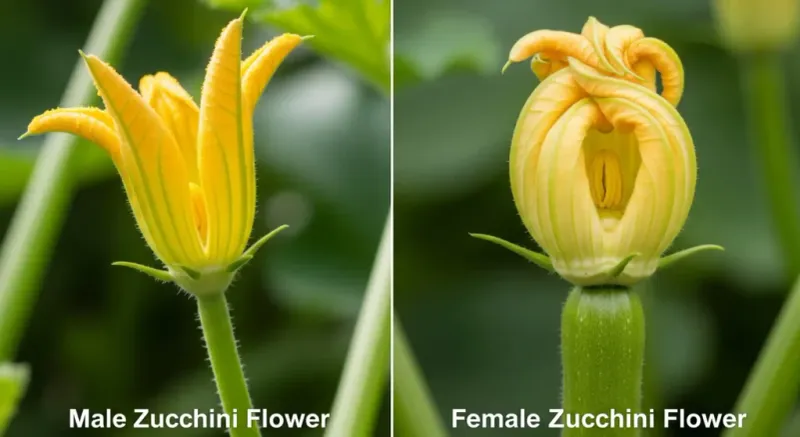
Not every flower on a zucchini plant is capable of producing fruit. Only female flowers can develop into squash, and knowing the difference between male and female blooms is the starting point for any honest diagnosis.
The female flower is easy to spot once you know what to look for: a small, swollen, miniature zucchini sits right at the base of the bloom, just below the petals. That tiny structure is the ovary, and it will only enlarge into harvestable fruit if the flower receives enough pollen.
Male flowers, by contrast, sit on a thin, straight stem with no swelling at the base. Their job is to produce pollen, not fruit, so their dropping off the plant is entirely normal.
University of Illinois Extension notes that zucchini plants typically produce several male flowers first, before female blooms appear – meaning early flower drop is expected and does not indicate disease or a care problem.
The practical takeaway is to inspect each flower before assuming something is wrong. UF/IFAS guidance on squash flower identification confirms that distinguishing male from female flowers is a fundamental first step.
A plant shedding only male flowers is behaving normally; a plant where female flowers repeatedly fail to develop into fruit is a different situation worth investigating further.
Morning timing controls pollen transfer
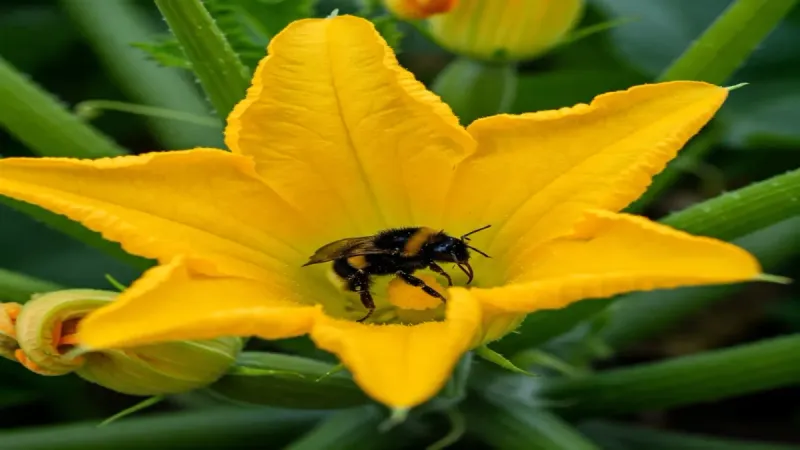
Zucchini flowers do not stay open all day, and that narrow window matters more than most gardeners realize. Blooms typically open in the early morning and remain receptive for only a few hours before closing.
Once a flower closes or wilts, pollination for that bloom is essentially finished. Checking flowers in the afternoon and finding them shut does not mean bees skipped the garden – it may simply mean the active window already passed.
Squash bees are among the most effective pollinators for zucchini because they are active from dawn through midmorning and often nest in the soil directly beneath squash plants, making them easy to overlook. Bumble bees and honey bees also contribute, and USDA research on squash pollination documents how multiple bee species interact with cucurbit flowers.
Seeing a bee in the garden at any point during the day does not confirm that female flowers received adequate pollen during the morning window.
Weather further complicates the picture. Rain, wind, and high humidity can reduce bee foraging activity precisely when flowers are open.
UF/IFAS pollinator guidance notes that pollinator activity is sensitive to environmental conditions. According to University of Minnesota Extension, making morning inspections during the bloom window gives a much more accurate picture of what pollinators are actually doing than an afternoon walk through the garden ever could.
Heat and water stress can reduce fruit set in different ways
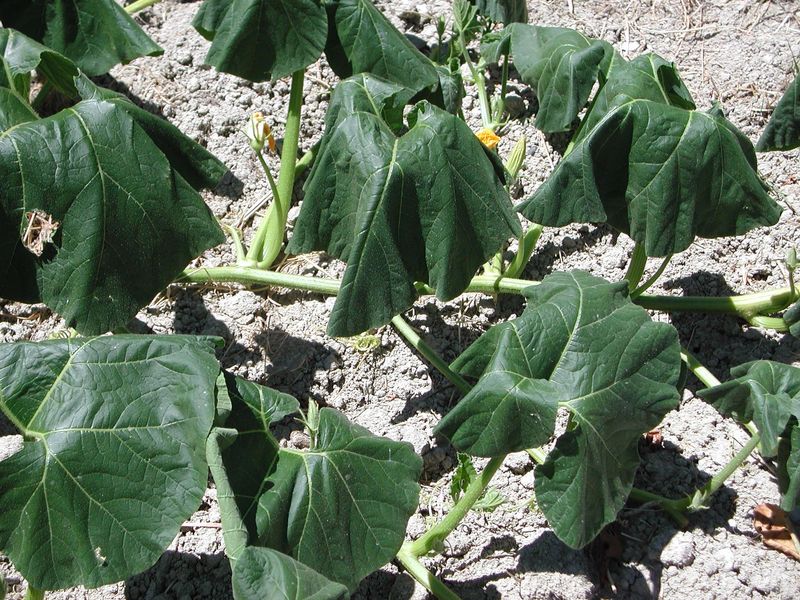
Southern gardeners face a compounding problem during peak summer: heat does not just stress the plant directly, it also interferes with the pollination process itself. When daytime temperatures stay above approximately 90 degrees Fahrenheit and nighttime temperatures remain above roughly 70 degrees Fahrenheit, fruit set in squash and other fruiting vegetables can decline noticeably.
Oklahoma State University Extension identifies these ranges as practical stress thresholds, though the exact cutoff varies by cultivar and local conditions.
Heat can reduce bee foraging activity, impair pollen performance, and increase the plant’s overall water demand all at once. But water problems operate through a separate pathway.
Drought stress can reduce flowering and fruit development, while waterlogged soil damages roots and limits the plant’s ability to take up nutrients and support developing fruit. University of Minnesota Extension irrigation guidance emphasizes that both extremes – too dry and too wet – create conditions that impair fruit development, even when pollination is adequate.
Florida gardeners should also be aware that squash production timing varies across the state. UF/IFAS squash production guidance and UF/IFAS seasonal planting recommendations indicate that much of Florida’s most productive squash season runs fall through early spring rather than the height of summer, particularly in South Florida.
Planting during a more favorable window can reduce the compounding pressure of heat, water stress, and reduced pollinator activity happening simultaneously.
Hand-pollination can rescue an open female flower
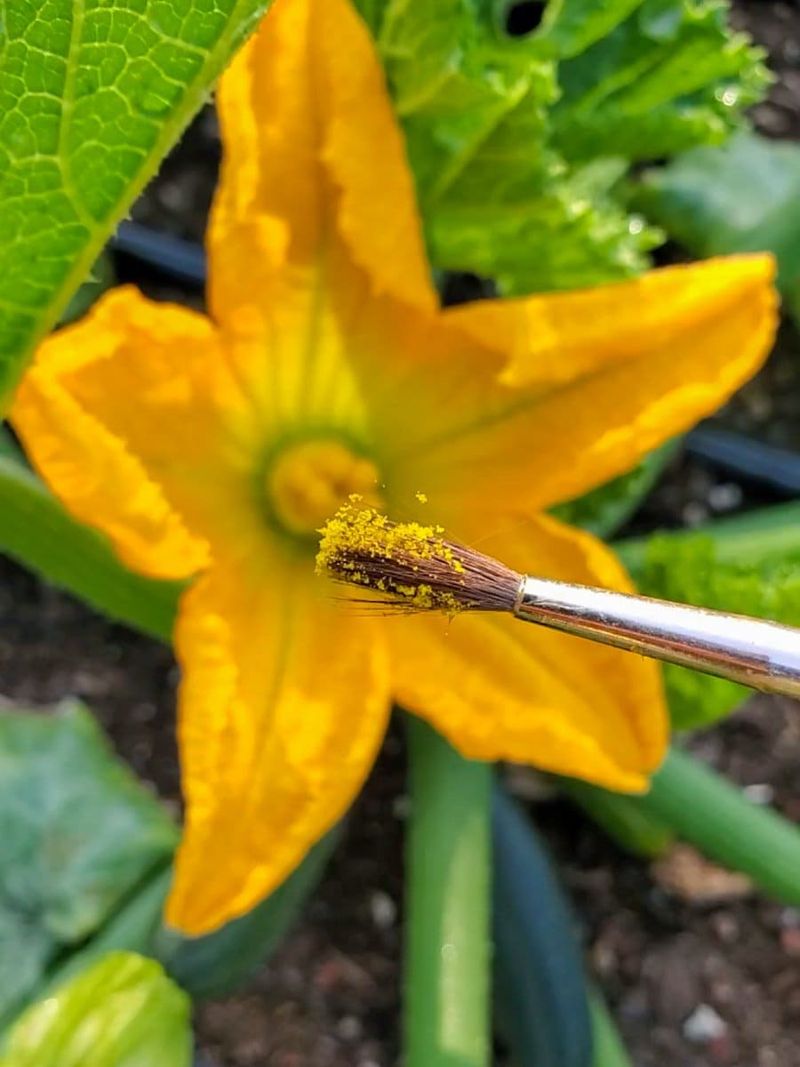
When female flowers keep forming but the tiny fruit beneath them repeatedly fails to enlarge, and the evidence points toward inadequate pollen transfer rather than disease or severe plant stress, hand-pollination is a reasonable next step. The procedure is simple and takes only a minute or two per flower, but timing is everything.
Work in the morning while both male and female flowers are freshly open – attempting to pollinate a closed or wilted bloom is unlikely to help.
Select a male flower that opened that morning and has visible yellow pollen on its central structure, called the anther. Gently peel back or remove the petals so the anther is easy to access, then brush or roll it directly against the stigma, the sticky central column, inside an open female flower.
University of New Hampshire Extension and Ask Extension guidance on zucchini pollination both describe this approach as a practical home-garden intervention. One male flower with abundant pollen can sometimes pollinate several female flowers in sequence.
University of Illinois Extension cautions against removing all male flowers from the plant if you want continued fruit production – leave enough blooms to maintain a pollen supply. Hand-pollination addresses the specific problem of insufficient pollen transfer.
It will not correct Choanephora rot, Phytophthora fruit rot, root damage from flooding, severe heat stress, or active pest injury. If any of those conditions are present, the plant needs a different response entirely.
Colorado State University Extension reinforces that hand-pollination is a targeted tool, not a cure-all.
Stabilize the root zone instead of following a rigid schedule
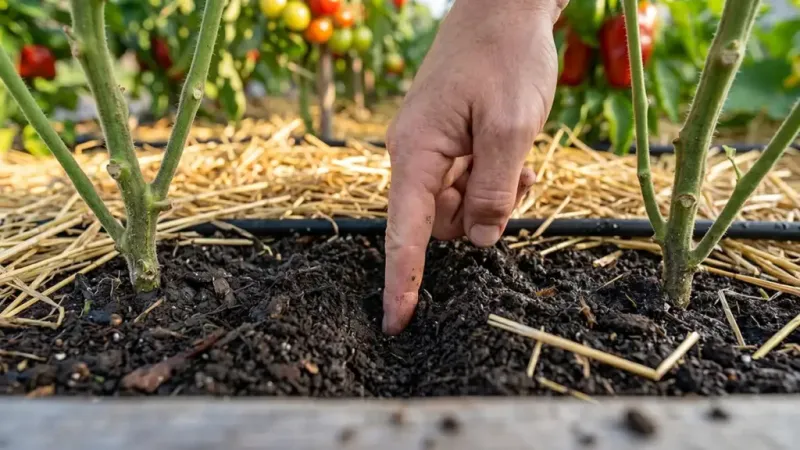
Consistent soil moisture does more for zucchini fruit development than any fixed watering schedule. The goal is to keep the root zone evenly moist without letting it dry out completely between waterings or stay saturated for extended periods.
How often that requires watering depends on the soil type, drainage, mulch coverage, container size, weather, and how much heat the plants are absorbing – not a predetermined number of days.
Mulch is one of the most practical tools for managing moisture swings. A layer of straw, shredded leaves, or similar organic material over the root zone slows evaporation, buffers soil temperature, and reduces how quickly the top few inches of soil dry out between rain events or irrigation.
University of Georgia Extension cultural guidance highlights moisture management as a key factor in preventing physiological problems in vegetable crops. Direct irrigation at the soil surface rather than overhead watering, which can wet flowers and foliage and create conditions favorable to fungal disease.
Fertilizer choices also matter. Oklahoma State University Extension squash production guidance notes that excessive nitrogen can push the plant toward lush leaf growth while delaying or reducing flowering and fruit set.
OSU Extension garden column guidance echoes this, recommending balanced nutrition rather than heavy nitrogen applications during the fruiting period. A soil test before the season is the most reliable way to know what amendments, if any, are actually needed.
Fuzzy decay or a dark lesion changes the diagnosis
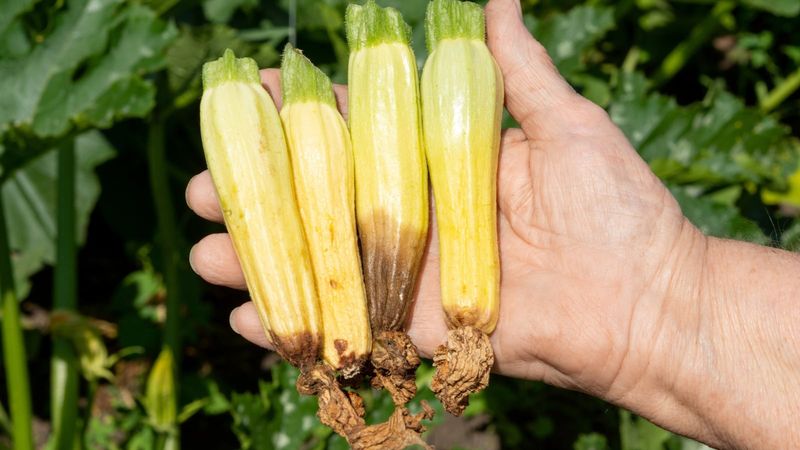
A fruit that shrivels and drops after failing to enlarge is not the same as a fruit that decays while still on the vine. Recognizing that difference changes the diagnosis completely.
Mushy or water-soaked tissue covered with white, gray, purple, or black fuzzy growth is a strong indicator of fungal or fungus-like fruit rot rather than a pollination problem. University of Minnesota Extension’s Choanephora rot resource describes the distinctive fuzzy spore masses that appear on infected tissue, which are unmistakable once you know what to look for.
A firm, dark, sunken lesion at the blossom end of the fruit tells a different story again. That pattern is more consistent with blossom-end rot, a physiological disorder involving calcium transport or calcium availability in developing tissue.
University of Georgia Extension’s blossom-end rot resource and UGA Extension publication C938 explain that the underlying cause is often fluctuating soil moisture, root stress, unsuitable soil pH, or excess nitrogen rather than a simple calcium shortage. Adding calcium without a soil test may not address the real problem and can create nutrient imbalances.
UF/IFAS squash disorder guidance and Oklahoma State University Extension’s squash disease fact sheet both recommend removing and discarding rotting fruit rather than leaving it on the ground beneath the plant, where it can harbor pathogens and attract pests. Mississippi State University Extension guidance on vegetable garden pests also supports prompt removal as a basic sanitation step.
If rot is spreading rapidly or the whole plant is declining, a disease diagnosis – not a pollination fix – is the appropriate next response.
Protect pollinators and harvest developing squash promptly
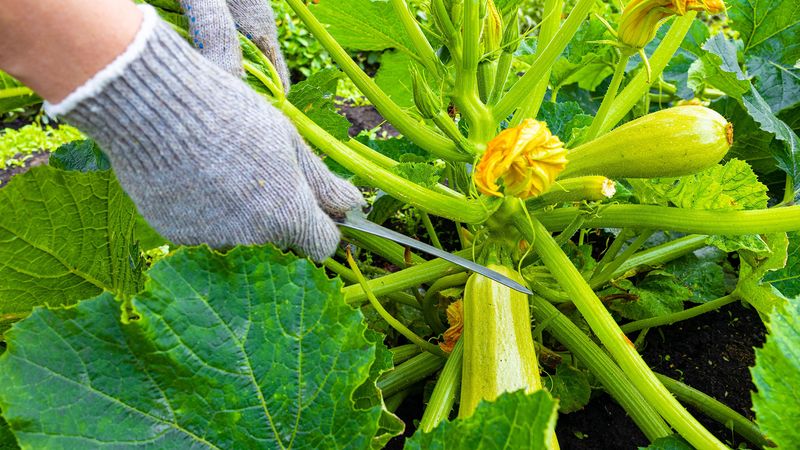
Once fruit successfully sets and begins to enlarge, frequent harvesting becomes one of the most effective ways to keep production going. Summer squash can reach harvest size within just a few days under warm conditions, and leaving oversized fruit on the plant signals it to slow down or stop setting new fruit.
University of Illinois Extension and University of Georgia Extension publication C934 both recommend checking plants every day or two during peak production and harvesting fruit while they are still small and tender.
Protecting pollinators during this period is equally important. Spraying open flowers or treating the garden while bees are actively foraging can eliminate the very insects responsible for fruit set.
Mississippi State University Extension’s Bug’s Eye View newsletter on unpollinated squash cautions against pesticide use during bloom, and any necessary pest treatment should use only a product labeled for the specific crop and pest. Follow label directions carefully, and consider late-day applications when pollinators are no longer foraging, as noted in Mississippi State University Extension’s vegetable production guide.
The practical decision sequence for any struggling zucchini plant comes down to a few steps: inspect flowers in the morning, hand-pollinate open female flowers when pollen transfer seems inadequate, keep soil moisture steady, and look carefully for disease signs before assuming the cause. No single fix works in every situation, and the gardener who takes the time to read the symptoms accurately will always have a better outcome than one who applies the same remedy regardless of what the plant is actually showing.