
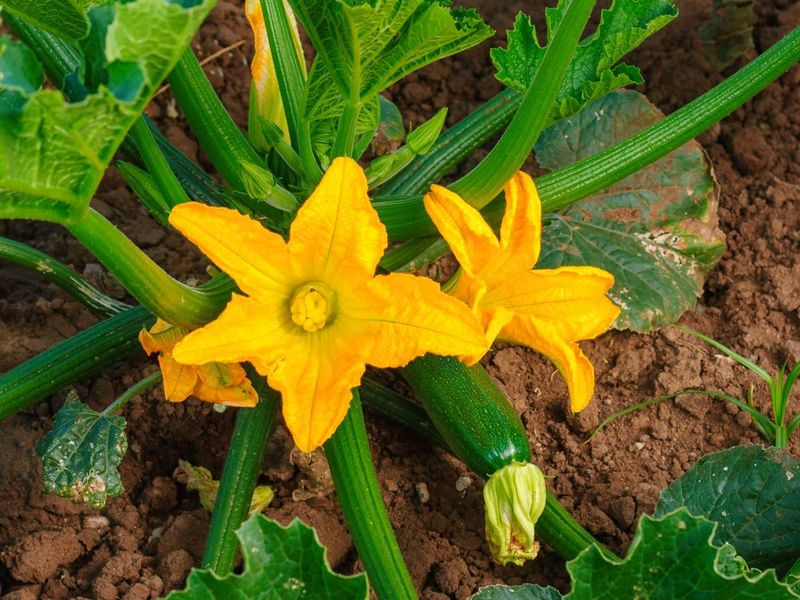
Watching your zucchini plant covered in bright yellow blossoms while not a single zucchini forms is one of the more frustrating puzzles in a summer garden. The plant looks healthy, the flowers keep coming, and yet the harvest stays at zero.
Late-summer heat gets blamed most often, but the real picture is more specific than that, and so is the fix.
A dropped flower is not always a failed zucchini
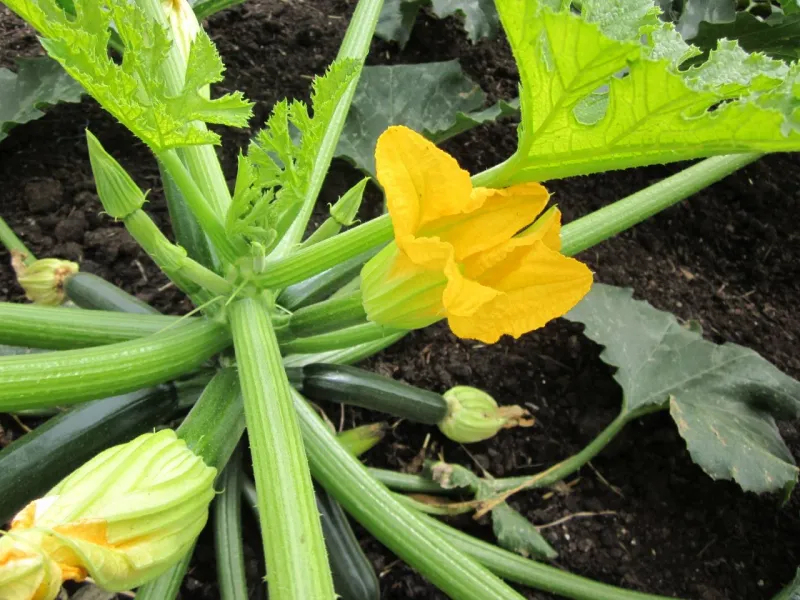
Before reaching for a solution, check which kind of flower is actually dropping. Zucchini produces two separate flower types on the same plant: male flowers, which grow on long, thin stems with no swelling behind the blossom, and female flowers, which carry a small, swollen ovary at the base that looks like a miniature zucchini.
Only the female flower can become fruit.
According to University of New Hampshire Extension, male flowers commonly appear before female flowers do, so an early flush of blossoms that all drop without producing anything is often completely normal. The male flower’s job is to release pollen, and once that job is done, the flower falls.
That process is not a sign that the plant is failing.
The symptom worth watching for is a female flower or tiny ovary that yellows, shrivels, drops, or produces a misshapen fruit rather than a full-sized zucchini. That pattern points toward a fruit-set problem, though it does not point to one single cause.
Heat, water stress, pollination gaps, and other pressures can all produce the same result, which is why the diagnosis matters before the intervention.
Heat can interfere with fruit set in more than one way
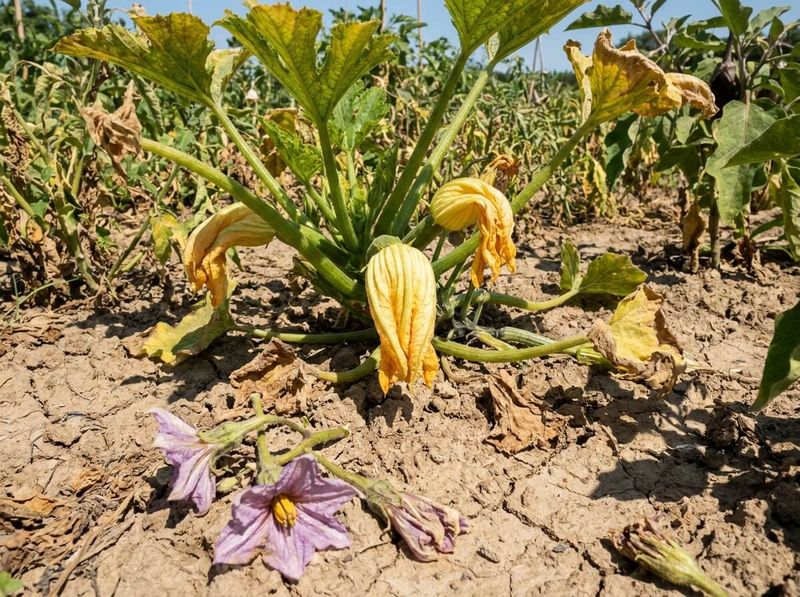
Late-summer heat is a real factor, but it does not operate in just one way. University of Minnesota Extension notes that daytime temperatures in the 90s and nighttime temperatures in the 70s are risk conditions that can lead to flower and small-fruit abortion in cucurbits.
These are risk thresholds, not hard rules, meaning some plants abort fruit at those temperatures while others do not.
Heat also shortens the window when bees are actively foraging. Squash flowers open for only a few hours each morning, and if pollinators are staying out of the sun during that window, fewer female flowers receive adequate pollen.
On top of that, research on cucurbit crops has shown that high temperatures during pollen development can impair pollen performance before it ever reaches the flower.
Understanding these distinctions matters because hand-pollination addresses one specific problem: inadequate pollen transfer. It can improve fruit set when bees are scarce or when weather limits their activity.
However, if a female bud is aborting before it even opens due to severe heat stress, or if the pollen itself has already been compromised, moving pollen from flower to flower will not reverse that outcome. University of Florida IFAS guidance on squash pollination confirms that pollinator-related shortfalls and heat-driven bud abortion are distinct problems requiring separate consideration.
Hand-pollinate fresh female flowers before midday
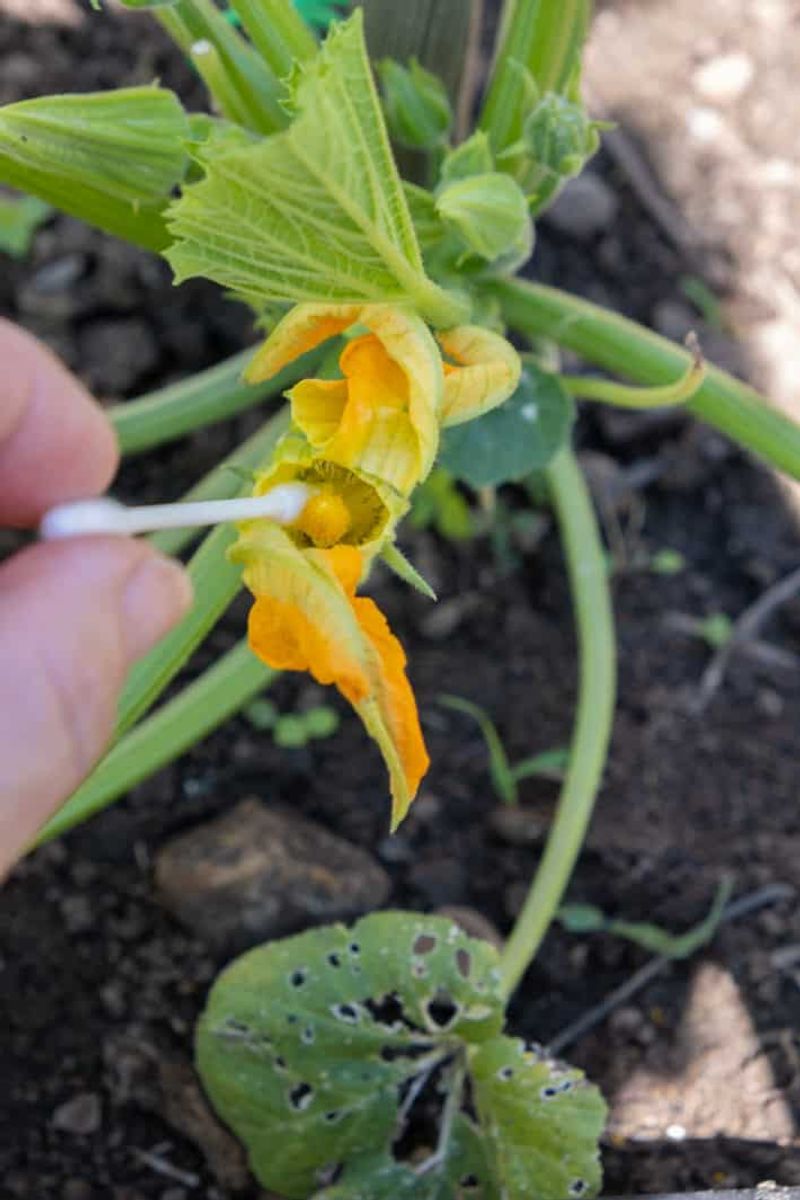
When female flowers are present, male flowers are open at the same time, and pollinator activity seems low, hand-pollination is a practical morning step worth trying. The key is timing: University of New Hampshire Extension explains that squash flowers are open for only a few hours, generally until around midday, and each individual flower lasts about one day.
Working early, while flowers are freshly open and dry, gives pollen the best chance of sticking to the stigma.
Start by finding a freshly opened male flower. Pull its petals back gently to expose the anther, which is the central pollen-covered structure.
Brush the anther directly onto the sticky stigma in the center of an open female flower. The stigma is the raised structure at the heart of the female blossom, and it should feel slightly tacky when receptive.
Repeat the transfer for every open female flower on the plant.
A clean, soft paintbrush or a cotton swab works as an alternative if you prefer not to pick the male flower. Collect pollen from the male anther by rolling the swab or brush gently across it, then transfer that pollen to the female stigma with the same motion.
Avoid wet flowers or flowers that have already started to close, because pollen transfer is far less effective under those conditions. Hand-pollination can improve the chance of fruit set when inadequate pollen delivery is the limiting factor, but not every treated flower will develop into a harvestable zucchini, especially if other stresses are present.
Read the developing ovary to judge the result
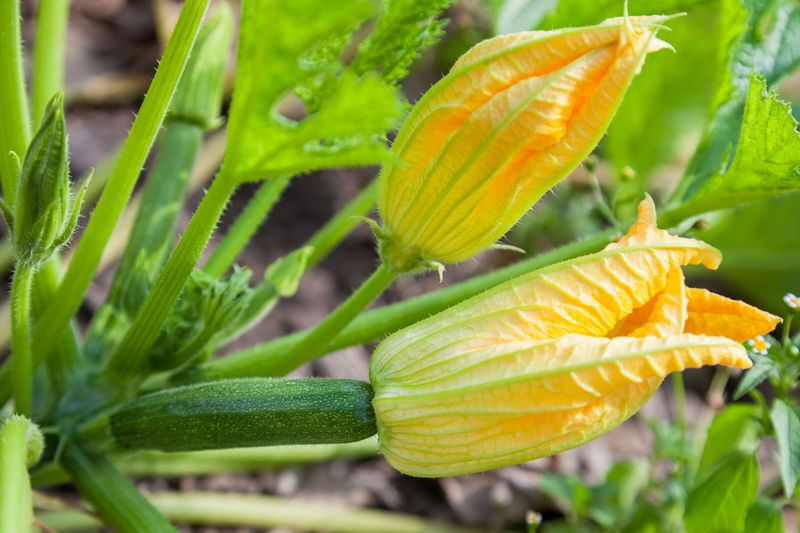
After hand-pollinating, the ovary behind the female flower becomes the clearest report card available. A flower that received adequate pollen should show steady enlargement of the tiny zucchini over the following days.
If the ovary yellows, shrivels, goes soft, or drops off within a day or two, the fruit set did not succeed.
Misshapen fruit is another signal worth reading carefully. UC Small Farms Network guidance on summer squash notes that incomplete pollination can produce fruit that tapers, curves, or develops unevenly rather than forming a full, straight zucchini.
A flower that received pollen from only a small portion of the stigma may produce a partially developed fruit rather than none at all.
Because each flower lasts about one day and is receptive for only a few hours, a new round of inspection each morning keeps gardeners from missing opportunities. If an ovary consistently fails even after careful hand-pollination, the problem is more likely heat-driven abortion, drought, flooding, or compromised pollen than a mistake in technique.
Redirecting attention to plant stress rather than repeating the same motion with diminishing returns is a more productive response when the pattern persists.
Keep the root zone steady instead of chasing a quick fix
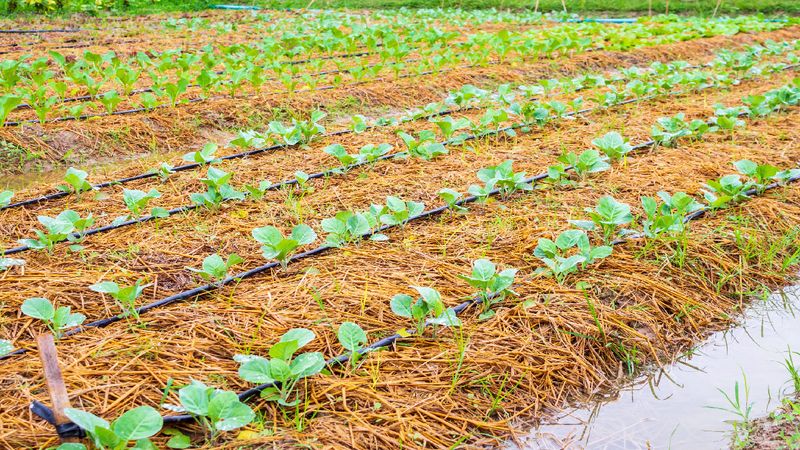
Consistent root-zone moisture is one of the most straightforward ways to reduce the stress that contributes to flower and fruit abortion. Both drought and flooding can cause a plant to drop flowers or abort developing fruit, and University of Minnesota Extension specifically identifies drought stress as a condition that can also push a plant toward producing more male flowers than female flowers, which compounds the fruit-set problem.
The goal is steady, even moisture at the root level, not dramatic wet-dry swings. Drip irrigation or a soaker hose laid at the base of the plant delivers water where it is needed without wetting the foliage or flowers.
Overhead watering is not the recommended approach here: wetting leaves and blossoms can interfere with pollinator activity and may increase the risk of foliar disease, and it does not function as a reliable cooling remedy for the plant.
Mulching around the base of the plant helps retain soil moisture between waterings and moderates soil temperature, both of which reduce stress on the root zone. Stable moisture supports viable flowers by giving them a better chance to complete development, but it does not guarantee fruit set on its own.
Think of it as reducing one layer of stress rather than solving the entire problem.
Protect bees and avoid overcorrecting with fertilizer or pesticides
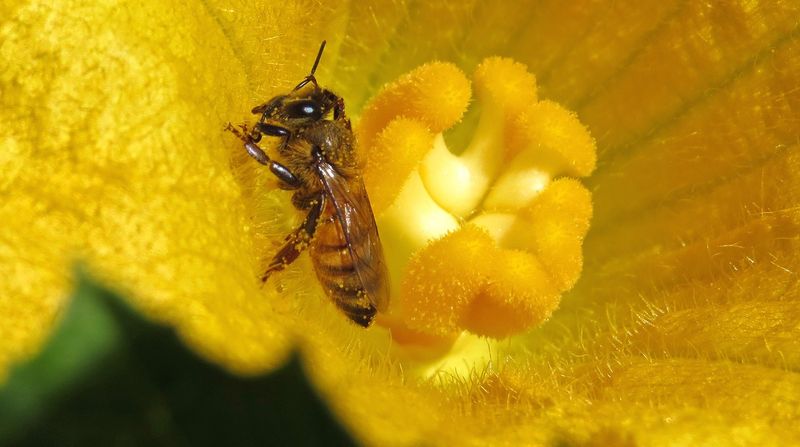
Bees are the primary pollinators for squash crops, and their role cannot be replaced by wind. Squash pollen is relatively heavy and sticky, and the flowers are deep enough that wind movement alone does not transfer it reliably.
University of Florida IFAS pollination guidance confirms that bee activity is essential to consistent cucurbit fruit set, and that even with adequate bee populations, weather, competing blooms, and flower timing can still limit the number of effective visits each flower receives.
Spraying insecticides during bloom to address poor fruit set is counterproductive. Reducing pollinator activity during the brief morning window when flowers are open makes the original problem worse, not better.
If a pest problem makes some pesticide use unavoidable, follow the product label exactly, observe any bloom-time or time-of-day restrictions, and review EPA pollinator-protection guidance for additional direction on minimizing bee exposure.
On the fertilizer side, resist the urge to add more nutrients when fruit set stalls. Excess nitrogen encourages the plant to produce lush foliage and long vines while delaying female-flower development and fruiting.
Fertilizer decisions should follow a soil test rather than a blanket application.
One more misconception is worth clearing up: a zucchini plant does not need a second zucchini plant to produce fruit. As University of New Hampshire Extension notes, a single healthy plant produces both male and female flowers.
Adding a second plant does not solve timing gaps, pollination shortfalls, or stress-related abortion.
Try viable flowers now, but plan for a better season window
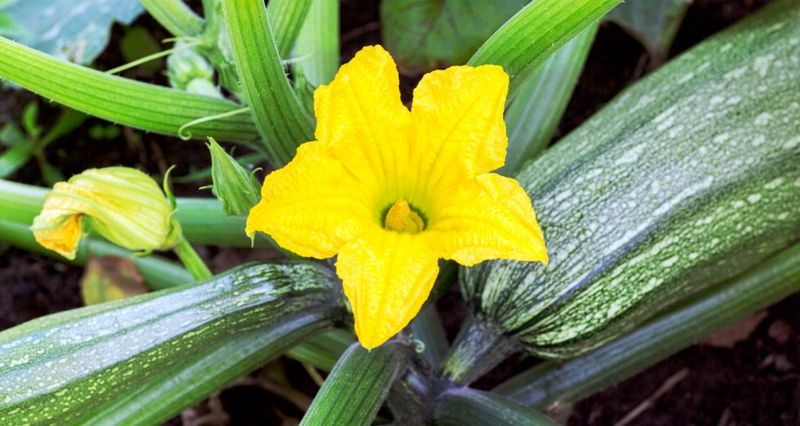
For gardeners in Florida and Texas watching their plants struggle through August heat, hand-pollinating receptive female flowers each morning is still worth attempting. A fresh female flower that opens alongside a viable male flower is a real opportunity, and careful technique gives it a better chance.
The honest qualifier is that a plant under prolonged heat stress may remain in a production lull even when the technique is executed correctly.
University of Florida IFAS seasonal guidance notes that summer squash in Florida is typically grown in late spring and early fall rather than through the most punishing stretch of summer. Texas A&M AgriLife Extension similarly identifies a fall squash season for most parts of Texas.
Starting fresh transplants or seeds for a fall crop, timed to mature as temperatures ease, may deliver a more dependable harvest than trying to push the current plant through conditions that are working against it.
Looking further ahead, University of Maryland Extension identifies parthenocarpic zucchini varieties, including Parthenon, Cavili, and Sure Thing, that can set fruit without pollination. That trait belongs to specific cultivars only and will not change what the current plant can do.
As a long-term strategy, though, choosing a parthenocarpic variety for future hot-season plantings removes pollination from the list of things that can go wrong.
The best summer garden is often the one planted at the right time for the right place.