
Zebra longwing butterflies are a Florida treasure, but their caterpillars are picky eaters. If you want more of these striped butterflies floating through your yard, passionvines are the plants to know.
The right vine can turn a fence, trellis, or wild corner into a nursery for the next generation. Here are seven Florida passionvines that give zebra longwing caterpillars the food they are built to find.
1. Corkystem Passionvine
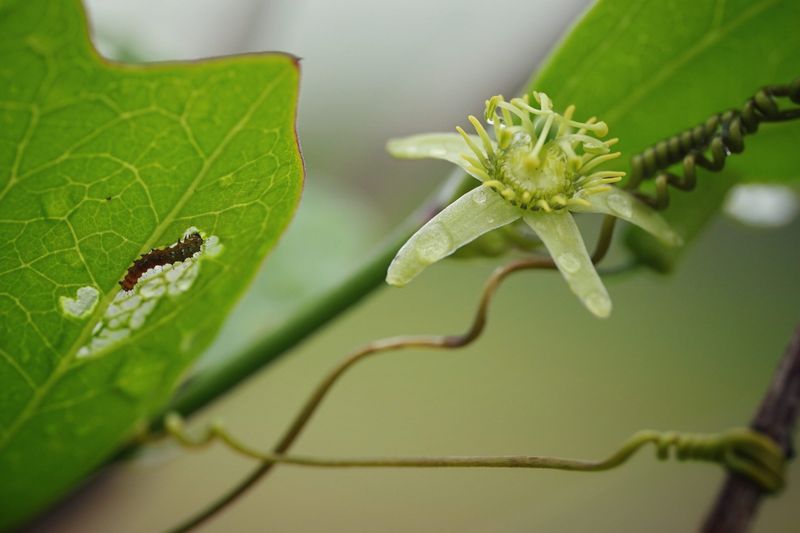
A scrappy little vine with big wildlife value, corkystem passionvine often looks more like a backyard volunteer than a showpiece. That is part of its charm.
It slips through shrubs, fences, and informal beds without demanding rich soil or constant attention.
For zebra longwing caterpillars, Passiflora suberosa is one of the most dependable host plants in much of Florida. The leaves are smaller than maypop, so damage may show quickly, but the vine usually rebounds if it is healthy and established.
In sandy soil, a light layer of mulch and occasional watering during dry spells can help it keep enough fresh growth for hungry larvae.
Gardeners who like tidy landscapes can train it along a wire fence or tuck it near a wildlife corner instead of letting it wander through prized ornamentals. Birds may also visit the small dark fruits, adding another layer of backyard habitat value.
If your goal is a low-fuss native vine that caterpillars can actually use, corkystem passionvine deserves a front-row spot.
2. Maypop Passionflower
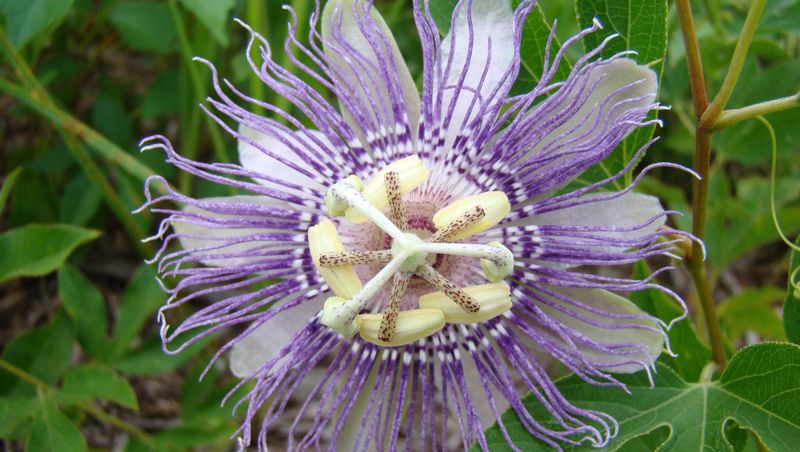
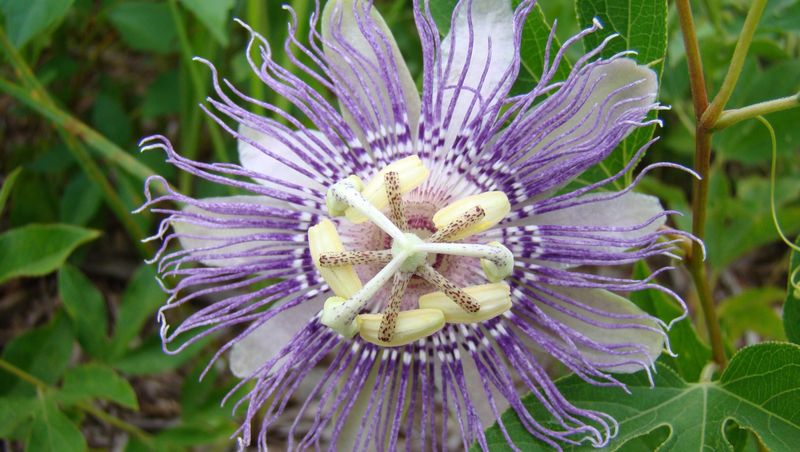
Big purple flowers make maypop the passionvine people notice first. Even neighbors who do not know the plant name often stop to ask about the wild-looking blooms.
In a sunny Florida yard, Passiflora incarnata can turn a plain trellis into a pollinator magnet.
Zebra longwing caterpillars will feed on maypop, especially when tender new growth is available. The larger leaves can support plenty of chewing, but the vine is more vigorous than some smaller native passionvines, so give it room.
A sturdy arbor, fence, or back-of-border support works better than a delicate plant cage.
Maypop can spread by underground runners, which is wonderful in a meadow-style habitat bed but less welcome in a tight formal garden. Plant it where a little roaming will not cause stress later.
In North and Central Florida, it may die back during cooler weather and return when warmth settles in again.
For homeowners who want both butterfly function and flower drama, maypop is the showiest choice on this list. It brings the caterpillar buffet and the garden sparkle at the same time.
3. Yellow Passionflower
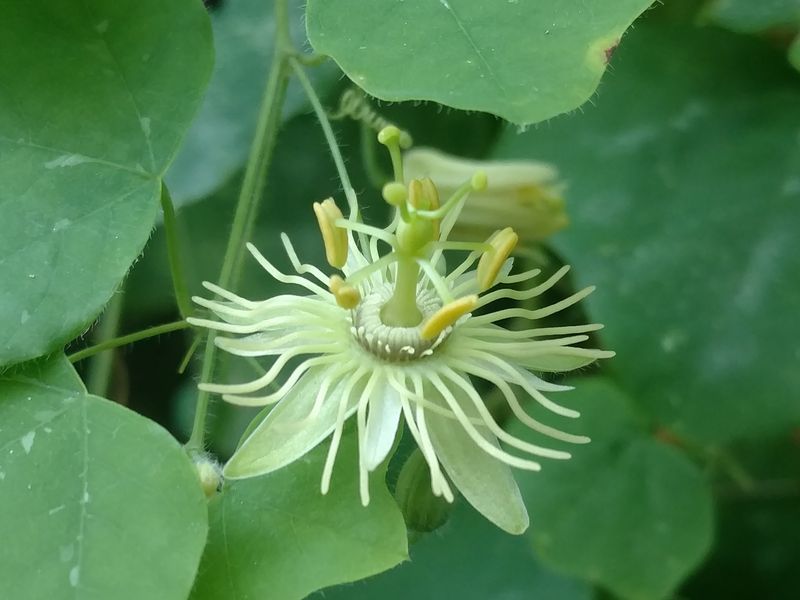
Not every butterfly plant has to shout. Yellow passionflower is quiet, fine-textured, and easy to miss until you look closely.
Its small yellow-green blooms have a woodland feel that suits the softer edges of a Florida yard.
Passiflora lutea is useful where larger vines would be too bold or too pushy. It can work along a lightly shaded fence, near native shrubs, or in a naturalized bed where the goal is habitat rather than a formal floral display.
Zebra longwing caterpillars may use the foliage, and its modest size makes it easier to fit into smaller spaces.
Because the plant is more delicate than maypop, avoid placing it where foot traffic, string trimmers, or aggressive vines will overwhelm it. Sandy soil is fine as long as young plants get enough moisture while they settle in.
Once established, it can feel surprisingly at home in a low-key wildlife planting.
Yellow passionflower is the pick for gardeners who want caterpillar support without turning the whole bed into a vine jungle. It is subtle, useful, and very much at home in native-minded Florida landscapes.
4. Pineland Passionflower
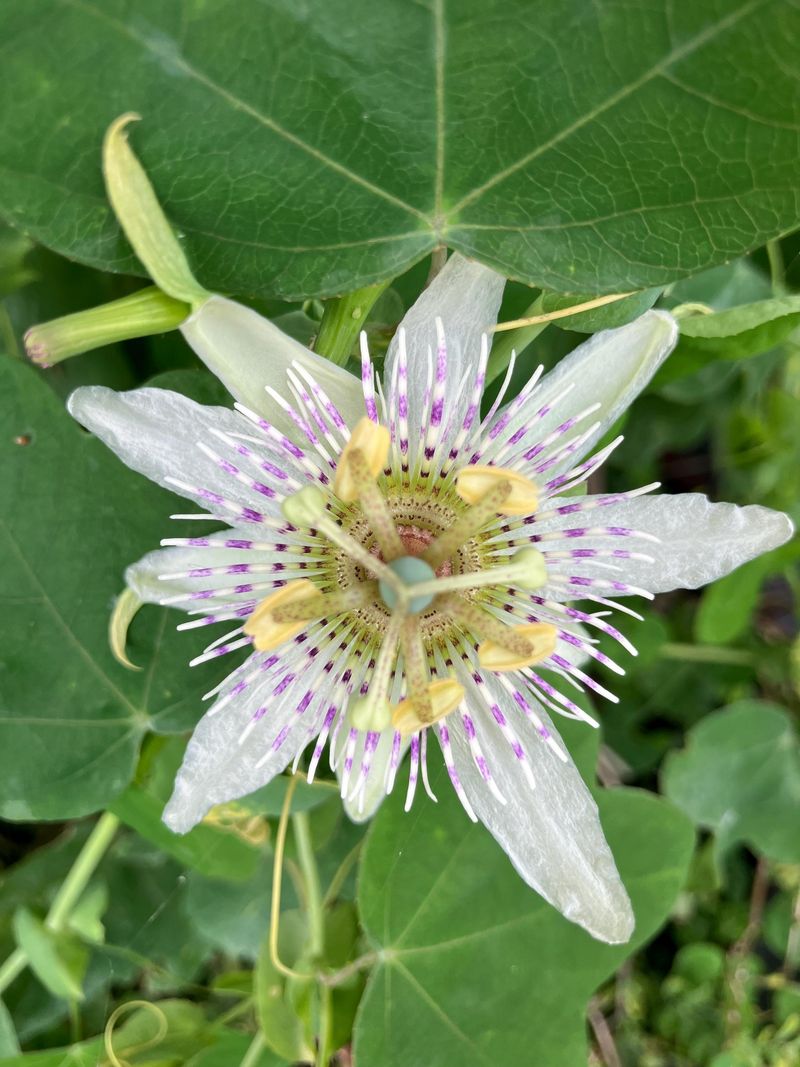
In a yard inspired by pine rockland or coastal scrub, pineland passionflower feels like it belongs. It has a lighter, wilder look than the big ornamental passionvines sold for their flowers.
That makes it a smart match for gardeners building a more natural Florida habitat bed.
Passiflora pallens is especially relevant in South Florida, where native plantings often need to handle heat, quick-draining soil, and intense rainy-season growth. Zebra longwing caterpillars can use it as a host, and the vine blends well with saw palmetto, coontie, native grasses, and other plants that do not need pampering.
Its flowers are not huge, but they reward people who enjoy small details.
Give this vine a place where it can climb lightly through open shrubs or along a simple support. Avoid heavy fertilizer, which can push soft growth and upset the balance of a native bed.
A pine straw or leaf mulch layer helps protect the roots while still keeping the planting natural-looking.
Pineland passionflower is different from the others because it feels site-specific. It is not trying to be the biggest bloom in the yard.
It is a habitat plant with a strong sense of place.
5. White-Flowered Passionvine
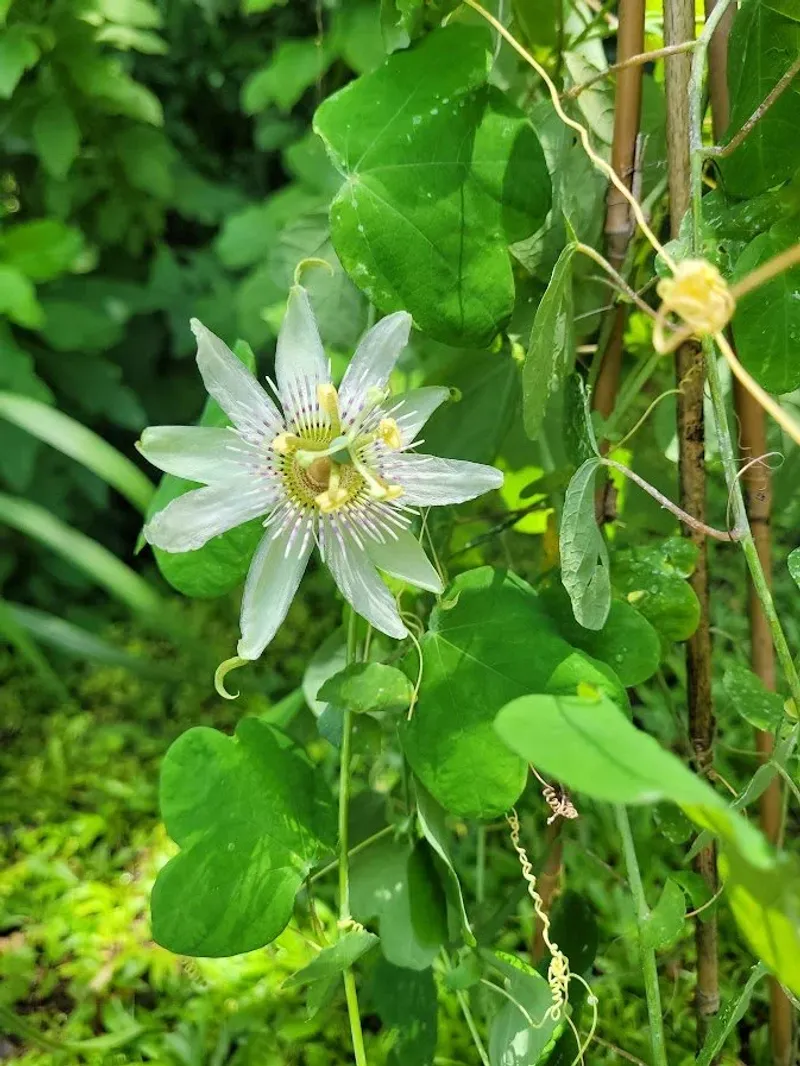
Small white blooms can be just as useful as flashy purple ones, especially when the plant fits the space. White-flowered passionvine has a clean, airy look that slips neatly into South Florida wildlife gardens.
It is the kind of vine that makes a planting feel alive without stealing the whole scene.
Passiflora multiflora can serve as a host for zebra longwing caterpillars, giving gardeners another native option beyond the familiar maypop and corkystem passionvine. Its growth is generally better suited to warm parts of the state, so match it to your region before planting.
In the right yard, it can weave through a hedge or climb a modest support with very little drama.
The main advantage here is texture. The flowers are dainty, the vine is not visually heavy, and it pairs well with shrubs used for privacy or storm-tough landscape structure.
That matters in Florida yards where homeowners want habitat but still need beds to look intentional from the patio or street.
Use white-flowered passionvine where you want a softer host plant. It feeds caterpillars, supports a native planting style, and keeps the overall garden feeling light rather than tangled.
6. Goatfoot Passionflower
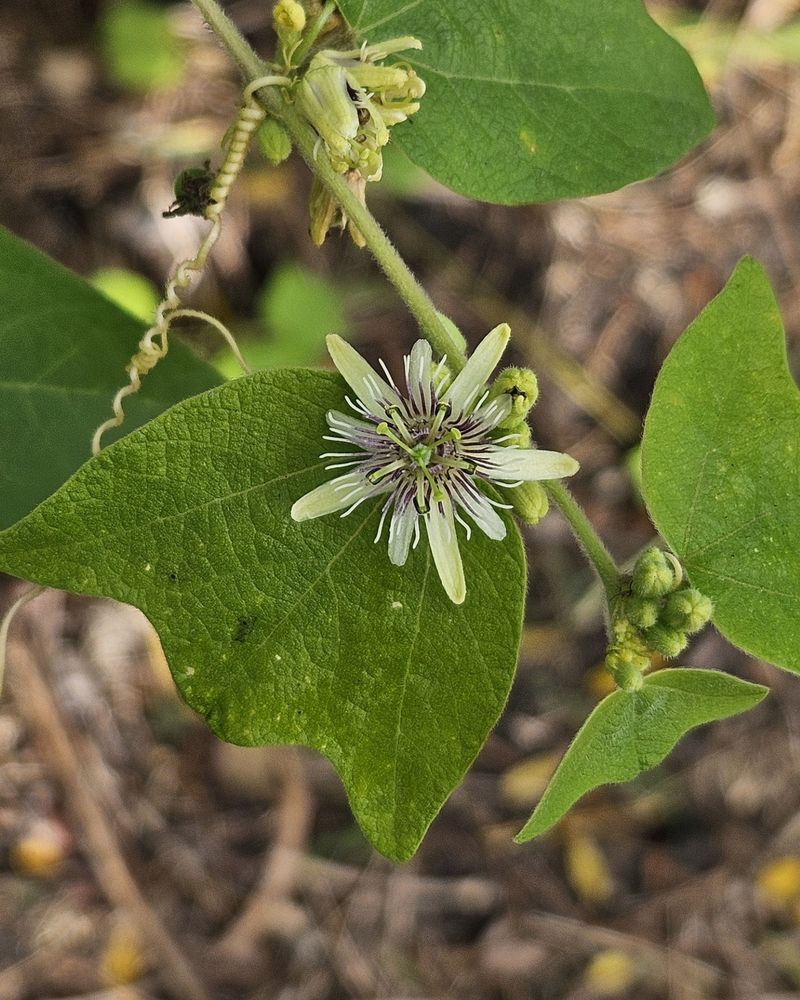
The name alone makes goatfoot passionflower memorable. Its leaf shape can look a little quirky, which gives the vine personality before it even blooms.
For gardeners who enjoy native plants with character, Passiflora sexflora is a fun one to learn.
Zebra longwing caterpillars can feed on goatfoot passionflower, and the plant is most fitting for warm Florida gardens where tropical natives thrive. It is not the best pick for every county, but in suitable South Florida conditions it adds diversity to the host-plant menu.
More host diversity can help keep a butterfly garden active even when one vine is resting, chewed down, or recovering from weather.
Place it where you can notice the foliage up close, such as near a path, small arbor, or backyard sitting area. Like many native vines, it benefits from support but does not need to be treated like a fussy ornamental.
Keep mower edges and trimmers away from the crown so the plant can regrow after caterpillar feeding.
Goatfoot passionflower earns its place because it is distinctive. It feeds the right insects, adds a conversation starter, and brings a less common native vine into the home landscape.
7. Stinking Passionflower
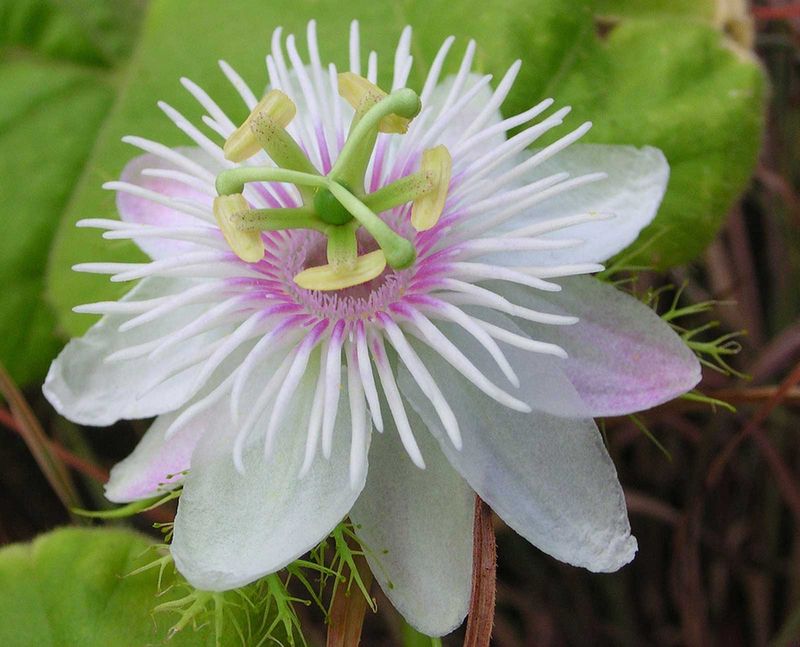
A plant with a rude nickname can still be useful, and stinking passionflower proves it. The foliage has a noticeable scent when crushed, and the lacy bracts around the fruit give it an odd, almost alien look.
It is not the polished choice, but caterpillars do not care about garden fashion.
Passiflora foetida is known as a host for zebra longwing caterpillars, and it can grow eagerly in warm, disturbed sites. That strength is also the reason to use caution.
In Florida, gardeners should check local guidance before planting it, because it may behave weedy in some areas and is not the best fit for every yard.
If it is already present on your property and not spreading into natural areas, it may help support caterpillars while you add more appropriate native passionvines. Keep it away from preserves, drainage edges, and places where seeds could move beyond your control.
Removing extra seedlings before they mature is much easier than correcting a vine problem later.
Stinking passionflower is included because zebra longwings will use it, not because every gardener should rush to plant it. Treat it as a managed, site-aware option, and lean on native Florida passionvines whenever possible.