
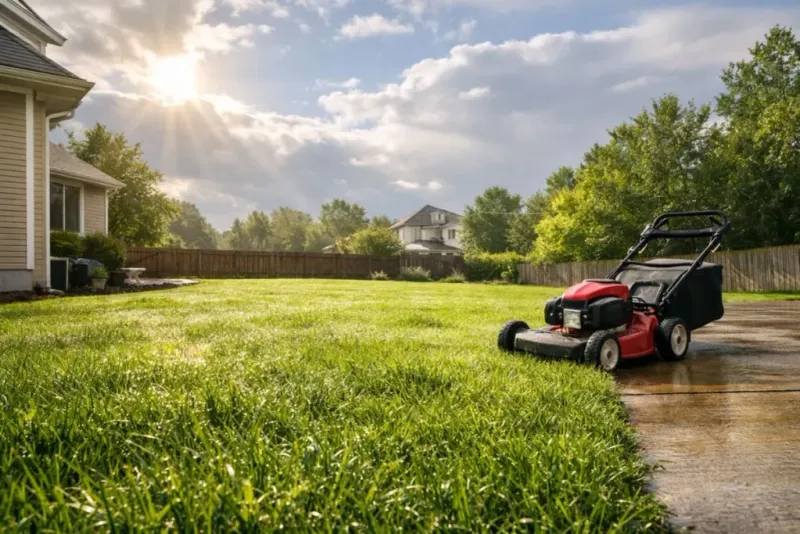
After a summer storm rolls through, the lawn looks lush and the mower is sitting right there in the garage. The temptation to knock out that chore before the weekend is real. But mowing on a rain-soaked lawn carries risks most homeowners never see coming, and knowing when to wait can save you a lot of headaches.
One damp mowing will not automatically destroy your lawn
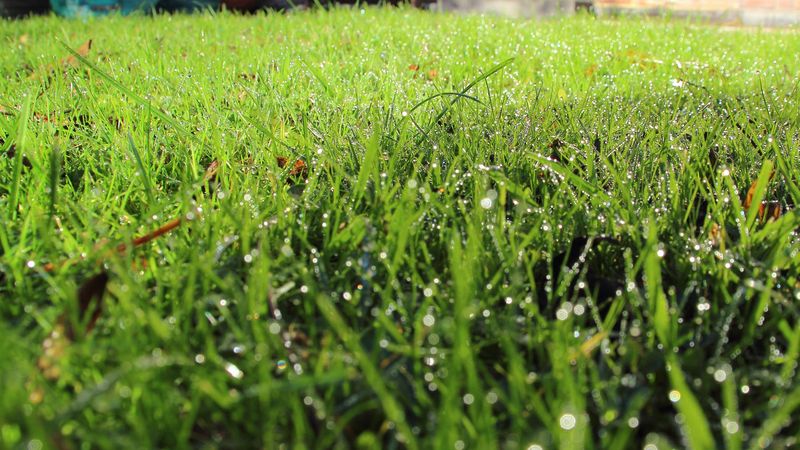
Here is the honest answer upfront: mowing right after a storm is not something you want to make a habit of, but one pass over mildly damp grass will not automatically ruin an established lawn. The real question is not whether the grass got wet, but whether the lawn is actually ready for the mower. University of Minnesota Extension mowing guidance consistently recommends waiting until the grass is dry and the soil is firm enough to support the mower without rutting or slipping.
The decision rule is simpler than most people think. Judge the condition of your specific lawn rather than the label you put on the storm. A brief afternoon shower is a different situation from three hours of heavy rain, and a well-drained sandy lawn recovers faster than a clay-heavy yard with low spots.
What matters most is whether the soil underneath can hold up to traffic. Extension turf guidance on mowing timing draws a clear line between wet leaf blades and saturated soil, and Penn State Extension’s soil compaction advice explains that soft, wet soil is far more vulnerable to lasting damage from equipment weight than firm ground with damp grass on top. Soil firmness is the more important variable, and the sections below explain exactly how to check it before you fire up the engine.
Wet blades and soft soil create different problems
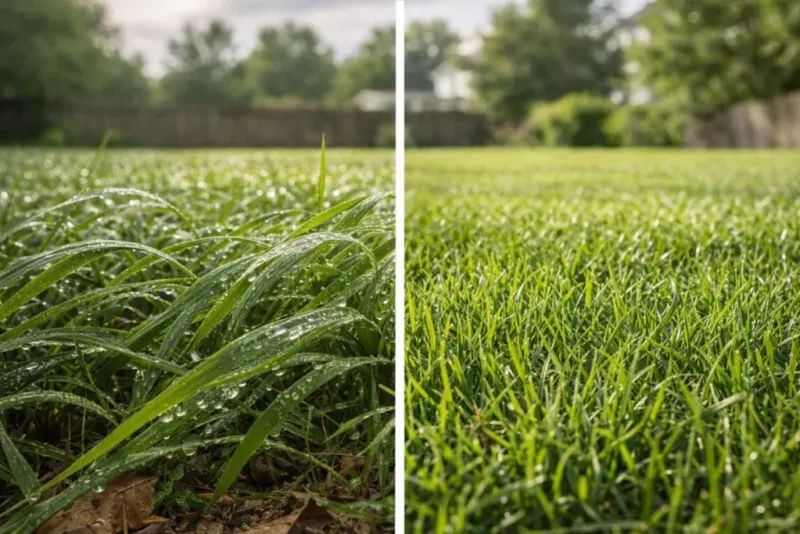
Moisture on grass blades and moisture in the soil are two separate problems, and mixing them up leads to poor decisions in the driveway. When rain or dew coats the leaf blades, the main concerns are cutting quality, clumping, and the possibility of moving some pathogens between areas of the lawn. Those are real issues, but they are manageable and generally resolve once the grass dries.
Soft, saturated soil is a different animal. When the ground beneath the turf is wet and plastic, mower wheels and your own feet can sink in, leave ruts, and compress the soil structure in ways that affect drainage and root growth for weeks. Penn State Extension’s compaction guidance notes that wet soils are significantly more vulnerable to compaction from traffic than dry soils, and University of Minnesota Extension’s soil compaction resource explains that repeated pressure on wet soil can reduce pore space and restrict the oxygen and water movement that roots depend on.
The tricky part is that these two conditions do not always match. You can have damp, shiny grass blades sitting over soil that is still perfectly firm underneath, and you can have grass that looks almost dry while the soil a few inches down remains soft after a heavy soaking. Extension turf specialists point to this distinction as the reason a visual check of the grass surface alone is not enough. You need to test the ground itself before making a call.
Your footsteps show whether the lawn is ready
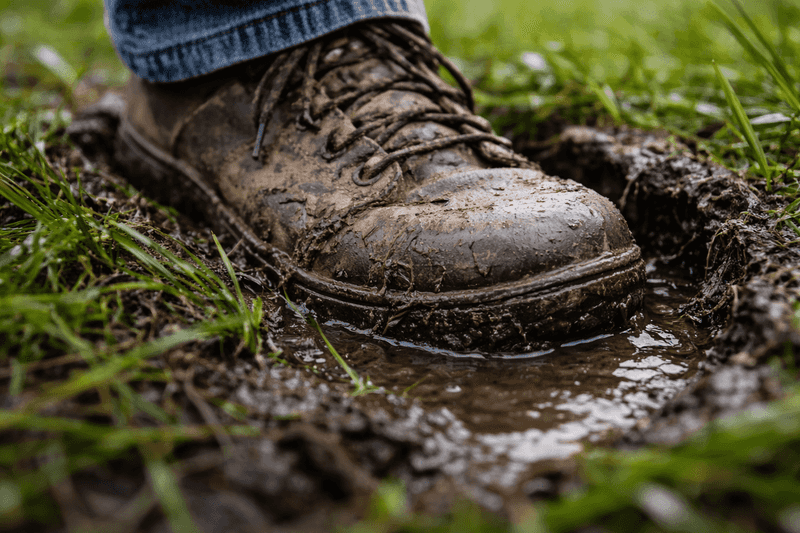
Before you pull the mower out of the garage, take a walk. Not a glance from the patio, but an actual walk across the full route you plan to mow. Pay attention to what your feet are telling you, because the ground is a more reliable readout than the sky or the clock.
If your shoes sink, the surface feels muddy underfoot, or you can look back and see footprints and impressions that stay rather than spring back, postpone the mow. University of Minnesota Extension’s spring lawn care guidance uses this exact test: persistent footprints are a sign that traffic will damage the soil structure and turf. Penn State Extension reinforces that point, noting that walking or driving over soil when it is at or near saturation causes far more compaction than the same traffic on dry ground.
Walk the entire route, not just the sunny open section that dried fastest. Shaded areas under trees, low spots that collect water, clay-heavy patches, and ground near pond edges or drainage ditches can stay soft long after the rest of the yard has firmed up. Minnesota’s soil compaction resource specifically calls out clay soils and areas with poor drainage as higher-risk zones.
A brief shower on a well-drained yard may leave the lawn mowable in a couple of hours. A soaking storm on heavy clay might mean waiting a full day or longer. Extension turf guidance is consistent on this point: check the actual lawn conditions rather than following a fixed number of hours. The footstep test gives you a real answer that no timer can.
Premature mowing leaves clumps, ruts, and ragged cuts
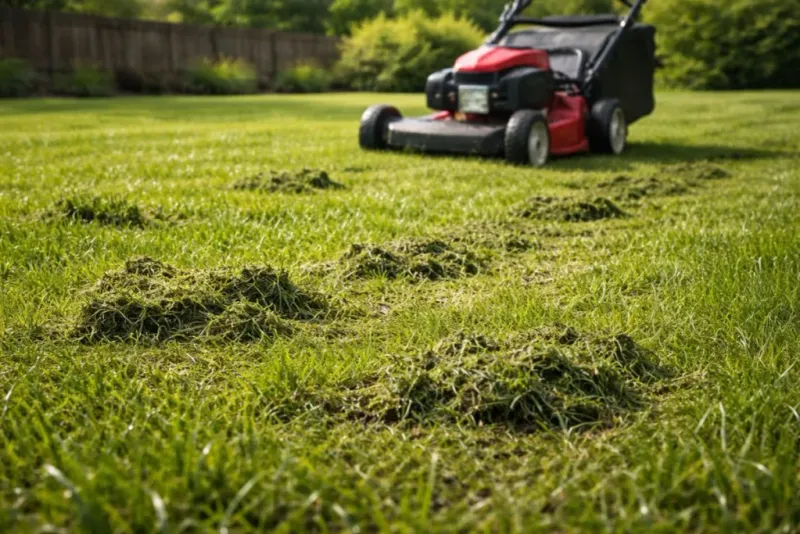
Mow too soon after rain and the problems show up fast. Wet grass blades stick together and clump as they pass through the mower deck. Those clumps land on the lawn in thick mats that block sunlight and air from the turf underneath, and if they sit there long enough they can stress or yellow the grass beneath them. University of Minnesota Extension notes that wet grass can clog decks and discharge chutes, creating a mechanical problem on top of a lawn-quality problem.
The cut itself suffers too. Wet blades bend away from the mower rather than standing upright to meet it cleanly, so the mower ends up tearing or missing sections rather than slicing evenly. University of Illinois Extension’s mowing guide connects dull blades to torn leaf tissue and increased turf stress, and a blade that was already borderline sharp becomes noticeably worse on wet, flexible grass. Sharpening your blade regularly is always worthwhile, but it matters even more when conditions are less than ideal.
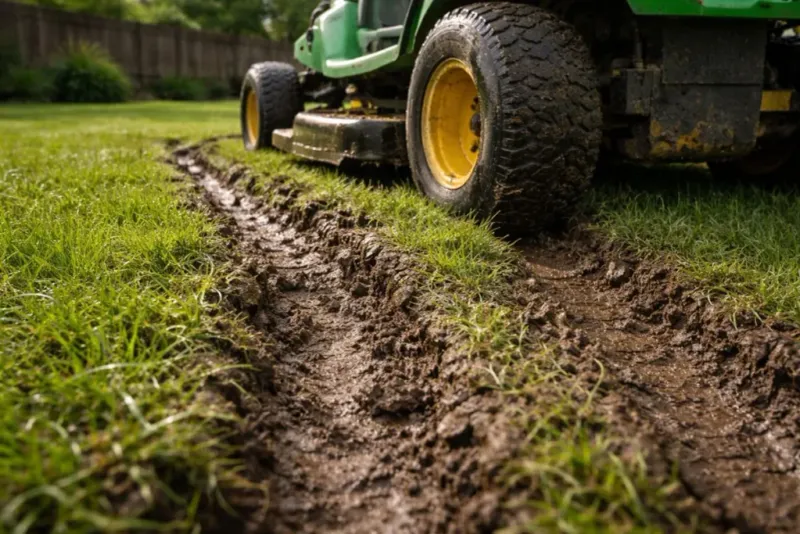
On soft ground, mower wheels and riding mower tires can press ruts into the turf that take weeks to level out. One thing wet mowing does not do, though, is cause thatch. Oregon State University Extension is clear that ordinary grass clippings do not significantly contribute to thatch buildup when mowing is managed properly. The clumping and rutting are the real visible headaches, and both are avoidable by simply waiting until conditions improve.
When the grass gets tall, lower the height gradually

Several rainy days in a row can push grass well beyond its normal mowing height before you ever get a dry window to cut. The temptation at that point is to drop the deck low and take it all off in one pass. That approach, called scalping, puts serious stress on the turf by removing too much leaf surface at once and exposing the stems and crowns to heat and drying.
The one-third rule is the standard guard against this. Remove no more than one-third of the grass blade in a single mowing session. University of Illinois Extension’s mowing guide explains that cutting more than one-third at a time forces the plant to redirect energy from root growth to rebuilding leaf area, weakening the lawn at exactly the moment it is already recovering from wet stress. Raise the deck higher than normal for the first post-rain mow, then step the height down gradually over the next one or two sessions if needed.
Blade sharpness matters here too. A sharp blade slices cleanly and reduces the torn-tissue stress that can leave grass more susceptible to disease. Oregon State University Extension notes that finely cut clippings left on a healthy lawn can return useful nutrients to the soil, but when clippings are unusually heavy or clumped from overgrown wet grass, bagging may be the more practical choice for that first recovery mow.
For height targets, University of Missouri Extension’s lawn guide and other regional sources suggest roughly 2.5 to 3 inches or higher as a broad reference for many cool-season home lawns, though warm-season grasses like bermudagrass and zoysiagrass have their own species-specific ranges. Check your local extension service or the University of Georgia Extension mowing heights chart to confirm the right target for your turf type and region before making any permanent deck adjustments.
Slopes and clogs turn a lawn-care delay into a safety issue
Wet grass on flat ground is an inconvenience. Wet grass on a slope near a drop-off, ditch, or pond edge is a genuine hazard. Reduced traction changes how a riding mower handles, and the consequences of a slide or tip on a slope are far more serious than a clumped clipping or a rut. The CPSC riding lawnmower fact sheet and OSHA guidance on riding mower rollovers both identify slopes, embankments, and water edges as high-risk terrain, especially when surfaces are wet and traction is reduced.
Walk-behind mowers carry their own risks on wet slopes. Footing is less secure, and a slip can put hands or feet near moving parts. University of Missouri Extension recommends treating any slope with extra caution and avoiding mowing near ditches or water edges when conditions are slippery. Follow your mower manufacturer’s specific guidance for slope ratings and wet-condition operation.
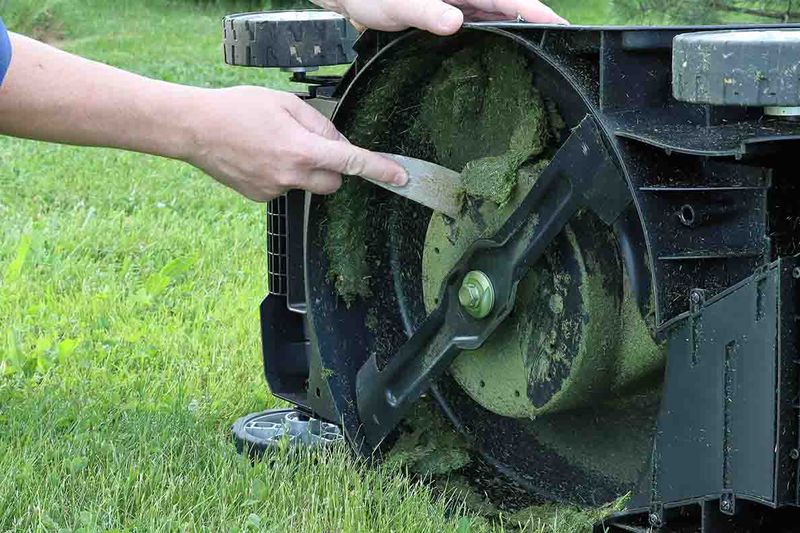
Clogs are a separate safety point that wet mowing makes more likely. When wet clippings pack into a discharge chute, the correct response is a specific sequence: stop the engine or motor completely, disengage the blades, and wait for every moving part to come to a full stop before doing anything else. Then follow the manufacturer’s cleaning instructions. CPSC walk-behind mower safety guidance is explicit: never reach into a discharge chute while there is any chance the blade is still moving.
That rule applies even when the mower sounds like it has stopped.
Disease and flooding require a different response
Wet conditions alone do not cause lawn disease. Fungal and other turf pathogens need a specific combination of factors to take hold: the right pathogen present in the soil or thatch, a susceptible grass variety, prolonged leaf wetness, favorable temperatures, and often some existing stress like compaction, low mowing, or excess nitrogen. University of Florida IFAS turfgrass disease management guidance lays out this multi-factor interaction clearly, and IFAS lawn disease resources reinforce that wet weather is a contributing factor, not a guarantee of infection.
Where wet mowing does raise a practical concern is pathogen movement. If you already know your lawn has an active disease, mowing through infected areas can carry water-borne or blade-borne pathogens to healthy sections. The practical fix is straightforward: mow the healthy areas first, mow the infected patches last, and clean the mower deck and discharge area before the next use. University of Illinois Extension’s Pythium blight guidance notes that this fast-spreading disease thrives in warm, wet conditions and can move through a lawn quickly when the environment suits it.
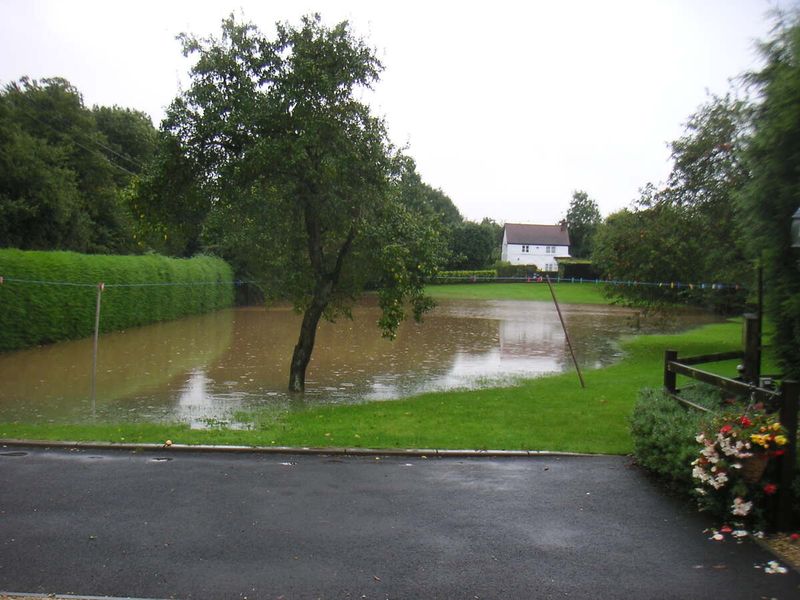
Standing water and flooding are a separate situation that goes beyond mowing decisions. Ponded water, especially in summer heat, can damage turf rapidly. The first job after flooding is not mowing. University of Minnesota Extension’s flooded lawn guide and University of Vermont Extension’s post-flood recovery guidance both recommend removing debris and allowing the area to drain fully before bringing any equipment onto waterlogged ground.
Mowing too early on a flooded area can compound the damage rather than help recovery.
Judge the lawn, not the clock
The practical sequence comes down to four quick checks before you start the mower. First, look at the grass blades: are they dry enough to stand upright and cut cleanly? Second, walk the full mowing route and press your foot into the ground in several spots, including shaded areas and low spots. If footprints stay, the soil is not ready.
Third, check any slopes, edges, or soft patches separately. Fourth, if everything passes, mow at a raised deck height and keep the one-third rule in mind. Extension turf specialists and University of Minnesota Extension both frame this as a conditions-based decision, not a time-based one.
Postponing one mowing session protects the turf, the soil structure, your equipment, and your own footing more reliably than any fixed waiting period. Penn State Extension puts it plainly: soil that can support traffic without compressing is ready; soil that cannot should be left alone. A lawn that waits one extra day recovers faster than one mowed under the wrong conditions.