
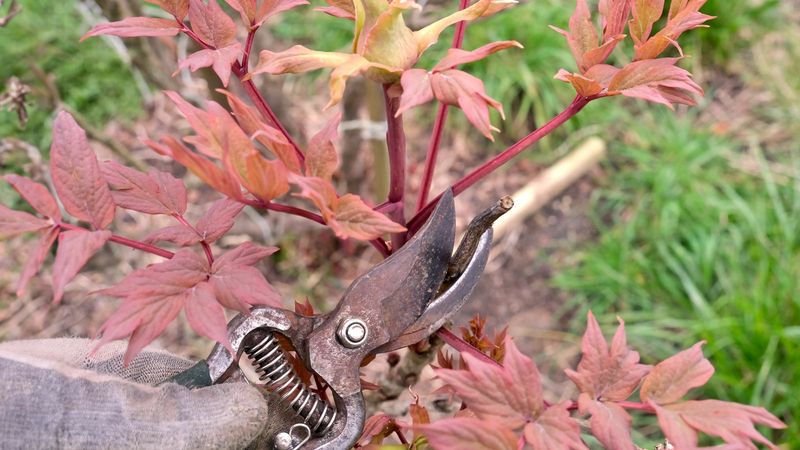
You cut back your peonies after the flowers faded, the garden looked tidy all summer, and then spring arrived with far fewer blooms than you expected. The frustrating part is that the damage was already done months before you noticed anything wrong. For herbaceous peonies, removing healthy green foliage too early can quietly reduce the plant’s ability to build up the resources it needs for next year’s flowers. Understanding exactly what to cut, what to leave alone, and when to act is the difference between a peony that bounces back strong and one that leaves you wondering what went wrong.
Identify your peony before you cut it
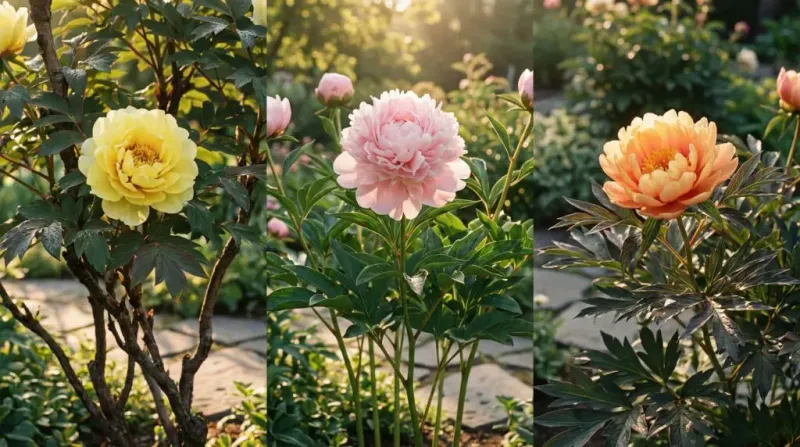
Not every peony in your yard responds to pruning the same way, and applying the wrong technique to the wrong plant can set back flowering by a full season or more. Before you pick up your pruners, spend a moment figuring out which type you are working with.
Ordinary herbaceous peonies are the most familiar kind in US home gardens. Their stems and leaves emerge from underground each spring and die back completely by fall. Because nothing above ground survives winter, cutting them to near ground level at the end of the season is both safe and recommended.
Tree peonies are a different situation entirely. Iowa State Extension guidance on tree peonies makes clear that their woody stems remain above ground through winter and carry next year’s buds. Cutting a tree peony to the ground removes those buds and can severely delay or prevent flowering. Fall maintenance for tree peonies is generally limited to removing leaves, dead tissue, or diseased portions while leaving the woody structure intact.
Itoh peonies, sometimes called intersectional peonies, are a hybrid group that usually dies back like herbaceous types but can retain partially woody lower stems. American Peony Society bulletin guidance describes cutting Itoh peonies back to where the growth becomes woody, often several inches above ground, while avoiding any viable buds still present on the stems.
The rest of this article focuses on herbaceous peonies. If your plant has persistent woody stems that survived last winter above ground, treat it as a tree peony and skip the ground-level cutback instructions that follow.
Healthy leaves keep working after flowering
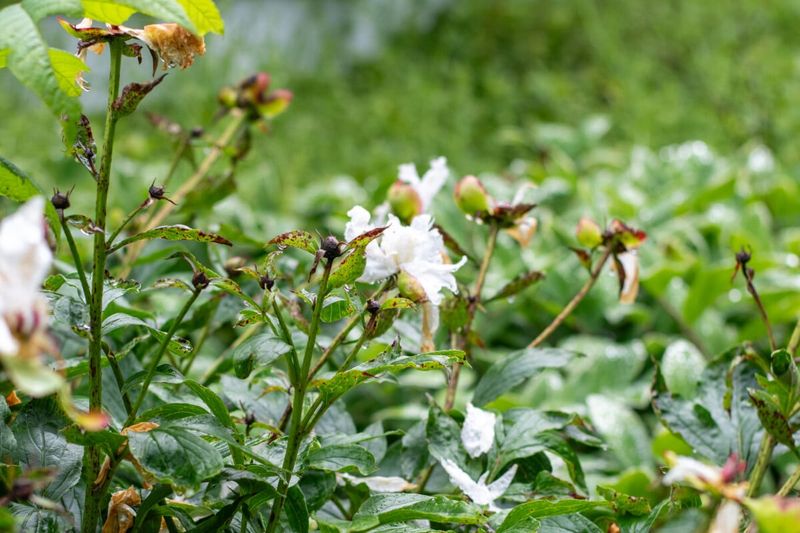
Once the last peony flower drops its petals, it can be tempting to clean up the plant immediately. The foliage looks spent, the blooms are gone, and tidy stems seem like the logical next step. The problem is that those green leaves are still doing meaningful work for the plant.
After flowering, herbaceous peony foliage continues photosynthesis, converting sunlight into energy that the plant moves into its root system and underground storage structures. That stored energy fuels the development of the underground buds, called eyes, that will become next year’s stems and flowers. Published research on peony bud development supports the connection between late-season carbohydrate storage and flowering performance the following year.
Remove the foliage before it has finished that job and the plant may head into winter with less stored energy than it needs. Iowa State Extension’s peony foliage guidance notes that plants cut in August or early September may produce fewer blooms the following spring. The key word is “may” – premature removal raises the risk of reduced flowering, but the outcome is not guaranteed to be a complete failure.
The delayed nature of this problem is what catches gardeners off guard. You make a cut in July or August, the plant looks unremarkable through fall and winter, and only when spring bloom season arrives do you realize something went wrong. By then, the window to correct the mistake has already closed for that season.
Deadhead the flowers without removing useful leaves
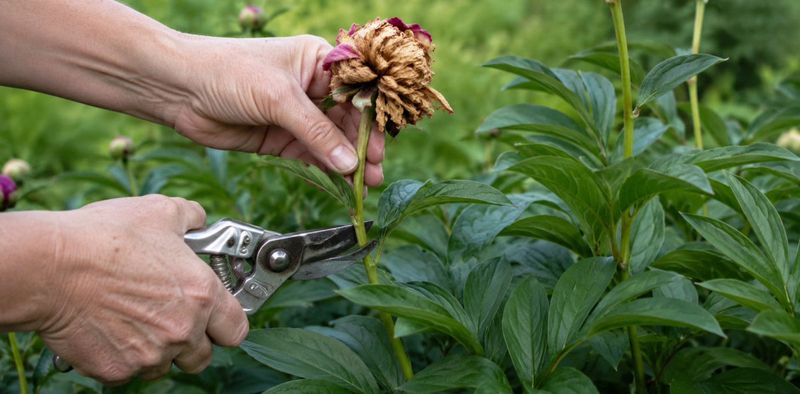
Spent peony blooms are not much to look at, and removing them keeps the garden looking cleaner through summer. The good news is that deadheading does not carry the same risk as removing healthy foliage, as long as you make the right cut.
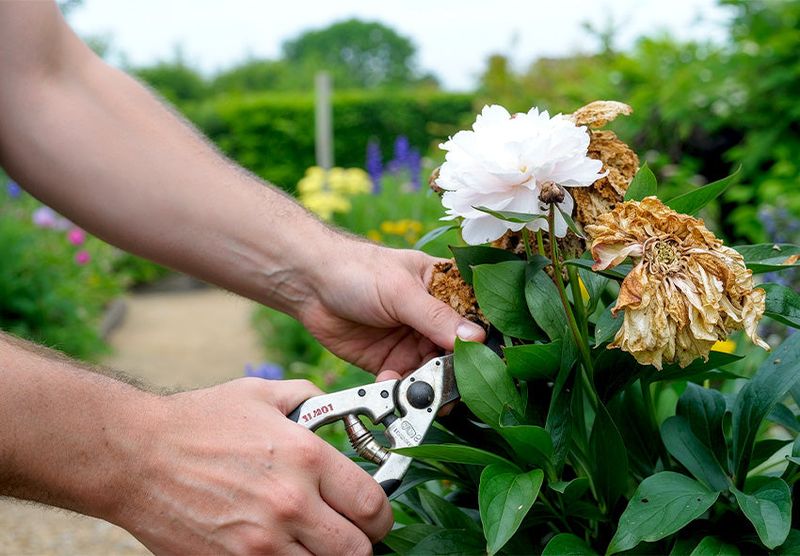
When a peony flower fades, cut the flower stem back to the first set of healthy leaves below the bloom. American Peony Society care guidance describes removing spent flowers as generally harmless when the healthy leaves remain in place. The leaves are what matter most at this stage, and they should stay on the plant as long as they are green and functional.
Where gardeners sometimes run into trouble is treating deadheading as an opportunity to shear back the whole plant. Cutting every stem to a few inches above ground in June or July removes the foliage along with the flowers, and that is the action that can lead to reduced blooms the following spring. The two cuts look similar but produce very different outcomes.
Iowa State’s peony encyclopedia entry reinforces that the foliage needs to remain through the growing season. A clean, targeted cut just below the faded flower head is all that is needed at bloom time. Leave the rest of the plant alone until the foliage naturally declines later in the season.
Wait for natural dieback before routine cutback
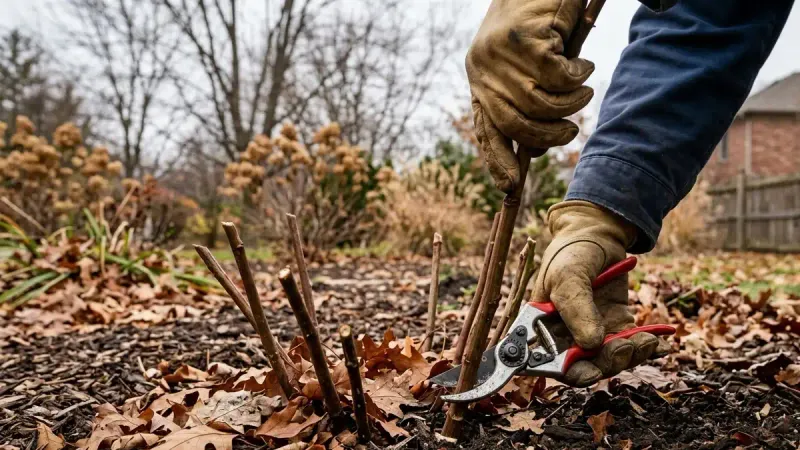
For a healthy herbaceous peony, the timing of routine fall cutback comes down to one straightforward cue: wait until the foliage is finished. That means leaving the plant alone until the leaves have yellowed and died back on their own or a hard freeze has killed the top growth.
Iowa State Extension’s foliage cutback guidance points to late October or early November as a typical window in Iowa, but that reflects Iowa’s climate rather than a universal rule. Gardeners in warmer parts of the country may find that natural senescence comes later, while those in colder zones may see frost do the work earlier. Watch the plant and the weather rather than the calendar.
Once the foliage is clearly dead, use clean, sharp pruners to cut the stems near ground level. Dull blades crush rather than cut, and that kind of damage can create entry points for disease. American Peony Society bulletin recommendations include using clean, sharp tools and sanitizing them between plants, especially when disease has been present anywhere in the garden that season.
If you have cut back peonies in past years before frost arrived and the plants were still green, consider adjusting your timing going forward. You may not see an immediate difference, but giving the foliage its full season can help protect the plant’s ability to build the energy reserves it needs for a strong bloom the following spring. RHS herbaceous peony growing guidance similarly emphasizes allowing foliage to die back before cutting.
Remove diseased foliage when sanitation requires it
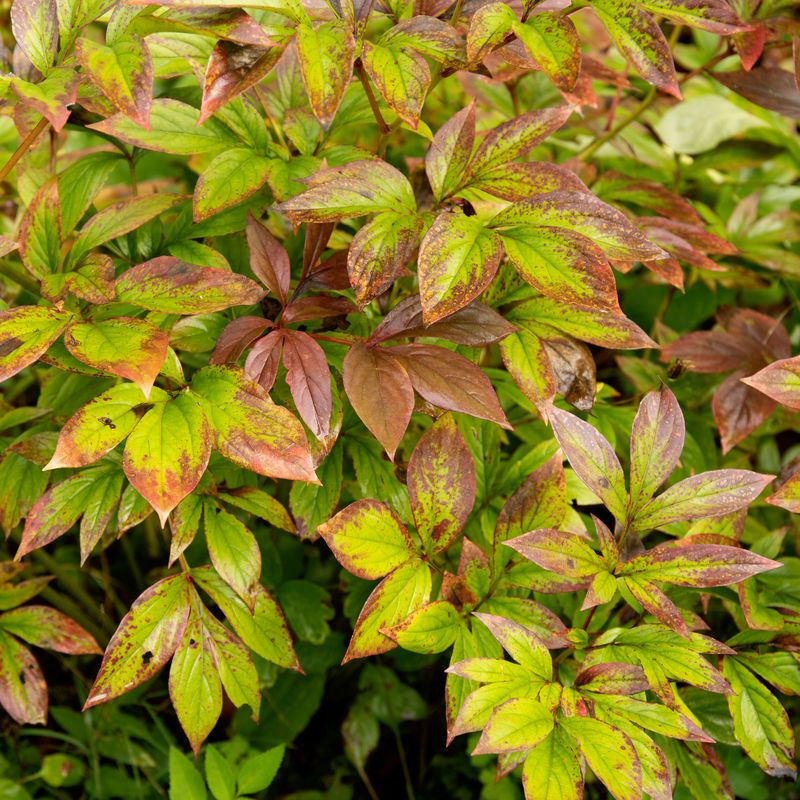
Healthy foliage should stay on the plant as long as possible, but diseased foliage is a different matter. Leaves covered with peony blotch, powdery mildew, or other fungal symptoms can harbor disease structures that carry over into the next growing season, and leaving heavily infected material in place through winter can increase the amount of inoculum available to reinfect the plant in spring.
Iowa State Extension’s guide to peony leaf problems recommends removing diseased foliage from the planting area as part of fall cleanup. Missouri Botanical Garden’s peony blotch information echoes that sanitation approach, noting that removing infected plant material and avoiding overhead watering can help reduce disease pressure in subsequent seasons.
When you remove diseased stems or leaves, take them out of the garden entirely. Ordinary home compost piles generally do not reach temperatures high enough to destroy fungal pathogens reliably, so bagging the material for trash pickup or following whatever disposal method your local extension office recommends is the safer choice.
Sanitize your pruners between plants when disease is involved. Wiping blades with a diluted bleach solution or another appropriate disinfectant can limit mechanical spread from one plant to the next. Penn State Extension’s cut flower update specifically recommends removing diseased portions while leaving healthy green foliage as long as possible – a useful balance to keep in mind when only part of the plant is affected.
Fungicides are not cures for established infections like blotch or powdery mildew. Preventive treatments applied at the right time, good air circulation, and thorough sanitation are the tools that actually reduce disease carryover. Always follow label directions and local registration requirements for any product you consider using.
Check other explanations for poor flowering

A peony that comes up in spring without flowers is disappointing, and it is natural to look back at last fall’s pruning as the cause. Premature foliage removal is a documented risk, but it is only one item on a longer list of reasons a peony might fail to bloom well.
Iowa State Extension’s guide to peony bloom failure lists several causes that have nothing to do with fall pruning. Excessive shade is a frequent culprit, since peonies generally need at least six hours of direct sun to bloom reliably. Eyes planted too deeply – more than one to two inches below the soil surface – can produce lush foliage year after year with little or no flowering. Drought stress during the growing season, excessive nitrogen fertilizer that pushes leafy growth at the expense of flowers, and a plant that is simply too young or recovering from a recent transplant can all produce the same disappointing result.
Missouri Botanical Garden’s peony problem guide adds late-spring frost injury to the list. A hard frost after buds have begun to develop can damage or kill those buds entirely, and the plant may show little else wrong. Bud blast – where buds form but fail to open – can result from frost, drought, or disease rather than anything related to pruning.
Working through this list before concluding that last fall’s cutback was the problem gives you a more accurate diagnosis and a more useful path forward. Correct pruning timing can help protect bloom potential, but it cannot compensate for shade, depth, drought, or frost.
Use a type-specific seasonal decision path
Putting this all together comes down to a short sequence of decisions made at the right moments across the growing season. Start by confirming your peony type. Herbaceous peonies get the full ground-level cutback. Tree peonies keep their woody stems.
Itoh peonies get cut back to where the growth turns woody, avoiding any live buds.
After flowering, deadhead spent blooms by cutting the flower stem while leaving every healthy leaf in place. Then inspect the foliage periodically. If serious disease appears, remove the affected material, dispose of it away from the garden, and sanitize your tools. Iowa State Extension’s leaf problem guidance and American Peony Society care recommendations both support this approach.
For healthy foliage, wait. Let the plant run its course through summer and into fall. When the leaves have yellowed naturally or a hard freeze has finished them off, cut herbaceous stems near ground level with clean, sharp pruners. Iowa State’s cutback timing guidance uses late October or early November as a regional example, but the frost cue travels better than any fixed date.
Careful timing protects bloom potential, though no pruning routine can guarantee flowers – a quiet plant in spring still deserves a full diagnosis before pruning gets the blame.