
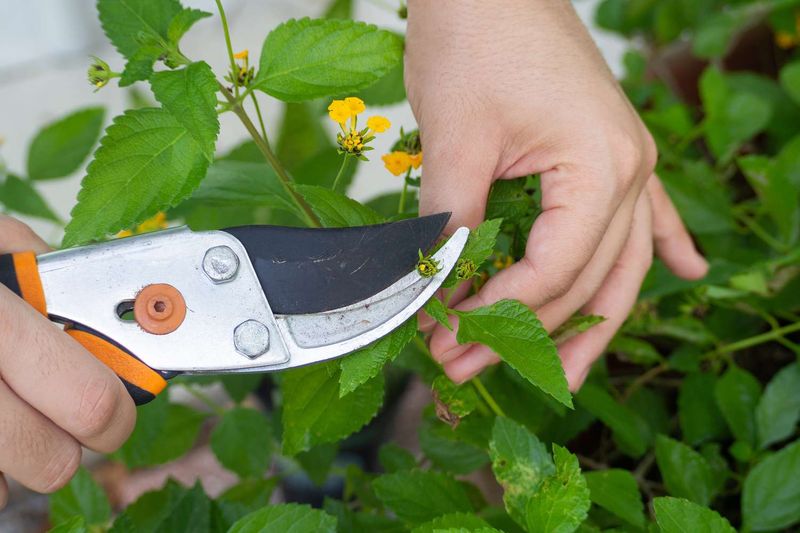
Texas lantana is still putting on a show in many yards come October, but some branches start to look tired and seedy. Those green berries can slow down the color on some plants.
A quick look at your shrub can tell you whether a few snips will help. Here is how to check, where to cut, and what to leave alone.
Inspect the plant before deciding whether to deadhead
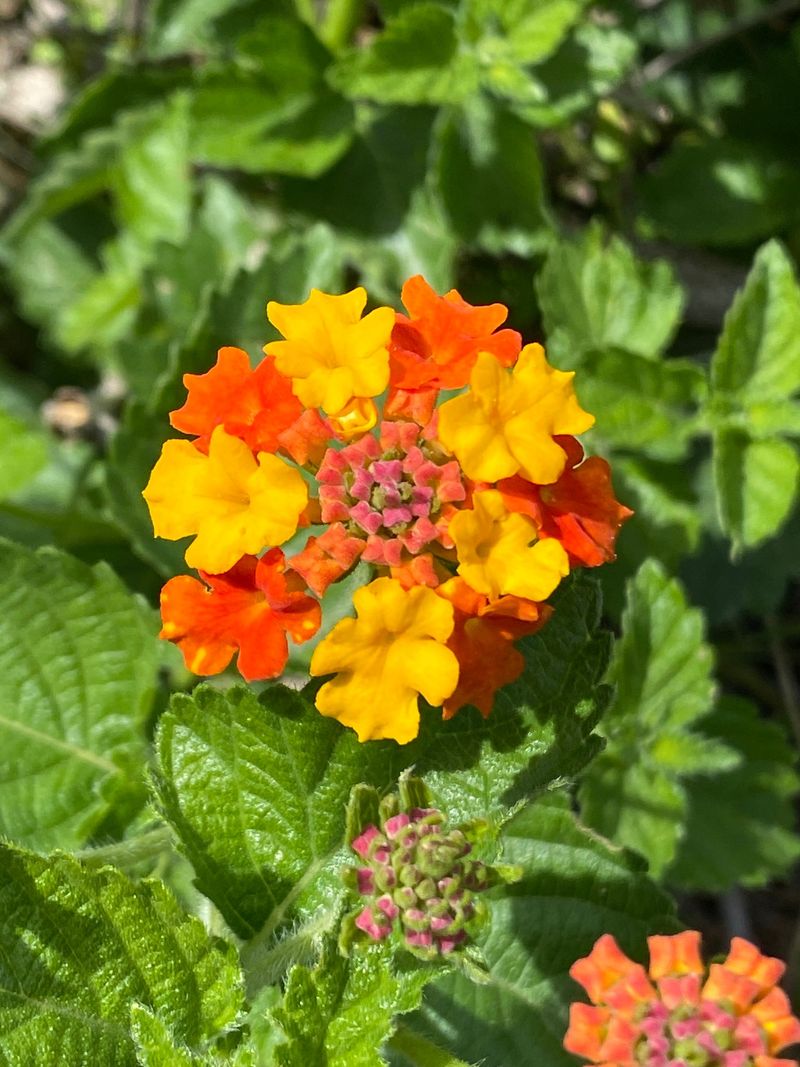
Let’s clear up the headline first. No single cut is proven to keep lantana blooming until first frost, and October alone is not a signal to grab the pruners.
What helps is a quick inspection of the plant in front of you.
Texas lantana (Lantana urticoides) typically blooms from April through October, according to Texas A&M AgriLife Extension. That means many plants are still flowering on their own this time of year.
The University of Texas lists it as a Texas native wildflower, with flowering months running through October.
Deadheading means removing individual spent flower clusters. It is not a haircut for the whole shrub.
Whether it is worth your time depends on two things: whether you see spent clusters turning into fruit, and whether your variety sets a lot of seed. Arkansas Extension says weekly deadheading may help varieties that set many seeds, and may be unnecessary for varieties that rarely set seed.
Also remember that “lantana” covers many species and cultivars. Texas lantana, Lantana urticoides, is not the same as Lantana camara or the many hybrids sold at garden centers.
Their fruiting, cold response, and ecological status can differ, so identify what you are growing and check local guidance. Frost timing and bloom length also vary from yard to yard.
Look for spent clusters that are forming fruit
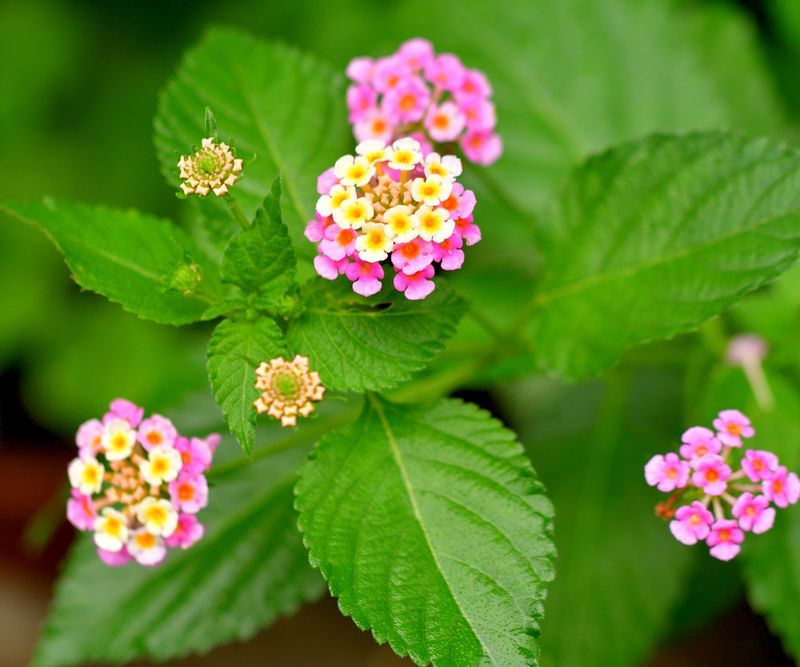
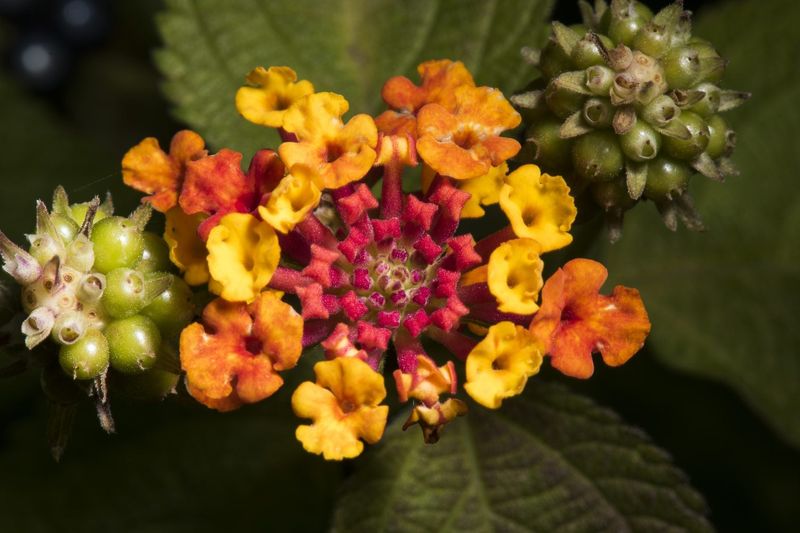
Walk around the shrub slowly and look at the tips of the stems. Fresh clusters look like bright, rounded bouquets of tiny flowers.
Spent ones look faded or thinned out, and small green berries may be swelling where petals used to be.
Those berry-topped clusters are the ones to notice. Plants that put energy into making lots of seed can look like they are slowing down on new flowers.
That is why the presence of fruit clusters is a better clue than the calendar.
Not every cluster needs to go. A plant with mostly fresh blooms and only a few fruiting stems may not need any attention.
Resist the urge to strip off every flower or berry just because you can.
Varieties also differ a great deal. Arkansas Extension notes that some lantanas set many seeds while others rarely do.
If your plant shows few or no berries, there is little to deadhead. If you see plenty, deadheading may be worth considering.
A simple habit helps: take a short lap with a cup of coffee, note which stems look finished, and decide from there.
Remove individual clusters with a selective cut
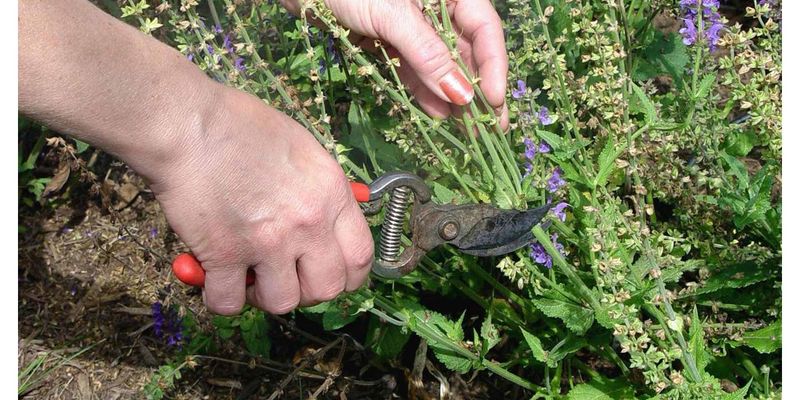
Once you have spotted a spent cluster, follow its stem back down to the first healthy set of leaves or a bud. Make your cut just above that point.
Iowa State Extension describes this as the general way to deadhead ornamentals.
The idea is simple. You are taking off one finished flower stem, and leaving the leaves and buds below it to keep growing.
Picture the difference between picking dead blooms off a rosebush and shearing the whole bush into a ball. Deadheading is the first one.
It removes small bits of the plant, one cluster at a time, and the shrub keeps its shape and its remaining flowers.
Skip the hedge trimmer for this job. Shearing or cutting the entire shrub back is a different kind of pruning, and for Texas lantana that belongs to early spring, which we cover below.
Work your way around the plant and stop when you run out of spent, fruiting clusters. A handful of snips may be all it takes.
Leave any stems that still carry fresh color, and toss your clippings where children and pets will not reach them.
Let seed-setting guide how often you check
How often you look should depend on how much seed your lantana makes. For heavy seed-setters, Arkansas Extension suggests deadheading about once a week when seed heads are forming.
Daily removal is not necessary.
Think of that weekly check as a guide, not a rule. It may help plants that load up on berries, and it may do little for varieties that rarely set seed.
Some of those can go without any deadheading at all.
A practical way to figure out where your plant falls: pick a Saturday morning, count how many clusters have turned to green fruit, and look again a week later. If you keep finding plenty of new berry clusters, a weekly routine might suit that plant.
If you find almost none, relax and enjoy the flowers.
No schedule promises more blooms, and none promises color all the way to frost. Weather, plant age, variety, and your local first-frost date all play a part.
Treat the routine as light upkeep that may or may not pay off with extra flowers.
Save Texas lantana’s major pruning for early spring
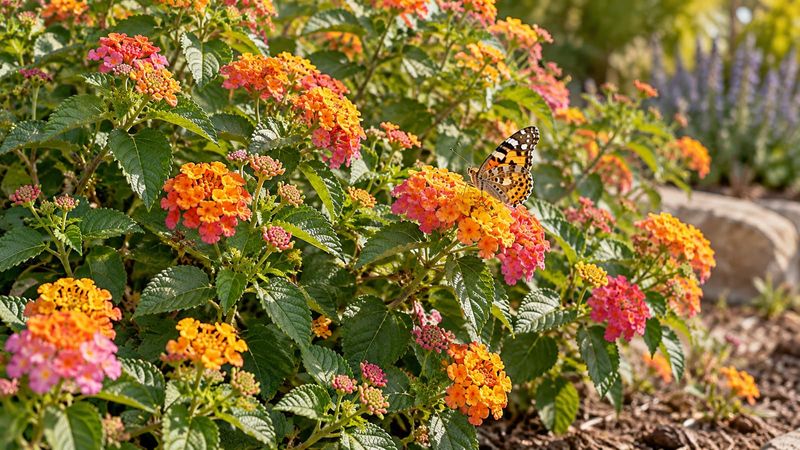
Deadheading and hard pruning are two different jobs. Texas A&M recommends cutting Texas lantana back to about 8 inches in early spring to encourage fresh growth, as described by Texas A&M AgriLife Extension.
Long stems can also be trimmed to keep the plant in shape.
That is the moment for the big cut, not October. A shrub that is still growing and flowering in fall does not need to be chopped down to stubs.
You may wonder why a spring haircut matters if the shrub blooms from April through October anyway. That bloom period is simply the plant’s usual season.
It does not show that cutting in October will stretch flowers out to first frost, so skip the shrub-wide cutback now.
Keep in mind this advice is for Texas lantana. Other species and cultivars may behave differently, so check guidance for the type you actually have.
If frost eventually damages the foliage, there is no rush to clean it up. Spring is the time to reset the plant.
For now, stick with the small, targeted snips and save the loppers for the end of winter.
Weigh fruit for wildlife and handle lantana carefully
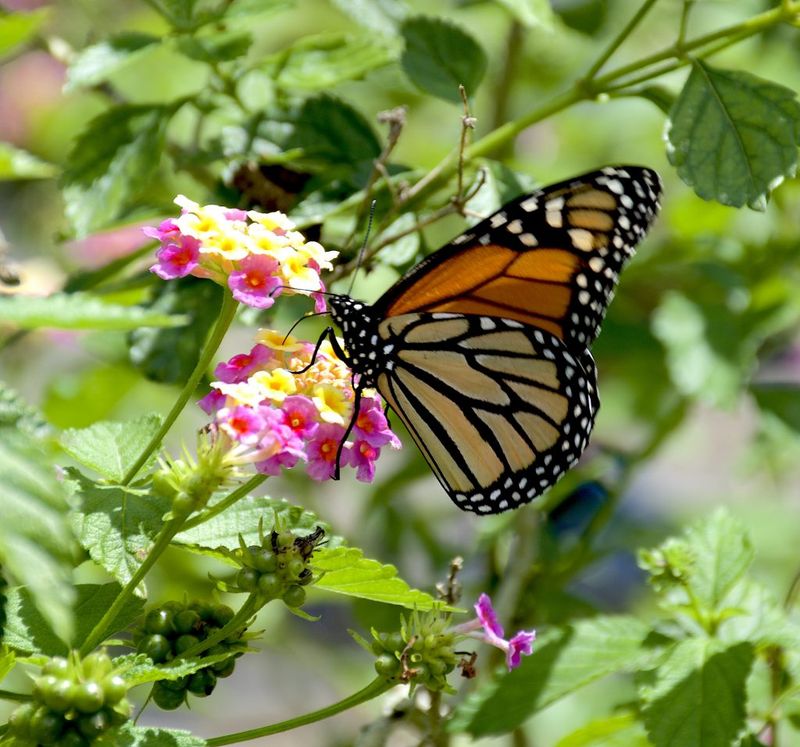
Berries are not always clutter. The Caesar Kleberg Wildlife Research Institute reports that some birds, including quail, eat Texas lantana fruit.
If you enjoy having wildlife in your yard, you may choose to leave some fruiting stems in place.
Removing fruit does cut down on seed production, but it also takes away food some birds use. There is no need to treat every cluster as a problem.
A balanced approach might be to deadhead the stems nearest a patio or walkway and leave others on the shrub’s back side.
Wear gloves as a precaution. University of Wisconsin Extension notes that lantana leaves can irritate skin or cause contact dermatitis in some people.
Keep plant parts away from children and pets, too. UF/IFAS lists lantana among poisonous landscape plants, and swallowing it can cause poisoning.
Do not assume ripe berries are harmless.
Drop your clippings into a covered bin or a yard-waste bag rather than leaving them on the ground where a curious dog or toddler might find them.
Treat deadheading as optional upkeep, not a frost guarantee
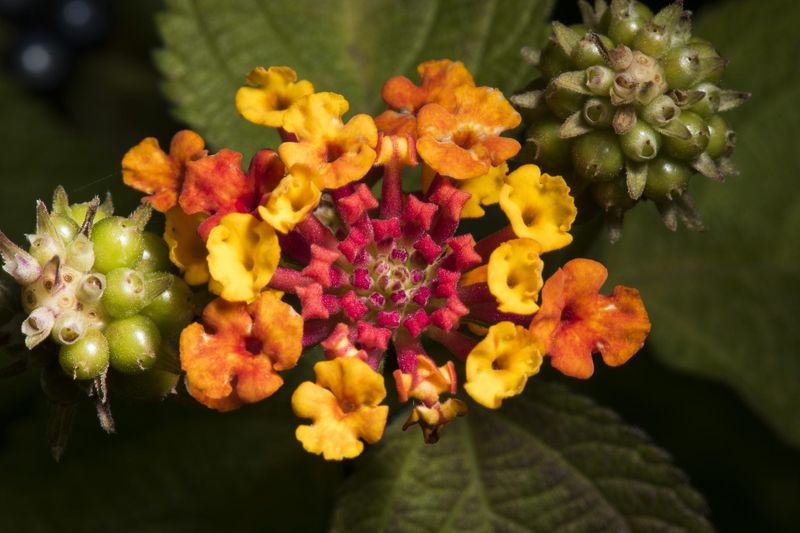
Check for spent, fruiting clusters, snip them selectively if your variety sets plenty of seed, and keep the big pruning for early spring. Sources such as Arkansas Extension and Texas A&M back that approach, but neither promises blooms until frost.
Lantana will bloom as long as the weather lets it. A few snips are a nudge, not a guarantee.