
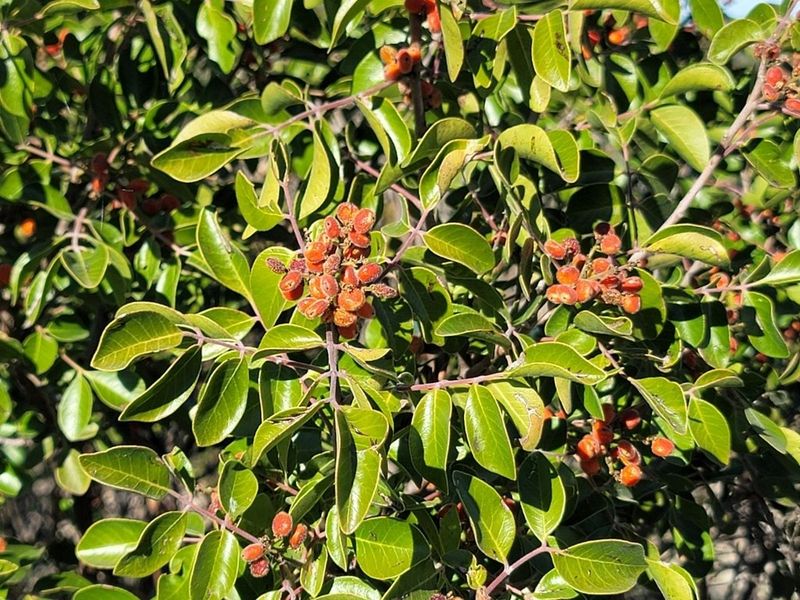
Most Central Texas yards have a spot where a tough, leafy shrub could earn its keep all year. Evergreen sumac is a Texas native that keeps its leaves through winter and does not ask for much water once it settles in.
It is not a plant for every yard, though, because it needs room and good drainage. Here is how to tell if it fits your space and how to get it planted well.
Evergreen sumac offers a useful native option
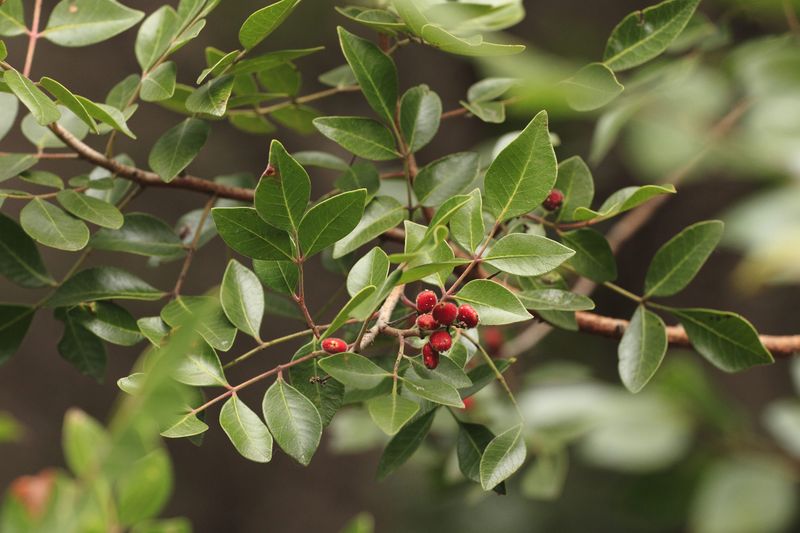
Evergreen sumac (Rhus virens) is a large shrub that holds its glossy leaves through the winter, which makes it handy for screening and year-round structure. Texas A&M’s range plant profile lists it in the Cross Timbers and Prairies, South Texas Plains, Edwards Plateau, and Trans-Pecos regions.
That puts it right in the neighborhood of the Hill Country and much of Central Texas.
In bloom, it carries small, pale flowers that are modest rather than showy. Those flowers give way to red, fuzzy fruit, which adds a splash of color against the dark foliage.
If you want a native shrub with a quiet, sturdy look instead of a flashy flower show, this one fits that bill.
The practical draw is water. Austin’s plant guide lists evergreen sumac as a low-water shrub that grows in sun or part shade.
In a region with triple-digit summers and watering restrictions, a plant with modest water needs deserves a look.
A few honest limits apply. Native to Texas does not mean it will thrive in every Texas yard, soil, or microclimate.
It also is not guaranteed to be scarce or hard to find, since availability depends on where you shop. Think of it as a good candidate that works when your light, drainage, and space line up.
The next sections cover how big it gets, how to water it without overdoing it, when to plant, how to dig the hole, and how to track down a plant.
Check its mature size and site requirements
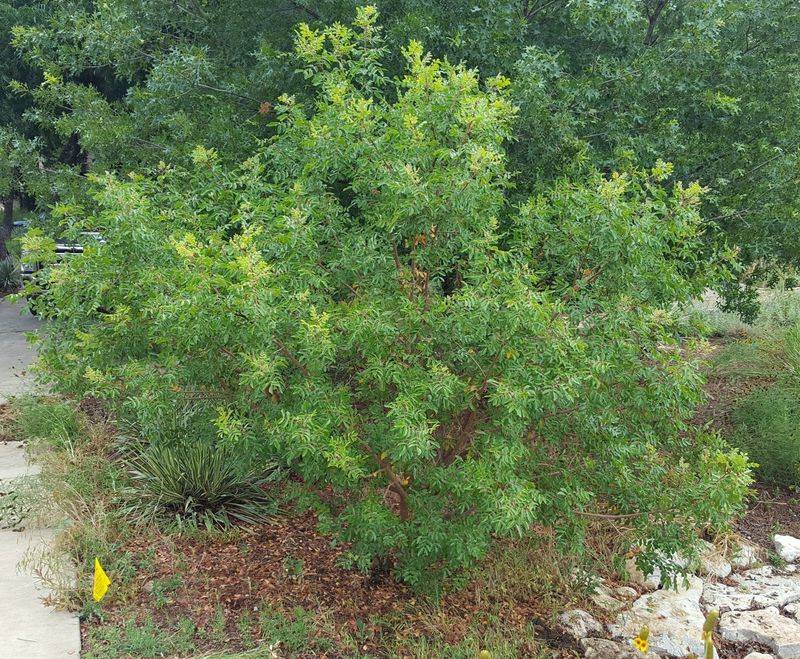
Before buying, measure your space. Austin’s plant guide gives evergreen sumac a mature size of about 8 to 10 feet tall and 6 to 8 feet wide.
That is a big shrub, so a spot right against a window, walkway, or fence line may feel cramped in a few years.
Picture a circle about 8 feet across with the plant at the center. If that circle fits without crowding a house wall, a drive, or a neighbor’s fence, you have a good start.
Leave extra room if you want to walk around it for pruning.
Light matters too. The guide lists sun to part shade, so a bright yard or a spot with some afternoon relief can work.
Deep, all-day shade is a poor match, and a dim corner is a sign to look at other plants.
Drainage is the requirement that trips people up. The same guide notes the shrub needs good drainage.
After a heavy rain, watch your planting spot. If water pools for hours or the clay stays soggy, pick a higher, looser spot or build a raised area.
It also helps to remember where it grows naturally. Texas A&M’s profile places it in particular regions and settings, not everywhere in the state.
Your own soil and microclimate can still surprise you, so treat the first year as a trial.
Drought tolerance does not mean no watering
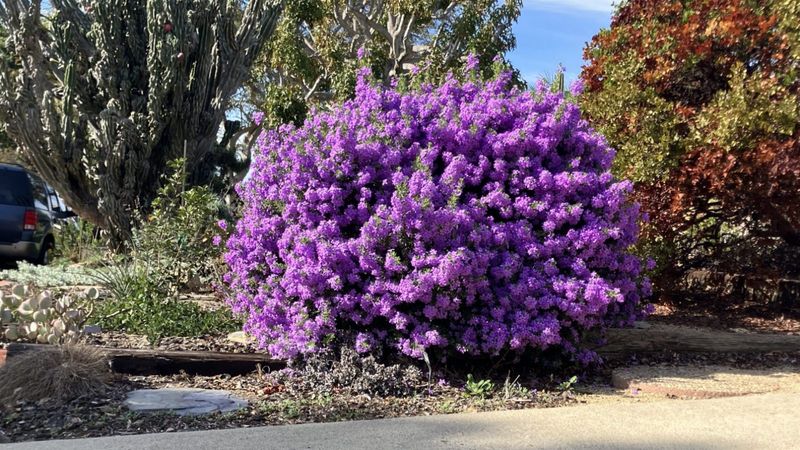
Low-water does not mean no-water. AgriLife Extension advice says drought-tolerant plants still need supplemental water when conditions require it.
A new shrub has a small root system, so it depends on you during its first seasons.
The best habit is to check the soil rather than follow a calendar. Push a finger a few inches down near the root ball.
If it is dry, water deeply. If it is damp, wait.
During a long dry, hot spell, check more often than you would in a cool, wet month.
Too much water causes its own trouble. The Native Plant Society of Texas describes evergreen sumac as drought-tolerant but cautions that overwatering in summer can make branches leggy or heavy.
It also warns that wet soils can lead to fungal problems.
Watch the plant for clues. Long, floppy branches after lots of summer watering suggest you are giving it more than it wants.
Wilting, crispy leaves during a dry stretch suggest it needs a drink. Yellowing and a soggy base point toward drainage trouble.
Once the shrub has settled in, you can usually water less often, but keep an eye on it during severe drought. Mulch can help hold moisture, though keep it from piling against the stems.
October is a locally recommended planting time
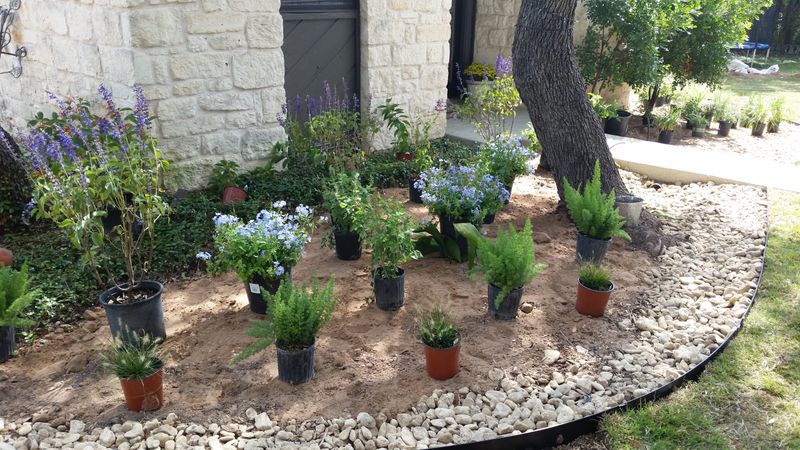
Fall is when many Central Texas gardeners get back outside. Travis County AgriLife Extension’s October checklist names October as a good time to plant trees and shrubs in the Austin and Central Texas area.
Cooler air eases stress on new plants, and roots can grow before the next summer heat.
That advice is local. It is not a statewide rule, and it is not the only workable window.
Gardeners in the Panhandle, the Gulf Coast, or the Trans-Pecos face different weather, so they should look for guidance from their own county extension office.
Even in Central Texas, conditions vary year to year. A hot, dry October may call for more attention to watering.
A cold snap or a soggy stretch might be a reason to wait a week or two. Check the forecast before you dig.
Soil is another factor. If your planting area is heavy clay and has been drenched, give it time to drain.
Plants set into saturated ground can struggle, especially a shrub that wants good drainage.
Treat October as a good target, then adjust for the weather and the site in front of you.
Plant at the root ball’s depth and water thoroughly
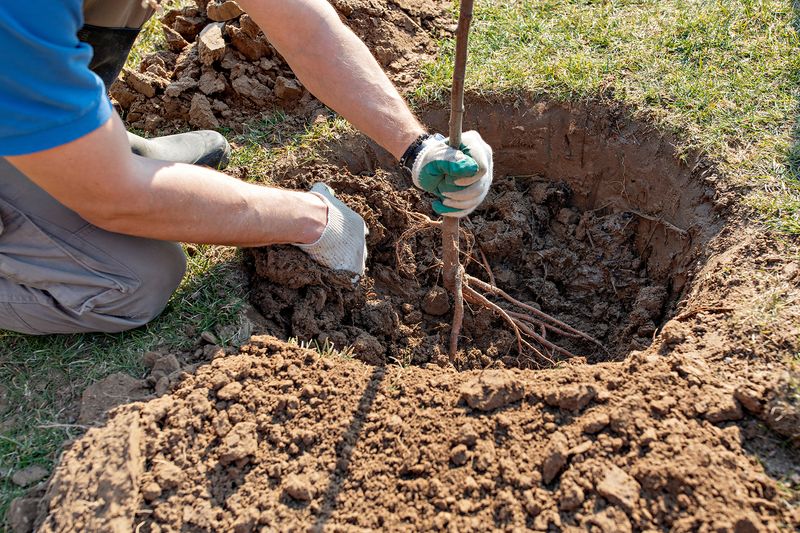
Digging the hole well gives a shrub a better start. Texas A&M’s Earth-Kind planting guidance recommends a hole no deeper than the root ball and about twice as wide.
The wide hole gives roots loosened soil to push into, while the shallow depth keeps the plant from sinking.
This is general woody-plant guidance, not a rule written for evergreen sumac alone. Treat it as a solid starting point and adjust to what you find.
Start by inspecting the root ball. Slide the plant out of its pot and look at the roots.
If they circle tightly around the outside, gently loosen them. Find where the trunk flares at the base and set that point level with or slightly above the surrounding soil.
Next, look at your site. If the spot is low and tends to hold water, plant a little higher or choose a better-drained place.
Rocky ground may need extra effort to dig a wide hole.
Backfill with the soil you removed, press it down gently, and water thoroughly to settle it and remove air pockets. After that, return to checking soil moisture rather than following a set schedule.
Call nurseries to check current availability
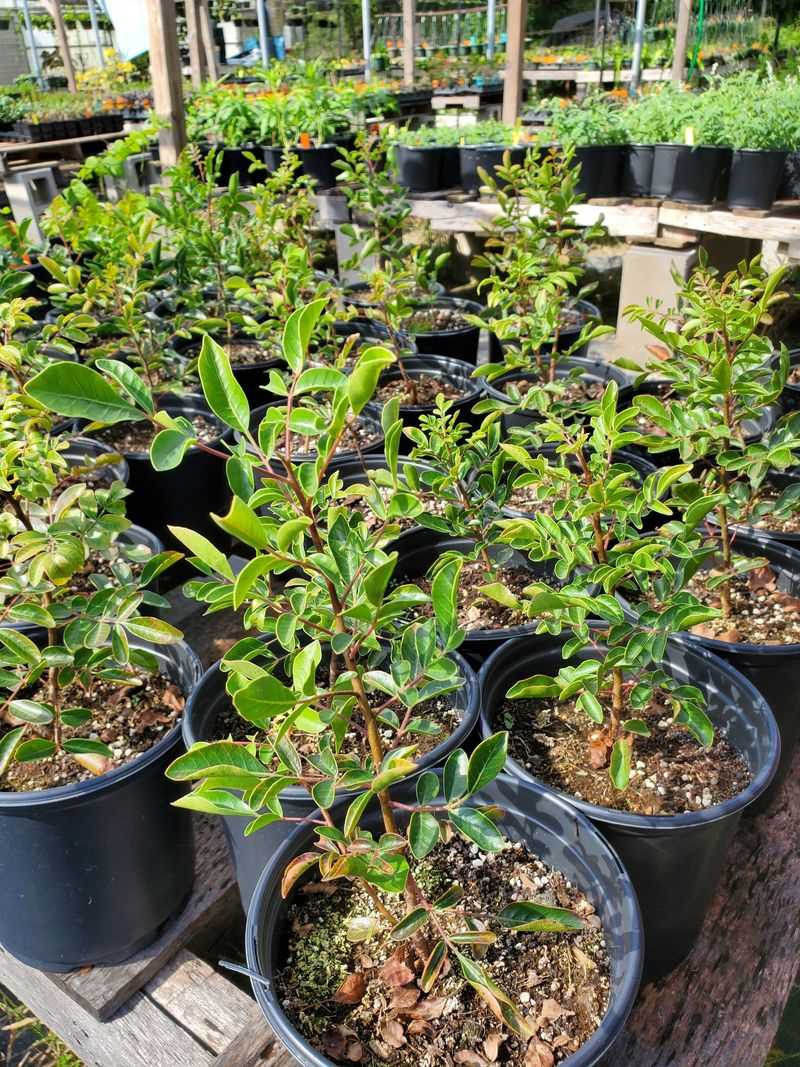
You may have heard that this shrub is impossible to find. Nobody has shown that big-box stores never carry it, and nobody has shown that homeowners commonly go hunting for it.
What seems true is simpler: stock varies by store, location, plant size, and season.
A good first step is checking native-plant resources. The Native Plant Society of Texas recommends looking at native-plant nursery resources when searching for this species.
Those listings can point you toward growers who work with Texas natives.
Wholesale sources offer clues about how stock works. Sunrise Native Plants notes that finding a particular size can sometimes take calls to several nurseries.
Native Texas Nursery’s catalog says availability changes seasonally. These are examples, not proof that any location has a plant on the shelf today.
So pick up the phone before you drive. Ask whether they have evergreen sumac, also sold as Rhus virens, what container sizes are available, and when new shipments arrive.
Ask about the botanical name, since common names can be confusing.
If one store has none, try another, or ask to be notified. Fall planning can start in late summer, so you are ready when October arrives.
A short phone call can save a long drive, and the right shrub is worth a few calls.