
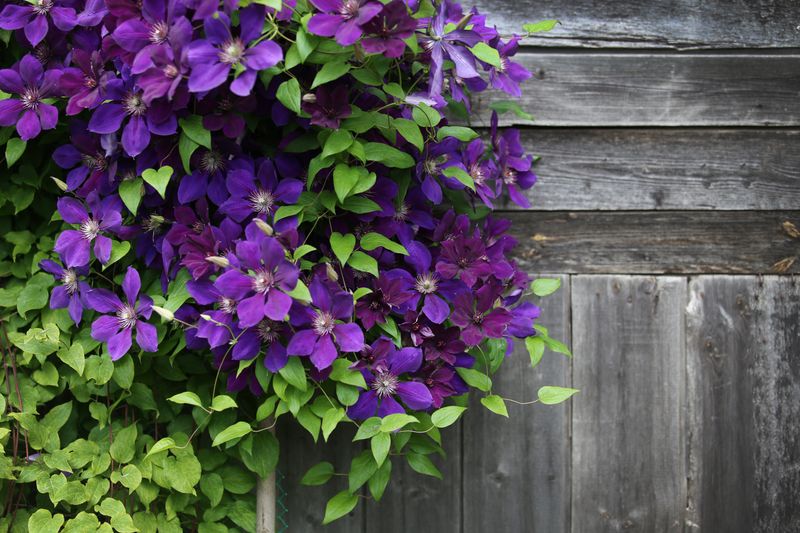
Your clematis is covered in leaves but the flowers just are not showing up, and it is hard not to wonder if you are doing something wrong. The honest answer is that fertilizer might help, but it is rarely the whole story. Before you grab a bag of bloom booster, a quick diagnosis can save you money and protect a plant you have spent years growing.
Sparse blooms do not automatically mean the vine is hungry
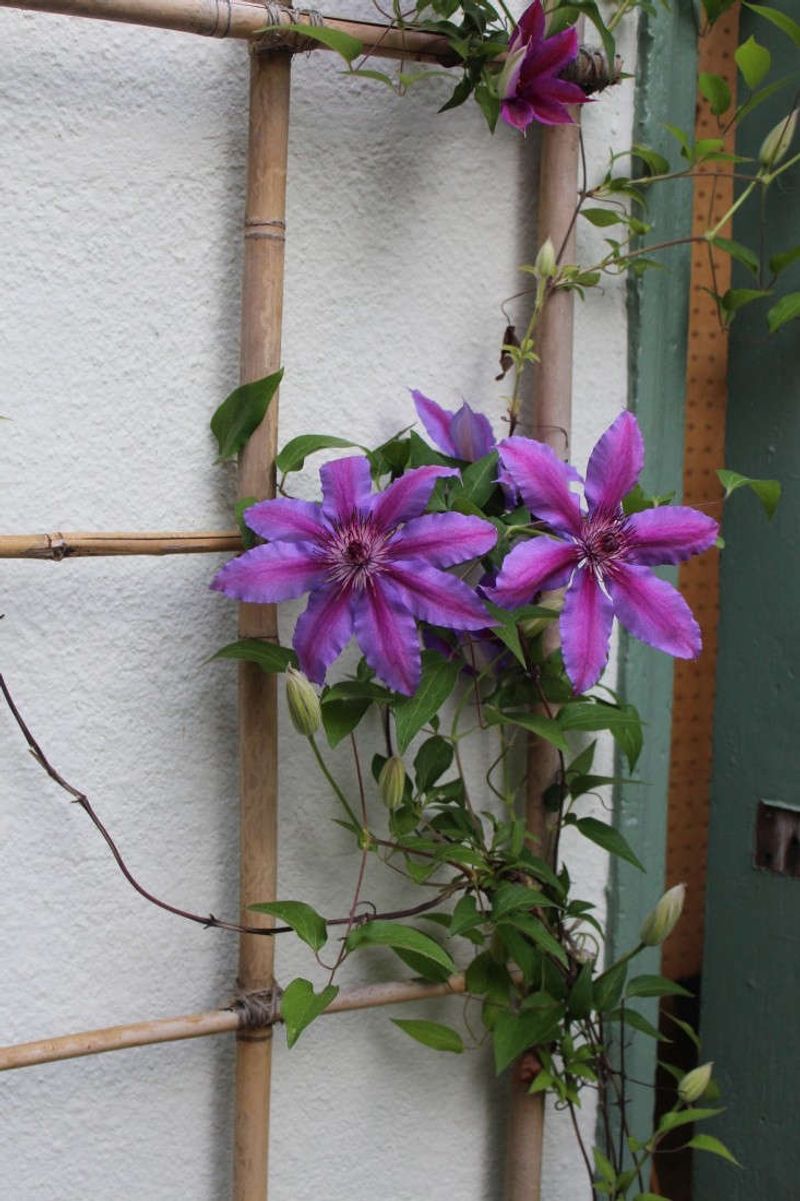
Plenty of gardeners look at a clematis smothered in foliage and reach for fertilizer, but a plant with vigorous leafy growth may actually be getting too much nitrogen rather than too little. Iowa State University Extension specifically lists excessive nitrogen as a cause of abundant growth with few blooms, so adding more fertilizer to an already lush vine can make the problem worse, not better.
A newly planted clematis may simply need more time. Young vines can take up to three years to become established enough to bloom well, and pushing fertilizer on an immature plant will not speed that process along in any meaningful way.
Established clematis growing in rich, well-amended garden soil may need little or no supplemental fertilizer at all. University of Maryland Extension guidance is clear that ornamentals growing well and showing no deficiency symptoms rarely benefit from added fertilizer, so the first step is honest observation rather than a trip to the garden center.
When symptoms do suggest a nutrient gap, a soil test is the safest way to find out what is actually missing. University of Minnesota Extension recommends letting test results guide fertilizer choice, because guessing at nutrient needs can lead to over-application and root damage. Check growth habit, bloom history, soil conditions, and any visible symptoms before buying anything.
Light, moisture, and cool roots set the ceiling for flowering
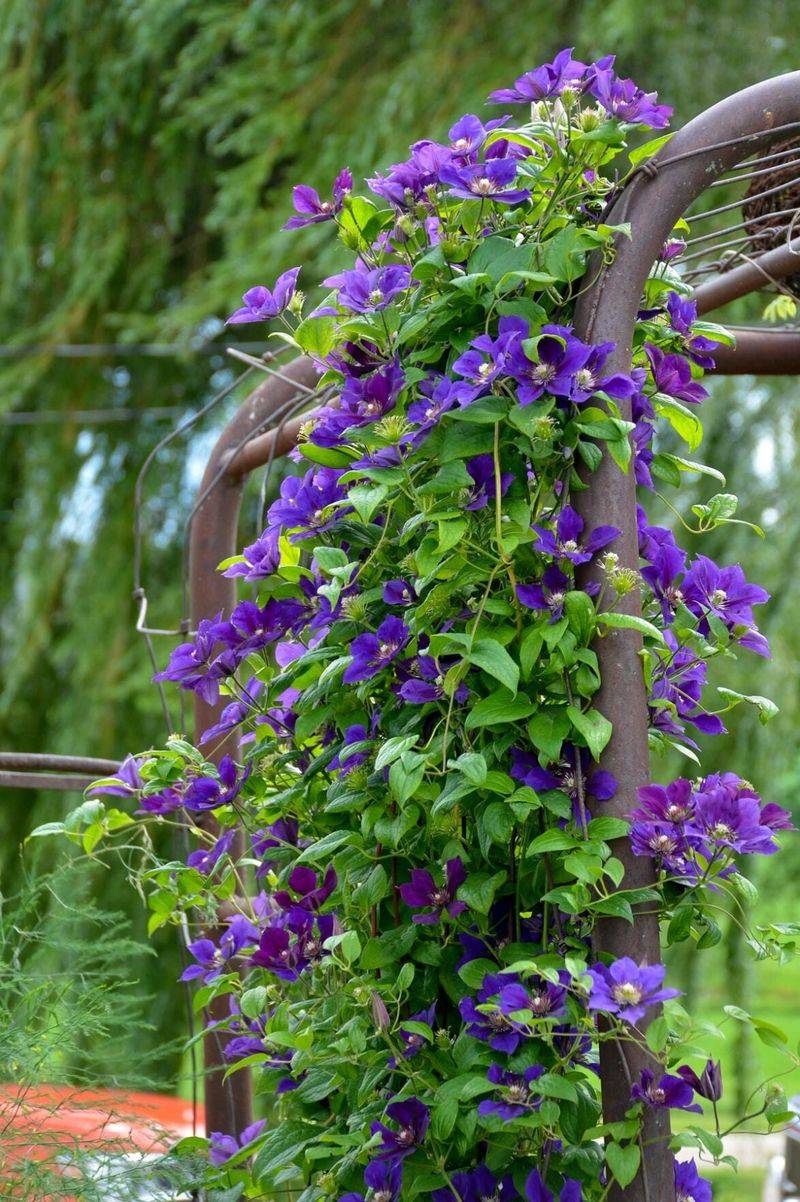
Even the best fertilizer program cannot make up for a plant stuck in the wrong spot. Clematis need substantial direct sunlight to flower well, and Iowa State University Extension recommends at least six hours of direct sun for strong flowering, noting that some types tolerate partial shade but will produce fewer blooms in those conditions.
Root-zone conditions matter just as much as what is happening above ground. Clematis roots prefer to stay cool and consistently moist, yet the soil around them needs to drain freely. Soggy, compacted, or bone-dry soil puts the plant under stress that no fertilizer can reverse, because a stressed root system simply cannot take up nutrients efficiently regardless of how much you apply.
A practical first step for any underperforming vine is to look honestly at its location before adjusting its feeding. Is the base shaded by a wall, competing shrub roots, or hardscape that holds heat? Is watering consistent, or does the plant swing between wet and dry cycles? Correcting the root-zone environment, adding a layer of mulch to moderate temperature and hold moisture, improving drainage, or moving a container plant to a sunnier spot, may produce a more noticeable improvement than any fertilizer application.
Feeding a clematis that is light-starved or drought-stressed is unlikely to deliver the flowering boost you are hoping for.
The pruning group helps determine when and where flowers form
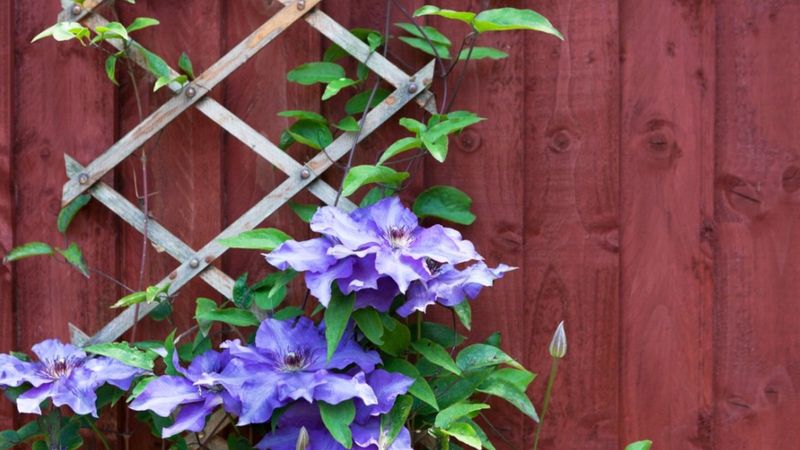
One of the most common reasons a clematis fails to bloom has nothing to do with fertilizer or soil. Pruning at the wrong time, or in the wrong way, can remove the very buds that would have produced flowers, and no amount of feeding will bring those buds back once they are gone.
Clematis are divided into three pruning groups based on when and where they produce flowers. Group 1 plants bloom on old wood from the previous season, so they are generally pruned only after flowering in late spring or early summer. Cutting them back hard in late winter removes the stems that were about to bloom. University of Illinois Extension and the Royal Horticultural Society both caution that mistimed pruning is a leading cause of bloom failure in this group.
Group 2 clematis flower on both old and new wood, which means they need light, cautious pruning rather than a hard cutback. Group 3 plants, by contrast, bloom on current-season growth and respond well to being cut back hard in late winter or early spring. Knowing which group your cultivar belongs to is one of the most useful pieces of information you can have, because it tells you where and roughly when flowers should appear. Iowa State University Extension emphasizes that pruning group is one of several factors shaping the final display, not the only one, but getting it right protects the flowering potential that good light, moisture, and appropriate feeding are meant to support.
Feed only when the plant and soil give you a reason
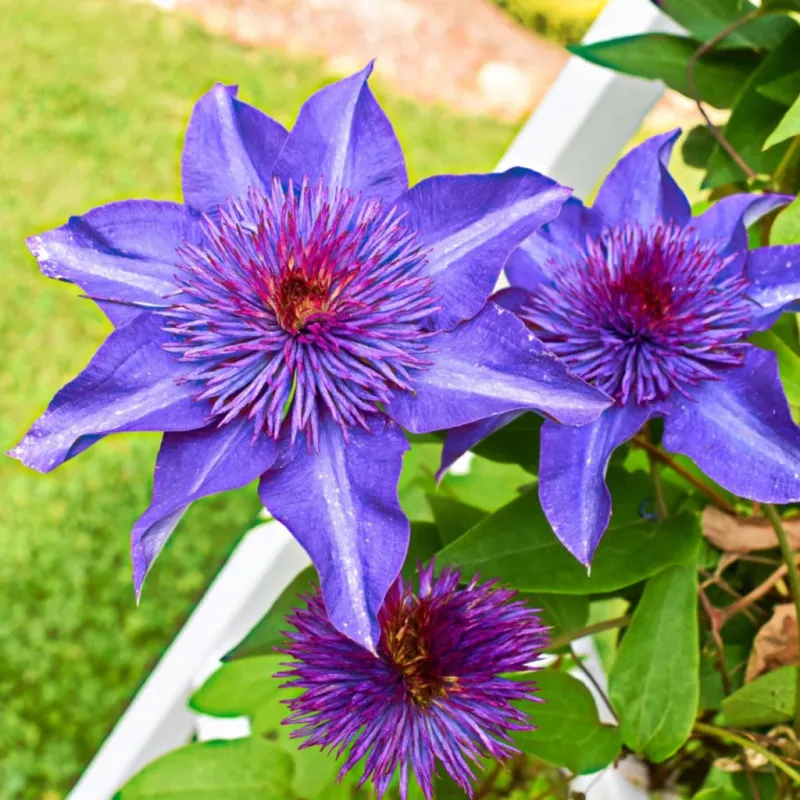
Feeding a clematis that is already growing in fertile, well-amended soil is unlikely to produce a dramatic change in flowering. The University of Maryland Extension guidance on established ornamentals is straightforward: if the plant is growing well and showing no deficiency symptoms, supplemental fertilizer is probably unnecessary. Starting with that honest assessment keeps you from spending money on a product that the plant does not need.
When a soil test or clear symptoms do point to a nutrient gap, timing and product choice both matter. Spring or during active growth is the most defensible window for feeding. Iowa State University Extension lists balanced all-purpose fertilizers such as 10-10-10 or 5-10-5 as general options for clematis, and the University of Vermont Extension recommends a low-nitrogen, slow-release fertilizer applied as needed during the growing season. These are general horticultural suggestions, not a formula that guarantees more flowers.
A slow-release product applied at a conservative, label-directed rate is a safer starting point than a concentrated liquid applied frequently. University of Minnesota Extension notes that inorganic fertilizers can burn roots when over-applied, which is a real risk if you exceed the label chasing a bigger bloom count. Feed lightly, follow the directions, and let the plant tell you over the season whether conditions are improving.
Container vines and young plants need a different decision
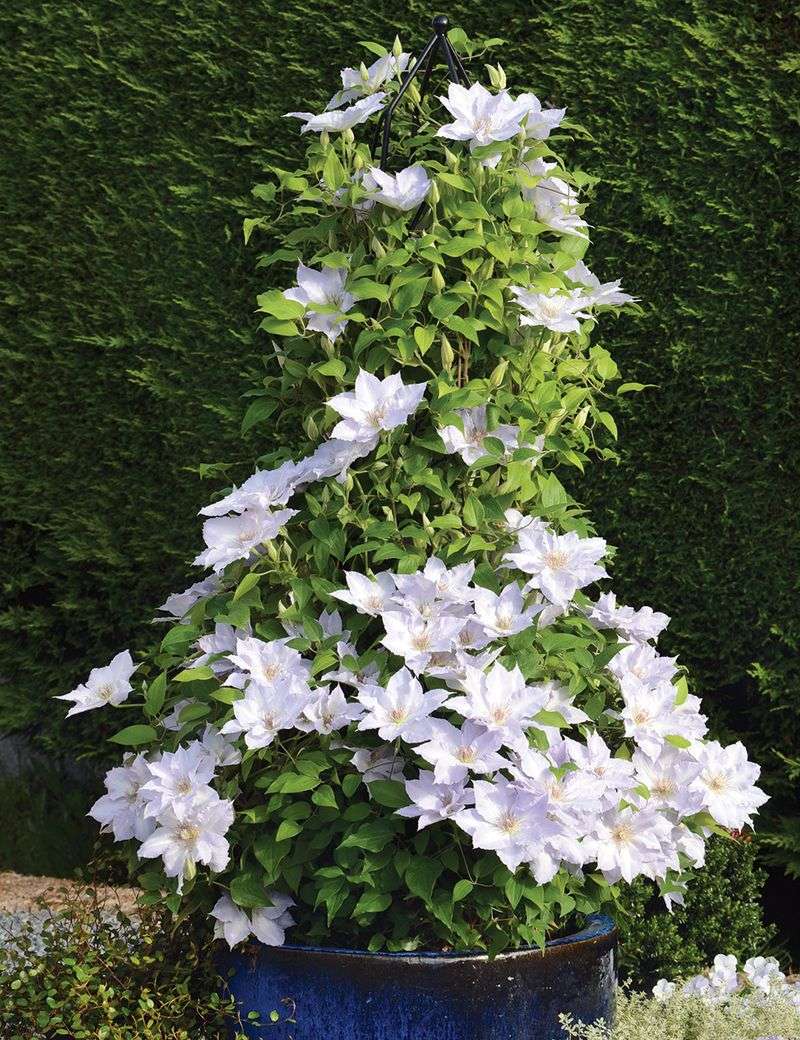
A clematis growing in a pot faces a fundamentally different situation than one rooted in open garden soil. The root run is restricted by the container walls, which means the plant exhausts available nutrients more quickly and dries out faster between waterings. The Royal Horticultural Society notes that container clematis may benefit from feeding through spring and summer for exactly this reason, while in-ground plants in fertile soil generally do not need the same regular attention.
That distinction matters practically. A feeding schedule appropriate for a potted vine is not a reason to apply concentrated fertilizer to an established in-ground clematis at the same frequency. The two situations call for different approaches, and treating them the same is one of the more common ways gardeners accidentally push a vine toward leafy growth at the expense of flowers.
Newly planted vines, whether in containers or in the ground, are a separate case again. Iowa State University Extension notes that clematis can take up to three years to establish well enough to bloom reliably. A young plant that produces modest flowers in its first or second season may simply be maturing, and patience combined with good site conditions will often do more than an aggressive fertilizer program. Keep any feeding for young vines label-directed and modest, and resist the urge to escalate when the bloom count is slow to build.
A bloom booster is not the shortcut the label suggests
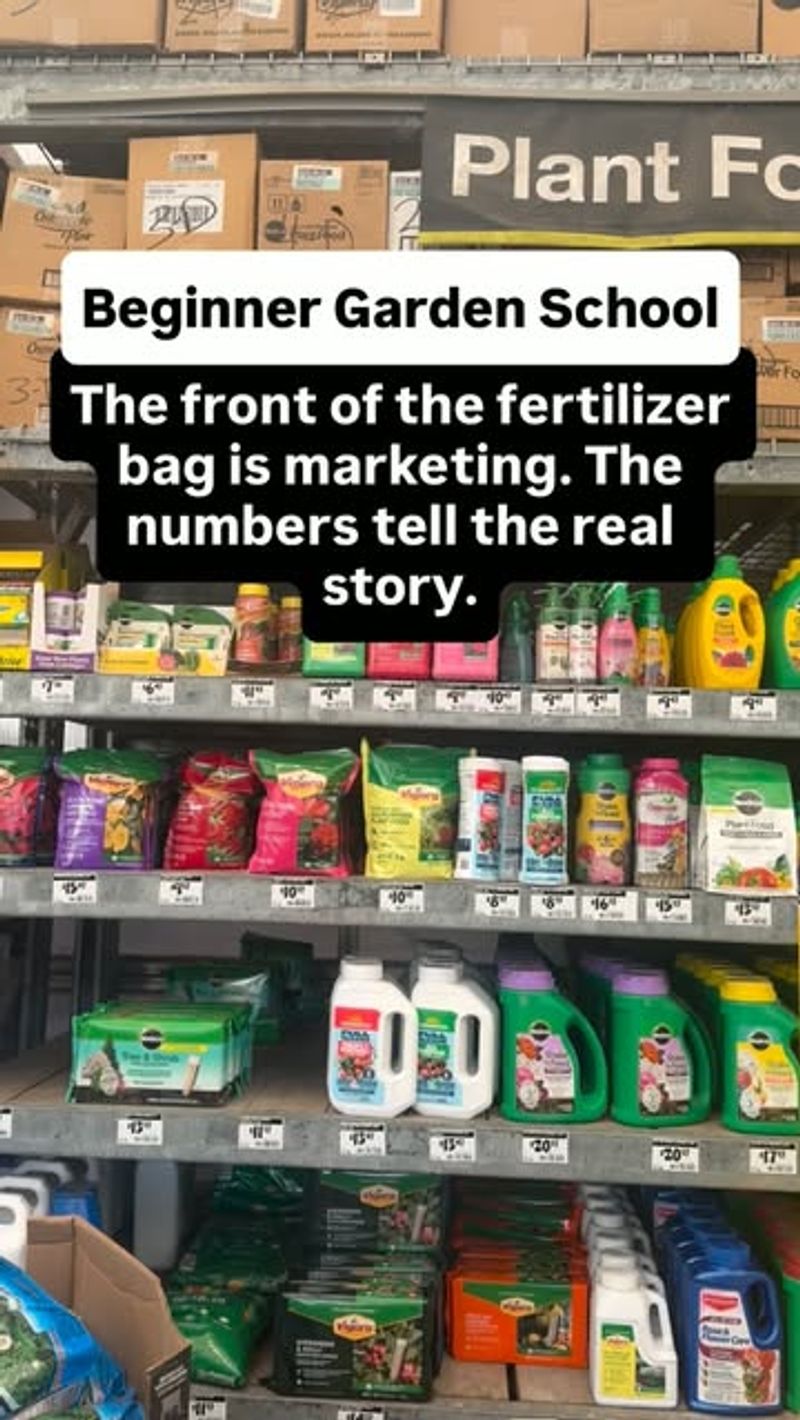
The appeal of a bloom booster is easy to understand. The label promises more flowers, the numbers on the bag look impressive, and it feels like a direct solution to a frustrating problem. The reality is more complicated. Extra phosphorus does not reliably increase flowering in soils that already contain enough of it, and most US garden soils are not phosphorus-deficient.
UMass Extension and North Dakota State University Extension both caution that high-phosphorus fertilizers are not a proven way to increase bloom count when phosphorus is already adequate in the soil. A Journal of NACAA field study reaches a similar conclusion. The more defensible product choice for a clematis that may benefit from feeding is a balanced or relatively low-nitrogen fertilizer, since excessive nitrogen is the nutrient most clearly linked to leafy growth at the expense of flowers.
Safe application boundaries are straightforward: follow the label and do not invent a dose. Keep concentrated granular or liquid fertilizer away from stems and roots, because direct contact can cause chemical burn. University of Maryland Extension recommends watering fertilizer in after application to reduce salt injury, and advises against feeding drought-stressed plants. Avoid applying fertilizer just before a heavy rain or near storm drains, because excess nitrogen and phosphorus can move in runoff and contribute to water-quality problems, a concern the EPA addresses directly in its guidance on yard nutrient management.
Wilting and yellowing call for diagnosis, not a stronger dose
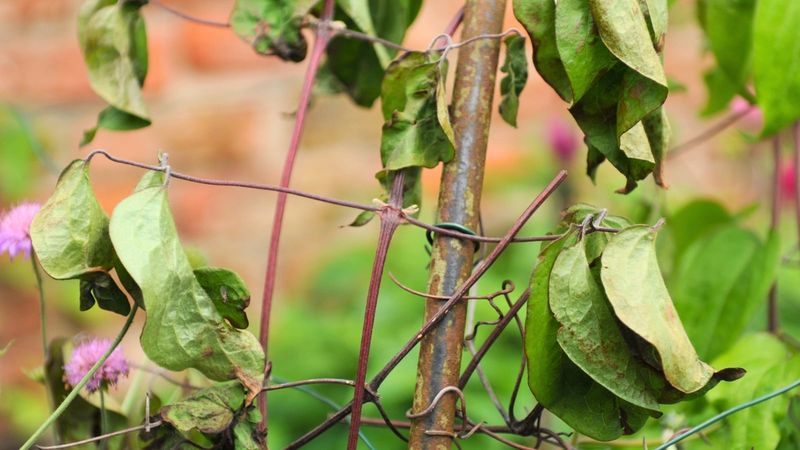
Yellow leaves are one of the most misread symptoms in the garden. Many gardeners assume yellowing means the plant is hungry, but Penn State Extension guidance on ornamental soil management makes clear that yellowing can reflect pH-related nutrient availability, water stress, root problems, or disease rather than a straightforward deficiency. Applying more fertilizer to a plant whose yellowing has a different cause will not fix the problem and may make it worse.
Soil pH is a particularly common culprit that gets overlooked. When pH is too high or too low, nutrients already present in the soil become chemically unavailable to the plant. Penn State Extension notes that pH affects nutrient uptake significantly, which is one more reason a soil test is more useful than a visual guess when yellow leaves appear.
Sudden stem collapse is a different situation entirely and should not be treated as a fertilizer problem. Iowa State University Extension identifies clematis wilt as a cause of rapid stem collapse, particularly in large-flowered cultivars. The Missouri Botanical Garden and University of Illinois Extension both recommend removing affected stems at or below the diseased section, destroying the cuttings rather than composting them, avoiding injury to stems and roots, and maintaining good overall growing conditions. Escalating fertilizer in response to wilt will not address the underlying cause and could stress an already compromised plant.
A fuller display requires more than fertilizer
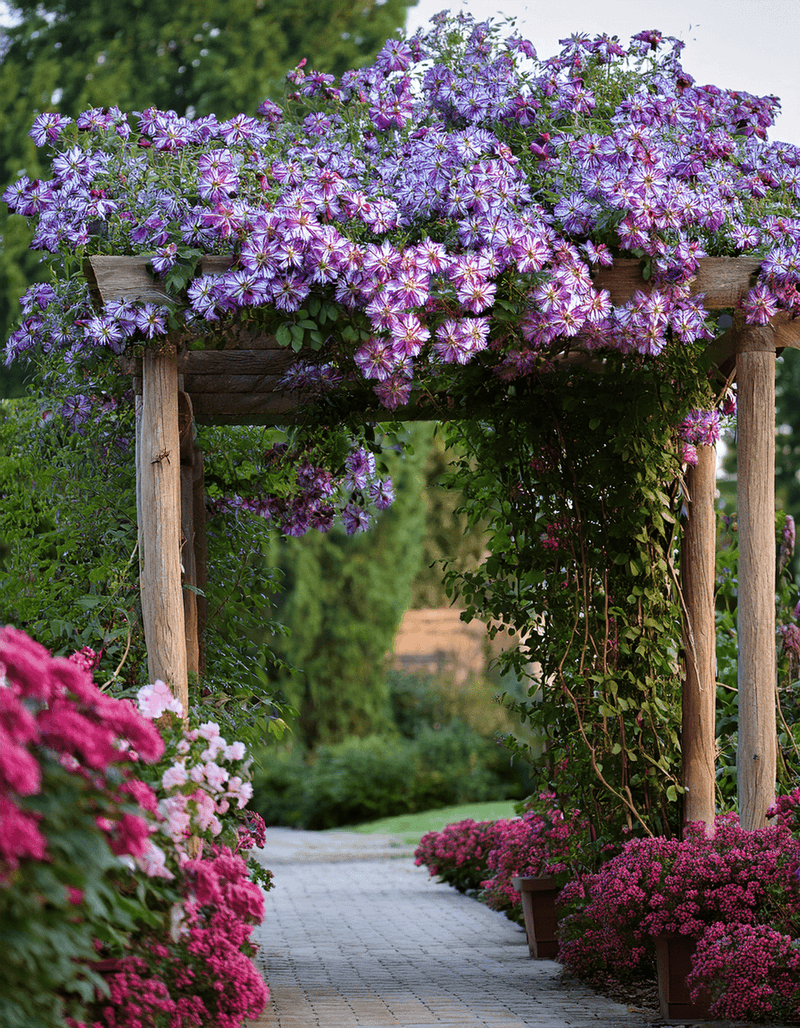
Getting a clematis to perform well is less about finding the right product and more about working through a short, honest checklist. Start by identifying the cultivar and its pruning group, because knowing where and when flowers should form tells you whether last season’s pruning protected or removed the buds you were counting on. Then look at light and root-zone conditions: consistent moisture, good drainage, and at least six hours of sun are the foundation that feeding is meant to support, not replace.
Consider the plant’s age and whether it is growing in a container or in open ground, since those factors shape whether any supplemental feeding is justified at all. A soil test, when possible, takes the guesswork out of product choice. If feeding makes sense after that review, apply a balanced or low-nitrogen fertilizer lightly and follow the label. When yellowing or sudden wilting appears, investigate the cause before adding anything, because established clematis in fertile soil rarely need more fertilizer and may need diagnosis instead.
Smart feeding can support a stronger display when nutrition genuinely limits the plant, but genetics, age, intact buds, pruning, support structure, winter survival, and consistent care all shape the result too. The vine that earns its wall of color usually gets there through good growing conditions first, with fertilizer playing a supporting role rather than carrying the whole show.